- Product Description Description
- Table of Contents TOC
- List of Table & Figure LOT
- Get Free Sample PDF Sample PDF
Market Size, 2025
$1,597.86 MnMarket Estimate, 2026
$1,643.88 MnMarket Forecast, 2034
$2,063.09 MnCAGR, 2026–2034
2.88%Executive Summary: Europe Pretzel Market
- Market Scope: Comprehensive analysis of the Europe pretzel market covering product types, flavor/content classifications, distribution channels, regional country dynamics, growth drivers, and competitive landscapes.
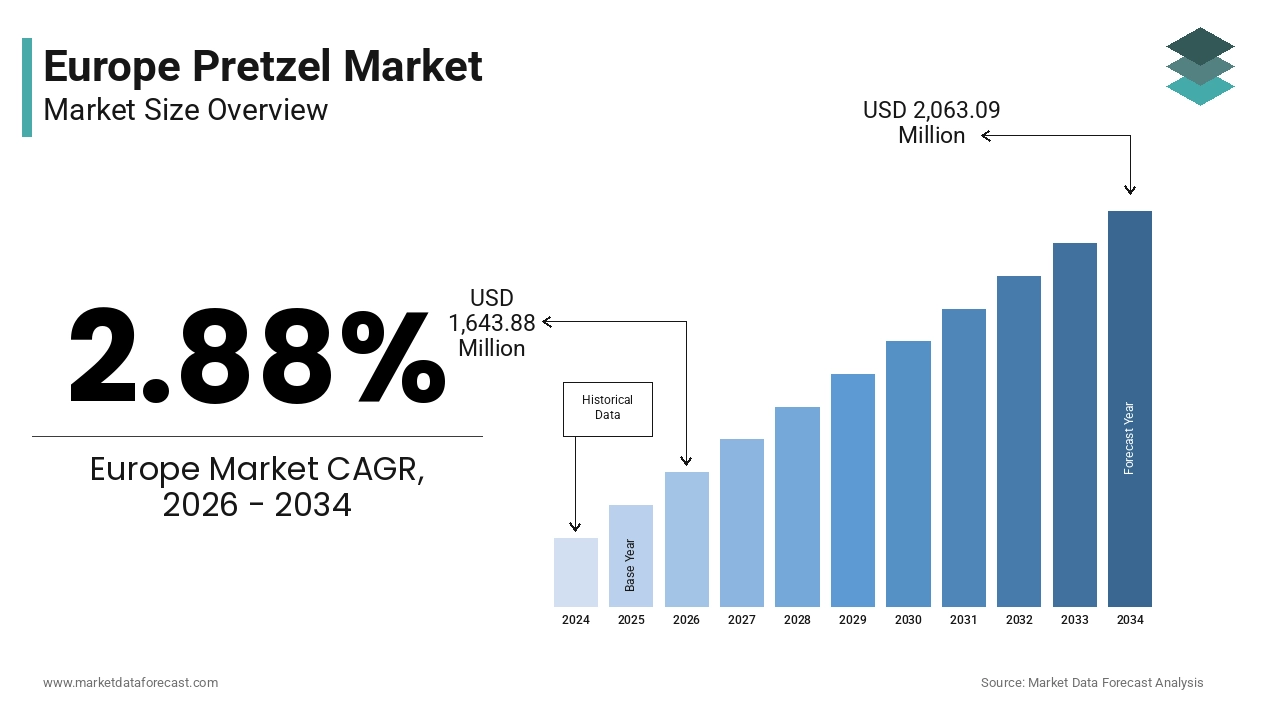
- Market Valuation: Valued at USD 1,597.86 million (2025), estimated at USD 1,643.88 million (2026), and projected to reach USD 2,063.09 million by 2034, registering a steady CAGR of 2.88% during the forecast period (2026–2034).
- Primary Growth Drivers: Expanding manufacturing production capacities across key European players, ongoing flavor and product innovations creating newer shapes and seasonings, and a deep-rooted cultural bakery tradition driving steady packaged snack demand.
Key Market Segment Metrics (2026–2034)
| Category | Leading Segment (2025 Position) | Fastest-Growing Segment |
|---|---|---|
| By Type | Hard Pretzels (favored for extended shelf life and broad retail availability) | Soft Pretzels (expanding via foodservice, cafe chains, and fresh artisanal bakery channels) |
| By Content | Salted Pretzels (traditional market leader capturing the vast majority of mainstream savory snack consumption) | Unsalted & Flavored Variants (propelled by health-conscious consumer choices and gourmet seasoning trends) |
| By Distribution Channel | Supermarkets & Hypermarkets (dominate retail volume with extensive shelf space and multi-brand variety) | Online Retailers (experiencing rapid growth due to digital grocery expansion and direct-to-consumer specialty snack brands) |
| By Region / Country | Germany (leads the European regional market share, supported by robust traditional baking heritage and product innovation) | United Kingdom & Southern Europe (driven by increasing snack premiumisation, flavored varieties, and expanding urban foodservice chains) |
Major Market Players & Market Structure
Market Structure: Moderately fragmented and competitive snack food landscape featuring international food corporations, specialized commercial bakeries, and regional snack producers competing on product innovation, distribution reach, and authentic taste profiles.
Key Companies: Auntie Anne's, Boulder Brands, ConAgra Brands, Frito-Lay, Herr Foods, J & J Snack Foods, Mars, Mr. Pretzel, Pretzels Inc., and others.
 Download Free Sample Report
Europe Pretzel Market Size
The Europe pretzel market size was valued at USD 1,597.86 million in 2025 and is expected to reach USD 2,063.09 million by 2034 from USD 1,643.88 million in 2026. The market is growing at a CAGR of 2.88% during the forecast period.
The pretzel is baked dough products, characterized by their distinctive knot shape and alkaline crust, which serves as a popular snack and accompaniment to beverages across the continent. The availability of high quality grain ensures consistent product texture and flavor which is essential for maintaining consumer loyalty. The bakery products remain a staple in European diets with bread and rolls accounting for a significant portion of daily caloric intake among adults. The cultural significance of pretzels extends beyond nutrition serving as a symbol of hospitality and tradition in many regions. Additionally, the food and beverage service sector employs millions across Europe facilitating widespread availability of fresh pretzels in bakeries cafes and restaurants.
MARKET DRIVERS
Deep Rooted Cultural Consumption Habits
The deep-rooted cultural consumption habits, which is driving the growth of the Europe Pretzel Market by ensuring consistent demand driven by traditional dietary patterns and social rituals. In countries like Germany, Austria, and Switzerland pretzels are not merely snacks but essential components of daily meals and social gatherings often paired with beer or coffee. This high density of production facilities ensures widespread availability and freshness which are critical quality attributes for consumers. As per the Austrian Chamber of Commerce bakery products constitute a major part of household expenditure on food reflecting the centrality of baked goods in the national diet. The tradition of consuming pretzels during festivals such as Oktoberfest further amplifies seasonal demand spikes creating predictable revenue streams for manufacturers. Consumers associate pretzels with authenticity and heritage which protects the category from fleeting food trends. The intergenerational transmission of these eating habits ensures that younger demographics continue to value traditional bakery items.
Rising Popularity of On The Go Snacking
The rising popularity of on the go snacking by aligning with the fast-paced lifestyles of urban consumers, who seek convenient and portable food options that is accelerating the growth of the Europe pretzel market. Pretzels are inherently portable and require no utensils by making them ideal for busy professionals students and commuters who need quick energy sources during the day. Pretzel manufacturers have responded by introducing individually wrapped portions and shelf stable variants that fit easily into bags and pockets. The average working hours in several European countries remain high leading to increased reliance on quick meal replacements rather than sit down lunches. This shift benefits pretzel brands that offer savory flavors and substantial texture which provide satiety compared to lighter snacks. Food service outlets such as kiosks and train station bakeries have expanded their pretzel offerings to capture this transient demand. The versatility of pretzels allows them to be consumed at any time of day from breakfast to late night snacks.
MARKET RESTRAINTS
Strict Regulations on Trans Fats and Additives
The strict regulations on trans fats and additives unfavorably by imposing stringent formulation requirements that increase production costs and limit ingredient choices, which is restricting the growth of the Europe pretzel market. European authorities have implemented rigorous standards to eliminate industrially produced trans fats from food products to protect public health. According to the European Commission Regulation 2019, 649 sets a limit of 2 grams of trans fat per 100 grams of fat in foods intended for final consumers requiring manufacturers to reformulate recipes. This transition often necessitates the use of more expensive alternative fats such as high oleic sunflower oil which can affect the texture and shelf life of pretzels. Continuous monitoring and testing are required to ensure compliance adding administrative burdens and laboratory costs for small and medium sized bakeries. Failure to comply can result in product recalls and reputational damage which discourages innovation. Consumers are increasingly reading labels and avoiding products with long lists of artificial preservatives or enhancers. This scrutiny forces manufacturers to invest in clean label initiatives which may compromise the traditional taste profile that consumers expect. The cost of sourcing premium natural ingredients is higher than conventional additives squeezing profit margins. These regulatory pressures create a challenging environment for producers who must balance compliance with affordability and taste.
Volatility in Energy and Raw Material Prices
Volatility in energy and raw material prices unfavorably by escalating operational expenses and reducing profitability for baking companies, which is declining the growth of the Europe pretzel market. The baking process is energy intensive requiring significant electricity and gas for ovens and mixing equipment, which are directly linked to fossil fuel. The surge forces bakeries to absorb higher utility costs or pass them on to consumers by risking reduced sales volume. As per the International Grains Council, global wheat prices have fluctuated significantly due to climate events and export restrictions affecting key supplying regions. Since wheat flour is the primary ingredient in pretzels these price swings directly impact production costs. Small independent bakeries lack the bargaining power to secure long term fixed price contracts making them vulnerable to spot market volatility. Currency fluctuations also affect the cost of imported ingredients such as salt or specialty seeds used for toppings. Price sensitive consumers may switch to cheaper private label alternatives or reduce discretionary snack spending during periods of high inflation.
MARKET OPPORTUNITIES
Expansion into Health Conscious and Whole Grain Variants
The expansion into health conscious and whole grain variants by tapping into the growing demand for nutritious and functional snack options that is solely ascribed to bolster the growth of the Europe pretzel market. Consumers are increasingly seeking snacks that offer dietary fiber and essential nutrients without compromising on taste or convenience. Pretzel manufacturers can leverage this trend by introducing varieties made with spelt rye or multigrain flours, which appeal to health aware shoppers. As per the Journal of Nutrition, whole grains are associated with reduced risk of cardiovascular diseases and diabetes, supporting marketing claims for fortified pretzel products. Innovations such as adding seeds like pumpkin sunflower or chia enhance the nutritional profile and texture offering a premium perception. Gluten free pretzels made from rice or corn flour also open up the market to individuals with celiac disease or gluten sensitivity. The European Society for Paediatric Gastroenterology Hepatology and Nutrition estimates that 1% of the population suffers from celiac disease representing a significant niche.
Growth in Premium Gourmet and Artisanal Segments
The growth in premium gourmet and artisanal segments by allowing manufacturers to differentiate through high quality ingredients and unique flavor profiles. This factor is additionally to amplify the growth of the Europe pretzel market. Consumers are willing to pay more for authentic handcrafted products that offer superior taste and experiential value compared to mass produced items. Pretzel makers can introduce gourmet variations topped with exotic cheeses truffle oil herbs or cured meats to appeal to discerning palates. As per the European Association of Craft Bakeries small scale producers who emphasize traditional methods and local sourcing often enjoy higher customer loyalty and margin stability. These premium products are well suited for upscale cafes hotels and gift markets where presentation and quality are paramount. The rise of food tourism also supports this segment as visitors seek authentic regional specialties. Social media platforms enable artisans to showcase their creative processes and build communities around their brands. Packaging innovations that preserve freshness and enhance visual appeal further support premium positioning.
MARKET CHALLENGES
Competition from Alternative Snack Categories
The competition from alternative snack categories, as consumers explore diverse options such as protein bars, nuts, and vegetable chips for their snacking needs is a major challenge for the growth of the Europe pretzel market. These alternatives often carry stronger health halos or offer novel flavors that attract curiosity and trial away from traditional baked goods. Protein bars in particular compete directly with pretzels for the on-the-go snack occasion by offering perceived muscle building benefits. The sales of plant-based snacks have surged driven by vegan and flexitarian trends, which may exclude dairy topped pretzels. Vegetable chips offer a low-calorie alternative that appeals to weight conscious individuals, who view pretzels as carbohydrate heavy. Manufacturers must invest in marketing to highlight the simplicity and natural ingredients of pretzels to counter these perceptions. Price competition intensifies as global supply chains for nuts and exotic snacks become more efficient lowering their retail prices. Consumer education is required to position pretzels as a balanced part of a varied diet.
Labor Shortages in the Bakery Sector
The labor shortages in the bakery sector are limiting production capacity and increasing operational costs for manufacturers that is additionally to restrict the growth of the Europe pretzel market. The baking industry relies heavily on skilled artisans and manual labor for shaping and finishing pretzels which is difficult to automate completely. According to the European Federation of Food Agriculture and Tourism Trade Unions, the bakery sector faces a significant skills gap with an aging workforce and fewer young people entering the trade. This shortage leads to production hurdles and increased overtime costs, which strain financial resources. The wage inflation in the service and manufacturing sectors has outpaced productivity growth by making it expensive to retain staff. Small independent bakeries are particularly vulnerable, as they cannot compete with larger industrial players on salary and benefits. The lack of trained personnel also affects product consistency and quality which can damage brand reputation. Recruitment difficulties delay expansion plans and new product launches as companies struggle to staff new lines. Automation solutions are capital intensive and may not replicate the artisanal quality expected by consumers.
REPORT COVERAGE
| REPORT METRIC | DETAILS |
| Market Size Available | 2025 to 2034 |
| Base Year | 2025 |
| Forecast Period | 2026 to 2034 |
| CAGR | 3.17% |
| Segments Covered | By Type, Content, Distribution Channel, and Region |
| Various Analyses Covered | Global, Regional, & Country Level Analysis; Segment-Level Analysis; DROC, PESTLE Analysis; Porter’s Five Forces Analysis; Competitive Landscape; Analyst Overview of Investment Opportunities |
| Regions Covered | UK, France, Spain, Germany, Italy, Russia, Sweden, Denmark, Switzerland, Netherlands, Turkey, and the Czech Republic |
| Market Leaders Profiled | Auntie Annes, BackWerk, Boulder Brands, ConAgra, Lieken, Frito-Lay, Herr Foods, J & J Snacks, Mars, Mr. Pretzel, Franz & Friends, and Pretzels Inc. |
SEGMENTAL ANALYSIS
By Type Insights
The soft pretzel segment was the largest by accounting for holds the dominant position in the Europe Pretzel Market due to its deep integration into traditional bakery culture and its role as a staple food item rather than just a snack. Soft pretzels are consumed fresh daily in countries like Germany, Austria, and Switzerland, where they are part of breakfast or afternoon coffee rituals. This prevalence is driven by the cultural expectation of freshness and the superior texture of soft doug, which pairs well with butter spreads and savory toppings. The bread and soft baked goods account for the largest share of household bakery expenditure by reflecting consumer preference for substantial and versatile products. The ability to customize soft pretzels with various seeds cheeses and herbs allows bakeries to cater to diverse tastes while maintaining the core product identity. Furthermore, soft pretzels are often sold warm enhancing their sensory appeal and encouraging impulse purchases in high traffic areas. The infrastructure for producing soft pretzels is well established across Central Europe with specialized equipment and skilled labor readily available.
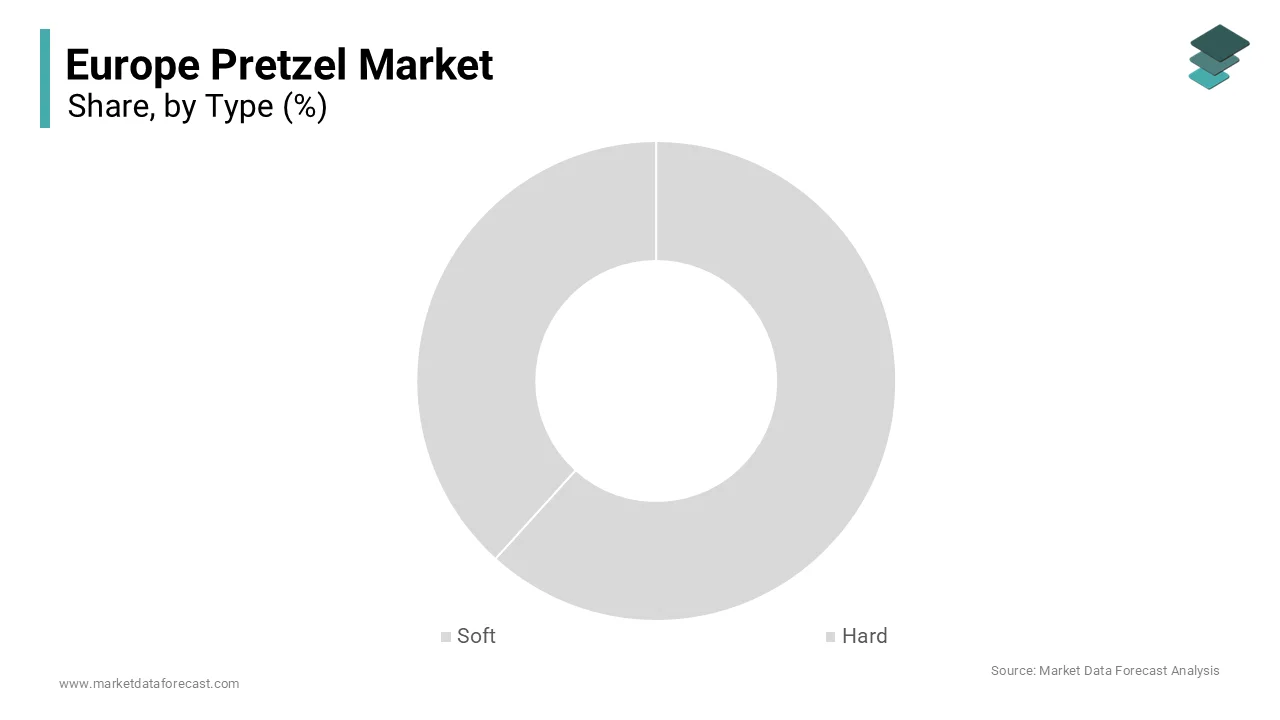
The hard pretzel segment is expected to grow at a fastest CAGR of 6.5% from 2026 to 2034 with the rising demand for shelf stable and portable snack options among urban consumers. Hard pretzels offer convenience and longevity by making them ideal for on the go-consumption and bulk purchasing, which aligns with modern lifestyle trends. Hard pretzels fit this need perfectly as they do not require refrigeration and maintain their crunch for extended periods. The global shift toward portion controlled snacking benefits hard pretzel manufacturers who offer single serve packs that appeal to health conscious individuals monitoring calorie intake. The versatility of hard pretzels also allows for innovative flavor coatings such as yogurt chocolate or spicy seasonings, which attract younger demographics and expand usage occasions beyond traditional meals. Retailers favor hard pretzels due to their ease of storage and lower waste compared to fresh baked goods. Additionally, the rise of e-commerce facilitates the distribution of branded hard pretzels to remote areas where fresh bakery options are limited.
By Content Insights
The salted pretzel segment was the largest by holding 34.2% of the Europe Pretzel Market share in 2025, which is deeply ingrained in cultural habits where salted pretzels are paired with beer or white sausages creating a balanced flavor profile. While sodium reduction is a public health goal moderate salt consumption in bakery products is still widely accepted and expected by European consumers. The simplicity of salted pretzels also appeals to purists who value authenticity and minimal processing. Manufacturers benefit from the low cost and wide availability of salt, which keeps production expenses manageable. Furthermore, salted pretzels have a longer shelf life compared to those with perishable toppings reducing waste for retailers.
The unsalted pretzel segment is anticipated to grow at a fastest CAGR of 7.2% from 2026to 2034 with the increasing health consciousness and dietary restrictions related to sodium intake. Consumers are actively seeking low sodium alternatives to manage blood pressure and improve overall cardiovascular health driving demand for unsalted bakery products. The high sodium intake is a leading risk factor for hypertension affecting millions of Europeans, which has prompted government campaigns to reduce salt consumption in processed foods. Unsalted pretzels offer a viable solution for these health-conscious individuals, who still desire the enjoyment of baked snacks without the associated health risks. Many consumers are reading labels more carefully and choosing products with lower sodium content leading to a shift in purchasing behavior. The rise of clean label trends also supports this segment as unsalted pretzels are perceived as more natural and less processed. Retailers are expanding their health food sections to include unsalted bakery items catering to this niche but growing demographic. Additionally, unsalted pretzels serve as a neutral base for homemade dips and spreads appealing to culinary enthusiasts.
By Distribution Channel Insights
The supermarkets and hypermarkets segment was the largest by holding 44.3% of the Europe Pretzel Market share in 2025 due to their extensive reach wide product assortment and ability to offer competitive pricing through economies of scale. These large retail formats serve as the primary shopping destination for households purchasing both fresh and packaged pretzels for weekly consumption. Supermarkets provide dedicated bakery sections where fresh soft pretzels are sold alongside packaged hard pretzels catering to diverse consumer preferences.Large retailers leverage their bargaining power to negotiate favorable terms with suppliers enabling aggressive promotional activities and bundle offers that drive volume sales. The controlled environment of supermarkets ensures consistent product quality and proper storage conditions, which is crucial for maintaining the freshness of soft pretzels. Loyalty programs and digital coupons further enhance customer retention and data collection capabilities.
The online retail segment is esteemed to grow at a fastest CAGR of 9.8% from 2026 to 2034 with the increasing internet penetration and the convenience of home delivery for both fresh and packaged pretzels. Digital platforms enable consumers to access a wider variety of artisanal and specialty pretzels that may not be available in local physical stores. Online retailers offer detailed product descriptions and customer reviews, which help educate buyers about premium and regional pretzel varieties. Improvements in last mile logistics have reduced delivery times by making online grocery shopping more viable for perishable items like fresh soft pretzels. Subscription models for regular delivery of bakery boxes are gaining popularity by ensuring recurring revenue for platforms. Social commerce and influencer marketing on platforms like Instagram drive traffic to online stores by showcasing creative serving ideas. Younger demographics particularly millennials and Gen Z prefer the ease of mobile ordering and contactless delivery.
REGIONAL ANALYSIS
Germany Market Analysis
Germany was the top performer in the Europe Pretzel Market characterized by holding 56.7% of the share in 2025 with the deep cultural roots and high per capita consumption of both soft and hard varieties. The country is the birthplace of the pretzel and home to thousands of artisanal bakeries that produce fresh soft pretzels daily. This tradition ensures steady demand regardless of economic fluctuations. As per the Federal Ministry of Food and Agriculture, local wheat production supports the bakery industry providing high quality raw materials at competitive prices. The presence of major industrial players alongside small craft bakeries creates a dynamic market with diverse product offerings. Festivals like Oktoberfest drive seasonal spikes in consumption reinforcing the cultural significance of pretzels. Regulatory standards for baking ingredients ensure high quality and safety which builds consumer trust.
France Market Analysis
France pretzel market was ranked second by capturing 23.4% of the share in 2025 with its strong bakery culture and growing interest in international snack trends. While croissants and baguettes dominate French baking pretzels are gaining popularity as a savory alternative in urban centers. The number of bakery outlets in France remains high providing ample distribution channels for new product introductions. Pretzels are increasingly featured in trendy cafes and bistros appealing to younger consumers seeking novel flavors. The consumer awareness of healthy snacking is driving demand for whole grain and low salt pretzel variants. Local artisans are experimenting with French ingredients such as cheese and herbs to create gourmet pretzels that align with local tastes. The rise of health consciousness also supports the growth of hard pretzels as a lighter snack option. Retailers are expanding their international food sections to include premium pretzel brands.
Spain Market Analysis
Spain pretzel market growth is likely to grow with the tourism and the increasing adoption of international food habits among younger generations. While traditional tapas dominate the snack landscape, pretzels are gaining traction in cities like Madrid and Barcelona. The influence of American and Central European cultures through media and travel has increased awareness of pretzels. Local bakeries are beginning to incorporate pretzel shapes into their offerings often adding Mediterranean twists such as olive oil and sea salt. The hot climate favors hard pretzels, which are easy to store and consume outdoors. Supermarkets are dedicating more shelf space to international snacks responding to changing consumer preferences.
Italy Market Analysis
Italy pretzel market is expected to grow with its rich bakery tradition and openness to new culinary experiences. Pretzels are not traditional in Italy but are becoming popular in urban areas and among tourists. Pretzels are often found in specialty stores and upscale supermarkets catering to health conscious and adventurous eaters. Italian consumers are increasingly interested in whole grain and organic products, which aligns with premium pretzel offerings. Local artisans are creating fusion products combining pretzel dough with Italian ingredients like Parmesan and rosemary. The strong coffee culture also supports the consumption of small baked goods as accompaniments. E-commerce platforms facilitate the distribution of imported and artisanal pretzels to a wider audience.
Russia Market Analysis
Russia pretzel market growth is likely to grow with the urbanization and the expansion of modern retail chains. Pretzels are gaining popularity as a snack option in major cities like Moscow and St Petersburg. As per the Ministry of Agriculture, local production of wheat supports the bakery industry although pretzel specific production is still nascent. The influence of western fast food and snack culture is driving trial among younger demographics. Local manufacturers are beginning to produce pretzels adapting recipes to local taste preferences such as adding dill or garlic. Economic factors influence purchasing power but pretzels remain an affordable indulgence.
COMPETITIVE LANDSCAPE
The competition in the Europe pretzel market is characterized by a mix of large industrial bakeries, regional artisanal chains, and independent local bakeries, vying for consumer attention through quality and convenience. Major players leverage their extensive distribution networks and brand recognition to dominate supermarket shelves and quick service outlets, while smaller artisans focus on premium handmade products and unique flavor profiles. Regulatory pressures regarding ingredient transparency and sustainability force all participants to adapt quickly, and invest in cleaner production methods. Innovation in packaging and delivery services serves as a key differentiator for brands seeking to attract busy urban consumers. The rise of private label products from large retailers also intensifies competition, by offering lower priced alternatives with comparable quality. Strategic collaborations with local farmers and suppliers help companies secure steady raw material supplies, and enhance brand storytelling.
Key Market Players
Some of the major players in the Europe pretzel market are
- Auntie Annes
- BackWerk
- Boulder Brands
- ConAgra
- Lieken
- Frito-Lay
- Herr Foods
- J & J Snacks
- Mars
- Mr. Pretzel
- Franz & Friends
- Pretzels Inc
Top Players in the Market
- BackWerk operates as a prominent bakery chain across Germany and neighboring countries, specializing in fresh baked goods, including a wide variety of soft pretzels. The company contributes to the market by offering affordable and high-quality pretzels, through its extensive network of self-service bakeries located in high traffic urban areas. Recent actions include expanding its store footprint in major cities, and introducing digital ordering systems to enhance customer convenience. BackWerk has also launched seasonal pretzel variations with unique toppings, to attract diverse consumer preferences and drive repeat visits. The company focuses on maintaining freshness and quality standards, which strengthens its reputation among value conscious customers.
- Lieken is a leading industrial bakery brand in Europe, known for its premium packaged breads and pretzels distributed widely across retail channels. The company contributes to the market by providing consistent and long lasting hard and soft pretzel products, that meet high-quality standards. Recent initiatives involve upgrading production facilities to improve energy efficiency and reduce environmental impact, aligning with sustainability goals. Lieken has introduced new whole grain and multigrain pretzel variants, to cater to health-conscious consumers seeking nutritious snack options. The brand actively engages in marketing campaigns, highlighting its traditional baking methods and natural ingredients. Its strong distribution network ensures widespread availability in supermarkets and convenience stores across the region.
- Franz & Friends is a dynamic bakery concept that combines traditional craftsmanship with modern retail experiences, offering a diverse range of fresh pretzels and baked goods. Recent actions include expanding its franchise model into new European markets, and introducing limited edition flavors to generate buzz and customer interest. Franz & Friends emphasizes community engagement and local sourcing, which appeals to consumers valuing authenticity and social responsibility. The brand uses social media effectively to showcase its products, and connect with younger demographics.
Top Strategies Used by Key Market Participants
Key players in the Europe pretzel market primarily employ product innovation and sustainability driven strategies, to strengthen their competitive position. Companies are increasingly launching healthy variants, such as whole grain, gluten free, and low salt pretzels, to appeal to health-conscious consumers and comply with dietary trends. This approach helps brands differentiate themselves in a crowded market, and capture niche segments. Another major strategy involves investing in sustainable packaging and energy efficient production processes, to meet environmental regulations and consumer expectations. Manufacturers are also expanding their distribution networks through e commerce platforms and convenience stores, to enhance accessibility and reach younger demographics. Digital marketing and social media engagement are used to build brand loyalty, and promote new product launches. Additionally, partnerships with local suppliers ensure high-quality ingredients, and support community development.
MARKET SEGMENTATION
This research report on the Europe pretzel market is segmented and sub segmented into following categories
By Type
- Soft
- Hard
By Content
- Unsalted Pretzels
- Salted Pretzels
By Distribution Channel
- Convenience Stores
- Supermarkets & Hypermarkets
- Online Retailers
- Specialist Retailers
- Other Distribution Channels
By Country
- UK
- France
- Spain
- Germany
- Italy
- Russia
- Sweden
- Denmark
- Switzerland
- Netherlands
- Turkey
- Czech Republic
- Rest of Europe