Europe Protein Engineering Market Size, Share, Trends, & Growth Forecast Report By Product (Instruments, Reagents, Software & Services), End-use, Technology, Protein Type and Country (UK, France, Spain, Germany, Italy, Russia, Sweden, Denmark, Switzerland, Netherlands, Turkey, Czech Republic and Rest of Europe), Industry Analysis From 2026 to 2034
Market Size, 2025
$1.50 BnMarket Estimate, 2026
$1.67 BnMarket Forecast, 2034
$3.99 BnCAGR, 2026–2034
11.50%Europe Protein Engineering Market Report Summary
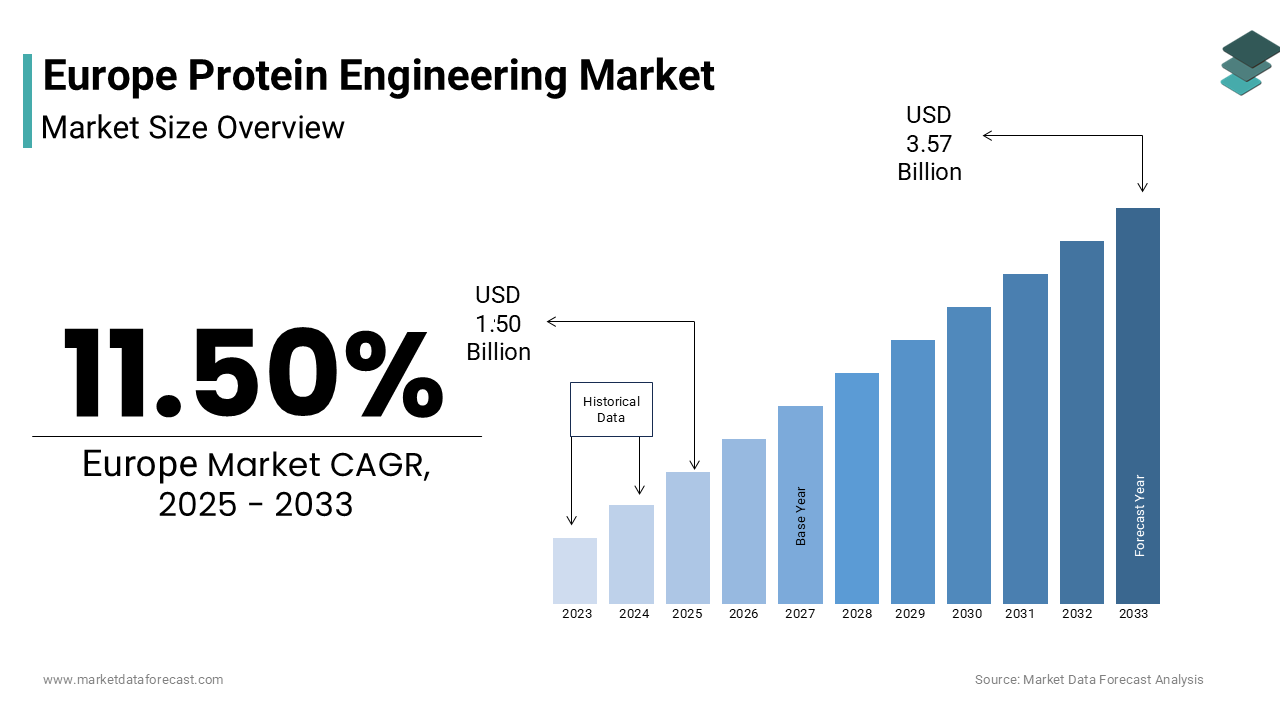
The Europe protein engineering market was valued at USD 1.50 billion in 2025, is estimated to reach USD 1.67 billion in 2026, and is projected to reach USD 3.99 billion by 2034, growing at a CAGR of 11.50% during the forecast period from 2026 to 2034. The growth of the Europe protein engineering market is driven by the rising demand for biologics and engineered therapeutics, increasing adoption of enzyme-based sustainable manufacturing processes, and strong public investment in life sciences research across the region. Protein engineering plays a critical role in drug discovery, industrial biotechnology, diagnostics, and advanced therapies, supported by Europe’s robust academic ecosystem, high-end structural biology infrastructure, and stringent regulatory frameworks. Additionally, the integration of artificial intelligence, computational biology, and high-throughput screening technologies is accelerating protein design cycles, positioning Europe as a strategic hub for next-generation biotechnological innovation.
Key Market Trends
- Growing development of engineered monoclonal antibodies, bispecifics, and antibody–drug conjugates.
- Increasing use of engineered enzymes in sustainable industrial and circular economy applications.
- Rapid integration of AI-driven protein structure prediction and design platforms.
- Expansion of protein engineering applications in cell and gene therapy manufacturing.
- Strong collaboration between academic institutes, biotech startups, and pharmaceutical companies.
Segmental Insights
- Based on product, the reagents segment held the largest share of the Europe protein engineering market in 2025. The dominance of this segment is attributed to the recurring demand for consumables such as mutagenesis kits, expression vectors, enzymes, and labeling reagents used extensively across research and development workflows.
- Based on end-use, pharmaceutical and biotechnology companies accounted for the largest share of the Europe protein engineering market in 2025. This leadership is driven by the extensive use of engineered proteins in oncology, autoimmune disorders, rare diseases, and advanced biologic therapies.
- Based on protein type, the monoclonal antibodies segment dominated the market in 2025 due to their widespread therapeutic use and the high level of protein engineering required to optimize affinity, stability, and pharmacokinetics. Meanwhile, the vaccines segment is expected to grow at the fastest rate during the forecast period, supported by the development of next-generation subunit and mRNA-based vaccines.
Regional Insights
- Germany led the Europe protein engineering market in 2024, supported by a strong biopharmaceutical industry, advanced research institutions, and extensive government funding for biotechnology innovation.
- The United Kingdom holds a prominent position in the market due to its leadership in structural biology, computational protein design, and rapid translation of academic research into clinical applications.
- Switzerland plays a critical role in the European market, driven by the presence of global biopharmaceutical leaders and a strong focus on high-value engineered biologics.
- France is witnessing steady growth due to increased public investment in vaccine development, industrial biotechnology, and sustainable enzyme applications.
- The Netherlands is emerging as a high-growth market, supported by its collaborative life sciences ecosystem, GMP manufacturing infrastructure, and strong emphasis on AI-driven biomanufacturing.
Competitive Landscape
The Europe protein engineering market is highly innovation-driven, characterized by competition among global biopharmaceutical companies, industrial enzyme specialists, and AI-enabled biotechnology startups. Market participants focus on integrating computational protein design, automation, and advanced analytics to accelerate discovery and reduce development risks. Strategic collaborations with academic institutions, investments in AI platforms, and alignment with EU regulatory and sustainability initiatives are key competitive differentiators. Intellectual property complexity and talent availability continue to shape competitive dynamics across the region. Major companies operating in the Europe protein engineering market include Thermo Fisher Scientific Inc., Merck KGaA, Danaher Corporation, Agilent Technologies, GenScript Biotech Corporation, Sartorius AG, Lonza Group AG, Qiagen N.V., Abcam plc, Bio-Rad Laboratories, Creative Biolabs, Evotec SE, Oxford Biomedica plc, and Syngene International Ltd. (Europe operations).
Europe Protein Engineering Market Size
The europe protein engineering market size was valued at USD 1.50 billion in 2025 and is anticipated to reach USD 1.67 billion in 2026 from USD 3.99 billion by 2034, growing at a CAGR of 11.50% during the forecast period from 2026 to 2034.
Protein engineering refers to the rational design or directed evolution of proteins to enhance or alter their functional properties for applications in therapeutics, industrial enzymes, diagnostics, and synthetic biology. In Europe, this field operates at the convergence of advanced biotechnology, high throughput screening, and computational biology, underpinned by a robust academic and regulatory ecosystem. The European Union, through the European Commission's Horizon Europe framework program, has made significant investments in life sciences research between 2021 and 2024, with a growing focus on strategic areas like biomanufacturing and precision medicine. The EU is positioning itself to be a global leader in health and biotech innovation. Simultaneously, The European Medicines Agency (EMA) has authorized a substantial number of new medicines for human use, a portion of which includes advanced therapies relying on engineered proteins like monoclonal antibodies and enzyme replacements. The EMA actively facilitates the development and market access for innovative health technologies. Europe’s command in structural biology, exemplified by facilities like EMBL and MAX IV, provides atomic level insights that accelerate rational design cycles. Moreover, the EU’s stringent regulatory frameworks under the Advanced Therapy Medicinal Products Regulation ensure that engineered biologics meet high standards for safety and efficacy. These scientific, financial, and regulatory dynamics, not direct market metrics, frame a market where innovation is driven by therapeutic need, industrial efficiency, and Europe’s strategic commitment to biotechnological sovereignty.
MARKET DRIVERS
Rising Demand for Biologics and Engineered Therapeutics in Oncology and Rare Diseases
The expanding clinical and commercial demand for biologic drugs, particularly engineered monoclonal antibodies, bispecifics, and antibody drug conjugates targeting complex diseases, propels the growth of the Europe protein engineering market. The European Medicines Agency has observed a continuing trend where a significant portion of new drug approvals, particularly in the oncology and rare disease areas, are biologics and biosimilars. Protein engineering enables critical enhancements such as humanization of murine antibodies to reduce immunogenicity, Fc region modifications to extend half-life, and site-specific conjugation for improved payload delivery. In major biopharma regions such as Germany and Switzerland, there is a strong focus within the oncology pipelines on developing complex engineered proteins like bispecific antibodies. Clinical data analyzed by oncology bodies, such as the European Society for Medical Oncology, confirms that bispecific T cell engagers are achieving promising response rates in difficult-to-treat lymphomas. The EU Orphan Drug Regulation, which grants market exclusivity for rare disease treatments, further incentivizes investment. A growing number of development requests for medicines with orphan designation involve innovative modalities, including protein-based therapies. The European Cancer Information System and related health bodies project a notable increase in overall cancer incidence and mortality in Europe in the coming decades, primarily driven by population aging.
Industrial Adoption of Engineered Enzymes for Sustainable Manufacturing
The region’s commitment to the Green Deal and circular economy is driving industrial sectors to replace chemical processes with biocatalysis, which in turn fuels the expansion of the Europe protein engineering market. This shift is significantly elevating demand for engineered enzymes with enhanced stability, substrate specificity, and activity under non-natural conditions. According to sources, the use of enzyme-based processes is a growing trend within European industrial biotechnology, enabling more sustainable production methods with lower energy and water consumption compared to traditional chemical processes. In the textile sector, engineered cellulases and laccases enable waterless denim finishing and dye decolorization, aligning with the EU Strategy for Sustainable and Circular Textiles. The use of advanced enzymes from companies like Novonesis continues to drive a significant shift toward lower-temperature and cold-water laundry cycles in households, substantially reducing energy consumption and associated carbon emissions. Similarly, in bio-based chemicals, Carbios has successfully developed and demonstrated an enzymatic plastic recycling technology at an industrial scale, supported by a consortium of global brands, which is progressing towards the construction of its first commercial plant. European financial institutions, such as the European Investment Bank, are increasingly providing significant funding and strategic support to scale up innovative industrial biotechnology projects, focusing on themes like the circular economy, waste valorization, and renewable feedstocks. Europe's industrial future, freed from high carbon emissions, is increasingly reliant on engineered enzymes; these are rapidly moving into the mainstream due to rising regulatory pressure and broader carbon pricing.
MARKET RESTRAINTS
High Costs and Lengthy Timelines for Preclinical Protein Optimization
The substantial financial and temporal investments required to design, screen, and validate functional protein variants, particularly for therapeutic applications restricts the growth of the Europe protein engineering market. Directed evolution or rational design campaigns often involve generating and testing tens of thousands of protein mutants, requiring access to high throughput robotic platforms, phage or yeast display libraries, and advanced analytics such as surface plasmon resonance. According to a study, The preclinical development phase for novel biologics involves substantial financial investment and is a lengthy process, which can pose significant risks for development timelines. Academic and small biotech entities, critical innovation drivers in Europe, frequently lack the capital or infrastructure to sustain such resource intensive cycles. Furthermore, the European Medicines Agency mandates extensive comparability studies when engineering post approval changes to biologics, adding regulatory complexity. Funding and access to specialized facilities are persistent challenges within the European biotechnology sector, particularly affecting small and medium-sized enterprises (SMEs). The current lack of widespread access to cloud-based protein design platforms and shared screening infrastructure creates a significant barrier, disproportionately affecting early-stage innovators and impeding the translation of academic discoveries into commercial applications.
Stringent and Evolving Regulatory Pathways for Engineered Biologics
There is significant regulatory complexity due to the evolving and highly technical requirements for approval of engineered protein therapeutics under the Advanced Therapy Medicinal Products (ATMP) and Biologics frameworks, which thereby hinders the expansion of the Europe protein engineering market. Unlike small molecules, engineered proteins—especially those with novel scaffolds, non-human sequences, or multi specific formats require extensive characterization of higher order structure, glycosylation patterns, and aggregation propensity. According to the European Medicines Agency, submissions involving engineered proteins triggered an average of 2.8 rounds of regulatory queries in 2024, compared to 1.4 for standard monoclonals, prolonging time to market by 6 to 9 months. Additionally, the classification of certain engineered proteins—such as gene edited cell therapies with recombinant receptors straddles ATMP and biologic categories, creating jurisdictional ambiguity. In 2024, the EMA issued new guidelines on immunogenicity risk assessment for modified Fc regions, requiring additional non clinical studies that increase development costs. While these safeguards ensure patient safety, they impose disproportionate burdens on small companies lacking regulatory affairs expertise. Without clearer guidance or adaptive pathways for novel modalities, regulatory uncertainty will remain a structural constraint on innovation velocity and investment in Europe’s protein engineering ecosystem.
MARKET OPPORTUNITIES
Expansion of AI Driven Protein Design Platforms
The integration of artificial intelligence and machine learning into protein engineering offers a key opportunity for the Europe protein engineering market. This is achieved by dramatically accelerating design cycles and expanding the functional scope of engineered proteins. Platforms like DeepMind’s AlphaFold and RoseTTAFold, both validated through European structural biology consortia, now predict protein structures with near experimental accuracy, enabling rational design without laborious crystallization. Biotechnology companies are increasingly leveraging integrated robotics and data science platforms to significantly accelerate drug discovery and the generation of high-quality data. The use of AI and automated platforms in drug discovery leads to considerably faster project timelines, better data quality, and enhanced decision-making compared to traditional, less reproducible methods. In addition, the European Union is investing hundreds of millions of euros through initiatives like the Digital Europe Programme's TEF-Health and GenAI4EU to accelerate the development and adoption of trustworthy artificial intelligence solutions in the healthcare sector. Furthermore, companies like Bayer and Sanofi are partnering with AI firms such as Isomorphic Labs to engineer proteins with novel binding geometries for undruggable targets. Recent research in prominent scientific journals has emphasized substantial progress in AI-driven de novo enzyme design, achieving catalytic efficiencies and rates comparable to or even surpassing natural enzymes for specific reactions. AI-driven design is set to revolutionize protein engineering in Europe, democratizing access, minimizing failures, and unlocking novel protein functions for use in therapeutics, agriculture, and green chemistry, as computational power and data grow.
Growth in Cell and Gene Therapy Requiring Custom Protein Scaffolds
The rapid advancement of cell and gene therapies in the region is creating demand for custom engineered protein components such as chimeric antigen receptors (CARs), T cell engagers, and viral vector capsid proteins to ultimately generate fresh prospects for the Europe protein engineering market. The European Medicines Agency (EMA) oversees a growing pipeline of advanced therapies, including numerous cell and gene therapy products in various stages of clinical development. Many of these therapies require sophisticated engineering, such as bespoke protein modifications, to enhance their safety, targeting, and persistence within the body. For instance, CAR T cell therapies rely on single chain variable fragments (scFvs) optimized for tumor antigen binding while minimizing off target effects—a process that involves extensive protein engineering to balance affinity and cross reactivity. The Paul Ehrlich Institute (PEI), Germany's regulatory body for advanced therapies, notes the increasing clinical use of CAR T-cell therapies in German hospitals. This growing application drives a general increase in demand for high-quality, GMP-grade engineered materials necessary for their manufacture and administration. Besides, next generation viral vectors use engineered capsid proteins to evade pre-existing immunity or enhance tissue tropism. Research into adeno-associated virus (AAV) vectors is a significant area of gene therapy development, with ongoing efforts in academia and industry, including companies like Sartorius and institutions such as Oxford University, to develop engineered capsids that can more effectively target specific tissues, such as the central nervous system (CNS). The EU has implemented various funding programs and regulatory frameworks to support the development and manufacturing scale-up of advanced therapy medicinal products (ATMPs). Europe's emergence as a key hub for advanced therapies necessitates a growing reliance on precision-engineered protein scaffolds, which are critical enablers of both clinical efficacy and market success.
MARKET CHALLENGES
Shortage of Interdisciplinary Talent in Computational Biology and Protein Chemistry
The acute shortage of professionals who combine expertise in molecular biology, structural bioinformatics, and machine learning is a serious obstacle to the Europe protein engineering market. This interdisciplinary skill set is essential for modern protein design. According to various studies, biotechnology firms across Europe, including major hubs like Germany, France, and the UK, face ongoing challenges in recruiting specialized talent with interdisciplinary skills, such as protein engineering expertise. This gap stems from traditional academic silos; while Europe produces strong candidates in either wet lab biology or computer science, few programs integrate both disciplines. As per research, there is a recognized need within the European Union for more structured academic programs and a consistent pipeline of graduates in highly specialized fields like computational protein engineering to meet growing industry demand. Consequently, companies must invest heavily in cross training, slowing project execution. Moreover, competition from North American tech firms offering higher salaries for AI talent exacerbates brain drain. Talent mobility in bioinformatics is a significant factor in global science, with ongoing discussion about the movement of researchers between European institutions and those in the United State. The market's ability to fully exploit AI and structural biology breakthroughs will be stymied by a lack of skilled personnel without cohesive EU education reforms and stronger industry-academia ties.
Intellectual Property Fragmentation and Patent Thickets
A complex and fragmented intellectual property landscape characterized by overlapping patents on foundational technologies such as phage display, CRISPR based screening, and AI trained protein models degrades the growth of the Europe protein engineering market. Biotechnology patent applications at the European Patent Office are experiencing consistent growth. The field of biotechnology is a key area of innovation in Europe, with a high demand for patent protection. There is a strong focus within the field on advanced areas like the engineering and development of therapeutic antibodies and the application of directed evolution techniques. Computational methods, including advanced algorithms, are increasingly significant in protein design and engineering. This density creates “patent thickets” that increase freedom to operate risks and legal costs for developers, particularly SMEs lacking in house IP counsel. Furthermore, the legal status of AI generated protein sequences remains ambiguous under EU patent law, which requires an “inventive step” by a human, casting uncertainty over ownership of next generation designs. These IP complexities deter investment, discourage open innovation, and slow collaborative development in a field that thrives on iterative discovery. Persistent market obstacles, hindering both new entrants and the diffusion of innovation within the European biotechnology sector, are likely to remain until harmonized guidelines or defensive patent pools are established.
REPORT COVERAGE
| REPORT METRIC | DETAILS |
| Market Size Available | 2025 to 2034 |
| Base Year | 2025 |
| Forecast Period | 2026 to 2034 |
| Segments Analysed | By Product, End-User, Technology, Protein Type and Region |
| Various Analyses Covered | Global, Regional & Country Level Analysis, Segment-Level Analysis, Drivers, Restraints, Opportunities, Challenges; PESTLE Analysis; Porter's Five Forces Analysis, Competitive Landscape, Analyst Overview of Investment Opportunities |
| Regions Analysed | United Kingdom, France, Spain, Germany, Italy, Russia, Sweden, Denmark, Switzerland, the Netherlands, Turkey, and the Czech Republic. |
| Market Leaders Profiled | Thermo Fisher Scientific Inc., Merck KGaA, Danaher Corporation, Agilent Technologies, Inc., GenScript Biotech Corporation, Sartorius AG, Lonza Group AG, Qiagen N.V., Abcam plc, Bio-Rad Laboratories, Inc., Creative Biolabs, Evotec SE, Oxford Biomedica plc, and Syngene International Ltd. (Europe operations). |
SEGMENTAL ANALYSIS
By Product Insights
In 2024, the reagents segment was the largest segment in the Europe protein engineering market by holding a 46.5% share in 2024. The prominence of the reagents segment is driven by their essential and recurring role in laboratory workflows, including site directed mutagenesis kits, expression vectors, enzyme conjugates, and labeling reagents used across academic, biotech, and pharmaceutical settings. Unlike capital equipment, reagents are consumables requiring continuous replenishment, generating stable revenue streams. The rise of CRISPR based protein tagging and phage display libraries has further amplified demand for high fidelity reagents with low batch variability. In Germany and the UK, national research funding bodies now mandate the use of GMP grade reagents for preclinical therapeutic development, elevating quality standards and pricing power. Additionally, the integration of reagents into commercialized protein engineering platforms, such as Twist Bioscience’s antibody discovery kits, embeds them into standardized pipelines. This combination of scientific necessity, regulatory validation, and high turnover ensures reagents remain the foundational and highest volume product category in Europe’s protein engineering ecosystem.
The software and services segment is predicted to witness the highest CAGR of 13.21% from 2025 to 2033 due to the increasing adoption of artificial intelligence and cloud based platforms that automate protein design, simulation, and data analysis, reducing reliance on trial and error experimentation. EU funding encourages small and medium-sized enterprises (SMEs) to adopt advanced technologies like biofabrication and biomanufacturing to improve productivity and develop new, affordable solutions. These platforms use deep learning models trained on structural databases like the Protein Data Bank to forecast stability, binding affinity, and immunogenicity of engineered variants. Furthermore, cloud laboratories now offer end to end protein engineering as a service, combining remote experiment design, robotic execution, and AI analysis under a single subscription model. Talent shortages and capital constraints are driving a shift among European biotechs toward outsourced and data-driven engineering, essentially industrializing protein design via scalable software solutions instead of manual methods.
By End-Use Insights
The pharmaceutical and biotechnology companies segment led the Europe protein engineering market and accounted for a 58.2% share in 2024. The supremacy of the pharmaceutical and biotechnology companies segment is fuelled by its central role in developing engineered biologics for oncology, autoimmune disorders, and rare diseases. According to sources, approvals for innovative protein-based therapies, including monoclonal antibodies and fusion proteins, represent a significant portion of new medicines evaluated by the European Medicines Agency (EMA).. Companies like Roche in Switzerland, Novartis in Switzerland, and Bayer in Germany maintain dedicated protein engineering teams that utilize advanced platforms for affinity maturation and Fc modification. The EU Orphan Drug Regulation continues to provide substantial market incentives, fostering the development and approval of medicines for rare diseases, many of which are advanced protein therapeutics. Besides, the rising complexity of next generation therapeutics, such as T cell engagers and antibody drug conjugates, demands iterative protein optimization to balance efficacy and safety. Europe maintains a key position in the global biopharmaceutical industry, contributing significantly to the demand, funding, and innovation within the protein engineering sector.
The academic research institutes segment is estimated to register the fastest CAGR of 9.84% from 2025 to 2033 owing to substantial public investment in basic and translational life sciences research under EU and national funding programs. Institutions like the Max Planck Society in Germany, the Francis Crick Institute in the UK, and EMBL in France operate high throughput protein production and characterization facilities that serve both internal and external collaborators. The open science movement has also accelerated adoption. Platforms distribute thousands of engineered plasmid constructs annually to European labs, which democratizes access to validated protein scaffolds. Furthermore, interdisciplinary training programs, such as the EU Marie Skłodowska Curie fellowships in computational protein design, are cultivating a new generation of researchers fluent in both wet lab and AI driven methods. Academic institutions are increasingly becoming vital hubs for innovation, expediting the transition from fundamental discovery to preclinical trials and quickly integrating advanced engineering technologies.
By Protein Type Insights
The monoclonal antibodies segment held the leading share of 42.4% of the Europe protein engineering market in 2024. The leading position of the monoclonal antibodies segment is attributed to its widespread therapeutic application and the extensive engineering required to optimize target affinity, reduce off target effects, and enhance pharmacokinetics. According to sources, monoclonal antibodies accounted for a portion of all biologic drug approvals in 2024, with engineered variants such as bispecifics and Fc modified antibodies comprising a growing share. In oncology, drugs like Roche’s Tecentriq and AstraZeneca’s Imfinzi rely on protein engineering to fine tune immune checkpoint blockade. The EU’s centralized authorization process encourages multinational submissions, leading to coordinated engineering efforts across European R&D hubs. Additionally, the rise of antibody drug conjugates, where cytotoxic payloads are attached via engineered cysteine or unnatural amino acid sites, has intensified demand for site specific conjugation technologies. Hence, this segment remains the cornerstone of protein engineering activity, driven by clinical need, regulatory pathways, and commercial success.
The vaccines segment is anticipated to witness the fastest CAGR of 11.6% from 2026 to 2034. The rapid growth of the vaccines segment is credited to the development of next generation subunit and mRNA-based vaccines that rely on engineered protein antigens to elicit precise immune responses. Protein engineering plays a critical role in stabilizing viral spike proteins in prefusion conformations, a technique pioneered for SARS CoV 2 and now applied to RSV, influenza, and HIV candidates. Furthermore, cancer vaccine developers like BioNTech in Germany are engineering neoantigen sequences optimized for MHC presentation using AI driven epitope prediction. The EU’s Beating Cancer Plan and antimicrobial resistance initiatives further sustain pipeline momentum. Europe's emphasis on long-term pandemic preparedness and precision immunization means that engineered vaccine proteins are now considered strategic assets for public health, not just emergency measures.
REGIONAL ANALYSIS
Germany Protein Engineering Market Analysis
Germany dominated the Europe protein engineering market by dominating a share of 24.4% in 2025. The dominance of the German market is driven by its world class biopharmaceutical industry, academic excellence, and federal support for life sciences innovation. Home to companies like Bayer and CureVac, as well as research institutions such as the Max Planck Society and Helmholtz Association, Germany integrates protein engineering across therapeutic discovery and industrial enzyme development. The country also hosts Europe’s largest cluster of contract research organizations specializing in GMP protein production, serving global biotech clients. With strong IP protection, a skilled STEM workforce, and dense collaboration between industry and academia, Germany functions as the technological and commercial nucleus of Europe’s protein engineering landscape.
United Kingdom Protein Engineering Market Analysis
The United Kingdom secured the second position in the Europe protein engineering market and held a 19.1% share in 2025. The demand of protein engineering in the Uk is driven by its preeminence in structural biology and rapid translation of basic research into clinical applications. Institutions like the Francis Crick Institute, the University of Oxford, and the MRC Laboratory of Molecular Biology have pioneered techniques in cryo electron microscopy and rational protein design that underpin modern engineering workflows. The UK’s Medicines and Healthcare products Regulatory Agency operates an Innovation Passport scheme that fast tracks engineered biologics, reducing approval timelines by several months. In addition, the Cell and Gene Therapy Catapult has established shared protein characterization facilities to support SMEs. Despite Brexit, the UK maintains deep scientific ties with EU programs and remains a global leader in turning protein science into medicines.
Switzerland Protein Engineering Market Analysis
Switzerland is also a major player in the Europe protein engineering market due to its concentration of global biopharmaceutical headquarters and culture of precision science. Companies like Roche and Novartis conduct the majority of their protein engineering R&D in Basel and Zurich, focusing on high value modalities such as bispecific antibodies and antibody drug conjugates. The Swiss biotech sector continues to demonstrate resilience and growth in research and development investment, driven significantly by private companies, despite global market challenges. International alliances and collaboration remain a cornerstone of the Swiss life sciences ecosystem, with a high proportion of patents involving international co-inventors and strategic partnerships with large international pharmaceutical firms. The nation’s neutrality, strong IP regime, and multilingual talent pool make it a preferred location for global R&D centers. Switzerland leads in cutting-edge biopharma innovation, particularly complex protein engineering, due to its streamlined regulations, top-tier infrastructure, and strong ecosystem, enabling high-margin, breakthrough research.
France Protein Engineering Market Analysis
France is moving ahead steadily in the Europe protein engineering market owing to strong public investment in vaccine development and sustainable industrial biotechnology. The French National Research Agency allocated 620 million euros in 2024 to projects in synthetic biology and protein engineering, with emphasis on pandemic preparedness and green chemistry. Institutions like Institut Pasteur and CEA operate high containment facilities for engineering viral antigens, while companies like Carbios have commercialized engineered enzymes for plastic depolymerization. The French Ministry of Higher Education supports a national bioinformatics infrastructure, the France Bioinformatique (IFB), which integrates various regional platforms and expert teams to advance research across life sciences, including the growing field of computational protein design. The French government's comprehensive "France 2030" investment plan prioritizes the scaling up of biomanufacturing and innovative health therapies, representing a substantial national effort to enhance sovereignty and innovation in the health sector. This dual focus on public health and industrial sustainability positions France as a strategic and mission driven player in Europe’s protein engineering ecosystem.
Netherlands Protein Engineering Market Analysis
The Netherlands is expected to be the most lucrative region in the Europe protein engineering market from 2025 to 2033 due to its collaborative life sciences ecosystem and advanced biomanufacturing infrastructure. Home to the European Molecular Biology Laboratory’s outstation in Heidelberg (with strong Dutch ties), the Hubrecht Institute, and companies like Genmab and Unilever’s biotech division, the country bridges academic discovery and commercial scale up. The Netherlands also hosts Europe’s largest network of GMP compliant protein production facilities, offering contract services for clinical trial materials. The national AI coalition supports the development of sovereign protein design platforms compliant with EU data regulations. The Netherlands acts as a key, highly connected service-oriented hub within the European protein engineering value chain, due to its open innovation policies, widespread English fluency, and strong logistical framework.
COMPETITIVE LANDSCAPE
Competition in the Europe protein engineering market is characterized by a dynamic interplay between global biopharmaceutical leaders specialized industrial enzyme developers and agile AI driven startups. The landscape is not defined by price but by scientific excellence regulatory sophistication and the ability to translate protein designs into clinically or industrially validated products. Large firms like Roche and Bayer dominate therapeutic applications through integrated pipelines while companies like Novozymes lead in sustainable manufacturing. Meanwhile European startups such as Cradle and Arctoris disrupt traditional workflows by offering cloud-based protein design as a service. Intellectual property complexity access to high throughput screening infrastructure and talent shortages in computational biology create significant barriers to entry. As the EU strengthens its biotech sovereignty agenda through Horizon Europe funding and advanced therapy strategies competition increasingly centers on data driven innovation speed and cross sector applicability rather than scale alone.
KEY MARKET PLAYERS
Some of the companies that are playing a dominating role in the Europe Protein Engineering Market include
- Thermo Fisher Scientific Inc.
- Merck KGaA
- Danaher Corporation
- Agilent Technologies, Inc.
- GenScript Biotech Corporation
- Sartorius AG
- Lonza Group AG
- Qiagen N.V.
- Abcam plc
- Bio-Rad Laboratories, Inc.
- Creative Biolabs
- Evotec SE
- Oxford Biomedica plc
- Syngene International Ltd. (Europe operations)
Top Players in the Europe Protein Engineering Market
Roche Diagnostics GmbH
Roche Diagnostics GmbH is a global leader in biopharmaceutical innovation with a significant footprint in the Europe protein engineering market through its development of engineered monoclonal antibodies and therapeutic proteins. Headquartered in Switzerland with major R&D centers in Germany and the UK, Roche leverages advanced protein engineering to enhance drug half life target specificity and reduce immunogenicity in oncology and immunology pipelines. Roche also expanded its partnership with DeepMind to validate computational protein design models against clinical outcomes. These initiatives reinforce Roche’s role in translating precision protein engineering into globally approved therapeutics that meet stringent European regulatory standards.
Novozymes A/S
Novozymes A/S is a Danish industrial biotechnology pioneer that applies protein engineering to develop high performance enzymes for detergents biofuels textiles and waste recycling across Europe. The company uses directed evolution and machine learning to create enzyme variants that function efficiently under extreme pH temperature or salinity conditions. The enzyme is now licensed to major consumer goods firms including Unilever and L’Oréal. Novozymes also collaborates with the European Bioinformatics Institute to refine its protein library screening algorithms. By bridging industrial need with sustainable innovation Novozymes demonstrates how engineered proteins can decarbonize manufacturing and reduce environmental impact at scale.
Bayer AG
Bayer AG is a German life science corporation with deep engagement in the Europe protein engineering market through its pharmaceutical and crop science divisions. In human health Bayer engineers fusion proteins and antibody drug conjugates for oncology and cardiovascular diseases with a focus on tissue specific delivery and reduced off target effects. In agriculture the company designs engineered proteins for biopesticides and nitrogen fixation that reduce chemical fertilizer dependency. The company also partnered with Berlin based AI startup Cradle to accelerate protein variant screening for both health and agriculture applications. These dual domain investments position Bayer as a cross-sector innovator advancing protein engineering for human and planetary health.
Top strategies used by the key market participants
Key players in the Europe protein engineering market invest heavily in artificial intelligence and machine learning platforms to accelerate protein design cycles and predict stability binding and immunogenicity. They establish strategic partnerships with academic institutions and AI startups to access cutting edge computational tools and structural biology data. Companies pursue vertical integration by combining in house protein engineering with GMP manufacturing and clinical validation capabilities. They align product development with EU regulatory and sustainability priorities including orphan drug designations and circular economy mandates. Additionally, firms expand into adjacent domains such as cell therapy and agricultural biotechnology to diversify applications and revenue streams. These strategies collectively enhance innovation velocity regulatory compliance and market relevance across Europe’s advanced biotechnology landscape.
MARKET SEGMENTATION
This research report on the europe protein engineering market has been segmented and sub–segmented into the following categories.
By Product
- Instruments
- Reagents
- Software & Services
By End-use
- Pharmaceutical & Biotechnology Companies
- Contract Research Organizations (CROs)
- Academic Research Institutes
By Technology
- Rational Protein Design
- Hybrid Approach
- Directed Evolution
- De Novo Protein Design
- Others
By Protein Type
- Monoclonal Antibodies
- Insulin
- Vaccines
- Growth Factors
- Interferon
- Colony Stimulating Factors
- Coagulation Factors
- Others
By Country
- UK
- France
- Spain
- Germany
- Italy
- Russia
- Sweden
- Denmark
- Switzerland
- Netherlands
- Turkey
- Czech Republic
- Rest of Europe
Access the study in MULTIPLE FORMATS
Purchase options starting from
$ 2000
Didn’t find what you’re looking for?
TALK TO OUR ANALYST TEAM
Need something within your budget?
NO WORRIES! WE GOT YOU COVERED!
Call us on: +1 888 702 9696 (U.S Toll Free)
Write to us: sales@marketdataforecast.com