- Product Description Description
- Table of Contents TOC
- List of Table & Figure LOT
- Get Free Sample PDF Sample PDF
Market Size, 2025
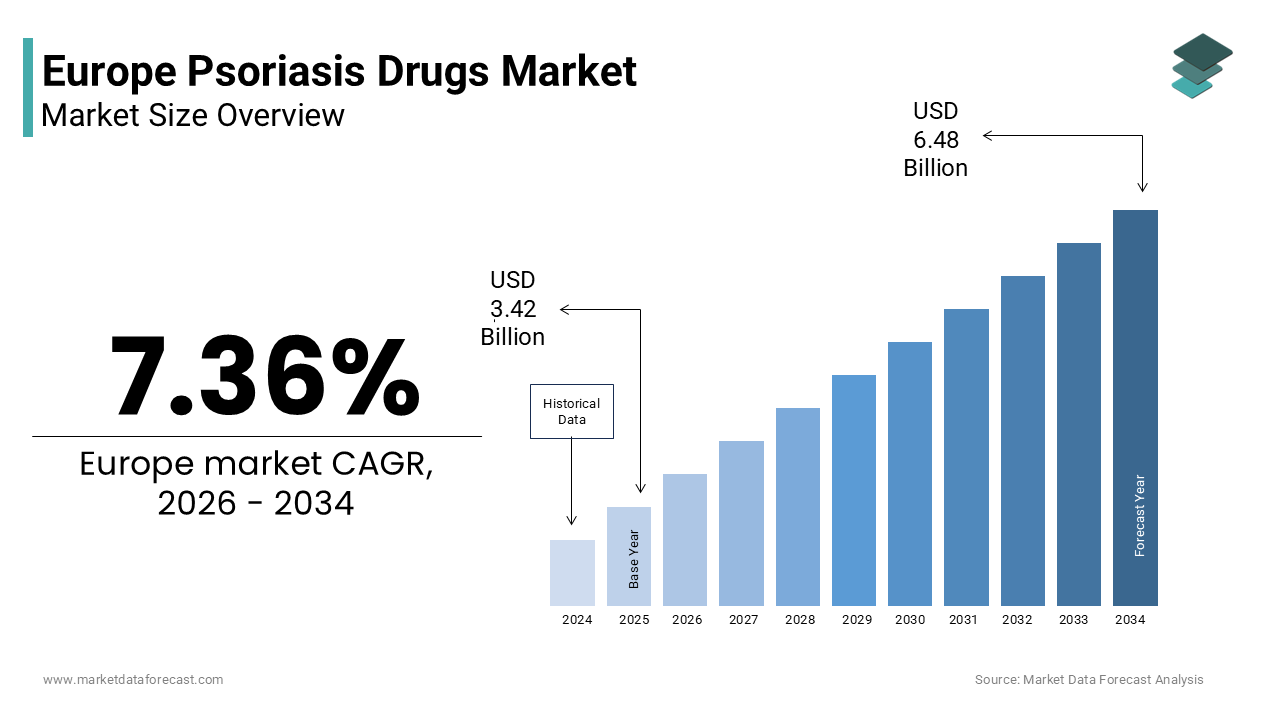
$3.42 BnMarket Estimate, 2026
$3.67 BnMarket Forecast, 2034
$6.48 BnCAGR, 2026–2034
7.36%Executive Summary: Europe Psoriasis Drugs Market
- Market Scope: Regional analysis of the European psoriasis therapeutics industry covering drug classifications (pharmaceuticals vs. biopharmaceuticals), routes of administration, biological targets (TNF, PDE4, Interleukin), and country-level profiles.
- Market Valuation: Valued at USD 3.42 billion in 2025, estimated at USD 3.67 billion in 2026, and projected to reach USD 6.48 billion by 2034, expanding at a steady CAGR of 7.36% throughout the forecast period (2026–2034).
- Primary Growth Drivers: Increasing public disease awareness, regulatory approvals of targeted biologic therapies (such as Interleukin-17 inhibitors like Taltz/ixekizumab), and rising investments in dermatological R&D.
Key Market Segment Metrics (2026–2034)
| Category | Key Segment Position / Details |
|---|---|
| By Drug Type | Divided into Traditional Pharmaceuticals and Advanced Biopharmaceuticals. |
| By Route of Administration | Segmented across Topical applications, Systemic Oral medications, Intravenous infusions, and others. |
| By Target Mechanism | Focuses on Tumor Necrosis Factor (TNF), Phosphodiesterase Type 4 (PDE4), and Interleukin inhibitors. |
| Geographic Footprint | Covering the UK, France, Spain, Germany, Italy, Russia, Sweden, Denmark, Switzerland, Netherlands, Turkey, Czech Republic, and Rest of Europe. |
Market Challenges & Competitive Landscape
- Key Restraints: High costs associated with biologic drug development, patent expirations of leading brand-name therapies, potential adverse side effects from systemic treatments, and reimbursement hurdles across national healthcare systems.
- Dominant Players: Major multinational pharmaceutical giants including Johnson & Johnson, Novartis International AG, Pfizer Inc., Merck & Co., Inc., AbbVie, Amgen, Takeda Pharmaceutical, and Janssen Biotech.
Europe Psoriasis Drugs Market Size
The Europe psoriasis drugs market size was valued at USD 3.42 billion in 2025 and is anticipated to reach USD 3.67 billion in 2026 from USD 6.48 billion by 2034, growing at a CAGR of 7.36% during the forecast period from 2026 to 2034.
Psoriasis drugs are prescription and over-the-counter medications used to manage and treat psoriasis, a chronic autoimmune condition that causes rapid skin cell buildup, scaling, and inflammation. This market is characterised by a shift from traditional symptomatic relief toward targeted immunomodulation that addresses the underlying inflammatory pathways of the disease. According to research, the prevalence of psoriasis in Europe affects approximately 2% to 3% of the population, translating to millions of patients requiring long-term pharmacological intervention. This substantial patient base creates a consistent demand for advanced therapeutic options. As per the World Health Organisation Regional Office for Europe, psoriasis is recognised not merely as a dermatological issue but as a systemic condition linked to comorbidities such as cardiovascular disease and psoriatic arthritis. This clinical understanding drives the prescription of drugs that offer comprehensive disease control rather than superficial improvement. Regulatory frameworks established by the European Medicines Agency ensure rigorous evaluation of safety and efficacy for new biological agents. Healthcare systems across member states are increasingly prioritising access to high-cost innovative therapies through centralised procurement mechanisms. The market is further influenced by the growing emphasis on personalised medicine, which tailors treatment to individual genetic and phenotypic profiles. Consequently, the sector is evolving toward more precise and effective treatment paradigms.
MARKET DRIVERS
High Prevalence of Comorbidities and Systemic Disease Recognition
The high prevalence of comorbidities associated with psoriasis is fuelling the expansion of the Europe psoriasis drugs market. This necessitates systemic therapeutic interventions. Clinicians increasingly recognise psoriasis as a systemic inflammatory disorder rather than an isolated skin condition, leading to a higher propensity for prescribing biologics and oral small molecules. According to the Journal of the European Academy of Dermatology and Venereology, up to 30% of patients with moderate to severe psoriasis develop psoriatic arthritis, which requires aggressive systemic treatment to prevent joint damage. This clinical progression drives the transition from topical therapies to injectable biologics that target specific cytokines such as interleukin 17 and interleukin 23. As per EULAR, conventional synthetic disease-modifying antirheumatic drugs are initiated for peripheral arthritis to help slow disease progression, while biologic DMARDs are recommended if those are ineffective. This medical consensus supports the sustained use of high-efficacy drugs despite their higher cost. The association between psoriasis and metabolic syndrome, cardiovascular disease, and depression further reinforces the need for comprehensive disease management. Healthcare providers are incentivised to treat the whole patient rather than just the skin lesions. This holistic approach increases the volume of prescriptions for advanced therapeutics. The recognition of these links ensures that psoriasis remains a priority in chronic disease management protocols across European healthcare systems.
Advancements in Biologic Therapies and Targeted Mechanisms
Advancements in biologic therapies and targeted molecular mechanisms are accelerating the growth of the European psoriasis drugs market. These advancements offer superior efficacy and safety profiles compared to traditional treatments. The development of monoclonal antibodies that specifically inhibit key inflammatory pathways has revolutionised patient care and increased treatment adherence. According to the study, numerous targeted biologic agents and small-molecule systemic therapies have received marketing authorisations over the past decade, significantly expanding the therapeutic options for managing moderate-to-severe plaque psoriasis. This regulatory approval rate reflects the robust pipeline of innovation in the region. As per The Lancet, clinical trials evaluating high-efficacy newer biologics demonstrate that large proportions of patients achieve high clear-skin response rates such as PASI 90. These high clearance rates enhance patient quality of life and reduce the burden of disease. The ability to tailor treatment based on specific biomarkers allows for personalised medicine approaches that maximise therapeutic benefit. Patients who fail to respond to one mechanism can switch to another with a different mode of action, ensuring continuous care. The convenience of less frequent dosing regimens for newer biologics also improves compliance. This technological progress drives the replacement of older therapies with modern solutions. Thus, the market benefits from continuous product lifecycle management and premium pricing for innovative agents.
MARKET RESTRAINTS
Stringent Health Technology Assessment and Reimbursement Policies
Stringent health technology assessment and reimbursement policies are significant constraints to the European psoriasis drugs market. These policies create barriers to rapid market access and limit patient access to treatments. Each European country employs its own health economic evaluation framework, which often demands extensive real-world evidence before approving high-cost biologics for national reimbursement. According to sources, the heterogeneous Health Technology Assessment (HTA) regulatory frameworks across European Union member states lead to fragmented access landscapes and varying timelines for gaining access to different EU markets. This disparity hinders the uniform adoption of new therapies across the continent. As per the National Institute for Health and Care Excellence in the United Kingdom, strict cost-effectiveness thresholds require manufacturers to demonstrate substantial value relative to the existing standard of care, which can result in restricted indications or price caps. These negotiations often limit the budget impact allowances for hospitals and clinics. Public healthcare systems facing fiscal pressures prioritise cost containment over immediate access to novel agents. The administrative burden of complying with diverse national requirements increases operational costs for pharmaceutical companies. Delayed reimbursement restricts the patient pool able to afford advanced treatments. This regulatory complexity slows down the revenue realisation for new product launches. Therefore, the market growth is tempered by bureaucratic and economic hurdles inherent in public healthcare financing.
Patent Expirations and Entry of Biosimilars
The expiration of patents for blockbuster biologic drugs and the subsequent entry of biosimilars unfavourably impact the revenue potential of the European psoriasis drugs market. These factors intensify price competition. As original biologics lose exclusivity, manufacturers of biosimilar versions enter the market, offering comparable efficacy at significantly lower prices. According to reports, the introduction of biosimilar medicines in European markets leads to lower prices and consistent average price reductions for a whole product line or class, including tumour necrosis factor inhibitors. This trend forces originator companies to lower prices or face loss of market share. As per research, the uptake of biosimilars varies across countries depending on national policy incentives, tendering systems, and physician prescribing support. In some regions, mandatory switching policies accelerate the displacement of originator products. While this increases affordability, it erodes the profit margins that fund research and development for new innovations. Hospitals and payers actively promote biosimilar adoption to reduce healthcare expenditures. Originator companies must invest heavily in differentiating their brands through patient support programs and device innovations to retain loyalty. The competitive landscape becomes fragmented with multiple players vying for formulary placement. This dynamic shifts the market focus from innovation premiums to cost efficiency. It challenges the sustainability of high investment models for new drug development.
MARKET OPPORTUNITIES
Expansion into Oral Small Molecule Therapies
The expansion into oral small molecule therapies offers a lucrative opportunity for the European psoriasis drugs market. This addresses patient preference for non-injectable administration routes. Many patients exhibit needle phobia or prefer the convenience of oral medication over subcutaneous injections, which drives demand for pills such as phosphodiesterase 4 inhibitors and Janus kinase inhibitors. According to sources, patient preferences indicate an increased interest in oral treatments that offer non-injectable options, provided they achieve robust efficacy and clinical clearance. This preference creates a substantial addressable market for oral agents. As per studies, next-generation targeted oral therapies, including novel small molecules, offer options for patients who prefer non-injectable treatment to achieve substantial skin clearance. These drugs offer an intermediate option between topicals and biologics, filling a critical treatment gap. They are particularly suitable for patients who do not qualify for biologic therapy due to severity criteria or comorbidities. Pharmaceutical companies are investing in the development of novel oral targets to diversify their portfolios. The ease of distribution and storage for oral drugs reduces logistical burdens for healthcare providers. This segment allows for broader patient reach, including those in remote areas. It represents a strategic avenue for growth beyond the saturated biologic sector.
Integration of Digital Health and Patient Support Programs
The integration of digital health tools and comprehensive patient support programs provides a significant growth area for differentiation and value creation in the European psoriasis drugs market. Digital platforms enable remote monitoring of disease activity, medication adherence, and side effects, enhancing the overall treatment experience. According to research, the adoption of digital health platforms and mobile applications has expanded globally across different healthcare frameworks as tools to reinforce self-management and tracking. These tools provide valuable real-world data that can inform clinical decisions and improve outcomes. As per the International Society for Pharmacoeconomics and Outcomes Research, standardised definitions and analytic methods are utilised to evaluate patient compliance and adherence metrics across chronic condition management programs. Higher adherence translates to better clinical results and reduced healthcare costs. Pharmaceutical companies can leverage these digital ecosystems to build long-term relationships with patients and providers. Data analytics from these platforms help identify trends and optimise treatment protocols. Payers are increasingly interested in value-based contracts that link reimbursement to real-world performance metrics. This approach aligns incentives among stakeholders. It transforms the drug product into a holistic service offering. This opportunity enhances brand loyalty and demonstrates tangible value to healthcare systems.
MARKET CHALLENGES
Complexity of Long-Term Safety Monitoring
The complexity of long-term safety monitoring for novel biologic and small molecule therapies is a major hindrance to the European psoriasis drugs market. This complexity imposes rigorous post-marketing surveillance requirements. Regulatory authorities mandate extensive pharmacovigilance activities to detect rare adverse events that may not appear in clinical trials. According to the European Medicines Agency, risk management plans for new psoriasis drugs require continuous data collection and periodic safety update reports, which place a significant administrative burden on manufacturers. This ongoing obligation increases operational costs and resource allocation. As per the Journal of Investigative Dermatology, concerns regarding potential risks such as infections, malignancies, and cardiovascular events necessitate careful patient selection and regular monitoring by specialists. These safety concerns can lead to hesitancy among prescribers and patients, affecting uptake rates. The need for specialised infrastructure to track patient outcomes over many years complicates market access strategies. Any emerging safety signal can trigger regulatory warnings or restrictions impacting sales. Manufacturers must balance innovation with rigorous safety validation to maintain trust. The lack of long-term real-world data for newer agents creates uncertainty in clinical practice. This challenge requires sustained investment in surveillance systems. It limits the speed at which new therapies can be fully embraced by the medical community.
Patient Access Inequalities Across Member States
Patient access inequalities across Member States in the region are a formidable challenge to the uniform growth of the European psoriasis drugs market. These disparities stem from varied healthcare funding and policy frameworks. Significant variations in GDP per capita and healthcare spending priorities result in unequal availability of advanced psoriasis treatments. According to the study, there are notable differences across European healthcare organisational structures regarding the perceived position of and access to a dermatologist for tracking chronic skin diseases like psoriasis. This geographic inequality limits the total addressable market for premium drugs. As per sources, HTA agencies in lower-income countries in regions such as Eastern Europe face unique challenges in providing timely access and managing structural processes for new medicines. These barriers prevent timely intervention, leading to disease progression and higher long-term costs. Harmonisation efforts by the European Union have had limited success in standardising access to high-cost medicines. Pharmaceutical companies struggle to implement uniform pricing and launch strategies across such a fragmented landscape. The ethical implications of unequal access create reputational risks for industry stakeholders. Addressing these disparities requires complex negotiations with multiple national governments. This fragmentation hinders the realisation of the market's full potential. It necessitates tailored strategies for each national context.
REPORT COVERAGE
| REPORT METRIC | DETAILS |
| Market Size Available | 2025 to 2034 |
| Base Year | 2025 |
| Forecast Period | 2026 to 2034 |
| CAGR | 7.36% |
| Segments Covered | By Drug Type, Route of Administration, Target and Region. |
| Various Analyses Covered | Global, Regional & Country Level Analysis, Segment-Level Analysis, DROC, PESTLE Analysis, Porter’s Five Forces Analysis, Competitive Landscape, Analyst Overview of Investment Opportunities |
| Regions Covered | UK, France, Spain, Germany, Italy, Russia, Sweden, Denmark, Switzerland, the Netherlands, Turkey, the Czech Republic, and the Rest of Europe. |
| Market Leaders Profiled | Johnson & Johnson (USA), Novartis International AG (Switzerland), Pfizer Inc. (USA), Merck & Co., Inc. (USA), Celgene Corporation (USA), Janssen Biotech, Inc. (USA), Stiefel Laboratories, Inc. (USA), Takeda Pharmaceutical Company Limited (Japan), Amgen (USA), and AbbVie (USA). |
SEGMENTAL ANALYSIS
By Drug Type Insights
The biopharmaceuticals segment dominated the European psoriasis drugs market and accounted for a substantial share in 2025. This dominance of the segment was driven by its superior efficacy in treating moderate to severe psoriasis and its ability to target specific inflammatory pathways with high precision. These agents, including monoclonal antibodies, have revolutionised disease management by achieving significant skin clearance rates that traditional small molecules often fail to deliver. According to sources, guidelines typically recommend conventional systemic agents first for moderate-to-severe plaque psoriasis, reserving biologic therapies for patients who have inadequate responses, contraindications, or intolerance to those initial treatments. This preference drives substantial prescription volumes across major European healthcare systems. As per studies, targeted biologic agents such as interleukin inhibitors demonstrate substantial efficacy in achieving high levels of skin clearance, which correlates with meaningful improvements in patient quality of life. The robust pipeline of novel biologics targeting new cytokines ensures continuous innovation and market expansion. Reimbursement policies in countries like Germany and France increasingly cover these high-cost treatments due to their proven cost-effectiveness in preventing disability. The patent landscape favours originator companies who maintain strong market presence through lifecycle management. Consequently, biopharmaceuticals remain the cornerstone of advanced psoriasis care in Europe.
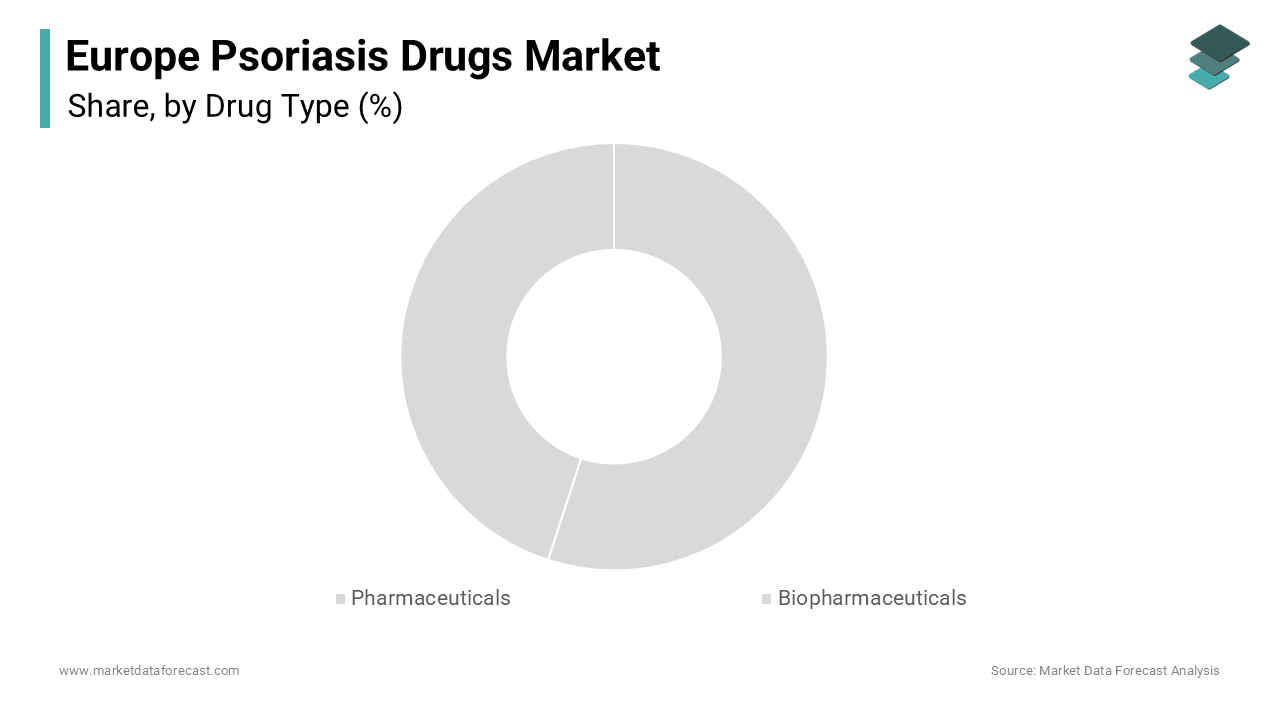
The pharmaceuticals segment is experiencing the fastest growth in the European psoriasis drugs market, due to patient preference for non-injectable administration and the introduction of novel mechanisms such as Janus kinase inhibitors. This trend is particularly evident within oral small molecules. Patients often exhibit needle phobia or desire the convenience of oral dosing, which creates a substantial addressable market for these agents. According to research, patient preference evaluations highlight an interest in oral treatments that offer non-injectable options, provided they achieve robust efficacy and clinical clearance. This demand accelerates the adoption of new oral therapies. As per the European Medicines Agency, the approvals of targeted oral therapies, including novel small-molecule formulations, expand the available options for patients who are candidates for systemic treatment. These drugs offer rapid onset of action and ease of distribution without the need for cold chain storage. Healthcare providers appreciate the flexibility they offer in treatment sequencing. The lower manufacturing costs compared to biologics allow for competitive pricing strategies. Regulatory pathways for small molecules are well established, facilitating faster market entry. This segment benefits from the growing emphasis on personalised medicine, where oral options serve as a crucial bridge between topicals and injectables.
By Route of Administration Insights
The systemic administration segment led the Europe psoriasis drugs market and captured a significant share in 2025. This leading position of the segment was attributed to its ability to address the underlying systemic inflammation and associated comorbidities such as psoriatic arthritis. Unlike topical treatments, which only manage surface symptoms, systemic agents provide comprehensive disease control throughout the body. According to sources, approximately up to 30% of individuals diagnosed with psoriasis may develop psoriatic arthritis over time, highlighting the necessity of proper screening and clinical management. This clinical requirement drives the sustained use of oral and injectable systemic drugs. As per studies, there is significant scientific interest in tracking how controlling systemic inflammation impacts long-term metabolic and cardiovascular risks in patients with moderate-to-severe psoriasis. This holistic benefit supports their prioritisation in treatment algorithms. National health services in countries like the United Kingdom and Sweden recommend systemic therapy for patients with high body surface area involvement. The availability of both biologic and small molecule systemic options allows for tailored treatment plans. Physicians prefer systemic routes for their predictable pharmacokinetics and proven long-term safety profiles. Consequently, this segment dominates the revenue share due to the high cost and chronic nature of these therapies.
The oral route of administration segment is rapidly expanding within the European psoriasis drugs market, owing to the launch of innovative small molecules and patient demand for convenience and autonomy in treatment. Oral medications eliminate the need for clinical visits for injections and reduce the psychological burden associated with self-injection. According to research, standardised definitions and analytic methods are utilised to evaluate patient compliance, adherence metrics, and persistence trends across chronic skin condition management programs. This improved adherence translates to better clinical outcomes and reduced flare-ups. As per studies, next-generation oral therapeutics and small-molecule inhibitors provide alternatives to traditional systemic drugs like methotrexate, expanding the range of mechanisms available to clinicians. These advancements encourage physicians to prescribe oral therapies earlier in the treatment journey. The ease of storage and transport makes oral drugs ideal for telemedicine models and remote patient management. Pharmaceutical companies are investing heavily in oral pipeline development to capture this growing segment. The convenience factor appeals to the working population who prioritise minimal disruption to daily life. This trend is reshaping the standard of care for moderate psoriasis.
By Target Insights
In 2025, the interleukin targets segment held the majority share within the Europe Psoriasis Drugs Market because of its exceptional efficacy and specificity in blocking key inflammatory pathways. This position is held particularly by IL-17 and IL-23 inhibitors. These biologics have set new standards for skin clearance and are preferred for patients who have failed tumour necrosis factor inhibitors. According to research, head-to-head clinical trials demonstrate that targeted biologic agents such as IL-17 and IL-23 inhibitors achieve high levels of skin clearance, including robust PASI 100 response rates compared to older systemic choices. This superior performance drives their widespread adoption in clinical practice. As per the European Medicines Agency, multiple interleukin inhibitors have received positive opinions for marketing authorisation in recent years, reflecting the robust scientific validation of this target class. The long dosing intervals for some IL-23 inhibitors further enhance patient convenience and compliance. Healthcare payers recognise the value of these drugs in reducing the overall burden of disease, including work absenteeism and comorbidity management. The strong intellectual property protection for these agents allows manufacturers to maintain premium pricing. Consequently, interleukin inhibitors represent the gold standard for modern psoriasis treatment in Europe.
The Phosphodiesterase Type 4 (PDE4) target segment is witnessing swift acceleration in the Europe Psoriasis Drugs Market. This surge is fuelled by the success of oral small molecule inhibitors that offer a favourable safety profile and ease of use. PDE4 inhibitors work by reducing inflammation within immune cells without suppressing the entire immune system, making them attractive for long term use. According to studies, phosphodiesterase-4 (PDE4) inhibitors, such as apremilast, provide therapeutic benefits in managing manifestations of psoriasis, including hard-to-treat areas like scalp and nail psoriasis. This unique benefit addresses a specific unmet need in the patient population. As per EuroGuiDerm guidelines, systemic agents such as apremilast provide oral options for the treatment of moderate-to-severe plaque psoriasis alongside conventional systemic treatments and biological therapies. The lack of required laboratory monitoring for liver or kidney function simplifies clinical management. This convenience lowers the barrier to prescription for general practitioners and dermatologists alike. The expanding label indications for PDE4 inhibitors to include psoriatic arthritis further boost their market potential. Pharmaceutical companies are promoting these agents as a versatile option in the treatment algorithm. This segment benefits from strong word-of-mouth recommendations among patients seeking non-biologic options.
COUNTRY ANALYSIS
Germany Psoriasis Drugs Market Analysis
Germany was the top performer in the Europe Psoriasis Drugs Market and occupied a commanding share in 2025. Its top position shows a high density of dermatologists and generous reimbursement policies for innovative therapies. The country serves as a key driver for the adoption of biologics and small molecules due to its robust healthcare infrastructure. According to the Act on the Reform of the Market for Medicinal Products (AMNOG), newly launched medications undergo an early benefit assessment process to determine their additional benefits compared to the current standard treatment. This regulatory efficiency encourages manufacturers to launch products in Germany first. As per sources, psoriasis is a prevalent chronic skin disease with substantial variations in regional prevalence rates depending on complex sociodemographic and environmental determinants. The statutory health insurance system covers the majority of treatment costs, ensuring broad patient access. Academic research centres in Berlin and Munich contribute to clinical trials driving innovation. The market is highly competitive with all major global players present. Patient advocacy groups play a significant role in influencing policy. Germany sets the benchmark for high-quality psoriasis care in Europe.
United Kingdom Psoriasis Drugs Market Analysis
The United Kingdom is rapidly expanding within the European psoriasis drugs market. This growth is driven by the National Health Service, which provides universal coverage but imposes strict cost-effectiveness criteria for drug approval. Access to newer biologics is governed by National Institute for Health and Care Excellence guidelines, which require rigorous economic evaluation. According to National Health Service (NHS) frameworks, specialised commissioning structures and clinical reference groups work to manage and standardise the delivery of specialised services and high-cost dermatology care. This centralised approach controls spending but may delay access to the newest agents. As per the study, psoriasis affects approximately 2% of the UK population, equating to an estimated 1.8 million people facing the burdens of the condition. The rise of biosimilars has significantly reduced costs, allowing for broader access to TNF inhibitors. Digital health initiatives are being integrated into patient care pathways. The market is shifting toward value-based agreements with manufacturers. Patient registries help monitor long-term outcomes and safety. The UK remains a critical market for demonstrating real-world evidence.
France Psoriasis Drugs Market Analysis
France is growing at a steady pace within the Europe Psoriasis Drugs Market, supported by a strong tradition of dermatological research and a comprehensive social security system that reimburses most treatment costs. The French National Authority for Health evaluates new drugs for medical benefit, which determines their reimbursement rate. According to the French Society of Dermatology, there is a high utilisation rate of biologic therapies, particularly IL-17 and IL-23 inhibitors, due to their proven efficacy. The market benefits from a well-distributed network of private and public dermatology clinics. As per sources, extensive research supports the strong genetic basis of psoriasis susceptibility, estimating that heritability ranges between 60% and 90% across studied populations. Patient associations actively advocate for better access to innovative treatments. The government encourages the use of biosimilars to control healthcare expenditures. France is a key market for launching new oral therapies. The regulatory environment is stable and predictable. High patient awareness drives demand for advanced care.
Italy Psoriasis Drugs Market Analysis
Italy is a growing frontier in the European psoriasis drugs market because of regional disparities in healthcare delivery and a strong emphasis on biosimilar adoption to manage costs. The National Health Service provides coverage, but procurement is managed at the regional level, leading to variations in drug availability. According to studies, the regionalised governance of the Italian National Health Service often leads to distinct interregional disparities in patient access to biological and small-molecule therapies. The southern regions face challenges in access and waiting times. As per the Italian Medicines Agency, the introduction of biosimilars has led to substantial savings, allowing for the treatment of more patients with limited budgets. The market is price sensitive, with tendering processes driving competition. Traditional topical treatments remain widely used for mild cases. There is a growing interest in oral small molecules as a cost-effective alternative. Patient registries are being expanded to collect real-world data. Italy offers opportunities for manufacturers who can navigate the complex regional landscape.
Spain Psoriasis Drugs Market Analysis
Spain holds a noteworthy share of the Europe Psoriasis Drugs Market due to a high prevalence of psoriasis and a publicly funded healthcare system that prioritises equitable access. The Spanish Society of Dermatology and Venereology develops clinical guidelines that influence prescribing patterns across autonomous communities. According to sources, multidisciplinary or specialised approach clinics enhance clinical coordination, diagnostic verification, and structured management plans for severe inflammatory skin diseases like plaque psoriasis. These specialized centers facilitate the use of advanced biologics. As per the Spanish Agency of Medicines and Medical Devices (AEMPS), the processing of systemic drugs aligns with standard statutory frameworks governing quality, therapeutic indication, and drug utilisation surveillance. The economic crisis in the past decade led to cost containment measures, but recovery has restored funding for innovative treatments. Biosimilars are widely accepted and used. Patient advocacy groups are influential in policy discussions. The market is characterised by a mix of public and private provision. Spain is a key market for demonstrating value in southern Europe.
COMPETITIVE LANDSCAPE
The competition in the Europe Psoriasis Drugs Market is characterized by intense rivalry among multinational pharmaceutical companies who compete on clinical efficacy safety profiles and cost effectiveness. Major players leverage extensive research capabilities to introduce novel biologics and small molecules that target specific inflammatory pathways. They differentiate themselves through robust clinical data demonstrating superior skin clearance rates and improved quality of life for patients. The entry of biosimilars has intensified price competition forcing originator companies to innovate and justify premium pricing through value based agreements. Regulatory bodies such as the European Medicines Agency ensure high standards for safety and efficacy influencing market entry timelines. National health technology assessment agencies play a crucial role in determining reimbursement status creating a fragmented access landscape across member states. Companies must navigate diverse pricing and reimbursement policies to maximize market penetration. Strategic collaborations with healthcare providers and payers help align incentives and improve patient access. The market sees continuous innovation in delivery devices and dosing regimens to enhance patient convenience. Intellectual property protection remains vital for maintaining revenue streams from blockbuster drugs. This dynamic environment drives rapid advancement in therapeutic options while pressuring margins through cost containment measures.
KEY MARKET PLAYERS
Prominent companies dominating the European Psoriasis Drugs Market include
- Johnson & Johnson (USA)
- Novartis International AG (Switzerland)
- Pfizer Inc. (USA)
- Merck & Co., Inc. (USA)
- Celgene Corporation (USA)
- Janssen Biotech, Inc. (USA)
- Stiefel Laboratories, Inc. (USA)
- Takeda Pharmaceutical Company Limited (Japan)
- Amgen (USA)
- AbbVie (USA)
Top Players in the Europe Psoriasis Drugs Market
Novartis AG
Novartis AG serves as a global leader in dermatology with a strong portfolio of innovative psoriasis treatments including interleukin inhibitors and small molecules. The company focuses on delivering high efficacy therapies that improve patient quality of life and address unmet medical needs. Novartis recently expanded its manufacturing capabilities in Europe to ensure a stable supply of biologic agents for the regional market. This strategic investment supports consistent availability for patients across multiple countries. The company actively engages in real world evidence generation to demonstrate the long term value of its drugs to payers. Novartis collaborates with patient advocacy groups to enhance disease awareness and support services. Their commitment to digital health solutions helps monitor patient adherence and outcomes. By prioritizing scientific innovation and patient centric care Novartis strengthens its leadership position. These efforts ensure they remain a preferred partner for healthcare providers treating complex psoriasis cases.
AbbVie Inc
AbbVie Inc plays a pivotal role in the Europe Psoriasis Drugs Market through its extensive experience in immunology and broad portfolio of biologic therapies. The company offers targeted treatments that address both skin and joint symptoms providing comprehensive disease management. AbbVie recently launched new indications for its existing biologics to cover broader patient populations including those with difficult to treat areas. This expansion increases the accessibility of their therapies for diverse clinical needs. The company invests heavily in head to head clinical trials to prove superior efficacy against competitors. AbbVie partners with healthcare systems to implement value based agreements that align cost with outcomes. Their robust pipeline includes next generation molecules aimed at improving safety profiles. By focusing on clinical differentiation and strategic partnerships AbbVie maintains a competitive edge. These actions reinforce their reputation for delivering reliable and effective immunological solutions.
Sanofi SA
Sanofi SA contributes significantly to the Europe Psoriasis Drugs Market by leveraging its expertise in rare diseases and immunology to develop specialized treatments. The company focuses on innovative mechanisms that target specific inflammatory pathways with high precision. Sanofi recently received regulatory approval for a novel biologic agent in several European countries expanding its dermatology footprint. This approval allows them to offer new options for patients who have failed previous therapies. The company emphasizes sustainable manufacturing practices to reduce the environmental impact of drug production. Sanofi collaborates with academic institutions to advance understanding of psoriasis pathogenesis and treatment response. Their patient support programs provide education and assistance throughout the treatment journey. By integrating research excellence with commercial execution Sanofi enhances its market presence. These initiatives help them capture growth opportunities in the evolving therapeutic landscape.
Top Strategies Used by Key Market Participants
Key players in the Europe Psoriasis Drugs Market primarily focus on clinical differentiation and value based access strategies to maintain competitive advantage. Companies invest heavily in head to head trials to demonstrate superior efficacy and safety profiles compared to existing standards of care. This evidence supports premium pricing and favorable reimbursement decisions from health technology assessment bodies. Strategic partnerships with patient advocacy groups enhance disease awareness and drive early diagnosis. Firms also prioritize lifecycle management by expanding indications to include psoriatic arthritis and difficult to treat body areas. Digital health integration is another critical strategy where companies use remote monitoring tools to improve adherence and collect real world data. Mergers and acquisitions are employed to acquire promising pipeline assets and expand therapeutic portfolios. Manufacturers adapt to regulatory pressures by developing biosimilars and engaging in risk sharing agreements with payers. These multifaceted approaches ensure resilience against price erosion and foster long term growth in the dynamic European healthcare environment.
MARKET SEGMENTATION
This research report on the European Psoriasis Drugs Market has been segmented and sub-segmented into the following categories:
By Drug Type
- Pharmaceuticals
- Biopharmaceuticals
By Route of Administration
- Systemic
- Oral
- Others
By Target
- Tumour Necrosis Factor (TNF)
- Phosphodiesterase Type 4 (PDE4)
- Interleukin
By Country
- UK
- France
- Spain
- Germany
- Italy
- Russia
- Sweden
- Denmark
- Switzerland
- Netherlands
- Turkey
- Czech Republic
- Rest of Europe