Europe Ready to Drink Market Size, Share, Trends, & Growth Forecast Report, Segmented By Type, Processing, Packaging, and Country (UK, France, Spain, Germany, Italy, Russia, Sweden, Denmark, Switzerland, Netherlands, Turkey, Czech Republic & Rest of Europe), Industry Analysis From 2026 to 2034
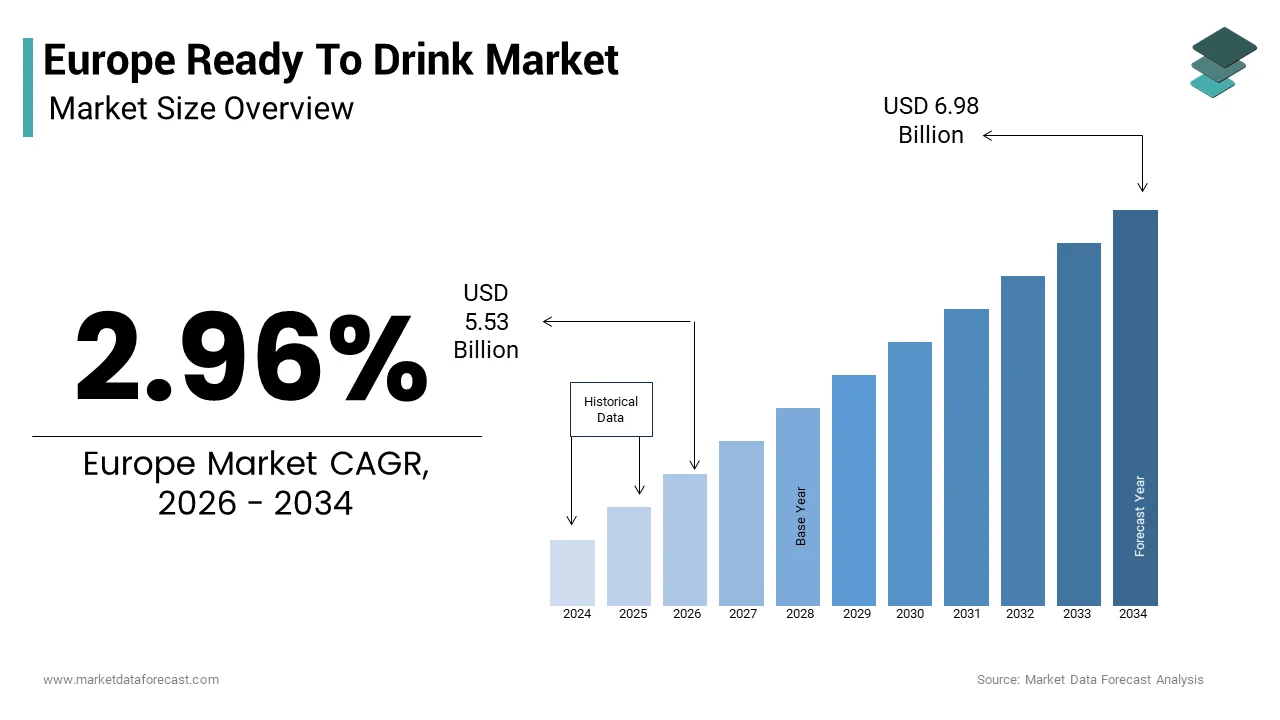
Market Size, 2025
$5.34 BnMarket Estimate, 2026
$5.50 BnMarket Forecast, 2034
$6.92 BnCAGR, 2026–2034
2.93%Europe Ready to Drink Market Size
The Europe ready to drink market size was valued at USD 5.34 billion in 2025 and is anticipated to reach USD 5.50 billion in 2026 to reach USD 6.92 billion by 2034, growing at a CAGR of 2.93% during the forecast period from 2026 to 2034.
Current Introduction of the Europe Ready to Drink Market
The ready to drink extends beyond traditional hydration to include functional beverages, meal replacements, alcoholic cocktails, and specialized nutritional solutions tailored for specific physiological needs. The definition now incorporates a sophisticated layer of technological integration where beverages serve as delivery systems for nootropics, adaptogens, and probiotics. In 2024, the regulatory shifted significantly as the European Food Safety Authority finalized guidelines for novel food ingredients, impacting over 300 new functional formulations entering the shelf space. This environment forces manufacturers to balance immediate convenience with long-term environmental responsibility.
MARKET DRIVERS
Integration of Nootropics and Cognitive Enhancement Ingredients
The surging demand for beverages that offer cognitive benefits, moving beyond physical energy to mental clarity and focus is major factor propelling the growth of Europe ready to drink market. Modern professionals and students are increasingly seeking liquid solutions to manage stress, enhance concentration, and combat mental fatigue without the jitters associated with high caffeine intake. According to research published by the European Brain Council, nearly 40% of the working population in major European cities reports experiencing chronic mental fatigue, driving a search for functional remedies. This has led to a proliferation of ready to drink products infused with nootropics such as L-theanine, lion's mane mushroom, and ginkgo biloba. The demographic driving this trend includes knowledge workers and gamers who view these beverages as essential tools for productivity. Furthermore, clinical studies cited by the German Federal Institute for Risk Assessment have validated the safety and efficacy of several plant-based cognitive enhancers by encouraging manufacturers to make credible health claims. The shift from recreational consumption to functional utility transforms these beverages into daily essentials, securing a loyal customer base willing to pay premium prices for verified mental performance benefits.
Expansion of the Sober Curious Movement and Alcohol Alternatives
The rapid expansion of the sober curious movement, which has fundamentally altered alcohol consumption patterns and spurred innovation in non-alcoholic ready to drink alternatives is also escalating the growth of Europe ready to drink market. A growing segment of the European population, particularly among millennials and Generation Z, is choosing to reduce or eliminate alcohol intake while still seeking the social ritual and complex flavor profiles associated with drinking. As per a survey conducted by the Institute of Alcohol Studies in the United Kingdom, 45% of adults aged 18 to 34 have actively reduced their alcohol consumption in the past year, creating a massive void for sophisticated alternatives. This behavioral shift has fueled the development of ready to drink mocktails, non-alcoholic spirits, and fermented teas that mimic the mouthfeel and complexity of alcoholic beverages. Brands are leveraging advanced distillation and blending technologies to create products that satisfy the sensory experience of drinking without the intoxicating effects. This trend is supported by changing social norms where abstaining is increasingly viewed as a lifestyle choice rather than a restriction by encouraging broader adoption and normalizing the presence of these products in bars, restaurants, and retail shelves across the continent.
MARKET RESTRAINTS
Complexity of Cross-Border Regulatory Compliance for Novel Ingredients
The intricate and often fragmented regulatory framework governing the approval and labeling of novel food ingredients across different member states is restricting the growth of Europe ready to drink market. While the European Union strives for harmonization, the process for approving new functional ingredients under the Novel Food Regulation can be lengthy and costly, delaying product launches and stifling innovation. According to the European Commission, the average timeline for novel food authorization exceeds 18 months, during which market trends may shift, rendering the proposed product obsolete before it reaches the shelf. Additionally, individual countries maintain specific national restrictions on certain botanicals and fortification levels, forcing manufacturers to create multiple formulations for different markets, which increases production complexity and costs. Data from the Food Drink Europe association reveals that small and medium-sized enterprises spend up to 20% of their research and development budget solely on regulatory compliance and legal consultancy. This barrier to entry limits the diversity of products available to consumers and discourages agile startups from introducing cutting-edge formulations. The lack of a unified fast-track system for low-risk ingredients further exacerbates the issue, causing European brands to lag behind counterparts in regions with more flexible regulatory environments.
Escalating Costs of Sustainable Packaging and Raw Materials
The soaring cost of sustainable packaging materials and key agricultural raw materials, which squeezes profit margins and forces price increases that can dampen consumer demand is another attribute hampering the growth of Europe ready to drink market. The transition away from virgin plastics toward recycled PET, aluminum, and biodegradable alternatives involves substantial capital investment and higher per-unit material costs. Simultaneously, climate change-induced volatility in agricultural yields has driven up the costs of essential inputs like sugar, fruit concentrates, and coffee beans. These combined pressures force companies to either absorb the costs, reducing profitability, or pass them on to consumers, risking volume loss in a price-sensitive market. Smaller brands with less purchasing power struggle to compete, leading to market consolidation. The economic burden of meeting the European Union's stringent packaging waste directives while managing raw material inflation creates a challenging financial environment that restricts market expansion and limits the ability of companies to invest in marketing and innovation.
MARKET OPPORTUNITIES
Development of Personalized Nutrition via Digital Integration
The emergence of beverage formulation with digital health technologies to deliver personalized nutrition solutions is creating new opportunities for the growth of Europe ready to drink market. Advances in wearable technology and health tracking apps provide consumers with real-time data on their hydration levels, nutrient deficiencies, and activity patterns by creating a demand for beverages tailored to individual physiological needs. Companies can leverage this data to offer subscription-based services where algorithms recommend or automatically dispatch specific beverage blends optimized for the user's current health status. For instance, a runner might receive an electrolyte-rich drink post-workout, while an office worker receives a focus-enhancing blend during work hours. Pilot programs in Scandinavia have already demonstrated a 40% increase in customer retention for brands offering such personalized experiences. This shift from mass production to mass customization allows manufacturers to command higher price points and build deeper brand loyalty.
Utilization of Upcycled Ingredients for Circular Economy Products
The emerging focus on the circular economy to innovate through the utilization of upcycled ingredients derived from food processing by-products is eventually to set up new opportunities for the growth of Europe ready to drink market. Traditionally discarded materials such as fruit peels, spent grains from brewing, and vegetable pulp are now being recognized as rich sources of fiber, antioxidants, and flavors that can be incorporated into new beverage formulations. Startups and established companies alike are developing technologies to extract valuable compounds from these waste streams, creating unique selling propositions centered on sustainability and resource efficiency. For example, drinks made from upcycled apple pomace or spent coffee grounds have gained traction among eco-conscious consumers, with sales growing by 45% in 2024 according to market intelligence from Mintel. This approach not only reduces raw material costs but also aligns perfectly with the European Green Deal objectives, potentially qualifying companies for government grants and tax incentives.
MARKET CHALLENGES
Prevalence of Microplastic Contamination in Water Sources
The increasing detection of microplastics in water sources, which threatens consumer confidence and complicates sourcing strategies for bottled water and water-based beverages is major challenges for the growth of Europe ready to drink market. Recent scientific studies have revealed the ubiquitous presence of microplastic particles in both tap and spring water across the continent, raising concerns about long-term health implications. According to research published by the Alfred Wegener Institute, microplastic concentrations in European freshwater bodies have doubled over the past decade, prompting heightened scrutiny from regulators and consumers alike. This issue poses a significant reputational risk for brands that market their products as pure and natural, as any detection of contaminants can lead to immediate recalls and loss of trust. Manufacturers are forced to invest heavily in advanced filtration technologies capable of removing nanoplastics, which significantly increases production costs. Furthermore, the lack of standardized testing methods and regulatory limits for microplastics in beverages creates uncertainty, making it difficult for companies to guarantee absolute purity. The potential for future legislation to impose strict limits could render existing production lines obsolete.
Saturation of Flavor Profiles and Innovation Fatigue
The extreme saturation of flavor profiles and the resulting innovation fatigue among consumers, who are becoming increasingly indifferent to incremental product launches in an overcrowded marketplace is also to degrade the growth of Europe ready to drink market in coming years. As per data from NielsenIQ, the failure rate of new beverage launches in Europe reached 65% in 2024, indicating that consumers are overwhelmed by choice and resistant to trying yet another me too product. The phenomenon of innovation fatigue leads to shorter product lifecycles and diminished returns on research and development investments. Consumers are increasingly reverting to trusted legacy brands or simple, recognizable ingredients by rejecting complex formulations that promise unsubstantiated benefits. Breaking through this noise requires radical innovation rather than iteration, yet the risk associated with truly disruptive concepts is high.
REPORT COVERAGE
| REPORT METRIC | DETAILS |
| Market Size Available | 2025 to 2034 |
| Base Year | 2025 |
| Forecast Period | 2026 to 2034 |
| CAGR | 2.93% |
| Segments Covered | By Type, Processing, Packaging, and Countries |
| Various Analyses Covered | Regional & Country Level Analysis, Segment-Level Analysis, DROC, PESTLE Analysis, Porter’s Five Forces Analysis, Competitive Landscape, Analyst Overview on Investment Opportunities |
| Regions Covered | UK, France, Spain, Germany, Italy, Russia, Sweden, Denmark, Switzerland, Netherlands, Turkey, Czech Republic, & Rest of Europe |
| Market Leaders Profiled | Thai Spirit Industry Co., Ltd. (Thailand), Whistler Wine & Spirits Pte Ltd (Singapore), Pernod Ricard SA, Destileria Limtuaco & Co., Inc. (Philippines), Winepak Corporation (U.S.), Thai Beverage Plc (Thailand), Diageo (U.K.), Carlsberg Group (Denmark), Siam Winery (Thailand), San Miguel Brewery Inc. (Philippines), Nestlé (Switzerland), Red Bull (Austria), The Coca-Cola Company (U.S.), BACARDI (Bermuda) |
SEGMENTAL ANALYSIS
By Type Insights
The spirit-based ready to drink segment was the largest by holding 52.8% of the Europe ready to drink market share in 2025 owing to the profound shift toward premiumization, where consumers seek high-quality alcoholic experiences that mirror the craftsmanship of bar-made cocktails without the effort of mixing. The modern European consumer, particularly in urban centers, increasingly views ready to drink options as a legitimate extension of the craft cocktail culture rather than a compromise. The growth of the segment is also fueled with the entry of renowned distillers and mixologists into the canned cocktail space, lending credibility and artisanal appeal to these products. Consumers are willing to pay a price premium of up to 30% for RTDs made with genuine aged spirits, botanical gin, or small-batch tequila compared to those using neutral alcohol bases. The demand for authentic ingredients such as real fruit juices, house-made syrups, and bitters further distinguishes this segment, aligning with the "clean label" movement even within the alcoholic beverage sector. Also, the relatively favorable regulatory and taxation environment in major European countries compared to malt-based alternatives, which often face higher excise duties categorized under beer is boosting the growth of the segment. As per analysis from the European Spirits Organisation, the distinct tax categorization has encouraged major spirit producers to invest heavily in RTD lines, knowing they can maintain healthier margins while offering value to consumers. Furthermore, the regulatory framework in the European Union regarding the definition of "spirit drinks" ensures that only products containing actual distilled spirits can carry specific geographical indications or traditional terms, protecting the integrity of the category and preventing dilution by lower-quality imitations.
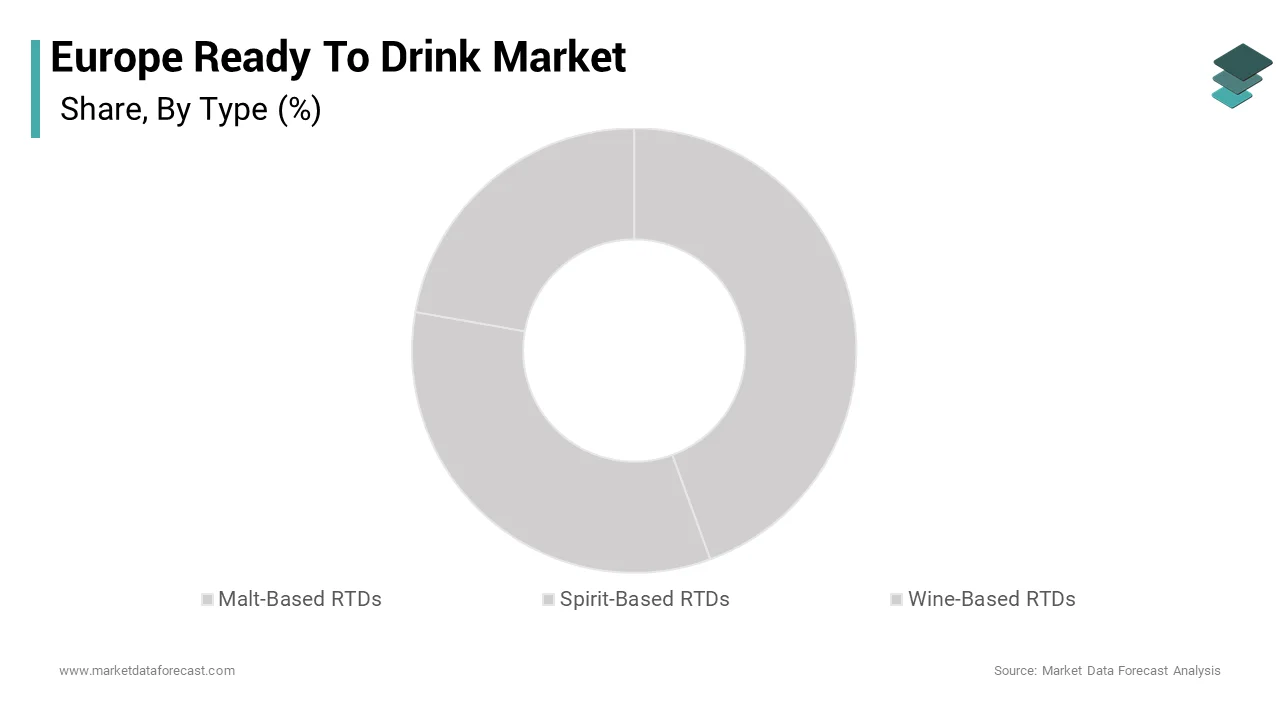
The wine-based ready to drink segment is ascribed to register a fastest CAGR of 9.7% during the forecast period. The rapid ascent of wine-based RTDs is primarily propelled by the widespread adoption of the "spritz" culture across Europe, which has normalized the consumption of wine cocktails as a daytime and early evening social ritual. Originating in Italy, the spritz phenomenon has permeated markets from Spain to Scandinavia, creating a massive demand for ready-to-pour versions of Aperol Spritz, Hugo Spritz, and Sangria that offer consistent taste and ease of service. This trend aligns perfectly with the broader societal shift toward moderation and "sessionable" drinking, where consumers prefer lower alcohol by volume (ABV) options that allow for longer social engagement without intoxication. The versatility of wine as a base allows for endless innovation with fruit infusions, herbs, and sparkling elements, keeping the category fresh and exciting.
By Processing Insights
The blended processing type segment was the largest by holding a significant share of the Europe ready to drink market in 2025 owing to the consumer expectation for complex, multi-layered flavor profiles that mimic the sophistication of hand-crafted cocktails, a feat achievable only through the blending of multiple ingredients. Modern drinkers reject one-dimensional tastes, seeking the interplay of bitter, sweet, sour, and savory notes found in classics like the Negroni, Mojito, or Old Fashioned. According to sensory analysis data from the European Flavour and Fragrance Association, over 85% of successful RTD launches in 2024 featured three or more distinct flavor components, necessitating advanced blending technologies to ensure homogeneity and stability. The blending process allows manufacturers to mask the harshness of high-proof alcohol with natural fruit extracts, botanicals, and spices by creating a smooth mouthfeel that appeals to a broad audience including novice drinkers. Furthermore, the ability to blend allows for the creation of signature proprietary flavors that differentiate brands in a crowded marketplace, fostering brand loyalty. The technical challenge of maintaining flavor consistency across large batches and varying storage conditions requires sophisticated industrial blending facilities, creating a barrier to entry that consolidates market share among established players who have mastered this art.
The single Compound processing type segment is anticipated to grow at a fastest CAGR of 12.4% from 2026 to 2034. The rapid expansion of the single compound segment is propelled by the intensifying consumer demand for transparency and simplicity in food and beverage labeling, where "less is more" has become a guiding principle for purchasing decisions. Health-conscious Europeans are increasingly scrutinizing ingredient lists, avoiding products with long lists of additives, preservatives, and artificial flavorings, and instead gravitating toward beverages that feature a single recognizable component such as pure cold-brew coffee, straight fermented tea, or single-origin fruit juice with no added sugar. Brands leveraging this positioning can command premium prices based on the perceived superior quality and lack of processing. The regulatory environment in the EU, which favors clear and unambiguous labeling, further supports this segment by making it easier for single-compound products to communicate their value proposition instantly.
By Packaging Insights
The can packaging segment held a prominent share of the Europe ready to rink market due to their unmatched ability to protect the contents from light and oxygen, two critical factors that degrade the quality and flavor of ready to drink beverages, particularly those containing delicate botanicals, hops, or wine. According to technical data from the European Aluminium Association, cans prevent light-induced skunking and oxidation better than any other common packaging format, preserving the freshness of craft beers, cocktails, and perishable juices for up to 12 months without the need for excessive preservatives. This protection is vital for premium RTDs where flavor integrity is the key selling point; consumers are unwilling to compromise on taste, and cans guarantee consistency from the first production batch to the last unit sold. The lightweight nature of cans also reduces the risk of breakage during transport and handling, minimizing product loss and safety hazards in retail environments.
The bottle segment is esteemed to witness a fastest CAGR of 8.9% during the forecast period. The rapid growth of the bottle segment is primarily driven by the enduring consumer perception of glass as the hallmark of luxury, quality, and authenticity, which is essential for high-end spirit-based and wine-based ready to drink products. As the RTD market moves upmarket with ultra-premium cocktails and vintage wine spritzers, brands are increasingly opting for glass bottles to signal sophistication and justify higher price points that cans cannot always support. The tactile weight and clarity of glass enhance the visual appeal of the liquid, allowing consumers to appreciate the color and clarity of the beverage, a key factor for wine and craft spirit enthusiasts. Furthermore, glass is perceived as inert and free from any potential chemical migration, reinforcing the "pure" image of the product. The reusability of glass bottles by consumers for other purposes also adds value, extending the brand interaction beyond the initial consumption. As the RTD category continues to shed its budget image and embrace the craft revolution, the demand for glass packaging will continue to surge, serving as a critical differentiator for brands targeting the affluent and discerning demographic.
COUNTRY ANALYSIS
United Kingdom Ready To Drink Market Analysis
The United Kingdom was the top performer of the Europe ready to drink market by holding 26.3% of share in 2025 with the hard seltzer and premium canned cocktail revolutions. The profound impact of the "sober curious" movement and the demand for high-quality low-alcohol alternatives, which has spurred unprecedented growth in the sector. The implementation of the Sugar Tax has also forced manufacturers to innovate with natural sweeteners and lower-calorie formulations by resulting in a healthier product portfolio that appeals to fitness-conscious consumers. The dense network of off-license retailers and the robust e-commerce infrastructure facilitate easy access to a wide variety of RTD brands, from mass-market giants to niche craft producers. Furthermore, the vibrant nightlife culture and the trend of pre-drinking at home have created a sustained demand for convenient, single-serve alcoholic beverages. The regulatory clarity regarding the classification of spirit-based RTDs has encouraged major distillers to invest heavily in local production and marketing.
Germany Ready To Drink Market Analysis
Germany ready to drink market was positioned second with 19.9% of Europe ready to drink market share in 2025 with a strong preference for beer-based RTDs (Radler) and a rapidly growing acceptance of premium spirit-based cans among younger demographics. Beyond traditional malt beverages, the German market is witnessing a surge in demand for high-quality gin and vodka-based RTDs, driven by the urban youth in cities like Berlin and Munich who seek portable party solutions. The strict adherence to the Pfand (deposit) system ensures high recycling rates and encourages the return of containers, making the logistics of glass and plastic bottles highly efficient. Furthermore, the German consumer's emphasis on quality and ingredient transparency has pushed manufacturers to adopt clean label practices, removing artificial additives from their formulations.
Italy Ready To Drink Market Analysis
Italy ready to drink market growth is likely to witness a fastest CAGR in coming years with its unique dominance of wine-based RTDs and the global influence of the Aperitivo culture which has normalized the consumption of ready-to-serve spritzes and negronis. The Italian market status is heavily influenced by its heritage as a wine-producing nation, translating into a natural affinity for wine-centric ready to drink formats. The Italian consumer's preference for authentic ingredients means that successful RTDs in the region must utilize genuine Prosecco, Campari, and fresh citrus juices, rejecting artificial substitutes. This demand for quality has led to collaborations between famous wineries and cocktail brands, elevating the status of RTDs to a premium category. Furthermore, the warm climate in southern regions encourages year-round consumption of cold, refreshing beverages, boosting sales volumes compared to northern European counterparts. The export of Italian-style RTDs has also reinforced the domestic market, as global success validates local preferences.
France Ready To Drink Market Analysis
France ready to drink market growth is propelled with its reputation for gastronomic excellence to drive demand for sophisticated, wine-based, and cider-based ready to drink options that emphasize terroir and elegance. The French government's support for the wine industry has facilitated the entry of major champagne and Bordeaux houses into the RTD space, lending prestige and credibility to the category. The "Made in France" label carries significant weight, with locals preferring domestically sourced fruits and alcohols, supporting a robust network of local producers who prioritize sustainability and organic farming. The rising trend of "vinification" in cans, where high-end wines are packaged in aluminum to reduce carbon footprints, has gained traction among eco-conscious French drinkers. Additionally, the strict regulations on advertising alcoholic beverages have forced brands to rely on packaging design and word-of-mouth, leading to highly aesthetic and innovative product presentations.
Spain Ready To Drink Market Analysis
Spain ready to drink market growth is driven with its dual role as a major producer of wine and citrus fruits and a enthusiastic consumer of innovative RTD formats. The primary driver for Spain's market share is the climatic necessity for hydration and refreshment, which results in high per capita consumption of beer-based shandies, wine spritzers, and fruit-infused RTDs, particularly during the long summer seasons. As per agricultural data from the Spanish Ministry of Agriculture, Fisheries and Food, Spain is one of the largest producers of citrus in Europe, fueling a domestic RTD industry that supplies high-quality lemon and orange flavored beverages to both local and international markets. The tradition of "tapeo" and outdoor socializing fosters a culture of shared beverage consumption, boosting sales of multipacks and portable single-serve formats ideal for beaches and terraces. The tourism industry, which attracts millions of visitors annually, significantly contributes to demand, especially in coastal regions where ready to drink refreshments are staples.
COMPETITIVE LANDSCAPE
The competition in the Europe ready to drink market is intensely fierce characterized by a dynamic mix of global beverage giants agile craft startups and powerful private label brands vying for consumer attention. Major multinational corporations leverage their vast distribution networks and massive marketing budgets to dominate shelf space while smaller niche players differentiate themselves through unique flavor profiles organic certifications and hyper local sourcing stories. The battle for market share is increasingly fought on the grounds of innovation with companies racing to launch low sugar functional and sustainable products that align with stringent European health and environmental regulations. Price competition remains sharp especially in the mass market segment where retailer own brands offer compelling value propositions that pressure branded goods to justify their premiums. Sustainability has emerged as a critical battleground with consumers favoring brands that demonstrate genuine commitment to circular economy principles through recyclable packaging and carbon reduction initiatives. The market sees frequent consolidation as large players acquire innovative small brands to refresh their portfolios and capture emerging trends quickly. Overall, the landscape is fast paced and complex requiring continuous adaptation to regulatory changes and evolving consumer tastes to survive and thrive in this highly contested sector.
KEY MARKET PLAYERS
A dominating players that are in the Europe ready to drink market are
- Thai Spirit Industry Co., Ltd. (Thailand)
- Whistler Wine & Spirits Pte Ltd (Singapore)
- Pernod Ricard SA
- Destileria Limtuaco & Co., Inc. (Philippines)
- Winepak Corporation (U.S.)
- Thai Beverage Plc (Thailand)
- Diageo (U.K.)
- Carlsberg Group (Denmark)
- Siam Winery (Thailand)
- San Miguel Brewery Inc. (Philippines)
- Nestlé (Switzerland)
- Red Bull (Austria)
- The Coca-Cola Company (U.S.)
- BACARDI (Bermuda)
Top Players In The Market
- Diageo plc stands as a global powerhouse in the alcoholic beverage sector with a formidable presence in the Europe ready to drink market through its portfolio of iconic spirit brands. The company contributes significantly to the global landscape by pioneering premium canned cocktails that leverage its extensive range of gins, vodkas, and whiskies. Recently, Diageo has strengthened its European position by launching innovative low sugar and natural ingredient variants to align with evolving consumer health preferences. They have also invested heavily in sustainable packaging initiatives including the rollout of fully recyclable aluminum cans across their key product lines. Their strategic acquisitions of emerging craft cocktail brands allow them to capture niche markets while maintaining mass appeal.
- Pernod Ricard SA operates as a leading French multinational with a dominant role in the Europe ready to drink market driven by its expertise in aperitifs and wine based beverages. The corporation enhances its global footprint by transforming classic cocktails like the Aperol Spritz and Ricard Pastis into convenient ready to drink formats suitable for modern lifestyles. Recent actions to solidify their market stance include the expansion of production facilities in Southern Europe to meet surging demand for wine spritzers. They have also prioritized sustainability by committing to carbon neutrality in their supply chain and introducing lightweight packaging solutions. Pernod Ricard actively collaborates with local distributors to ensure widespread availability in both on trade and off trade channels.
- The Coca-Cola Company exerts significant influence in the Europe ready to drink market particularly within the non alcoholic and hybrid beverage segments through its diverse brand portfolio. The giant contributes to the global market by leveraging its unmatched distribution network to deliver innovative soft drinks teas and energy beverages across the continent. Recently the company has bolstered its European presence by acquiring regional craft brands and launching new functional beverages infused with vitamins and adaptogens. They have made substantial investments in circular economy goals aiming to collect and recycle a bottle or can for every one they sell. Their development of smart vending machines and partnership with quick commerce platforms ensures immediate product accessibility for urban consumers.
Top Strategies Used By The Key Market Participants
Key players in the Europe ready to drink market primarily focus on premiumization strategies by launching high quality craft cocktails and organic beverages to appeal to discerning consumers willing to pay more for superior taste and ingredients. Companies are increasingly investing in sustainable packaging solutions such as recycled aluminum and bio based plastics to meet strict environmental regulations and satisfy eco conscious buyer demands. Another major strategy involves portfolio diversification through the acquisition of niche local brands and the development of low or no alcohol options to cater to the growing sober curious movement. Market participants are also leveraging digital transformation by utilizing data analytics for personalized marketing and expanding direct to consumer sales channels to build stronger customer relationships. Furthermore, firms are optimizing supply chains by localizing production facilities to reduce carbon footprints and ensure faster response times to shifting regional trends and consumption patterns.
MARKET SEGMENTATION
This research report on the Europe ready to drink market is segmented and sub-segmented into the following categories.
By Type
- Malt-Based RTDs
- Spirit-Based RTDs
- Wine-Based RTDs
- Others
By Processing Type
- Single Compound
- Blended
By Gender
- Male
- Female
By Packaging
- Bottle
- Can
- Others
By Trade
- Off-Trade
- On-Trade
By Country
- UK
- France
- Spain
- Germany
- Italy
- Russia
- Sweden
- Denmark
- Switzerland
- Netherlands
- Turkey
- Czech Republic
- Rest of Europe
Frequently Asked Questions
How are ready-to-drink beverages changing consumption habits in Europe?
They offer convenient, on-the-go options that fit fast-paced lifestyles and reduce preparation time.
What factors are driving the growth of the ready-to-drink market in Europe?
Busy lifestyles, demand for convenience, and increasing preference for functional beverages are key growth drivers.
Which types of ready-to-drink beverages are popular in Europe?
Tea, coffee, energy drinks, juices, and ready-to-drink alcoholic beverages are widely consumed categories.
Why are consumers shifting toward ready-to-drink beverage options?
Consumers prefer quick, portable, and easy-to-consume drinks that match modern lifestyle needs.
How is health awareness influencing the ready-to-drink market?
Demand is rising for low-sugar, organic, and functional beverages with added nutritional benefits.
Which distribution channels play a major role in RTD product sales?
Supermarkets, convenience stores, and online platforms are key channels for product availability.
What challenges affect the Europe ready-to-drink market?
Concerns about sugar content, packaging waste, and product shelf life can impact market growth.
How is product innovation shaping the RTD beverage industry?
Brands are introducing new flavors, functional ingredients, and sustainable packaging to attract consumers.
Which countries are key contributors to the RTD market in Europe?
The United Kingdom, Germany, France, and Spain are major markets due to high beverage consumption.
What future trend is expected in the Europe ready-to-drink market?
Growing demand for healthier, premium, and eco-friendly beverage options is expected to drive market expansion.
Access the study in MULTIPLE FORMATS
Purchase options starting from
$ 2000
Didn’t find what you’re looking for?
TALK TO OUR ANALYST TEAM
Need something within your budget?
NO WORRIES! WE GOT YOU COVERED!
Call us on: +1 888 702 9696 (U.S Toll Free)
Write to us: sales@marketdataforecast.com