Europe Recombinant Proteins Market Size, Share, Trends, & Growth Forecast Report By Product (Cytokines & Growth Factors, Antibodies, Immune checkpoint proteins, Virus Antigens, Enzymes, Recombinant Regulatory Protein, Hormones, Others) Application, End-User , Host Cell and Country (UK, France, Spain, Germany, Italy, Russia, Sweden, Denmark, Switzerland, Netherlands, Turkey, Czech Republic and Rest of Europe), Industry Analysis From 2026 to 2034
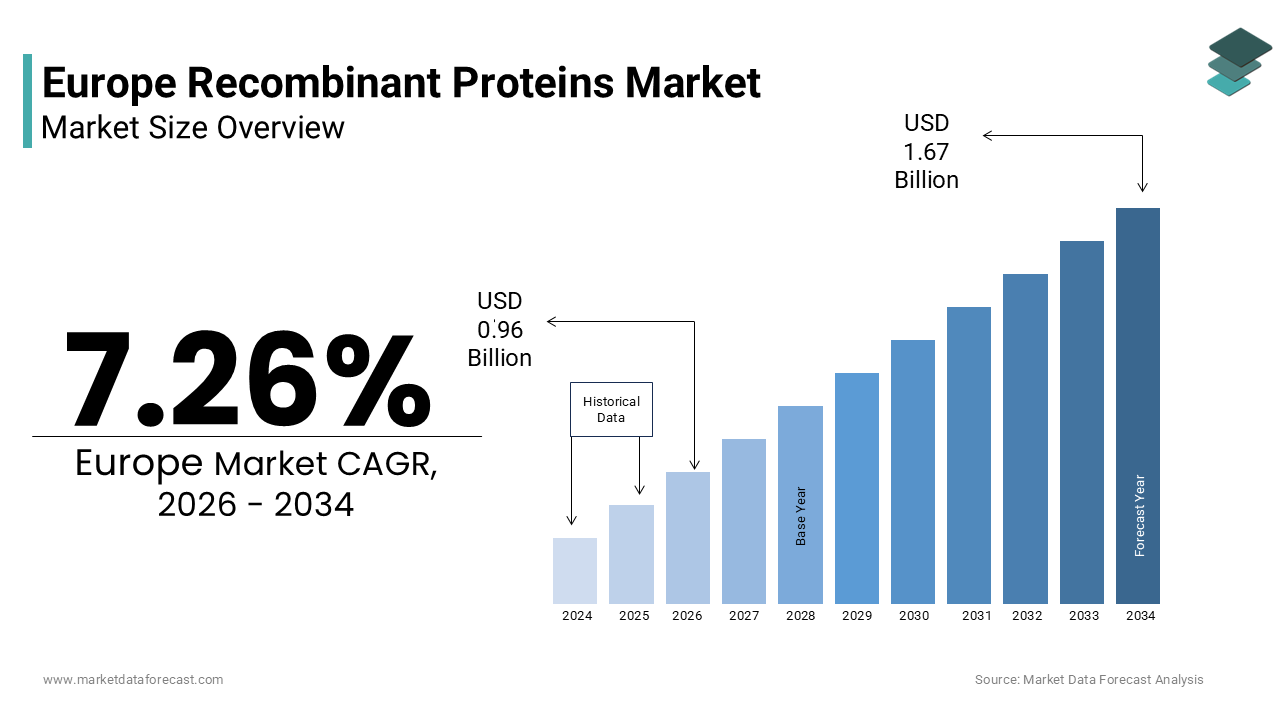
Market Size, 2025
$0.89 BnMarket Estimate, 2026
$0.96 BnMarket Forecast, 2034
$1.67 BnCAGR, 2026–2034
7.26%Europe Recombinant Proteins Market Report Summary
The Europe recombinant proteins market was valued at USD 0.89 billion in 2025, is estimated to reach USD 0.96 billion in 2026, and is projected to reach USD 1.67 billion by 2034, growing at a CAGR of 7.26% during the forecast period from 2026 to 2034. The growth of the market is driven by the expanding pipeline of biologic therapeutics, increasing use of recombinant proteins in oncology and rare disease treatments, and strong demand from academic and industrial life science research. Europe’s robust biopharmaceutical ecosystem, aging population, and growing burden of chronic diseases are further supporting market expansion. Additionally, rising adoption of recombinant proteins in vaccine development, cell and gene therapies, and advanced diagnostics is accelerating market growth across the region.
Key Market Trends
- Increasing use of recombinant antibodies in oncology and autoimmune disease therapies.
- Rising demand for cytokines and growth factors in cell and gene therapy manufacturing.
- Growing integration of recombinant proteins in mRNA and viral vector vaccine development.
- Expansion of GMP-grade recombinant protein production across Europe.
- Increasing funding for life sciences research through EU programs such as Horizon Europe.
- Rising focus on high-purity, serum-free and mammalian-expressed proteins for better reproducibility.
Segmental Insights
- Based on product, the antibodies segment was the largest and held a significant share of the Europe recombinant proteins market. The dominance of this segment is attributed to the extensive use of monoclonal antibodies in cancer immunotherapy, autoimmune disease management, and advanced diagnostic applications across Europe.
- Based on application, the therapeutics segment accounted for the largest share of the market. This dominance is driven by the growing approvals of biologic drugs, increasing use of recombinant proteins in chronic disease treatment, and Europe’s strong regulatory support for biologic and biosimilar development.
- Based on end use, the pharmaceutical and biotechnology companies segment dominated the market. The leadership of this segment is due to the heavy utilization of recombinant proteins in drug discovery, process development, quality control, and biologics manufacturing.
Regional Insights
The Europe recombinant proteins market is witnessing steady growth across major economies, supported by strong research infrastructure and biopharmaceutical leadership.
- Germany was the largest contributor to the market, driven by its strong biotech ecosystem, presence of major biopharma companies, and advanced GMP manufacturing infrastructure.
- Switzerland holds a significant position due to the strong presence of global pharmaceutical leaders such as Roche and Novartis and high investment in biologics R&D.
- The United Kingdom and France continue to perform strongly, supported by leading universities, government-funded research programs, and growing biotech startup ecosystems.
- Other European countries are gradually expanding their market presence through increased investment in life science research and biomanufacturing capabilities.
Competitive Landscape
The Europe recombinant proteins market is characterized by the presence of global life science leaders and specialized biotechnology companies focusing on high-quality protein production, GMP compliance, and customized recombinant solutions. Companies are emphasizing expansion of product portfolios, investment in mammalian expression systems, partnerships with research institutions, and development of serum-free and high-purity proteins. Innovation in modular biomanufacturing and continuous processing is further strengthening competition. Prominent players in the Europe recombinant proteins market include Roche Diagnostics, Merck KGaA, Thermo Fisher Scientific, Bio-Techne, Abcam, GenScript, Sino Biological, Lonza Group, Sartorius AG, and Creative BioMart.
Europe Recombinant Proteins Market Size
The europe recombinant proteins market size was valued at USD 0.89 billion in 2025 and is anticipated to reach USD 0.96 billion in 2026 from USD 1.67 billion by 2034, growing at a CAGR of 7.26% during the forecast period from 2026 to 2034.
Recombinant proteins are proteins produced through genetic engineering techniques in host systems such as bacteria yeast mammalian or insect cells. These proteins serve as critical tools in therapeutic development diagnostics and life science research. Europe’s leadership in biopharmaceutical innovation and stringent regulatory science creates a distinct demand environment and is driven by both scientific rigor and clinical necessity. In 2023, the European Union approved several new medicinal products, including a significant proportion that were biologics or contained recombinant proteins, as per the European Medicines Agency. The region hosts numerous academic and private life science laboratories that routinely utilize recombinant proteins for target validation, assay development, and preclinical studies. Additionally, Europe’s aging population amplifies demand for biologic therapeutics in oncology, autoimmune, and metabolic diseases. The convergence of world-class research infrastructure, robust regulatory pathways, and high unmet medical need positions recombinant proteins as a strategic cornerstone of Europe’s life science and healthcare ecosystem.
MARKET DRIVERS
Expanding Pipeline of Biologic Therapeutics in Oncology and Rare Diseases
The growth of the Europe recombinant proteins market is significantly propelled by the growing clinical development and regulatory approval of biologic drugs for complex chronic conditions. In 2023, the European Medicines Agency granted marketing authorization to several recombinant protein-based biologics, including monoclonal antibodies, bispecifics, and fusion proteins, with oncology representing a major share of these approvals. As per the European Commission, rare diseases affect between 27 and 36 million people in EuropePublic Health. Recombinant enzymes such as imiglucerase for Gaucher disease and alglucosidase alfa for Pompe disease are considered life-sustaining. The EU’s Orphan Drug Regulation provides ten years of market exclusivity, which is incentivizing investment in recombinant protein development for small patient populations. This therapeutic imperative ensures sustained demand not only for final drug products but also for research-grade and GMP-grade recombinant proteins used in process development and quality control across the biopharmaceutical value chain.
Robust Academic and Industrial Life Science Research Ecosystem
Europe’s dense network of public and private research institutions drives consistent demand for high-quality recombinant proteins as essential reagents in basic and translational science, which is further boosting expansion of the European recombinant proteins market. The European Research Area includes a large number of universities and research hospitals that conduct protein-centric studies in immunology, neuroscience, and infectious diseases. As per the European Commission, Horizon Europe has allocated over €8.2 billion to health research, with a substantial portion directed toward projects requiring recombinant cytokines, growth factors, and antigens. Industrial players also contribute significantly, with pharmaceutical companies in Germany, Switzerland, and the UK maintaining internal protein production for target screening and assay development. The use of recombinant proteins is widespread across European research labs, with purity and batch-to-batch consistency cited as top procurement criteria.
MARKET RESTRAINTS
Stringent Regulatory Requirements for Protein Characterization and Purity
The Europe recombinant proteins market faces significant constraints due to the European Medicines Agency’s and European Pharmacopoeia’s rigorous standards for identity, purity, and bioactivity. Recombinant proteins intended for clinical or diagnostic use must undergo extensive analytical validation, including mass spectrometry, glycosylation profiling, and endotoxin testing to meet EU GMP Annex 1 requirements. These scientific and administrative burdens disproportionately affect small and medium biotech firms that lack in-house analytical capacity. Consequently, many researchers opt for imported proteins from non-EU jurisdictions with less stringent oversight, risking non-compliance during audits. This regulatory intensity, while ensuring safety, also raises barriers to entry and slows innovation cycles, particularly for novel protein formats.
High Production Complexity and Cost of Mammalian Cell Culture Systems
The production of complex recombinant proteins relies heavily on mammalian cell expression systems, which are capital and expertise intensive and is another major restraint to the growth of the European recombinant proteins market. Culturing Chinese hamster ovary or human embryonic kidney cells demands sterile bioreactors, precise media formulations, and continuous monitoring. According to BioPlan Associates, the average cost to produce one gram of clinical-grade recombinant monoclonal antibody in Europe is significantly higher than microbial systems, contributing to limited accessibility for academic labs and startups. Additionally, Europe has a limited number of contract development and manufacturing organizations specializing in mammalian expression, creating bottlenecks in technology transfer and scale-up. Without public investment in open-access biomanufacturing infrastructure, the high cost and complexity of advanced protein production will continue to constrain the breadth and pace of innovation in Europe’s recombinant protein landscape.
MARKET OPPORTUNITIES
Advancement of Continuous Bioprocessing and Modular Manufacturing Platforms
Europe is emerging as a leader in next-generation biomanufacturing technologies that promise to reduce costs and accelerate production of recombinant proteins, which is a potential opportunity in the European recombinant proteins market. As per the Innovative Health Initiative, multiple projects under its 2023 call have focused on continuous bioprocessing, including the MODULAR consortium, which integrates perfusion bioreactors and in-line analytics into compact systems. These platforms have demonstrated potential to significantly increase volumetric productivity while reducing facility footprint, according to pilot data from the Technical University of Denmark. Companies like Sartorius and Cytiva, headquartered in Germany and Sweden respectively, are commercializing single-use modular units that enable GMP-compliant protein production in standard laboratories. In 2024, the Paul Ehrlich Institute certified a modular continuous manufacturing line for recombinant cytokines in Germany, setting a regulatory precedent. By decentralizing production and lowering capital barriers, these innovations democratize access to high-quality recombinant proteins for small biotechs and academic spin-outs and is unlocking a new wave of therapeutic and diagnostic development across the continent.
Integration of Recombinant Proteins in mRNA and Viral Vector Vaccine Platforms
The expansion of advanced vaccine modalities in Europe has created a strategic opening for recombinant proteins as critical components in antigen design and quality control. While mRNA vaccines encode protein production in vivo, their development relies on recombinant spike proteins for binding assays, neutralization tests, and potency determination. Similarly, viral vector vaccines such as those for Ebola or HIV use recombinant envelope proteins for pseudotyping and immunogenicity studies. In 2023, the European Medicines Agency issued updated guidelines requiring reference standards of recombinant antigens for novel vaccine dossiers. Public health agencies, including the European Centre for Disease Prevention and Control, maintain stockpiles of recombinant viral proteins for pandemic preparedness, with a broad catalog of pathogen antigens included in its 2024 biorepository inventory. Furthermore, the EU’s HERA Incubator program has allocated substantial funding to establish a recombinant protein core facility for rapid response to emerging variants. This convergence of vaccinology and protein engineering positions recombinant proteins not as legacy tools but as dynamic enablers of Europe’s future pandemic resilience.
MARKET CHALLENGES
Intellectual Property Disputes Over Expression Systems and Protein Engineering
The Europe recombinant proteins market is increasingly hindered by complex and overlapping intellectual property rights covering host cell lines, gene optimization algorithms, and fusion protein designs. As per the European Patent Office, patent filings in biotechnology remain high, with significant litigation emerging around CRISPR-based expression enhancement and Fc fusion technologies. In 2024, a Munich court issued an injunction against a German biotech startup for infringing a patent on glycoengineered antibody production, which is delaying its clinical trial. Such disputes create legal uncertainty, particularly for academic spin-outs that lack resources for freedom-to-operate analyses. Moreover, the fragmentation of patent law across EU member states forces companies to navigate multiple jurisdictions for enforcement. According to the European IPR Helpdesk, a significant proportion of small life science firms have delayed or abandoned recombinant protein projects due to IP concerns. This innovation chill risks ceding leadership to regions with clearer or more permissive IP frameworks unless Europe establishes standardized licensing pools for foundational protein technologies.
Shortage of Skilled Workforce in Advanced Protein Bioengineering
Europe faces a critical gap in professionals trained in the multidisciplinary science of recombinant protein development spanning molecular biology, bioprocess engineering, and analytical characterization. As per the European Commission, biotechnology is among the fastest-growing sectors in the EU, yet industries face a serious skills gap, particularly in areas like glycosylation analysis and continuous manufacturing. University curricula remain siloed, with few programs integrating cell line development, downstream processing, and regulatory science into cohesive tracks. Consequently, companies invest significant time in training new hires in protein production workflows. This talent bottleneck slows technology transfer from academia to industry and increases reliance on external consultants, raising costs. The problem is acute in Central and Eastern Europe, where brain drain to Western institutions exacerbates local capacity gaps. Without coordinated investment in cross-sectoral education and apprenticeship models, Europe’s ability to scale next-generation recombinant protein innovation will remain constrained despite strong scientific foundations and regulatory excellence.
REPORT COVERAGE
| REPORT METRIC | DETAILS |
| Market Size Available | 2025 to 2034 |
| Base Year | 2025 |
| Forecast Period | 2026 to 2034 |
| CAGR | 7.26 % |
| Segments Covered | By Product, Application, End-User, Host Cell and Region |
| Various Analyses Covered | Global, Regional & Country Level Analysis; Segment-Level Analysis; DROC, PESTLE Analysis; Porter’s Five Forces Analysis; Competitive Landscape; Analyst Overview of Investment Opportunities |
| Regions Covered | United Kingdom, France, Spain, Germany, Italy, Russia, Sweden, Denmark, Switzerland, the Netherlands, Turkey, and the Czech Republic |
| Market Leaders Profiled | Bio-Techne Corporation, Thermo Fisher Scientific, Inc., Merck KGaA, Bio-Rad Laboratories, Inc., Abcam plc, GenScript Biotech Corporation, Miltenyi Biotec B.V. & Co. KG, Proteintech Group, Inc., BPS Bioscience, Inc., RayBiotech Life, Inc., Novartis AG, Lonza Group, Kaneka Eurogentec S.A., ExcellGene SA, A.M.S. Biotechnology (Europe) Limited, and PerkinElmer Inc. |
SEGMENTAL ANALYSIS
By Product Insights
The antibodies segment led the market by holding 60.5% of the European recombinant proteins market share in 2024. The dominance of antibodies segment in this regional market is driven by their central role in targeted cancer immunotherapies, autoimmune disease management, and advanced diagnostic assays across both clinical and research settings. Monoclonal antibodies constitute the largest class of biologic drugs approved in Europe, with dozens of antibody-based therapies receiving European Medicines Agency authorization between 2020 and 2023. In 2023 alone, antibody drugs generated substantial pharmaceutical revenue across the EU, with blockbuster agents like adalimumab, trastuzumab, and pembrolizumab used to treat conditions ranging from rheumatoid arthritis to HER2-positive breast cancer and advanced melanoma. According to the European Society for Medical Oncology, recombinant antibodies are now included in a significant proportion of new oncology regimens. These therapeutics require high purity recombinant forms not only as final products but also as reference standards during manufacturing and quality control. Additionally, the rise of bispecific and antibody drug conjugate formats relies on precisely engineered recombinant scaffolds. This deep clinical entrenchment ensures sustained demand across the entire antibody value chain from research through commercial production.
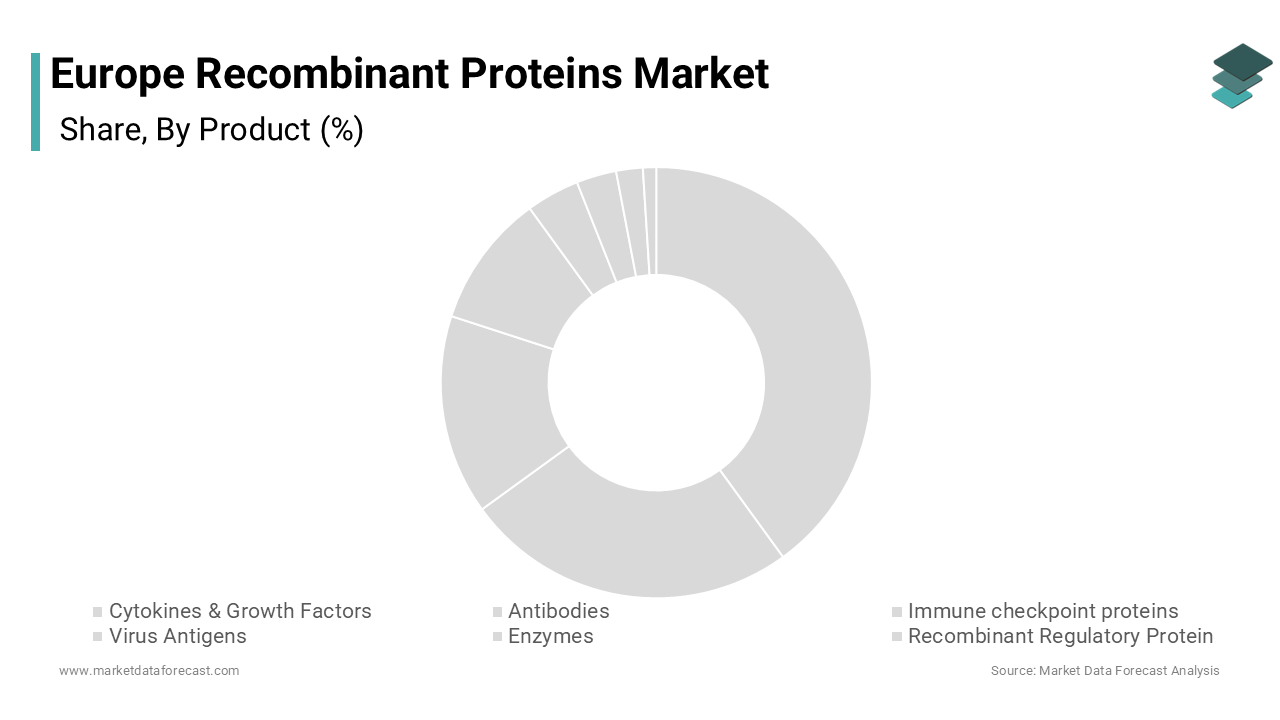
The cytokines and growth factors segment is the fastest growing in the Europe recombinant proteins market and is expected to witness a CAGR of 14.4% over the forecast period. Cytokines and growth factors are fundamental reagents in the ex vivo expansion and differentiation of immune and stem cells for advanced therapy medicinal products. The European Medicines Agency has authorized multiple cell-based therapies including CAR T products like Kymriah and Yescarta. Similarly, mesenchymal stem cell therapies for graft-versus-host disease depend on recombinant fibroblast growth factor and platelet-derived growth factor to maintain potency. The European Commission’s ATMP Regulation mandates the use of GMP-grade recombinant proteins in all advanced therapy production to ensure patient safety. In 2023, numerous cell therapy clinical trials were active in the EU according to the Clinical Trials Register. As commercial cell therapy adoption grows, the demand for high quality recombinant signalling proteins will scale proportionally.
By Application Insights
The therapeutics segment is the dominant application segment in the Europe recombinant proteins market and had 56.5% of the regional market share in 2024. Europe maintains one of the world’s most active pipelines for recombinant protein therapeutics. According to the European Medicines Agency, biologics represented 56% of all new molecular entities authorized in the EU in 2023. Recombinant monoclonal antibodies, enzymes, and fusion proteins formed the majority. The centralized authorization procedure enables rapid pan-European market access, which is incentivizing developers to prioritize the EU in global launch sequences. Furthermore, the EU’s adaptive pathways initiative allows conditional approval based on surrogate endpoints, accelerating patient access to life-saving recombinant therapies for unmet needs. Diseases such as hemophilia, multiple sclerosis, and psoriasis now have multiple recombinant treatment options including extended half-life Factor VIII replacement and IL-17 inhibitors. This steady influx of new therapies ensures continuous demand for both innovator and generic grade recombinant proteins in therapeutic manufacturing and quality assurance.
The research application segment is the fastest growing in the Europe recombinant proteins market and is expected to register a CAGR of 14.01% over the forecast period. Europe’s commitment to open science and collaborative research drives consistent demand for recombinant proteins as essential tools in hypothesis testing and pathway elucidation. The Horizon Europe program allocated €5.2 billion to health research in 2023, with a significant portion supporting projects requiring recombinant cytokines, growth factors, and enzymes. Initiatives like the Human Cell Atlas and the EU IMI2 consortium on neurodegenerative diseases routinely distribute recombinant protein reagents to hundreds of partner labs. As per a 2024 audit by the European Molecular Biology Laboratory, recombinant proteins were used in a majority of signal transduction and immune profiling studies across its network. Furthermore, the EU’s push for research reproducibility has shifted procurement toward well-characterized recombinant reagents over polyclonal sera. This policy-driven quality upgrade across thousands of laboratories sustains high volume demand for research-grade proteins with verified bioactivity and lot consistency.
By End Use Insights
The pharma and biotechnology companies segment led the market by holding 60.6% of the regional market share in 2024. The dominance of pharma and biotechnology segment in this regional market can be attributed to their role as primary developers and manufacturers of recombinant protein-based therapeutics, biosimilars, and advanced diagnostics. Large and mid-sized pharmaceutical companies in Europe maintain extensive internal recombinant protein capabilities to support drug discovery, process development, and quality control. Companies like Novo Nordisk in Denmark, Roche in Switzerland, and Sanofi in France operate dedicated protein expression and purification suites that produce thousands of unique recombinant constructs annually for target screening, lead optimization, and reference standards. These proteins are used in high-throughput binding assays, cell-based functional tests, and structural biology studies that form the foundation of modern biologic development. In 2023, the top ten European pharma firms collectively filed over 1,200 patents involving recombinant proteins according to the European Patent OfficePatentRenewal.com. The need for proprietary control over critical reagents drives continuous investment in internal production. This vertical integration ensures that pharma and biotech remain the largest and most consistent end users of recombinant proteins across the continent.
The academic and research institutes segment is the fastest growing end use segment in the Europe recombinant proteins market and is likely to register a CAGR of 13.3% over the forecast period. Europe is systematically investing in shared research infrastructures that centralize access to high quality recombinant proteins for the academic community. The European Strategy Forum on Research Infrastructures has designated over 20 life science facilities as ESFRI Landmarks including EMBL’s Protein Expression and Purification Core Facility and the French Proteogenomics Platform. These centers produce and distribute recombinant proteins to thousands of researchers under standardized quality protocols. In 2023, the EU allocated €380 million to upgrade national core facilities through the Cohesion Policy with recombinant protein production as a priority area. A 2024 assessment by the European Research Infrastructure Consortium found that centralized protein services reduced procurement costs by 40% and improved experimental reproducibility across member states. As these infrastructures scale, they democratize access to high quality reagents that were previously limited to elite institutions thereby expanding the academic market base.
REGIONAL ANALYSIS
Germany Recombinant Proteins Market Analysis
Germany dominated the recombinant proteins market in Europe in 2024 by holding 20.9% of the regional market share. The dominance of Germany in the European market is driven by its world-class biopharmaceutical industry, strong academic research base, and advanced manufacturing infrastructure. Germany is home to a large number of biotech firms, with major hubs in Munich, Berlin, and the Rhine-Neckar region. Companies like BioNTech, CureVac, and Bayer maintain large-scale recombinant protein pipelines for vaccines, oncology, and gene therapy. Germany also hosts leading contract development organizations such as Rentschler Biopharma and Yposkesi that offer GMP protein production services to global clients. As per the Federal Ministry of Education and Research, substantial funding was allocated in 2023 to life science innovation, including the National Research Platform for Zoonoses, which relies heavily on recombinant viral antigens. Additionally, the Paul Ehrlich Institute’s stringent but predictable regulatory oversight provides a trusted framework for protein-based product development. This combination of industrial density, scientific excellence, and regulatory clarity ensures Germany’s central role in Europe’s recombinant protein ecosystem.
Switzerland Recombinant Proteins Market Analysis
Switzerland held a noteworthy share of the Europe recombinant proteins market in 2024. The growth of Switzerland in the European market is driven by its concentration of global pharmaceutical leaders and precision manufacturing culture. According to the Swiss Biotech Report, biologics and recombinant protein-based products account for a significant portion of the country’s life science exports. Roche and Novartis, headquartered in Basel, operate some of the world’s most advanced recombinant protein facilities, producing monoclonal antibodies and engineered enzymes for global markets. Switzerland’s unique regulatory alignment with the EU through mutual recognition agreements allows seamless access to European markets without duplication of testing. The Swiss Federal Office of Public Health maintains a streamlined approval process for clinical-grade proteins, which accelerates trial initiation. Furthermore, institutions like ETH Zurich and the Friedrich Miescher Institute drive fundamental research requiring high-purity recombinant cytokines and growth factors. As per OECD data, Switzerland invests approximately 3.4% of its GDP in R&D, which is the highest in Europe. This combination of scientific rigor, industrial scale, and regulatory efficiency maintains Switzerland’s disproportionate influence in the recombinant protein landscape.
United Kingdom Recombinant Proteins Market Analysis
The United Kingdom is expected to account for a promising share of the Europe recombinant proteins market over the forecast period. The historic strength of the UK in molecular biology, world-leading universities, and vibrant biotech cluster are propelling the UK market growth. According to the UK BioIndustry Association, over 1,100 life science companies operate in the country, with Cambridge, Oxford, and London forming the “Golden Triangle” of innovation. Institutions like the Francis Crick Institute and the Sanger Institute routinely develop and use recombinant proteins for genomics and immunology research. The Medicines and Healthcare products Regulatory Agency maintains a robust but agile framework for biologic approvals and has authorized numerous recombinant protein therapies since 2020. Post-Brexit, the UK introduced the Innovative Licensing and Access Pathway to accelerate access to advanced therapies requiring recombinant components. Additionally, government initiatives like the Life Sciences Vision allocated £14 billion through 2024 to support biomanufacturing, including recombinant protein production. Despite regulatory divergence, the UK remains deeply integrated into European research networks through Horizon Europe association, ensuring continued scientific collaboration and market relevance.
France Recombinant Proteins Market Analysis
France is anticipated to exhibit a notable CAGR in the Europe recombinant proteins market over the forecast period owing to the strong public investment in health research and a growing biomanufacturing sector. The country hosts major players like Sanofi, which produces recombinant insulin and monoclonal antibodies at its sites in Vitry and Lyon. France’s national research infrastructure includes the Institut Pasteur and Genoscope, which utilize recombinant proteins for infectious disease and genomics research. The French Medicines Agency has streamlined pathways for advanced therapy medicinal products, which rely on recombinant cytokines for cell expansion. Additionally, the government’s France 2030 investment plan committed €1.2 billion to biomanufacturing innovation, including modular protein production units. With over 450 biotech firms and a centralized public health research system, France leverages state support and industrial heritage to maintain a strategic position in Europe’s recombinant protein value chain.
COMPETITVE LANDSCAPE
Competition in the Europe recombinant proteins market is defined by a dual focus on scientific excellence and regulatory compliance where differentiation hinges on protein quality expression system fidelity and supply chain transparency. The landscape includes global life science giants’ regional biotech specialists and academic core facilities all vying to serve a discerning customer base that prioritizes batch consistency endotoxin levels and functional validation over price alone. Large players leverage scale distribution and integrated workflows while niche suppliers compete through customization speed and specialized expertise in areas like cytokine engineering or antibody humanization. The rise of advanced therapies has intensified demand for GMP grade materials creating a bifurcation between research and clinical grade segments. Regulatory scrutiny under the European Medicines Agency and European Pharmacopoeia raises the bar for documentation and testing increasing barriers to entry. Meanwhile public funding initiatives and open science mandates drive volume in the research segment but demand cost efficiency. This complex interplay of science policy and application specificity shapes a highly specialized and technically rigorous competitive environment.
KEY MARKET PLAYERS
Some of the companies that are playing a dominating role in the europe recombinant proteins market include
- Bio-Techne Corporation
- Thermo Fisher Scientific, Inc.
- Merck Group / Merck KGaA
- Bio-Rad Laboratories, Inc.
- Abcam plc
- Genscript Biotech Corporation
- Miltenyi Biotec B.V. & Co. KG
- Proteintech Group, Inc.
- BPS Bioscience, Inc.
- RayBiotech Life, Inc.
- Novartis AG
- Lonza Group
- Kaneka Eurogentec S.A.
- ExcellGene SA
- A.M.S. Biotechnology (Europe) Limited
- PerkinElmer Inc.
Top Players in the Market
Roche Diagnostics
Roche Diagnostics is a global leader in life science tools with a substantial footprint in the Europe recombinant proteins market through its production of high purity recombinant antibodies cytokines and enzymes for research and diagnostic applications. Headquartered in Switzerland the company supplies recombinant reagents to academic institutions pharmaceutical developers and clinical laboratories across the continent. Roche’s recombinant proteins are integral to its immunoassay platforms and next generation sequencing workflows. In 2024 the company expanded its GMP compliant protein manufacturing facility in Penzberg Germany to support the growing demand for reference standards in biosimilar development. It also launched a new line of recombinant SARS CoV 2 antigens with enhanced stability for serology testing. These investments reinforce Roche’s role as a trusted enabler of precision medicine and diagnostics innovation in Europe.
Merck KGaA
Merck KGaA a German science and technology company plays a pivotal role in the Europe recombinant proteins market through its life science business which provides recombinant growth factors cytokines and engineered antibodies for drug discovery and cell therapy manufacturing. The company operates advanced protein expression platforms in Darmstadt and Lyon producing both catalog and custom proteins under ISO and GMP standards. Merck supplies critical reagents to over 70% of European cell and gene therapy developers according to internal data. In early 2024 Merck introduced a new line of serum free recombinant proteins optimized for CAR T cell expansion reducing reliance on animal derived components. It also partnered with the European Vaccine Initiative to supply recombinant viral antigens for pandemic preparedness. These actions underscore its strategic alignment with Europe’s advanced therapy and public health priorities.
Thermo Fisher Scientific
Thermo Fisher Scientific is a key participant in the Europe recombinant proteins market offering a comprehensive portfolio of recombinant antibodies cytokines and enzymes through its Gibco and Invitrogen brands. The company serves academic research institutes biotech startups and pharmaceutical companies across Europe with products validated for applications ranging from target validation to quality control. Thermo Fisher leverages its extensive distribution network and e commerce platform to ensure rapid access to high quality proteins. In 2024 the company enhanced its recombinant protein catalog with over 500 new human cytokines and checkpoint proteins produced in mammalian systems for improved post translational fidelity. It also launched a digital certificate of analysis system compliant with EU GMP Annex 1 requirements. These innovations strengthen its position as a reliable and scalable supplier supporting Europe’s evolving life science ecosystem.
Top Strategies Used by the Key Market Participants
Key players in the Europe recombinant proteins market are investing in GMP compliant and serum free production platforms to meet regulatory and ethical standards for advanced therapies. They are expanding catalog offerings with human sequence and mammalian expressed proteins to ensure biological relevance and reproducibility. Companies are enhancing digital traceability through electronic certificates of analysis and batch documentation aligned with EU pharmacovigilance requirements. Strategic partnerships with academic consortia and public health agencies secure long-term demand for reference antigens and research reagents. Additionally, they are developing modular protein expression systems to accelerate custom production for biotech and diagnostic innovators across the continent.
MARKET SEGMENTATION
This europe recombinant proteins market research report is segmented and sub-segmented into the following categories.
By Product
- Cytokines & Growth Factors
-
- Interferons (IFNs)
- Interleukins (ILs)
- Others
-
- Antibodies
- Immune checkpoint proteins
- Virus Antigens
- Enzymes
-
- Kinases
- Metabolic enzymes
- Others
-
- Recombinant Regulatory Protein
- Hormones
- Others
By Application
- Drug Discovery & Development
- Therapeutics
-
- Biologics
- Vaccines
- Cell & Gene Therapies
- Others
-
- Research
- Others
By End Use
- Pharma & Biotechnology Companies
- Academic & Research Institutes
- Diagnostic Laboratories
- Others
By Host Cell
- Mammalian systems
- Insect Cells
- Yeast & Fungi
- Bacterial Cells
- Others
By Country
- UK
- France
- Spain
- Germany
- Italy
- Russia
- Sweden
- Denmark
- Switzerland
- Netherlands
- Turkey
- Czech Republic
- Rest of Europe
Frequently Asked Questions
What are recombinant proteins?
Recombinant proteins are proteins produced using genetic engineering techniques in host cells such as bacteria, yeast, or mammalian cells.
What is driving the growth of the Europe recombinant proteins market?
Rising demand for biologics, increasing R&D in biotechnology, and growing use in drug discovery and diagnostics are major drivers.
Which sectors use recombinant proteins the most?
Pharmaceutical and biotechnology companies, academic and research institutes, and diagnostic laboratories are the main end users.
What are the common applications of recombinant proteins?
They are widely used in drug development, vaccine production, clinical research, diagnostics, and cell culture studies.
Which expression systems are commonly used?
Bacterial, yeast, insect, and mammalian cell expression systems are commonly used in production.
What challenges does the market face?
High production costs and complex manufacturing processes are major challenges. Strict regulatory requirements can also slow product development and commercialization.
How does biotechnology growth impact this market?
The expansion of biotechnology research directly increases the need for recombinant proteins. Innovations in genetic engineering are also improving production efficiency.
What is the role of CROs and CDMOs in this market?
Contract research organizations and contract development and manufacturing organizations support companies by providing protein production and research services. This helps biopharma firms reduce costs and speed up development.
How does academic research contribute to market growth?
Universities and research institutes continuously use recombinant proteins for experiments and innovation. Their research activities contribute to new discoveries and increased market demand.
What is the future outlook for the Europe recombinant proteins market?
The market is expected to grow steadily over the forecast period due to strong demand for biologics. Technological advancements will further support market expansion.
Access the study in MULTIPLE FORMATS
Purchase options starting from
$ 2000
Didn’t find what you’re looking for?
TALK TO OUR ANALYST TEAM
Need something within your budget?
NO WORRIES! WE GOT YOU COVERED!
Call us on: +1 888 702 9696 (U.S Toll Free)
Write to us: sales@marketdataforecast.com