- Product Description Description
- Table of Contents TOC
- List of Table & Figure LOT
- Get Free Sample PDF Sample PDF
Market Size, 2025
$139.76 BnMarket Estimate, 2026
$145.76 BnMarket Forecast, 2034
$203.94 BnCAGR, 2026–2034
4.29%Europe Residential Real Estate Market Report Summary
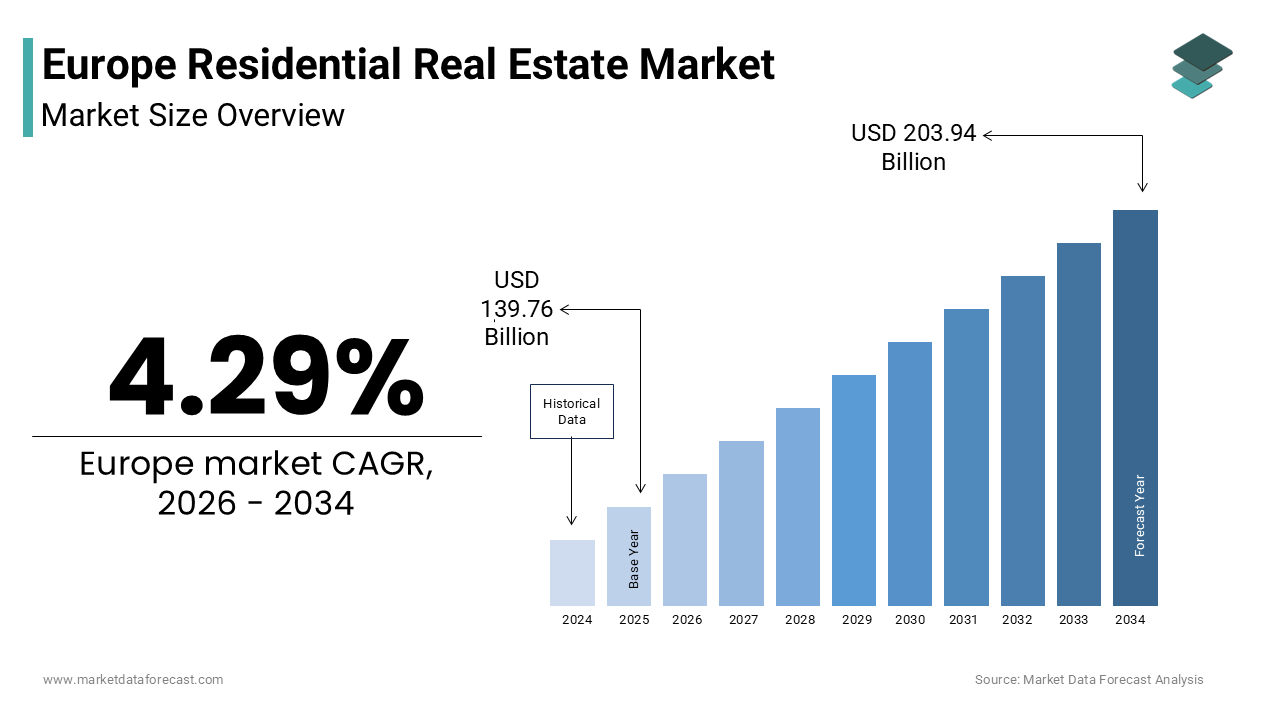
The Europe residential real estate market was valued at USD 139.76 billion in 2025, is estimated to reach USD 145.76 billion in 2026, and is projected to reach USD 203.94 billion by 2034, growing at a CAGR of 4.29% during the forecast period from 2026 to 2034. The growth of the Europe residential real estate market is driven by increasing urbanization, changing household structures, and rising demand for sustainable and energy-efficient housing across the region. Residential real estate includes properties designed for human habitation such as apartments, condominiums, villas, and houses used for living purposes. The sector is also shaped by government housing policies, environmental regulations, and evolving lifestyle preferences. Increasing population concentration in metropolitan areas and the rising demand for modern housing infrastructure are further supporting market growth across Europe.
Key Market Trends
-
Rising demand for energy-efficient and green residential buildings due to stringent environmental regulations under the European Green Deal.
-
Increasing adoption of PropTech solutions such as digital property management, virtual property tours, and smart home technologies.
-
The growing popularity of Build-to-Rent housing models is attracting institutional investors seeking stable rental income.
-
Expansion of urban residential projects and high-density housing developments due to land scarcity in major European cities.
-
Rising focus on renovation and retrofitting of existing buildings to improve energy performance and sustainability.
Segmental Insights
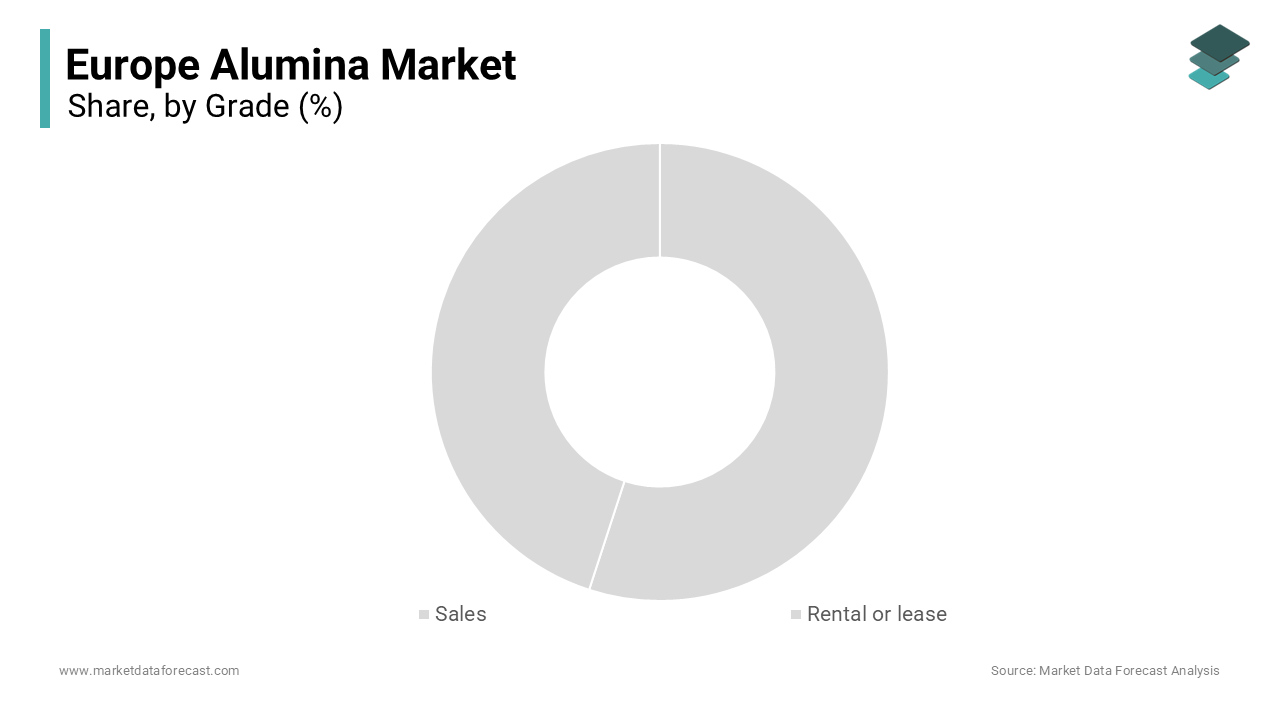
- Based on mode of booking, the sales segment held the largest share of the Europe residential real estate market in 2025. The dominance of this segment is attributed to the strong cultural preference for homeownership across many European countries and government incentives supporting property purchases.
- The rental or lease segment is expected to witness the fastest growth during the forecast period due to increasing housing affordability challenges and rising demand for flexible living arrangements among younger populations.
- Based on type, the apartments and condominiums segment dominated the Europe residential real estate market in 2025. The growth of this segment is driven by urbanization and the growing need for high-density housing solutions in major metropolitan areas.
- The landed houses and villas segment is projected to grow steadily due to increasing demand for spacious homes and suburban living trends supported by remote and hybrid working models.
- Based on end user, the mid-range housing segment accounted for the largest share of the Europe residential real estate market in 2025 due to the large middle-income population seeking affordable yet quality housing.
- The affordable housing segment is expected to register the highest growth rate owing to government initiatives and rising demand for cost-effective housing solutions across European cities.
Regional Insights
The Europe residential real estate market is witnessing steady growth across major European economies driven by population growth, housing shortages, and increasing investments in residential infrastructure.
-
Germany dominated the Europe residential real estate market by accounting for 22.1% of the regional market share in 2025, supported by strong economic stability, population growth, and persistent housing shortages in major cities such as Berlin and Munich.
-
United Kingdom holds a significant share due to high housing demand, limited supply, and strong investment activity in buy-to-let and build-to-rent housing sectors.
-
France remains an important market due to government support for housing development and strong demand in major urban centers like Paris.
-
Italy is witnessing growth driven by renovation activities, historical property redevelopment, and international investment in lifestyle and tourism-driven housing markets.
-
Spain is emerging as a key destination for foreign property buyers and retirees due to favorable climate conditions and relatively affordable housing prices compared to Northern Europe.
Competitive Landscape
The Europe residential real estate market is highly competitive and fragmented with a mix of large listed property companies, regional developers, institutional investors, and property management firms. Market players focus on expanding their residential portfolios, improving sustainability performance, and adopting digital property management solutions to enhance operational efficiency. Strategic acquisitions, partnerships with governments for affordable housing projects, and investments in energy-efficient renovations are common strategies used by companies to strengthen their market presence. The increasing adoption of PropTech and the development of large-scale residential communities are also shaping competition in the sector. Prominent players in the Europe residential real estate market include Vonovia SE, LEG Immobilien AG, Heimstaden Bostad AB, TAG Immobilien AG, Grand City Properties S.A., Aroundtown SA, Gecina SA, Covivio SA, Savills plc, and Engel & Völkers AG.
Europe Residential Real Estate Market Size
The Europe residential real estate market size was valued at USD 139.76 billion in 2025 and is anticipated to reach USD 145.76 billion in 2026 from USD 203.94 billion by 2034, growing at a CAGR of 4.29% during the forecast period from 2026 to 2034.
Residential real estate refers to land and buildings specifically designed and zoned for human habitation rather than commercial or industrial activities. This sector transcends mere transactional activity by reflecting deep demographic shifts urbanization trends and evolving lifestyle preferences that dictate spatial utilization patterns. The operational landscape is currently defined by a critical tension between acute housing scarcity and escalating affordability constraints driven by macroeconomic volatility. According to Eurostat approximately thirty percent of the European Union population resides in rented accommodations emphasizing a structural shift away from traditional homeownership models particularly among younger demographics. As per sources, a notable portion of the EU population continues to struggle with energy poverty, with heating difficulty rates varying significantly by country, and a pressing need for energy-efficient retrofitting remains a top policy priority. The convergence of stringent environmental mandates under the Green Deal rising construction input costs and changing household compositions establishes residential real estate as a complex asset class requiring sophisticated management strategies. This discipline now integrates sustainable building standards digital property management and flexible living arrangements to address the dual challenges of climate resilience and social inclusion across diverse European jurisdictions.
MARKET DRIVERS
Persistent Urbanization and Household Fragmentation Trends
The continuous migration of populations toward major metropolitan centers coupled with the fragmentation of larger households into smaller units serves as a primary driver for the Europe residential real estate market. Urban areas in Europe are experiencing a persistent increase in population share, driving significant demand for housing and infrastructure in major cities. As per Eurostat data the average household size in the European Union has decreased driven by rising divorce rates delayed marriage and an increase in single person households particularly among the elderly and young professionals. This demographic splintering means that even with a stagnant total population the number of required housing units increases significantly as one large family home is replaced by multiple smaller apartments. Cities like Paris Berlin and Amsterdam face acute shortages where demand outstrips new construction completions by a wide margin leading to soaring rental yields and capital values in central locations. The preference for proximity to employment hubs educational institutions and cultural amenities further concentrates demand in specific urban corridors. Consequently developers prioritize high density residential projects in city centers to capitalize on this structural shift ensuring sustained activity in the residential sector despite broader economic headwinds.
Government Incentives for Energy Efficient Retrofits and Green Building
Aggressive government policies and financial incentives aim to decarbonize the building sector, which in turn contributes to the growth of the Europe residential real estate market. These measures act as a powerful driver for renovation activity and the valuation of energy-efficient residential properties. According to the European Commission the Buildings Directive mandates that all new buildings must be zero emission by 2030 while existing stock faces increasingly strict minimum energy performance standards that compel owners to upgrade or face penalties. To achieve energy efficiency goals, Europe is accelerating its renovation pace, backed by government incentives to support insulation upgrades, heating system improvements, and solar energy integration. These initiatives not only stimulate construction activity but also create a two tier market where energy efficient homes command significant premiums over inefficient assets that risk becoming stranded. Homeowners and investors are increasingly motivated to undertake renovations to improve asset liquidity and comply with upcoming regulatory deadlines such as the introduction of digital building passports. The availability of favorable green financing options from European banks further lowers the cost of capital for sustainable projects. This regulatory push transforms energy efficiency from a voluntary feature into a mandatory value driver fueling investment flows into the residential renovation and development segments.
MARKET RESTRAINTS
Elevated Interest Rates and Tightened Mortgage Lending Standards
Interest rates have remained elevated for a prolonged period, which leads financial institutions to tighten their mortgage lending criteria, and thereby constrains the expansion of the Europe residential real estate market. These factors are severely constraining both buyer purchasing power and transaction volumes. Following historically rapid rate hikes, Eurozone mortgage rates increased, resulting in significantly higher borrowing costs and diminished affordability for homebuyers, which lasted through 2024 before stabilizing in 2025 as the ECB began easing policy. Increased interest rates and stricter affordability requirements driven by ECB policy led to a significant contraction in new mortgage loans across major European housing markets, including Germany and the Netherlands, over the 2023-2024 period. This reduction in borrowing capacity forces many potential first time buyers out of the market while discouraging existing homeowners from trading up due to the loss of favorable legacy rates. The cooling effect on demand leads to price stagnation or corrections in previously overheated segments causing developers to delay or cancel new projects due to feasibility concerns. Furthermore, the uncertainty regarding future rate trajectories creates a wait and see attitude among consumers further dampening market liquidity. The inability of wages to keep pace with rising financing costs exacerbates the affordability crisis making homeownership increasingly inaccessible for a significant portion of the population.
Soaring Construction Input Costs and Labor Shortages
The dramatic escalation in construction material prices combined with a chronic shortage of skilled labor is slowing down the growth of the Europe residential real estate market. This acts as a significant brake on new residential supply delivery across the region. Following a rapid surge in prices after 2020, costs for key building materials like steel and concrete have stabilized at elevated levels, leading to reduced developer margins and project delays. The European construction sector is experiencing a significant, enduring shortage of skilled labor across multiple trades, driven by demographic aging and, according to industry reports, a lack of sufficient new vocational trainees. This labor scarcity drives up wage bills and extends completion times making it difficult for developers to deliver units at price points affordable to the market. Many planned developments are being put on hold or redesigned to reduce complexity as the economic viability of new builds deteriorates under the weight of input cost inflation. The supply chain disruptions exacerbated by geopolitical tensions further complicate the procurement of essential components leading to unpredictable project schedules. Consequently the pipeline of new housing stock remains constrained failing to alleviate the underlying supply deficit and perpetuating the imbalance between availability and demand in key regions.
MARKET OPPORTUNITIES
Expansion of Build to Rent Institutional Investment Models
The Build to Rent sector is seeing rapid expansion and transformative growth, which is predicted to push the Europe residential real estate market forward. It allows institutional investors to tackle the housing shortage while earning stable long-term yields. According to studies, institutional capital flows into the European Build to Rent market have reached record levels as investors seek resilient assets backed by strong demographic demand and inflation linked rental income. As per sources this model allows for the professionalization of the rental experience offering high quality amenities flexible lease terms and dedicated management services that appeal to modern tenants unwilling or unable to buy. The scale of Build to Rent developments enables operators to achieve efficiencies in construction and management that individual landlords cannot match thereby improving net operating incomes. Governments in countries like the United Kingdom and Germany are increasingly supportive of this sector recognizing its role in delivering much needed housing supply quickly. The standardization of unit designs and the integration of smart home technologies further enhance the attractiveness of these assets to both tenants and investors. The cultural stigma around renting is diminishing while mobility increases. Consequently, the Build to Rent segment is poised to capture a larger share of the residential market as a viable solution to the affordability crisis.
Adoption of PropTech and Digital Property Management Solutions
The integration of Property Technology (PropTech) into residential real estate operations offers substantial opportunities for the Europe residential real estate market. These digital innovations enhance efficiency, tenant satisfaction, and asset valuation. According to research, the adoption of digital tools for virtual viewings automated lease management and predictive maintenance can reduce operational costs by up to fifteen percent while improving tenant retention rates. As per research, European proptech startups are attracting significant venture capital to develop solutions ranging from blockchain based title registration to artificial intelligence driven energy optimization systems. These technologies enable landlords to offer seamless digital experiences that meet the expectations of tech savvy tenants who demand instant communication and transparent service delivery. Smart building systems that monitor usage patterns and adjust heating or lighting in real time contribute to sustainability goals and lower utility bills making properties more competitive. The data generated by these platforms provides valuable insights for asset managers to make informed decisions about capital improvements and lease renewals. Furthermore digital platforms facilitate the fractional ownership of residential assets opening up investment opportunities to a broader range of participants. The digitization of the residential sector represents a frontier for value creation and operational excellence in an otherwise traditional industry.
MARKET CHALLENGES
Regulatory Complexity and Rent Control Measures
There is an intricate web of varying national and local regulations, including stringent rent control measures and eviction protections, which hampers the growth of the Europe residential real estate market. Consequently, these factors pose a significant challenge to investment confidence and operational flexibility in the residential sector. According to sources, many European cities have implemented strict rent caps and limitations on rent increases to protect tenants from affordability shocks which inadvertently discourages new investment in rental housing. As per research excessive regulation can lead to a reduction in the quality and quantity of available rental stock as landlords exit the market or convert properties to short term lets to bypass restrictions. The legal complexity surrounding eviction processes in countries like France and Spain makes it risky for landlords to rent to perceived higher risk tenants leading to more selective screening and reduced access for vulnerable groups. Navigating the disparate regulatory landscapes across different European jurisdictions requires specialized legal expertise and increases compliance costs for cross border investors. The uncertainty regarding future policy changes such as potential bans on short term rentals or new tenant rights legislation creates a cautious investment environment. Balancing the need for tenant protection with the necessity of maintaining a viable investment case remains a delicate and contentious challenge for policymakers and market participants alike.
Climate Change Physical Risks and Insurance Availability
Climate change is increasing the frequency and severity of physical risks like flooding, wildfires, and extreme heat, which hold back the expansion of the Europe residential real estate market. These escalating threats now jeopardize the insurability and long-term value of residential assets across the region. According to research, millions of homes in Europe are located in high risk flood zones and wildfire prone areas facing escalating damage costs and potential uninsurability as insurers withdraw coverage or hike premiums prohibitively. As per sources, the economic losses from weather related catastrophes have trended upward significantly forcing property owners to bear a larger share of the risk through higher deductibles or self insurance. This exposure to physical climate risk complicates mortgage lending as banks become reluctant to finance properties in vulnerable locations without adequate insurance coverage. The cost of retrofitting existing homes to withstand extreme weather events is substantial and often beyond the means of individual homeowners leading to a potential decline in asset values in affected regions. The lack of standardized climate risk data and modeling tools further hinders accurate pricing of these risks by investors and lenders. Addressing the growing protection gap and ensuring the resilience of the housing stock against climate impacts represents a formidable challenge that requires coordinated action from the public and private sectors.
REPORT COVERAGE
| REPORT METRIC | DETAILS |
| Market Size Available | 2025 to 2034 |
| Base Year | 2025 |
| Forecast Period | 2026 to 2034 |
| CAGR | 4.94% |
| Segments Covered | By Mode Of Booking, Type, Location, End-User and Region. |
| Various Analyses Covered | Global, Regional & Country Level Analysis, Segment-Level Analysis, DROC, PESTLE Analysis, Porter’s Five Forces Analysis, Competitive Landscape, Analyst Overview of Investment Opportunities |
| Country Covered | UK, France, Spain, Germany, Italy, Russia, Sweden, Denmark, Switzerland, the Netherlands, Turkey, the Czech Republic, and the Rest of Europe. |
| Market Leaders Profiled | Vonovia SE, LEG Immobilien AG, Heimstaden Bostad AB, TAG Immobilien AG, Grand City Properties S.A., Aroundtown SA, Gecina SA, Covivio SA, Savills plc, and Engel & Völkers AG. |
SEGMENTAL ANALYSIS
By Mode of Booking Insights
The sales segment was the largest segment in the Europe residential real estate market in 2025. The supremacy of the segment is attributed to a deep cultural preference for homeownership and the accumulation of property as a primary store of wealth across the continent. This dominance persists despite recent economic headwinds because owning a home remains a central life goal for European families. An additional factor sustaining the dominance of the sales segment is the entrenched cultural belief across Europe that homeownership represents financial security and social status superior to renting. The majority of the EU population resides in homes they own, with significantly higher rates in Eastern European nations, while renting is more common in Germany and Austria. Total household assets in the Eurozone are heavily weighted toward a mix of financial instruments (such as bank deposits, insurance, and equities) and non-financial assets (housing). This psychological drive ensures that demand for purchasing homes remains robust even when mortgage rates rise as buyers prioritize long term equity building over short term rental flexibility. Governments further reinforce this trend through tax deductions on mortgage interest and favorable capital gains treatments for primary residences which incentivize buying over leasing. The desire to customize living spaces and achieve stability for raising children also fuels the preference for ownership. Consequently the sales channel continues to generate the highest transaction volumes and value across the European landscape. Extensive government intervention through subsidies and support schemes specifically designed to facilitate home purchases acts as a powerful driver for the sales segment dominance. As per sources, countries like France and Germany have historically provided substantial fiscal incentives including zero interest loans and savings schemes tailored exclusively for home acquisition rather than rental payments. These policy measures effectively lower the entry barrier for purchasing and stimulate demand in the sales market even during periods of economic uncertainty. Local authorities often prioritize the development of land for sale to private individuals to boost municipal revenues through transaction taxes creating a supply side push that favors the sales channel. The political imperative to maintain high homeownership rates drives continuous legislative support ensuring that the sales ecosystem remains well funded and active. This institutional backing solidifies the position of sales as the primary mode of residential real estate booking in Europe.
The rental or lease segment is on the rise and is expected to be the fastest growing segment in the market by witnessing a CAGR of 6.8% during the forecast period owing to shifting demographic patterns and increasing housing affordability constraints. Moreover, the escalating difficulty in securing mortgages due to high interest rates and stringent lending criteria is forcing a significant portion of the population toward the rental market accelerating its growth rate. As per research the gap between house price growth and wage inflation has widened to historic levels meaning that saving for a deposit has become impossible for many young professionals who now remain in the rental sector for longer durations. This forced extension of tenancy periods increases the overall size and liquidity of the rental market as households delay purchasing decisions indefinitely. Landlords and institutional investors are responding to this surge in demand by expanding their rental portfolios knowing that the tenant pool is growing rapidly. The inability of wages to keep pace with property prices ensures that renting becomes the only viable option for a large demographic cohort. This structural shift from ownership to tenancy due to financial exclusion drives the rental segment to expand faster than the sales market. The modernization of work cultures and the rise of remote working arrangements are fostering a preference for flexible living solutions that favor renting over buying among mobile professionals. Younger generations particularly millennials and Gen Z prioritize experiences and flexibility over asset accumulation viewing renting as a lifestyle choice that allows them to move easily between cities for better opportunities. This cultural shift is supported by the proliferation of professional build to rent developments that offer hotel like amenities and flexible lease terms catering specifically to this mobile demographic. The decoupling of residence from location due to digital nomadism further amplifies the need for rental options. These evolving lifestyle dynamics propel the rental segment to become the fastest growing mode of booking in the European residential market.
By Type Insights
The apartments and condominiums segment led the Europe residential real estate market in 2025. The leading position of the segment is supported by the efficiency of vertical living and the proximity to economic hubs. This reflects the high density urbanization patterns and land scarcity prevalent across major European cities. The intense concentration of population in European city centers combined with severe land scarcity drives the overwhelming preference for apartment living over detached housing. As per studies, the average price per square meter for land in cities like Paris London and Munich has reached record highs making the construction of landed houses economically unviable for the majority of developers and buyers. Consequently, urban planning policies strictly favor high density vertical developments to maximize housing output per hectare ensuring that apartments constitute the bulk of new supply and existing stock. The logistical advantage of living close to public transport networks employment centers and cultural amenities further reinforces the demand for apartment units which are typically located in these prime urban cores. The historical architecture of many European cities also consists largely of multi unit buildings making apartments the default housing type for centuries. This structural reality of urban geography ensures that apartments and condominiums remain the dominant property type in the region. The relative affordability of apartments compared to landed houses and the reduced burden of maintenance responsibilities act as key factors sustaining their market dominance. As per research the ongoing cost of maintaining a standalone property including gardening roof repairs and exterior upkeep is substantially higher than the service charges associated with condominium living where costs are shared among residents. This economic efficiency appeals to budget conscious buyers and investors who seek to minimize operational expenses while maximizing rental yields. The security features inherent in apartment complexes such as concierge services and controlled access also attract safety conscious tenants and owners. Furthermore the smaller footprint of apartments aligns with the trend toward smaller household sizes reducing the need for expansive living spaces. The combination of lower entry costs and manageable ongoing expenses ensures that apartments remain the most popular and widely traded residential property type across Europe.
The landed houses and villas segment is expected to exhibit a noteworthy CAGR of 5.4% over the forecast period owing to the post pandemic desire for space and the rise of suburban living. The lasting impact of the global pandemic has fundamentally altered housing preferences with a surging demand for private outdoor space and larger living areas that only landed properties can provide. As per sources, the premium paid for properties with private gardens has increased dramatically in markets across the UK France and Spain as families seek safe environments for children and pets away from crowded communal areas. This psychological reorientation toward health and well being drives affluent buyers and families to seek detached or semi detached homes in suburban and semi rural locations where land is available. The ability to work remotely has reduced the necessity of daily commuting enabling this migration to lower density areas where landed houses are the primary housing stock. Developers are responding by launching new villa projects in green belts and outskirts catering to this specific desire for isolation and nature. This sustained preference for private open space propels the landed house segment to grow at an accelerated pace. The widespread adoption of remote and hybrid work models has enabled a structural shift toward suburbanization fueling rapid growth in the landed houses and villas segment. Families are increasingly trading small urban flats for spacious villas that provide dedicated home offices and recreational rooms enhancing their quality of life without sacrificing career progression. Local governments in suburban regions are incentivizing this influx by improving digital infrastructure and transport links to accommodate the new wave of residents. The availability of larger plots for custom built homes also attracts buyers seeking personalized living environments that apartments cannot offer. This decentralization of the workforce creates a robust and expanding market for landed houses making it the fastest growing property type in the current cycle.
By End User Insights
The mid range housing segment held the majority share of the Europe residential real estate market in 2025. The prominence of the segment is credited to the sheer volume of households falling within this income bracket and the balanced nature of the product offering. It serves the broad middle class demographic that forms the economic backbone of the continent. The extensive size of the middle class population across Europe serves as the fundamental driver for the dominance of the mid range housing segment. As per studies household income distribution shows a strong concentration in the median range creating massive aggregate demand for housing that is neither luxury nor subsidized but offers quality and comfort. This demographic cohort actively seeks properties that balance location amenities and size within a realistic budget making mid range developments the most viable and voluminous sector for developers. The stability of middle class employment in sectors like education healthcare and public administration ensures steady demand for these homes regardless of economic fluctuations. Financial institutions tailor the majority of their mortgage products to this segment recognizing it as the safest and most liquid part of the market. The alignment of supply with the needs of this vast population base ensures that mid range housing consistently generates the highest transaction volumes and occupies the largest share of the residential landscape. The optimal balance between affordability and quality offered by mid range housing makes it the primary focus for developers and investors alike sustaining its market leadership. Developers prioritize this segment because it allows for standardized construction processes and economies of scale which protect margins against input cost volatility. The resale market for mid range homes is also the most active providing liquidity for investors and confidence for end users regarding future asset value. Government housing policies often indirectly support this segment through infrastructure development in middle income neighborhoods enhancing their attractiveness. The convergence of developer strategy and consumer preference around this sweet spot of value ensures that mid range housing remains the dominant end user category in the European residential market.
The affordable housing segment is predicted to witness the highest CAGR of 7.2% between 2026 to 2034. The rapid expansion of the segment is propelled by acute affordability crises and intensified government intervention. The deepening affordability crisis across Europe where housing costs consume an disproportionate share of household income is driving urgent demand and investment into the affordable housing segment. According to research, the shortage of affordable units has reached critical levels in major cities prompting social unrest and political pressure for decisive action to house low and moderate income families. This societal imperative is forcing both public and private sectors to pivot resources toward developing cost effective housing solutions at an unprecedented pace. The definition of affordable housing is expanding to include not just social housing but also workforce housing for essential workers who are priced out of the general market. The sheer magnitude of the unmet need creates a vast addressable market that is growing faster than any other segment as governments mandate inclusionary zoning and developers seek stable yields from guaranteed tenancies. This crisis driven demand ensures that the affordable housing sector expands rapidly to catch up with societal needs. Unprecedented levels of government funding and regulatory mandates specifically targeting affordable housing production are catalyzing the rapid expansion of this segment. As per studies, many European nations have introduced strict inclusionary zoning laws requiring developers to dedicate a fixed percentage of new projects to affordable units or pay substantial fees in lieu. These regulations effectively force a increase in the supply of affordable housing regardless of market cycles. Furthermore the rise of public private partnerships allows private developers to access cheap land and favorable financing conditions in exchange for delivering affordable stock reducing their risk profile. Institutional investors are increasingly viewing affordable housing as a resilient asset class with stable cash flows backed by government guarantees. The combination of regulatory compulsion and financial incentives creates a fertile environment for rapid growth making affordable housing the fastest expanding end user segment in the European residential market.
REGIONAL ANALYSIS
Germany Residential Real Estate Market Analysis
Germany dominated the residential real estate market and accounted for a 22.1% share in 2025. The dominance of the German market is fuelled by its robust economy and chronic housing shortage. The country's position is further supported by its status as the most populous nation in the EU with a relentless influx of migrants and young professionals into major cities like Berlin Munich and Hamburg. According to sources, German household wealth is increasingly shifting toward real estate as a hedge against inflation further fueling buying activity. The government has launched ambitious programs to construct four hundred thousand new homes annually although supply chain issues have slowed progress keeping the market tight. Strong tenant protection laws have also bolstered the rental sector making it a stable investment haven. The combination of demographic growth economic stability and severe undersupply ensures that Germany remains the dominant and most dynamic residential real estate market in the region.
United Kingdom Residential Real Estate Market Analysis
The United Kingdom was the next prominent country in the Europe residential real estate market and captured a 18.9% share in 2025 because of a deeply ingrained culture of homeownership and a constrained supply pipeline. The UK market is distinguished by its unique tenure system and the persistent imbalance between housing demand and planning restricted supply particularly in the South East. The government's Help to Buy schemes and stamp duty holidays have historically stimulated the market although their withdrawal has cooled activity slightly. The presence of a sophisticated buy to let sector and strong institutional interest in build to rent projects adds depth to the market. The legacy of underbuilding over decades combined with population growth ensures that the UK remains a critical and high value market for residential real estate investment.
France Residential Real Estate Market Analysis
France is another key player in the Europe residential real estate market due to a diverse mix of vibrant urban centers and a strong second home culture in coastal and alpine regions. The French market is uniquely influenced by strict rent control regulations in Paris and significant government support for first time buyers through zero interest loans. The country's extensive coastline and ski resorts create a lucrative luxury and holiday home segment that attracts substantial foreign investment. The legal framework provides strong security for tenants which supports a stable rental market alongside the sales sector. The blend of urban dynamism and leisure property appeal positions France as a key pillar of the European residential landscape.
Italy Residential Real Estate Market Analysis
Italy expanded steadily in the Europe residential real estate market owing to its rich architectural heritage and a recovering economy that is stimulating renovation activity. The Italian market is characterized by a fragmented landscape of historic city centers and coastal tourism hubs where demand is driven by both domestic needs and international buyers seeking lifestyle properties. The popularity of regions like Tuscany Lombardy and the Amalfi Coast among foreign investors sustains the luxury segment. The cultural importance of family owned homes ensures a steady baseline of demand despite economic challenges. The focus on restoring historical buildings and improving energy efficiency is reshaping the market dynamics making Italy a distinctive and evolving player in the European residential sector.
Spain Residential Real Estate Market Analysis
Spain is anticipated to grow in the Europe residential real estate market over the forecast period by leveraging its status as a premier destination for international retirees and tourists alongside a recovering domestic market. The Spanish market is known for its heavy reliance on the coastal tourism corridor and the resurgence of construction activity following the post 2008 crash correction. The government has implemented measures to boost affordable housing supply and regulate tourist rentals in overcrowded areas to balance local needs. The climate advantage and relatively lower price points compared to Northern Europe make Spain an attractive option for both living and investment. The dual engine of domestic urbanization and international leisure demand ensures Spain remains a vital and growing component of the European residential real estate market.
COMPETITIVE LANDSCAPE
The competition in the Europe residential real estate market is intensely fierce characterized by a fragmented landscape of large listed corporations regional developers and private institutional investors vying for limited land and assets. Market participants constantly differentiate themselves through superior sustainability credentials and the ability to deliver high quality affordable housing that meets strict regulatory standards. The presence of severe housing shortages in major cities forces companies to compete aggressively for development sites driving up land prices and squeezing profit margins. Large corporations leverage their scale and access to cheap capital to undertake massive regeneration projects while smaller niche players focus on specific segments like luxury condos or student housing to carve out profitable areas. Price competition remains moderate as demand significantly outstrips supply but competition for tenants intensifies in newly completed developments where amenities and service quality become key deciding factors. The market witnesses frequent mergers and acquisitions as larger entities seek to expand their geographic footprint and achieve economies of scale. Regulatory compliance and the ability to navigate complex planning systems serve as significant barriers to entry favoring established players with deep local knowledge and resources.
KEY MARKET PLAYERS
Some of the companies that are playing a dominating role in the Europe Residential Real Estate Market include
- Vonovia SE
- LEG Immobilien AG
- Heimstaden Bostad AB
- TAG Immobilien AG
- Grand City Properties S.A.
- Aroundtown SA
- Gecina SA
- Covivio SA
- Savills plc
- Engel & Völkers AG
Top Players in the Market
Vonovia SE
Vonovia SE stands as a leading European residential real estate company headquartered in Germany with a vast portfolio spanning multiple key markets including Sweden and Austria. The company focuses on providing affordable and modern living spaces while driving sustainability through extensive renovation programs to improve energy efficiency across its stock. Recently Vonovia has strengthened its market position by divesting non core assets to reduce debt and focusing capital on value adding refurbishments and new construction projects in high demand urban centers. Their strategic approach includes digitalizing property management services to enhance tenant satisfaction and operational efficiency. Vonovia actively collaborates with policymakers to address the housing shortage in Europe by advocating for streamlined planning permissions and increased construction activity. This commitment to sustainable growth and tenant centric services solidifies their role as a pivotal player in shaping the future of European residential living standards.
Deutsche Wohnen SE
Deutsche Wohnen SE operates as a major force in the European residential sector specializing in the ownership and management of large scale housing portfolios primarily within German metropolitan regions. The company contributes to the global market by setting benchmarks in professional asset management and the integration of social responsibility into corporate strategy. In recent developments Deutsche Wohnen has intensified its efforts to modernize its housing stock through comprehensive energy saving measures that align with strict European climate goals. They have also expanded their service offerings to include smart home technologies and flexible living concepts that cater to evolving demographic needs. The firm frequently engages in strategic partnerships with local municipalities to develop mixed use communities that blend residential units with commercial and social infrastructure. Deutsche Wohnen prioritizes long term value creation by maintaining high occupancy rates and fostering strong relationships with tenants through transparent communication and responsive maintenance services.
Aroundtown SA
Aroundtown SA has emerged as a significant innovator in the European real estate landscape with a diverse portfolio that includes substantial residential holdings alongside commercial assets across Germany and the Netherlands. The company focuses on identifying undervalued properties with potential for redevelopment or conversion into modern residential units to meet urban housing demand. Aroundtown recently accelerated its residential expansion by acquiring strategic land banks in prime locations and initiating large scale development projects that prioritize sustainability and community integration. Their commitment to flexible usage concepts allows them to adapt quickly to market shifts such as the rising demand for co living spaces and short term rentals. The organization actively leverages digital platforms to optimize leasing processes and enhance the user experience for residents. Aroundtown continues to strengthen its balance sheet through disciplined capital management and selective disposals ensuring financial resilience amidst economic volatility. Their agile approach to asset transformation positions them as a dynamic force in the European residential market.
Top Strategies Used by Key Market Participants
Key players in the Europe residential real estate market primarily employ aggressive acquisition strategies to consolidate land banks and existing portfolios in high growth urban areas while expanding their development pipelines. Companies frequently invest heavily in sustainability initiatives such as deep energy retrofits and green building certifications to comply with stringent European environmental regulations and attract eco conscious tenants. Strategic partnerships with local governments and housing associations allow developers to secure favorable zoning approvals and access public funding for affordable housing projects. Vendors also focus on digital transformation by implementing proptech solutions for property management tenant engagement and predictive maintenance to reduce operational costs. Another prevalent strategy involves diversifying revenue streams through the introduction of flexible living models like co living and build to rent schemes that cater to changing lifestyle preferences. Furthermore leading firms actively engage in portfolio optimization by divesting non core assets to recycle capital into higher yielding residential developments in prime locations.
MARKET SEGMENTATION
This research report on the Europe Residential Real Estate Market has been segmented and sub-segmented based on the following categories.
By Mode Of Booking
- Sales
- Rental or lease
By Type
- Apartments and condominiums
- Landed houses and villas
By Location
- Urban
- Suburban
- Rural
By End-user
- Mid-range housing
- Affordable housing
- Luxury housing
By Country
- UK
- France
- Spain
- Germany
- Italy
- Russia
- Sweden
- Denmark
- Switzerland
- Netherlands
- Turkey
- Czech Republic
- Rest of Europe