- Product Description Description
- Table of Contents TOC
- List of Table & Figure LOT
- Get Free Sample PDF Sample PDF
Market Size, 2025
$6.12 BnMarket Estimate, 2026
$6.70 BnMarket Forecast, 2034
$13.82 BnCAGR, 2026–2034
9.47%Executive Summary: Europe Respiratory Devices Market
- Market Scope: Overview of the European respiratory devices market assessing therapeutic and diagnostic technologies, institutional versus homecare delivery channels, country-level adoption, and competitive positioning.
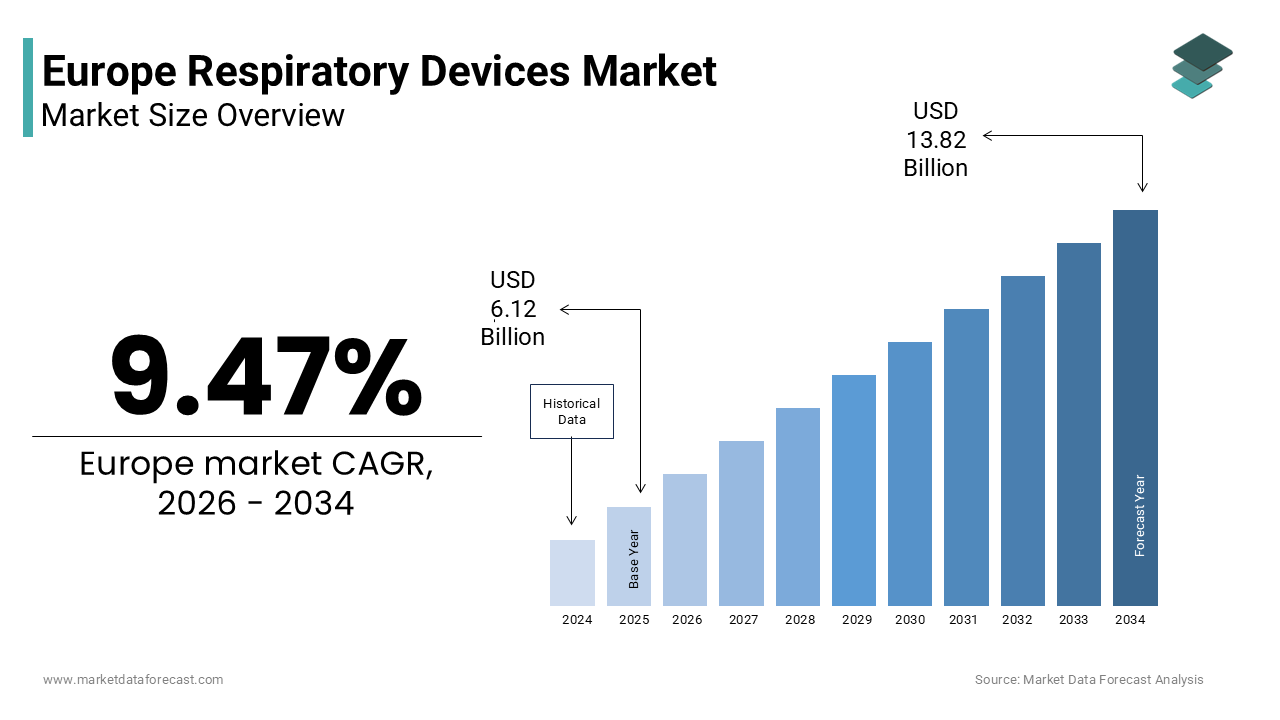
- Market Valuation: Valued at USD 6.12 billion in 2025, reaching USD 6.70 billion in 2026, and projected to expand to USD 13.82 billion by 2034, registering a strong CAGR of 9.47% (2026–2034).
- Primary Growth Drivers: Increasing prevalence of chronic respiratory disorders (asthma, COPD, chronic bronchitis, pneumonia), growing geriatric populations, elevated smoking and pollution levels, technological advancements in diagnosis, and enhanced healthcare infrastructure investments.
Key Market Segment Metrics (2026–2034)
| Category | Leading Segment Position | Core Focus / Alternative Segment |
|---|---|---|
| By Type | Therapeutic Devices (critical for managing chronic conditions and acute distress) | Diagnostic & Monitoring Devices and Disposables |
| By End User | Hospitals (maintaining high volume due to acute care and critical procedures) | Homecare Settings (expanding rapidly due to patient-centric disease management) |
| By Country / Region | Germany (abundant market driven by aging demographics, rising preterm births, and urbanization) | UK, France, Spain, Italy, Russia, Sweden, Denmark, Switzerland, Netherlands, Turkey, Czech Republic, and Rest of Europe |
Major Market Players & Market Structure
Market Structure: Highly consolidated regional market featuring global medical technology enterprises leveraging strategic partnerships, mergers, and acquisitions to expand portfolios and navigate reimbursement frameworks.
Key Companies: ResMed, Inc., Fisher & Paykel Healthcare Limited, Philips Healthcare, CareFusion Corporation, Masimo Corporation, and Covidien plc.
 Download Free Sample Report
Europe Respiratory Devices Market Size
The europe respiratory devices market size was valued at USD 6.12 billion in 2025 and is anticipated to reach USD 6.70 billion in 2026 from USD 13.82 billion by 2034, growing at a CAGR of 9.47% during the forecast period from 2026 to 2034
The respiratory devices are sophisticated array of medical technologies designed to diagnose monitor and treat pulmonary disorders, across the European continent. This sector includes mechanical ventilators nebulizers oxygen therapy equipment and diagnostic spirometers essential for managing acute and chronic respiratory conditions. As per the World Health Organization, chronic obstructive pulmonary disease is responsible for approximately 300000 deaths annually in the European Region. These epidemiological realities define the operational scope of this market which prioritizes technological innovation to improve patient survival and quality of life. Healthcare systems increasingly integrate smart respiratory devices that enable remote monitoring and data driven clinical decision making. Regulatory bodies like the European Medicines Agency enforce stringent safety standards ensuring device efficacy before commercialization.
MARKET DRIVERS
Rising Prevalence of Chronic Respiratory Diseases Drives Demand for Home Care Solutions
The rising prevalence of chronic respiratory diseases is major factor propelling the growth of he Europe Respiratory Devices Market. As per the European Respiratory Society, over 40 million Europeans suffer from asthma while another 40 million live with chronic obstructive pulmonary disease creating a massive patient pool requiring long term management. This high disease burden necessitates continuous access to portable oxygen concentrators nebulizers and positive airway pressure machines for daily symptom control. Patients prefer home treatment to avoid hospital acquired infections and maintain their quality of life. Manufacturers respond by developing user friendly lightweight devices with integrated telemetry for remote monitoring. National health services are increasingly prescribing home respiratory equipment to reduce hospital readmission rates. The integration of digital health platforms allows clinicians to adjust therapy parameters remotely based on real time data. This shift towards decentralized care ensures sustained volume sales for consumer oriented respiratory devices. Public health campaigns focusing on smoking cessation and early diagnosis further expand the identified patient base.
Aging Population Structure Increases Susceptibility to Acute Respiratory Failure
The aging population structure significantly increases susceptibility to acute respiratory failure, thereby fuelling the growth of the Europe Respiratory Devices Market. As per the Eurostat, nearly 30% of the European population will be aged 65 or older correlating directly with higher incidence rates of pneumonia and respiratory insufficiency. Older adults often have weakened immune systems and comorbidities that make them vulnerable to severe respiratory complications requiring mechanical ventilation. The Lancet Respiratory Medicine journal notes that patients over 80 years old constitute the majority of intensive care unit admissions for acute respiratory distress syndrome in Europe. Hospitals consequently invest in advanced critical care ventilators with lung protective algorithms tailored to fragile physiology. Long term care facilities also expand their inventories of noninvasive ventilation devices to manage chronic respiratory decline. The demographic shift creates a structural demand for both acute care and palliative respiratory support systems. Government health budgets are allocating more resources to geriatric care infrastructure including respiratory support units. The prevalence of age related neuromuscular disorders further drives the need for assisted coughing and suction devices. This inevitable demographic trend ensures a stable baseline growth for respiratory technology providers.
MARKET RESTRAINTS
Stringent Regulatory Compliance Requirements Delay Product Launches and Increase Costs
The stringent regulatory compliance requirements delay product launches and increase costs is hampering the growth of the Europe Respiratory Devices Market. The European Commission implemented the Medical Device Regulation, which mandates rigorous clinical evaluation and post market surveillance for all respiratory devices classified as high risk. This prolonged validation period postpones revenue generation and discourages smaller innovators from entering the competitive landscape. Manufacturers must navigate complex documentation processes to demonstrate conformity with essential safety and performance requirements. Delays in notified body availability further extend time to market for new innovations. The regulation requires unique device identification and traceability systems adding administrative burdens to supply chains. While these measures protect patient safety they inadvertently slow the diffusion of potentially life saving advancements. Companies must allocate significant resources to regulatory affairs rather than research and development. The uncertainty surrounding interpretation of new rules complicates strategic planning for product portfolios.
Reimbursement Constraints and Budget Pressures Limit Access to Advanced Technologies
The reimbursement constraints and budget pressures limit access to advanced technologies are limiting the growth of the Europe Respiratory Devices Market. National health systems across Europe face increasing financial strain leading to strict cost containment measures for durable medical equipment. The European Observatory on Health Systems and Policies states that many countries have introduced reference pricing and tendering mechanisms that drive down prices for respiratory devices. Patients often face long waiting times or restricted access to newer innovative therapies such as high flow nasal cannula systems due to budget caps. Healthcare providers may opt for older cheaper alternatives to stay within allocated budgets. The variability in reimbursement criteria between different European countries creates market fragmentation and unequal patient access. Private insurance coverage for home respiratory care is limited in several nations leaving patients to bear out of pocket costs. Manufacturers face margin compression as public payers negotiate aggressive discounts during procurement processes. This economic environment discourages investment in premium features that do not have immediate proven cost savings.
MARKET OPPORTUNITIES
Integration of Artificial Intelligence Enables Predictive Diagnostics and Personalized Therapy
The integration of artificial intelligence enables predictive diagnostics and personalized therapy, which is to impact positively on the growth of the Europe Respiratory Devices Market. According to the European Institute of Innovation and Technology, AI algorithms analyzing respiratory patterns can predict exacerbations in chronic obstructive pulmonary disease patients with 80% accuracy allowing for early intervention. This capability allows manufacturers to differentiate products through intelligent software layers that optimize clinical outcomes beyond basic hardware functions. Hospitals actively seek smart devices that automate complex adjustments and reduce clinician workload during staffing shortages. Data aggregation from connected devices creates valuable real world evidence streams for research and product refinement. Payers recognize value based purchasing potential where reimbursement ties to algorithmic performance metrics rather than mere device provision. Startups specializing in respiratory AI attract significant venture capital signaling strong investor confidence in this convergence. Regulatory agencies are establishing frameworks for software as a medical device accelerating approval pathways for algorithmic updates. This technological synergy transforms respiratory devices from passive tools into active clinical partners.
Expansion of Telehealth Infrastructure Supports Remote Patient Monitoring Programs
The expansion of telehealth infrastructure supports remote patient monitoring programs is another factor to promote new opportunities for the growth of the Europe Respiratory Devices Market. According to the European Centre for Disease Prevention and Control, telemedicine adoption has increased significantly with many national health systems integrating remote monitoring into standard care pathways for respiratory conditions. This digital connectivity enables proactive intervention before minor symptoms escalate into emergency department visits. The European Union has invested heavily in digital health infrastructure facilitating cross border data exchange and interoperability of medical devices. Patients benefit from continuous feedback loops that reinforce medication adherence and self management behaviors. Device manufacturers embed cellular or Bluetooth modules to ensure seamless data transmission without requiring patient technical expertise. Rural health networks leverage telehealth to extend specialist oversight to underserved communities lacking local pulmonologists. Clinical trials validate that remote management improves quality of life and reduces healthcare costs for chronic respiratory patients. Insurers view this model as a cost containment strategy supporting broader coverage decisions. The interoperability of devices with major telehealth platforms ensures scalability across diverse health systems.
MARKET CHALLENGES
Fragmented Regulatory Landscape Across Member States Complicates Market Entry
The fragmented regulatory landscape across member states complicates entry is challenging the growth of the Europe Respiratory Devices Market. Although, the Medical Device Regulation provides a unified framework individual countries maintain distinct health technology assessment processes and reimbursement policies. The discrepancies in national guidelines for respiratory care lead to uneven adoption rates of new technologies across the continent. Manufacturers must tailor their market entry strategies for each country navigating different languages cultural preferences and clinical practices. This fragmentation increases operational complexity and costs for global companies seeking pan European presence. Some countries have faster approval timelines while others require extensive local clinical data delaying launch sequences. The lack of harmonized coding systems for respiratory devices complicates billing and data collection across borders. Small and medium enterprises struggle to manage the regulatory burden of multiple jurisdictions simultaneously. Inconsistent enforcement of regulations can create unfair competitive advantages for certain players.
Shortage of Skilled Respiratory Therapists Limits Effective Utilization of Complex Devices
The shortage of skilled respiratory therapists limits effective utilization of complex devices is also to decline the growth of the Europe Respiratory Devices Market. The European Respiratory Society projects a significant deficit in trained respiratory professionals due to an aging workforce and insufficient educational pipeline capacity. Without adequate skilled operators advanced ventilators and noninvasive ventilation systems cannot be deployed safely or optimally in clinical settings. The World Health Organization reports that many European countries face staffing crises in critical care units exacerbating the challenge of managing complex respiratory cases. Hospitals restrict equipment purchases to match available staffing levels rather than patient acuity needs. Overtime and burnout among existing staff increase error rates and reduce protocol adherence compromising device efficacy. Training new personnel on sophisticated technologies requires dedicated educator time which is scarce amid clinical demands. Rural and community hospitals face disproportionate shortages limiting access to advanced respiratory care outside academic centers. Manufacturers must simplify user interfaces and enhance automation to compensate for workforce gaps. Educational institutions struggle to expand programs due to funding and faculty limitations.
REPORT COVERAGE
| REPORT METRIC | DETAILS |
| Market Size Available | 2025 to 2034 |
| Base Year | 2025 |
| Forecast Period | 2026 to 2034 |
| CAGR | 9.47% |
| Segments Covered | By Type, End User and Region |
| Various Analyses Covered | Global, Regional & Country Level Analysis, Segment-Level Analysis, DROC, PESTLE Analysis, Porter’s Five Forces Analysis, Competitive Landscape, Analyst Overview on Investment Opportunities |
| Regions Covered | UK, France, Spain, Germany, Italy, Russia, Sweden, Denmark, Switzerland, the Netherlands, Turkey, the Czech Republic, and the Rest of Europe. |
| Market Leaders Profiled | ResMed, Inc., Fisher & Paykel Healthcare Limited, Philips Healthcare, CareFusion Corporation, Masimo Corporation, and Covidien plc. |
SEGMENTAL ANALYSIS
By Type Insights
The therapeutic devices segment was the largest by accounting for 44.9% of the Europe Respiratory Devices Market share in 2025 with the crucial need for life sustaining interventions in both acute and chronic care settings. As per the European Respiratory Society, over 80 million Europeans suffer from chronic respiratory diseases requiring long term oxygen therapy or ventilatory support creating a massive installed base for these devices. This high patient volume ensures consistent procurement cycles for hospitals and home care providers across the continent. The World Health Organization reports that lower respiratory infections remain among the top causes of death in Europe necessitating immediate access to mechanical ventilation and nebulization therapies in emergency departments. Hospitals prioritize advanced ventilators with lung protective strategies to reduce mortality in intensive care units. The prevalence of sleep apnea further expands the market as continuous positive airway pressure machines become standard first line treatments. Manufacturers focus on durability and ease of use to meet the demands of both clinical professionals and home users. Regulatory approvals for new therapeutic modalities such as high flow nasal cannula systems have accelerated adoption in critical care. Insurance coverage for durable medical equipment supports patient access to these essential technologies. The segment benefits from recurring revenue streams through maintenance contracts and accessory sales. Clinical guidelines increasingly mandate early initiation of therapeutic support to prevent disease progression.
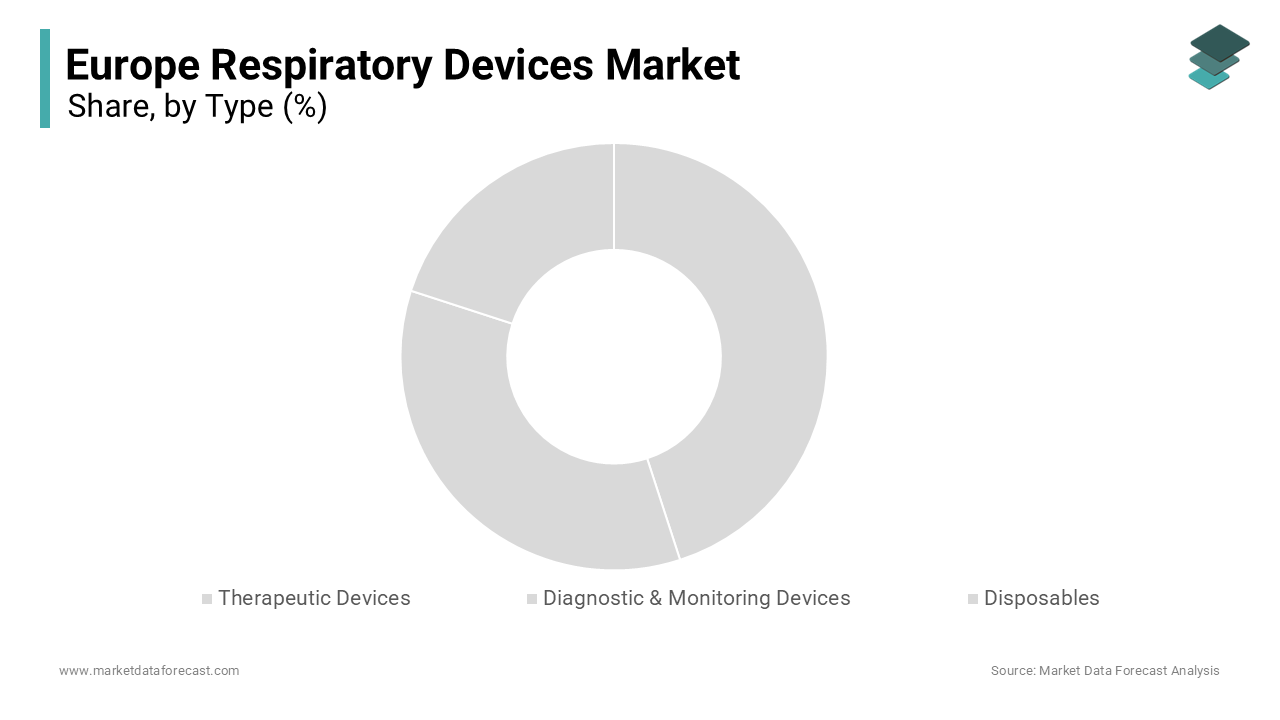
The diagnostic and monitoring devices segment is projected to register a fastest CAGR of 8.9% from 2026 to 2034 with the shift towards preventive care and remote health management. Healthcare providers are integrating these tools into routine screenings for smokers and occupational hazard exposures. According to the Journal of Telemedicine and e Health, wearable pulse oximeters and respiratory rate monitors enable real time tracking of vital signs allowing for timely clinical intervention. This capability is crucial for managing post discharge recovery and chronic condition stability at home. Telehealth platforms rely on accurate home diagnostic data to make informed treatment decisions without physical visits. Technological advancements have miniaturized sensors making them comfortable for continuous wear during daily activities. Patients appreciate the empowerment that comes from self monitoring their respiratory health metrics. Insurance payers are beginning to reimburse for remote physiologic monitoring codes encouraging broader adoption. Startups are introducing smartphone connected devices that simplify data sharing with clinicians.
By End User Insights
The hospitals segment was the largest by capturing 56.2% of the Europe Respiratory Devices Market share in 2025 due to their role as primary centers for acute respiratory failure management and critical care. The European Centre for Disease Prevention and Control reports that intensive care units across Europe manage millions of admissions annually with a significant portion requiring mechanical ventilation or advanced respiratory support. These facilities possess the capital resources to invest in high end ventilators extracorporeal membrane oxygenation systems and sophisticated monitoring arrays. The European Hospital and Healthcare Federation indicates that respiratory care departments are among the fastest growing clinical services due to rising acuity levels and aging patient populations. Hospitals drive innovation by adopting the latest technologies to improve survival rates and reduce length of stay. Accreditation standards mandate specific equipment ratios and capabilities ensuring consistent demand for certified devices. Group purchasing organizations negotiate bulk contracts that streamline procurement for large health systems. Teaching hospitals serve as training grounds for new respiratory therapies influencing future adoption patterns. The concentration of specialized pulmonologists and intensivists in hospital settings ensures optimal utilization of complex devices.
The homecare segment is expected to grow at a fastest CAGR of 10.4% from 2026 to 2034 due to the strategic shift towards decentralized care models and patient preference for comfort. The European Commission states that home health services have expanded significantly as policies encourage treating patients in less restrictive environments to reduce healthcare costs. Chronic respiratory conditions such as asthma and chronic obstructive pulmonary disease are increasingly managed at home using portable nebulizers and oxygen concentrators. Patients benefit from reduced exposure to hospital acquired infections and greater autonomy in their daily routines. Advances in battery technology have made respiratory devices lighter and more portable facilitating active lifestyles. Family caregivers receive training on device operation enhancing adherence and safety. Private insurers are expanding coverage for home durable medical equipment to lower overall healthcare expenditures. Direct to consumer marketing by manufacturers raises awareness of available home solutions. Telehealth integration allows clinicians to monitor home device usage remotely adjusting therapies as needed. The aging population prefers aging in place which drives demand for reliable home respiratory support.
COUNTRY ANALYSIS
Germany Respiratory Devices Market Analysis
Germany was the largest contributor in the Europe Respiratory Devices Market by holding 33.2% of the share in 2025 with the robust healthcare infrastructure and high prevalence of respiratory conditions. The country is home to several major medical technology manufacturers fostering innovation and local production of high quality respiratory equipment. Statutory health insurance covers a wide range of respiratory therapies ensuring broad patient access to advanced devices. The aging demographic in Germany accelerates the need for home care solutions and long term ventilation support. Hospitals in Germany are early adopters of digital health technologies integrating smart ventilators with electronic health records. Government initiatives focus on improving air quality and smoking cessation to reduce disease burden but current treatment needs remain high. The strong regulatory framework ensures high safety standards for medical devices. Research institutions collaborate on clinical trials for new respiratory therapies attracting global investment.
United Kingdom Respiratory Devices Market Analysis
The United Kingdom respiratory devices market growth is significantly growing at a fastest CAGR during the forecast period with its national health service and structured approach to respiratory care. Public Health England states that respiratory diseases account for a substantial proportion of hospital admissions and emergency department visits creating consistent demand for acute care devices. The National Health Service implements strict procurement guidelines favoring cost effective and evidence based respiratory technologies. The shift towards integrated care systems promotes the adoption of remote monitoring solutions for chronic disease management. Smoking rates have declined but legacy effects continue to drive COPD treatment needs. The UK is a hub for digital health innovation with many startups developing AI driven respiratory diagnostics. Brexit has introduced some regulatory changes but the country remains aligned with high safety standards. Home care services are expanding to reduce pressure on hospital beds increasing demand for portable equipment.
France Respiratory Devices Market Analysis
France respiratory devices market growth is driven by the government support for respiratory health initiatives. The French National Authority for Health reports that respiratory diseases are among the leading causes of mortality prompting significant investment in diagnostic and therapeutic infrastructure. The country has a well-established network of pulmonary rehabilitation centers that utilize advanced respiratory devices for patient recovery. Universal health coverage ensures that patients have access to necessary respiratory equipment including home oxygen therapy and noninvasive ventilation. Manufacturers focus on providing comprehensive training and support to healthcare professionals to ensure proper device usage. The aging population in rural areas drives demand for telemonitoring solutions that connect patients with specialists in urban centers.
Italy Respiratory Devices Market Analysis
Italy respiratory devices market growth is likely to grow with its aging population and high prevalence of chronic respiratory conditions. The national health service provides coverage for respiratory therapies although regional disparities exist in access to advanced technologies. The Italian Society of Respiratory Medicine promotes the use of evidence based guidelines for the management of asthma and COPD. Home care services are increasingly utilized to manage chronic patients reducing hospital burden. The market sees strong demand for portable oxygen concentrators and nebulizers for home use. Italy is also a manufacturing hub for certain medical device components supporting local supply chains. Smoking cessation programs are actively promoted to reduce future disease burden. The integration of digital health tools is gaining traction particularly in northern regions with advanced infrastructure.
Spain Respiratory Devices Market Analysis
Spain respiratory devices market growth is likely to grow with its universal healthcare system and increasing focus on chronic disease management. The Spanish Society of Pneumology and Thoracic Surgery reports that respiratory diseases affect millions of citizens driving demand for both acute and home care devices. The country has seen an increase in telemedicine adoption facilitating remote monitoring of respiratory patients particularly in rural areas. National health coverage includes reimbursement for home oxygen therapy and noninvasive ventilation supporting patient access. The aging population contributes to higher rates of respiratory complications requiring advanced ventilatory support. Spain is investing in modernizing hospital infrastructure which includes upgrading respiratory care units with new technology. Public health campaigns target smoking reduction and air quality improvement to mitigate risk factors.
COMPETITIVE LANDSCAPE
The competition in the Europe Respiratory Devices Market is characterized by a mix of global multinational corporations and specialized niche players striving for dominance. Global players leverage their extensive research capabilities and brand reputation to introduce innovative products such as smart ventilators and connected sleep therapy devices. These companies benefit from established distribution networks and strong relationships with key healthcare institutions across the region. Specialized manufacturers compete primarily on technological differentiation and clinical evidence offering unique solutions for complex respiratory conditions. The market sees intense rivalry in the home care segment where ease of use and patient comfort are crucial for maintaining competitive advantage. Companies frequently engage in strategic collaborations with government bodies and non governmental organizations to enhance their market presence and contribute to public health initiatives. Regulatory hurdles are stringent but clear creating barriers to entry for smaller firms but opportunities for those with robust compliance frameworks. The rise of value based care has intensified competition for products that demonstrate cost effectiveness and improved patient outcomes. Intellectual property protection remains a critical factor influencing competitive dynamics as firms seek to safeguard their innovations. Continuous investment in clinical evidence generation helps companies demonstrate superior efficacy and justify premium pricing.
KEY MARKET PLAYERS
Key players dominating the Europe Respiratory Devices Market include
- ResMed, Inc.
- Fisher & Paykel Healthcare Limited
- Philips Healthcare
- CareFusion Corporation
- Masimo Corporation
- Covidien plc.
Top Players in the Europe Respiratory Devices Market
Philips
Philips maintains a strong presence in the Europe Respiratory Devices Market through its comprehensive portfolio of sleep and respiratory care solutions. The company focuses on connected health by integrating cloud-based software with positive airway pressure devices to enhance patient adherence. Recent initiatives include expanding its digital health ecosystem to support remote patient monitoring for chronic obstructive pulmonary disease management across European health systems. Philips collaborates with healthcare providers to offer data driven insights that improve clinical outcomes and reduce hospital readmissions. The company invests heavily in research to develop quieter and more comfortable masks for home users. Strategic partnerships with telehealth platforms enable seamless integration of device data into electronic health records. Philips continues to launch innovative humidification technologies that improve therapy tolerance. Their commitment to user centric design drives high patient satisfaction and brand loyalty. These efforts strengthen their reputation as a leader in home respiratory care across the region.
ResMed Inc
ResMed Inc contributes significantly to the Europe Respiratory Devices Market with its advanced ventilators and noninvasive respiratory support systems. The company emphasizes critical care innovation by developing intelligent ventilation modes that adapt to patient breathing patterns in real time. Recent actions include launching next generation intensive care unit ventilators with enhanced safety features and intuitive interfaces for European hospitals. ResMed partners with academic medical centers to conduct clinical trials validating the efficacy of its respiratory algorithms. The company actively participates in public health initiatives to improve access to respiratory care in underserved communities. They engage in training programs for respiratory therapists to maximize the utility of complex devices. Innovation in portable oxygen concentrators supports the growing demand for mobile home care solutions. ResMed focuses on interoperability ensuring its devices integrate seamlessly with hospital information systems.
Fisher & Paykel Healthcare
Fisher & Paykel Healthcare plays a vital role in the Europe Respiratory Devices Market by specializing in high flow nasal cannula therapy and sleep apnea solutions. The company focuses on improving patient comfort and clinical outcomes through its proprietary heated humidification technology. Recent developments include expanding its critical care product line to support neonatal and pediatric respiratory needs in European hospitals. Fisher & Paykel collaborates with hospitals to implement standardized protocols for high flow therapy usage. They have established strong distribution networks in major European countries to ensure widespread product availability. The company invests in clinical education to promote evidence based practices among healthcare professionals. Innovation in mask design reduces skin irritation and improves seal integrity for long term users. Fisher & Paykel supports research into the benefits of humidified high flow oxygen in preventing respiratory failure.
Top Strategies Used by Key Market Participants
Key players in the Europe Respiratory Devices Market employ several strategic approaches to strengthen their competitive position and drive growth. Product innovation remains a primary strategy as companies invest heavily in research and development to create smarter and more user-friendly devices. These innovations address specific clinical needs such as improved comfort reduced noise and enhanced data connectivity. Strategic partnerships with telehealth providers enable companies to offer integrated remote monitoring solutions that improve patient adherence. Collaborations with academic institutions facilitate clinical trials and validation of new therapies ensuring regulatory approval and market acceptance. Companies also focus on educational initiatives to train healthcare professionals on proper device usage and maintenance protocols. Digital health integration is another major strategy with firms developing cloud based platforms for real time data analysis. Regulatory compliance and obtaining approvals from agencies like the European Medicines Agency allow faster market entry for new products.
MARKET SEGMENTATION
This research report on the European Respiratory Devices Market has been segmented and sub-segmented into the following categories
By Type
- Therapeutic Devices
- Diagnostic & Monitoring Devices
- Disposables
By End User
- Hospitals
- Homecare
By Country
- UK
- France
- Spain
- Germany
- Italy
- Russia
- Sweden
- Denmark
- Switzerland
- Netherlands
- Turkey
- Czech Republic
- Rest of Europe