- Product Description Description
- Table of Contents TOC
- List of Table & Figure LOT
- Get Free Sample PDF Sample PDF
Market Size, 2025
$5.23 BnMarket Estimate, 2026
$5.73 BnMarket Forecast, 2034
$11.93 BnCAGR, 2026–2034
9.6%Executive Summary: Europe Respiratory Monitoring Devices Market
- Market Scope: Comprehensive European respiratory monitoring devices market analysis covering diagnostic devices, monitoring equipment types, country-level insights, and regional healthcare/lifestyle drivers.
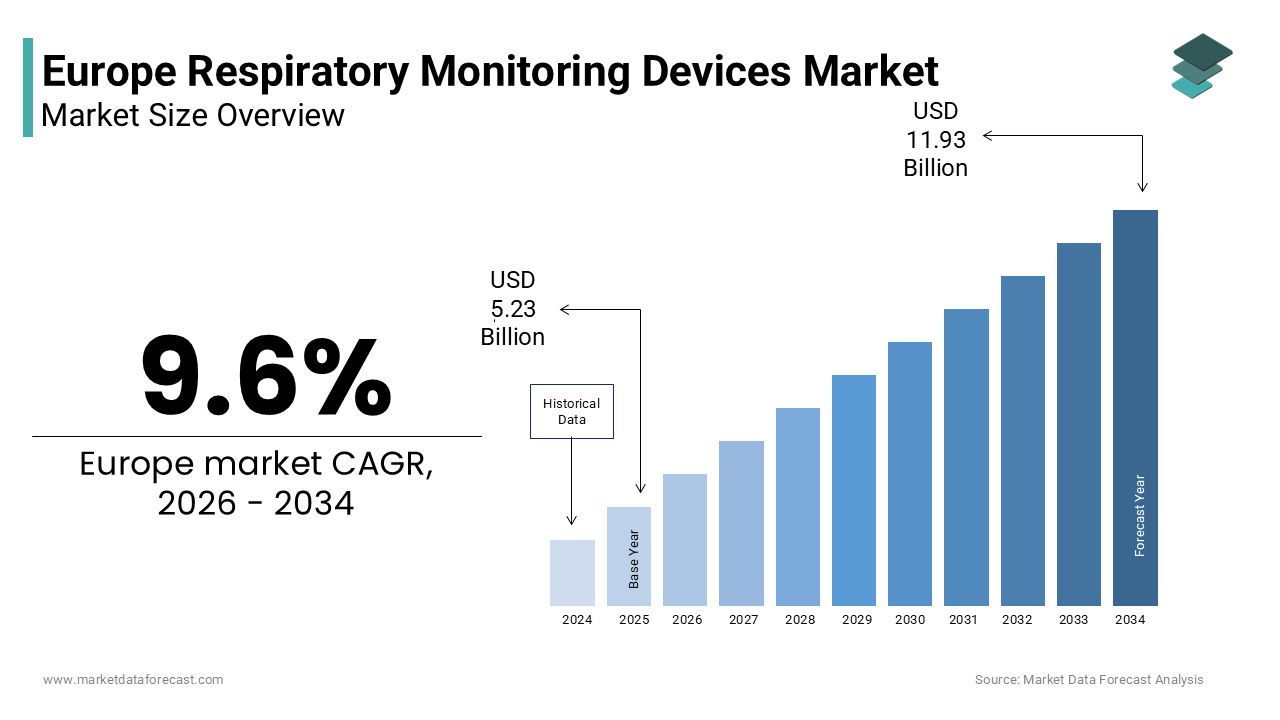
- Market Valuation: Valued at USD 5.23 billion (2025), estimated at USD 5.73 billion (2026), and projected to reach USD 11.93 billion by 2034, registering a consistent CAGR of 9.60% (2026–2034).
- Primary Growth Drivers: High prevalence of chronic respiratory diseases (such as asthma, tuberculosis, and chronic obstructive pulmonary disease [COPD]), growing geriatric population, tobacco use, and heightened focus on respiratory care following infectious outbreaks like COVID-19.
Key Market Segment Metrics (2026–2034)
| Category | Leading Segment (2025 Position) | Fastest-Growing Segment |
|---|---|---|
| By Diagnostic Devices | Spirometers (essential for routine primary care and pulmonary function testing across European clinics) | Advanced Spirometry & Digital Diagnostic Tools (accelerated by telehealth and home management adoption) |
| By Monitoring Devices | Pulse Oximeters (widely utilized in both hospitals and home care settings for non-invasive blood-oxygen tracking) | Sleep Test Devices & Capnographs (driven by rising diagnosis rates for sleep apnea and critical care monitoring) |
| By Country | United Kingdom (held the largest market share in 2025, propelled by high COPD and smoking burdens) | Germany (projected to witness considerable share and rapid growth due to enhanced polysomnography [PSG] implementation and rising pulse oximeter demand) |
Major Market Players & Market Structure
Market Structure: Highly competitive landscape featuring established global medical technology corporations and major regional players engaging in strategic partnerships, mergers, and acquisitions to secure a competitive edge.
Key Companies: Covidien (Ireland), GE Healthcare (U.S.), Philips Healthcare (Netherlands), Siemens Healthcare (Germany), ResMed (U.S.), Merck & Co., Inc. (U.S.), Calando Pharmaceuticals, Inc. (U.S.), Quark Pharmaceuticals, Inc. (U.S.), Access Pharmaceuticals, Inc. (U.S.), Sirnaomics Inc. (U.S.), and Traversa Therapeutics, Inc. (U.S.).
Europe Respiratory Monitoring Devices Market Size
The Europe respiratory monitoring devices market size was valued at USD 5.23 billion in 2025 and is anticipated to reach USD 5.73 billion in 2026 from USD 11.93 billion by 2034, growing at a CAGR of 9.6% during the forecast period from 2026 to 2034.
Respiratory monitoring devices are tools that track a person's breathing patterns, airflow, and oxygen or carbon dioxide levels. This market includes spirometers, pulse oximeters, capnographs and portable monitoring systems that are critical for early detection and ongoing management of diseases such as asthma, chronic obstructive pulmonary disease and sleep apnea. As per the European Lung Foundation and the World Health Organisation, chronic respiratory diseases affect 81.7 million people across the 53 countries of the WHO European Region, while overall major respiratory conditions in the region account for an estimated 97 million cases. According to the World Health Organisation, chronic respiratory diseases are the sixth leading cause of death in the WHO European Region, claiming almost 400,000 lives every year, with chronic obstructive pulmonary disease causing nearly 80% of these deaths. These facts underscore the vital role of advanced monitoring technologies in reducing hospital readmissions and improving patient quality of life. Regulatory frameworks established by the European Medicines Agency ensure high standards for device safety and performance, which fosters trust among healthcare providers and patients. The integration of digital health technologies with traditional monitoring devices enables remote patient monitoring and real-time data analysis. This technological convergence supports personalised treatment plans and enhances clinical decision-making. As healthcare systems prioritise preventive care and cost efficiency, the demand for accurate and user-friendly respiratory monitoring solutions continues to grow. The market is characterised by continuous innovation driven by the need to address the rising burden of respiratory illnesses in an ageing population.
MARKET DRIVERS
Rising Prevalence of Chronic Respiratory Diseases Drives Diagnostic Demand
The increasing incidence of chronic respiratory conditions significantly propels the adoption of monitoring devices across healthcare facilities and home care settings in the region, which fuels the Europe respiratory monitoring devices market growth. As per the European Respiratory Society in collaboration with the World Health Organisation, chronic obstructive pulmonary disease (COPD) affects an estimated 38.4 million adults in the WHO European Region, serving as one of the top causes of chronic illness and the driver behind nearly 80% of all chronic respiratory deaths in the area. This high prevalence necessitates regular lung function assessments to monitor disease progression and adjust treatment protocols effectively. According to joint data published by the European Respiratory Society and the European Lung Foundation, the annual societal and economic burden of major lung conditions across the WHO European region is estimated at 795 billion euros, far exceeding previous decades' historical estimates of 102 billion euros. Spirometry and other monitoring devices enable clinicians to identify exacerbations early, thereby reducing costly emergency visits and hospitalisations. The ageing demographic in countries such as Germany, Italy, and France further amplifies the demand as older adults are more susceptible to respiratory complications. Healthcare providers increasingly rely on portable monitoring devices to facilitate routine checkups in primary care settings. This shift decentralises care and improves access for patients in rural areas. Pharmaceutical companies collaborate with device manufacturers to create integrated care pathways that combine medication with regular monitoring. The correlation between disease prevalence and device utilisation establishes a robust foundation for market expansion as clinical guidelines emphasise the importance of continuous monitoring for optimal disease management.
Technological Advancements in Remote Patient Monitoring Enhance Care Delivery
The rapid integration of digital technologies into these monitoring devices substantially improves patient outcomes and operational efficiency within healthcare systems in the region, which further drives the Europe respiratory monitoring devices market expansion. According to studies, a significant majority of member nations have structured formal frameworks and action plans to deploy regional eHealth services and scale up connected digital technologies. These smart devices transmit real-time data to healthcare providers, allowing for timely interventions and personalised treatment adjustments without requiring frequent clinic visits. As per research, the ongoing integration of automated telemonitoring systems and digital health tools serves to optimise daily clinical workflows by logging patient metrics and signalling staff during emergencies. This efficiency gain is crucial given the ongoing shortage of healthcare professionals in many European countries. Patients benefit from the convenience of home-based monitoring, which enhances adherence to treatment plans and improves quality of life. The development of wearable sensors and mobile applications enables continuous tracking of oxygen saturation and breathing patterns. Data analytics platforms process this information to identify trends and predict potential health deteriorations. Insurance providers increasingly reimburse for remote monitoring services, recognising their cost-saving potential. The synergy between technological innovation and healthcare policy creates a favourable environment for market growth as stakeholders prioritise value-based care models that leverage digital tools for better health outcomes.
MARKET RESTRAINTS
Stringent Regulatory Compliance Requirements Delay Product Launches
The rigorous regulatory framework governing medical devices in the region creates significant barriers that slow down the introduction of new respiratory monitoring technologies in the European market. As per sources, the EU Medical Device Regulation requires extensive clinical evidence and post-market surveillance data, which typically extends the approval timeline to 12 to 18 months for higher-risk Class III devices. This prolonged process increases development costs and delays revenue generation for manufacturers seeking to introduce innovative solutions. According to studies, regulatory frameworks enforce stringent evaluation processes for respiratory equipment, leading many product developers to encounter delays during initial compliance reviews. Companies must navigate complex documentation requirements and adhere to strict quality management standards, which demand substantial financial and human resource investments. Small and medium-sized enterprises face particular challenges in meeting these regulatory demands due to limited resources and expertise. The uncertainty surrounding approval timelines discourages investment in novel product development, as companies prefer focusing on established categories with predictable outcomes. Regulatory changes frequently occur, requiring companies to continuously update their compliance strategies. This dynamic environment creates operational inefficiencies that hinder rapid market responsiveness. The emphasis on safety, though beneficial for patients, inadvertently restricts product diversity and the pace of innovation. Companies must balance regulatory compliance with commercial viability, which often results in conservative product portfolios. This regulatory intensity ultimately constrains market expansion by limiting the variety of available options for healthcare providers seeking specialised monitoring solutions.
High Cost of Advanced Monitoring Systems Limits Accessibility
The substantial financial investment required for advanced respiratory monitoring systems significantly restricts their adoption in resource-constrained healthcare settings across the region, which limits the European market. According to the European Observatory on Health Systems and Policies, healthcare expenditure per capita varies widely among member states, with some countries spending less than 2000 euros annually compared to over 6000 euros in others. This disparity limits the ability of lower-income regions to procure state-of-the-art monitoring equipment, which hinders equitable access to quality respiratory care. As per research, financial and budgetary constraints across various European regional networks frequently restrict health systems from modernising or upgrading local diagnostic infrastructure. High upfront costs for devices such as comprehensive pulmonary function testing systems deter smaller clinics from upgrading their infrastructure. Maintenance and calibration expenses further add to the total cost of ownership, which strains limited operational budgets. Reimbursement policies in several countries do not fully cover the cost of advanced monitoring procedures, which discourages healthcare providers from investing in new technologies. Patients in private care settings may also face out-of-pocket expenses that limit their access to premium monitoring services. The economic pressure on public health systems forces prioritisation of essential services over advanced diagnostic tools. This financial barrier creates a gap in care quality between well-funded and under-resourced institutions. Addressing this challenge requires innovative financing models and policy reforms to ensure broader accessibility of critical monitoring technologies.
MARKET OPPORTUNITIES
Integration of Artificial Intelligence in Diagnostic Algorithms Creates New Value Propositions
The application of artificial intelligence in these monitoring devices paves the way for enhancing diagnostic accuracy and predictive capabilities in the region’s healthcare, which is expected to accelerate the growth of the European respiratory monitoring devices market. According to sources, deep learning models assist clinicians by picking up subtle architectural changes in medical imaging and spirometry outputs to streamline respiratory screening. This enhanced accuracy enables earlier intervention and better management of chronic diseases, which reduces long-term healthcare costs. Machine learning models analyse large datasets from monitoring devices to identify subtle patterns that may indicate disease progression or exacerbation risks. As per studies, deploying automated risk-scoring software inside critical care environments helps teams manage severe respiratory illnesses and optimise patient recovery tracking. These findings demonstrate the potential of intelligent monitoring systems to optimise resource utilisation and improve patient outcomes. Manufacturers are developing smart spirometers and oximeters that provide real-time feedback and personalised recommendations to users. Telemedicine platforms integrate these AI tools to support remote consultations and continuous care management. Regulatory bodies are establishing frameworks for validating AI algorithms, which build trust among clinicians and patients. The convergence of AI and respiratory monitoring creates new revenue streams through software subscriptions and data analytics services. This technological evolution positions market participants to offer comprehensive solutions that go beyond hardware sales. The opportunity lies in transforming raw data into actionable insights that empower both providers and patients.
Expansion of Home Healthcare Services Drives Demand for Portable Devices
The growing preference for home-based care across the region creates significant opportunities for manufacturers of portable and user-friendly devices in the European respiratory monitoring devices market. According to research, the European home healthcare infrastructure has expanded significantly due to systemic shifts toward decentralised, home-based treatment setups. This trend is driven by the desire to reduce hospital congestion and improve patient comfort during recovery and chronic disease management. Portable spirometers and pulse oximeters allow patients to monitor their condition regularly without visiting clinical facilities. As per sources, an overwhelming majority of older demographics favour managing their recovery at home rather than inside clinical institutions, escalating the market requirements for accessible health tracking tools. Manufacturers are designing compact devices with intuitive interfaces that cater to non-professional users. Connectivity features enable seamless data sharing with healthcare providers, ensuring continuous oversight and timely interventions. Insurance providers are increasingly covering home monitoring equipment as part of value-based care initiatives. The rise of digital health platforms facilitates remote coaching and education for patients managing respiratory conditions. This ecosystem supports sustained engagement and adherence to treatment plans. The opportunity extends to partnerships with home care agencies that integrate monitoring devices into their service offerings. Market participants can capitalise on this trend by developing comprehensive home care solutions that combine hardware, software, and support services. This alignment with healthcare delivery trends ensures robust growth potential for portable monitoring technologies.
MARKET CHALLENGES
Data Privacy and Security Concerns Hinder Digital Adoption
The increasing reliance on connected respiratory monitoring devices raises significant concerns regarding data privacy and cybersecurity, which challenge European market growth. According to sources, healthcare organisations face severe threats from malicious actors exploiting digital vulnerabilities, frequently leveraging medical systems and network endpoints to initiate critical cyberattacks. Patients and providers are hesitant to adopt digital monitoring solutions due to fears of unauthorised access to sensitive health information. The General Data Protection Regulation imposes strict requirements on data handling, which adds complexity to the development and deployment of connected devices. Manufacturers must invest heavily in encryption and security protocols to comply with these regulations, which increases production costs. As per studies, the healthcare and life sciences sector remains an exceptionally high-value target for ransomware groups due to the critical nature of patient data. These incidents erode trust in connected medical technologies and slow down adoption rates. Interoperability issues between different device brands and electronic health record systems further complicate data management. Clinicians worry about data accuracy and reliability when integrating multiple sources into clinical decision-making. Legal liabilities associated with data breaches pose financial risks for healthcare providers and manufacturers. Addressing these challenges requires collaborative efforts to establish robust security standards and transparent data practices. Without adequate safeguards, the potential benefits of digital respiratory monitoring may remain unrealised. This is due to persistent security apprehensions.
Shortage of Skilled Healthcare Professionals Limits Device Utilisation
The widespread shortage of trained healthcare professionals in the region significantly limits the effective utilisation of advanced devices in the European respiratory monitoring devices market. As per the European Commission, the European Union faces an estimated deficit of approximately 4.1 million healthcare workers by 2030, straining the operational capacity of clinics and hospitals. Complex monitoring systems require specialised training for accurate operation and interpretation of results, which is often lacking in understaffed facilities. According to research, nursing workforces require coordinated professional training programs to keep pace with the swift deployment of digital medical tech. This skills gap leads to underutilization of expensive equipment and potential errors in data collection. Hospitals struggle to allocate time for staff training amidst heavy workloads and staffing shortages. The lack of technical support personnel further exacerbates the issue, as devices may remain unused due to minor technical glitches. Rural healthcare centres are particularly affected as they have limited access to training resources and specialist support. This imbalance creates disparities in care quality between urban and rural regions. Manufacturers face challenges in designing user-friendly devices that require minimal training while maintaining clinical accuracy. The shortage also impacts maintenance and calibration schedules, which affects device reliability. Addressing this challenge requires investment in automated features and comprehensive training programs. Until the workforce crisis is resolved, the full potential of respiratory monitoring technologies may remain constrained. This limitation is due to human resource deficiencies.
REPORT COVERAGE
| REPORT METRIC | DETAILS |
| Market Size Available | 2025 to 2034 |
| Base Year | 2025 |
| Forecast Period | 2026 to 2034 |
| CAGR | 9.6% |
| Segments Covered | By Diagnostic Devices, Monitoring Devices and Region. |
| Various Analyses Covered | Global, Regional & Country Level Analysis, Segment-Level Analysis, DROC, PESTLE Analysis, Porter’s Five Forces Analysis, Competitive Landscape, Analyst Overview of Investment Opportunities |
| Regions Covered | UK, France, Spain, Germany, Italy, Russia, Sweden, Denmark, Switzerland, the Netherlands, Turkey, the Czech Republic, and the Rest of Europe. |
| Market Leaders Profiled | Covidien (Ireland), GE Healthcare (U.S.), Philips Healthcare (Netherlands), Siemens Healthcare (Germany), ResMed (U.S.), Merck & Co., Inc. (U.S.), Calando Pharmaceuticals, Inc. (U.S.), Quark Pharmaceuticals, Inc. (U.S.), Access Pharmaceuticals, Inc. (U.S.), Sirnaomics Inc. (U.S.), and Traversa Therapeutics, Inc. (U.S.). |
SEGMENTAL ANALYSIS
By Diagnostic Devices Insights
The spirometers segment remained the largest in 2025 and occupied a commanding share of the European respiratory monitoring devices market. This segment dominated because it is recognised as the gold standard for diagnosing obstructive and restrictive lung diseases across European healthcare systems. According to sources, clinical bodies advocate for utilising spirometry to accurately identify airflow limitations in patients presenting with common pulmonary symptoms like chronic cough or dyspnea. This clinical guideline drives consistent procurement by hospitals and primary care clinics throughout the region. As per studies, executing early screening protocols and utilizing specialized testing measures can significantly enhance long-term management for individuals suffering from chronic obstructive pulmonary disease (COPD). National health programs in countries like Germany and France mandate regular lung function testing for high-risk populations, including smokers and industrial workers. This regulatory support creates a steady demand stream for both stationary and portable spirometry units. Manufacturers focus on developing user-friendly interfaces that allow non-specialist staff to perform accurate tests, thereby expanding the utility of these devices in smaller clinics. The integration of digital data management systems enables seamless storage and sharing of results, which enhances clinical workflow efficiency. Reimbursement policies in most European countries cover spirometry procedures, ensuring financial viability for healthcare providers. The entrenched position of spirometry in clinical protocols makes it indispensable for respiratory care. This widespread acceptance ensures that spirometers remain the most utilised diagnostic tool in the market.
The continuous technological advancement in spirometer design significantly contributes to their market leadership by improving accuracy and simplifying operation for healthcare professionals. According to research, the integration of advanced flow-sensing architectures and electronic calibrations into modern digital devices significantly improves the precision and data logging of respiratory testing. This improvement in reliability builds trust among clinicians who depend on precise data for diagnosis and treatment planning. As per sources, medical hardware increasingly incorporates telemonitoring protocols like Bluetooth connectivity to streamline wireless data logging to healthcare information portals. This connectivity reduces administrative burden and minimises transcription errors, which enhances overall patient safety. Portable spirometers have become increasingly popular as they enable point-of-care testing in community settings and patient homes. The ease of use encourages broader adoption in primary care, where time constraints often limit complex diagnostic procedures. Training programs supported by manufacturers help healthcare staff master the latest features, which improves compliance with testing standards. The ability to perform quality control checks automatically ensures consistent performance over time. These technological enhancements make spirometers more attractive to healthcare institutions seeking to upgrade their diagnostic capabilities. The combination of precision and convenience sustains the leading position of spirometers in the diagnostic segment.
The peak flow meters segment is estimated to register the fastest CAGR of 8.5% from 2026 to 2034 due to the increasing emphasis on home-based asthma management. According to epidemiologic figures supported by the European Academy of Allergy and Clinical Immunology (EAACI), approximately 30 million people in Europe suffer from asthma, requiring regular monitoring of airway obstruction levels. Peak flow meters provide a simple and cost-effective way for patients to track their lung function daily and identify early signs of exacerbation. As per Global Initiative for Asthma (GINA) guidelines, daily peak flow monitoring is recommended for patients with moderate-to-severe persistent asthma, driving consistent consumer demand for these devices. The affordability of peak flow meters makes them accessible to a wide range of patients, including those in lower-income brackets. Healthcare providers prescribe these devices as part of personalised asthma action plans, which empower patients to take control of their condition. The compact size and ease of use encourage adherence to monitoring routines among children and elderly patients. Pharmaceutical companies often bundle peak flow meters with inhaler prescriptions, which further boosts distribution. The shift toward patient-centred care models supports the integration of self-monitoring tools into daily life. This trend ensures sustained growth as more patients adopt proactive health management strategies.
Comprehensive educational initiatives by health authorities and patient advocacy groups significantly increase the awareness and usage of peak flow meters across the region. According to sources, structured educational outreach initiatives and guided self-care routines considerably improve the technique and adherence of individuals utilising personal home respiratory diagnostic tools. These programs teach patients how to interpret their readings and when to seek medical help, which enhances the clinical value of the device. Schools and workplaces are increasingly adopting asthma management policies that include access to peak flow monitoring, which expands the user base beyond clinical settings. As per studies, patient advocacy reports highlight an increasing volume of individuals acquiring individual home monitoring instruments to systematically manage chronic allergy and airway conditions. This rise in ownership reflects growing health literacy and confidence in self-care practices. Digital apps that sync with smart peak flow meters provide visual trends and reminders, which improve engagement among younger demographics. Insurance providers offer incentives for patients who demonstrate regular monitoring through data sharing, which further encourages adoption. The simplicity of the device allows for widespread distribution through pharmacies and online retailers. Marketing campaigns emphasise the role of peak flow meters in preventing emergency visits, which resonates with cost-conscious consumers. These factors collectively drive the rapid expansion of the peak flow meter segment.
By Monitoring Devices Insights
In 2025, the pulse oximeters segment held the majority share in the Europe respiratory monitoring devices market because of its universal application in both critical care and routine health assessments across diverse medical settings. The European Society of Intensive Care Medicine states that pulse oximetry is mandatory for monitoring all patients undergoing anaesthesia and sedation, which ensures consistent demand from hospitals and surgical centres. The non invasive nature of the technology allows for continuous monitoring without causing discomfort to patients, which makes it ideal for long term use. According to the World Health Organisation, pulse oximeters are designated as essential medical devices, serving as a baseline tool to manage respiratory conditions across global public healthcare facilities. The COVID-19 pandemic heightened awareness of oxygen saturation monitoring, leading to widespread adoption in home care settings. As per research, public interest in independent pulse oximetry screening rose significantly following global outbreaks, steering patients toward consumer-grade home health tracking monitors. Manufacturers have responded by producing affordable and portable devices that cater to consumer needs. The integration of pulse oximetry into wearable fitness trackers has further normalised its use among healthy individuals. This broad applicability across clinical and consumer segments secures the leading position of pulse oximeters. The reliability and low cost of the technology make it accessible to healthcare systems with varying budget constraints.
The miniaturisation of pulse oximeter technology has significantly expanded its accessibility and appeal to consumer markets in Europe. As per sources, consumer demand for wearable health devices integrated with photoplethysmography sensors has steadily expanded as personal health monitoring gains mainstream adoption. Smartwatches and fitness bands equipped with optical sensors allow users to monitor oxygen levels during exercise and sleep, which promotes preventive health behaviours. The ease of use and instant feedback provided by these devices encourage regular monitoring among health-conscious individuals. Pharmaceutical and tech companies collaborate to develop algorithms that detect irregularities in oxygen saturation, which can indicate underlying respiratory issues. The European Data Protection Board ensures that data from these devices is handled securely, which builds trust among users concerned about privacy. Retail pharmacies and online platforms offer a wide variety of consumer-grade pulse oximeters at competitive prices. Marketing campaigns highlight the benefits of early detection of hypoxia, which appeals to elderly users and caregivers. The integration with mobile health apps provides long-term data trends that can be shared with healthcare providers. This convergence of consumer electronics and medical monitoring creates a robust growth engine for the segment. The versatility of pulse oximeters ensures their continued dominance in the market.
The sleep test devices segment is anticipated to witness the fastest CAGR of 9.8% during the forecast period owing to the rising prevalence of sleep-disordered breathing conditions. According to sources, obstructive sleep apnea affects an estimated 175 million to 200 million adults in Europe, with nearly 90 million to 100 million experiencing at least a moderate form of the condition. Home sleep testing devices offer a convenient and cost-effective alternative to traditional laboratory polysomnography, which removes barriers to diagnosis. As per studies, clinical protocols emphasize utilizing portable diagnostic equipment to optimise waiting lists and expand outpatient access for individuals showing high clinical indicators of sleep-disordered breathing. Insurance reimbursement for home sleep studies has improved in several countries, making these devices more financially accessible to patients. The comfort of sleeping in one’s own bed improves the accuracy of test results by reducing the first night effect often seen in lab settings. Manufacturers are developing simplified devices with fewer sensors that are easy for patients to set up themselves. Telemedicine platforms facilitate remote interpretation of data, which speeds up the diagnosis and treatment initiation process. The growing recognition of sleep health as a critical component of overall wellness supports market expansion. These factors contribute to the rapid growth of the sleep test device segment.
Recent advancements in wireless technology and sensor miniaturisation have significantly enhanced the user experience and accuracy of home sleep test devices. As per research, modern home sleep screening systems increasingly lean on telemonitoring setups to synchronise structural biometric channels with clinical cloud applications. This feature reduces the rate of invalid tests caused by sensor displacement or technical failures, which improves diagnostic efficiency. As per the European Respiratory Society, modern diagnostic instruments focus on structural validation to capture diagnostic compliance and cardiovascular risk profiling. Patients appreciate the discreet design of modern devices, which minimises disruption to sleep patterns and increases compliance. The integration of artificial intelligence algorithms helps automate data analysis, which reduces the workload for sleep specialists and accelerates report generation. Cloud-based platforms enable secure storage and sharing of results with multiple healthcare providers, facilitating coordinated care. The ease of data access empowers patients to understand their condition and engage actively in treatment decisions. Marketing efforts focus on the convenience and comfort of home testing, which appeals to busy professionals and elderly patients. These technological improvements drive the rapid adoption of sleep test devices across Europe.
REGIONAL ANALYSIS
United Kingdom Respiratory Monitoring Devices Market Analysis
The United Kingdom is swiftly growing in the European respiratory monitoring devices market. This growth of the country’s market is propelled by massive national procurement frameworks for virtual wards and remote monitoring. The UK has a robust National Health Service that prioritises early diagnosis and management of respiratory conditions. According to official data from NHS England, respiratory diseases affect one in six people, stand as the third leading cause of death, and contribute to approximately 8% of all hospital admissions in England. The British Thoracic Society guidelines mandate regular spirometry for patients with chronic respiratory conditions, which drives consistent demand for diagnostic devices across primary and secondary care settings. The ageing population in the UK further amplifies this demand as older adults are more susceptible to conditions such as COPD and pneumonia. As per mid-2023 population data published by the Office for National Statistics, the number of people aged 65 and over in the United Kingdom was estimated to be approximately 12.5 million, representing about 18.3% of the total population. Government initiatives to reduce hospital readmissions through remote patient monitoring have accelerated the adoption of home-based devices. The National Institute for Health and Care Excellence recommends the use of pulse oximetry in community care settings, which supports market growth. Private healthcare providers also contribute to demand by offering advanced diagnostic services. The strong regulatory framework ensures high quality standards for medical devices. These factors sustain the UK as a key market for respiratory monitoring technologies.
Germany Respiratory Monitoring Devices Market Analysis
Germany dominated the European respiratory monitoring devices market and accounted for a substantial share in 2025. This dominance of the German market was driven by its advanced healthcare infrastructure and high expenditure on medical technology. The country holds the largest clinical infrastructure footprint and hospital bed network in Western Europe, reinforced by systemic digital health tracking reimbursements. According to the German Federal Statistical Office (Destatis), total health expenditure in Germany reached approximately 494.65 billion euros in 2023, representing 12.8% of the nation's gross domestic product (GDP). As per sources, regulatory frameworks and clinical organisations throughout Germany champion preventive measures and targeted pulmonary health screenings to check and identify long-term airway limitations. The country’s strong manufacturing base for medical devices fosters innovation and local availability of high-quality products. As per the Robert Koch Institute, the 12-month prevalence of known chronic obstructive pulmonary disease (COPD) among adults aged 18 years or older in Germany is estimated at 5.8% for women and 5.7% for men. Statutory health insurance covers most respiratory diagnostic procedures, ensuring financial accessibility for patients. The trend toward digital health is supported by the Digital Healthcare Act, which facilitates reimbursement for digital health applications, including remote monitoring tools. Hospitals and clinics invest in state-of-the-art monitoring systems to maintain competitive advantage. The presence of major medical technology companies in Germany supports continuous product development. These elements combine to make Germany a dynamic and mature market for respiratory monitoring devices.
France Respiratory Monitoring Devices Market Analysis
France is growing quickly in the European respiratory monitoring devices market. This position is supported by a comprehensive healthcare system that emphasises preventive care and chronic disease management. According to studies, The Lancet Respiratory Medicine shows that chronic obstructive pulmonary disease (COPD) is the seventh-leading cause of death nationwide, ranking among the top causes of mortality. As per research, preventative clinical pathways within the French medical framework advocate for early evaluation of pulmonary symptoms to treat structural obstruction. According to sources, approximately 3.5 million people suffer from asthma alone in France, while separate national studies estimate that millions more remain heavily impacted or undiagnosed with obstructive lung diseases. Reimbursement policies cover a wide range of respiratory monitoring devices, making them accessible to the general population. The integration of telemedicine into the healthcare system has grown rapidly following regulatory changes that allow remote consultations and monitoring. Pharmacies play a crucial role in distributing home monitoring devices such as peak flow meters and pulse oximeters. Public awareness campaigns educate citizens about the importance of respiratory health, which drives consumer demand. The presence of research institutions focused on respiratory medicine fosters innovation in monitoring technologies. These factors ensure steady growth and stability in the French market.
Spain Respiratory Monitoring Devices Market Analysis
Spain is expanding moderately within the European respiratory monitoring devices market due to an ageing population and an increasing prevalence of respiratory ailments. As per the EPI-SCAN epidemiological studies backed by the Spanish Society of Pulmonology and Thoracic Surgery (SEPAR), chronic obstructive pulmonary disease (COPD) affects an estimated 2,185,765 adults between the ages of 40 and 80 in Spain, creating a substantial demand for diagnostic tools. As per studies, regional health ministries periodically update clinical toolkits and fund local diagnostic equipment to address long-term airway screening delays in outpatient networks. According to the Spanish National Statistics Institute (INE), adults aged 65 or older make up roughly 20% of the national population, representing a highly vulnerable cohort heavily impacted by chronic respiratory conditions. Economic recovery in recent years has allowed for increased investment in healthcare infrastructure, including modern monitoring devices. Regional health services are adopting telemedicine solutions to manage chronic patients more efficiently, which drives demand for connected devices. Public hospitals are replacing outdated equipment with digital spirometers and pulse oximeters to improve diagnostic accuracy. Private healthcare providers also contribute to market growth by offering specialised respiratory services. Awareness campaigns during winter months highlight the risks of respiratory infections, which boosts sales of home monitoring kits. These dynamics support the gradual expansion of the respiratory monitoring market in Spain.
Italy Respiratory Monitoring Devices Market Analysis
Italy holds a noteworthy share in the European respiratory monitoring devices market because of the high rates of respiratory diseases and a strong focus on specialised care. According to the Italian National Institute of Statistics (Istat), diseases of the respiratory system account for approximately 8% of all nationwide annual deaths, serving as the third leading cause of mortality behind cardiovascular conditions and cancer. As per research, atmospheric particulate matter and urban pollutants correlate with increased respiratory disease exacerbations, prompting expanded local screening frameworks. The Italian National Health Service provides coverage for respiratory diagnostics, which ensures broad access to spirometry and other monitoring tests. The ageing population structure exacerbates the burden of chronic respiratory conditions requiring long term management. Recent investments in digital health infrastructure have facilitated the adoption of remote monitoring technologies. Hospitals are upgrading their intensive care units with advanced capnographs and gas analysers to improve patient outcomes. Private clinics offer specialised sleep disorder diagnostics, which supports the growth of sleep test devices. Regulatory alignment with European standards ensures the availability of high-quality medical devices. These factors contribute to a resilient and evolving market landscape in Italy.
Netherlands Respiratory Monitoring Devices Market Analysis
The Netherlands is rapidly growing in the European respiratory monitoring devices market, with a strong focus on integrated care and digital health innovation. According to sources, clinical guidelines advocate for integrating home telemonitoring instruments to improve patient self-management and minimise emergency hospital visits. As per studies, tracking ambient particulate exposure helps health authorities communicate regional airway risks and manage long-term community health complications. General practitioners are equipped with modern diagnostic tools to provide immediate care. The high penetration of broadband internet supports the use of connected monitoring devices. Insurance companies incentivise the use of remote monitoring through reimbursement schemes. The ageing population requires efficient care models that leverage technology. Collaborative projects between universities and industry drive the development of new monitoring solutions. Public awareness campaigns encourage regular lung health checks. These factors contribute to a dynamic and forward-looking market environment.
COMPETITIVE LANDSCAPE
The competition in the European Respiratory Monitoring Devices Market is characterized by intense rivalry among established global medical technology giants and specialized regional manufacturers. Leading players leverage extensive research and development capabilities to introduce innovative products with enhanced connectivity and artificial intelligence features. Local competitors focus on niche segments such as home care and portable diagnostics to differentiate themselves from larger corporations. The market sees frequent collaborations between device manufacturers and software developers to create integrated digital health ecosystems. Price competition is moderate as healthcare providers prioritize clinical accuracy and reliability over cost savings. Regulatory compliance serves as a significant barrier to entry ensuring that only qualified players with robust quality systems operate in the sector. Distribution channels play a crucial role with direct sales to hospitals and partnerships with distributors for retail reach. Companies invest heavily in after sales service and training to build long term relationships with customers. The dynamic nature of healthcare technology requires continuous adaptation and strategic agility from all market participants. Innovation in user experience and data security becomes a key differentiator. This competitive landscape drives continuous improvement and benefits end users through better diagnostic tools and care outcomes.
KEY MARKET PLAYERS
A few of the notable companies operating in the European respiratory monitoring devices market include
- Covidien (Ireland)
- GE Healthcare (U.S.)
- Philips Healthcare (Netherlands)
- Siemens Healthcare (Germany)
- ResMed (U.S.)
- Merck & Co., Inc. (U.S.)
- Calando Pharmaceuticals, Inc. (U.S.)
- Quark Pharmaceuticals, Inc. (U.S.)
- Access Pharmaceuticals, Inc. (U.S.)
- Sirnaomics Inc. (U.S.)
- Traversa Therapeutics, Inc. (U.S.)
Top Players in the Market
Philips Healthcare
Philips Healthcare maintains a strong presence in the Europe respiratory monitoring devices market through its comprehensive portfolio of sleep diagnostics and patient monitoring solutions. The company focuses on integrating artificial intelligence into its devices to enhance diagnostic accuracy and streamline clinical workflows. Recent initiatives include launching connected home sleep testing systems that allow patients to undergo diagnostics in their own environment. Philips collaborates with healthcare providers to develop integrated care pathways for chronic respiratory conditions. The company invests heavily in research and development to create user friendly interfaces that simplify operation for both clinicians and patients. Strategic partnerships with telemedicine platforms enable remote data analysis and timely intervention. These efforts ensure sustained relevance and competitive advantage in the evolving digital health landscape.
ResMed
ResMed is a prominent player in the Europe respiratory monitoring devices sector known for its innovative sleep apnea and ventilation solutions. The company leverages advanced cloud based technologies to facilitate remote patient monitoring and data management. Recent actions involve expanding its digital health ecosystem by introducing mobile applications that support patient adherence to therapy. ResMed enhances its market position by investing in educational programs for healthcare professionals on the latest diagnostic techniques. The company actively engages in clinical research to validate the efficacy of its monitoring devices. Strategic acquisitions of software companies help integrate data analytics into its hardware offerings. These measures reinforce consumer trust and drive consistent adoption across various healthcare settings.
Vyaire Medical
Vyaire Medical holds a significant role in the Europe respiratory monitoring devices market with a focus on critical care and pulmonary function testing. The company capitalizes on the demand for high precision spirometry and capnography equipment in hospital settings. Recent strategies include upgrading its product line with smart connectivity features that enable seamless integration with electronic health records. Vyaire Medical invests in sustainable manufacturing practices which appeal to environmentally conscious healthcare institutions. The company collaborates with key opinion leaders to promote evidence based practices in respiratory care. Innovation in portable monitoring devices allows for broader application in emergency and transport medicine. Continuous improvement in supply chain efficiency ensures timely product availability. These initiatives strengthen brand equity and support long term market leadership.
Top Strategies Used by Key Market Participants
Key players in the EUROPE RESPIRATORY MONITORING DEVICES MARKET employ several strategic approaches to maintain competitiveness and drive growth. Product innovation remains a primary strategy where companies develop advanced sensors and artificial intelligence algorithms to improve diagnostic accuracy and ease of use. Digital transformation is another critical strategy as firms expand their cloud based platforms and mobile applications to support remote patient monitoring and data analytics. Partnerships with healthcare providers and insurance companies enhance credibility and facilitate reimbursement for new technologies. Marketing campaigns increasingly focus on patient empowerment and education to build brand loyalty among consumers managing chronic conditions at home. Companies also invest in regulatory compliance and quality assurance to meet stringent European standards. Strategic acquisitions allow firms to diversify their portfolios and enter new therapeutic categories quickly. Pricing strategies often include value based models that demonstrate cost savings through reduced hospitalizations. These multifaceted strategies enable market participants to adapt to changing healthcare needs and technological advancements while sustaining business growth.
MARKET SEGMENTATION
This research report on the European respiratory monitoring devices market has been segmented and sub-segmented into the following categories.
By Diagnostic Devices
- Spirometers
- Peak Flow Meter
By Monitoring Devices
- Pulse Oximeters
- Sleep Test Devices
- Gas Analyzers
- Capnograph
By Country
- UK
- France
- Spain
- Germany
- Italy
- Russia
- Sweden
- Denmark
- Switzerland
- Netherlands
- Turkey
- Czech Republic
- Rest of Europe