- Product Description Description
- Table of Contents TOC
- List of Table & Figure LOT
- Get Free Sample PDF Sample PDF
Market Size, 2025
$363.12 MnMarket Estimate, 2026
$390.39 MnMarket Forecast, 2034
$696.77 MnCAGR, 2026–2034
7.51%Executive Summary: Europe Seed Coatings Material Market
- Market Scope: Regional European seed coatings material market analysis covering product types, application segments, regional country leadership frameworks, and regulatory compliance trends.
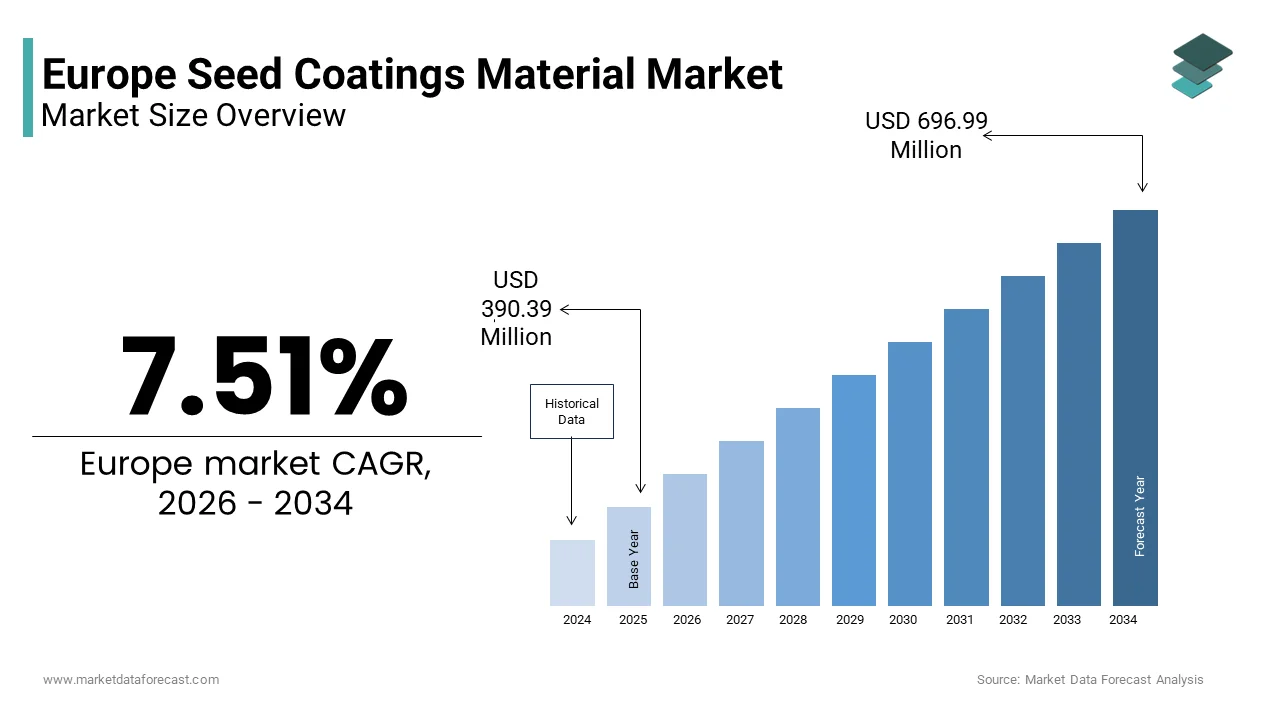
- Market Valuation: Valued at USD 363.12 million (2025), estimated at USD 390.39 million (2026), and projected to reach USD 696.77 million by 2034, registering a robust CAGR of 7.51% (2026–2034).
- Primary Growth Drivers: Implementation of Integrated Pest Management under EU Directive 2009/128/EC mandating biological seed coatings, and expansion of precision sowing technologies. Key challenges include high raw material costs for marigold extracts and fragmented national approval processes.
Key Market Segment Metrics (2026–2034)
| Category | Leading Segment (2025 Position) | Fastest-Growing Segment |
|---|---|---|
| By Product Type | Polymers (dominated due to their critical role in adhesion and moisture retention for precision planting) | Superabsorbent polymer gels (projected to expand at a CAGR of 10.2% driven by drought resilience needs) |
| By Application | Cereals and grains (held the largest application share owing to staple food demand across Europe) | Fruits and vegetables (anticipated to register a CAGR of 11.6% due to high-value export quality standards) |
| By Region / Country | Germany (led regionally with a 24.7% share in 2025, supported by over 2.2 million hectares of organic farmland) | France (expected to witness significant growth driven by the Ecophyto Plan allocating €1.1 billion) |
Major Market Players & Market Structure
Market Structure: Highly competitive European agricultural input landscape featuring 10 major profiled market leaders focusing on biodegradable polymer innovation, compliance with EU microplastics restrictions, and localized supply chains.
Key Companies: Platform Specialty Products Corporation, Croda International PLC, Precision Laboratories LLC, INCOTEC Group BV, BrettYoung Seeds Limited, Keystone Aniline Corporation, BASF SE, Clariant AG, Bayer CropScience AG, and Germains Seed Technology Inc.
Europe Seed Coatings Material Market Size
Europe seed coatings material market was valued at USD 363.12 million in 2025 and is anticipated to reach USD 390.39 million in 2026 and USD 696.77 million by 2034, estimated to grow at a CAGR of 7.51% during the forecast period from 2026 to 2034.
Current Introduction of the Europe Seed Coatings Material Market
Seed coating materials are specialized formulations applied to seeds to enhance germination,n protect against biotic and abiotic stresses, and deliver active ingredients such as biologicals, nutrients,s and polymers. In Europe, these coatings play a critical role in sustainable intensification by reducing chemical inputs, improving seedling vigor, and supporting precision agriculture. According to the European Commission, a significant portion of arable land in the European Union is cultivated using treated seeds, with cereals, oilseeds, and vegetables representing the primary crops. As per Eurostat, the EU imports large volumes of certified seeds annually, all of which require pre-sowing treatments compliant with stringent phytosanitary standards. Furthermore, the European Food Safety Authority mandates rigorous environmental and toxicological assessments for all seed treatment substances under Regulation EC 1107/2009, which ensures minimal impact on non-target organisms. These regulatory, agronomic, and trade dynamics position seed coating materials as a vital enabler of resilient and resource-efficient crop production across the continent.
MAREKT DRIVERS
Implementation of Integrated Pest Management Drives Demand for Biological Seed Coatings
The European Union’s legal requirement for Integrated Pest Management under Directive 2009/128/EC has significantly accelerated the adoption of biological seed coatings as a first-line defense against soil-borne pathogens and early-season pests, which is one of the key factors driving the growth of the European seed coating material market. According to the European Commission, all professional users of plant protection products must prioritize non-chemical methods, including resistant varieties and biological controls. As per the European Biocontrol Manufacturers Association, the biocontrol market in Europe has grown steadily, with microbial seed treatments such as those containing Trichoderma spp., Bacillus subtilis, and Pseudomonas fluorescens gaining traction in countries like Germany, France, and the Netherlands. These bio-coatings enhance root development, suppress Fusarium and Rhizoctonia, and reduce reliance on synthetic fungicides, as demonstrated in field trials conducted by the Julius Kühn Institute. Furthermore, the EU’s Farm to Fork Strategy targets a 50% reduction in chemical pesticide use by 2030, which is incentivizing seed companies to formulate biological actives into next-generation coatings. This regulatory and agronomic convergence is transforming biological seed treatments from niche supplements into mainstream agronomic tools.
Expansion of Precision Sowing Technologies Increases Coating Performance Requirements
The widespread adoption of precision planting equipment across European farms demands seed coatings with exceptional uniformity, durability, and flowability to ensure singulation and accurate placement, which is further boosting the expansion of the European seed coating material market. While EN 16623 is a European standard, it pertains to fire protection coatings and not seed coatings. However, industry guidelines and equipment manufacturers emphasize that coated seeds must maintain integrity during high-speed metering with minimal dust-off to comply with environmental and operator safety standards. For instance, a growing majority of professional farms in Western Europe now use vacuum or finger-pickup planters that require spherical seed geometry and consistent weight distribution, as these are the attributes achieved only through advanced polymer and pigment formulations. In 2024, agricultural research institutions in France reported that poor coating quality contributed to planting inconsistencies in maize fields using precision drills, leading to measurable yield losses. Consequently, seed processors invest in proprietary coating polymers from companies like Bayer and Incotec to meet equipment compatibility standards. This mechanization trend elevates seed coatings from passive protectants to critical functional components of modern agronomic systems.
MARKET RESTRAINTS
Restrictive EU Regulations on Active Substances Limit Chemical Coating Options
The Europe seed coatings material market faces significant constraints due to the European Union’s stringent approval process for active substances under Regulation EC 1107/2009, which has led to the withdrawal of numerous synthetic fungicides and insecticides. According to the European Food Safety Authority, dozens of active substances previously used in seed treatments were not renewed between 2020 and 2024 due to concerns about groundwater contamination or toxicity to pollinators. As per the European Crop Protection Association, the withdrawal of neonicotinoids such as clothianidin and thiamethoxam has created gaps in early-season pest control for crops like sugar beet and oilseed rape, particularly in countries like the United Kingdom and France. Although alternatives like flupyradifurone have been approved, the regulatory review timeline typically spans several years, creating prolonged uncertainty for seed companies. This restrictive environment forces formulators to rely on a shrinking portfolio of approved chemistries or shift to less effective biologicals, which is constraining innovation and increasing crop vulnerability during the seedling stage.
Environmental Concerns Over Polymer and Microplastic Residues Impede Coating Adoption
Growing scrutiny over the persistence of synthetic polymers in agricultural soils is challenging the long-term viability of conventional seed coating materials in Europe, which is further hampering the growth of the European seed coating material market. According to the European Chemicals Agency, certain film-forming agents and binders used in seed coatings are classified as persistent and potentially mobile in soil systems. As per a 2024 study by the Swedish University of Agricultural Sciences, residues from polymer-based coatings were detectable in topsoil layers months after sowing, whichraisesg concerns about their effects on microbial activity and soil fauna. The European Commission’s Microplastics Restriction Proposal under REACH explicitly identifies intentionally added microplastics, including seed coating polymers, for phase-out by 2030 unless biodegradability is demonstrated. Consequently, major seed companies are reformulating with starch-based or cellulose-derived polymers despite higher costs and reduced durability. Until standardized biodegradation testing protocols are established and scalable green alternatives become available, this environmental pressure will continue to constrain formulation options and increase regulatory compliance burdens.
MARKET OPPORTUNITIES
Development of Nutrient and Biostimulant Infused Coatings Enhances Value Proposition
The integration of macro- and micronutrients along with biostimulants into seed coatings offers a high-growth opportunity for the European seed coating material market. According to the European Biostimulants Industry Council, biostimulants such as zinc, manganese, and seaweed extracts are increasingly incorporated into seed enhancement products to support root development under cold or drought conditions. For instance, maize seeds coated with phosphorus and mycorrhizal fungi have demonstrated improvements in early vigor and yield under low-fertility conditions. Furthermore, the European Commission’s Fertilising Products Regulation permits biostimulant seed treatments to carry CE marking if they meet safety and efficacy criteria, which opens a regulated pathway for market entry. With growing farmer interest in seed-placed nutrition across Europe, this multifunctional approach aligns with circular economy goals by reducing broadcast fertilizer use and improving nutrient use efficiency.
Rise of Organic and Low-Input Farming Systems Creates Demand for Approved Coating Solutions
The rapid expansion of organic and agroecological farming in Europe is generating strong demand for seed coating materials compliant with EU Organic Regulation 2018/848, which permits only natural substances and restricts synthetic polymers, and is another major opportunity for the European seed coating material market. According to Eurostat, certified organic arable land in the European Union reached 17.7 million hectares in 2023, which is continuing a steady upward trend. As per the Research Institute of Organic Agriculture (FiBL), a large share of organic vegetable and pulse growers in countries like Germany and Denmark use treated seeds but face limited options due to the scarcity of approved biological coatings. This gap has spurred innovation in clay-based coatings enriched with Trichoderma and plant-derived extracts that provide physical protection and microbial enhancement without synthetic inputs. Companies like Incotec and Germains have launched organic-certified seed pelleting and film coating systems using kaolin and food-grade starches. With the EU’s target of 25% organic land by 2030, this segment offers a sustainable and rapidly growing market for clean-label seed enhancement technologies.
MARKET CHALLENGES
Fragmented Approval Processes Across Member States Delay Product Commercialization
Despite EU-level regulation, seed coating materials face inconsistent national interpretations and delayed mutual recognition that hinder pan-European market access, which is one of the major challenges to the growth of the European seed coating material market. According to the European Seed Association, national authorities in Southern and Eastern Europe often require additional efficacy or environmental data beyond EFSA assessments, causing approval delays. As per a 2024 audit by the European Commission, only a portion of seed treatment dossiers received simultaneous authorization in all member states due to divergent risk assessments on groundwater leaching or bee exposure. For instance, a polymer binder approved in Germany may be rejected in Italy over unverified biodegradation claims. These discrepancies force seed companies to maintain multiple formulations and delay launches in key markets like Spain and Poland. Without full harmonization of technical evaluation criteria under the Sustainable Use of Pesticides Regulation, the commercialization timeline for innovative seed coatings remains unpredictable and costly across the European Union.
Technical Complexity in Multi-Active Formulations Limits Stability and Efficacy
The trend toward multifunctional seed coatings combining biologicals, chemicals, nutrients, and polymers introduces significant formulation challenges that compromise shelf life and field performance. According to the Julius Kühn Institute, interactions between microbial spores and chemical fungicides can reduce viability if not properly separated through microencapsulation or layered application. For instance, seed lots with combined Trichoderma and chemical actives may experience reduced biological efficacy over time if not stabilized effectively. Moreover, polymer viscosity must be precisely calibrated to avoid clogging during industrial coating processes while ensuring adhesion under humid field conditions. These technical hurdles require extensive compatibility testing and specialized application equipment that many small seed processors lack. Until standardized formulation protocols and stabilization technologies—such as silica encapsulation or cold chain logistics—are widely adopted, the promise of integrated seed treatments will remain partially unrealized in practical agronomic settings across Europe.
REPORT COVERAGE
| REPORT METRIC | DETAILS |
| Market Size Available | 2025 to 2034 |
| Base Year | 2025 |
| Forecast Period | 2026 to 2034 |
| CAGR | 7.51% |
| Segments Covered | By Type, Application, And By Country |
| Various Analyses Covered | Global, Regional & Country Level Analysis; Segment-Level Analysis, DROC, PESTLE Analysis, Porter’s Five Forces Analysis, Competitive Landscape, Analyst Overview of Investment Opportunities |
| Regions Covered | UK, France, Spain, Germany, Italy, Russia, Sweden, Denmark, Switzerland, Netherlands, Turkey, Czech Republic, & Rest of Europe |
| Market Leaders Profiled | Platform Specialty Products Corporation (U.S.), Croda International PLC (U.K.), Precision Laboratories LLC (U.S.), INCOTEC Group BV (The Netherlands), BrettYoung Seeds Limited (Canada), Keystone Aniline Corporation (U.S.), BASF SE (Germany), Clariant AG (Switzerland), Bayer CropScience AG (Germany), and Germains Seed Technology Inc. (U.K.). |
SEGMENTAL ANALYSIS
By Type Insights
The polymers segment accounted for the largest share of the Europe seed coatings material market in 2024. The growth of the polymers segment in this regional market is due to their critical role in enhancing seed handling, moisture retention, and active ingredient adhesion. EN 16623, however, pertains to fire protection coatings for metallic substrates and does not apply to seed coatings. Polymers are widely used in coated cereal and vegetable seeds across Western Europe to ensure uniform shape, reduced dust-off, and compatibility with vacuum planters. Superabsorbent polymers are increasingly used in drought-prone regions such as Southern Spain and Italy, where field trials have demonstrated improvements in early seedling emergence under water stress. Additionally, polymers serve as carriers for biologicals and nutrients, enabling controlled release during germination. Their multifunctionality, regulatory acceptance, and compatibility with modern agronomic systems solidify polymers as the foundational material in Europe’s seed coating landscape.
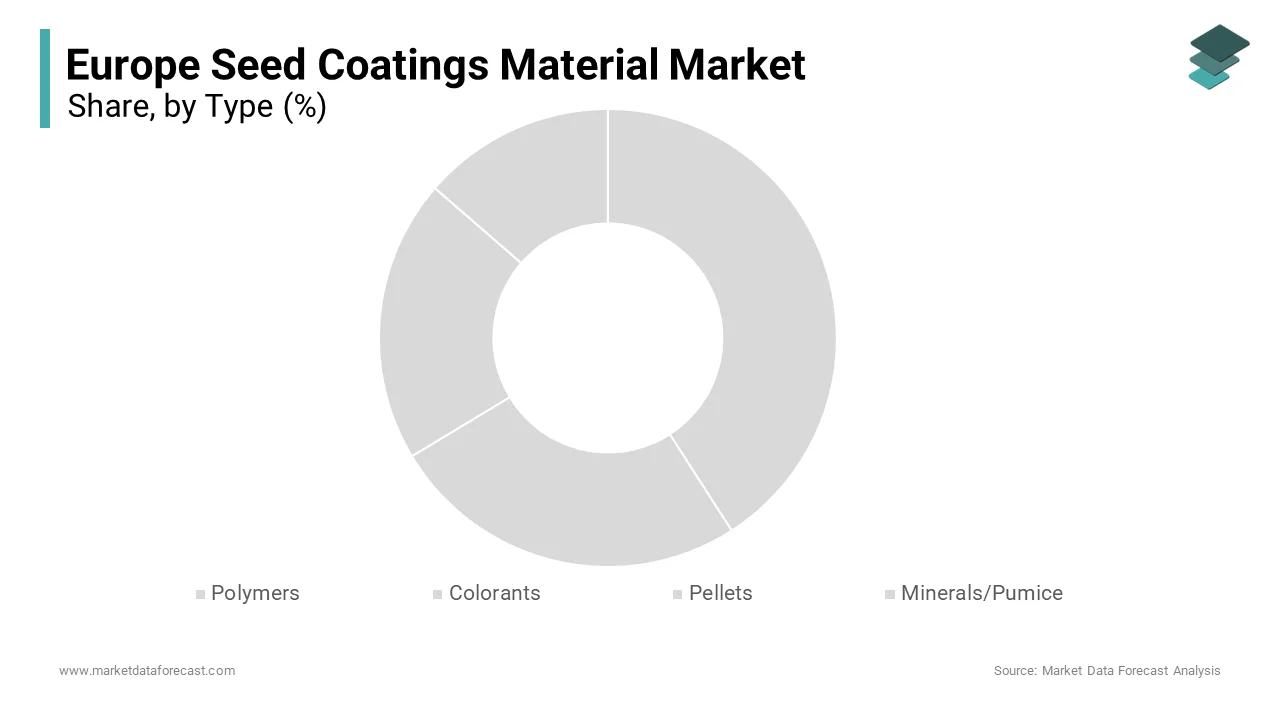
The superabsorbent polymer gels segment is expanding at the highest CAGR of 10.2% over the forecast period, owing to the intensifying water scarcity and EU policies promoting climate-resilient agriculture. According to the European Environment Agency, Southern Europe experienced widespread drought conditions in 2023, affecting over 30% of arable land. Superabsorbent polymers can absorb and retain several hundred times their weight in water, releasing it gradually to germinating seeds, which is a functionality validated in multiple agronomic studies. Furthermore, the EU’s Common Agricultural Policy incentivizes water efficiency measures through eco-scheme payments andencouragese seed processors to integrate these gels into coatings for maize, sunflower, and legumes. With climate projections indicating increased aridity across the Mediterranean basin, superabsorbent polymers are transitioning from niche inputs to essential components of drought-adaptive seed systems.
By Application Insights
The cereals and grains segment was the dominant application segment in the Europe seed coatings material market in 2024. The leading position of the cereals and grains segment in this regional market is attributed to the vast scale of wheat, barley, oats, and maize cultivation and the economic necessity of uniform stand establishment. According to Eurostat, 48.6 million hectares of cereals were sown in the EU in 2024. Large-scale mechanized farms in Germany, France, and Poland rely on polymer-coated seeds for precision drilling, while fungicidal and biological coatings protect against soil-borne pathogens like Fusarium and Pythium. Moreover, the EU’s Green Deal targets for reduced pesticide use have intensified demand for seed-placed protection in cereals, minimizing the need for foliar sprays.
The fruits and vegetables segment is the fastest expanding application segment in the Europe seed coatings material market and is expected to grow at a CAGR of 11.6% over the forecast period. The growth of the fruits and vegetables segment in this regional market is attributed to the high-value nature of horticultural crops, where uniform emergence and early pest protection directly impact profitability. According to the European Commission, 12.4 million metric tons of vegetables were produced under protected cultivation in 2024. The shift toward organic vegetable farming fuels demand for clay-based and biological coatings compliant withthe EU Organic Regulation. Additionally, precision transplanting systems used in the Netherlands and Spain demand spherical seeds with color coding for variety identification, which is driving the use of mineral and pigment coatings. With urban agriculture and short supply chains boosting local vegetable demand, this segment’s technical and regulatory specificity positions it as the most dynamic growth vector in the seed coatings market.
COUNTRY ANALYSIS
Germany Seed Coating Material Market Analysis
Germany held the leading position in the European seed coating material market in 2024 by accounting for 20.6% of the regional market share. The dominance of Germany in the European market is driven by its advanced seed industry, stringent agricultural standards, and widespread adoption of precision farming. Germany’s seed sector is highly regulated, with a strong emphasis on quality standards such as DIN and EN norms. Global seed giants like KWS SAAT and BASF Agricultural Solutions develop proprietary coating formulations for European and global markets. The national Integrated Plant Protection Act mandates reduced chemical use, accelerating uptake of biological and nutrient-infused coatings. Furthermore, research institutions like the Julius Kühn Institute lead in validating coating efficacy under real field conditions. These industrial, regulatory, and scientific synergies position Germany as Europe’s seed coating innovation and compliance benchmark.
France Seed Coating Material Market Analysis
France held the second leading share of the Europe seed coatings material market in 2024. The country’s strength lies in its diverse cropping systems, extensive cereal and vegetable production, and strong public investment in agroecological transition. A large proportion of maize and sunflower seeds are coated, with increasing use of superabsorbent polymers in drought-affected regions like Occitanie. France’s Ecophyto Plan II mandates a 50% reduction in pesticide use by 2030, driving seed companies to adopt biological seed treatments containing Trichoderma and Bacillus strains. The nation also leads in organic seed coating development through collaborations involving INRAE and Terres Inovia. With over 2 million hectares of organic arable land and a robust seed export sector, France’s market reflects a strategic balance between productivity and sustainability.
Netherlands Seed Coating Material Market Analysis
The Netherlands is anticipated to exhibit a prominent CAGR in the European seed coating material market during the forecast period. The country’s influence arises not from field area but from its role as Europe’s horticultural seed hub, supplying coated vegetable and flower seeds to over 100 countries. A vast majority of Dutch vegetable seeds are pelleted and film-coated for automated transplant production in greenhouses across Europe and the Middle East. Companies like Rijk Zwaan and Enza Zaden operate advanced coating facilities using mineral clays, colorants, and biodegradable polymers to meet strict phytosanitary and handling standards. The Netherlands also pioneers color-coded seed systems for variety traceability under EU seed marketing regulations. With world-leading seed R&D, precision agriculture infrastructure, and export orientation, the Netherlands serves as a high-value innovation corridor for specialized seed coatings.
Spain Seed Coating Material Market Analysis
Spain is likely to account for a notable share of the Europe seed coatings material market during the forecast period. The country’s significance stems from its climate-driven reliance on drought-resilient seed technologies and extensive horticultural production. A large share of maize and melon seeds are coated with superabsorbent polymers to combat chronic water stress in regions like Murcia and Andalusia. Spain is Europe’s largest producer of fresh fruits and vegetables, with protected cultivation requiring pelleted seeds for transplant automation. The government’s Strategic Irrigation Plan promotes water-saving inputs, including moisture-retaining coatings. Additionally, rising organic vegetable farming fuels demand for clay-based and biological coatings. Spain’s unique agro-climatic challenges position it as a critical testing ground for next-generation water-smart seed enhancement solutions.
Italy Seed Coating Material Market Analysis
Italy is expected to witness a healthy CAGR in the Europe seed coatings material market during the forecast period. The country’s market is defined by its dual focus on high-value horticulture and traditional cereal systems under increasing environmental pressure. A significant portion of tomato and lettuce seeds are coated with mineral pellets and colorants for transplant production in Emilia-Romagna and Puglia. Simultaneously, cereal growers in the Po Valley increasingly adopt polymer-coated seeds with biologicals to comply with the National Action Plan for Sustainable Use of Pesticides. Italy also faces severe drought, with the Po River basin experiencing historic lows in 2023, accelerating the adoption of superabsorbent polymer gels in maize and soybean. With strong regional seed cooperatives and growing organic acreage, Italy balances tradition and innovation in its seed coating practices, reflecting the diverse agronomic realities of Southern Europe.
COMPETITIVE LANDSCAPE
Competition in the Europe Seed Coatings Material Market is defined by a dynamic interplay between multinational agrochemical firms and specialized seed technology providers vying for innovation leadership in sustainable formulations. The market features moderate concentration with differentiation driven by polymer biodegradability, biological compatibility,y regulatory compliance,ce and precision agriculture readiness. Large players like BASF and Corteva leverage integrated crop protection portfolios to offer bundled seed soluti,ons while niche firms such as Incotec focus on high-value horticultural applications requiring advanced pelleting and color coding. Barriers to entry include stringent EU chemical approvals, complex formulation science,e and long-term relationships with seed companies. Competition is increasingly shaped by the EU’s microplastics restriction policy, the Farm to Fork Strategy,egy and national Integrated Pest Management mandates,ates which favor environmentally benign and multifunctional coatings. As sustainability becomes non-negotiable,iable the market shifts from performance alone to performance plus planetary health, driving continuous innovation in green seed enhancement technologies.
KEY MARKET PLAYERS
Major companies known in the seed coating materials market include
- Platform Specialty Products Corporation (U.S.),
- Croda International PLC (U.K.),
- Corteva Agriscience
- Precision Laboratories LLC (U.S.)
- INCOTEC Group BV (The Netherlands)
- BrettYoung Seeds Limited (Canada)
- Keystone Aniline Corporation (U.S.)
- BASF SE (Germany)
- Clariant AG (Switzerland)
- Bayer CropScience AG (Germany)
- Germains Seed Technology Inc. (U.K.).
Top Players in the Market
- BASF Agricultural Solutions is a global leader in seed enhancement technologies with a strong European footprint through its advanced seed coating formulations. The company supplies polymer, binders, biologicals, and colorants that improve seed handling, pest resistance, and early plant vigor across cereal, vegetable, es,, and oilseeds. BASF integrates its coatings with proprietary inoculants and chemical actives to deliver holistic seed performance solutions. In 2024, BASF launched a new biodegradable polymer system for vegetable seeds that meets EU microplastics restrictions while maintaining flowability in precision planters. This innovation reinforces its commitment to sustainable agriculture and strengthens its position as a trusted partner for European seed companies pursuing regulatory compliance and agronomic excellence.
- Incotec Group is a specialized provider of seed coating and pelleting technologies headquartered in the Netherlands with extensive operations across Europe. The company focuses high-valuelue horticultural seeds requiring precision coating for automated transplant production. Incotec offers proprietary colorants, mineral pellets,s and film coatings that ensure variety identification, uniformity,y and biological compatibility. The firm has reinforced its market position by developing organic certified coating systems using kaolin and food-grade starches. In 2024, Incotec introduced a moisture-responsive polymer gel for drought-prone regions that activates only upon soil contact. This smart release technology enhances water use efficiency and aligns with EU climate adaptation goals for sustainable seed systems.
- Corteva Agriscience contributes significantly to the Europe Seed Coatings Material Market through its integrated seed and crop protection portfolio. The company delivers advanced polymer-based coatings that combine fungicides, insecticides, and biologicals for cereal soybeans, ds, and pulses. Corteva emphasizes regulatory alignment and field efficacy with coatings tailored to European Integrated Pest Management requirements. It has strengthened its presence by investing in low-dust polymer technologies that reduce operator exposure and environmental drift. In 2024, Corteva expanded its biological seed treatment line in Germany to include Trichoderma and Bacillus strains formulated in biodegradable carriers. This move supports the EU Farm to Fork Strategy and enhances its offering for sustainable crop establishment across diverse European agroecosystems.
Top Strategies Used by the Key Market Participants
Key players in the Europe Seed Coatings Material Market pursue biodegradable polymer development, regulatory alignment with EU microplastics and pesticide regulations, integration of biologicals and nutrients into multifunctional coatings,s strategic partnerships with seed companies, and investment in low-dust and precision-compatible formulations to maintain a competitive advantage. Companies are reformulating traditional synthetic polymers with starch, cellulose,e or polylactic acid to meet upcoming REACH restrictions. Collaborations with seed processors ensure coatings are optimized for regional crops and planting equipment. Compliance with EN 16623 and organic certification standards expands market access. Additionally, firms are enhancing coating durability under variable storage conditions and developing smart release systems that respond to soil moisture or temperature. These strategies collectively address environmental, agronomic,c and regulatory demands shaping Europe’s sustainable seed enhancement landscape.
MARKET SEGMENTATION
This research report on the Europe seed coatings material market is segmented and sub-segmented into the following categories.
By Type
- Polymers
- Polymer Gels
- and Superabsorbent Polymer Gels
- Colorants
- Pellets
- Minerals/Pumice
By Application
- Cereals & Grains
- Fruits & Vegetables
- Flowers & Ornamentals
- Oilseeds & Pulses
By Country
- UK
- France
- Spain
- Germany
- Italy
- Russia
- Sweden
- Denmark
- Switzerland
- Netherlands
- Turkey
- Czech Republic
- Rest of Europe