- Product Description Description
- Table of Contents TOC
- List of Table & Figure LOT
- Get Free Sample PDF Sample PDF
Market Size, 2025
$802 MnMarket Estimate, 2026
$863 MnMarket Forecast, 2034
$1,557 MnCAGR, 2026–2034
7.65%Europe Shea Butter Market Report Summary
The Europe shea butter market was valued at USD 802.12 million in 2025, is estimated to reach USD 863.48 million in 2026, and is projected to reach USD 1,557.27 million by 2034, growing at a CAGR of 7.65% during the forecast period. Market growth is driven by increasing demand for natural cosmetic ingredients, rising consumer preference for organic skincare products, and expanding applications in personal care formulations. Shea butter is widely valued for its moisturizing, nourishing, and anti inflammatory properties. The growing clean beauty movement and demand for sustainable plant based ingredients are further supporting strong market growth across Europe.
Key Market Trends
- Rising demand for natural and organic skincare ingredients is driving market growth.
- Increasing consumer preference for clean beauty and sustainable products is boosting demand.
- Growing use of shea butter in cosmetics and personal care formulations is supporting market expansion.
- Expansion of premium skincare and wellness product categories is enhancing product adoption.
- Innovation in natural beauty formulations and ethical sourcing is influencing market development.
Segmental Insights
- Based on type, the refined shea butter segment accounted for 46.7% of the Europe shea butter market share in 2025. This dominance is attributed to its neutral scent, smooth texture, and suitability for large scale cosmetic formulations.
- Based on application, the cosmetics segment held a significant share of the Europe shea butter market in 2025, driven by extensive use in skincare, haircare, and beauty products.
Regional Insights
The Europe shea butter market is experiencing strong growth across key countries, supported by rising demand for premium cosmetic ingredients and natural products.
Germany was the leading contributor, accounting for 22.3% of the Europe shea butter market share in 2025, driven by strong cosmetics industry presence, high consumer awareness of natural products, and growing organic skincare demand.
Competitive Landscape
The Europe shea butter market is moderately competitive, with key players focusing on sustainable sourcing, natural ingredient innovation, and expansion of cosmetic ingredient portfolios to strengthen their market position. Companies are investing in organic certifications, ethical sourcing initiatives, and premium skincare formulations. Prominent players in the Europe shea butter market include Star Shea Ltd, Bread For Life, All Pure Nature Ltd, Shea Radiance, VINK CHEMICALS GMBH & CO. KG, Jedwards International, Inc, Lovinah Naturals, Maison Karite Sociedad Limitada, Shebu Industries, Shea Therapy Ltd, and The Pure Company.
Europe Shea Butter Market Size
The Europe shea butter market size was valued at USD 802.12 million in 2025, and the market size is expected to reach USD 1,557.27 million by 2034 from USD 863.48 million in 2026. The market is growing at a CAGR of 7.65%.
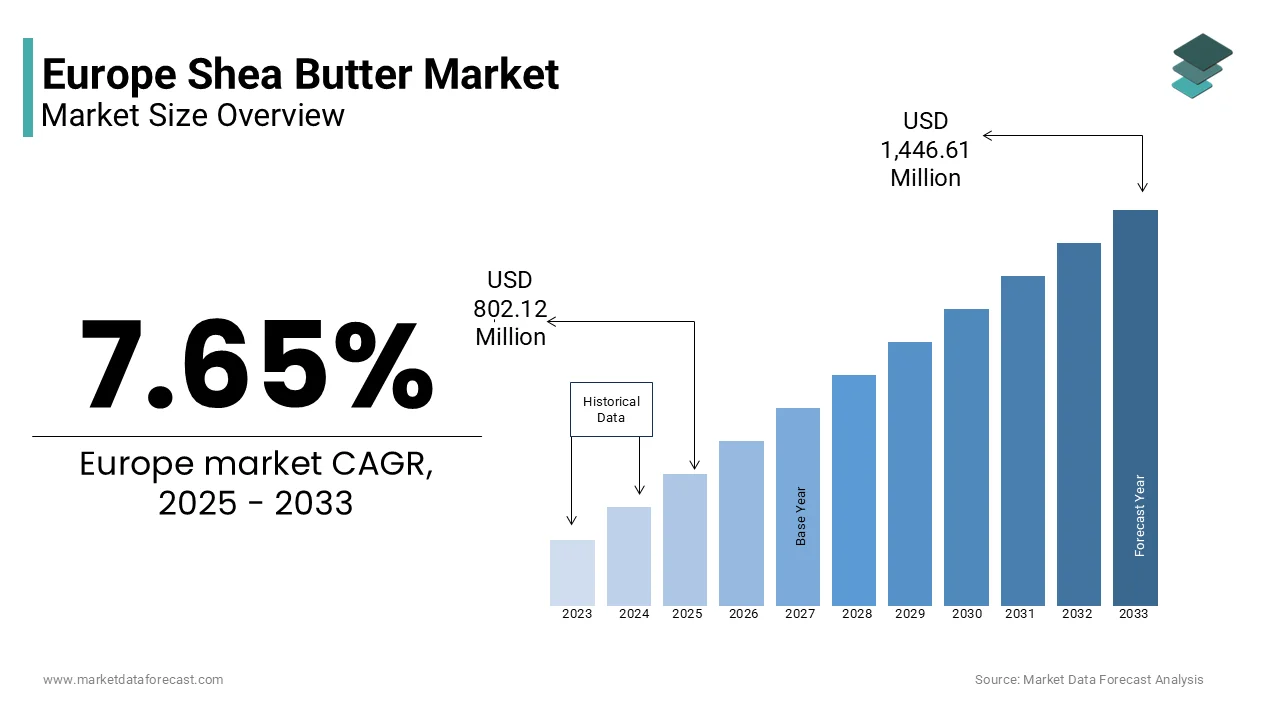
The shea butter is the import and utilization of fat extracted from the nuts of the African shea tree. This versatile ingredient is predominantly utilized in the cosmetic and personal care sectors for its emollient and healing properties as well as in the confectionery industry as a cocoa butter equivalent. As per Eurostat, the European Union imports approximately 150,000 to 200,000 tons of shea nuts and butter annually primarily sourced from West African nations, such as Ghana Burkina Faso and Nigeria. This shift reflects a broader consumer preference for sustainable and ethically sourced ingredients. The shea trees play a vital ecological role in the Sahel region preventing desertification and supporting biodiversity. The integration of shea butter into various industrial applications underscores its economic significance.
MARKET DRIVERS
Surging Demand for Natural and Organic Personal Care Products
The escalating consumer preference for natural and organic personal care products is additionally leveraging the growth of the Europe Shea Butter Market. European consumers are increasingly scrutinizing ingredient lists and avoiding synthetic chemicals, such as parabens, sulfates, and mineral oils in favor of plant based alternatives. Shea butter is highly valued in this sector for its rich content of vitamins A and E, as well as its ability to moisturize and protect the skin barrier. It is a staple ingredient in lotions creams balms and hair care formulations due to its non-comedogenic nature and excellent absorption properties. The Soil Association a leading certification body in the United Kingdom reports that certified organic beauty products continue to outpace conventional beauty sales indicating a structural shift in consumer behavior. Furthermore, the rise of clean beauty trends on social media platforms has amplified awareness of shea butter’s benefits among younger demographics. Brands are leveraging the narrative of ethical sourcing and community empowerment associated with shea production to enhance brand loyalty.
Expansion of the Confectionery Industry and Cocoa Butter Equivalents
The expansion of the confectionery industry and the widespread use of shea butter as a cocoa butter equivalent significantly drive the Europe Shea Butter Market. Shea butter fractions particularly shea stearin possess physical and chemical properties similar to cocoa butter making them an ideal substitute or extender in chocolate and confectionery production. Manufacturers utilize shea butter to improve the texture stability and melting profile of chocolate products, while reducing production costs compared to using pure cocoa butter. The European Union regulations permit the addition of up to 5% vegetable fats other than cocoa butter in chocolate products provided they are listed on the label. This regulatory framework facilitates the incorporation of shea butter into mainstream confectionery items. The International Cocoa Organization notes that volatility in cocoa prices often prompts manufacturers to seek stable and cost effective alternatives like shea butter. Additionally, the growing demand for premium and artisanal chocolates has led to innovative formulations where shea butter is used to create unique textures and flavors. The versatility of shea butter in maintaining product quality under varying temperature conditions further enhances its appeal to industrial buyers.
MARKET RESTRAINTS
Supply Chain Volatility and Climate Change Impacts
The supply chain volatility and the adverse effects of climate change by disrupting the consistent availability of raw materials is hampering the growth of the Europe shea butter market. Shea trees are wild harvested primarily in the Sahel region of West Africa where they are highly susceptible to changing weather patterns. Droughts and desertification reduce the productivity of shea parklands leading to fluctuations in supply volumes. This unpredictability complicates procurement planning for European importers and manufacturers, who require consistent quality and quantity. Furthermore, the lack of domesticated shea plantations means that supply relies entirely on natural forests, which are also under threat from agricultural expansion and logging. The environmental degradation in sourcing countries poses a long term risk to the sustainability of the shea supply chain. Logistics challenges including poor infrastructure in rural areas and port congestion further exacerbate supply delays. These disruptions lead to price volatility which affects the profitability of downstream industries. The reliance on a geographically concentrated and climate sensitive source makes the market vulnerable to external shocks.
Stringent Regulatory Standards and Quality Compliance Costs
The stringent regulatory standards and the high costs associated with quality compliance by creating barriers for suppliers and increasing operational expenses is additionally declining the growth of the Europe shea butter market. The European Union imposes rigorous requirements on imported agricultural products regarding contaminants pesticides and microbiological safety. The shea butter intended for food use must comply with strict limits on polycyclic aromatic hydrocarbons and other contaminants. Achieving and maintaining these standards requires significant investment in testing certification and quality control systems by suppliers in producing countries. The European Commission’s Rapid Alert System for Food and Feed frequently issues notifications for non-compliant shipments leading to rejections and financial losses. Additionally, the cosmetic regulation in Europe mandates comprehensive safety assessments and documentation for all ingredients including shea butter. Small and medium sized enterprises in West Africa often struggle to meet these demanding standards due to limited technical capacity and resources. The complexity of navigating multiple regulatory frameworks for different applications food versus cosmetic further adds to the burden. These compliance costs are often passed down the supply chain affecting competitiveness. The high entry barriers limit the number of qualified suppliers and reduce market flexibility.
MARKET OPPORTUNITIES
Development of Value Added Derivatives and Specialty Ingredients
The development of value-added derivatives and specialty ingredients to diversify its applications and enhance profitability is ascribed to expand new opportunities for the growth of Europe shea butter market. Beyond traditional unrefined butter, there is growing demand for fractionated shea oil shea stearin and shea olein which offer specific functional properties for various industries. Shea derivatives are increasingly used in pharmaceuticals nutraceuticals and advanced cosmetic formulations due to their unique fatty acid profiles. Additionally, the rise of clean label trends in the food industry encourages the use of shea butter as a natural emulsifier and stabilizer. The European Food Information Council notes that consumers prefer recognizable and natural ingredients in processed foods. Innovations in extraction and refinement technologies allow for the production of high purity shea components with minimal environmental impact. The potential for shea butter to replace synthetic ingredients in industrial applications such as lubricants and coatings also offers new avenues for growth.
Integration of Fair Trade and Ethical Sourcing Initiatives
The integration of fair trade and ethical sourcing initiatives to enhance brand reputation and secure loyal customer bases is also to impact positively in the growth of the Europe shea butter market. European consumers are increasingly conscious of the social impact of their purchases and prefer products that support equitable labor practices and community development. The sales of fair trade certified products have grown significantly with consumers willing to pay a premium for ethically sourced goods. Shea butter production is predominantly carried out by women in rural West African communities making it a powerful vehicle for gender empowerment and poverty alleviation. Brands that partner with fair trade certified cooperatives can leverage this narrative to build strong emotional connections with consumers. The European Retail Forum for Sustainability emphasizes the importance of transparent and responsible supply chains in meeting corporate social responsibility goals. Certification schemes, such as Fair for Life and Union for Ethical BioTrade provide verification of ethical practices enhancing consumer trust. Retailers are increasingly prioritizing suppliers who demonstrate commitment to social welfare and environmental stewardship. This trend creates a competitive advantage for companies that embed ethical sourcing into their core business strategies. Furthermore, government procurement policies in some European countries favor sustainably and ethically sourced products.
MARKET CHALLENGES
Traceability and Transparency in Supply Chains
Ensuring traceability and transparency in supply chains due to the fragmented and informal nature of collection networks is key challenge for the growth of the Europe shea butter market. Shea nuts are typically gathered by millions of smallholder farmers and collectors across vast rural areas in West Africa, making it difficult to track the origin of each batch. Palm Oil and similar initiatives for shea the lack of standardized digital tracking systems hinders efforts to verify sustainability claims. The European Union Deforestation Regulation requires operators to provide precise geolocation data for commodities linked to deforestation risks although shea is not currently the primary target the pressure for transparency is increasing. Implementing robust traceability systems requires significant investment in technology and capacity building for local cooperatives. Many small-scale actors lack the resources to adopt digital tools or maintain detailed records. This gap creates uncertainty for European importers who must ensure compliance with evolving regulatory and consumer expectations. The absence of universal standards for shea butter traceability further complicates verification processes. Inconsistent data quality and limited infrastructure in sourcing regions exacerbate the challenge. Addressing this issue requires collaborative efforts among governments NGOs and private sector stakeholders to develop accessible and effective tracking solutions.
Price Volatility and Market Speculation
The price volatility by creating uncertainty for both suppliers and buyers is to impede the growth of the Europe shea butter market. Shea butter prices are influenced by a multitude of factors including harvest yields global demand currency fluctuations and speculative trading. The commodity price indices agricultural products often experience significant price swings due to external economic shocks. The reliance on wild harvest means that supply is inelastic in the short-term leading to sharp price increases during poor harvest years. European manufacturers, who depend on consistent input costs struggle to manage budgeting and pricing strategies amidst such volatility. The European Central Bank notes that inflationary pressures and exchange rate variations between the Euro and West African currencies further complicate trade dynamics. Speculative activities in global commodity markets can exacerbate price fluctuations disconnecting them from fundamental supply and demand conditions. This instability discourages long term investment in processing infrastructure and sustainable practices in producing countries. Smallholder farmers who bear the brunt of price drops may abandon shea collection for other activities threatening future supply. The lack of hedging instruments and financial services for small scale producers limits their ability to manage risk.
REPORT COVERAGE
| REPORT METRIC | DETAILS |
| Market Size Available | 2025 to 2034 |
| Base Year | 2025 |
| Forecast Period | 2026 to 2034 |
| CAGR | 7.65% |
| Segments Covered | By Type, Application, and Region |
| Various Analyses Covered | Global, Regional, & Country Level Analysis; Segment-Level Analysis; DROC; PESTLE Analysis; Porter’s Five Forces Analysis; Competitive Landscape; Analyst Overview of Investment Opportunities |
| Regions Covered | UK, France, Spain, Germany, Italy, Russia, Sweden, Denmark, Switzerland, Netherlands, Turkey, Czech Republic and Rest of Europe |
| Market Leaders Profiled | Star Shea Ltd, Bread For Life, All Pure Nature Ltd, Shea Radiance, VINK CHEMICALS GMBH & CO. KG, Jedwards International, Inc, Lovinah Naturals, Maison Karite Sociedad Limitada, Shebu Industries, Shea Therapy Ltd (formerly trading as AGC Ltd), The Pure Company etc |
SEGMENTAL ANALYSIS
By Type Insights
The refined shea butter segment was accounted in holding 46.7% of the Europe Shea Butter Market share in 2025 due to its superior versatility and compatibility with large scale industrial manufacturing processes in both the cosmetic and confectionery sectors. Major cosmetic manufacturers prefer refined shea butter for mass lotions and creams because it ensures batch consistency and stability. This uniformity is for automated production lines, where variable raw materials can cause processing issues. In the food industry refined shea butter fractions are essential as cocoa butter equivalents because they mimic the melting point and crystallization behavior of cocoa butter without imparting a nutty flavor. The European Chocolate Biscuit and Confectionery Association notes that the demand for consistent texture in chocolate products drives the preference for refined ingredients. Furthermore, refined shea butter has a longer shelf life and is less prone to oxidation compared to unrefined variants making it ideal for products distributed across long supply chains. The ability to customize melting points through fractionation allows manufacturers to tailor the ingredient for specific applications, such as lip balms or premium chocolates.
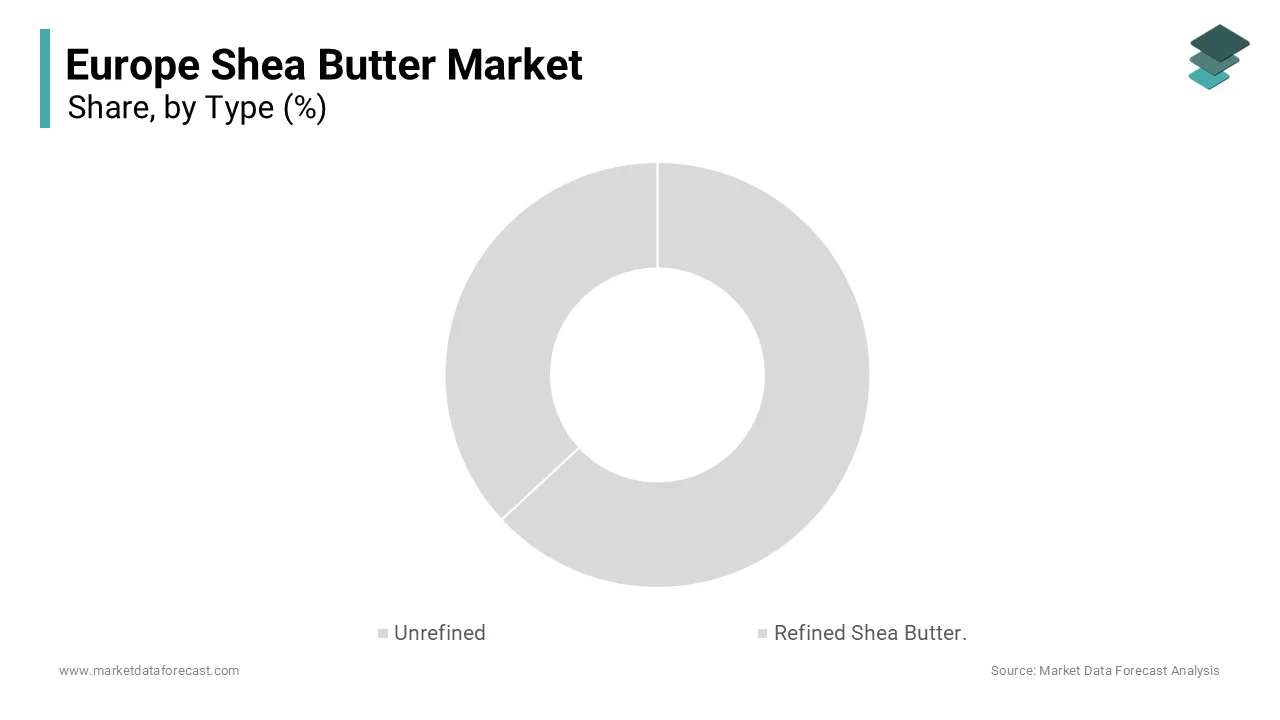
The unrefined shea butter segment is likely to grow at an anticipated CAGR of 7.5% from 2026 to 2034 with the surging demand for natural and organic cosmetic products among environmentally conscious consumers. Unrefined shea butter retains its natural vitamins antioxidants and distinctive nutty aroma which are highly valued in the clean beauty movement. Unrefined shea butter is perceived as more authentic and potent offering superior moisturizing and healing properties compared to its refined counterpart. Brands are leveraging the narrative of traditional extraction methods and community empowerment associated with unrefined shea to attract premium buyers. Social media influencers and dermatologists often recommend unrefined shea for its ant- inflammatory benefits.
By Application Insights
The cosmetics segment was accounted in holding a significant share of the Europe Shea Butter Market in 2025 with its exceptional emollient properties. Shea butter is rich in fatty acids and vitamins that nourish the skin and improve elasticity making it indispensable in premium skincare lines. Major beauty brands incorporate shea butter into their formulations to address dryness and signs of aging appealing to a broad demographic ranging from young adults to seniors. The European Dermatology Forum recognizes shea butter for its barrier repair capabilities which are essential for maintaining healthy skin in harsh weather conditions. Its non-comedogenic nature allows it to be used in facial products without clogging pores expanding its application scope. The trend towards multifunctional cosmetics that offer hydration protection and anti-aging benefits simultaneously further drives demand. Manufacturers value shea butter for its ability to enhance the texture and spreadability of creams providing a luxurious sensory experience.
The food segment is expected to grow at a fastest CAGR of 6.8% from 2026 to 2034 with the expansion of shea butter as a cocoa butter equivalent in the confectionery industry. Chocolate manufacturers utilize shea stearin to optimize production costs and improve the thermal stability of chocolate products without compromising quality. The volatility of cocoa prices encourages manufacturers to seek stable alternatives like shea butter to maintain profit margins. Shea butter’s similar melting profile to cocoa butter ensures that chocolate retains its snap and mouthfeel. The rising consumption of chocolate and confectionery items in Europe particularly during festive seasons amplifies this demand. The European Commission’s trade policies facilitate the import of shea nuts and butter from African countries supporting the supply chain for food manufacturers. Innovation in chocolate formulations such as vegan and dairy free options also utilizes shea butter to provide creaminess.
REGIONAL ANALYSIS
Germany Shea Butter Market Analysis
Germany was the largest contributor of the Europe Shea Butter Market by accounting for 22.3% of the share in 2025 with its robust cosmetic and confectionery industries. The country is home to numerous leading personal care brands and chocolate manufacturers that extensively use shea butter in their formulations. The cosmetics industry generates billions of euros in annual revenue with a strong emphasis on natural and sustainable ingredients. German consumers are highly informed and prefer products with transparent supply chains driving demand for certified organic and fair-trade shea butter. Additionally, Germany’s advanced processing infrastructure allows for the efficient refinement and fractionation of shea butter for industrial use. The German Ministry for Economic Cooperation and Development funds projects that improve shea value chains promoting quality and fairness.
France Shea Butter Market Analysis
France Shea Butter Market was ranked second by holding 18.2% of the share in 2025 with its prestigious luxury cosmetics sector and culinary traditions. The country is a global hub for high end beauty brands that incorporate shea butter into premium skincare and hair care lines. As per the French Federation of Beauty Companies, the luxury cosmetics segment relies heavily on natural exotic ingredients like shea butter to create unique product experiences. French consumers associate shea butter with efficacy and indulgence driving sales in pharmacies and perfumeries. The French Agency for Ecological Transition promotes sustainable sourcing practices influencing brands to adopt ethical supply chains.
United Kingdom Shea Butter Market Analysis
The United Kingdom Shea Butter Market growth is lucratively growing from past few years and expected to continue the same throughout the forecast period. strong demand for organic and ethically sourced personal care products. British consumers are pioneers in the fair-trade movement with many households preferring products that support developing communities. As per the Soil Association, the UK has one of the largest contributors for certified organic beauty products in Europe driving demand for unrefined and organic shea butter. Major retail chains in the UK have committed to sourcing sustainable palm and shea oils influencing supply chain practices. The UK’s departure from the European Union has led to new trade dynamics but demand for shea butter remains robust due to domestic production of cosmetics and foods. The National Health Service acknowledges the benefits of emollients for eczema and dry skin boosting sales in pharmaceutical channels.
Italy Shea Butter Market Analysis
Italy shea butter market is esteemed to grow with the vibrant cosmetics industry and growing confectionery sector. As per the Italian Cosmetic Industry Union the export of cosmetics is a key economic driver with shea-based products gaining popularity in other countries as well. Italian consumers value quality and tradition leading to a preference for high grade shea butter in personal care routines. The food industry in Italy, also utilizes shea butter in industrial confectionery and bakery production although olive oil remains the dominant fat in traditional cuisine. Italy’s strategic location in the Mediterranean facilitates trade with North Africa and Europe enhancing supply chain efficiency. The country’s design and aesthetic sensibilities influence packaging and marketing of shea products making them attractive to consumers.
Spain Shea Butter Market Analysis
Spain shea butter market growth is likely to have significant opportunities in coming years with its expanding personal care industry and tourism driven demand. The Spanish cosmetics sector is growing with local brands increasingly adopting natural ingredients to compete in European countries. Tourism plays a significant role as visitors purchase shea based souvenirs and personal care items, boosting retail sales. The Spanish Ministry of Agriculture supports sustainable agricultural practices, which aligns with the ethical sourcing of shea butter. Spain’s proximity to Africa facilitates logistical connections for importing raw shea nuts.
Netherlands Shea Butter Market Analysis
The Netherlands shea butter market growth is propelled with the country’s trade in vegetable oils and fats is substantial due to its advanced port infrastructure and processing facilities. The Netherlands is also home to several sustainable sourcing initiatives and NGOs that promote ethical shea production. The Dutch Ministry of Foreign Affairs supports development projects in shea producing regions enhancing supply chain integrity. Although domestic consumption is lower than in larger markets the Netherlands plays a pivotal role in the supply chain. The country’s commitment to sustainability influences trading practices and standards. The presence of multinational food and cosmetic companies headquartered in the Netherlands drives indirect demand.
COMPETITIVE LANDSCAPE
The competition in the Europe shea butter market is characterized by a mix of large multinational agribusinesses and specialized niche suppliers who compete on quality sustainability and innovation. Major players leverage their extensive supply chains and processing capabilities to offer consistent and certified products to industrial clients. Differentiation is achieved through vertical integration which ensures traceability and supports ethical sourcing narratives that resonate with European consumers. Companies invest in advanced refining technologies to produce high purity shea butter and specialized fractions for specific applications in cosmetics and confectionery. Sustainability credentials are critical as buyers increasingly require proof of deforestation free and fair trade practices. Regulatory compliance with European standards acts as a barrier to entry for smaller unverified suppliers.
KEY MARKET PLAYERS
Some of the key players in Europe shea butter market are
- Star Shea Ltd
- Bread For Life
- All Pure Nature Ltd
- Shea Radiance
- VINK CHEMICALS GMBH & CO. KG
- Jedwards International, Inc
- Lovinah Naturals
- Maison Karite Sociedad Limitada
- Shebu Industries
- Shea Therapy Ltd (formerly trading as AGC Ltd)
- The Pure Company
Top Players in the Market
- Loders Croklaan is a leading global supplier of specialty fats and oils with a strong presence in the Europe shea butter market. The company provides high quality refined shea butter and fractions for the chocolate confectionery and bakery industries. Recent actions include expanding its sustainable sourcing programs to ensure traceability and support women collectors in West Africa. Loders Croklaan invests in advanced fractionation technologies to create customized shea solutions that meet specific functional requirements. The company actively collaborates with European manufacturers to develop innovative fat systems that enhance product texture and stability. Its commitment to responsible sourcing aligns with European regulatory standards and consumer expectations. These strategic initiatives ensure consistent supply and high performance for industrial clients across the region.
- Aak AB is a major player in the Europe shea butter market specializing in value added vegetable oils and fats for food and non food applications. The company sources shea nuts directly from West Africa and processes them in its European facilities to produce premium shea butter. Recent strategies involve enhancing its vertical integration to improve supply chain transparency and efficiency. Aak AB focuses on developing specialized shea derivatives for the cosmetic and personal care sectors catering to the demand for natural ingredients. The company engages in long term partnerships with local communities to promote sustainable harvesting practices. These efforts reinforce its reputation for quality and reliability. The company continues to innovate in product development to capture growth opportunities in the evolving European market.
- Bunge Limited contributes significantly to the Europe shea butter market through its extensive global supply chain and processing capabilities. The company imports raw shea nuts and produces refined shea butter for use in confectionery and personal care products. Recent actions include strengthening its sustainability framework to comply with European deforestation regulations and ethical sourcing standards. Bunge Limited invests in infrastructure upgrades to enhance processing efficiency and product quality. The company collaborates with industry stakeholders to promote best practices in shea production and trade. Its broad portfolio allows it to serve multiple sectors effectively. These strategic moves strengthen its competitive position and support long term growth in the European region.
Top Strategies Used by Key Market Participants
Key players in the Europe Shea Butter Market primarily focus on vertical integration to secure stable supplies and ensure quality control from source to end user. Companies invest heavily in sustainable sourcing initiatives and fair trade certifications to meet stringent European regulatory requirements and consumer expectations. Strategic partnerships with West African cooperatives enhance traceability and support community development. Innovation in refining and fractionation technologies allows producers to create specialized shea derivatives for diverse applications in cosmetics and food. Digital tools are implemented to monitor supply chains and verify sustainability claims. Marketing efforts emphasize ethical narratives and natural benefits to differentiate products in a competitive landscape. Compliance with environmental standards such as the EU Deforestation Regulation is prioritized to maintain market access. Collaborative research with customers drives the development of custom formulations. These strategies collectively strengthen market position and foster long term growth.
MARKET SEGMENTATION
This Research Report on Europe shea butter market is segmented and sub segmented into following categories
By Type
- Unrefined
- Refined Shea Butter.
By Application
- Cosmetics
- Personal Care
- Food
- Medicinal
By Region
- U.K
- Germany
- Italy
- France
- Spain