- Product Description Description
- Table of Contents TOC
- List of Table & Figure LOT
- Get Free Sample PDF Sample PDF
Market Size, 2025
$1.18 BnMarket Estimate, 2026
$1.22 BnMarket Forecast, 2034
$1.55 BnCAGR, 2026–2034
3.02%Executive Summary: Europe Skateboard Market
- Market Scope: Comprehensive European skateboard industry analysis covering product segments (cruiser boards, electric skateboards), regional leadership frameworks (Germany, UK), strategic corporate developments, and competitive landscapes.
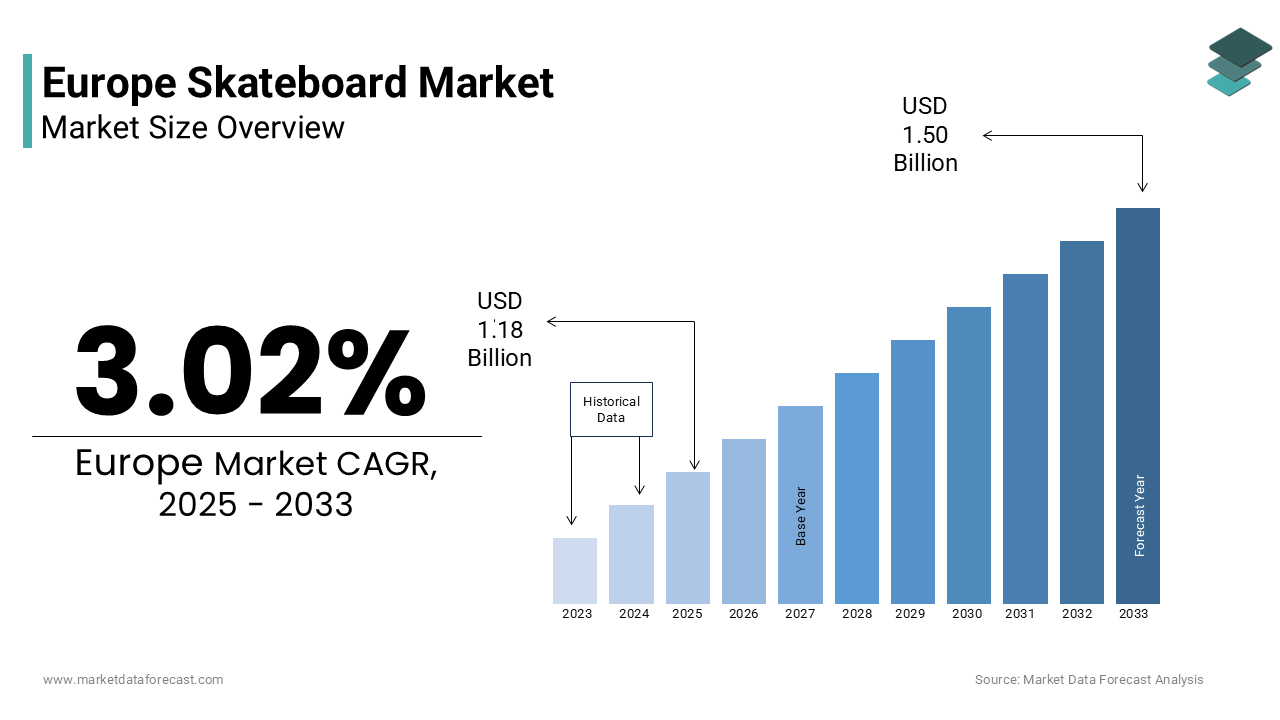
- Market Valuation: Valued at USD 1.18 billion (2025), estimated at USD 1.22 billion (2026), and projected to reach USD 1.55 billion by 2034, registering a steady CAGR of 3.02% (2026–2034).
- Primary Growth Drivers: Rising youth engagement in urban recreation, municipal investments in skate-friendly infrastructure, and inclusion in international multi-sport competitions. Restraints include fragmented regional preferences, inconsistent public skate park provision, and stringent EU product safety compliance costs.
Key Market Segment Metrics (2026–2034)
| Category | Leading Segment / Region (Position) | Fastest-Growing Segment |
|---|---|---|
| By Product Type | Cruiser boards (held the largest share at 28.6% in 2025 due to dual commuter and recreational utility) | Electric skateboards (predicted to witness the highest CAGR of 18.7% driven by urban emissions regulations and last-mile transport demand) |
| By Cultural & Application Trend | Mainstream legitimacy via national physical education programs and multi-sport competitions | Skate tourism, digital content creation, and surfskate micro-mobility pilot integrations |
| By Region / Country | Germany (dominated with a 19.7% share in 2025) & United Kingdom (second-largest with a 16.5% share) | Southern Europe (partnering with municipal transport authorities for micro-mobility solutions) |
Major Market Players & Market Structure
Market Structure: Culturally embedded European sports ecosystem characterized by major event sponsorships, collaborations with independent retail skate shops, environmental advocacy (e.g., reclaimed wood and organic sourcing), and emerging partnerships with regional transport authorities.
Key Companies: Element Skateboards, Zero Skateboards, Santa Cruz Skateboards, Powell Peralta, Birdhouse Skateboards, Plan B Skateboards, Anti-Hero Skateboards, Almost Skateboards, Chocolate Skateboards, Real Skateboards, Nike SB, Carver Skateboards, Polar Skate Co, Lush Longboards, Stereo Skateboards, Carver Europe, Aperture, Supreme, and Skatehut.de.
Europe Skateboard Market Size
The europe skateboard market size was valued at USD 1.18 billion in 2025 and is anticipated to reach USD 1.22 billion in 2026 from USD 1.55 billion by 2034, growing at a CAGR of 3.02% during the forecast period from 2026 to 2034.
A skateboard is defined as specialized sports equipment consisting of a deck, trucks, wheels, and bearings used for recreation, athletic activities, and urban commuting. Moreover, skateboarding in Europe has evolved from a niche subculture into a mainstream leisure and competitive pursuit especially following its inclusion in the Olympic Games. Urban design initiatives in cities like Copenhagen Berlin and Barcelona have integrated skate friendly infrastructure which supports informal and formal participation. According to sources, participation in wheeled sports, including skateboarding, among young urban residents in Europe is becoming a more visible and established trend in many cities. As per research, there is a noticeable increase in the development of public skate parks and designated skate zones as local authorities in European cities increasingly recognize the value of wheeled sports facilities as inclusive public spaces. Furthermore, UNESCO’s recognition of skateboarding as an intangible cultural heritage activity in select European municipalities underscores its sociocultural embedding. These developments reflect a shifting perception of skateboarding from mere sport to a legitimate mode of urban expression and micro mobility contributing to its sustained visibility and relevance within the continent’s recreational economy.
MARKET DRIVERS
Urbanization and Youth Engagement Fuel Skateboard Adoption
The region’s dense urban centers and growing youth population drive the growth of the Europe skateboard market. As per sources, Europe's population is predominantly urban, with a continuing, strong trend of people residing in cities and towns. This urban concentration creates natural demand for compact non motorized transport solutions and recreational outlets that align with limited space. Skateboarding enjoys considerable popularity among younger urban residents across Europe. Municipal investments reflect this trend. For example, major European cities like Paris are increasingly investing in and expanding urban sports facilities, including areas for activities like skateboarding, often as part of larger city planning or sports initiatives. Similarly, Other European capitals, such as Berlin, are developing more urban spaces and modern facilities to cater to diverse youth sports, including skateboarding. These infrastructural commitments not only normalize skateboarding but also reduce accessibility barriers encouraging trial and habitual use. The social integration of skate culture through festivals community workshops and school programs further amplifies its appeal. Recent trends and market data suggest a significant and rising interest in skateboarding among European teenagers, making it a notably popular choice for physical activity alongside or even exceeding some traditional team sports. This confluence of demographic density municipal support and youth preference forms a resilient demand foundation for the Europe skateboard market.
Rising Popularity of Skateboarding as Lifestyle and Artistic Expression
Skateboarding in the region is increasingly perceived not merely as sport but as a vehicle for individuality creative expression and social identity, which further propels the expansion of the Europe skateboard market. This cultural repositioning has broadened its appeal beyond athletic circles to include artists designers and fashion conscious demographics. European cities have increasingly embraced a trend of hosting visual art exhibitions and multimedia installations that are inspired by skateboarding culture. Frequent collaborations between major skateboard brands and European fashion houses have cemented skateboarding's prominent position within contemporary urban lifestyle and fashion spheres. Social media amplifies this trend. Skateboarding-related content created by European individuals has become significantly more popular on social media platforms like Instagram and TikTok, reaching a large and growing audience. Educational institutions have also embraced this shift. Academic interest in skateboarding has grown, with some educational institutions exploring aspects of skate culture through conferences, workshops, and design-related discussions. Moreover, the European Union's Creative Europe program has provided support to various cultural projects, some of which have fostered artistic and social dialogue within the broader context of skate culture. This cultural embedding fosters deeper emotional engagement with skateboarding products transforming them from utilitarian tools into identity markers and collectible artifacts thereby sustaining long term market interest beyond performance metrics.
MARKET RESTRAINTS
Limited Dedicated Infrastructure Constrains Safe Skateboarding Access
The absence of sufficient safe and legally sanctioned skateboarding spaces, despite growing interest, remains a significant barrier to the Europe skateboard market. According to research, the provision of publicly accessible skate parks in European municipalities is inconsistent, with a notable disparity revealing that smaller communities often have less access to dedicated skateboarding infrastructure than larger urban areas. This regional imbalance is particularly stark in parts of Eastern and Southern Europe compared to Northern Europe. The scarcity of designated areas forces riders to use streets sidewalks and plazas often resulting in legal restrictions or community complaints. For instance, recent analyses by urban mobility experts and cycling advocacy groups indicate that many European cities restrict or prohibit the use of skateboards and other personal light mobility devices in crowded pedestrian zones, a policy often implemented due to evolving safety and liability concerns. This regulatory friction discourages consistent participation particularly among younger riders whose guardians cite injury risk and legal uncertainty as primary deterrents. Reports on urban safety emphasize a significant number of skate-related incidents occurring in public spaces across the EU. A majority of these incidents take place in undesignated areas rather than in official skate parks, underscoring the risks associated with skateboarding in shared or unsuitable environments. The skateboarding market's expansion is hindered by a failure to integrate suitable designs into public urban spaces, creating significant accessibility and legitimacy barriers for all potential participants.
Stringent Product Safety and Environmental Compliance Increases Operational Burden
The regional skateboard manufacturers and importers face escalating regulatory complexity under the EU’s General Product Safety Regulation and REACH chemical compliance framework, which is among the major restraints to the Europe skateboard market. The European Chemicals Agency (ECHA), under the REACH regulation, rigorously regulates and can require mandatory disclosure or substitution of numerous hazardous substances found in various products, including adhesives and coatings. The number of restricted or highly scrutinized substances is significant and continuously evolving. Compliance necessitates rigorous testing material traceability and documentation which disproportionately affects small and medium enterprises lacking dedicated regulatory teams. The European Small Business Alliance (ESBA), an advocacy group for entrepreneurs, has highlighted the challenges and increased burdens, including costs, that small and medium enterprises (SMEs) face due to evolving and extensive EU environmental legislation. Additionally, the EU’s upcoming Ecodesign for Sustainable Products Regulation mandates durability reparability and recyclability criteria that current skateboard designs rarely meet. There is a growing trend within European industry and research institutions, such as the Fraunhofer Institute, to explore and promote principles of the circular economy, including the use of modular and replaceable components in product design to reduce waste and improve sustainability. However, this approach is still emerging in niche markets like skateboards These requirements not only delay time to market but also limit design innovation as brands prioritize compliance over performance or aesthetics. Consequently, the regulatory landscape while well intentioned inadvertently restricts market fluidity and discourages new entrants thereby constraining product diversity and consumer choice across the continent
MARKET OPPORTUNITIES
Integration of Skateboarding into National Physical Education and Wellness Programs
European governments are increasingly recognizing skateboarding as a viable component of public health and youth wellness strategies, which creates new opportunities for the Europe skateboard market. The World Health Organization's official physical activity guidelines for adolescents emphasize the importance of regular moderate-to-vigorous aerobic activity, such as skateboarding, to achieve substantial health benefits. In response several countries have incorporated it into school curricula. For example, educational bodies in some countries are increasingly recognizing the value of diverse, non-traditional sports like skateboarding, leading to their broader inclusion in physical education programs. Similarly, there is a general trend toward governmental agencies exploring and integrating a wider variety of appealing physical activities, including wheeled sports, into national and local youth programs. Recent public data suggests an increase in overall government spending on recreation and sport infrastructure, with a noticeable shift in focus toward funding opportunities for non-traditional and emerging sports. These initiatives not only introduce the sport to previously unreached demographics but also foster long term brand loyalty and skill development from an early age. Furthermore, partnerships are developing between some national sports bodies and private companies to support athletic development and expand participation in sports through enhanced training and equipment access. This institutional endorsement transforms skateboarding from a discretionary leisure activity into a structured component of public health policy thereby unlocking scalable and recurring market opportunities across educational and municipal procurement channels.
Growth of Skate Tourism and Destination Branding in Europe
Skateboarding is spurring niche tourism with European cities leveraging iconic skate spots to attract international visitors and boost local economies, which is expected to boost the expansion of the Europe skateboard market. Skate-centric tourism has been identified as a travel segment showing notable activity. Direct spending within the travel sector has a measurable contribution from this tourism segment, and certain key destinations have experienced a substantial increase in visitor nights associated with skateboarding activities. A prominent urban park is a significant draw, attracting a large number of international visitors annually, and the integration of recommended routes catering to this activity has been observed in visitor engagement platforms. Event driven tourism further amplifies this trend. A recent annual sporting event has shown the capacity to attract a considerable number of attendees, with a significant portion traveling from outside the immediate geographic area. Visitors to the event demonstrate a pattern of high daily expenditure on lodging, dining, and equipment rentals. Municipalities are responding by investing in skate plazas that double as public art installations enhancing both cultural appeal and economic yield. This fusion of sport urban design and travel creates a self-reinforcing ecosystem where market growth is supported not only by domestic demand but also by inbound experiential consumption.
MARKET CHALLENGES
Fragmented Consumer Preferences Across European Subregions
Pronounced heterogeneity in consumer behavior usage patterns and product expectations across Northern Southern Eastern and Western subregions challenges the growth of the Europe skateboard market. In a specific northern European region, skateboarding is largely perceived as a seasonal complement to snow sports, with a preference among participants for models designed for varied terrain and powered functionality. Conversely, in the southern parts of the continent, the activity is consistently maintained throughout the year as an integral aspect of street culture, with a primary consumer focus on acquiring traditional, light-weight decks that facilitate technical tricks. Across eastern European areas, a general sensitivity to cost influences purchasing decisions, leading to a higher acquisition rate of basic, introductory board models. This fragmentation complicates unified marketing strategies product development and inventory planning. A single design or promotional message rarely resonates continent wide forcing brands to maintain multiple SKUs and regional campaigns. For instance, a company's sales approach has recently evolved, moving away from a uniform, continent-wide product introduction to offering distinct, location-specific product lines in response to varying performance metrics across different urban markets. Such divergence increases operational costs reduces economies of scale and heightens the risk of unsold inventory particularly for global brands lacking localized insights. Lacking granular regional intelligence, companies find it difficult to tailor their product offerings, design, communication, and distribution channels to local cultural subtleties, which restricts how effectively they can enter new markets.
Vulnerability to Fluctuations in Raw Material and Logistics Costs
High exposure to volatility in global supply chains, particularly concerning maple wood polyurethane wheels and aluminum truck components, remains a barrier to the Europe skateboard market. North American timber serves as the primary source for high-grade maple utilized in the production of premium skateboards within the European market. Environmental events affecting North American forests have been observed to impact the pricing and availability of wood veneers across international supply chains. Regulatory shifts regarding carbon-related import policies have influenced the procurement costs of metallic components required for skateboard assembly. The combination of raw material scarcity and new trade frameworks has contributed to an overall rise in input expenses for equipment manufacturers. Supply chain patterns indicate a significant regional dependence on specific wood species, making the industry sensitive to localized ecological disruptions. Logistics pose another pressure point. A notable increase has been observed in the average costs associated with shipping freight from major Asian component suppliers. This upward cost trend appears linked to changes in primary shipping routes and increased congestion at various maritime ports. Unlike mass market consumer goods skateboard manufacturers often lack the scale to absorb or hedge these fluctuations. A significant majority of independent companies within a specific niche manufacturing sector maintain gross margins below a certain threshold. The prevalent margin levels in this sector suggest a limited financial capacity to absorb sudden increases in operational costs This fragility constrains pricing flexibility investment in innovation and inventory resilience. Consequently, even temporary supply chain disruptions can trigger product shortages price hikes or quality compromises all of which erode consumer trust and competitive positioning in a market where authenticity and consistency are paramount
REPORT COVERAGE
| REPORT METRIC | DETAILS |
| Market Size Available | 2025 to 2034 |
| Base Year | 2025 |
| Forecast Period | 2026 to 2034 |
| CAGR | 3.02% |
| Segments Covered | By Product Type, End-user and Region. |
| Various Analyses Covered | Global, Regional & Country Level Analysis, Segment-Level Analysis, DROC, PESTLE Analysis, Porter’s Five Forces Analysis, Competitive Landscape, Analyst Overview of Investment Opportunities |
| Regions Covered | United Kingdom, France, Spain, Germany, Italy, Russia, Sweden, Denmark, Switzerland, the Netherlands, Turkey, and the Czech Republic |
| Market Leaders Profiled | Element Skateboards, Zero Skateboards, Santa Cruz Skateboards, Powell Peralta, Birdhouse Skateboards, Plan B Skateboards, Anti-Hero Skateboards, Almost Skateboards, Chocolate Skateboards, and Real Skateboards. |
SEGMENTAL ANALYSIS
By Product Type Insights
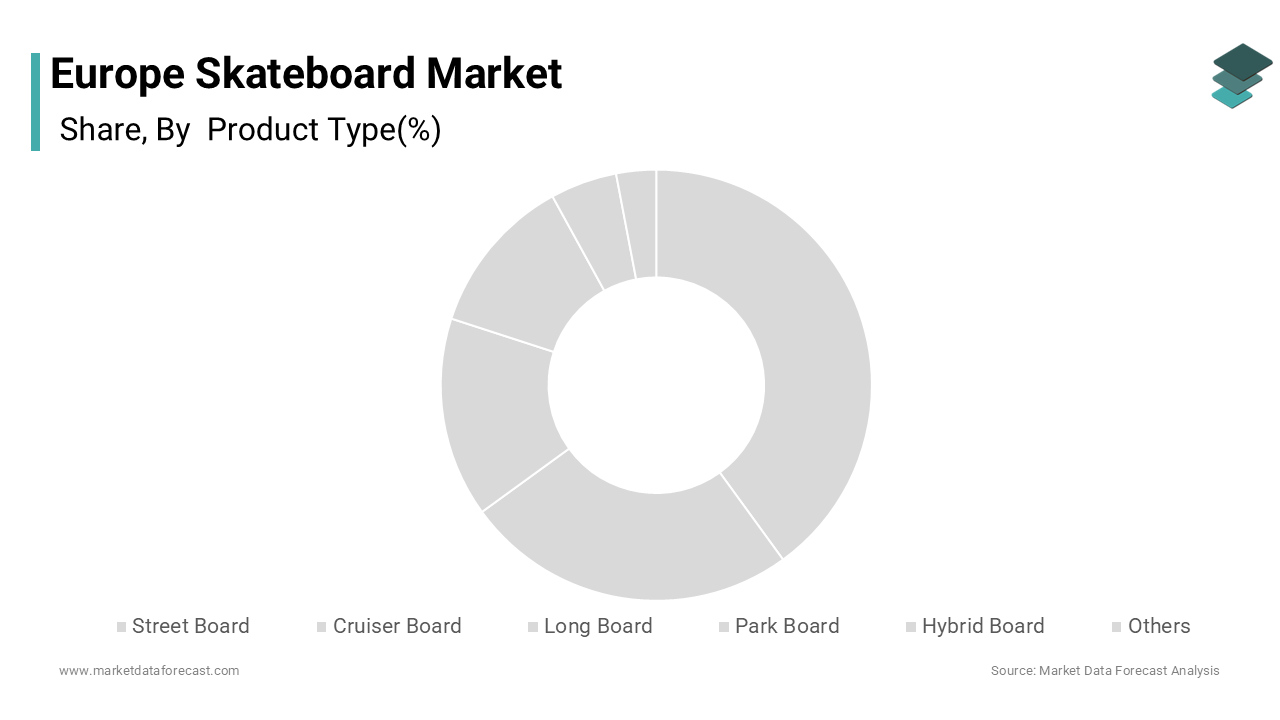
The cruiser board segment held the largest share of 28.6% of the Europe skateboard market in 2025. The dominance of the cruiser board segment is attributed to its dual utility as both a short distance commuter tool and a casual recreational device. Urban micro mobility trends have significantly elevated demand for nimble lightweight boards that navigate dense cityscapes without reliance on public transport or motorized vehicles. Surveys on European urban mobility indicate a significant preference among younger city dwellers for using various forms of non-motorized personal transport for daily travel, including different types of boards and scooters, particularly for shorter trips within the city. Municipal policies reinforcing car free zones further bolster adoption. For instance, urban planning initiatives, such as the expansion of low-traffic zones in cities like Amsterdam, generally coincide with an increase in the adoption and use of various forms of active and personal mobility options, as residents adapt their travel habits to reduced car access. Additionally, cruiser boards require minimal learning curves making them accessible to non-athletes including students and professionals seeking efficient last mile solutions. Their compact size durability and aesthetic versatility also align with lifestyle branding pursued by European retailers particularly in fashion forward markets like Milan and Berlin. These converging functional and cultural attributes sustain the segment’s leadership across diverse demographic and geographic contexts. An additional driver of the Cruiser Board segment’s dominance is its alignment with evolving retail and e commerce dynamics. As per a study, online sales for cruiser boards are experiencing substantial growth and outpacing other skateboard types, according to general market observations. This surge is attributed to tailored digital marketing that emphasizes portability design customization and commuter efficiency. Brands such as Stereo Skateboards and Carver Europe have introduced region specific cruiser models optimized for cobblestone streets and narrow alleyways common in historic European cities. Furthermore, Cruiser boards are generally priced within an accessible range, positioning them as a common purchase for consumers with moderate incomes living in urban areas, according to consumer data analysis. Unlike specialized park or street boards which require protective gear and dedicated venues cruiser boards are marketed as standalone lifestyle products often bundled with carrying straps or theft resistant locks. This product to service integration resonates strongly with younger demographics who prioritize convenience and urban aesthetics over technical performance. Consequently, the segment benefits from both grassroots cultural adoption and scalable commercial strategies that reinforce its market anchoring role.
The electric skateboard segment is predicted to witness the highest CAGR of 18.7% between 2026 and 2034 due to tightening urban emissions regulations and rising demand for sustainable last mile transport alternatives. Cities across Europe are increasingly adopting urban mobility frameworks that encourage the use of various smaller electric personal transport options as part of broader efforts to reduce emissions and congestion. Driven by long-standing government policies promoting electric transport, the adoption rate of electric vehicles in Norway has experienced substantial growth. Technological advancements have also enhanced safety and usability. Modern personal electric mobility devices commonly incorporate advanced technological features, such as energy recovery braking and speed management systems. Significant improvements in battery technology have led to substantially increased travel ranges for personal electric mobility devices in recent years. These upgrades mitigate earlier barriers related to range anxiety and hill performance particularly in cities with varied topography like Lisbon and Zurich. A further pivotal driver is the integration of electric skateboards into shared mobility ecosystems. Multiple European metropolitan areas have initiated pilot programs offering shared electric skateboards. These specialized fleets show higher average daily usage per unit than traditional electric scooter services. Lower rates of vandalism and theft in these programs may contribute to increased equipment availability. Corporate adoption is also rising. Corporate initiatives are increasingly incorporating light electric vehicles into employee mobility programs to decrease reliance on internal shuttle systems. Retailers are broadening the availability of consumer financing and installment options, facilitating easier acquisition of these devices. Localized manufacturing of critical components has contributed to a downward trend in average retail prices. The segment is shifting from a niche luxury product toward a standardized tool for urban transportation. The category has established itself as a leading growth area within the broader skateboard market.
REGIONAL ANALYSIS
Germany Skateboard Market Analysis
Germany dominated the Europe skateboard market and captured a share of 19.7% in 2025. The supremacy of the German market is driven by its robust sports culture advanced retail infrastructure and strong youth engagement in urban recreation. The country’s market status is characterized by high per capita spending on sporting goods and early adoption of skateboarding as both sport and transport. Participation in skateboarding among younger demographics has demonstrated a consistent upward trend following the sport's inclusion in major international multi-sport competitions. Public sector involvement has become a significant factor in the sport's development through the systematic funding of infrastructure improvements and the modernization of communal recreation spaces. Large metropolitan areas have established themselves as central hubs for the activity by hosting recurring events that attract substantial international interest and large-scale public attendance. The expansion of dedicated facilities within urban planning initiatives reflects a broader effort to promote active lifestyles and integrate specialized sports into the public landscape. The transition of skateboarding from a niche subculture to a more structured athletic pursuit is evidenced by the increased availability of high-quality venues and the growth of organized gatherings. Retail penetration is equally strong with specialty stores such as Titus Skateboarding and online platforms like Skatehut.de offering extensive product ranges tailored to technical and commuter needs. Additionally, Germany’s engineering tradition influences consumer preference for high precision durable boards particularly in the street and park segments. This blend of cultural legitimacy institutional backing and commercial maturity solidifies Germany’s leadership position in the regional market.
United Kingdom Skateboard Market Analysis
The United Kingdom was the second-largest country in the Europe skateboard market and captured a 16.5% share in 2025. The growth of the UK market is fuelled by a deeply rooted skate culture amplified by urban regeneration and digital content creation. The UK’s market status is marked by a thriving independent brand ecosystem and strong media visibility particularly through social platforms. Skate-related video content produced by creators in the region receives significant engagement across various online platforms. Among younger local audiences, skating is a widely consumed action sports genre. The capital city has numerous public skate parks, indicating a high concentration of these facilities compared to other major European cities. The integration of skateboarding into educational frameworks also contributes significantly. A significant number of local non-profit organizations and social enterprises have developed partnerships with schools in England, utilizing skateboarding programs to positively impact young people's physical and mental well-being, including attributes such as personal resilience, self-discipline, and community building. Retail innovation further propels demand with brands like Palace Skateboards achieving global influence while maintaining grassroots authenticity. Economic data from the Office for National Statistics indicates that average household spending on recreational and cultural services in the UK has shown an increasing trend in nominal terms in recent years, particularly as the country recovered from the pandemic-related restrictions on movement and social gatherings. Real-terms spending on these categories has also seen some recovery, though some categories still remain below pre-pandemic levels. These interconnected cultural commercial and policy factors ensure the UK’s continued prominence in the European landscape.
France Skateboard Market Analysis
France is another key player in the Europe skateboard market due to its legacy as a skateboarding pioneer and proactive municipal investment in inclusive public spaces. The country’s market status benefits from both historical prestige and contemporary policy alignment with youth wellness and urban sustainability. Certain urban centers in a European country are notable as significant locations for the skating community. One of these cities hosts a large-scale, regularly occurring event that attracts a substantial number of spectators and participants. Data from a national report indicates a notable increase in youth participation in organized skating activities over a two-year period. A government initiative is in place that requires new city planning projects to incorporate recreational infrastructure for wheeled sports. This specific policy has been adopted by a significant number of cities since its introduction. This regulatory foresight ensures consistent access and normalizes skateboarding across socioeconomic groups. Retail dynamics also favor growth with French brands like Carver Europe and Aperture leading innovation in cruiser and hybrid designs suited to Mediterranean urban layouts. These structural cultural and commercial synergies position France as a resilient and influential market within Europe.
Spain Skateboard Market Analysis
Spain grew steadily in the Europe skateboard market owing to year round usability climate advantage and integration of skateboarding into tourism and coastal lifestyle branding. The country’s market status thrives on favorable weather that enables consistent outdoor activity and a strong association between skate culture and beachfront urban identity. Barcelona alone features numerous official skate zones including the globally renowned MACBA plaza which attracts thousands of skaters weekly as per sources. Participation in skateboarding activities among the younger adolescent demographic has shown a discernible increase over a recent period. The upward trend in the number of participants within this age group is evident, indicating a shift in recreational preferences. A pattern of local governmental bodies leveraging this enhanced interest has been observed in urban development strategies. Urban renewal initiatives are increasingly integrating facilities tailored to skateboarding, reflecting an adaptation to changing public leisure interests. Specific urban park redevelopment projects have incorporated multiple new dedicated skateboarding areas as part of a general pattern of aligning public spaces with observed recreational shifts. The tourism angle is equally vital. Youth tourism in certain Spanish coastal cities appears to be showing substantial growth, with local hospitality sectors, such as youth hostels, observing a significant rise in visitor numbers, potentially influenced by emerging interest in action sports and events. Domestic brands such as Lush Longboards have gained international recognition for sustainable bamboo construction aligning with EU green consumer preferences. This fusion of climate convenience cultural cachet and economic strategy sustains Spain’s strong regional standing.
Italy Skateboard Market Analysis
Italy is likely to expand in the Europe skateboard market from 2025 to 2033 due to its fusion of fashion aesthetics technical craftsmanship and urban design innovation. The country’s market status reflects a sophisticated consumer base that views skateboarding as both performance activity and design object. Milan and Rome lead adoption with Milan’s Navigli district hosting Italy’s first design driven skate shop collaboration between Supreme and local artisans. There is a pattern of engagement with skateboarding among younger age groups. Equipment preferences appear influenced by urban architecture, with a shift towards board designs compatible with historic city layouts. Official recognition of historical skate sites indicates their ongoing social and cultural relevance. Restoration of these spaces has contributed to renewed visibility and participation. Consumer behavior reflects a growing emphasis on high-quality materials and unique design elements, suggesting a prioritization of artisanal craftsmanship and exclusivity in the specialized sporting goods sector. Additionally Italian universities such as Politecnico di Milano now offer industrial design courses focused on sustainable board manufacturing integrating local olive wood and recycled resins. This emphasis on heritage craftsmanship and material innovation elevates skateboarding beyond sport into a cultural statement thereby securing Italy’s distinctive and growing role in the European market.
COMPETITIVE LANDSCAPE
Competition in the Europe skateboard市场 is characterized by a dynamic interplay between global giants and agile regional brands each vying for cultural relevance and consumer trust. Unlike mass consumer markets where price dominates differentiation here hinges on authenticity design narrative and community integration. Global players leverage scale and athlete endorsements but face challenges in resonating with Europe’s diverse local skate scenes. Meanwhile independent European brands such as Polar Skate Co and Lush Longboards compete through craftsmanship limited editions and direct rider relationships. The competitive landscape is further shaped by evolving regulatory demands particularly around sustainability which compel all participants to innovate in materials and production. Digital channels have lowered entry barriers enabling niche brands to gain traction rapidly. However long term success requires consistent engagement not just transactional presence. As a result the market rewards those who blend product performance with genuine cultural contribution creating a uniquely European model of brand loyalty that prioritizes identity over ubiquity.
KEY MARKET PLAYERS
Some of the companies that are playing a dominating role in the europe skateboard market include
- Element Skateboards
- Zero Skateboards
- Santa Cruz Skateboards
- Powell Peralta
- Birdhouse Skateboards
- Plan B Skateboards
- Anti-Hero Skateboards
- Almost Skateboards
- Chocolate Skateboards
- Real Skateboards
Top Players in the Europe Skateboard Market
Nike SB
Nike SB maintains a prominent position in the Europe skateboard market through its fusion of performance innovation and street credibility. The brand actively supports European professional skaters and sponsors major events across the continent including competitions in Berlin and Barcelona. The company also intensified collaborations with independent European skate shops to reinforce grassroots authenticity while expanding digital engagement through localized content on social platforms. These efforts align with its global strategy to position skateboarding as both sport and cultural movement enhancing its influence beyond athletic performance into lifestyle domains across international markets.
Carver Skateboards
Carver Skateboards has established deep roots in Europe by pioneering surfskate technology that resonates with coastal and urban riders alike. The company’s European operations focus on product customization and rider education through workshops held in France Spain and Portugal. It also partnered with municipal transport authorities in southern Europe to integrate surfskates into micro mobility pilot programs. Globally Carver leverages its European success as a blueprint for emerging markets demonstrating how regional riding styles can inform product development and community engagement strategies across continents.
Element Skateboards
Element Skateboards strengthens its European footprint through environmental advocacy and inclusive design. The brand operates a Europe based sustainability lab that sources organic cotton and reclaimed wood for decks and apparel. It also amplified digital storytelling by featuring European female and non binary riders in its global campaigns. Element’s global contribution lies in proving that ethical production and social equity can coexist with commercial relevance inspiring similar models in North America and Asia while maintaining creative autonomy within the European context.
Top Strategies Used by the Key Market Participants
Key players in the Europe skateboard market prioritize localized product innovation by tailoring board geometry and materials to regional urban landscapes and riding styles. They actively invest in community building through sponsorships of grassroots events skate park renovations and youth mentorship programs. Strategic collaborations with European fashion designers artists and environmental organizations enhance brand relevance beyond sport. Companies increasingly adopt circular economy principles introducing take back schemes and using recycled or bio based materials to align with EU regulations. Digital engagement is refined through region specific social media content and e commerce platforms offering customization options. These approaches collectively reinforce authenticity accessibility and sustainability which are critical to long term consumer loyalty in Europe’s culturally nuanced market.
MARKET SEGMENTATION
This research report on the europe skateboard market has been segmented and sub–segmented into the following categories.
By Product Type
- Street Board
- Cruiser Board
- Long Board
- Park Board
- Hybrid Board
- Others
By End User
- Teenagers (12-17)
- Adults (18 & Above)
- Kids (0-9)
By Country
- UK
- France
- Spain
- Germany
- Italy
- Russia
- Sweden
- Denmark
- Switzerland
- Netherlands
- Turkey
- Czech Republic
- Rest of Europe