- Product Description Description
- Table of Contents TOC
- List of Table & Figure LOT
- Get Free Sample PDF Sample PDF
Market Size, 2025
$3.92 BnMarket Estimate, 2026
$4.56 BnMarket Forecast, 2034
$15.23 BnCAGR, 2026–2034
16.27%Europe Smart Label Market Report Summary
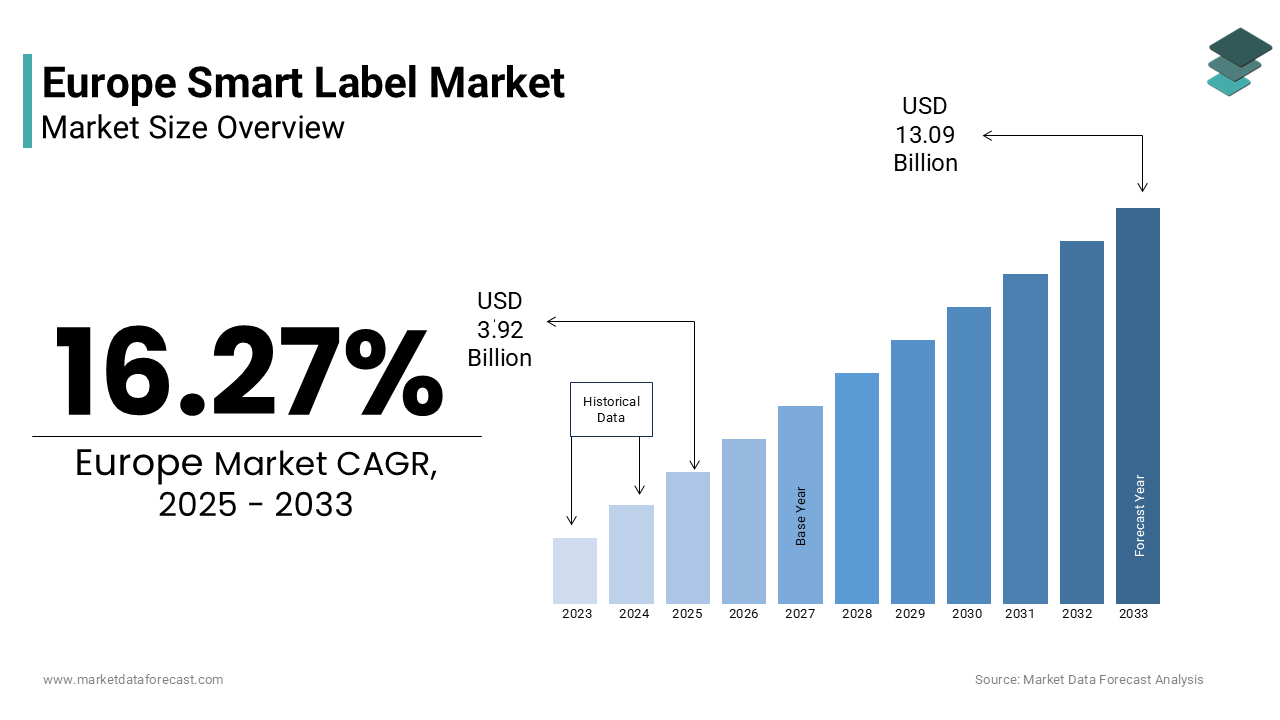
The Europe smart label market was valued at USD 3.92 billion in 2025, is estimated to reach USD 4.56 billion in 2026, and is projected to reach USD 15.23 billion by 2034, growing at a CAGR of 16.27% during the forecast period from 2025 to 2033. The growth of the Europe smart label market is driven by stringent regulatory mandates for product traceability and serialization, rising demand for anti-counterfeiting solutions, and increasing consumer preference for transparent and interactive product information. Expanding adoption of RFID- and sensor-enabled labels in pharmaceuticals, food & beverage, retail, and logistics, along with the EU’s focus on supply chain digitalization and circular economy initiatives, is further fueling market expansion. Moreover, the integration of smart labels with smartphones and digital platforms is enhancing consumer engagement, product authentication, and real-time monitoring across Europe.
Key Market Trends
- Mandatory pharmaceutical serialization under the EU Falsified Medicines Directive is driving large-scale adoption of smart labels.
- Growing consumer demand for real-time product information related to origin, sustainability, and authenticity.
- Increasing use of RFID-based smart labels for retail inventory management and loss prevention.
- Rising adoption of sensing labels for cold-chain monitoring in food, beverages, and vaccines.
- Expansion of smart labels in circular economy applications, including recycling verification and waste reduction.
Segmental Insights
- Based on product type, the RFID smart labels segment was the largest and held a significant share of the Europe smart label market in 2024. The dominance of this segment is attributed to mandatory pharmaceutical serialization, widespread deployment in retail inventory management, and automation of supply chain operations across Europe.
- Based on end-user industry, the healthcare & pharmaceutical segment accounted for the largest share of the Europe smart label market in 2024. This leadership is driven by strict regulatory requirements for drug authentication, patient safety, and traceability, along with the growing adoption of smart packaging to improve medication adherence.
- Based on application, the retail inventory management segment occupied a prominent share of the market in 2024, supported by retailers’ need for real-time stock visibility, shrinkage reduction, and omnichannel fulfillment efficiency.
Regional Insights
The Europe smart label market is witnessing strong growth across major economies, supported by regulatory enforcement, advanced logistics infrastructure, and high digital adoption.
- Germany was the largest contributor to the market in 2024, driven by its fully implemented pharmaceutical serialization system, mature RFID retail ecosystem, and strong industrial base.
- France continues to perform strongly due to stringent anti-counterfeiting regulations in luxury goods, food, and pharmaceuticals, coupled with high consumer demand for product authenticity.
- The United Kingdom remains a key market, supported by advanced retail adoption of RFID technologies and continued alignment with EU medicine verification standards.
- Italy is emerging as a major adopter of smart labels in luxury fashion and agri-food exports, where authentication and geographical indication protection are critical.
- The Netherlands is gaining momentum as a logistics and innovation hub, driven by extensive use of smart labels in cold-chain logistics and proximity to leading smart packaging innovators.
Competitive Landscape
The Europe smart label market is characterized by strong competition among global material science companies, RFID technology providers, and printed electronics specialists. Market participants are focusing on regulatory compliance, sustainability, and functional differentiation through battery-free sensors, biodegradable inlays, and cloud-integrated label platforms. Strategic partnerships with pharmaceutical companies, retailers, logistics providers, and regulatory bodies are strengthening market penetration. Prominent players in the Europe smart label market include Avery Dennison Corporation, CCL Industries Inc., UPM Raflatac, SATO Holdings Corporation, Zebra Technologies Corporation, Honeywell International Inc., Checkpoint Systems, NXP Semiconductors, STMicroelectronics, Nedap N.V., SES-imagotag, Pricer AB, Schreiner Group, and Brady Corporation.
Europe Smart Label Market Size
The europe smart label market size was valued at USD 3.37 billion in 2024 and is anticipated to reach USD 3.92 billion in 2025 from USD 13.09 billion by 2033, growing at a CAGR of 16.27% during the forecast period from 2025 to 2033.
Smart labels are advanced identification systems that integrate conventional labeling with embedded electronic components such as RFID inlays NFC chips sensors or QR codes to enable dynamic data exchange product authentication and real time monitoring. In Europe, their deployment spans pharmaceuticals food and beverage logistics and luxury goods where traceability transparency and consumer engagement are increasingly mandated or expected. The functional scope extends beyond barcodes to interactive interfaces that convey temperature history authenticity verification or recycling instructions directly to smartphones. According to multiple sources, the volume of counterfeit goods detained by authorities across the European Union has significantly increased, with a notable shift in the types of products seized. There has also been a growing trend in the seizure of packaging and labeling materials, indicating an increasing risk of counterfeit assembly within EU borders. As per research, European consumers are increasingly factoring in the origin and sustainability credentials of products when making purchasing decisions, a clear behavioral shift reflecting growing environmental awareness. Regulatory requirements under the Falsified Medicines Directive are driving widespread adoption of advanced serialization and traceability systems for prescription drugs, connecting individual product identifiers to centralized EU-wide verification databases to enhance patient safety and supply chain integrity. This confluence of regulatory enforcement consumer expectation and digital infrastructure positions smart labels as critical enablers of trust and efficiency in Europe’s circular and transparent economy.
MARKET DRIVERS
Mandatory Serialization in the Pharmaceutical Sector
The EU Falsified Medicines Directive has been a key driver for the Europe smart label market. It requires all prescription medicines to carry a unique identifier and anti-tampering device. A significant quantity of medicine packaging has been marked with unique identifiers and tracked through a central system. This system's implementation indicates broad adoption across many areas. Individual packages are mandated to display a scannable code containing specific details for tracking at various points in the supply chain. Reports from several areas show consistently high rates of successful verification for these identifiers, enabling prompt identification of unauthorized items within the supply chain. This regulatory framework not only secures public health but also creates a foundational digital layer that can support additional smart functionalities such as patient adherence tracking or temperature excursion logging. Europe's pharmaceutical serialization directive, enabled by widespread integration of pharmacies and wholesalers, has turned every medicine pack into a smart label platform, establishing it as the most advanced ecosystem globally for tracking medicines.
Consumer Demand for Transparent and Interactive Product Information
European shoppers increasingly expect immediate access to verified data about product origin sustainability and authenticity directly at the point of interaction, which contributes to the Europe smart label market. Consumers in several Northern European countries are using product codes to verify environmental or ethical claims about purchases. Products with smart labels appear to generate greater consumer trust than those with static information. Luxury goods manufacturers are incorporating advanced digital technology into their products to enable immediate authentication via smartphone. The use of this technology correlates with a decrease in reported counterfeit incidents in some markets. Similarly, Italian wine producers use QR linked smart labels to display vineyard practices and carbon footprint validated by third party auditors. This demand for on demand transparency is accelerating smart label integration beyond compliance into brand value creation across fast moving consumer goods.
MARKET RESTRAINTS
High Integration Costs for Small and Medium Enterprises
The upfront investment required for smart label adoption remains prohibitive for many small and medium enterprises across the region’s fragmented manufacturing landscape, which hampers the growth of the Europe smart label market. The food and beverage production sector is primarily made up of smaller entities that typically function under financial limitations. Adopting advanced labeling technologies necessitates considerable investment in new hardware, software integration, and system enhancements, with initial setup costs generally being significant. These financial obstacles appear to be a primary reason for the slow adoption rate of advanced labeling within the industry. Even cloud-based serialization solutions require per unit licensing fees that erode margins in low value segments such as dairy or baked goods. The absence of targeted public subsidies and scalable shared infrastructure creates cost hurdles that impede widespread adoption and widen the digital divide between large corporations and smaller producers.
Lack of Standardized Data Protocols Across Sectors
The absence of unified data standards for these labels hinders interoperability and scalability across supply chains, and thereby hinders the expansion of the Europe smart label market. Disparate proprietary systems are prevalent in the food and fashion industries for data management, contrasting with the adherence to a unified framework and standards in other sectors. A wide variety of data schemas are currently used for QR-based product stories within a specific food sector, contributing to a lack of reliability in consumer applications designed to read such information. A significant percentage of smart labels observed on imported produce were found to contain non-compliant or broken links, primarily due to inconsistencies in data format. Similarly, NFC chips from different vendors often use incompatible tag command protocols limiting universal smartphone readability. This fragmentation increases complexity for retailers who must support multiple scanning interfaces and reduces consumer confidence in label authenticity. Europe needs to create cross-sector data governance for smart labeling to unlock its end-to-end traceability potential.
MARKET OPPORTUNITIES
Expansion Into Circular Economy and Recycling Verification
These advanced identification systems offer a transformative tool for the region’s circular economy ambitions by enabling automated material identification and recycling validation, which in turn creates potential opportunities for the Europe smart label market growth. According to multiple sources, a portion of plastic packaging is effectively sorted for recycling due to contamination or misidentification. Smart labels with embedded material composition data can be read by optical sorters or robotic arms to improve purity. There is a developing pattern of implementing requirements for advanced labeling on containers to verify recyclability claims and track collection rates. Initial evaluations conducted by retailers indicate a noticeable increase in the accuracy of consumer sorting of plastic waste when utilizing smart labels. Regulatory frameworks in some regions are beginning to officially recognize digitally-enabled labels as valid documentation within their packaging compliance programs. The EU's new Packaging and Packaging Waste Regulation mandates higher recycled content, making smart labels crucial for tracking materials and enabling closed-loop systems where packaging actively contributes to resource recovery.
Integration With Cold Chain Monitoring for Perishable Goods
Time-temperature sensitive products, such as vaccines, fresh produce, and seafood, benefit significantly from these labels that log thermal history in real-time, providing fresh prospects for the expansion of the European smart label market. According to research, temperature abuse causes a considerable portion of food spoilage in the EU supply chain. Smart labels with printed temperature indicators or NFC based sensors provide irreversible visual or digital alerts when thresholds are breached. The implementation of temperature logging labels has been required for imported seafood to ensure adherence to established hygiene standards. A trial in the flower export industry indicated that smart label technology reduced rejection rates during border inspections by enabling real-time verification of cold chain conditions. The use of smart temperature labels has been supported for the distribution of vaccines, following an evaluation that demonstrated high accuracy in identifying temperature excursions. Cold chain integrity is now fundamental to safety and compliance, positioning intelligent labels not as a premium feature, but as a basic operational necessity.
MARKET CHALLENGES
E Waste and Environmental Impact of Electronic Components
The proliferation of RFID and NFC tags raises concerns about electronic waste and material sustainability in a region committed to green transition, which poses a serious impediment to the Europe smart label market. According to sources, A significant volume of RFID inlays are used annually in Europe with most ending up in mixed packaging waste due to lack of separation infrastructure. These tags contain metals like aluminum copper and silicon that complicate recycling streams and may leach contaminants if incinerated. Furthermore the EU’s Restriction of Hazardous Substances Directive does not yet fully cover nanomaterials used in printed electronics creating regulatory gaps. The smart label industry must proactively address its environmental impact through sustainable material use and a focus on design for disassembly, as its technology might otherwise undermine the European Commission's robust push for a circular economy in packaging.
Consumer Privacy and Data Security Concerns
Smart labels that collect or transmit data, even passively, trigger privacy considerations under Europe’s stringent General Data Protection Regulation. This greatly limits the expansion of the Europe smart label market. Regulatory guidance suggests that identifiers enabling the tracking of purchasing habits or device interactions may be considered personal data if linked to an identifiable individual. Directives specify that technologies used to deliver marketing content should require clear user approval before data is transmitted. Analysis of tested connected labels in consumer goods indicates instances where device identifiers were sent to other entities without transparent disclosure to the user. These risks erode consumer trust and expose brands to compliance liabilities. Most smart labels only allow data to be read, but fear of being monitored can stop people from using them, especially for items like medicine or toys. The widespread adoption of interactive labeling could be limited by data protection imperatives unless strong privacy by design frameworks and standardized consumer disclosures are implemented.
REPORT COVERAGE
| REPORT METRIC | DETAILS |
| Market Size Available | 2024 to 2033 |
| Base Year | 2024 |
| Forecast Period | 2025 to 2033 |
| CAGR | 16.27% |
| Segments Covered | By Product Type, Application End-user Industry and Region. |
| Various Analyses Covered | Global, Regional & Country Level Analysis, Segment-Level Analysis, DROC, PESTLE Analysis, Porter’s Five Forces Analysis, Competitive Landscape, Analyst Overview of Investment Opportunities |
| Regions Covered | United Kingdom, France, Spain, Germany, Italy, Russia, Sweden, Denmark, Switzerland, the Netherlands, Turkey, and the Czech Republic |
| Market Leaders Profiled | Avery Dennison Corporation, CCL Industries Inc., UPM Raflatac, SATO Holdings Corporation, Zebra Technologies Corporation, Honeywell International Inc., Checkpoint Systems, Inc., NXP Semiconductors, STMicroelectronics, Nedap N.V., SES-imagotag, Pricer AB, Schreiner Group, and Brady Corporation. |
SEGMENTAL ANALYSIS
By Product Type Insights
The Radio Frequency Identification (RFID) segment led the Europe smart label market and accounted for a 54.6% share in 2024. The leading position of the RFID segment is attributed to mandatory pharmaceutical serialization that drives high-volume adoption, and retail inventory optimization through automated scanning. The EU Falsified Medicines Directive requires every prescription medicine pack to carry a unique identifier scannable at multiple supply chain points, primarily implemented via UHF RFID or 2D codes linked to RFID backends. National verification systems such as Germany’s securPharm and France’s CIP rely on RFID infrastructure at wholesale and pharmacy levels to enable real time authentication. This regulatory backbone has transformed pharmaceutical packaging into the largest single-volume application for RFID smart labels in Europe creating sustained demand independent of consumer trends. Major European retailers have deployed RFID at scale to enhance stock accuracy and reduce labor costs. Large-scale retailers within the European fashion and electronics sectors are increasingly adopting item-level tracking technologies to oversee their stock. The transition from traditional scanning methods to radio-frequency identification has been observed as a primary strategy for enhancing the precision of inventory records. Major retail groups have completed the integration of these tracking systems across their international store networks to streamline supply chain operations. The implementation of these advanced tracking tools appears to correlate with a significant improvement in the reliability of stock data compared to previous manual systems. Observations indicate that the deployment of such technology assists in maintaining product availability and reducing instances where items are unavailable for purchase. The shift toward automated identification suggests a broader industry pattern of prioritizing real-time visibility within the retail environment. The technology allows full store inventories to be completed in minutes rather than days using handheld or fixed readers. With the European Commission promoting digitalization of SMEs through the Digital Europe Programme funding has expanded for shared RFID infrastructure in shopping centers further accelerating adoption beyond retail giants.
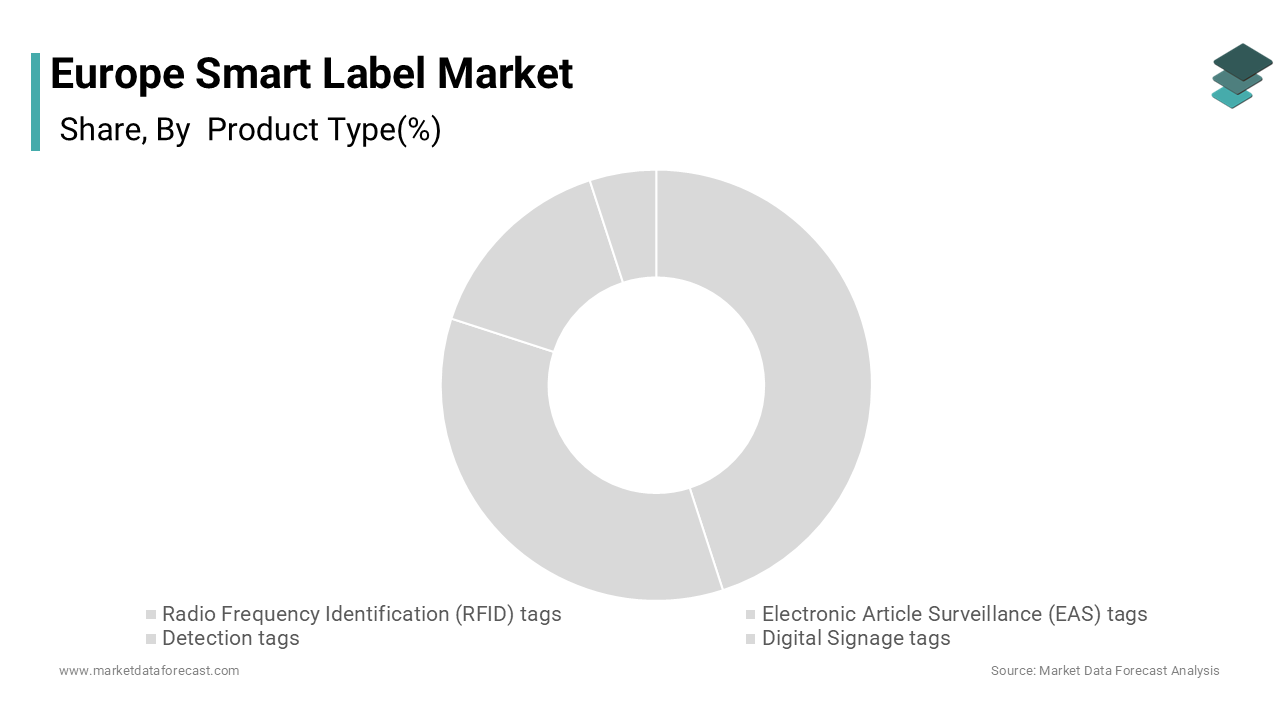
The sensing labels segment is estimated to register the fastest CAGR of 18.6% between 2025 and 2033 due to cold chain integrity requirements for vaccines and biologics, and EU regulations on food freshness and waste reduction. The European Centre for Disease Prevention and Control mandates strict temperature control for vaccine distribution with excursions risking efficacy loss. Sensing labels that irreversibly change color or transmit digital alerts upon threshold breach have become essential. A trend has emerged toward integrating specialized tracking indicators within vaccine shipments to ensure quality during distribution. Regulatory expectations now require continuous thermal monitoring for complex medicinal therapies. Oversight emphasizes end-to-end visibility from manufacture to administration, and sensing technology in logistics is associated with decreased product loss at the pharmacy level. The demand for integrated sensing labels is poised for exponential growth, fueled by the fact that biologics make up a portion of new drug approvals across Europe. The European Commission’s Farm to Fork Strategy targets a reduction in food waste by 2030 with spoilage from temperature abuse cited as a key contributor. Sensing labels that indicate freshness based on time temperature history are gaining traction in perishable categories. Packaging is shifting towards dynamic indicators instead of fixed expiration dates for real-time freshness monitoring. Sensing labels on milk containers appear to influence consumer behavior by lowering premature disposal. Advancements in packaging technology include sensors detecting volatile organic compounds, and gas-sensing labels in meat packaging identify biological signals of microbial activity. There is an emerging trend towards active packaging solutions providing more precise data on perishable goods' shelf life. Intelligent labels provide a powerful, scalable solution to the EU's annual millions of tons of food waste by aligning product shelf life with actual edibility, accelerating their adoption for high-value perishable goods.
By End User Industry Insights
The healthcare & pharmaceutical segment held the majority share of 32.1% of the Europe smart label market in 2024. The prominence of the healthcare & pharmaceutical segment is credited to the legal mandate for unique medicine identification, and rise of smart packaging for patient adherence and safety. The EU Falsified Medicines Directive legally compels all prescription medicines to carry a unique serial number and anti tampering device primarily realized through 2D data matrix codes often backed by RFID infrastructure. Connectivity across numerous networks has established infrastructure for real-time medicinal verification. High volumes of authentication requests indicate scanning protocols have become standard within the pharmaceutical supply chain. The integration of unique identifiers has transitioned product units into active data points within a broader digital tracking ecosystem. Regulatory mandates ensuring only verified units can be dispensed have created consistent demand for compliant labeling solutions. The vast diversity of product presentations and high frequency of prescriptions position the pharmaceutical industry as a primary catalyst for the adoption of smart labeling technologies. Beyond serialization smart labels now support patient engagement through NFC enabled blister packs that log dose intake and provide reminders. There is an observable pattern of incorporating technological enhancements into traditional medication packaging to improve patient self-management. Solutions utilizing simple digital communication protocols are increasingly being used to provide access to detailed product information at the point of care. The integration of enhanced packaging features is becoming more prevalent in the management of long-term health conditions. A growing number of clinical settings in various regions are recommending or supplying advanced packaging systems to support adherence protocols. Interactive labels provide quantifiable benefits in outcomes-based healthcare, strengthening the sector's leading position beyond mere regulatory adherence.
The food & beverage segment is anticipated to witness the fastest CAGR of 16.8% during the forecast period owing to consumer demand for real time freshness and origin transparency, and regulatory push for anti-counterfeiting and traceability in high-risk foods. European shoppers increasingly reject arbitrary expiration dates in favor of dynamic freshness indicators. According to a study, a notable share of consumers in Denmark Sweden and the Netherlands expressed willingness to pay a premium for packaging that shows real time spoilage status. Sensing labels that respond to microbial byproducts or temperature history directly address this demand. This alignment with conscious consumption trends drives rapid adoption across premium dairy seafood and organic segments. The European Commission’s Action Plan Against Food Fraud prioritizes digital traceability for vulnerable categories like honey wine and infant formula. Reports of food mislabeling and product adulteration have highlighted vulnerabilities in global supply chains, particularly within the edible oils and natural sweeteners sectors. Regulatory frameworks are increasingly emphasizing digitized traceability to confirm the geographical origin and specific production standards of high-value agricultural goods. The implementation of scannable labeling systems on certified dairy products allows for the immediate authentication of regional sourcing and traditional manufacturing processes. Advanced tracking technologies, such as tamper-evident electronic tags, are being utilized during the exportation process to ensure the integrity of premium meat products at international checkpoints. These technological shifts indicate a broader pattern of replacing traditional documentation with integrated digital verification methods to mitigate risks of fraud. The European Food Safety Authority now recommends smart labeling as a best practice for high value perishables to combat economically motivated adulteration. These measures transform smart labels from marketing tools into compliance necessities, which accelerates deployment across Europe’s diverse agri food landscape.
By Application Insights
The retail inventory segment dominated the Europe smart label market by capturing a share of 41.7% in 2024. The dominance of the retail inventory segment is driven by labor cost pressures and need for real time stock visibility, and loss prevention and shrinkage reduction through EAS integration. European retailers face mounting pressure to reduce operational costs while improving omnichannel fulfillment accuracy. According to research, labor accounts for a considerable share of store operating expenses making automation essential. RFID enabled inventory management allows full stock counts in minutes rather than hours with high accuracy. The integration of advanced tracking systems in retail settings has led to a reduction in manual inventory management efforts. This has enhanced the use of physical stores for fulfilling digital orders. Improved precision in tracking assets has resulted in better alignment between recorded and actual inventory. High stock accuracy levels have supported the expansion of customer services dependent on real-time product location data. The competitive need for instant item location within physical stores, driven by e-commerce's growing portion of EU retail sales, is spurring sustained RFID label demand. Electronic Article Surveillance remains a core function of smart labeling in fashion electronics and cosmetics where theft contributes significantly to shrinkage. RFID labels with integrated EAS functionality allow simultaneous inventory tracking and anti theft detection at exit gates. This operational synergy ensures that even as retailers digitize inventory they retain loss prevention capabilities, which makes integrated smart labels indispensable in high turnover environments.
The perishable goods monitoring segment is likely to experience the fastest CAGR of 19.2% from 2025 to 2033. The swift growth of the perishable goods monitoring segment is fuelled by EU regulatory emphasis on temperature-controlled supply chains, and retailer initiatives to reduce food waste and enhance consumer trust. The European Food Safety Authority requires continuous temperature monitoring for all chilled and frozen foods during transport and storage. Traditional loggers are being replaced by disposable sensing smart labels that provide irreversible visual or digital evidence of excursions. Regulations regarding imported seafood have shifted to require monitoring devices that verify temperature maintenance during transit. The implementation of these indicators has led to a significant increase in the use of specialized labeling for products entering the market. Cold chain management remains a critical factor in maintaining the safety and quality of dairy products. Advanced monitoring technologies have become essential tools for identifying specific failures within the distribution network. Enhanced tracking requirements are increasingly used to detect environmental exposure issues that may lead to product recalls. The EU Green Deal mandates stricter food safety rules, which means these labels are transitioning from a choice to a requirement across high-risk categories. Major European grocers are deploying smart labels to align with sustainability commitments and reduce write offs. Retail sector initiatives suggest that implementing specific packaging technology on items like pre-packed salads may lead to reduced product waste. Consumer feedback from these initiatives indicates a rise in satisfaction metrics among shoppers using the modified products. Different markets have introduced dynamic guidance systems on perishable goods, such as milk, offering an alternative to traditional fixed dates. Data on shopper perception shows higher trust in products with real-time indicators compared to those using only printed dates. The potential economic and reputational benefits of intelligent labels are being recognized, potentially accelerating adoption across perishable goods supply chains.
REGIONAL ANALYSIS
Germany Smart Label Market Analysis
Germany outperformed other countries in the Europe smart label market by holding a 19.8% share in 2024. The supremacy of the German market is propelled by its advanced pharmaceutical industry which fully implemented the Falsified Medicines Directive with millions of medicine verifications. Germany also hosts Europe’s most mature RFID retail ecosystem with fashion electronics and automotive sectors driving high volume label usage. A significant majority of entities within the automotive supply sector are implementing radio-frequency identification (RFID) technology for tracking components, largely driven by directives from major vehicle manufacturers. Government resources have been directed to facilitate the integration of intelligent labeling solutions among small and medium-sized enterprises operating within the food processing sector. This blend of regulatory compliance industrial sophistication and public funding ensures Germany remains the undisputed innovation and deployment hub for smart labels in Europe.
France Smart Label Market Analysis
France followed closely in the Europe smart label market and captured a 14.5% share in 2024. The growth of these labels in France is attributed to stringent anti-counterfeiting laws in luxury goods food and pharmaceuticals. A notable reduction has been observed in the volume of seized items within a particular luxury goods category, following the implementation of mandatory physical authentication technologies on those products. Concurrently, a pattern of broader adoption of intelligent labeling has emerged within the agricultural sector for certain regional specialty items, in line with established product origin standards. Furthermore, within the health and wellness product supply chain, there has been universal adherence by retail distributors to established product serialization requirements. France's unique blend of luxury appeal (Paris) and strong agri-food exports, coupled with high consumer demand and strict regulations, creates a perfect environment for advanced smart label adoption across its industries.
United Kingdom Smart Label Market Analysis
The United Kingdom continues to have a significant position in the Europe smart label market. Despite Brexit the UK maintains alignment with EU medicine serialization standards through the National Medicines Verification System which processed millions of verifications in 2023. The UK’s strong retail sector further fuels demand with Tesco Sainsbury’s and John Lewis implementing RFID for inventory and loss prevention across all major formats. Additionally, London’s concentration of global brand headquarters drives innovation in NFC enabled consumer engagement. The UK thus balances regulatory rigor with commercial innovation making it a pivotal market for both compliance driven and value added smart labeling.
Italy Smart Label Market Analysis
Italy expanded gradually in the European market due to its high value export sectors including fashion food and pharmaceuticals. Moreover, Italian luxury brands like Prada and Armani embed NFC chips in garments and accessories for global authentication with an increase in smart label usage among fashion exporters. Simultaneously Italy’s agri food industry uses QR and RFID tags to protect Parmigiano Reggiano Prosecco and olive oil from fraud under EU geographical indication rules. A high degree of integration has been established between local dispensaries and a broader verification network. The extensive network of small and medium-sized enterprises in the nation underscores the importance of product integrity and supply chain visibility in the marketplace. Given the focus on authenticity for exported goods, innovative tracking methods are becoming crucial for maintaining a competitive edge in international commerce.
Netherlands Smart Label Market Analysis
The Netherlands is anticipated to grow notably in the Europe smart label market from 2025 to 2033, owing to its strategic role as Europe’s logistics gateway, which drives massive demand for smart labels in supply chain visibility. All major logistics hubs including Schiphol Cargo and Port of Rotterdam require RFID or sensing labels for temperature controlled and high value shipments. Additionally the Netherlands hosts leading smart packaging innovators like PragmatIC and Thin Film Electronics which collaborate with Unilever and Philips on printed electronics. This combination of trade infrastructure agri tech leadership and R and D excellence positions the Netherlands as a testbed and deployment leader for next generation smart labeling solutions.
COMPETITIVE LANDSCAPE
The Europe smart label market features dynamic competition shaped by regulatory complexity technological innovation and sustainability expectations. Global material science leaders dominate the RFID and NFC segments through scale and compliance expertise while specialized printed electronics firms compete on functional differentiation in sensing and memory applications. The market is bifurcated between high volume standardized solutions for retail and pharmaceuticals and low volume high value interactive labels for luxury and perishables. Competition intensifies around data security recyclability and cost efficiency as brands seek to balance consumer engagement with circular economy principles. Fragmentation arises from country specific implementation of EU directives creating opportunities for agile regional players. Innovation is concentrated on battery free sensors biodegradable inlays and cloud integrated label management platforms. This environment rewards companies that combine deep regulatory insight with scalable sustainable technology and strong brand partnerships.
KEY MARKET PLAYERS
- CCL Industries Inc.
- Avery Dennison Corporation
- Zebra Technologies Corporation
- SATO Holdings Corporation
- Alien Technology, LLC
- Smartrac N.V.
- Checkpoint Systems, Inc.
- Brady Corporation
- Honeywell International Inc.
- RFID Global Solution
- RFIDentics GmbH
- Identiv, Inc.
Top Players in the Market
Avery Dennison Corporation
Avery Dennison is a leading force in the Europe smart label market through its Intelligent Packaging and RFID Solutions divisions which supply high performance labels to retail pharmaceutical and logistics sectors. The company leverages its global material science expertise to produce sustainable RFID inlays with reduced environmental impact. It also launched a digital platform enabling brand owners to manage label data and consumer engagement campaigns across EU markets. These initiatives reinforce its role as an enabler of transparent and interactive packaging while strengthening its global leadership in intelligent labeling technologies.
CCL Industries Inc
CCL Industries contributes significantly to the Europe smart label market through its extensive portfolio of functional and smart packaging solutions for healthcare food and personal care industries. The company integrates RFID NFC and sensing technologies into labels that meet stringent EU regulatory requirements for serialization and sustainability. It also upgraded its facilities in Germany and Spain to support high volume production of tamper evident smart labels compliant with the EU Falsified Medicines Directive. These strategic enhancements solidify CCL’s position as a trusted partner for regulated and high value labeling applications across Europe and globally.
Thinfilm Electronics ASA
Thinfilm Electronics holds a distinctive role in the Europe smart label market by pioneering printed sensor and memory technologies that enable low cost intelligent packaging. The company’s proprietary Organic Memory and Sensor Platform allows labels to record temperature shock and time data without batteries making them ideal for perishable goods. It also collaborated with a Scandinavian vaccine logistics provider to integrate its printed temperature history indicators into cold chain packaging. These real world implementations demonstrate Thinfilm’s capacity to deliver scalable sensing solutions that address Europe’s food waste and pharmaceutical safety priorities while advancing its global footprint in printed intelligence.
Top Strategies Used by the Key Market Participants
Key players in the Europe smart label market pursue regulatory alignment technology integration and sustainability differentiation. They develop solutions that comply with sector specific mandates such as pharmaceutical serialization food traceability and luxury goods authentication. Companies invest in printable electronics and biodegradable substrates to reduce environmental impact while maintaining functionality. Strategic partnerships with brand owners logistics providers and regulatory bodies ensure real world relevance and rapid deployment. Geographic localization of production and data management platforms enables responsive service across diverse EU markets. These strategies collectively enhance trust performance and scalability in a region defined by high standards and digital ambition.
MARKET SEGMENTATION
This research report on the europe smart label market has been segmented and sub–segmented into the following categories.
By Product Type
- Radio Frequency Identification (RFID) tags
- Electronic Article Surveillance (EAS) tags
- Detection tags
- Digital Signage tags
By Application
- Retail Inventory
- Perishable Products
- Others
By End-user Industry
- Retail
- Healthcare and Pharmaceutical
- Food and Beverage
- Logistics
- FMCG
- Automotive
By Country
- UK
- France
- Spain
- Germany
- Italy
- Russia
- Sweden
- Denmark
- Switzerland
- Netherlands
- Turkey
- Czech Republic
- Rest of Europe