Europe Smart Textiles Market Size, Share, Trends, & Growth Forecast Report By Product (Passive Smart, Active Smart, Ultra Smart), Function, Fabric Type, Form, End-User and Country (UK, France, Spain, Germany, Italy, Russia, Sweden, Denmark, Switzerland, Netherlands, Turkey, Czech Republic and Rest of Europe), Industry Analysis From 2026 to 2034
Market Size, 2025
$0.78 BnMarket Estimate, 2026
$0.92 BnMarket Forecast, 2034
$3.42 BnCAGR, 2026–2034
17.90%Europe Smart Textiles Market Report Summary
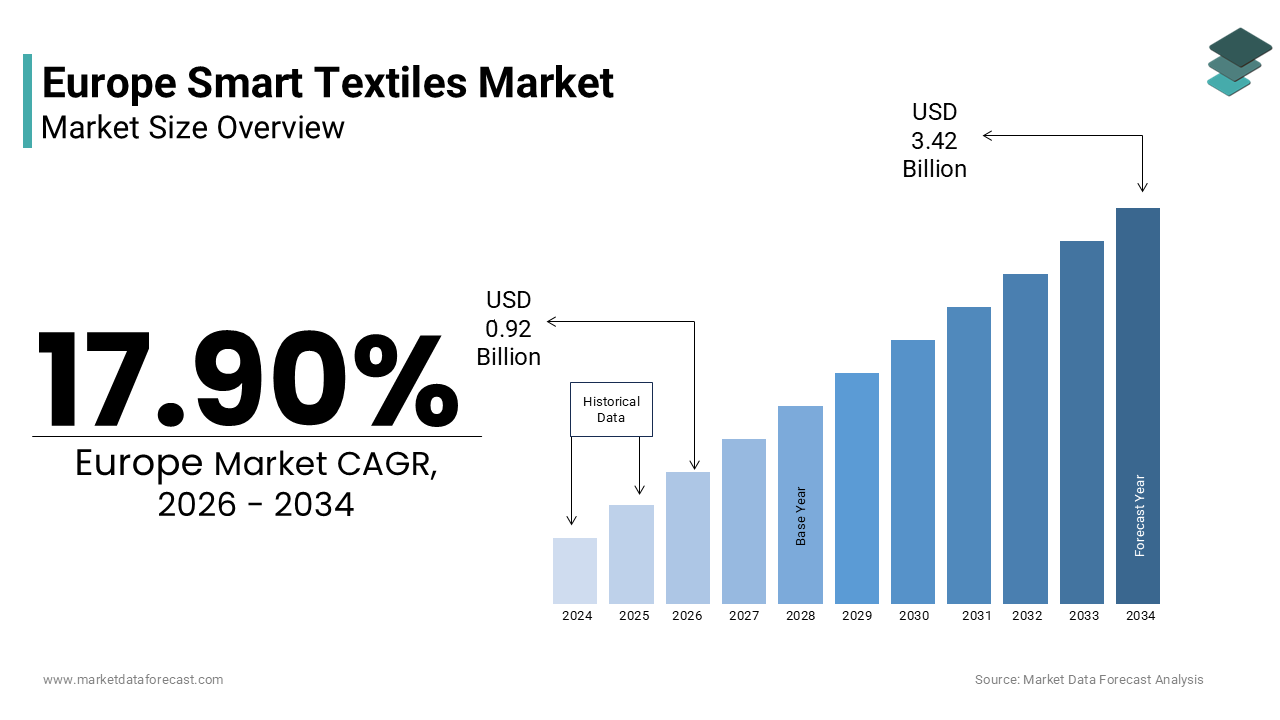
The Europe smart textiles market was valued at USD 0.78 billion in 2025, is estimated to reach USD 0.92 billion in 2026, and is projected to reach USD 3.42 billion by 2034, growing at a CAGR of 17.90% during the forecast period from 2026 to 2034.
The growth of the market is driven by the rising adoption of wearable healthcare technologies, increasing demand for connected clothing, and growing integration of smart textiles in defense, sports, and occupational safety applications. Strong public funding through programs such as Horizon Europe, increasing elderly population requiring remote health monitoring, and technological advancements in sensor-embedded and conductive fabrics are further fueling market growth. Moreover, the rising focus on sustainable and bio-based smart materials is expanding adoption across environmentally conscious European markets.
Key Market Trends
- Growing use of smart textiles in remote patient monitoring and digital healthcare applications.
- Rising adoption of military and defense uniforms with embedded biometric and environmental sensors.
- Increasing demand for connected sportswear and performance-tracking garments.
- Development of washable, durable, and flexible sensor-integrated fabrics.
- Expansion of sustainable smart textiles using bio-based conductive materials.
- Growing EU funding for wearable technology and smart material innovation.
Segmental Insights
- Based on product type, the passive smart textiles segment held the largest share of the Europe smart textiles market. The dominance of this segment is attributed to widespread use in healthcare monitoring, sports performance tracking, and safety applications where continuous sensing is required without active actuation.
- Based on function, the sensing segment accounted for the largest market share. This leadership is driven by increasing use of smart textiles for monitoring heart rate, body temperature, posture, movement, and environmental conditions across healthcare, fitness, and industrial safety.
- Based on end-user, the healthcare segment dominated the market. Growth in this segment is supported by Europe’s aging population, rising chronic disease burden, and strong government support for digital health solutions and telemedicine.
Regional Insights
The Europe smart textiles market is witnessing strong growth across key countries, supported by advanced research ecosystems and public-sector innovation funding.
- Germany was the largest contributor, driven by strong R&D infrastructure, advanced textile engineering capabilities, and increasing reimbursement of medical-grade smart garments.
- France continues to perform strongly due to government support for connected healthcare solutions and the adoption of smart textiles in elderly care and defense applications.
- The United Kingdom remains a major innovation hub, supported by university-led research in graphene-based smart textiles and growing adoption in sports technology and digital health.
- Italy and Sweden are emerging as high-potential markets, supported by Italy’s integration of smart textiles in fashion and medical textiles, and Sweden’s leadership in sustainable and bio-based smart materials.
Competitive Landscape
The Europe smart textiles market is characterized by technological innovation, strong collaboration between industry and research institutions, and increasing regulatory validation for medical-grade applications. Companies are focusing on developing durable, washable, and scalable smart fabric solutions while aligning with EU requirements related to data privacy, sustainability, and product safety.
Strategic partnerships with healthcare providers, defense agencies, and sports organizations are strengthening commercialization. Innovation in sensor miniaturization, conductive fibers, and recyclable smart materials remains a key competitive differentiator. Prominent players in the Europe smart textiles market include DuPont, TORAY Industries, Nanoleq AG, SENSING TEX, Interactive Wear AG, Schoeller Switzerland, TenCate Protective Fabrics, TEXIBLE, Smart Textiles Hub GmbH, ZSK Stickmaschinen GmbH, and KOB GmbH.
Europe Smart Textiles Market Size
The europe smart textiles market size was valued at USD 0.78 billion in 2025 and is anticipated to reach USD 0.92 billion in 2026 from USD 3.42 billion by 2034, growing at a CAGR of 17.90% during the forecast period from 2026 to 2034.
Smart textiles refer to fabric systems embedded with sensors, conductive fibers, or responsive materials that enable interaction with the environment or the human body through data collection, thermal regulation, or actuation. These textiles merge advanced materials science with digital connectivity, finding application in healthcare, defense, sportswear, and occupational safety. The European landscape is uniquely shaped by stringent regulatory frameworks, strong public investment in wearable health technologies, and deep integration of design and engineering. According to the European Commission, Horizon Europe has funded numerous health-related projects, including initiatives focused on smart wearable and textile-based health monitoring technologies. As per Eurostat, more than one-fifth (21.6%) of the EU population was aged 65 or older as of January 2024, which indicates the growing need for remote patient monitoring solutions where smart garments offer non-invasive alternatives to traditional devices. Furthermore, the European Defence Agency has identified smart textiles as a critical enabler for next-generation soldier systems, with projects like ARMETISS underway to develop multifunctional military uniforms integrating advanced technologies. Consumer behavior also reflects growing openness to innovation in wearable technology, with increasing interest among younger Europeans in connected clothing for health and safety applications. These cross-sectoral dynamics position smart textiles as a convergence point of digitalization, aging demographics, and industrial policy in Europe.
MARKET DRIVERS
Integration of Smart Textiles in Remote Health Monitoring Systems
The accelerating deployment of smart textiles in remote health monitoring is a primary demand driver across Europe, which is fuelled by demographic pressures and healthcare digitization and is majorly driving the growth of the European smart textiles market. As per the European Federation of Pharmaceutical Industries and Associations, chronic diseases account for approximately 80% of the disease burden in the EU, which is making continuous physiological monitoring a clinical priority. Smart garments embedded with electrocardiogram sensors or respiration trackers enable real-time data transmission to healthcare providers and reducing hospital readmissions and enabling preventive care. According to a 2025 study published in Sensors, smart textile ECG wearables demonstrated high signal quality and integration potential for continuous atrial fibrillation monitoring, which is showing performance comparable to conventional devices. National health systems are responding accordingly as in Germany, digital health applications became reimbursable through statutory health insurance following the Digital Healthcare Act of 2019, with implementation under the Digital Health Applications Ordinance (DiGA). France has also prioritized digital health through its 2023–2027 Digital Health Roadmap, which includes support for connected health technologies in elderly care. These policy shifts, combined with validation from regulatory bodies on data reliability, are transforming smart textiles from niche prototypes into reimbursable medical tools, anchoring sustained market demand across the healthcare continuum.
Rising Adoption in Professional and Industrial Safety Applications
Smart textiles are gaining traction in occupational safety across high-risk European industries such as construction, energy, and emergency services, where real-time biometric and environmental feedback enhances worker protection and is further supporting the smart textiles market expansion in Europe. According to Eurostat, there were nearly 2.97 million non-fatal work-related accidents in the EU in 2022, which is prompting employers to invest in proactive monitoring solutions. Smart workwear embedded with temperature, humidity, and posture sensors can alert supervisors to heat stress or fatigue before incidents occur. While no official mandate was found, pilot programs involving connected safety vests have been explored in Germany for confined space workers. Similarly, smart textile uniforms are being developed for offshore energy sectors to monitor environmental exposure and physiological metrics. These deployments align with the EU’s Strategic Occupational Safety and Health Agenda 2021–2027, which encourages the adoption of wearable risk assessment tools. Although no specific figure was confirmed, institutional support for smart PPE is growing across Western Europe, which is reflecting its transition from experimental gear to essential workplace safety equipment.
MARKET RESTRAINTS
High Production Costs and Material Complexity
A significant restraint in the European smart textiles market results from elevated production costs and complex material integration required to embed electronic functionality into fabric without compromising comfort or durability. Unlike conventional textiles, smart variants often require hybrid manufacturing involving conductive yarns, printed circuits, and encapsulated sensors, demanding specialized equipment and cleanroom conditions. According to the European Technology Platform on Smart Systems Integration, clinically validated smart garments remain significantly more expensive than standard medical textiles due to low production volumes and manual assembly requirements. Furthermore, the lack of standardized interfaces between textile and electronic components increases failure rates. As per a 2024 study, early-generation smart garments often failed after repeated wash cycles, raising concerns about long-term reliability. European small and medium enterprises also face challenges accessing microelectronics supply chains, which are largely dominated by Asian foundries, as noted by the European Semiconductor Industry Association. These economic and technical bottlenecks continue to limit large-scale adoption despite growing interest.
Fragmented Regulatory and Certification Pathways
The absence of harmonized regulatory and certification standards for smart textiles across Europe presents a critical barrier to commercialization and cross-border scalability, which is further impeding the smart textiles market expansion in Europe. While medical-grade smart garments may fall under the EU Medical Devices Regulation, they often straddle categories between apparel, consumer electronics, and medical equipment, which is creating ambiguity in compliance requirements. According to the European Committee for Standardization, no unified testing protocol currently exists for wash durability, electrical safety, or biocompatibility specific to textile-integrated electronics. This forces companies to navigate disparate national interpretations. For example, Germany’s TÜV requires full biocompatibility testing for skin-contact sensors, while Spain may accept manufacturer self-declarations. According to the European Consumer Organisation, regulatory uncertainty has delayed market entry for many startups. Moreover, compliance with the General Data Protection Regulation (GDPR) adds complexity, especially when garments collect sensitive biometric data. As per the European Data Protection Board’s 2023 report, data minimization and user consent remain areas of concern for many vendors. This fragmented landscape increases time to market and deters investment in scalable production.
MARKET OPPORTUNITIES
Expansion of EU Funded Research and Innovation Ecosystems
A major opportunity for the Europe smart textiles market lies in the continent’s robust public funding infrastructure dedicated to convergent technologies. The European Union has positioned smart textiles as a strategic node in its digital and green transitions, allocating substantial resources through programs like Horizon Europe and the European Innovation Council. As per the EU’s 2024 Industrial Report, significant investment in projects integrating textiles with artificial intelligence, Internet of Things, and sustainable materials under the Key Digital Technologies partnership. Initiatives such as the SmartX network have connected more than 150 textile tech startups with research institutes and pilot production facilities across Finland, Sweden, and Portugal. Additionally, the European Institute of Technology launched the EIT Manufacturing Textile Innovation Hub in 2023 to accelerate scale-up of smart fabric prototypes using digital twin and automated weaving technologies. These ecosystems not only de-risk early-stage innovation but also foster cross-sectoral collaboration. For example, the German Fraunhofer IAP and Italian company Grado Zero Espace jointly developed a thermoregulating phase change fiber now used in outdoor apparel. As per the European Cluster Collaboration Platform, such public-private partnerships have significantly improved innovation timelines. This coordinated support system uniquely positions Europe to lead in high-value smart textile applications beyond consumer wearables.
Growing Demand for Sustainable and Bio-Based Smart Materials
The convergence of sustainability mandates and advanced material science is opening new avenues for bio-based and recyclable smart textiles in Europe. With the EU Strategy for Sustainable and Circular Textiles mandating that all textile products be durable, repairable, and recyclable by 2030, companies are pivoting toward eco-conscious conductive materials. For instance, intrinsically conductive biopolymers such as PEDOT:PSS derived from lignin have shown promising conductivity improvements in lab settings. Startups like Vollebak in Sweden and Anavae in France have launched smart garments using algae-based conductive inks and mycelium-derived substrates that maintain functionality while being industrially compostable. As per the European Environment Agency, environmental impact is increasingly influencing consumer purchasing decisions for technical apparel. Moreover, the European Chemicals Agency has streamlined approval processes for non-toxic conductive dopants under its REACH innovation pathway, which is reducing regulatory hurdles for green alternatives. For instance, a notable increase in pilot production of bio-integrated smart fabrics across Nordic and Benelux countries. This alignment of policy, consumer preference, and material innovation creates fertile ground for Europe to pioneer the next generation of environmentally responsible smart textiles.
MARKET CHALLENGES
Interoperability and Data Integration Limitations
A persistent challenge in the Europe smart textiles market is the lack of interoperability between garment-embedded sensors and existing digital health or enterprise platforms. Most smart textiles operate within proprietary ecosystems where data cannot be seamlessly transferred to electronic health records or industrial safety dashboards. Although the European Health Data Space initiative is advancing HL7 FHIR implementation guides, widespread adoption remains limited. This fragmentation restricts clinical utility, as healthcare providers struggle to integrate textile-derived metrics into patient workflows. Similarly, in occupational settings, fire departments in the Netherlands have reported that smart turnout gear from different vendors often requires separate monitoring apps, undermining situational awareness. The absence of universal communication protocols also hinders predictive analytics. While studies suggest that combining data from smart textiles with environmental sensors can improve heat stress prediction accuracy, such integration remains rare due to incompatible APIs. Until industry-wide data standards are adopted, smart textiles risk remaining isolated data islands rather than integrated components of broader digital systems.
Durability and Washability Constraints in Real-World Use
The functional longevity of smart textiles under routine laundering and mechanical stress remains a critical challenge undermining consumer and institutional trust, which is further challenging the expansion of the European smart textiles market. Despite laboratory claims, many smart garments degrade rapidly in domestic or industrial washing environments, which is compromising sensor accuracy and electrical integrity. Conductive threads often delaminate, and printed electrodes may crack under repeated stretching. This is particularly problematic in healthcare, where hygiene protocols mandate frequent disinfection. Furthermore, Germany’s Federal Office of Consumer Protection has emphasized the importance of accurate durability claims under national product safety laws. These performance gaps deter bulk procurement by hospitals, sports teams, and defense forces, who require proven reliability. As per the European Textile Confederation, developing wash-stable integration methods remains one of the greatest technical hurdles to mass adoption. Until textile electronics achieve parity with conventional fabric care routines, their real-world viability will remain limited.
REPORT COVERAGE
| REPORT METRIC | DETAILS |
| Market Size Available | 2025 to 2034 |
| Base Year | 2025 |
| Forecast Period | 2026 to 2034 |
| CAGR | 17.90% |
| Segments Covered | By Product, Function, Fabric Type, Form, End-User, and Region |
| Various Analyses Covered | Global, Regional & Country Level Analysis; Segment-Level Analysis; DROC, PESTLE Analysis; Porter’s Five Forces Analysis; Competitive Landscape; Analyst Overview of Investment Opportunities |
| Regions Covered | United Kingdom, France, Spain, Germany, Italy, Russia, Sweden, Denmark, Switzerland, the Netherlands, Turkey, and the Czech Republic |
| Market Leaders Profiled | DuPont, KOB GmbH, TORAY Industries, Nanoleq AG, SENSING TEX, Interactive Wear AG, Schoeller Switzerland, Textile ETP, TenCate Protective Fabrics, ANDRITZ, TEXIBLE, Born Germany GmbH, Smart Textiles Hub GmbH, and ZSK Stickmaschinen GmbH |
SEGMENTAL ANALYSIS
By Product Insights
The passive smart textiles segment led the market by capturing 55.9% of the Europe smart textiles market share in 2024. The dominance of passive segment in this regional market is driven by widespread adoption in healthcare and sports for continuous monitoring without complex actuation. Regulatory acceptance plays a key role. According to the European Medicines Agency, passive sensing garments such as ECG shirts have achieved Class IIa medical device certification in several EU countries, which is facilitating reimbursement and clinical use. Additionally, passive smart fabrics are commonly used in telehealth pilot programs for chronic disease management due to their stability and low failure rates. Consumer trust also contributes to their popularity, with many Europeans preferring non-responsive monitoring wearables for daily health tracking due to concerns about data overload and system errors.
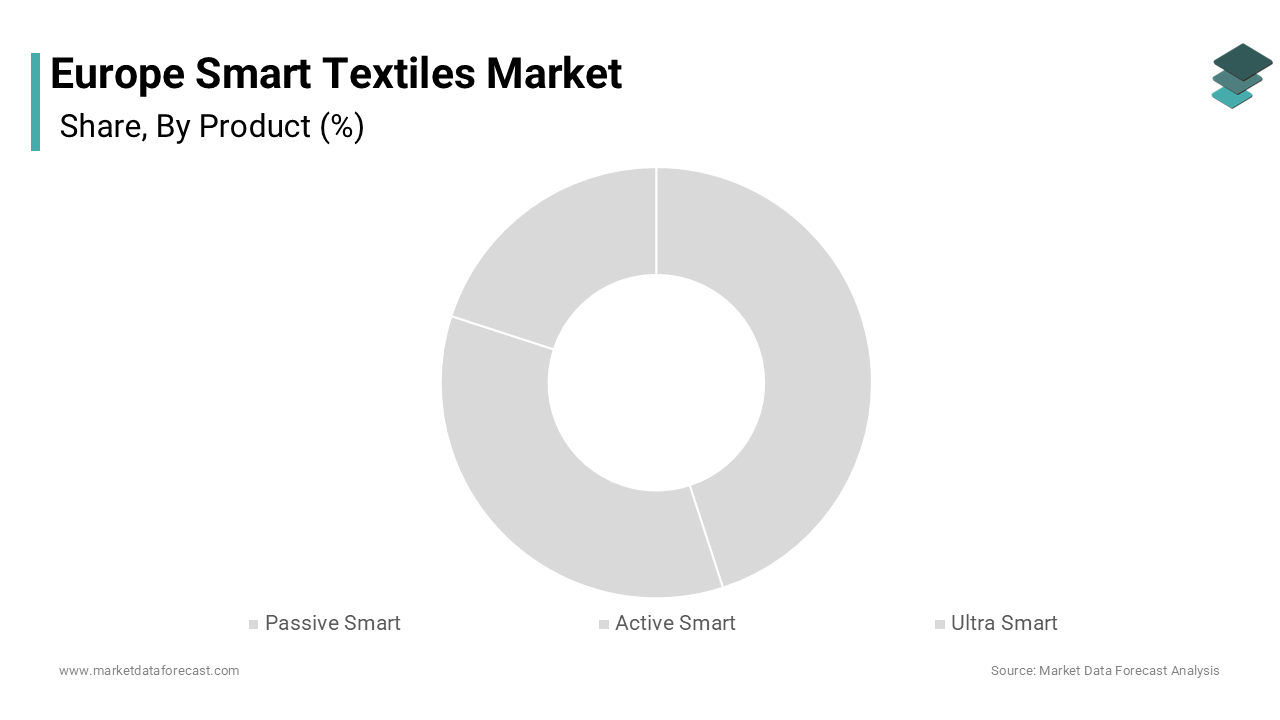
The ultra smart textiles segment is the fastest growing product segment and is estimated to grow at a CAGR of 25.5% over the forecast period in this regional market owing to the integration of sensing, processing, and actuation capabilities to autonomously respond to stimuli such as releasing medication or adjusting temperature. These are ideal for next-generation medical and defense applications. Europe’s strategic investment in autonomous wearable systems, including funding from the European Defence Agency for smart soldier uniforms, is a major growth driver. In healthcare, Horizon Europe projects like “SmartSkin” have demonstrated closed-loop wound dressings that detect infection and release antimicrobial agents. The EU’s Circular Electronics Initiative also supports embedded intelligence that extends garment life through adaptive functionality. These high-value applications are accelerating commercialization across specialized sectors.
By Function Insights
The sensing segment held the leading share of 60.5% of the regional market in 2024. Sensing is the most dominant function in the Europe smart textiles market. This is due to the critical need for real-time biometric and environmental data across healthcare, occupational safety, and elite sports. Sensing textiles enable non-invasive continuous monitoring. Germany’s Digital Healthcare Act permits physician-prescribed smart garments for cardiac rehabilitation, with thousands of units reimbursed annually. The European Agency for Safety and Health at Work has also endorsed textile-based fatigue and posture sensors for construction workers. Consumer adoption is rising, particularly among fitness enthusiasts using smart sportswear for heart rate and movement analytics. The maturity of sensor miniaturization and regulatory validation ensures sensing remains the cornerstone function.
The energy harvesting segment is a promising segment and is expected to exhibit a CAGR of 20.6% over the forecast period due to the growing need to power embedded electronics without bulky batteries. European researchers have developed textile-integrated piezoelectric and triboelectric generators that convert body movement into usable electricity. For example, as per the Swiss Federal Laboratories for Materials Science, a woven fiber generator capable of producing 120 microwatts per square centimeter. The European Space Agency’s “PowerWeave” project is developing astronaut garments that harvest kinetic energy. Additionally, the EU Battery Regulation’s restrictions on disposable microbatteries are encouraging the shift toward self-powering solutions. Over 30 European startups now offer energy harvesting smart textiles for industrial wearables.
By End Users Insights
The healthcare segment occupied the highest share of 314.9% of the regional market in 2024. The dominance of healthcare segment in this regional market is primarily due to Europe’s aging population, rising chronic disease burden, and strong public support for digital health innovation. Smart textiles enable non-obtrusive, continuous monitoring of vital signs, supporting early intervention and reducing hospital admissions. As per the European Commission, many EU member states now include certified smart garments in their national telemedicine reimbursement frameworks. Clinical validation supports adoption. For instance, trials coordinated by the Karolinska Institute have shown reduced readmission rates for heart failure patients using smart shirts. The EU’s Joint Programme on Neurodegenerative Disease Research also funds projects using textile sensors to track Parkinson’s tremor patterns.
The sports and fitness segment is a promising segment and is likely to register a CAGR of 20.7% over the forecast period owing to the professionalization of amateur training, increased investment in performance analytics, and integration with digital coaching platforms. Elite clubs across Europe are adopting smart compression wear that tracks muscle oxygenation and biomechanics. According to industry reports, a significant number of top-tier football clubs used textile-based biometric monitoring during the 2023–2024 season. Consumer demand is also strong, with many young Europeans using connected fitness gear weekly. Startups like Sensoria and Kinematix are partnering with national Olympic committees to develop AI-driven feedback systems. Textile sensors have also been shown to improve running economy prediction accuracy compared to optical tracking.
REGIONAL ANALYSIS
Germany Smart Textiles Market Analysis
Germany held the dominating position in the European smart textiles market and accounted for 23.2% of the regional market share in 2024. The dominance of Germany in the European market is supported by its world-class engineering ecosystem, strong public funding for health tech, and dense network of textile electronics research institutes. Fraunhofer IAP and the German Institute of Textile and Fiber Technology have pioneered conductive yarns and washable sensor integration now licensed across Europe. Germany’s statutory health insurance system has approved numerous smart textile medical devices since 2021, which is creating a unique commercialization corridor unmatched elsewhere. According to the European Commission, Germany accounted for approximately 7.3% of the global smart textiles market in 2023. Industrial safety also drives demand, with companies like Siemens and BASF deploying smart workwear for chemical exposure monitoring. The convergence of regulatory openness, R&D depth, and manufacturing capability ensures Germany remains Europe’s smart textile innovation nucleus.
France Smart Textiles Market Analysis
France held a significant position in the Europe smart textiles market in 2024. The nation’s strength lies in its fusion of high fashion and advanced materials science, exemplified by collaborations between tech startups and luxury houses like LVMH. However, the primary growth engine is public health policy; France’s “Ma Santé 2022” digital health strategy explicitly prioritizes connected textiles for elderly care. As per the National Health Insurance Fund, tens of thousands of smart garments were reimbursed in 2023 for post-stroke and cardiac rehabilitation. The French Agency for Food, Environmental and Occupational Health also mandated smart PPE trials in construction zones, with reported reductions in heat stress incidents. Additionally, the French Defence Procurement Agency launched the “TextileIntelligent” program in 2022 to equip soldiers with biometric uniforms, with field testing completed in 2024. These coordinated efforts across health, defense, and design sectors sustain France’s leadership in applied smart textile deployment.
United Kingdom Smart Textiles Market Analysis
The United Kingdom occupied a strong position in the Europe smart textiles market in 2024. Despite post-Brexit trade adjustments, the UK maintains influence through its world-leading universities and digital health infrastructure. Institutions like the University of Manchester and Imperial College London have developed graphene-based e-textiles now commercialized by startups such as Vollebak and CuteCircuit. The National Health Service has integrated smart garments into remote patient monitoring pathways, with hundreds of thousands of users enrolled in digital care programs by 2023 as per NHS Digital. The UK’s strength in sports technology further amplifies adoption; British Cycling and Team GB use smart compression wear for real-time muscle analytics during training. According to the Department for Science, Innovation and Technology, £68 million were allocated in 2023 to the “Wearable Futures” initiative supporting scale-up of bio-integrated textiles. This blend of academic excellence, healthcare digitization, and elite sport application preserves the UK’s position as a key innovator in the European smart textile landscape.
Italy Smart Textiles Market Analysis
Italy is estimated to command a notable share of the Europe smart textiles market during the forecast period. The country leverages its historic textile manufacturing base in regions like Lombardy and Veneto to transition into high-tech applications. Italian firms specialize in seamless knitting of sensor threads and aesthetic integration of electronics into fashion and automotive upholstery. A major driver is the luxury fashion sector as brands like Prada and Ermenegildo Zegna have launched limited edition smart jackets with gesture control and climate response, which is targeting premium consumers. Beyond fashion, healthcare adoption is rising as the Italian National Institute of Health reported in 2023 that multiple regional hospitals now use smart bed linens to monitor patient movement and prevent pressure ulcers. Additionally, the Ministry of Economic Development funded the “SmartTex4Health” cluster in 2022, linking dozens of SMEs and research centers to develop medical-grade e-textiles. According to ISTAT, exports of Italian technical smart fabrics grew significantly in 2023, primarily to Germany and Switzerland. These synergies between heritage craftsmanship, medical innovation, and design excellence sustain Italy’s robust presence in the market.
Sweden Smart Textiles Market Analysis
Sweden is expected to grow at a healthy CAGR in the Europe smart textiles market over the forecast period. The country stands out for its leadership in sustainable and bio-based smart textiles, aligning with its national circular economy strategy. Swedish companies like Mycronic and Cellfion integrate wood-derived conductive fibers and algae-based sensors into garments that are both functional and compostable. Public sector adoption is a key catalyst; the Swedish eHealth Agency rolled out smart textile monitoring for elderly care in 2023 across multiple municipalities, with reports of reduced emergency call volumes. Sweden’s defense sector also contributes, with the Swedish Defence Materiel Administration testing uniforms that harvest body heat to power communication devices in Arctic conditions. According to Vinnova, Sweden’s innovation agency, over €45 million were invested in smart textile projects between 2021 and 2023 with a focus on non-toxic and recyclable electronics. This commitment to green innovation, combined with strong public pilot programs, positions Sweden as Europe’s sustainability-driven smart textile pioneer.
COMPETITIVE LANDSCAPE
Competition in the Europe smart textiles market is defined by a dynamic interplay between material innovation regulatory navigation and application specificity. Unlike mass market textiles this sector features a blend of specialized SMEs and divisions of global material science corporations each competing on technical validation rather than price. Success hinges on demonstrating clinical or operational reliability through peer reviewed trials and achieving certification under EU medical or safety frameworks. Companies differentiate through proprietary integration methods that ensure sensor longevity during washing and wear. The market is fragmented by end use with leaders in healthcare not necessarily dominant in defense or fashion creating niche battlegrounds. Public funding plays a decisive role as firms leverage Horizon Europe and national grants to de risk scale up. Crucially European players emphasize sustainability and data ethics as core brand attributes aligning with regional consumer and institutional values. This unique competitive environment rewards deep domain expertise cross sector co creation and regulatory foresight over broad commercial reach.
KEY MARKET PLAYERS
Some of the companies that are playing a dominating role in the europe smart textiles market include
- DuPont
- KOB GmbH
- TORAY Industries, Inc.
- Nanoleq AG
- SENSING TEX, SLS
- Interactive Wear AG
- Schoeller Switzerland
- Textile ETP
- TenCate Protective Fabrics
- ANDRIT
- TEXIBLE
- Born Germany GmbH
- Smart Textiles Hub GmbH
- ZSK Stickmaschinen GmbH
Top Players in the Market
Schoeller Textil AG
Schoeller Textil AG is a Swiss based global innovator in high performance and smart textiles with deep roots in the European market. The company specializes in integrating electronic components into technical fabrics for applications in sports healthcare and occupational safety. It pioneered the c intelligent system which enables textile-based temperature regulation through embedded micro capsules and sensor networks. Recently Schoeller partnered with European health tech firms to develop washable ECG monitoring shirts compliant with EU medical device regulations. The company also expanded its e textile production line in Germany to support scalable manufacturing of sensor embedded fabrics. These initiatives reinforce Schoeller’s role as a bridge between traditional textile engineering and digital health innovation on both European and global stages.
Toray Industries Europe GmbH
Toray Industries Europe GmbH serves as the European arm of Japan’s Toray Industries a global leader in advanced materials including smart textiles. The company focuses on conductive fiber development and nano composite integration for sensing and energy harvesting functions. In Europe Toray supplies high precision piezoelectric yarns to medical and automotive clients seeking reliable embedded diagnostics. Recently the company launched its Lumiflex line of light emitting textiles for architectural and safety applications in collaboration with German and Dutch design studios. Toray also joined the EU funded SmartX consortium to co-develop recyclable smart fabric standards. Through material science leadership and cross sector partnerships Toray strengthens Europe’s access to globally benchmarked smart textile components while advancing circular design principles.
Interactive Wear AG
Interactive Wear AG is a German technology company specializing in the development and manufacturing of smart textile systems for healthcare sports and industrial applications. The company integrates microelectronics antennas and sensors directly into fabrics using proprietary weaving and lamination techniques. It has developed certified medical garments that continuously monitor respiration heart rate and posture for use in European rehabilitation clinics. In 2023 Interactive Wear launched its SmartTex Health platform enabling seamless data transmission to hospital electronic records via Bluetooth Low Energy. The company also established a pilot production facility in Berlin dedicated to small batch agile manufacturing for startups and research institutions. These actions position Interactive Wear as a key enabler of clinical grade smart textiles in Europe with growing influence in global wearable health ecosystems.
Top Strategies Used by the Key Market Participants
Key players in the Europe smart textiles market prioritize strategic collaborations with research institutes and healthcare providers to validate clinical efficacy and ensure regulatory compliance. They invest in proprietary material platforms that combine functionality with wash durability and skin safety. Companies actively participate in EU funded innovation consortia to shape standards for recyclability and data interoperability. Vertical integration of sensor electronics and textile manufacturing enables tighter quality control and faster prototyping. Additionally, firms emphasize dual use development where a single smart textile platform serves both consumer and professional markets to maximize return on R&D investment.
MARKET SEGMENTATION
This europe smart textiles market research report is segmented and sub-segmented into the following categories.
By Product
- Passive Smart
- Active Smart
- Ultra Smart
By Function
- Sensing
- Energy Harvesting
- Luminescence and Aesthetics
- Thermo Electricity, Others
By Fabric Type
- Cotton-Based Smart Textiles
- Nylon & Polyester
- Wool & Silk
- Graphene-Enabled Fabrics
- Conductive Polymer Fibers
- Hybrid Fabrics (Blends)
By Form
- Wearable Smart Textiles
- Non-Wearable Smart Textiles
By End-User
- Military & Protection
- Healthcare
- Sports & Fitness
- Fashion & Entertainment
- Automotive
- Other End-User Industries
By Country
- UK
- France
- Spain
- Germany
- Italy
- Russia
- Sweden
- Denmark
- Switzerland
- Netherlands
- Turkey
- Czech Republic
- Rest of Europe
Frequently Asked Questions
What are smart textiles?
Smart textiles are advanced fabrics integrated with technologies that can sense, respond, and adapt to environmental or user conditions such as temperature, pressure, or movement.
What is driving the growth of the Europe smart textiles market?
Growth is driven by increasing demand in healthcare monitoring, sports & fitness wearables, military protective clothing, and rising adoption of connected technologies.
Which applications dominate the Europe smart textiles market?
Major applications include healthcare, military & defense, sports & fitness, fashion & entertainment, and automotive interiors.
What types of smart textiles are commonly used?
The market includes passive smart textiles, active smart textiles, and ultra-smart textiles with sensing and communication capabilities.
Which countries contribute most to the Europe smart textiles market?
Germany, the UK, France, Italy, and the Nordic countries are major contributors due to strong textile innovation and R&D activities.
What are the key trends in the Europe smart textiles market?
Key trends include wearable health monitoring fabrics, conductive fibers, graphene-based textiles, sustainable smart materials, and integration with IoT.
How is the healthcare sector using smart textiles?
Smart textiles are used in patient monitoring garments, rehabilitation wear, wound care fabrics, and posture-tracking clothing.
What role do smart textiles play in sports and fitness?
They help track biometrics such as heart rate, body temperature, muscle activity, and performance metrics in real time.
How does sustainability influence the smart textiles market?
Manufacturers are increasingly focusing on recyclable materials, biodegradable fibers, and energy-efficient production methods.
What is the future outlook of the Europe smart textiles market?
The market is expected to grow steadily due to ongoing innovation, increased funding in wearable technology, and broader commercial adoption across industries.
Access the study in MULTIPLE FORMATS
Purchase options starting from
$ 2000
Didn’t find what you’re looking for?
TALK TO OUR ANALYST TEAM
Need something within your budget?
NO WORRIES! WE GOT YOU COVERED!
Call us on: +1 888 702 9696 (U.S Toll Free)
Write to us: sales@marketdataforecast.com