- Product Description Description
- Table of Contents TOC
- List of Table & Figure LOT
- Get Free Sample PDF Sample PDF
Market Size, 2025
$1.59 BnMarket Estimate, 2026
$1.68 BnMarket Forecast, 2034
$2.62 BnCAGR, 2026–2034
5.7%Executive Summary: Europe Specialty Feed Additives Market
- Market Scope: Comprehensive European specialty feed additives industry analysis covering vitamin and mycotoxin management segments, precision livestock integration, regional leadership frameworks, strategic corporate developments, and competitive landscapes.
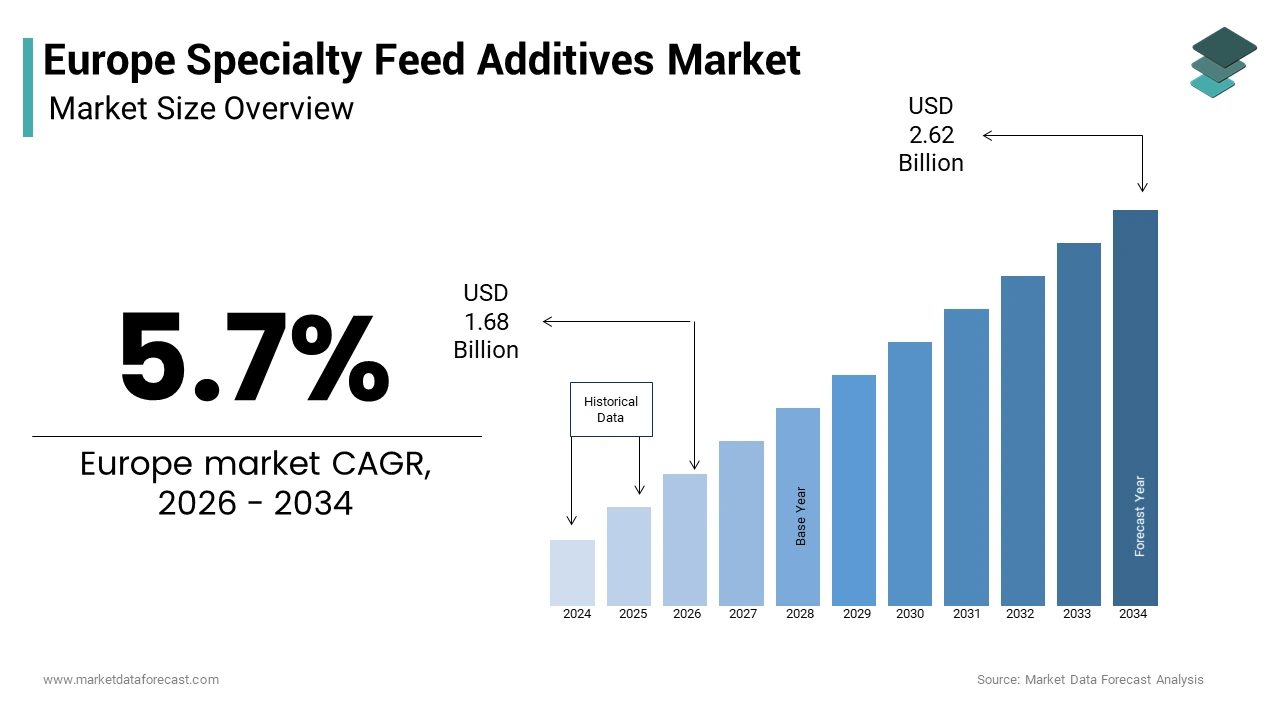
- Market Valuation: Valued at USD 1.59 billion (2025), estimated at USD 1.68 billion (2026), and projected to reach USD 2.62 billion by 2034, registering a steady CAGR of 5.7% (2026–2034).
- Primary Growth Drivers: EU antibiotic growth promoter bans, clean-label animal product demand, precision livestock farming system adoption, and alternative protein sources expanding enzyme requirements. Restraints include stringent EFSA authorization processes and price sensitivity among small-scale producers.
Key Market Segment Metrics (2026–2034)
| Category | Leading Segment / Region (Position) | Fastest-Growing Segment |
|---|---|---|
| By Additive Type & Function | Feed vitamins (dominated with 28.8% share in 2025) & Digestive performance enhancement (36.1% functional share) | Mycotoxin management (fastest-growing function at a CAGR of 10.7%) |
| By Livestock / Animal Category | Poultry (led livestock segments accounting for 36.4% of regional share in 2025) | Aquatic animals (projected to grow fastest at a CAGR of 11.4%) |
| By Region / Country | Germany (dominated regionally holding 20.9% of market in 2025), followed by France as second-largest | The Netherlands (predicted to register a promising CAGR during the forecast period) |
Major Market Players & Market Structure
Market Structure: Highly regulated European animal nutrition ecosystem focused on R&D-driven antibiotic alternatives, sustainability initiatives (reducing carbon footprints), digital tools for precision feeding, and strict compliance with EFSA feed safety standards.
Key Companies: Charoen Pokphand Foods Public Company Limited, BASF SE, Adisseo France SAS, Cargill Inc., DSM Firmenich AG, Novozymes A/S, Hansen Holding A/S, and Archer Daniels Midland Company.
Europe Specialty Feed Additives Market Size
Europe's specialty feed additives market size was valued at USD 1.59 billion in 2025 and is anticipated to reach a valuation of USD 1.68 billion in 2026 from USD 2.62 billion by 2034, growing at a CAGR of 5.7% from 2026 to 2034.
Current Introduction of the European Specialty Feed Additives Market
Specialty feed additives comprise non-nutritional compounds incorporated into animal diets at low concentrations to enhance performance, gut health, disease resilience, and environmental sustainability. These include probiotics, prebiotics, organic acids, phytogenics, enzymes, and mycotoxin binders that are formulated to replace or reduce reliance on antimicrobial growth promoters following the EU’s 2006 ban. Unlike conventional macro additives like vitamins or minerals, specialty additives function through biological or biochemical modulation rather than direct nutrient supply. Their adoption aligns with Europe’s integrated approach to One Health, linking animal welfare, food safety, and ecological stewardship. According to Eurostat, the European Union produced about 14.1 million tonnes of poultry meat and 21.1 million tonnes of pig meat in 2024, which is sustaining massive demand for efficient and compliant feed solutions. Concurrently, antimicrobial resistance remains a critical public health threat, as per the estimations of the European Centre for Disease Prevention and Control, drug-resistant infections cause more than 35,000 deaths every year across the European Union and associated countries. The European Food Safety Authority maintains a rigorous authorization process under Regulation EC No 1831/2003, requiring scientific dossiers for each additive’s efficacy, safety, and environmental impact. This regulatory gatekeeping ensures only evidence-based products reach the market, fostering a high-trust but high-barrier environment where innovation must be both scientifically sound and policy aligned.
MARKET DRIVERS
EU Ban on Antibiotic Growth Promoters Sustains Demand for Alternatives
The European Union’s landmark prohibition of antimicrobial growth promoters in animal feed since 2006 remains the single most influential driver of specialty feed additive adoption across the region, which is majorly driving the growth of the European specialty feed additives market. This policy shift forced producers to seek non-antibiotic solutions to maintain productivity while curbing antimicrobial resistance, a priority reinforced by the EU One Health Action Plan. As per the European Medicines Agency’s 2023 report on veterinary antimicrobial consumption, sales of antibiotics for food-producing animals declined by 43% between 2011 and 2022. Probiotics and organic acids now feature widely in commercial poultry and swine rations in Germany and the Netherlands, according to national feed association surveys. For instance, the Dutch Product Board for Livestock Feed documented that a majority of piglet starter feeds contained protected organic acid blends in 2023 to control post weaning diarrhea without zinc oxide or antibiotics. Similarly, France’s National Research Institute for Agriculture reported that broiler farms using multi-strain probiotic regimens reduced necrotic enteritis incidence compared to control groups. These outcomes validate specialty additives not as substitutes but as superior management tools in modern, antibiotic-free production systems.
Rising Consumer Demand for Clean Label and Ethical Animal Products Fuels Innovation
European consumers increasingly scrutinize the origin and composition of animal protein, driving demand for “antibiotic-free,” “soy-free,” and “non-GMO” meat and dairy, labels that require advanced feed strategies, which is further boosting the expansion of the European specialty feed additives market. According to the European Consumer Organisation’s 2023 survey, 64% of EU shoppers consider animal feed ingredients when purchasing meat, with more than half willing to pay a premium for products from farms using natural feed additives. This market signal has prompted retailers like Carrefour and REWE to implement strict sourcing policies requiring documentation of additive use. In response, producers adopt phytogenic additives such as oregano, thyme, and garlic extracts as natural alternatives to synthetic growth promoters. As per the German Federal Ministry of Food and Agriculture, a significant share of laying hen operations now use essential oil blends to improve eggshell quality and reduce Salmonella colonization in 2024. Additionally, enzyme formulations like xylanase and phytase enable greater utilization of alternative protein sources such as rapeseed meal, reducing reliance on imported soy linked to deforestation. A study by Wageningen University confirmed that phytase supplementation in pig diets lowered phosphorus excretion by 25%, aligning with the EU’s Nutrient Management Strategy. Thus, specialty additives serve dual roles, meeting ethical consumer expectations while advancing environmental compliance.
MARKET RESTRAINTS
Stringent EFSA Authorization Process Delays Market Entry
The European Food Safety Authority’s rigorous scientific evaluation for feed additive approval creates significant time and cost barriers that restrain market dynamism, particularly for small innovators, which is hindering the growth of the specialty feed additives market in Europe. Under Regulation EC No 1831/2003, applicants must submit comprehensive dossiers demonstrating efficacy, safety for target species, consumer, worker, and environment, plus absence of antimicrobial resistance risk. As per the European Commission’s 2023 implementation report, the average authorization timeline exceeds 18 months, with costs ranging from 300,000 to 700,000 euros per application. Many novel probiotic strains or phytogenic blends fail due to insufficient trial data meeting EFSA’s causality standards. In 2023, several submitted applications for gut health additives were rejected, primarily for inadequate demonstration of consistent performance across diverse farm conditions. This bottleneck discourages investment in next-generation solutions, particularly microbiome modulators or postbiotics, despite strong scientific promise. Italy’s Feed Industry Association noted that many of its members delayed launches of innovative enzyme combinations due to regulatory uncertainty. Until the pathway accommodates adaptive trial designs or recognizes third-party validated models, the EU will lag in adopting cutting-edge feed technologies already deployed in North America and Asia.
Price Sensitivity Among Livestock Producers Limits Premium Adoption
Despite regulatory and consumer tailwinds, the highly competitive nature of European livestock farming constrains willingness to adopt higher cost specialty additives, especially among small and mid-sized operations, which further hampers the regional market growth. Margins in poultry and pig production remain thin, according to Eurostat. The average net income per livestock farm in the EU was about 18,500 euros in 2023, with feed accounting for 60 to 70% of variable costs. This economic reality makes producers cautious about incorporating additives priced 15 to 30% above conventional alternatives unless immediate returns are evident. As per a 2024 survey by the French Livestock Institute, only 22% of dairy farmers used yeast-based rumen modifiers despite proven methane reduction benefits, citing cost as the primary barrier. Similarly, in Eastern Europe, where farm sizes are smaller and subsidies lower, adoption ofmulti-componentt additive packages remains limited according to the Czech Ministry of Agriculture. Even in wealthier regions, volatility in grain prices, with wheat reaching 280 euros per tonne in early 2023 as per the European Commission, forces feed mills to prioritize cost containment over performance optimization. Without targeted subsidies or cooperative purchasing models, premium specialty additives risk remaining confined to large integrators and export-oriented operations.
MARKET OPPORTUNITIES
Integration of Additives into Precision Livestock Farming Systems
The convergence of digital monitoring and tailored nutrition is unlocking new opportunities for the European specialty feed additives market. Sensors, AI-driven analytics, and automated feeding systems now enable real-time adjustment of additive inclusion based on individual animal health status, growth rate, or environmental stressors. As per the European Federation of Feed Compounders, a significant share of large-scale dairy and pig farms in the Netherlands and Denmark used connected feeding systems in 2023 that dynamically blend probiotics or organic acids in response to early signs of digestive upset. For example, Dutch smart barns equipped with infrared thermography and activity trackers can trigger targeted delivery of butyrate precursors to sows showing subclinical inflammation. Similarly, German poultry integrators deploy feed robots that adjust phytogenic doses based on flock-level ammonia sensor readings to optimize air quality and footpad health. These closed-loop systems transform additives from static inputs into responsive interventions, maximizing efficacy while minimizing waste. The EU’s Digital Europe Programme has allocated 90 million euros since 2022 to support such agri-tech integration, signaling strong policy alignment. This synergy positions specialty additives as intelligent components of data-driven animal health ecosystems rather than mere dietary supplements.
Expansion of Alternative Protein Sources Drives Enzyme and Mycotoxin Binder Demand
Europe’s strategic push to reduce dependence on imported soy, linked to deforestation in South America, is accelerating the use of local protein crops like rapeseed, sunflower, and faba beans in animal feed and creating parallel demand for specialized enzymes and mycotoxin management solutions. According to the European Commission’s Protein Plan Progress Report 2023, domestic protein crop cultivation increased between 2021 and 2023, yet these alternatives contain anti-nutritional factors such as glucosinolates and tannins that impair digestibility. Enzymes like protease and xylanase are essential to unlock their nutritional value. BASF’s 2024 agronomy bulletin noted rising protease sales for monogastric feed in France and Spain, directly tied to rapeseed meal inclusion. Simultaneously, climate change increases mycotoxin contamination, as per the Julius Kühn Institut,,e wheat fusarium levels in Central Europe rose during the wet 2023 harvest season, necessitating advanced binders like yeast cell wall derivatives. Finland’s national feed safety authority mandated enhanced mycotoxin testing in 2024, prompting widespread adoption multi-toxinxin adsorbents. This dual trend of localization and climate adaptation ensures sustained innovation and uptake of specialty additives as enablers of resilient, sovereign feed systems.
MARKET CHALLENGES
Inconsistent Efficacy Across Farm Conditions Undermines Trust
The performance of many specialty feed additives, particularly probiotics and phytogenics, varies significantly depending on animal genetics, diet composition, hygiene, and management practices, which leads to inconsistent field results that erode producer confidence and are one of the major challenges to the European specialty feed additives market. According to a 2023 meta-analysis by the Swedish University of Agricultural Sciences, multiple trials on broiler probiotics found that while many showed positive effects under controlled research conditions, fewer replicated those gains on commercial farms due to uncontrolled variables like stocking density and water quality. Similarly, organic acid efficacy in piglets is highly dependent on gastric pH and feed buffering capacity, factors rarely standardized across operations. The European Feed Manufacturers’ Federation acknowledged in its 2024 technical briefing that inconsistent outcomes are the top reason cited by farmers for discontinuing additive use after initial trials. Without robust on-farm validation protocols or adaptive dosing guidelines, even scientifically approved products risk being perceived as unreliable. This variability challenges the very premise of guaranteed performance and slows mainstream adoption, particularly among risk-averse smallholders who cannot afford trial and error.
Supply Chain Vulnerability for Key Raw Materials Disrupts Formulation Stability
Europe’s specialty feed additive market faces recurrent disruptions due to reliance on imported raw materials for critical ingredients such as specific microbial strains, plant extracts, and enzyme substrates, which further challenge the expansion of the European specialty feed additives market. A large share of high-purity oregano oil and thyme extracts used in phytogenic formulations is sourced from Turkey and the Balkans, according to the European Essential Oils Association, exposing supply to geopolitical and climatic volatility. Droughts in 2022 reduced Turkish oregano yields, causing European prices to spike within months,s as confirmed by the German Feed Additives Trade Group. Similarly, key probiotic strains like Bacillus subtilis are predominantly fermented in facilities in China and India, where export restrictions or quality deviations can halt production. In 20,23, a sterility failure at an Indian fermentation plant led to a shortage of a widely used poultry probiotic across Southern Europe. These dependencies complicate formulation consistency and force last-minute substitutions that may alter efficacy. Until regional production of core bioactives scales, supported by EU agri-biotech initiatives, manufacturers will remain vulnerable to external shocks that undermine product reliability and customer retention.
REPORT COVERAGE
| REPORT METRIC | DETAILS |
| Market Size Available | 2025 to 2034 |
| Base Year | 2025 |
| Forecast Period | 2026 to 2034 |
| CAGR | 5.7% |
| Segments Covered | By Type of Feed, Livestock, Form of Feed, Function, And By Region |
| Various Analyses Covered | Global, Regional, and Country-Level Analysis; Segment-Level Analysis; DROC; PESTLE Analysis; Porter’s Five Forces Analysis; Competitive Landscape; Analyst Overview of Investment Opportunities |
| Regions Covered | UK, France, Spain, Germany, Italy, Russia, Sweden, Denmark, Switzerland, Netherlands, Turkey, the Czech Republic, and the Rest of Europe |
| Market Leaders Profiled | Charoen Pokphand Foods Public Company Limited, BASF SE, Cargill Inc., Novozymes A/S, Hansen Holding A/S/, and Archer Daniels Midland Company. |
SEGMENTAL ANALYSIS
By Type of Feed
The feed vitamins segment led the market by holding 28.8% of the regional market share in 2025. The dominance of feed vitamins in the European market can be credited to their irreplaceable role in metabolic function, immune competence, and reproductive performance across all livestock species. Unlike optional additives, vitamins are essential micronutrients that must be supplemented due to losses during feed processing and storage. According to the European Food Safety Authority, heat treatment during pelleting can degrade natural vitamin E and vitamin A in compound feed, necessitating over fortification with stabilized synthetic forms. The EU’s strict animal welfare directives further amplify demand. Directive 2007/43/EC mandates minimum space and lighting for poultry, increasing oxidative stress and thus requirements for antioxidant vitamins like E and C. Germany’s Federal Research Institute for Animal Health documented that broiler farms using enhanced vitamin D3 regimens saw a reduction in leg disorders, directly supporting compliance with welfare audits. Additionally, the rising use of alternative feed ingredients like rapeseed meal, which lacks certain fat-soluble vitamins, requires precise rebalancing. Major premix manufacturers in the Netherlands and France now formulate species-specific vitamin packs that account for regional raw material variability, ensuring consistent bioavailability and regulatory adherence across diverse production systems.
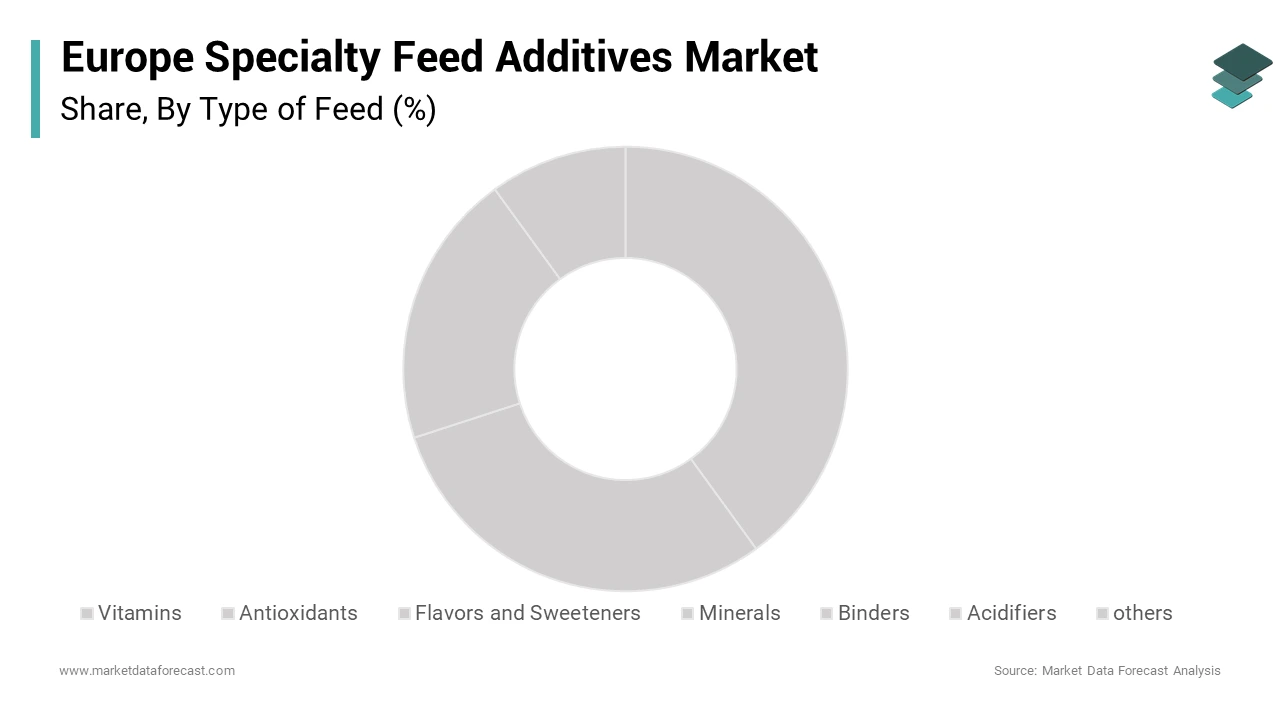
The acidifiers segment is the fastest growing by type and is estimated to record a CAGR of 9.11% over the forecast period, owing to their dual function as antibiotic alternatives and gut health modulators in post-weaning piglets and broilers. Organic acids such as formic, propionic, and lactic acid lower gastric pH, inhibiting pathogenic bacteria like Salmonella and E coli while promoting beneficial microbiota. As per the Danish Veterinary and Food Administration, farms using protected acidifier blends in piglet starter feed reduced post-weaning diarrhea incidence compared to control groups. Regulatory shifts further fuel adoption. Germany’s Federal Ministry of Food and Agriculture phased out high zinc oxide use in piglets by 2023, creating an urgent need for effective alternatives. Acidifiers filled this gap; the German Feed Industry Association reported a rise in acidifier inclusion rates in nursery diets in 2023. Innovations in encapsulation technology now allow targeted release in the lower gut, enhancing efficacy without feed palatability issues. France’s National Institute for Agricultural Research confirmed that microencapsulated benzoic acid improved feed conversion ratio in broilers under commercial conditions. These advances position acidifiers not as temporary substitutes but as permanent pillars of sustainable monogastric nutrition in Europe.
By Livestock Insights
The poultry segment led the market by accounting for 36.4% of the regional market share in 2025. The dominating position of the poultry segment in this regional market is attributed to the sector’s intensive production model, short production cycles, and high sensitivity to feed efficiency and disease outbreaks. With the EU producing over 14 million tonnes of poultry meat annually, according to Eurostat, even marginal improvements in feed conversion ratio translate into significant economic gains. Specialty additives like phytogenics, enzymes, and probiotics are routinely integrated into broiler and layer rations to replace antibiotics and enhance performance. The Netherlands’ Product Board for Livestock Feed reported that a majority of commercial broiler feeds contain multi-strain probiotic blends in 2023 to control necrotic enteritis, a condition costing the EU poultry industry billions of euros yearly, according to Wageningen University. Consumer pressure also plays a role; retailers like Aldi and Lidl require “antibiotic-free” certification, compelling integrators to adopt advanced additive protocols. Furthermore, welfare regulations such as EU Directive 2007/43/EC mandate slower growing breeds and enriched environments, increasing nutritional demands that only precision additive formulations can meet. This confluence of productivity economics, regulatory compliance, and market access ensures poultry remains the primary driver of specialty feed additive innovation and volume in Europe.
The aquatic animals segment is the fastest-growing by livestock category and is predicted to register a CAGR of 11.4% over the forecast period, owing to Europe’s strategic push to enhance aquaculture self-sufficiency amid declining wild fish stocks and rising seafood imports. According to the European Commission’s 2023 Blue Economy Report, EU aquaculture production reached 1.3 million tonnes, yet it still meets only a quarter of domestic demand. To close this gap, countries like Greece, Spain, and Norway are scaling recirculating aquaculture systems for salmon, seabass, and trout, operations that require highly digestible, low-polluting feeds fortified with specialty additives. Probiotics and prebiotics are critical for gut health in high-density tanks. The Hellenic Centre for Marine Research documented improved survival rates of gilthead seabream fed Bacillus subtilis-supplemented diets in 2023. Mycotoxin binders are equally vital; fishmeal replacement with plant proteins increases exposure to aflatoxins, which are more toxic to fish than mammals, according to the European Food Safety Authority. Denmark’s Technical University developed algae-basedomega-33 carriers that enhance palatability and nutrient retention in carnivorous species. As the EU’s Farm to Fork Strategy targets 25% organic aquaculture by 2030, demand for certified natural additives will accelerate, positioning aquatic feed as the most dynamic frontier in specialty nutrition.
By Function Insights
The digestive performance enhancement segment accounted 36.1% of the regional market share in 2025. The growth of the digestive performance enhancement segment in the European market is attributed to Europe’s dual imperative to maximize feed efficiency while minimizing environmental impact. Phytase enzymes alone enable monogastric animals to access phosphorus bound in phytate, reducing inorganic phosphate supplementation and lowering manure phosphorus excretion. According to the Julius Kühn Institute in Germany, widespread phytase use in pig diets has decreased phosphorus runoff into waterways since 2018. Similarly, xylanase andβ-glucanasee break downnon-starchh polysaccharides in wheat and barley-based feeds, common in Northern Europe, improving energy availability and reducing digesta viscosity. The Dutch Feed Manufacturers’ Association reported that most broiler feeds now include multi-enzyme complexes to accommodate high levels of locally sourced cereals. Beyond enzymes, probiotics like Lactobacillus reuteri enhance villi development and nutrient absorption; trials by France’s INRAE showed an increase in apparent metabolizable energy in layers fed synbiotic formulations. As nitrogen and phosphorus emission ceilings tighten under the EU Nitrates Directive, digestive enhancers transition from performance tools to regulatory necessities.
The mycotoxin management segment is the fastest growing by function and is anticipated to exhibit a CAGR of 10.7% over the forecast period, owing to the escalating climate-induced mycotoxin contamination in European feed crops. Wet and warm harvest seasons favor fungal proliferation; the European Mycotoxin Survey recorded deoxynivalenol (DON) in a majority of wheat samples from Central Europe in 2023, with average levels above EU guidance limits for pig feed. Ruminants are not immune; zearalenone in maize silage disrupts reproduction in dairy herds. In response, farmers increasingly adopt multi-toxin binding solutions. Sweden’s Board of Agriculture mandated enhanced mycotoxin testing in 2024 following a rise in clinical mycotoxicosis cases in dairy cattle. Advanced binders now combine yeast cell walls, clay minerals, and enzymatic detoxifiers for broad-spectrum efficacy. BASF’s 2024 field data showed that its Mycofix Select product reduced DON transfer into milk in lactating cows. With the EU’s Farm Sustainability Toolkit requiring mycotoxin risk assessments by 2025, proactive management is shifting from optional to obligatory, transforming this segment into a cornerstone of feed safety and animal health resilience.
COUNTRY ANALYSIS
Top Countries In The Market
Germany Specialty Feed Additives Market Analysis
Germany dominated the specialty feed additives market in Europe in 2025 by holding 20.9% of the regional market share. The leading position of Germany in the European market is driven by the dense network of technologically advanced livestock operations, stringent environmental regulations, and a strong domestic feed additive manufacturing base. The country produces over 5 million tonnes of pig meat annually,y according to Eurosta,,t and enforces some of Europe’s strictest limits on zinc oxide and antibiotic use, phasing out therapeutic zinc in piglets by 2023. This regulatory pressure has acceleratthe ed adoption of acidifiers, probiotics, and phytogenics. The German Feed Industry Association reported that a majority of nursery pig feeds now contain protected organic acid blends. Germany also hosts leading R&D centers for companies like Evonik and BAS, F which developnext-generationn amino acid and enzyme solutions tailored to European raw materials. The Federal Ministry of Food and Agriculture’s Tierwohl (animal welfare) program further incentivizes gut health additives through premium subsidies. This ecosystem of regulation, innovation, and scale ensures Germany remains the benchmark for specialty feed additive adoption and development across the continent.
France Specialty Feed Additives Market Analysis
France captured the second-largest share of the European market in 2025, owing to the large-scale poultry and dairy sectors with a strong emphasis on natural and organic solutions. The country is Europe’s second-largest poultry producer and home to major integrators that supply antibiotic-free chicken to global retailers. According to FranceAgriMer, many broiler farms use phytogenic additives like oregano and thyme extracts to replace antimicrobials while maintaining growth performance. France also leads in organic livestock farming, with more than 12% of its dairy herd certified organic in 2023 per Agence Bio, driving demand for EFSA-approved natural additives such as yeast derivatives and plant extracts. The National Institute for Agricultural Research (INRAE) actively validates these products through field trials. Its 2024 study confirmed that a proprietary rosemary extractreduced methane emissions in dairy cows. Additionally, France’s Protein Plan promotes local legume cultivation, increasing net production for enzyme supplements to manage tannins in faba bean-based rations. This blend of scientific rigor, consumer preference, and policy support cements France’s role as a trendsetter in clean-label animal nutrition.
Netherlands Specialty Feed Additives Market Analysis
The Netherlandsis predicted to register a promising CAGR during the forecast period in the European market due to itsexport-oriented agri-foodd cluster and leadership in precision feed formulation. Despite a limited land area, the country is Europe’s largest exporter of feed premixes and specialty additives, serving markets across the globe from hubs in Rotterdam and Amsterdam. Dutch integrators operate highly automated farms where feed is dynamically adjusted using real-time animal data, requiring consistenthigh-qualityy additive performance. As per the Dutch Product Board for Livestock Feed, most commercial pig and poultry feeds include multi-strain probiotic and enzyme combinations to maximize efficiency under antibiotic-free protocols. The Netherlands also pioneers circular feed concepts. Wageningen University trials demonstrated that insect meal-based diets require specialized antioxidants to prevent lipid oxidation, a niche driving innovation in vitamin E analogs. Strict manure legislation under the Nitrogen Action Programme further boosts demand for phytase and amino acid additives that reduce nitrogen excretion. This convergence of global trade, scientific excellence, and environmental policy makes the Netherlands a critical node in Europe’s specialty feed additive value chain.
Spain Specialty Feed Additives Market Analysis
Spain is estimated to hold a notable share of the European specialty feed additives market over the forecast period, with strength in swine, aquaculture, and extensive ruminant systems facing unique climatic challenges. The country is Europe’s top pork exporter and home to large integrated pig operations that adopted acidifiers and probiotics early to comply with EU antibiotic restrictions. According to Spain’s Ministry of Agriculture, many nursery pig feeds contained organic acid blends in 2023 following the national ban on colistin. Simultaneously, Spain leads EU aquaculture production, particularly seabass and seabream, with significant volumes farmed annually per the Spanish Aquaculture Association. These marine species require specialized mycotoxin binders and palatability enhancers due to high plant protein inclusion in feeds. Climate change intensifies pressure, recurrent droughts reduce forage quality for sheep and goats, prompting increased use of rumen modifiers and vitamin premixes. Regional governments in Catalonia and Andalusia offer subsidies for feed additives that improve water use efficiency or reduce methane. This multifaceted demand across terrestrial and aquatic systems positions Spain as a dynamic and rapidly evolving market responsive to both global trade and local environmental realities.
Denmark Specialty Feed Additives Market Analysis
Denmark is expected to register a healthy CAGR in the European specialty feed additives market during the forecast period. Factors such as the world-leading swine production and pioneering sustainability initiatives are propelling the Denmark market growth. The country exports over 90% of its pork, primarily to Asia and other EU nations, and maintains one of the lowest antibiotic consumption rates globally thanks to mandatory herd health plans. According to the Danish Veterinary and Food Administration, antibiotic use in swine fell significantly between 2010 and 2023, largely replaced by acidifiers, probiotics, and zinc chelates. Denmark’s “Green Pig” strategy targets a 50% reduction in nitrogen excretion by 2030, driving adoption of crystalline amino acids and phytase to optimize protein efficiency. The Danish Agriculture and Food Council reports that most finisher pig diets now include multi-enzyme complexes to enhance cereal digestibility. Moreover, Denmark mandates CO2 footprint labeling on meat products from 2025, which incentivizes feed additives that lower methane and ammonia emissions. With robust public-private research partnerships and a culture of data-driven farming, Denmark exemplifies how regulatory ambition and technical precision converge to make specialty feed additives indispensable to competitive and sustainable livestock production.
COMPETITIVE LANDSCAPE
The European specialty feed additives market features intense competition among established multinational corporations and specialized regional players. Leading companies differentiate themselves through continuous innovation, proprietary formulation,s and robust scientific validation of product efficacy. The competitive landscape is shaped by strict regulatory frameworks, which demand high standards for safety, sustainability,y and traceability, ty prompting firms to invest heavily in compliance and quality assurance. Mergers, acquisitions, and strategic alliances are frequently employed to access new technologies, expand product portfolios, os and strengthen distribution networks. Additionally, companies are enhancing their digital capabilities to offer customized nutrition solutions and real-time monitoring tools. Consumer demand for antibiotic-free and environmentally friendly animal products further drives competition as firms race to develop alternatives that meet evolving market expectations. This dynamic environment fosters rapid technological advancement and reinforces Europe’s position as a key hub for feed additive innovation globally.
KEY MARKET PLAYERS
This market is extremely disjointed, with numerous big and developing players operating in the business. The major companies dominating the Specialty Feed Additives Market in this region are
- Charoen Pokphand Foods Public Company Limited
- BASF SE
- Adisseo France SAS
- Cargill Inc.
- DSM Firmenich AG
- Novozymes A/S
- Hansen Holding A/S
- Archer Daniels Midland Company.
Top Players In The Market
- Adisseo France SAS is a prominent player in theEuropeane specialty feed additives market with a strong focus on amino acids and nutritional solutions for animal health. The company contributes significantly to the global market by offering innovative and sustainable feed additive products that enhance livestock performance and welfare. Adisseo has invested heavily in research and development to create science-based solutions tailored to regional and global farming needs. Recently, the company expanded its production capabilities in Europe and launched new product lines targeting gut health and feed efficiency. These initiatives demonstrate its commitment to reinforcing its presence in the European market while supporting global food security through advanced animal nutrition technologies.
- BASF SE plays a vital role in the European specialty feed additives market through its comprehensive portfolio of enzymes, vitamins, and carotenoids designed to improve animal nutrition and productivity. The company leverages its global R and D infrastructure to develophigh-qualityy feed solutions that meet evolving regulatory and sustainability standards. BASF has intensified its efforts in digital farming tools and precision nutrition to support farmers across Europe. Recent actions include strategic collaborations with feed manufacturers and investments in biotechnology to enhance product efficacy. These moves align with its broader strategy to deliver value-added solutions that address both economic and environmental challenges in modern animal husbandry while strengthening its influence in the global feed additives sector.
- DSM Firmenich AG is a leading innovator in theEuropeane specialty feed additives market,t offering a wide range of products including vitamins, eubiotics,s and mycotoxin risk management solutions. The company’s integrated approach combines scientific expertise with sustainability goals to support healthier and more resilient livestock systems. DSM Firmenich actively contributes to the global market by promoting circular economy principles and reducing the environmental footprint of animal farming. To bolster its European position, the company has launched severanext-generationon feed additives focused on gut health and alternative protein utilization. It has also enhanced its digital advisory services for ffarmers enabling data-driven decisions that optimize feed efficiency and animal well-being across diverse production environments.
Top strategies Used By The key market participants
Key players in theEuropeane specialty feed additives market primarily focus on innovation through sustained investment in research and development to create advanced nutritional solutions. Strategic partnerships and collaborations with feed producers, universities,s and technology firms enable them to accelerate product development and market reach. Companies are increasingly adoptingsustainability-drivenn initiatives such as reducing carbon footprints and promoting alternatives to antibiotics. Geographic expansion within Europe and integration of digital tools for precision feeding are also common strategies. Additionally, firms emphasize regulatory compliance and consumer transparency to build trust and meet stringent European Union standards for animal feed safety and environmental impact.
MARKET SEGMENTATION
This research report on the European specialty feed additives market is segmented and sub-segmented into the following categories.
By Type of Feed
- Vitamins
- Antioxidants
- Flavors and Sweeteners
- Minerals
- Binders
- Acidifiers
- others
By Livestock
- Aquatic animals
- Poultry
- Swine
- Ruminants
- others
By Form of Feed
- Liquid feed
- Dry feed
By Function
- Palatability enhancement
- Mycotoxin Management
- Ingredient Preservation: Digestive Performance Enhancement
- others
By Country
- UK
- France
- Spain
- Germany
- Italy
- Russia
- Sweden
- Denmark
- Switzerland
- Netherlands
- Turkey
- Czech Republic
- Rest of Europe