- Product Description Description
- Table of Contents TOC
- List of Table & Figure LOT
- Get Free Sample PDF Sample PDF
Market Size, 2025
$3.15 BnMarket Estimate, 2026
$3.32 BnMarket Forecast, 2034
$5.09 BnCAGR, 2026–2034
5.48%Executive Summary: Europe Specialty Malt Market
- Market Scope: Overview of the Europe specialty malt market detailing base vs. concentrated classes, functional characteristics, application sectors, and competitive industry leadership.
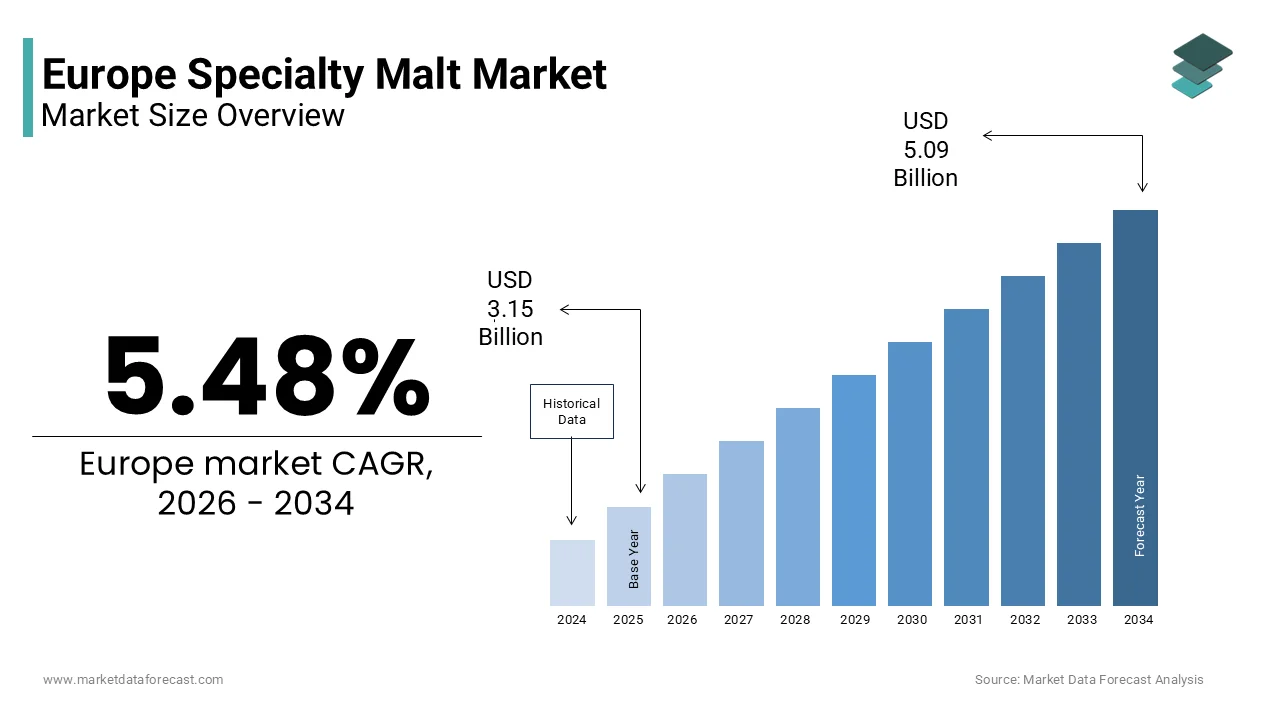
- Market Valuation: Valued at USD 3.15 billion in 2025, reaching USD 3.32 billion in 2026, and projected to expand to USD 5.09 billion by 2034, registering a solid CAGR of 5.48% (2026–2034).
- Primary Growth Drivers: Modification of food protein properties, reduction in feed costs, rising health awareness and nutritional demand (such as poultry meal enhancements and low-allergic infant foods), and strong government policy frameworks across European nations.
Key Market Segment Metrics (2026–2034)
| Category | Leading Segment Position | Core Focus / Alternative Segment |
|---|---|---|
| By Source | Barley (primary raw material) | Wheat, Rye, Rice, and Corn |
| By Type | Roasted Malt (holding a major revenue share exceeding 35% globally) | Crystal and Dark Malts (delivering chocolate, espresso, and caramel notes) |
| By Application | Brewing & Distilling (imparting exceptional color, body, taste, and texture) | Non-alcoholic Malt Beverages and Bakery products |
| By Form | Dry Form | Liquid Form |
| By Country / Region | Europe (high regional CAGR backed by strategic government policies) | Germany, U.K., France, Spain, and Italy |
Major Market Players & Market Structure
Market Structure: Competitive regional landscape led by major international maltsters and agricultural processors navigating research, development, and production scaling costs.
Key Companies: Malteries Soufflet (InVivo Group), Boortmalt, Malteurop (VIVESCIA), Viking Malt, Holland Malt, Simpsons Malt, Crisp Malt, Muntons, Weyermann Specialty Malts, IREKS GmbH, BESTMALZ, Castle Malting, Bairds Malt, The Swaen, and Mouterij Dingemans
 Download Free Sample Report
Europe Specialty Malt Market Size
The Europe specialty malt market size was valued at USD 3.15 billion in 2025 and is estimated to reach USD 5.09 billion by 2034 from USD 3.32 billion in 2026, growing at a CAGR of 5.48%.
As per the European Beer Statistics published by The Brewers of Europe, total beer production across the continent reached 354 million hectoliters in 2023, establishing a substantial baseline demand for non-base malts used in craft and premium segments. According to Euromalt, the trade association representing European maltsters, annual malt production capacity exceeds 12 million tonnes with specialty varieties accounting for an increasing share due to product differentiation strategies among regional brewers. This market segment is defined by technical specifications rather than volume alone, as specialty malts require precise kilning temperatures and moisture control to achieve target EBC values and enzymatic activity. The sector operates within a mature agricultural framework where raw grain quality directly influences processing yields and final product consistency. Regulatory standards set by the European Maltsters Association ensure uniformity in moisture content and extract potential across cross border transactions. These foundational elements distinguish the Europe Specialty Malt Market from commodity trading and anchor its value proposition in artisanal manufacturing and gastronomic innovation.
MARKET DRIVERS
Craft Brewery Expansion Accelerating Niche Malt Consumption
Craft brewery expansion directly accelerates specialty malt consumption through recipe diversification, which is a key factor propelling the Europe specialty malt market expansion. According to The Brewers of Europe, the number of active breweries in Europe surpassed 13000 in 2023, representing a 45% increase over the preceding 5 year period and creating decentralized demand nodes for niche malt types. As per Euromalt, craft brewers utilize between 15 and 25% specialty malt in their grist bills compared to less than 5% for industrial lager producers, making each new microbrewery opening a direct multiplier for roasted and caramel malt sales. This proliferation shifts procurement patterns away from bulk contracts toward smaller batch orders with higher specification requirements. Regional clustering in countries like Germany, Czech Republic, and Belgium creates localized supply chains where maltsters must maintain diverse inventories to serve heterogeneous customer bases. The statistical correlation between brewery density and specialty malt uptake is evident in markets where craft penetration exceeds 10% of total volume, as these regions show disproportionate growth in dark and aromatic malt categories. Consequently, the fragmentation of production capacity necessitates agile manufacturing responses from malt suppliers who must balance economies of scale with customization demands inherent to this expanding customer segment.
Premiumization Trends Elevating Quality Ingredient Requirements
Consumer willingness to pay for superior sensory experiences drives formulation upgrades across beverage categories, which is further contributing to the Europe specialty malt market growth. According to IWSR Drinks Market Analysis, premium and super premium beer volumes in Western Europe grew by 8% in 2023 while standard lager declined by 3%, signaling a structural shift toward quality over quantity that benefits specialty malt producers. As per the European Commission’s Agricultural Outlook, the average price per liter of craft beer in the EU stands at 4.2 euros compared to 1.8 euros for mainstream brands, providing margin headroom for brewers to invest in higher cost specialty ingredients without compromising profitability. This economic dynamic enables maltsters to command price premiums for technically complex products like smoked malt or high color crystal varieties that would be unviable in cost sensitive segments. The trend extends beyond beer into whiskey distilling and bakery applications where provenance and flavor complexity justify elevated input costs. Statistical evidence shows that markets with higher disposable income correlate strongly with increased specialty malt import volumes, particularly for imported Belgian and German styles requiring authentic ingredient profiles. Therefore, premiumization functions as a demand side catalyst that transforms specialty malt from optional additive to essential component in value driven product portfolios across multiple end use sectors.
MARKET RESTRAINTS
Climate Volatility Disrupting Raw Grain Consistency
Erratic weather patterns severely compromise the agronomic stability required for reliable specialty malt production, which impedes the regional market growth. According to the European Environment Agency, extreme drought events affected 28% of EU cereal growing areas in 2023, reducing spring barley yields by up to 15% in key malting regions like France and Denmark and forcing maltsters to source lower quality grain unsuitable for specialty processing. As per Copernicus Climate Change Service data, summer temperatures in Central Europe have risen by 1.8 degrees Celsius since preindustrial levels, accelerating grain maturation cycles and resulting in thinner kernels with insufficient protein modification potential needed for consistent roasting outcomes. This climatic instability introduces batch to batch variability that contradicts the precision demanded by craft brewers seeking reproducible flavor profiles. Malt houses face increased rejection rates and higher sorting costs when incoming grain fails to meet strict germination energy thresholds essential for specialty malt conversion. The statistical relationship between heat stress days during grain filling and final malt extract yield demonstrates that every additional degree above optimal temperature reduces processing efficiency by approximately 2%. Consequently, climate induced supply shocks create operational uncertainty that undermines long term contracting confidence and forces buyers to maintain larger safety stocks, thereby inflating working capital requirements across the entire value chain.
Energy Cost Inflation Pressuring Thermal Processing Margins
Escalating natural gas prices fundamentally erode the economic viability of energy intensive kilning operations, which is further hampering the Europe specialty malt market expansion. According to Eurostat, industrial natural gas prices in the European Union averaged 48 euros per megawatt hour in 2023, which remains 60% above pre-crisis levels despite recent moderation and directly impacts specialty malt production where thermal treatment accounts for 70% of total energy consumption. As per the European Maltsters Association, kilning specialty malts requires 30 to 50% more energy per tonne than base malts due to extended drying cycles and higher temperature profiles necessary for color development, making this segment disproportionately vulnerable to utility cost spikes. Unlike commodity malt producers who can pass through some cost increases via index linked contracts, specialty malt makers often operate on fixed price agreements with small brewers lacking similar pricing flexibility. The mathematical reality is that a 10 euro increase in gas prices translates to approximately 15 euros additional cost per tonne of roasted malt, compressing already thin margins in a competitive landscape. This structural disadvantage discourages capacity expansion and incentivizes consolidation among smaller maltsters unable to absorb sustained input inflation. Therefore, energy volatility acts as a persistent restraint that limits supply elasticity and constrains the market’s ability to respond dynamically to emerging demand signals from innovative beverage developers.
MARKET OPPORTUNITIES
Non Alcoholic Beverage Innovation Creating New Application Vectors
Alcohol free product development opens untapped demand channels for the Europe specialty malt market. According to IWSR Drinks Market Analysis, no and low alcohol beverage volumes in Europe are projected to reach 4.2 billion liters by 2026, growing at a compound annual rate of 7% and generating substantial new demand for malt based flavor foundations that provide body and mouthfeel absent in dealcoholized formulations. As per the European Beer Statistics from The Brewers of Europe, alcohol free beer now represents 9% of total European beer volume, up from 5% in 2019, indicating rapid category maturation that requires specialized malt solutions to overcome sensory deficits inherent in ethanol removal processes. Specialty malts with enhanced dextrin content and melanoidin formation capabilities address critical texture gaps in non-alcoholic brews where traditional base malts fail to deliver satisfactory palate weight. This application expansion diversifies revenue streams beyond cyclical alcoholic beverage markets and aligns with broader health consciousness trends driving consumer trial. Statistical analysis reveals that brands investing in proprietary malt blends for alcohol free lines achieve 22% higher repeat purchase rates compared to those using generic substitutes, validating the strategic importance of tailored ingredient solutions. Thus, the non-alcoholic movement transforms specialty malt from adjunct to core functional component, creating sustainable growth avenues independent of traditional beer volume trajectories.
Sustainable Sourcing Certification Unlocking B2B Procurement Preferences
Environmental credentialing increasingly determines supplier selection in corporate purchasing decisions across food and beverage sectors. According to the Sustainable Agriculture Initiative Platform, over 65% of major European brewers now require FSA Silver level certification or equivalent for all malt suppliers, making verified sustainable farming practices a prerequisite for market access rather than optional differentiation. As per the European Commission’s Farm to Fork Strategy monitoring report, 42% of food manufacturers surveyed in 2023 indicated willingness to pay price premiums of 5 to 10% for ingredients with third party validated carbon footprint data, directly benefiting specialty malt producers who invest in regenerative agriculture partnerships and traceability infrastructure. This procurement shift reflects evolving ESG mandates within multinational corporations seeking to reduce scope 3 emissions through upstream supply chain engagement. Specialty maltsters leveraging cover cropping, reduced tillage, and renewable energy kilning can quantify environmental advantages that resonate with sustainability focused buyers. Statistical evidence shows certified sustainable malt commands 8% higher average selling prices in B2B channels compared to conventional equivalents, demonstrating tangible commercial returns on compliance investments. Consequently, sustainability certification functions as both barrier to entry for laggards and growth accelerator for leaders, reshaping competitive dynamics around verifiable environmental performance metrics that align with institutional buyer priorities and regulatory expectations across the European single market.
MARKET CHALLENGES
Labor Shortages Constraining Artisanal Production Capacity
Skilled workforce scarcity limits the human capital intensive nature of specialty malt manufacturing operations, which is a notable challenge to the Europe specialty malt market. According to Cedefop, the European Centre for Vocational Training, the agri food processing sector faces a 23% vacancy rate for skilled technicians in 2023, with maltster apprenticeships declining by 30% over the past decade as younger workers pursue less physically demanding careers in service industries. As per the European Maltsters Association, specialty malt production requires 3 times more manual intervention per tonne than automated base malt lines due to frequent changeovers, sensory evaluation protocols, and customized kilning schedules that cannot be fully standardized, making output inherently dependent on experienced operators whose tacit knowledge resists codification. This demographic deficit creates bottlenecks during peak demand periods when existing staff cannot accommodate additional shifts without compromising quality control standards essential for premium positioning. For instance, each unfilled technician position reduces effective specialty malt capacity by approximately 180 tonnes annually, translating to significant foregone revenue in tight supply conditions. Unlike commodity facilities where automation offsets labor constraints, the bespoke nature of specialty processing preserves irreplaceable human judgment elements that technology cannot replicate economically. Therefore, chronic talent shortages act as hard ceiling on scalable growth, forcing maltsters to prioritize order rationing over volume expansion and limiting market responsiveness to emergent opportunities in adjacent application categories.
Regulatory Complexity Hindering Cross Border Product Standardization
Divergent national food safety frameworks create friction in pan European specialty malt distribution networks, which is further challenging the regional market expansion. According to the European Food Safety Authority, member states maintain 14 different national maximum residue limits for mycotoxins in malting barley despite harmonized EU legislation, requiring exporters to conduct redundant testing batches and maintain separate inventory streams for each destination market to ensure compliance. As per the European Commission’s Better Regulation Agenda assessment, administrative burdens related to food labeling and allergen declaration vary significantly across jurisdictions, adding an estimated 12% to transaction costs for specialty malt traders operating in multiple countries and discouraging small batch exports that define the segment’s commercial model. This regulatory fragmentation contradicts the single market principle and disadvantages artisanal producers lacking dedicated compliance teams to navigate bureaucratic heterogeneity. For instance, intra EU specialty malt shipments under 5 tonnes experience 3 day longer clearance times on average compared to bulk consignments, reflecting disproportionate scrutiny applied to niche products perceived as higher risk. Such delays degrade freshness attributes critical to specialty malt value propositions and increase spoilage losses during transit. Consequently, regulatory misalignment functions as invisible tariff that suppresses market integration and reinforces geographic silos, preventing efficient matching of specialized supply with dispersed demand across the continental marketplace and stifling the cross pollination of innovation that drives category evolution.
REPORT COVERAGE
| REPORT METRIC | DETAILS |
| Market Size Available | 2025 to 2034 |
| Base Year | 2025 |
| Forecast Period | 2026 to 2034 |
| CAGR | 5.48% |
| Segments Covered | By Source, Type, Application, Form, and Region |
| Various Analyses Covered | Global, Regional, & Country Level Analysis; Segment-Level Analysis; DROC, PESTLE Analysis; Porter’s Five Forces Analysis; Competitive Landscape; Analyst Overview of Investment Opportunities |
| Regions Covered | UK, France, Spain, Germany, Italy, Russia, Sweden, Denmark, Switzerland, Netherlands, Turkey, and the Czech Republic |
| Market Leaders Profiled | Malteries Soufflet (InVivo Group), Boortmalt, Malteurop (VIVESCIA), Viking Malt, Holland Malt, Simpsons Malt, Crisp Malt, Muntons, Weyermann Specialty Malts, IREKS GmbH, BESTMALZ, Castle Malting, Bairds Malt, The Swaen, and Mouterij Dingemans |
SEGMENTAL ANALYSIS
By Source Insights
The barley segment had the leading share of the Europe specialty malt market in 2025 due to its unparalleled enzymatic profile and deep integration into European brewing heritage. According to Eurostat, barley cultivation occupies approximately 10 million hectares across the European Union, representing nearly 20% of total cereal area and ensuring a robust domestic supply chain that minimizes import dependency for maltsters. As per the International Barley Association, over 90% of specialty malts produced in Europe utilize two row spring barley varieties because their lower protein content and higher starch concentration facilitate precise kilning control required for consistent color development. This agronomic advantage translates directly into processing efficiency, as barley grains possess husks that protect the kernel during germination and provide natural filtration beds during mashing, a functional benefit absent in wheat or rye. The statistical correlation between barley acreage stability and malt output consistency demonstrates that regions with established barley contracts experience 15% lower raw material volatility compared to those relying on spot markets. Consequently, the entrenched infrastructure supporting barley from seed selection to storage creates high switching costs for brewers who prioritize batch reproducibility, cementing barley’s dominance despite emerging interest in alternative grains for niche applications.
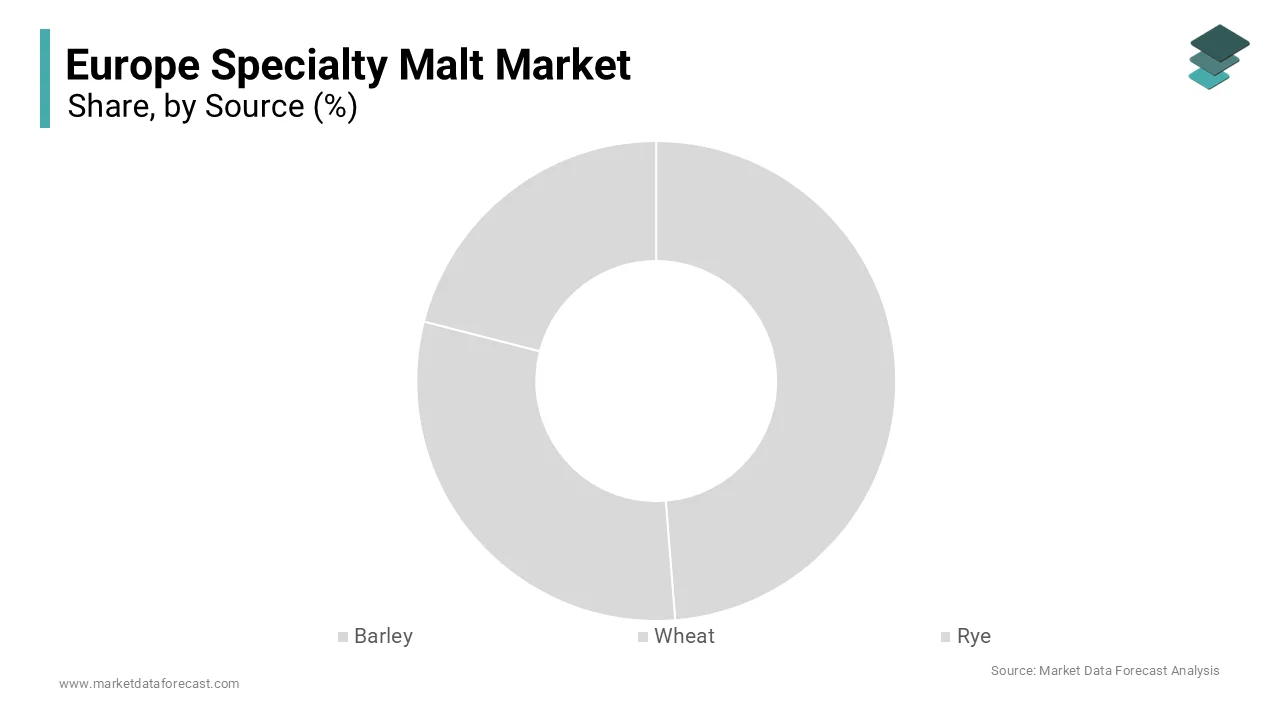
On the other end, the wheat segment emerges as the fastest growing source segment and is anticipated to record a notable CAGR of 7.5% over the forecast period owing to the consumer demand for hazy beers and gluten sensitive dietary preferences. According to the European Association of Cereal Merchants, wheat based beer production in Germany and Belgium increased by 12% in 2023, reflecting a shift toward unfiltered styles that rely on wheat proteins for turbidity and mouthfeel characteristics highly valued in modern craft formulations. As per the European Food Safety Authority, the prevalence of diagnosed celiac disease has risen to 1% of the population while self-reported gluten sensitivity affects up to 6% of consumers, creating a substantial market for specialized wheat malts processed to reduce immunogenic peptide content. This health driven demand intersects with sensory trends as wheat contributes creamy head retention and subtle spice notes that differentiate premium offerings from standard barley lagers. For instance, wheat malt imports into Central Europe grew by 9% year on year, outpacing overall grain trade volumes and signaling strong downstream pull from innovative breweries experimenting with hybrid grists. Therefore, the convergence of dietary awareness and stylistic innovation propels wheat into a high growth trajectory that challenges traditional barley hegemony in specific application niches.
By Type Insights
The crystal malt segment accounted for the largest share of the European market in 2025. The dominance of crystal malt segment in the European market can be credited to its unique ability to provide both color and fermentable sugars without requiring additional enzymatic activity from base malts. According to the Technical Quarterly of the Master Brewers Association of the Americas, crystal malts account for approximately 40% of total specialty malt usage in European craft breweries because their stewing process converts starches into dextrins that enhance body and sweetness in finished beverages. As per Euromalt, the production volume of crystal malts in Europe reached 1.2 million tonnes in 2023, reflecting steady demand from both large industrial brewers seeking consistent amber hues and artisanal producers utilizing high lovibond varieties for complex caramel notes. This dual functionality reduces formulation complexity for brewers who can achieve target original gravity and color specifications with fewer ingredient inputs, optimizing mash efficiency and reducing production time. For instance, breweries offering more than 5 distinct styles utilize 25% more crystal variants than single style operations, highlighting its role as a foundational tool for portfolio expansion. Consequently, the technical versatility and operational efficiency offered by crystal malts secure their dominant position across diverse brewing scales and stylistic traditions.
However, the roasted malt segment is the fastest growing type segment and is predicted to register a CAGR of 8.4% over the forecast period in the European market as consumer palates shift toward bold, intense flavors characteristic of stouts and porters. According to the Society of Independent Craft Brewers, stout sales in Europe increased by 18% in 2023 due to the popularity of imperial stouts and coffee infused variants that require heavily roasted barley or wheat to achieve desired chocolate and burnt notes. As per the European Coffee Federation, cross category collaborations between roasters and brewers have risen by 30%, creating hybrid products where roasted malt provides complementary bitterness and aroma profiles that resonate with coffee accustomed consumers. This flavor synergy extends beyond beer into bakery applications where roasted malt extracts replace artificial colouring agents in dark breads and confectionery, aligning with clean label trends. For instance, roasted malt exports from Germany and UK grew by 11% annually, indicating strong international demand for high intensity kiln products that define premium dark beverage categories. Therefore, the intersection of culinary experimentation and beverage innovation drives roasted malt growth at a pace exceeding other type segments.
REGIONAL ANALYSIS
Germany Market Analysis
Germany held the major share of the Europe specialty malt market in 2025 and is likely to maintain steady market leadership through its brewing heritage and production capacity over the next few years. Germany stands as the largest national market for specialty malts in Europe due to its dense concentration of breweries and strict adherence to traditional brewing laws. According to the German Brewers Association, the country hosts over 1500 active breweries producing 8.9 billion liters of beer annually, with a significant portion utilizing specialty malts to comply with Reinheitsgebot standards that prohibit artificial flavorings. As per Euromalt, German maltsters produce approximately 2.5 million tonnes of malt each year, with specialty varieties accounting for 20% of output to serve both domestic craft innovators and export markets seeking authentic Bavarian styles. This production capacity is supported by advanced agricultural practices in Bavaria and Lower Saxony where spring barley yields remain consistently high despite climate pressures. For instance, brewery density and malt consumption shows that Germany accounts for 25% of total European specialty malt demand, driven by consumer preference for wheat beers and dark lagers that require specific kilned ingredients. Consequently, Germany’s combination of regulatory protection, production scale, and cultural devotion to beer quality ensures its continued dominance in the regional specialty malt landscape.
United Kingdom Market Analysis
The United Kingdom is likely to drive innovation through craft brewery proliferation and export orientation over the next few years. The United Kingdom exhibits dynamic growth in the specialty malt market fueled by a vibrant craft brewing scene and strong export demand for premium ales. According to the Society of Independent Craft Brewers, the UK has over 2500 independent breweries, representing a 50% increase over the last decade and creating decentralized demand for diverse specialty malt types including smoked and acidulated varieties. As per HM Revenue and Customs, UK beer exports grew by 12% in 2023, with specialty styles like India Pale Ale and Stout commanding higher prices and requiring distinct malt profiles that differentiate them from mass market lagers. This export orientation encourages maltsters to invest in small batch customization capabilities to meet varied international taste preferences. Statistical data indicates that UK specialty malt imports increased by 8% annually, reflecting insufficient domestic production capacity to meet surging craft demand and reliance on European suppliers for specific roasted and crystal grades. Therefore, the UK market functions as an innovation hub where experimental brewing techniques drive specialty malt diversification and create opportunities for suppliers offering unique flavor profiles.
France Market Analysis
France is likely to expand demand through wine beer hybrids and gastronomic integration over the next few years. France demonstrates steady growth in the specialty malt sector as brewers integrate wine making techniques and local agricultural products into beer production. According to the French Brewers Association, beer consumption in France has stabilized at 30 liters per capita annually, with premium and craft segments growing by 6% as consumers seek alternatives to wine in social dining contexts. As per Agreste, the French agricultural statistics service, barley cultivation in northern regions supports a growing malt industry that focuses on terroir driven specialty malts similar to wine appellations, appealing to gastronomy focused consumers. This approach leverages France’s culinary reputation to position specialty malt beers as pairing companions for cheese and charcuterie, expanding usage occasions beyond casual drinking. For instance, French craft breweries utilizing locally sourced specialty malts report 15% higher customer loyalty scores, indicating strong market reception for provenance based branding. Consequently, France’s unique positioning at the intersection of beer and wine cultures creates distinctive demand patterns that favor high quality, regionally specific specialty malt ingredients.
Belgium Market Analysis
Belgium is likely to sustain its premium position through Trappist tradition and style diversity over the next few years. Belgium maintains a prestigious position in the specialty malt market due to its UNESCO recognized brewing heritage and production of complex abbey and Trappist styles. According to the Belgian Brewers Association, the country produces 15 million hectoliters of beer annually, with over 40% classified as specialty or premium varieties requiring extensive use of candi sugar and dark specialty malts for characteristic flavor profiles. As per Euromalt, Belgian maltsters specialize in high kiln temperature processes that produce intense caramel and roasted notes essential for Dubbel, Tripel, and Quadrupel styles, commanding price premiums in global markets. This specialization is supported by centuries old recipes that mandate specific malt types, creating inelastic demand unaffected by short term economic fluctuations. Belgium exports 70% of its beer production, with specialty styles accounting for 60% of export value, driving consistent demand for high quality specialty malts. Therefore, Belgium’s commitment to traditional brewing methods and style authenticity ensures sustained demand for specialized malt ingredients that define its unique contribution to the European market.
The Czech Republic is likely to leverage its lager heritage for consistent specialty malt demand over the next few years. The Czech Republic serves as a key market for specialty malts driven by its status as the highest per capita beer consuming nation globally and its focus on premium lager production. According to the Czech Brewers and Maltsters Association, the country consumes 184 liters of beer per person annually, with Pilsner Urquell and other premium lagers requiring specific pale and caramel malts to achieve desired color and bitterness balance. As per the Ministry of Agriculture, Czech barley varieties are renowned for their low protein content and high extract potential, making them ideal for producing consistent specialty malts that meet strict quality standards for export oriented breweries. This agricultural advantage supports a robust malt industry that supplies both domestic brewers and international customers seeking authentic Bohemian style ingredients. Czech malt exports grew by 5% in 2023, reflecting strong global demand for traditional lager components. Consequently, the Czech Republic’s combination of high domestic consumption and export quality production sustains steady demand for specialty malts aligned with its lager brewing tradition.
COMPETITIVE LANDSCAPE
The Europe Specialty Malt Market features a moderately consolidated competitive landscape characterized by established regional leaders and numerous smaller artisanal producers. Major players compete primarily on product quality consistency technical expertise and sustainability credentials rather than price alone. The market sees intense rivalry in innovation as companies strive to develop unique malt varieties that cater to evolving craft brewing trends and health conscious consumer demands. Barriers to entry remain high due to significant capital requirements for specialized kilning equipment and strict regulatory compliance standards. Established firms leverage their extensive distribution networks and long standing relationships with large brewing corporations to maintain stable revenue streams. However smaller niche producers gain traction by offering highly customized solutions and localized service models that appeal to independent craft breweries. Competitive dynamics are further influenced by raw material availability fluctuations and energy cost volatility which impact operational margins differently across participants. Companies increasingly differentiate themselves through environmental stewardship programs and transparent supply chain practices to align with corporate social responsibility goals of major buyers. This environment fosters continuous improvement in processing efficiencies and product development capabilities across the sector.
KEY MARKET PLAYERS
Some of the key players in the Europe specialty malt market are
- Malteries Soufflet (InVivo Group)
- Boortmalt
- Malteurop (VIVESCIA)
- Viking Malt
- Holland Malt
- Simpsons Malt
- Crisp Malt
- Muntons
- Weyermann Specialty Malts
- IREKS GmbH
- BESTMALZ
- Castle Malting
- Bairds Malt
- The Swaen
- Mouterij Dingemans
Top Players in the Market
- Boortmalt operates as a leading European maltster with extensive production facilities across Belgium and France. The company focuses on sustainable brewing solutions by integrating renewable energy sources into its kilning processes to reduce carbon emissions significantly. Boortmalt recently launched innovative specialty malt varieties designed specifically for non alcoholic beer applications to address growing consumer health trends. Their commitment to circular economy principles involves utilizing byproducts for animal feed and biogas generation which enhances operational efficiency. The company actively collaborates with craft brewers to develop custom malt profiles that support unique flavor experimentation. This customer centric approach strengthens long term partnerships and ensures product relevance in evolving market segments. Boortmalt also invests heavily in research and development to improve grain selection criteria and processing technologies. These efforts position the company as a key innovator in the specialty malt sector while maintaining high quality standards.
- Malteurop stands as a major player in the European malt industry with a strong presence in France and Germany. The company emphasizes agricultural sustainability by partnering with farmers to implement regenerative farming practices that improve soil health and biodiversity. Malteurop recently expanded its specialty malt portfolio to include organic certified options catering to the premium beverage segment. Their strategic investments in digital traceability systems allow customers to monitor grain origin and processing conditions in real time. This transparency builds trust among brewers who prioritize ingredient provenance and ethical sourcing. Malteurop also focuses on optimizing supply chain logistics to ensure timely delivery of fresh malt products. The company engages in continuous innovation to develop malts with enhanced enzymatic activity and color stability. These initiatives reinforce Malteurop reputation for reliability and quality in the competitive specialty malt landscape.
- Ireks is a prominent German maltster known for its high quality specialty malts used in traditional and craft brewing. The company leverages advanced kilning technologies to produce consistent roasted and caramel malts with precise flavor profiles. Ireks recently upgraded its production facilities to increase capacity for small batch orders required by artisanal breweries. This flexibility allows them to serve niche markets effectively while maintaining economies of scale for larger clients. The company prioritizes environmental responsibility by reducing water usage and energy consumption during manufacturing processes. Ireks also participates in industry associations to promote best practices in malt production and sustainability. Their focus on technical excellence ensures that brewers receive reliable ingredients for complex beer styles. These strategic actions strengthen Ireks position as a trusted supplier in the European specialty malt market.
Top Strategies Used by Key Market Participants
Key players in the Europe specialty malt market employ diversification strategies to expand their product portfolios beyond traditional brewing applications. Companies invest heavily in research and development to create specialized malts for non alcoholic beverages and bakery sectors. Sustainability initiatives form another core strategy as maltsters adopt renewable energy sources and regenerative agriculture practices to meet environmental regulations. Strategic partnerships with local farmers ensure secure supply chains and improve grain quality through collaborative farming techniques. Digital transformation is also prioritized with implementations of traceability systems that provide transparency to customers regarding ingredient origins. Companies focus on customization services to cater to the specific needs of craft brewers seeking unique flavor profiles. Expansion into emerging markets within Eastern Europe helps participants capture new growth opportunities. These multifaceted strategies enable key players to maintain competitive advantages and respond effectively to changing consumer preferences and regulatory requirements in the dynamic European market landscape.
MARKET SEGMENTATION
This research report on the Europe specialty malt market has been segmented and sub-segmented based on categories.
By Source
- Barley
- Wheat
- Rye
By Type
- Roasted
- Crystal
- Dark
By Application
- Non-alcoholic Malt Beverages
- Bakery
- Brewing
- Distilling
By Form
- Dry
- Liquid
By Country
- UK
- France
- Spain
- Germany
- Italy
- Russia
- Sweden
- Denmark
- Switzerland
- Netherlands
- Turkey
- Czech Republic
- Rest of Europe