- Product Description Description
- Table of Contents TOC
- List of Table & Figure LOT
- Get Free Sample PDF Sample PDF
Market Size, 2025
$0.48 BnMarket Estimate, 2026
$0.53 BnMarket Forecast, 2034
$1.09 BnCAGR, 2026–2034
9.50%Europe Spirometer Market Report Summary
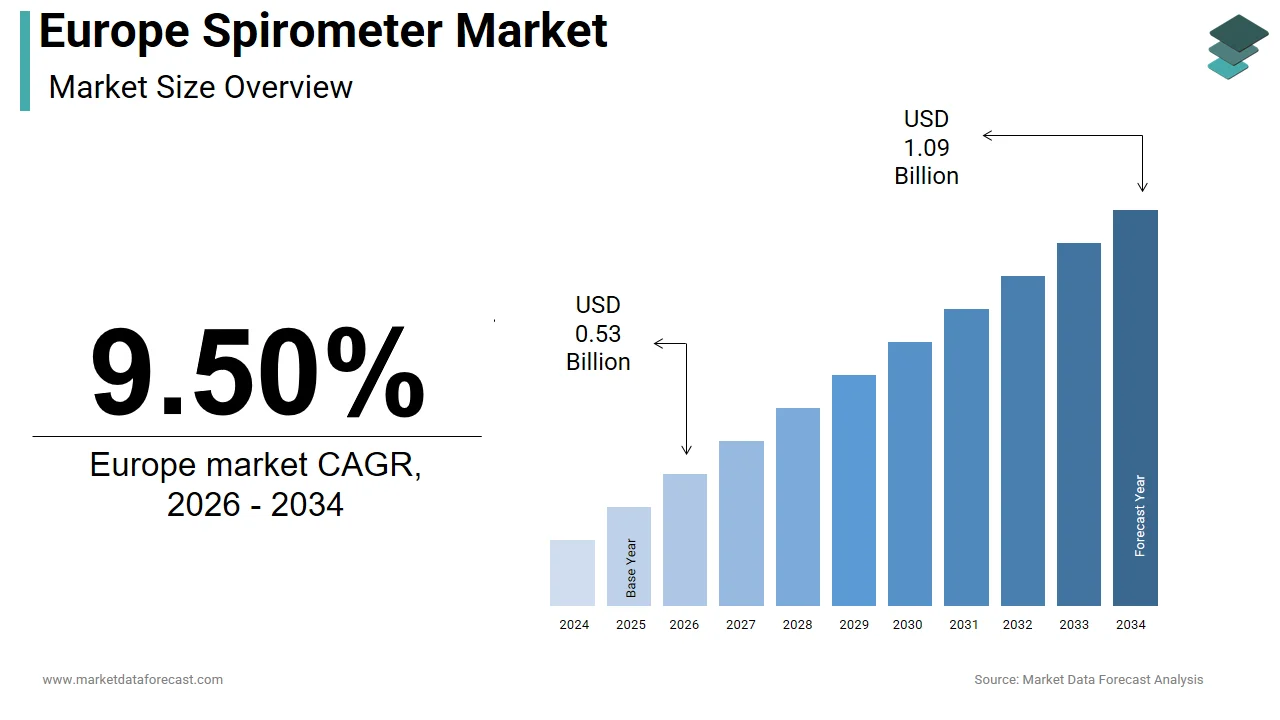
The Europe spirometer market was valued at USD 0.48 billion in 2025, is anticipated to reach USD 0.53 billion in 2026, and is projected to reach USD 1.09 billion by 2034, growing at a strong CAGR of 9.50% from 2026 to 2034. Market growth is driven by the rising prevalence of chronic respiratory diseases, increasing smoking-related health complications, and growing demand for early pulmonary function testing. Healthcare providers across Europe are strengthening respiratory diagnostics to support chronic disease management, preventive screening, and post-COVID respiratory assessment. Advancements in portable spirometry devices, digital data integration, and home-based monitoring solutions are further accelerating market expansion.
Key Market Trends
- Rising incidence of chronic obstructive pulmonary disease (COPD) and asthma.
- Increasing adoption of portable and handheld spirometry devices.
- Growing integration of digital health platforms and cloud-based reporting systems.
- Expansion of preventive respiratory screening programs.
- Strengthening focus on home healthcare and telemedicine-based lung monitoring.
Segmental Insights
- Based on end use, the hospitals & clinics segment dominated the market in 2025 by holding 65.8% share, driven by high patient inflow, availability of respiratory specialists, and increasing diagnostic testing volumes.
- Based on application, the chronic obstructive pulmonary disease (COPD) segment led the market by capturing 43.4% share in 2025, supported by the high disease burden and growing emphasis on early detection and monitoring.
- Based on technology, the volume measurement segment held the leading share of 51.5% in 2025, driven by its clinical reliability, cost-effectiveness, and widespread adoption in routine pulmonary function testing.
Regional Insights
The Europe spirometer market is witnessing strong growth across major economies, supported by advanced healthcare infrastructure, high respiratory disease prevalence, and expanding screening programs.
- Germany led the regional market in 2025 with 23.2% share, driven by strong hospital infrastructure, high diagnostic spending, and increasing respiratory care initiatives.
- The United Kingdom held the second-largest share in 2025, supported by centralized healthcare delivery and national respiratory health programs.
- France is expected to register steady growth over the forecast period, supported by its centralized healthcare model and strong regulatory enforcement for respiratory diagnostics.
Competitive Landscape
The Europe spirometer market is characterized by strong competition among global medical device manufacturers and specialized respiratory care companies. Market players are focusing on developing compact, user-friendly devices with digital connectivity and advanced data analytics features. Strategic partnerships, regulatory approvals, and investments in remote monitoring technologies are shaping competitive dynamics across the region.
Prominent companies operating in the Europe spirometer market include Hill-Rom Holdings, Inc., Smiths Group PLC, NDD Medizintechnik AG, Koninklijke Philips N.V., Medline Industries, Inc., Schiller AG, Vyaire Medical, Inc., CareFusion Corporation, SDI Diagnostics, Inc., Nihon Kohden Corporation, Koko LLC, and Fukuda Sangyo Co., Ltd..
Europe Spirometer Market Size
The size of the Europe spirometer market was worth USD 0.48 billion in 2025. The regional market is anticipated to grow at a CAGR of 9.50% from 2026 to 2034 and be worth USD 1.09 billion by 2034 from USD 0.53 billion in 2026.
A spirometer is a diagnostic medical device used to measure the volume and flow of air that can be inhaled and exhaled by the lungs, playing a fundamental role in assessing respiratory health and detecting conditions such as chronic obstructive pulmonary disease, asthma, and restrictive lung disorders. In Europe, spirometry is regarded as a standard component of pulmonary function testing and is widely integrated into both primary and specialized healthcare settings. The clinical relevance of spirometers has intensified in recent years due to the rising prevalence of respiratory ailments across the continent. According to the European Lung Foundation, more than 30 million people in the European Union suffer from chronic respiratory diseases, placing sustained pressure on diagnostic infrastructure. The European Respiratory Society emphasizes that early and accurate diagnosis through spirometry improves clinical outcomes and reduces long-term healthcare costs. As per Eurostat, a significant proportion of adults aged 45 years and older in Western European countries report having been diagnosed with a chronic lung condition, reflecting a deepening public health challenge. National health strategies in countries like Germany, France, and the United Kingdom have prioritized respiratory screening in preventive care programs, which is reinforcing the foundational role of spirometers in routine clinical workflows. This growing dependency on objective lung function metrics underscores the spirometer’s critical position in Europe’s expanding diagnostic ecosystem.
MARKET DRIVERS
Escalating Burden of Chronic Respiratory Diseases Drives Diagnostic Demand
Chronic respiratory diseases represent one of the leading causes of morbidity across Europe, which is directly fuelling the need for accessible and accurate pulmonary diagnostic tools such as spirometers, and is one of the key factors propelling the growth of the European spirometer market. According to the World Health Organization Regional Office for Europe, chronic obstructive pulmonary disease accounts for hundreds of thousands of deaths annually in the WHO European Region, with prevalence rates continuing to climb due to aging populations and environmental factors. As per the European Commission’s Joint Research Centre, a notable proportion of adults in the European Union exhibit clinically relevant airflow limitation, a condition that typically necessitates spirometric confirmation. Asthma further compounds this burden, and as per the Global Asthma Network, millions of individuals in Europe live with asthma, many of whom require periodic lung function monitoring. Primary care physicians across countries like Italy and Spain increasingly rely on office-based spirometry to differentiate between obstructive and restrictive patterns early in the diagnostic process. This shift from symptom-based assessment to objective measurement aligns with clinical guidelines issued by the European Respiratory Society, which mandate spirometry as the gold standard for initial respiratory evaluation. Consequently, the persistent and escalating incidence of chronic respiratory conditions sustains demand for both stationary and portable spirometers across outpatient clinics, occupational health centers, and home care environments throughout Europe.
Regulatory Standardization Across the European Union Accelerates Device Adoption
The harmonization of medical device regulations across European Union member states has significantly streamlined the approval and deployment of diagnostic equipment like spirometers, which is fostering market expansion through predictable compliance pathways. Under the European Union Medical Device Regulation 2017/745, which fully applied from May 2021, diagnostic respiratory devices are classified based on risk, enabling manufacturers to navigate a uniform certification process through designated notified bodies. As per the European Commission, hundreds of thousands of medical devices receive CE marking annually, with pulmonary function equipment benefiting from standardized clinical evaluation requirements that reduce time to market. This regulatory cohesion has encouraged innovation, particularly in the development of digital and connected spirometers compliant with the EU’s cybersecurity and data privacy frameworks, including the General Data Protection Regulation. Countries such as the Netherlands and Sweden have leveraged this regulatory clarity to integrate spirometry into national screening protocols, supported by reimbursement codes established under unified Health Technology Assessment criteria. Additionally, the European Medicines Agency and national competent authorities collaborate through the Medical Device Coordination Group to ensure consistent post-market surveillance, enhancing clinician confidence in device reliability. The result is a more cohesive market landscape where manufacturers can scale solutions across borders without facing fragmented national regulations, thereby accelerating adoption in both hospital and decentralized care settings throughout Europe.
MARKET RESTRAINTS
High Costs and Reimbursement Variability Impede Widespread Clinical Utilization
Despite the clinical value of spirometry, inconsistent reimbursement policies and high upfront costs for advanced spirometers hinder their universal deployment across European healthcare systems, which is a major restraint to the European spirometer market. According to the European Observatory on Health Systems and Policies, reimbursement for pulmonary function testing varies significantly between countries, with nations like Poland and Romania offering limited or conditional coverage for outpatient spirometry, whereas Germany and France maintain more comprehensive schemes. The cost of a modern digital spirometer equipped with integrated software and telehealth capabilities can be several thousand euros, a prohibitive figure for small primary care practices in lower-income regions. As per the Primary Care Respiratory Society Europe, many general practitioners in Southern and Eastern Europe report insufficient funding to acquire or regularly calibrate spirometric equipment, leading to reliance on outdated devices or referrals to distant specialist centers. Moreover, differences in national coding systems affect billing efficiency, as coding adopted in some Nordic countries does not always align with spirometry-related procedural codes used in hospital billing systems. This fragmentation not only delays patient access but also discourages investment in next-generation devices that support remote monitoring and AI-driven interpretation. Consequently, economic and administrative barriers persist as critical constraints on equitable spirometer access across the European continent.
Shortage of Trained Personnel Limits Effective Spirometry Implementation
The accuracy and clinical utility of spirometry are highly dependent on proper patient coaching and operator expertise, yet a persistent shortage of adequately trained healthcare professionals undermines its consistent application across Europe, which is further hindering the growth of the European spirometer market. According to the European Respiratory Society, fewer than one-third of primary care centers in countries such as Greece, Bulgaria, and Hungary have staff certified in standardized spirometry techniques as defined by the American Thoracic Society and European Respiratory Society guidelines. This gap is exacerbated by the limited integration of practical pulmonary function training in undergraduate medical curricula, and as per the European Journal of Medical Education, only a minority of European Union member states mandate hands-on spirometry instruction for medical students. Without proper technique, test results may suffer from significant variability, leading to misdiagnosis or unnecessary referrals. Incorrect patient effort or inadequate maneuver repetition can artificially lower forced expiratory volume readings, mimicking obstructive patterns in healthy individuals. The problem is particularly acute in rural areas where access to continuing education is constrained. Although digital spirometers increasingly incorporate automated feedback systems, they cannot fully compensate for human oversight in ensuring test validity. Until systematic training programs and certification frameworks are scaled across the continent, the full diagnostic potential of spirometry will remain unrealized in many European healthcare settings.
MARKET OPPORTUNITIES
Expansion of Telemedicine Platforms Creates New Avenues for Remote Spirometry
The rapid integration of digital health technologies into European healthcare systems presents a transformative opportunity for the European spirometer market. According to the Digital Health Society, a majority of European Union member states had implemented national telemedicine strategies by 2024, with respiratory monitoring identified as a priority use case in countries like Finland and Belgium. These initiatives are supported by the European Commission’s Digital Europe Programme, which allocated significant funding in 2023 to pilot projects involving remote patient monitoring for chronic diseases. Portable spirometers equipped with Bluetooth connectivity and cloud-based analytics can now transmit real-time lung function data to clinicians, enabling proactive management of conditions like asthma and COPD without requiring frequent clinic visits. In the United Kingdom, the National Health Service has trialed home spirometry programs for post-COVID lung assessment, with initial findings showing reductions in outpatient appointments for stable patients. Similarly, Germany’s Digital Healthcare Act allows physicians to prescribe certified digital health applications, including respiratory monitoring tools, which are reimbursed through statutory health insurance. As per Eurostat, internet penetration exceeds 90% across the EU, and smartphone ownership is widespread among adults, making the infrastructure for scalable remote spirometry increasingly viable and opening new commercial pathways for innovative device manufacturers.
Growing Emphasis on Preventive Occupational Health Surveillance Boosts Demand
Workplace respiratory screening mandates across European industries are catalysing the adoption of spirometers in occupational health settings, particularly in sectors with exposure to airborne hazards, which is another prominent opportunity in the European spirometer market. According to the European Agency for Safety and Health at Work, a significant proportion of workers in the EU are regularly exposed to substances such as dust, fumes, or chemical vapours that can impair lung function, with construction, mining, and manufacturing identified as high-risk sectors. Under Directive 89/391/EEC, employers are required to implement preventive health surveillance for employees at risk of occupational lung disease, and spirometry is explicitly recommended by the European Network for Health and Safety at Work as a core component of such programs. In France, for instance, the Labour Code mandates annual spirometry for workers handling hazardous substances, affecting a large workforce. Similarly, the German Statutory Accident Insurance reported that hundreds of thousands of occupational spirometry tests were conducted nationwide in 2023, which is a figure projected to grow as enforcement tightens. This regulatory impetus is driving demand for rugged, portable, and easy-to-operate spirometers that can be deployed on site or in mobile health units. Manufacturers who align their products with EN ISO 26782 standards for occupational spirometry gain preferential access to corporate procurement contracts, creating a distinct and expanding niche within the broader European spirometer market.
MARKET CHALLENGES
Persistent Fragmentation in Healthcare Infrastructure Challenges Uniform Deployment
The decentralized nature of Europe’s healthcare systems results in significant disparities in diagnostic infrastructure, which is creating operational inefficiencies for spirometer vendors aiming for pan-European scale and challenging the rep. According to the European Health Management Association, while countries like Denmark and the Netherlands operate integrated digital health records that support seamless data flow from spirometers to electronic patient files, others, such as Romania and Croatia, still rely on paper-based or siloed digital systems that impede interoperability. This fragmentation complicates the rollout of advanced spirometers with data integration capabilities, as each country may require different software adaptations, language interfaces, and compatibility protocols. Furthermore, procurement practices vary widely, with public tenders in Southern Europe often prioritizing lowest cost over clinical functionality, discouraging investment in high-performance devices with features like AI-assisted interpretation or longitudinal trend analysis. As per the European Federation of Pharmaceutical Industries and Associations, cross-border regulatory recognition does not always guarantee market access, as local hospital formularies and clinical pathway guidelines can effectively block new device adoption. These structural inconsistencies force manufacturers to adopt highly customized go-to-market strategies, increasing operational costs and delaying patient access to next-generation diagnostic tools across much of the continent.
Data Privacy and Cybersecurity Compliance Increases Product Development Complexity
As spirometers evolve into connected medical devices that collect and transmit sensitive patient data, manufacturers must navigate an increasingly stringent regulatory landscape governing digital health in Europe, which adds layers of complexity to product design and validation and is another major challenge to the growth of the regional market. The General Data Protection Regulation mandates strict controls over the processing of health-related personal data, requiring manufacturers to implement end-to-end encryption, secure authentication, and data minimization principles by design. According to the European Data Protection Board, medical device manufacturers continue to receive formal inquiries regarding compliance with GDPR provisions related to remote monitoring applications, including pulmonary function tools. Additionally, the EU Cybersecurity Act and the Medical Device Regulation jointly require conformity assessments for devices with wireless connectivity, with notified bodies now evaluating cybersecurity resilience as part of the CE certification process. As per the Fraunhofer Institute, integrating compliant data architectures into diagnostic devices adds considerable time to the product lifecycle. Smaller European MedTech firms, which constitute a significant portion of the spirometer supplier base, often lack the in-house expertise to manage these requirements, leading to delayed market entry or reliance on third-party compliance consultants. Consequently, while digitalization opens new opportunities, the accompanying regulatory burden poses a formidable challenge to agile innovation in the Europe spirometer market.
REPORT COVERAGE
| REPORT METRIC | DETAILS |
| Market Size Available | 2025 to 2034 |
| Base Year | 2025 |
| Forecast Period | 2026 to 2034 |
| Segments Covered | By End Use, Application, Product Type, Technology, and Country. |
| Various Analyses Covered | Global, Regional, and Country-Level Analysis, Segment-Level Analysis, Drivers, Restraints, Opportunities, Challenges; PESTLE Analysis; Porter’s Five Forces Analysis, Competitive Landscape, Analyst Overview of Investment Opportunities |
| Countries Covered | UK, France, Spain, Germany, Italy, Russia, Sweden, Denmark, Switzerland, Netherlands, Turkey, Czech Republic, and the Rest of Europe. |
| Market Leaders Profiled | Hill-Rom Holdings, Inc., Smiths Group PLC (Smiths Medical, Inc.), NDD Medizintechnik AG, Koninklijke Philips N.V., Medline Industries, Inc., Schiller AG, Vyaire Medical, Inc., CareFusion Corporation, SDI Diagnostics, Inc., Nihon Kohden Corporation, Koko LLC, Fukuda Sangyo Co., Ltd., and Others. |
SEGMENTAL ANALYSIS
By End-use Insights
The hospitals & clinics segment dominated the Europe spirometer market in 2025 by holding 65.8% of the regional market share. The dominance of the hospitals and clinics segment in the European market is driven by the entrenched integration of spirometry in hospital-based respiratory diagnostics and the high procedural volume in outpatient pulmonary departments. As per the European Respiratory Society, the majority of confirmed chronic obstructive pulmonary disease diagnoses in Europe originate from hospital or specialized clinic settings where spirometry is performed under controlled conditions by trained professionals. Moreover, national health systems in countries like Germany and France prioritize facility testing due to reimbursement policies that favor certified diagnostic centers over home-based alternatives. Hospitals also benefit from centralized procurement budgets that enable investment in high-accuracy volume-based spirometers, which are often cost-prohibitive for individual consumers. The clinical validity required for treatment decisions, particularly for surgical pre-assessment or disability certification, further anchors demand within institutional settings. Consequently, the procedural rigor, regulatory alignment, and funding structures of European hospitals cement their position as the dominant end-use segment for spirometers.
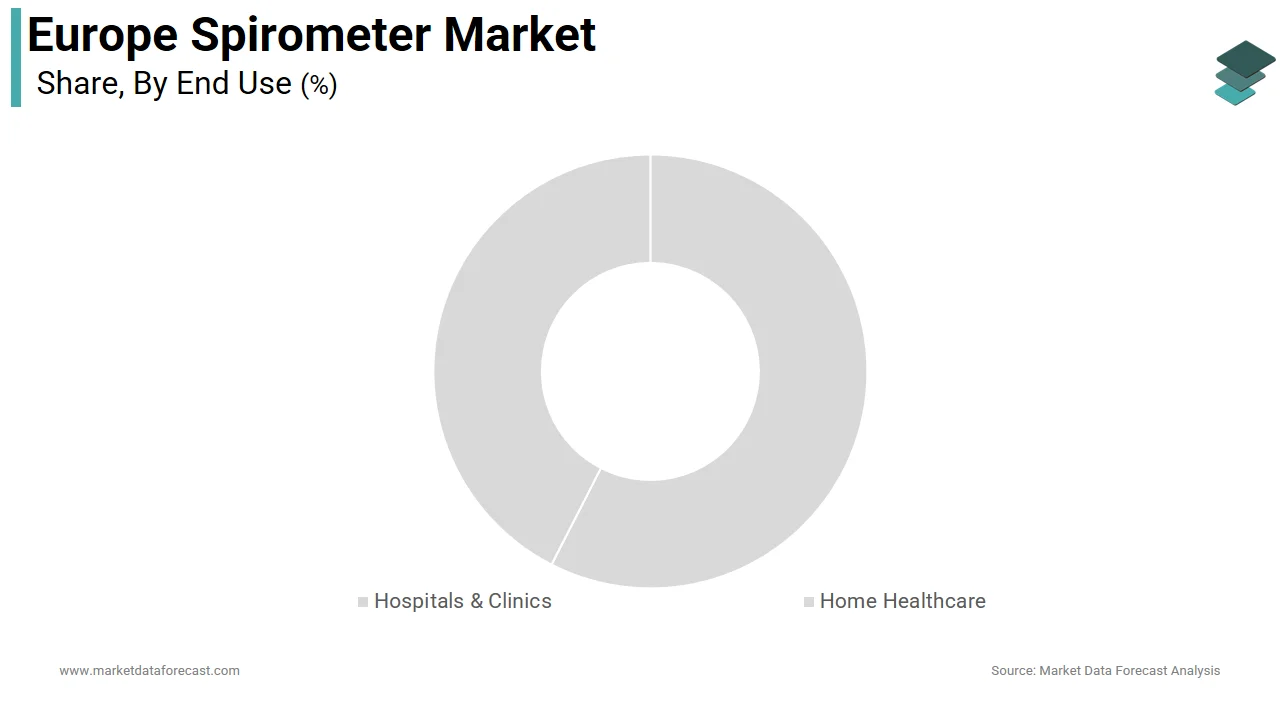
The home healthcare segment is the fastest-growing and is expected to register a CAGR of 10.2% over the forecast period, owing to the expansion of remote patient monitoring programs endorsed by national health authorities to alleviate pressure on acute care facilities. As per the European Commission’s 2024 Digital Health Action Plan, a growing number of EU member states now reimburse home-based pulmonary function testing for chronic respiratory disease management, a significant increase compared to earlier years. Portable spirometers compliant with EN ISO 26782 standards have gained traction in the United Kingdom and Sweden, where integrated care models link home-collected data to electronic health records. Additionally, patient preference for decentralized care is rising, and as per Eurobarometer, many adults aged 50 and older with chronic lung conditions expressed willingness to perform regular spirometry at home if supported by telehealth guidance. Coupled with advancements in smartphone-connected devices and AI-driven quality control algorithms, these factors are rapidly transforming home healthcare into the most dynamic end-use segment in the European spirometer landscape.
By Application Insights
The chronic obstructive pulmonary disease (COPD) segment was the largest application segment in the Europe spirometer market in 2025 and held 43.4% of the European market share. The leading position of the COPD segment in this regional market can be credited to the high prevalence of COPD across aging populations and the unequivocal reliance on spirometry for definitive diagnosis. According to the World Health Organization Regional Office for Europe, millions of people in the WHO European Region live with COPD, and the condition is responsible for a large number of annual deaths. Spirometry remains the only objective method to confirm airflow limitation, as emphasized in the Global Initiative for Chronic Obstructive Lung Disease guidelines adopted by European clinical societies. National screening initiatives further amplify demand; for instance, Germany’s Disease Management Programs mandate annual spirometry for all enrolled COPD patients, covering millions of individuals. The irreversible nature of the disease necessitates lifelong monitoring, ensuring recurring device utilization in both hospital and primary care settings. These structural and epidemiological factors collectively anchor COPD as the leading application driver in the European spirometer market.
The cystic fibrosis segment is the fastest-growing application segment and is expected to register a CAGR of 11.4% over the forecast period, owing to the advances in early diagnosis protocols and the increasing use of spirometry as a surrogate endpoint in clinical trials for CFTR modulator therapies. As per the European Cystic Fibrosis Society, newborn screening for cystic fibrosis is now implemented in most European countries, enabling diagnosis before symptom onset and initiating lifelong pulmonary monitoring from infancy. Spirometry, particularly forced expiratory volume in one second, serves as a key metric in assessing treatment response, and the European Medicines Agency has accepted it as a primary endpoint in recent approvals of CFTR modulator drugs. Furthermore, specialized CF centers in the Netherlands and Denmark conduct quarterly spirometry as standard of care, supported by national registries that track longitudinal lung function. With tens of thousands of individuals diagnosed with cystic fibrosis in Europe and life expectancy now exceeding 50 years in several countries, the need for frequent and precise spirometric assessment continues to drive accelerated adoption in this niche but high-value application segment.
By Technology Insights
The volume measurement segment had the leading share of 51.5% of the European market in 2025. The growth of the volume measurement segment in this regional market is attributed to its superior accuracy and compliance with gold standard clinical guidelines. Water sealed and bell spirometers, though less common today, established volume-based systems as the benchmark for pulmonary function testing, and modern dry rolling seal and turbine-based volume spirometers maintain this legacy in hospital laboratories. The European Respiratory Society mandates volume-based spirometry for diagnostic confirmation in complex cases, citing its lower susceptibility to drift and calibration error compared to flow integrating alternatives. As per the European Committee for Standardization, volume measurement devices demonstrate low intra-test variability, significantly outperforming many flow-based systems in reproducibility metrics. Major academic medical centers in France and Italy exclusively use volume spirometers for research and clinical trials, reinforcing institutional preference. Additionally, reimbursement codes in countries like Switzerland and Austria explicitly require volume-derived parameters for certain diagnostic claims, creating financial incentives for continued adoption. These clinical, regulatory, and technical advantages sustain volume measurement as the dominant technological segment in the European market.
The flow measurement segment is predicted to witness a CAGR of 12.2% over the forecast period due to the miniaturization of ultrasonic and turbine-based flow sensors, which enable the development of compact, low-maintenance, and cost-effective spirometers ideal for point-of-care and home use. As per the Fraunhofer Institute for Biomedical Engineering, the average manufacturing cost of digital flow-based spirometers has declined in recent years due to economies of scale in microsensor production, making them increasingly accessible to primary care providers. Their compatibility with smartphone applications and cloud analytics further enhances appeal, and in Sweden, a majority of newly procured primary care spirometers in 2024 were flow-based portable units integrated into national telehealth platforms. Moreover, the European Union’s Green Public Procurement criteria now favor devices with lower material use and energy consumption, a category where flow-based systems often outperform bulkier volume devices. These converging factors of affordability, digital readiness, and sustainability are driving the rapid ascent of flow measurement technology across diverse European care settings.
COUNTRY-LEVEL ANALYSIS
Germany Spirometer Market Analysis
Germany dominated the market by accounting for 23.2% of the European market share in 2025. The dominating spot of Germany in the European market is attributed to its robust healthcare infrastructure and high diagnostic intensity for respiratory conditions. The country operates a large number of pulmonary specialty clinics and integrates spirometry into mandatory Disease Management Programs for chronic respiratory diseases under statutory health insurance. As per the Federal Statistical Office of Germany, millions of spirometry procedures are billed to public insurers annually, representing the highest volume in Europe. Strict adherence to the German Respiratory Society’s guidelines ensures regular calibration and technician certification, reinforcing demand for high-end devices. Furthermore, Germany’s proactive stance on early COPD detection, supported by nationwide awareness campaigns, sustains consistent utilization across urban and rural settings.
United Kingdom Spirometer Market Analysis
The United Kingdom captured the second leading share of the European spirometer market in 2025. The growth of the UK in the European market is driven by the National Health Service’s strategic shift toward preventive respiratory care. As per NHS England’s Primary Care Respiratory Framework, all general practices are expected to offer in-house spirometry for suspected asthma or COPD, leading to significant procurement of new devices in recent years. The post-COVID focus on long-term lung health has further expanded spirometry use in community hubs, with home monitoring pilots covering tens of thousands of patients in England. The Medicines and Healthcare products Regulatory Agency’s streamlined approval pathway for connected diagnostics also encourages innovation.
France Spirometer Market Analysis
France is a promising regional segment in the European spirometer market and is predicted to account for a notable share of the regional market over the forecast period, owing to its centralized healthcare model and strong regulatory enforcement. The French High Authority for Health mandates spirometry for occupational health assessments in high-risk industries, affecting a large workforce annually. As per the National Health Insurance Fund, spirometry reimbursement claims have risen, reflecting expanded coverage for asthma control monitoring. Additionally, France’s investment in digital health through the Ma Santé 2022 initiative has accelerated the adoption of interoperable spirometers linked to the national health data hub.
Italy Spirometer Market Analysis
Italy is estimated to showcase a healthy CAGR in the European spirometer market during the forecast period due to the rising COPD prevalence and regional healthcare autonomy. As per the Italian National Institute of Statistics, COPD affects a notable proportion of adults over 45, among the highest rates in Western Europe. Lombardy and Emilia Romagna have implemented regional spirometry screening programs targeting smokers and former smokers, resulting in hundreds of thousands of tests annually. Despite budget constraints in the south, the Ministry of Health’s 2024 decree on chronic disease management allocated additional funds for pulmonary diagnostics in underserved areas, which signals sustained demand.
Spain Spirometer Market Analysis
Spain is expected to exhibit a healthy CAGR in the European spirometer market over the forecast period. Spain is experiencing accelerated uptake due to primary care reform and tobacco control outcomes. As per the Spanish Society of Pulmonology and Thoracic Surgery, the national smoking rate has declined over the past decade, yet legacy lung damage ensures ongoing diagnostic needs. The Ministry of Health’s Primary Care Modernization Plan committed substantial funding to equip all health centers with spirometers by 2026. Already, a majority of Andalusian and Catalan primary clinics have integrated spirometry, supported by national training programs that certified thousands of healthcare workers in 2023. This systemic upgrade positions Spain for continued market expansion.
COMPETITIVE LANDSCAPE
The Europe spirometer market features a competitive landscape characterized by a mix of established multinational MedTech firms and specialized European diagnostic companies. Competition centers on clinical accuracy, regulatory compliance, digital capabilities, and service support rather than price alone. Leading players differentiate themselves through adherence to European Respiratory Society standards, integration with national health information systems, and investment in clinician training. The market is not highly consolidated, allowing niche innovators to gain traction with portable or AI-enhanced devices, particularly in telehealth applications. Regulatory scrutiny under the Medical Device Regulation has raised entry barriers favoring companies with robust quality management systems. Geographic variation in reimbursement and healthcare infrastructure also compels vendors to adopt localized go-to-market strategies. Overall, the competitive dynamics reflect Europe’s emphasis on clinical validity, data security, and preventive respiratory care, driving continuous product evolution and strategic collaboration across the ecosystem.
KEY MARKET PLAYERS
The leading companies operating in the Europe spirometer market include:
- Hill-Rom Holdings, Inc.
- Smiths Group PLC (Smiths Medical, Inc.)
- NDD Medizintechnik AG
- Koninklijke Philips N.V.
- Medline Industries, Inc.
- Schiller AG
- Vyaire Medical, Inc.
- CareFusion Corporation
- SDI Diagnostics, Inc.
- Nihon Kohden Corporation
- Koko LLC
- Fukuda Sangyo Co., Ltd.
TOP PLAYERS IN THE MARKET
- NDD Medizintechnik AG is a Swiss-based developer of advanced pulmonary diagnostic devices with a strong footprint across Europe. The company specializes in high-precision spirometers that comply with international standards, including ATS ERS guidelines. In recent years ndd has intensified its focus on digital integration by launching the EasyOne Air Pro, a portable spirometer with cloud connectivity and automated quality control. This device is now deployed in primary care networks across Germany and the United Kingdom. The company also collaborates with national health agencies to support respiratory screening initiatives, particularly in occupational health settings. Through continuous innovation in sensor accuracy and user-centric design, ndd Medizintechnik AG reinforces its reputation as a trusted partner in European pulmonary diagnostics.
- Vyaire Medical Inc is a global leader in respiratory diagnostics and therapeutic solutions with significant operations throughout Europe. Headquartered in the United States, the company maintains dedicated European manufacturing and service hubs in the United Kingdom and Germany. Vyaire’s product portfolio includes the MicroLab and SentrySuite spirometry systems, which are widely used in hospital pulmonary labs. In 2024, the company enhanced its digital health offering by integrating its spirometers with hospital electronic medical record platforms across France and Spain. Vyaire also participates in European Respiratory Society-sponsored training programs to improve spirometry technique among clinicians. These efforts underscore its commitment to clinical excellence and interoperability in evolving European healthcare ecosystems.
- CareFusion Corporation, a subsidiary of Becton Dickinson, operates a focused respiratory diagnostics business that includes the widely recognized SpiroConnect and Compact Air devices. The company leverages BD’s extensive European distribution network to ensure rapid deployment and service support across diverse markets. In 2023, CareFusion launched a firmware update enabling remote calibration verification for its spirometer,s addressing a key regulatory concern under the EU Medical Device Regulation. The company also partnered with telehealth providers in the Netherlands and Sweden to incorporate its devices into national remote monitoring pathways for COPD and asthma. By aligning its technology with Europe’s digital health transformation, CareFusion strengthens its clinical relevance and operational efficiency across the region.
TOP STRATEGIES USED BY THE KEY MARKET PARTICIPANTS
Key players in the Europe spirometer market prioritize regulatory compliance, digital integration, and clinical education to reinforce their market position. Companies invest heavily in aligning their devices with the European Union Medical Device Regulation and General Data Protection Regulation to ensure seamless market access. They develop connected spirometers that interface with national electronic health record systems and telemedicine platforms. Strategic partnerships with respiratory societies and health ministries facilitate training programs that enhance test quality and user adoption. Additionally, manufacturers focus on miniaturization and sensor accuracy to differentiate their offerings in both hospital and home care segments. Continuous firmware updates and cloud-based analytics services further extend the product lifecycle and customer retention across diverse European healthcare settings.
MARKET SEGMENTATION
This research report on the Europe spirometer market has been segmented and sub-segmented into the following categories.
By End Use
- Hospitals & Clinics
- Home Healthcare
By Application
- COPD
- Pulmonary Fibrosis
- Asthma
- Cystic Fibrosis
- Others
By Product Type
- Table Top
- Desktop
- Hand Held
By Technology
- Flow Measurement
- Volume Measurement
- Peak Flow Measurement
By Country
- United Kingdom
- France
- Spain
- Germany
- Italy
- Russia
- Sweden
- Denmark
- Switzerland
- Netherlands
- Rest of Europe