Europe Streetwear Market Size, Share, Trends, & Growth Forecast Report By Product ( Clothing, Footwear, Accessories, Others), End User, Distribution Channel and Country (UK, France, Spain, Germany, Italy, Russia, Sweden, Denmark, Switzerland, Netherlands, Turkey, Czech Republic and Rest of Europe), Industry Analysis From 2026 to 2034
Market Size, 2025
$110.76 BnMarket Estimate, 2026
$118.89 BnMarket Forecast, 2034
$209.50 BnCAGR, 2026–2034
7.34%Europe Streetwear Market Report Summary
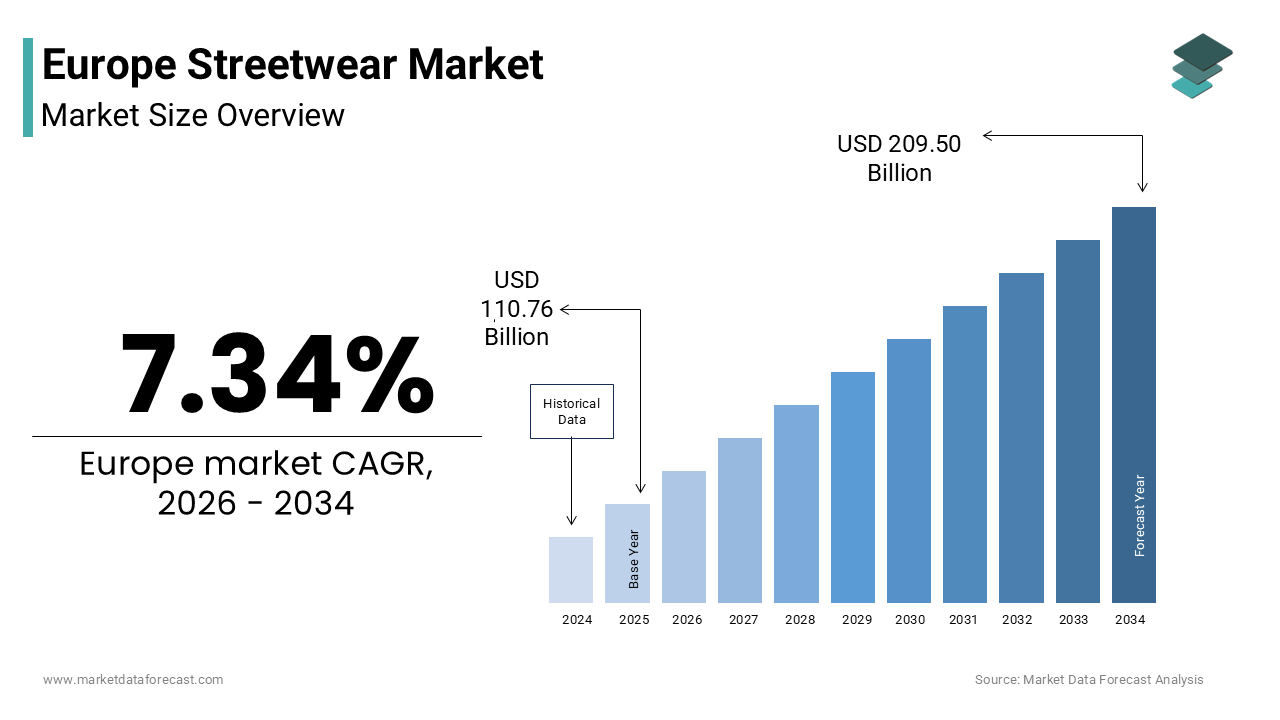
The Europe streetwear market was valued at USD 110.76 billion in 2025, is expected to reach USD 118.89 billion in 2026, and is projected to grow to USD 209.50 billion by 2034, registering a CAGR of 7.34% from 2026 to 2034. The market growth is driven by the increasing influence of youth culture, rapid expansion of social commerce, and the growing fusion of streetwear with luxury fashion. Additionally, rising digital engagement and demand for self-expression through fashion are further accelerating market expansion across Europe.
Key Market Trends
- Growing influence of Gen Z and Millennials on streetwear consumption
- Rising adoption of social commerce and influencer-driven sales
- Increasing collaborations between luxury brands and streetwear labels
- Expansion of resale and secondary streetwear marketplaces
- Emergence of digital fashion and virtual wearables
Segmental Insights
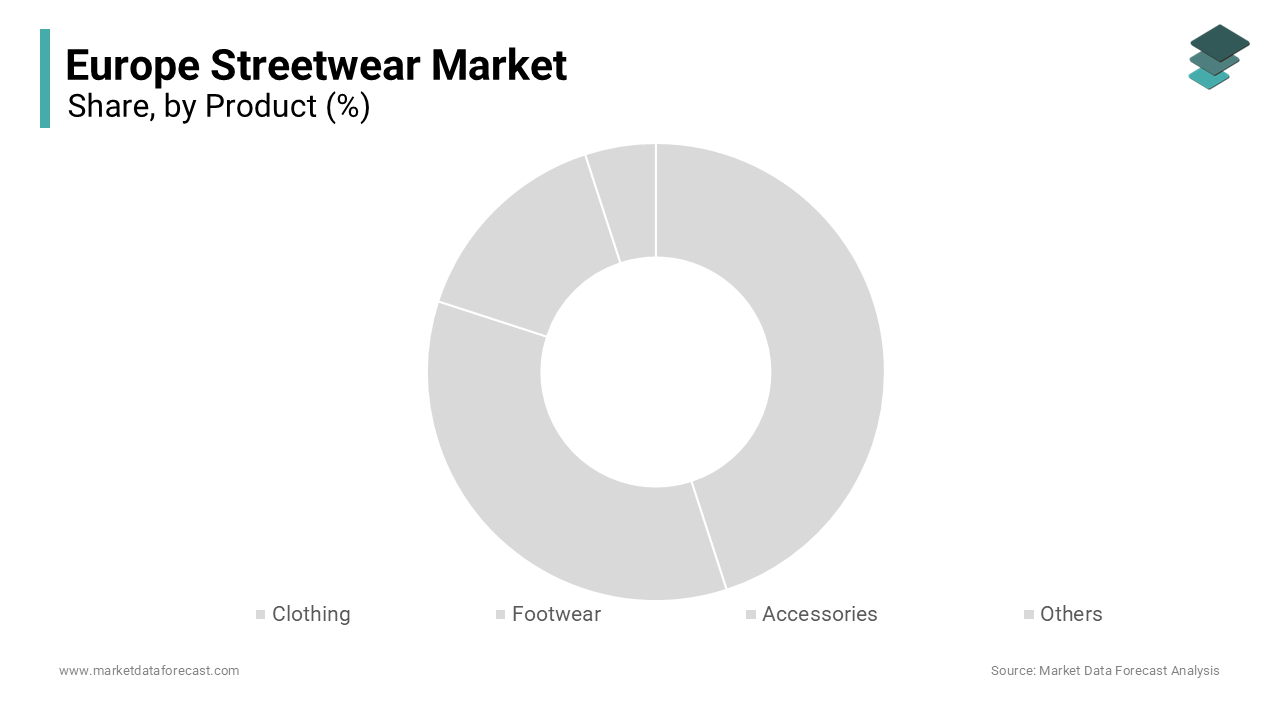
- Based on product, the clothing segment held the largest share of 52.8% in 2025. This dominance is driven by high demand for everyday streetwear essentials such as hoodies, graphic t-shirts, and oversized apparel, supported by the strong influence of athleisure trends.
- Based on end user, the men segment accounted for the largest share of 58.3% in 2025, driven by the historical roots of streetwear in male-dominated subcultures and higher spending on premium products.
- Based on distribution channel, the offline stores segment dominated the market with 54.2% share in 2025, driven by experiential retail, flagship stores, and community engagement.
Regional Insights
The Europe streetwear market is expanding across major countries, supported by strong urban culture, fashion influence, and digital adoption.
- Germany led the market with 22.8% share in 2025, driven by strong urban culture, high disposable income, and a thriving streetwear scene in cities like Berlin.
- United Kingdom held the second-largest share, supported by strong youth subcultures, music influence, and a highly developed retail ecosystem in London.
- France is witnessing strong growth due to the fusion of luxury fashion and streetwear, with Paris acting as a global fashion hub.
- Italy is growing steadily with its focus on premium craftsmanship, design innovation, and integration of streetwear into luxury fashion.
- Spain is emerging as a high-growth market, driven by youth demographics, tourism, and strong social media influence.
Competitive Landscape
The Europe streetwear market is highly competitive and fragmented, with global sportswear giants, luxury fashion houses, and independent streetwear labels competing for market share. Companies focus on collaborations, limited-edition releases, and digital engagement strategies to maintain brand relevance and exclusivity. Sustainability initiatives and omnichannel retail strategies are also shaping the competitive landscape. Key players in the Europe streetwear market include Nike, Inc., Adidas AG, Puma SE, Supreme (VF Corporation), Off-White (LVMH), Balenciaga (Kering S.A.), Gucci (Kering S.A.), Louis Vuitton (LVMH), H&M Group, Inditex (Zara), New Balance, Inc., and Vans (VF Corporation).
Europe Streetwear Market Size
The Europe streetwear market size was valued at USD 110.76 billion in 2025 and is anticipated to reach USD 118.89 billion in 2026 from USD 209.50 billion by 2034, growing at a CAGR of 7.34% during the forecast period from 2026 to 2034.
Streetwear is a style of fashionable casual clothing that originated from a blend of urban subcultures, including hip-hop, skateboarding, and surfing. This market covers oversized silhouettes, graphic tees, hoodies, and limited-edition sneakers that resonate deeply with the identity expression of modern European youth. The demographic backbone of this expansion relies heavily on the substantial youth population, where about 73 million young people reside within the European Union, driving consumption patterns through digital engagement and cultural fluidity as per Eurostat data. Social media platforms serve as essential channels for market growth, with a significant portion of fashion shoppers in the United Kingdom making purchases directly through these apps after engaging with recommendations and content from online influencers. The definition of streetwear has broadened beyond mere clothing to include a lifestyle ethos that prioritizes authenticity, exclusivity, and a blend of luxury with utilitarian design. Urbanization rates continue to climb across major hubs like London, Berlin, and Paris, creating fertile ground for brands that cater to the fast-paced, visually driven demands of city dwellers. This market segment distinguishes itself by its rapid response to cultural shifts, often outpacing traditional fashion cycles in speed and relevance.
MARKET DRIVERS
Rising Influence of Digital Native Demographics and Social Commerce
The proliferation of digital native demographics drives the exponential growth of the Europe streetwear market. Generation Z and younger Millennials represent a major segment of the youth population in the European Union, shaping market trends through their deep integration into social media and mobile-based shopping environments. These consumers do not merely purchase clothing but engage in a continuous dialogue with brands via platforms like Instagram and TikTok, where visual storytelling drives immediate demand. A notable portion of fashion consumers in the United Kingdom complete their purchases as a direct result of social media content, demonstrating a clear link between digital interaction and successful sales outcomes. Furthermore, the preference for mobile-first shopping is increasingly clear, with mobile devices now accounting for more than half of the total online revenue generated in the European apparel landscape. This shift forces brands to adopt agile marketing strategies that leverage real-time data and influencer partnerships to maintain relevance. The desire for instant gratification and exclusive drops fuels a cycle of constant consumption, where limited availability creates urgency among digitally connected users. As European internet penetration remains near universal among youth, the barrier between online discovery and offline adoption dissolves, allowing streetwear trends to spread virally across borders within hours. This digital fluency ensures that streetwear remains at the forefront of fashion innovation, driven by a generation that values community validation and online presence as much as physical garment quality.
Cultural Integration of Urban Lifestyle and Luxury Collaborations
The seamless integration of urban lifestyle aesthetics with high-end luxury collaborations fuels the expansion of the Europe streetwear market. Historically rooted in skate, hip-hop, and graffiti cultures, streetwear has transcended its origins to become a staple in high fashion, evidenced by the strategic partnerships between heritage luxury houses and contemporary street labels. This convergence appeals to a broad spectrum of consumers who seek the prestige of luxury branding combined with the relatability and comfort of street style. The scarcity model employed in these collaborations, often involving limited edition drops, generates immense hype and secondary market activity, further validating the sector's economic vitality. European cities serve as cultural incubators where fashion weeks increasingly feature streetwear elements, legitimizing the genre within the formal fashion industry. Consumers view these items as investment pieces rather than disposable fashion, willing to pay premium prices for garments that signal cultural capital and exclusivity. The blurring lines between casual wear and formal attire in European urban centers have normalized the wearing of hoodies and sneakers in diverse social settings, expanding the addressable market. This cultural shift ensures that streetwear maintains its momentum, driven by a consumer base that perceives these garments as essential components of a sophisticated, modern identity.
MARKET RESTRAINTS
Stringent Sustainability Regulations and Compliance Costs
The implementation of rigorous sustainability regulations across the European Union impedes the growth of the Europe streetwear market. Effective January 2025, EU mandates require the separate collection of textile waste, forcing brands to overhaul their logistics and reverse supply chain operations to ensure compliance according to European Commission directives. These regulatory frameworks, including the Ecodesign for Sustainable Products Regulation, demand higher standards for durability, repairability, and material transparency, which inevitably increase production costs for streetwear labels as per legislative updates. Many streetwear brands, particularly emerging independent labels, operate on thin margins and rely on rapid production cycles that conflict with the slower, more deliberate processes required by new environmental laws. The introduction of the Digital Product Passport necessitates detailed tracking of every garment's lifecycle, imposing additional administrative and technological burdens on companies according to industry compliance guides. Non-compliance risks severe financial penalties and reputational damage, deterring smaller players from entering or expanding within the market. Furthermore, the push for circular economy principles challenges the traditional drop culture model of streetwear, which thrives on frequent, high-volume releases of often non-biodegradable synthetic materials. As the European Commission prioritizes textiles in its 2025 to 2030 working plan, the pressure to adopt eco-friendly materials and ethical manufacturing practices intensifies according to policy roadmaps. These constraints limit the ability of brands to respond quickly to fleeting trends, potentially stifling the agility that defines the streetwear sector and raising entry barriers for innovative but undercapitalized designers.
Prevalence of Counterfeit Goods and Brand Dilution
The pervasive presence of counterfeit goods is also a constraint that undermines the integrity and profitability of the Europe streetwear market. The fashion industry in the European Union suffers significant annual losses due to the proliferation of fake products, with streetwear being a primary target due to its high demand and brand-centric value proposition, according to updated reports from intellectual property offices. In 2024, EU customs authorities seized a substantial volume of counterfeit items, and while the quantity decreased from the previous year, the total estimated value of these goods reached a record high, reflecting the shifting scale and nature of the illicit trade infiltrating the region as per customs enforcement data. Counterfeit streetwear not only diverts revenue from legitimate brands but also dilutes brand equity by flooding the market with inferior quality imitations that misrepresent the original designs. This saturation confuses consumers and erodes trust, as buyers struggle to distinguish between authentic limited editions and sophisticated fakes. The rise of online marketplaces and social media platforms has exacerbated this issue, providing anonymous channels for counterfeiters to reach unsuspecting customers across Europe. Intellectual property enforcement remains a complex challenge, with legal proceedings often lagging behind the rapid pace at which fake goods are produced and distributed. For streetwear brands whose value is heavily derived from exclusivity and authenticity, the existence of a robust black market poses an existential threat to their business models. The financial strain of combating counterfeiting through legal action and advanced authentication technologies further drains resources that could otherwise be invested in innovation and growth.
MARKET OPPORTUNITIES
Expansion of the Resale and Secondary Market Ecosystem
The burgeoning resale and secondary market ecosystem offers a substantial opportunity for the European streetwear market. This evolution allows brands to capture new value streams. The resale sector for streetwear continues to outpace the traditional retail apparel market significantly, driven by a sustained shift in consumer behavior toward pre-owned and vintage items, as per studies. This trend aligns perfectly with the European emphasis on sustainability and circular fashion, allowing consumers to access exclusive, sold-out items while extending the lifecycle of garments. Platforms dedicated to sneaker and streetwear resale experience the majority of their traffic from mobile devices, reflecting the strong digital nativity and app-first preferences of their core young consumer audience. Limited edition streetwear represents a substantial and distinct segment of the inventory on specialist resale marketplaces, underscoring the enduring value and high collectibility of these items relative to other categories. Brands can leverage this opportunity by officially endorsing resale programs or integrating buy-back schemes, thereby fostering brand loyalty and controlling the secondary market narrative. The growth of this sector also provides a buffer against economic volatility, as consumers seek more affordable entry points into high-end streetwear through pre-owned channels. Additionally, the data generated from resale transactions offers invaluable insights into consumer preferences and pricing elasticity, enabling brands to refine their primary market strategies. Streetwear labels can turn the threat of market saturation into a sustainable revenue channel by embracing the secondary market. This approach simultaneously reinforces brand desirability.
Adoption of Digital Fashion and Virtual Wearables
The adoption of digital fashion and virtual wearables is a potential prospect for the European streetwear market. It allows brands to engage with tech-savvy consumers in immersive environments. As the metaverse and augmented reality landscapes mature, there is a growing appetite among Generation Z for digital-only clothing that allows for self-expression in virtual spaces without physical production constraints. Research indicates a marked increase in the intention of European youth to utilize digital fashion items, driven by a desire for uniqueness and the ability to customize avatars with exclusive designs according to consumer trend surveys. Streetwear brands are uniquely positioned to lead this charge due to their inherent connection to youth culture and digital trends. By launching virtual drops and NFT-linked garments, companies can create new revenue streams that bypass traditional supply chain limitations and environmental concerns. This digital expansion allows for limitless creativity, where physics and material costs do not restrict design possibilities. Furthermore, virtual try-on technologies enhance the online shopping experience, reducing return rates and increasing consumer confidence in physical purchases. The line between physical and digital identities is blurring. Consequently, streetwear brands that successfully integrate virtual offerings will secure a competitive advantage with the next generation of European consumers.
MARKET CHALLENGES
Supply Chain Volatility and Raw Material Instability
Supply chain volatility and raw material instability are critical challenges that threaten the operational consistency of the Europe streetwear market. The industry faces immense pressure from fluctuating costs of essential inputs such as cotton, polyester, and specialized dyes, which are exacerbated by geopolitical tensions and climate change impacts on agriculture according to global supply chain monitors. The reliance on global sourcing networks exposes streetwear labels to disruptions caused by trade restrictions, logistical bottlenecks, and labor constraints in key producing regions. These instabilities force companies to hold higher inventory levels or face stockouts, both of which negatively impact cash flow and brand reputation. The just-in-time manufacturing models often employed by streetwear brands to facilitate rapid drops are particularly vulnerable to these disruptions, leading to missed launch windows and lost sales opportunities. Additionally, the transition to sustainable materials, while necessary, introduces further complexity as supply chains for recycled fibers and organic cotton are less established and more prone to variability. Navigating this turbulent landscape requires significant investment in supply chain resilience and diversification, posing a formidable challenge for brands striving to maintain agility and profitability.
Intensifying Competition and Market Saturation
Intense competition and market saturation are slowing down the growth of the European streetwear market. An increasing number of brands are vying for the attention of a finite consumer base. The low barrier to entry in the streetwear segment has led to an influx of independent labels and fast-fashion imitators, creating a crowded marketplace where differentiation becomes increasingly difficult. Established brands face pressure to constantly innovate and release exclusive collections to stay relevant, leading to a fatigue among consumers who are overwhelmed by the frequency of new drops. This saturation is compounded by the rise of private label offerings from major retailers, which mimic streetwear aesthetics at lower price points, undercutting authentic brands. The struggle for visibility on social media platforms further exacerbates the issue, as advertising costs rise and organic reach declines due to algorithm changes. Smaller brands often lack the marketing budgets to compete with industry giants, resulting in a consolidation of market share among top players. Moreover, the homogenization of styles across different brands reduces the perceived uniqueness of streetwear, potentially dampening consumer enthusiasm. To survive in this hyper-competitive environment, companies must invest heavily in brand storytelling and community building, yet the diminishing returns on such investments remain a persistent concern for industry stakeholders.
REPORT COVERAGE
| REPORT METRIC | DETAILS |
| Market Size Available | 2025 to 2034 |
| Base Year | 2025 |
| Forecast Period | 2026 to 2034 |
| CAGR | 7.34% |
| Segments Covered | By Product, End User, Distribution Channel and Region. |
| Various Analyses Covered | Global, Regional & Country Level Analysis, Segment-Level Analysis, DROC, PESTLE Analysis, Porter’s Five Forces Analysis, Competitive Landscape, Analyst Overview of Investment Opportunities |
| Country Covered | UK, France, Spain, Germany, Italy, Russia, Sweden, Denmark, Switzerland, the Netherlands, Turkey, the Czech Republic, and the Rest of Europe. |
| Market Leaders Profiled | Nike, Inc., Adidas AG, Puma SE, Supreme (VF Corporation), Off-White (LVMH), Balenciaga (Kering S.A.), Gucci (Kering S.A.), Louis Vuitton (LVMH), H&M Group, Inditex (Zara), New Balance, Inc., and Vans (VF Corporation). |
SEGMENTAL ANALYSIS
By Product Insights
The clothing segment dominated the Europe streetwear market and accounted for a 52.8% share in 2025. This supremacy of the segment is driven by the fundamental nature of streetwear as a wardrobe staple rather than a niche accessory category. The versatility of items such as hoodies, graphic t-shirts, and oversized jackets allows for daily wear across diverse social settings, from casual outings to semi-formal urban environments. A primary driver is the cultural shift towards comfort without compromising style, often termed as "athleisure" influence, which has seen European consumers prioritize soft fabrics and relaxed fits. Furthermore, the frequency of product releases in the clothing category far outpaces footwear or accessories, with brands launching weekly drops to maintain consumer engagement. The average European youth purchases many new streetwear clothing items per quarter, reflecting a high consumption rate fueled by social media trends and influencer endorsements as per retail transaction analysis. The ability to layer clothing items also extends their utility across seasons, making them a perennial favorite in the variable European climate. This consistent demand ensures that clothing remains the revenue backbone of the industry, setting the aesthetic tone for the entire streetwear ecosystem.
The accessories segment is expected to exhibit a noteworthy CAGR of 15.8% from 2026 to 2034 due to the increasing consumer desire to personalize and customize their core streetwear outfits with unique add-ons that signal individuality. Items such as bucket hats, crossbody bags, chunky jewelry, and branded socks have transitioned from afterthoughts to essential components of the streetwear look. A key factor driving this surge is the lower price point of accessories compared to full outfits, allowing a broader demographic to participate in the streetwear culture without a significant financial commitment. Additionally, the rise of limited edition collaborations often focuses on accessories, creating hype cycles that drive rapid sales velocity. The integration of technology into accessories, such as smart bags or NFC-enabled caps, further attracts tech-savvy consumers. Social media platforms amplify this trend, as accessories are highly photogenic and easily showcased in short-form video content, leading to viral moments that instantly boost demand. The modular nature of accessories allows consumers to experiment with trends quickly, fostering a dynamic market environment that sustains high growth rates.
By End User Insights
The men segment led the Europe streetwear market and captured a 58.3% share in 2025 because of the historical origins of streetwear, which emerged from male-centric subcultures such as skateboarding, hip-hop, and surfing. For decades, marketing narratives and brand ambassadors have predominantly targeted male audiences, establishing a deep-seated loyalty and a robust collection culture among men. A significant driving factor is the higher average transaction value observed in male consumers, who are more likely to invest in high-ticket items like limited-edition sneakers and designer hoodies. Research indicates that male streetwear enthusiasts in Europe spend significant amount per transaction, which is higher than their female counterparts according to e-commerce spending data. Furthermore, the concept of "hype" and exclusivity resonates strongly with male demographics, who actively participate in raffles and drop events to secure rare items. The normalization of streetwear in professional and semi-professional settings for men has also expanded the addressable market, allowing for daily wear of these styles. Brand collaborations frequently target male icons and athletes, reinforcing the segment's leadership. The established infrastructure of men's streetwear communities, both online and offline, creates a self-sustaining ecosystem of discussion, trading, and consumption that maintains their market preeminence.
The women segment is predicted to witness the highest CAGR of 14.2% during the forecast period owing to the deliberate strategic pivot of major brands to design gender-inclusive or female-specific collections that cater to the evolving tastes of modern women. The blurring of gender lines in fashion has empowered women to adopt traditionally male-dominated streetwear silhouettes, such as oversized tees and baggy jeans, while also demanding fits that accommodate female body types. A critical driver is the rising influence of female influencers and celebrities who showcase streetwear as a versatile and empowering style choice, reaching millions of followers across Europe. Moreover, the expansion of plus-size and diverse sizing options within streetwear lines has opened the market to a wider array of female consumers who were previously underserved. The integration of streetwear elements into high-fashion runway shows featuring female models has further legitimized the style for women. Brands are increasingly launching dedicated women's capsules and collaborating with female designers. As a result, this segment is poised to close the gap with the male market, driven by a newfound confidence and expression among female consumers.
By Distribution Channel Insights
In 2025, the offline stores segment remained the largest segment in the Europe streetwear market by occupying a 54.2% share. One of the main reasons for this dominance is the emergence of flagship stores and concept shops that serve as cultural hubs rather than mere points of sale. Despite the digital boom, the physical retail experience retains its critical importance due to the tactile nature of fashion and the community aspect of streetwear culture. Consumers value the ability to try on garments for fit and feel, especially given the varied sizing standards across different streetwear brands. These locations often host exclusive launch events, art installations, and meet-and-greets that foster a sense of belonging and brand loyalty among local communities. Furthermore, the immediacy of obtaining products without shipping delays appeals to impulse buyers and those seeking instant gratification. The strategic placement of stores in high-traffic urban centers like London, Paris, and Berlin ensures high visibility and footfall. Retailers also leverage omnichannel strategies where online browsing leads to offline pickup, blending the convenience of digital with the assurance of physical interaction. This hybrid model reinforces the relevance of brick-and-mortar outlets, keeping them at the forefront of the distribution landscape.
The online stores segment is estimated to register the fastest CAGR of 16.5% over the forecast period. This swift expansion of the segment is propelled by the ubiquitous adoption of smartphones and the seamless integration of social commerce features that allow users to purchase directly from influencer posts and brand feeds. The convenience of accessing global brands and limited-edition drops from the comfort of home appeals strongly to the digital-native demographic that defines the streetwear audience. A key factor is the development of sophisticated augmented reality tools that enable virtual try-ons, reducing the hesitation associated with buying apparel online. Additionally, the rise of dedicated resale apps and marketplace aggregators has centralized the streetwear ecosystem online, making it easier for consumers to compare prices and find rare items. The ability of online channels to offer endless aisles without the spatial constraints of physical stores allows brands to showcase their full inventory, including niche sizes and colors. Flash sales and app-exclusive drops create a sense of urgency that drives massive traffic spikes, further accelerating the growth of the digital channel as the preferred method for the next generation of shoppers.
REGIONAL ANALYSIS
Germany Streetwear Market Analysis
Germany outperformed other countries in the Europe streetwear market and captured a 22.8% share in 2025. A major driving factor is the strong presence of both international luxury streetwear brands and thriving local independent labels that cater to diverse tastes. The country's market status is characterized by a robust blend of high disposable income and a deeply ingrained urban culture that embraces contemporary fashion trends. Berlin, in particular, serves as a global epicenter for streetwear, attracting designers, artists, and enthusiasts from around the world due to its reputation for creativity and non-conformity. The German consumer exhibits a high willingness to pay for quality and sustainability, pushing brands to innovate in eco-friendly materials which aligns with national values. The country's efficient logistics infrastructure also supports a vibrant e-commerce scene, facilitating rapid delivery of limited drops. Furthermore, major trade fairs and fashion weeks held in Berlin and Munich provide platforms for brand exposure and networking, solidifying Germany's position as the engine of the European streetwear economy.
United Kingdom Streetwear Market Analysis
The United Kingdom was the second-largest country in the Europe streetwear market by occupying a 19.7% share in 2025 because of its rich heritage in youth subcultures and its status as a global fashion capital. London acts as a pivotal hub where traditional tailoring meets gritty street style, creating a unique aesthetic that influences trends worldwide. The market status here is dynamic and highly competitive, with a dense concentration of flagship stores and concept boutiques in areas like Shoreditch and Soho. A key driver is the profound impact of British music scenes, particularly grime and drill, which have propelled streetwear into the mainstream consciousness among young people. The prevalence of sneaker culture is also exceptionally high, with London hosting some of the largest sneaker conventions in Europe that draw thousands of attendees. Additionally, the strong pound sterling and high urbanization rates support premium pricing strategies for exclusive items. The integration of streetwear into school uniforms and casual Friday policies in corporate sectors has further normalized the style, ensuring sustained demand across various demographics and reinforcing the UK's critical role in the market.
France Streetwear Market Analysis
France plays a major role in the Europe streetwear market by leveraging its unparalleled reputation as the heart of high fashion to elevate streetwear to luxury status. The market status in France is defined by the sophisticated fusion of haute couture techniques with urban aesthetics, a trend pioneered by Parisian designers who have redefined what streetwear can be. Paris Fashion Week has increasingly become a stage for streetwear brands, granting them legitimacy and access to a wealthy clientele. A significant driving factor is the strong government support for the fashion industry and the presence of major luxury conglomerates that have acquired or partnered with streetwear labels to diversify their portfolios. The French consumer's appreciation for brand heritage and craftsmanship ensures that streetwear items are viewed as long-term investments. Moreover, the vibrant street culture in cities like Marseille and Lyon contributes to a grassroots demand that complements the high-end market. The synergy between historic fashion houses and street brands creates a unique ecosystem that keeps France at the forefront of innovation and desirability in the European landscape.
Italy Streetwear Market Analysis
Italy grew steadily in the Europe streetwear market due to its exceptional manufacturing capabilities and a deep-rooted culture of design excellence. The market status is characterized by a preference for high-quality materials and impeccable construction, where Italian streetwear often bridges the gap between sportswear and luxury ready-to-wear. Cities like Milan serve as critical nodes where fashion business meets street culture, hosting events that attract global buyers and media attention. A primary driver is the "Made in Italy" label, which commands a premium globally and instills confidence in consumers regarding the durability and style of the products. The strong tradition of textile production allows Italian brands to experiment with innovative fabrics and finishes that set them apart from mass-market competitors. Furthermore, the influence of Italian football culture and automotive design permeates the streetwear scene, creating distinct thematic collections that resonate with local and international fans. The growing interest among younger Italians in supporting local heritage brands over foreign giants has also bolstered the domestic market, ensuring a steady growth trajectory fueled by pride in national craftsmanship.
Spain Streetwear Market Analysis
Spain is anticipated to expand notably in the European market during the forecast period. It emerges as a vibrant and rapidly evolving player in the Europe streetwear landscape. The market status is marked by a youthful energy and a strong connection to Mediterranean lifestyle trends, where outdoor living and socializing drive the demand for comfortable yet stylish apparel. Barcelona and Madrid have become key destinations for streetwear tourism, hosting festivals and pop-up events that draw crowds from across the continent. A crucial driving factor is the booming tourism industry, which exposes international visitors to local Spanish brands and encourages cross-border shopping. The Spanish consumer is highly responsive to social media trends, with a high penetration rate of platforms like Instagram and TikTok fueling rapid adoption of new styles. Additionally, the relatively affordable cost of living compared to Northern Europe allows for higher discretionary spending on fashion among the youth demographic. The collaboration between Spanish retailers and global streetwear giants has further enriched the market offering, creating a diverse ecosystem that balances local flavor with international appeal, positioning Spain as a key growth engine for the future.
COMPETITIVE LANDSCAPE
The competition in the Europe streetwear market is intensely fierce characterized by a constant battle for cultural relevance and consumer attention among global giants and emerging independent labels. Established brands face pressure from agile startups that quickly adapt to micro-trends and leverage social media virality to gain market traction. The landscape is fragmented with numerous players vying for dominance through unique design aesthetics and exclusive partnerships that differentiate their offerings. Price competition exists but brand equity and perceived exclusivity often drive purchasing decisions more than cost considerations. Companies must continuously innovate their marketing strategies and supply chain operations to stay ahead of rapidly changing consumer preferences. The influx of luxury fashion houses into the streetwear space further intensifies rivalry as these entities blend high-end craftsmanship with urban styles. Success depends on building strong community connections and maintaining authenticity while scaling operations to meet growing demand across diverse European regions.
KEY MARKET PLAYERS
Some of the companies that are playing a dominating role in the Europe streetwear market include
- Nike, Inc.
- Adidas AG
- Puma SE
- Supreme (VF Corporation)
- Off-White (LVMH)
- Balenciaga (Kering S.A.)
- Gucci (Kering S.A.)
- Louis Vuitton (LVMH)
- H&M Group
- Inditex (Zara)
- New Balance, Inc.
- Vans (VF Corporation)
Top Players in the Europe Streetwear Market
Adidas AG
Adidas AG stands as a titan within the Europe streetwear market by seamlessly blending athletic performance with urban style through its iconic Originals line. The company contributes significantly to the global landscape by leveraging partnerships with high-profile celebrities and designers to create culturally relevant collections that resonate with youth. Recently, Adidas has strengthened its position by focusing on sustainability initiatives and launching exclusive drops that utilize recycled materials to appeal to eco-conscious consumers. The brand actively engages with local European communities through pop-up stores and cultural events in cities like Berlin and London. These actions reinforce its commitment to authenticity while expanding its digital footprint to capture the growing online demand for limited-edition sneakers and apparel.
Nike Inc
Nike Inc maintains a dominant presence in the Europe streetwear sector by continuously innovating its product offerings and fostering deep connections with sports and music cultures. The company drives global trends through its Jordan Brand and collaborative projects with influential artists that generate immense hype and exclusivity. Recent strategic moves include the expansion of its direct-to-consumer channels and the enhancement of its mobile application experience to facilitate seamless access to rare releases. Nike has also invested heavily in localized marketing campaigns across major European capitals to celebrate regional diversity and street culture. The brand integrates advanced technology into its supply chain. This ensures a rapid response to shifting consumer preferences, maintaining its status as a leader in sneaker culture and lifestyle apparel.
Supreme (VF Corporation)
Supreme operates as a pivotal force in the Europe streetwear market by adhering to a strict scarcity model that fuels intense consumer demand and brand loyalty. As part of VF Corporation, the label leverages global resources while maintaining its niche appeal through limited weekly drops and exclusive collaborations with luxury fashion houses. The brand recently strengthened its foothold by opening new flagship stores in key European locations such as Paris and Milan to provide immersive retail experiences. Supreme continues to influence global streetwear by partnering with diverse artists and brands that align with its counter-culture ethos. These strategic expansions and partnerships ensure that Supreme remains at the forefront of trendsetting while cultivating a dedicated community of enthusiasts who value authenticity and exclusivity above all else.
Top Strategies Used by Key Market Participants
Key players in the Europe streetwear market primarily employ limited edition drops and exclusive collaborations to generate hype and maintain brand desirability among consumers. Companies heavily invest in digital transformation by enhancing their e-commerce platforms and utilizing social media influencers to reach younger demographics effectively. Sustainability has become a central strategy where brands integrate eco-friendly materials and circular economy principles to appeal to environmentally conscious shoppers. Major participants also focus on expanding their physical retail presence through experiential flagship stores that serve as cultural hubs rather than simple transaction points. Additionally, firms leverage data analytics to predict trends and optimize inventory management ensuring they meet the fast-paced demands of the streetwear cycle without overproduction.
MARKET SEGMENTATION
This research report on the Europe streetwear market has been segmented and sub-segmented based on the following categories.
By Product
- Clothing
- Footwear
- Accessories
- Others
By End User
- Men
- Women
By Distribution Channel
- Offline Stores
- Online Stores
By Country
- UK
- France
- Spain
- Germany
- Italy
- Russia
- Sweden
- Denmark
- Switzerland
- Netherlands
- Turkey
- Czech Republic
- Rest of Europe
Access the study in MULTIPLE FORMATS
Purchase options starting from
$ 2000
Didn’t find what you’re looking for?
TALK TO OUR ANALYST TEAM
Need something within your budget?
NO WORRIES! WE GOT YOU COVERED!
Call us on: +1 888 702 9696 (U.S Toll Free)
Write to us: sales@marketdataforecast.com