- Product Description Description
- Table of Contents TOC
- List of Table & Figure LOT
- Get Free Sample PDF Sample PDF
Market Size, 2025
$59.81 BnMarket Estimate, 2026
$64.21 BnMarket Forecast, 2034
$113.33 BnCAGR, 2026–2034
7.36%Europe Superfood Market Size
The Europe Superfood market size was calculated to be USD 59.81 billion in 2025 and is anticipated to be worth USD 113.33 billion by 2034, from USD 64.21 billion in 2026, growing at a CAGR of 7.36% during the forecast period.
A superfood is a term commonly used to describe foods that are exceptionally rich in nutrients and bioactive compounds, such as vitamins, minerals, antioxidants, fiber, and healthy fats. These contribute to overall health and disease prevention. While not formally defined under EU legislation, the term commonly refers to items such as chia seeds, quinoa, goji berries, spirulina, and moringa, which are integrated into diets for their high concentrations of antioxidants, vitamins, minerals, and phytochemicals. According to sources, consumer interest in functional foods and foods with added health benefits is growing in the European Union. This behavioral trend is reinforced by rising rates of lifestyle-related non-communicable diseases with a growing burden of chronic diseases linked to poor nutrition in the European Region, which is the primary public health body reporting on these issues. According to studies, the consumption of plant-based functional foods has seen a significant increase since 2020, particularly in specific urban areas within countries like Germany and the Nordics. Regulatory frameworks exert strict control over labeling, ensuring that only scientifically substantiated benefits may be communicated. This convergence of health consciousness, regulatory oversight, and culinary innovation positions the European superfood market as a values-driven domain where science, authenticity, and sustainability increasingly dictate consumer trust and product viability.
MARKET DRIVERS
Rising Prevalence of Preventive Health and Functional Nutrition
European consumers are increasingly adopting superfoods as part of a proactive approach to long-term health maintenance rather than reactive treatment, which surges the growth rate of the Europe superfood market. This shift is propelled by growing awareness of the link between diet and chronic disease prevention. Superfoods such as turmeric, flaxseeds, and acai berries are favored for their documented bioactive compounds. National health initiatives further reinforce this behavior. For instance, Germany’s National Reduction and Innovation Strategy for Sugar and Fat encourages the incorporation of nutrient-dense alternatives into everyday diets. This alignment of public health policy, consumer education, and scientific validation transforms superfoods from niche wellness items into mainstream dietary staples across Europe.
Expansion of Plant-Based and Flexitarian Dietary Patterns
The surge in plant-based and flexitarian eating habits across the region has augmented the expansion of the Europe superfood market. As a result, this has amplified demand for superfoods as primary sources of protein, fiber, and micronutrients. Unlike strict veganism, flexitarianism allows occasional animal product consumption while emphasizing plant-derived nutrition, making superfoods ideal for nutritional supplementation. The dietary shift creates consistent demand for legume-based superfoods like lentils and chickpeas, as well as seed varieties such as hemp and chia. The European Commission’s Farm to Fork Strategy actively supports this transition by promoting diverse crop cultivation and reducing reliance on animal agriculture. Retailers like Edeka and Carrefour have responded by dedicating entire aisles to plant-powered nutrition, often highlighting superfood content on packaging. This structural integration into mainstream food systems ensures sustained growth beyond transient wellness trends.
MARKET RESTRAINTS
Stringent EU Regulations on Health and Nutrition Claims
Rigorous regulatory frameworks governing health-related marketing constrain the growth of the Europe superfood market. The EU Nutrition and Health Claims Regulation EC 1924 2006 mandates that any claim linking a food to a health benefit must undergo scientific evaluation and authorization by the European Food Safety Authority. This stringent process prevents brands from using terms like detox, supercharge, or cure even when referencing widely accepted nutritional science. Consequently, many superfood products must be marketed solely on taste or culinary use rather than functional benefits. This regulatory environment, while protective of consumers, creates significant barriers for small producers lacking legal and scientific resources to navigate the authorization process, thereby limiting innovation and market entry.
High Price Volatility and Import Dependency
Heavy reliance on imports for key ingredients such as quinoa from South America, chia from Mexico, and goji berries from China exposes the market to supply chain disruptions and price instability. This exposure hinders the expansion of the Europe superfood market. According to sources, a portion of quinoa consumed in the EU was imported in 2023 primarily from Peru and Bolivia. Climate anomalies in these regions have triggered significant cost fluctuations. In addition, geopolitical tensions and shipping delays have increased lead times. These disruptions force manufacturers to reformulate or absorb costs, ultimately affecting retail pricing. Although local cultivation of alternatives like European quinoa and sea buckthorn is emerging, it remains insufficient to offset import dependence. This structural vulnerability undermines price stability and challenges the affordability of superfoods for mainstream consumers.
MARKET OPPORTUNITIES
Revival of Indigenous European Nutrient-Dense Crops
A growing movement to rediscover and commercialize native European nutrient-dense crops offers an opportunity for the growth of the Europe superfood market. It helps to reduce import reliance while promoting biodiversity and rural development. Crops such as sea buckthorn from the Baltic region, black garlic from France, and wild mountain arnica from the Alps are gaining recognition for their exceptional nutritional profiles. The European Commission’s Horizon Europe program allocated funds to research projects focused on valorizing underutilized native species. Consumer interest is also rising. Brands have successfully commercialized sea buckthorn and carob, respectively achieving premium positioning through terroir-based storytelling. This reconnection with regional food heritage not only enhances supply chain resilience but also aligns with EU sustainability and food sovereignty objectives.
Integration of Superfoods into Mainstream Food and Beverage Innovation
These are increasingly embedded into everyday consumables such as breakfast cereals, plant-based milks, snack bars, and ready meals, which transforms them from specialty items into accessible functional ingredients. This trend further generates growth possibilities for the European superfood market expansion. This mainstreaming is driven by food manufacturers seeking clean label differentiation and enhanced nutritional profiles. Major brands have reformulated existing lines to incorporate chia seeds or quinoa flakes, responding to consumer demand for added protein and fiber. Retailers support this trend through private label development with Tesco’s Plant Chef range and Carrefour’s Bio line featuring superfood-enriched options. This strategic infusion into mass market formats democratizes access, expands consumption occasions, and normalizes superfoods as integral components of daily nutrition rather than niche supplements.
MARKET CHALLENGES
Greenwashing and Misleading Marketing Practices
Misleading labeling and unsubstantiated wellness claims are eroding consumer trust and are inviting enforcement actions, which hamper the growth of the Europe superfoods market. The term “superfood” itself lacks a clear definition, enabling brands to apply it liberally to products with minimal nutritional distinction. The European Consumer Organization (BEUC) and other consumer groups have repeatedly criticized the practice of applying misleading health claims, including for foods perceived as 'superfoods,' on products that are actually high in sugar, salt, and fat. National authorities have responded with increased scrutiny. These incidents showcase a persistent gap between marketing rhetoric and nutritional reality. A lack of standardized criteria and third-party verification fuels consumer skepticism, which may ultimately undermine the credibility of truly beneficial products and prevent the market from maturing.
Environmental and Social Impact of Unsustainable Sourcing
The global demand for exotic superfoods has triggered ecological degradation and social inequities in producing regions, which in turn affects the expansion of the Europe superfood market. The rapid commercialization of crops like quinoa and acai has led to monoculture farming, soil depletion, and water overuse in vulnerable ecosystems. European consumers are increasingly aware of these consequences. However, traceability remains limited as complex multi-tier supply chains obscure origin and labor conditions. The absence of mandatory due diligence under current EU food laws allows opaque practices to persist. Hence, brands face a mounting burden to ensure environmental and social accountability across their entire value chain or risk reputational and regulatory consequences.
REPORT COVERAGE
| REPORT METRIC | DETAILS |
| Market Size Available | 2025 to 2034 |
| Base Year | 2025 |
| Forecast Period | 2026 to 2034 |
| CAGR | 7.36% |
| Segments Covered | By Product Type, Application, Distribution Channel, and Region |
| Various Analyses Covered | Global, Regional & Country Level Analysis; Segment-Level Analysis; DROC, PESTLE Analysis; Porter’s Five Forces Analysis; Competitive Landscape; Analyst Overview of Investment Opportunities |
| Regions Covered | UK, France, Spain, Germany, Italy, Russia, Sweden, Denmark, Switzerland, Netherlands, Turkey, and the Czech Republic |
| Market Leaders Profiled | Your Super, Naturya, Biotona, Nutri&Co, Iswari, Glanbia PLC, Unilever PLC, Nestlé S.A. |
SEGMENTAL ANALYSIS
By Product Type Insights
The grains and seeds segment captured a prominent share of 32.6% share of the Europe superfood market in 2025. The prominence of the grains and seeds segment is driven by their versatility, high nutritional density, and seamless integration into everyday diets. Chi, a flaxseed, ax hemp, and quinoa are particularly favored for their rich omega-3 fatty acid fiber and complete protein profiles, which align with plant-based and flexitarian eating patterns. The European Food Safety Authority has issued positive scientific opinions on health claims for flaxseed and chia related to cholesterol reduction and digestive health, further legitimizing their use. Apart from these, grains and seeds are shelf-stable, easy to transport, and compatible with clean label formulations, making them ideal for food manufacturers. Retailers have expanded bulk and pre-packaged seed sections, responding to consistent consumer demand. This combination of nutritional credibility, functional utility, and supply chain efficiency solidifies grains and seeds as the backbone of the European superfood landscape.
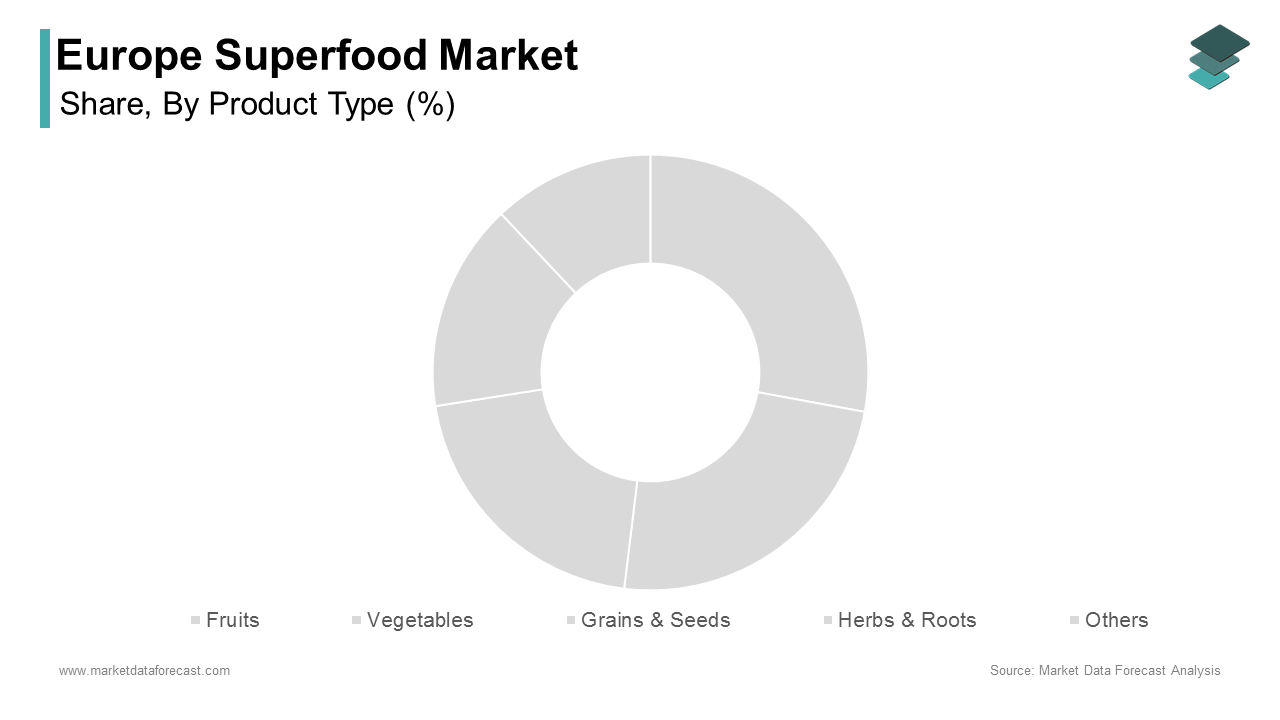
The herbs and roots segment is predicted to witness the highest CAGR of 12.4% from 2026 to 2034. The rapid expansion of the herbs and roots segment is fueled by rising interest in adaptogenic and immune-supporting botanicals such as turmeric, ginge, ashwagandha, and maca. European consumers increasingly seek natural solutions for stress resilience and metabolic health. The European Medicines Agency’s Committee on Herbal Medicinal Products has validated the traditional use of several roots for digestive and anti-inflammatory purposes, lending scientific credibility. Moreover, the clean label movement favors whole root powders over synthetic additives. Culinary innovation also plays a role as chefs in cities like Copenhagen and Barcelona incorporate moringa and galangal into modern European cuisine. This convergence of preventive health culinary trends and regulatory acceptance positions herbs and roots as the vanguard of functional nutrition in Europe.
By Application Insights
The snacks segment was the largest segment of the Europe superfood market and occupied a 29.7% share in 2025. The growth of the snacks segment is attributed to the growing demand for convenient yet nutritious on-the-go options that align with busy urban lifestyles. Superfood-enriched snack bars, energy bites, and roasted seed mixes offer protein, fiber, and antioxidants without compromising portability. According to research, a portion of working adults consume at least one functional snack daily, with superfood content being a key purchase driver. Major brands have reformulated products to include chia, pumpkin seeds, and goji berries, responding to this preference. Retailers support this trend through dedicated healthy snacking aisles. Besides, school and workplace wellness programs across Nordic countries. This normalization of nutrient-dense snacking ensures sustained volume and innovation in the segment.
The beverages segment is estimated to register the fastest CAGR of 13.1% from 2026 to 2034 due to the fusion of superfoods into ready-to-drink formats such as smoothies plant plant-based milks cold cold-pressed juices, and functional waters. Consumers seek hydration that delivers added benefits like immunity support or mental clarity. Spirulina, matcha, and moringa are particularly popular for their vibrant color and nutrient density. Brands have introduced lines featuring chia or flaxseed to boost omega-3 content while maintaining clean labels. The rise of at-home wellness rituals also fuels demand. Moreover, regulatory clarity around health claims for beverages has enabled clearer communication of benefits. This alignment of convenience functionality and sensory appeal positions beverages as the primary vehicle for mainstream superfood adoption.
By Distribution Channel Insights
The supermarkets and hypermarkets segment accounted for 43.9% of the regional market share in 2025. The growth of the supermarkets and hypermarkets segment is due to high foot traffic, broad demographic reach, and strategic placement in health food or organic sections. Major chains like Carrefour,r, Edeka, and Tesco offer extensive selections ranging from bulk seeds to branded superfood blends, making them accessible to mass consumers. Private label development has further intensified its presence with Aldi and Lidl launching affordable superfood lines that mimic premium offerings. Seasonal campaigns during the New Year and summer detox periods significantly boost sales. This combination of accessibility, affordability, and promotional agility ensures supermarkets remain the primary gateway for mainstream superfood consumption.
The online retail segment is anticipated to witness the fastest CAGR of 15.3% over the forecast period, owing to digital native consumers seeking transparency, specialty items, and subscription convenience. E-commerce platforms enable detailed ingredient disclosure, origin stories, and customer reviews, which are critical in a category where trust and authenticity dictate purchase decisions. Subscription models for monthly superfood boxes have gained traction, with services reporting customer retention rates exceeding sixty-two percent. Moreover, cross-border e-commerce within the EU allows Nordic and Alpine brands to reach Southern European audiences without physical retail investment. These factors collectively position online as the engine of discovery, premiumization, and direct consumer engagement.
REGIONAL ANALYSIS
Germany Superfood Market Insights
Germany led the European superfood market by accounting forr 21.5% share in 2025. The domination of any because offf iofigh health literacy, strong organic infrastructure, and regulatory rigor. The nation’s robust network of Reformhaus stores specializing in natural and health foods provides dedicated retail space for superfood innovation. Furthermore, Germany’s National Reduction Strategy for Sugar and Fat actively promotes nutrient-dense alternatives, driving product reformulation across food categories. This combination of policies supports retail specialization and informed demand, establishing Germany as the region’s most mature and influential superfood market.
United Kingdom Superfood Market Insights
The United Kingdom was the second largest in the Europe superfood market by capturing 17.5% share in 2025, and is driven by its dynamic fusion of wellness trends and convenience culture. British consumers exhibit high receptivity to influencer-endorsed superfood brands and functional snack formats. London serves as a hub for superfood startups leveraging social media and direct-to-consumer models to build cult followings. Moreover, the National Health Service’s Eat Well campaign has integrated superfoods like berries and seeds into public dietary guidance, enhancing mainstream legitimacy. Post Brexit, regulatory flexibility has also enabled faster approval of novel food ingredients, giving domestic innovators a competitive edge. This blend of digital agility, public health alignment, and urban wellness culture positions the UK as a trend incubator for pan-European superfood adoption.
France Superfood Market Insights
France is another key region in the European superfood market and maintains a unique position where superfoods intersect with gastronomic tradition and preventive health. French consumers favor superfoods that enhance culinary experience without compromising taste, with cold-pressed oils, sea buckthorn, and black garlic, gaining popularity in gourmet cooking. Apart from these, the government’s National Nutrition and Health Program actively promotes legume and seed consumption as plant-based protein sources. This integration into France’s revered food culture ensures superfoods are perceived not as supplements but as elevated ingredients within a holistic diet.
Sweden Superfood Market Insights
Sweden experienced steady growth in the European superfood market and is a pioneer in sustainable and minimalist nutrition. The concept of “lagom” balanced moderation drives consistent yet mindful superfood use, particularly in breakfast and smoothie routines. Swedish consumers lead Europe in preference for locally grown superfoods such as sea buckthorn, lingonberries, and nettle. The country’s strict food labeling laws under the Swedish Food Agency require full origin disclosure, reinforcing trust in clean claims. Moreover, municipal school meal programs in Stockholm and Gothenburg now include superfood-enriched dishes as part of national child nutrition guidelines. The Nordic Nutrition Recommendations further endorse berries and seeds for cardiovascular protection, aligning public policy with dietary practice. This synergy of environmental ethics, public health, and local sourcing cements Sweden’s role as a sustainability benchmark.
Italy Superfood Market Insights
Italy is anticipated to grow in the European superfood market due to the strong integration of superfoods into Mediterranean dietary patterns. Rather than adopting, Italian consumers increasingly rediscover native nutrient-dense foods such as capers, artichokes, and Sicilian blood oranges, which are now marketed as indigenous superfoods. Culinary heritage plays a key role with chefs in regions like Tuscany and Puglia, incorporating ancient grains like farro and legumes like chickling vetch into modern menus. This reconnection with regional food identity ensures superfoods are embraced not as foreign novelties but as extensions of Italy’s rich nutritional legacy.
COMPETITION OVERVIEW
The Europe superfood market features a highly dynamic competitive environment shaped by the interplay of multinational food giants, regional specialty brands, and agile startups. Large corporations leverage scale distribution networks and scientific credibility to embed superfoods into mass market products, while niche players differentiate through locasourcing, artisanal processing, and storytelling. Competition is increasingly defined by transparency, with consumers demanding verifiable origin, ethical labor practices, and environmental impact data. Regulatory scrutiny under the EU Nutrition and Health Claims Regulation creates both barriers and opportunities, favoring companies with robust R and D capabilities. Digital channels have democratized access, enabling micro brands to reach pan-European audiences through direct-to-consumer models and social commerce. At the same time, retailers exert significant influence by curating private-label superfood lines that challenge branded offerings on price and sustainability. This fragmented yet innovation-driven landscape rewards agility, authenticity, and alignment with Europe’s evolving values around health food sovereignty and planetary boundaries.
KEY MARKET PLAYERS
A Few of the dominating players of the Europe superfood market include
- Your Super
- Naturya
- Biotona
- Nutri&Co
- Iswari
- Glanbia PLC
- Unilever PLC
- Nestlé S.A
Top Strategies Used by the Key Market Participants
Key players in the Europe superfood market deploy integrated strategies centered on scientific validation, product integration, and sustainable sourcing. Leading companies prioritize obtaining European Food Safety Authority-approved health claims to build consumer trust and differentiate offerings. Superfoods are increasingly embedded into everyday food formats such as breakfast cereals plant plant-based beverages, bakery items, and snacks to ensure consistent consumption beyond specialty channels. Strategic partnerships with local farmers and cooperatives enhance traceability and support the EU’s Farm to Fork objectives. Digital engagement through nutrition apps and QR code-based origin stories strengthens transparency and brand loyalty. Furthermore, investment in clean label reformulation and reduction of added sugars or preservatives aligns products with public health guidelines. These multifaceted approaches enable brands to navigate regulatory complexity while meeting evolving expectations for authenticity, functionality, and environmental responsibility across diverse European markets.
LEADING PLAYERS IN THE MARKET
Nestlé SA
Nestlé SA plays a pivotal role in the Europe superfood market through its extensive portfolio of health-oriented brands, including Garden Gourmet and Vital Proteins. The company integrates superfoods such as chia seeds, quinoa, and pea protein into mainstream products to enhance nutritional profiles without compromising taste or convenience. It also invested in traceable sourcing partnerships with European farmers to secure non-GMO legumes and ancient grains. These initiatives align with its broader strategy to position superfoods as accessible components of everyday nutrition rather than niche wellness items.
Danone SA
Danone SA leverages its prominence in dairy and plant-based nutrition to embed superfoods into beverages, yogurts, and snack formats across Europe. The company prominently features flaxseed, chia, and berries in its Alpro and Activia lines to boost fiber and antioxidant content. It also partnered with organic seed cooperatives in France and Spain to ensure a sustainable supply of key ingredients. These actions reinforce Danone’s commitment to science-backed functional nutrition while meeting rising consumer demand for clean label transparency.
Dr. Oetker Group
Dr. Oetker Group has strategically incorporated superfoods into its baking and dessert segments to cater to health-conscious European households. The company offers superfood-enriched baking mixes featuring ingredients like almond flour, chia, and cacao nibs under its Backin and Coppenrath brands. Dr. Oetker also collaborated with German nutrition institutes to validate the nutrient retention of superfoods during baking processes. By embedding functional ingredients into familiar culinary rituals, the company bridges traditional home cooking with modern wellness expectations across Central and Eastern Europe.
MARKET SEGMENTATION
This research report on the Europe superfood market is segmented and sub-segmented into the following categories.
By Product Type
- Fruits
- Vegetables
- Grains & Seeds
- Herbs & Roots
- Others
By Application
- Snacks
- Processed Fruits & Vegetable Snacks
- Beverages
- Bakery
- Confectionery
- Others
By Distribution Channel
- Supermarkets/Hypermarkets
- Convenience Stores
- Specialty Stores
- Online Retail
- Others
By Region
- UK
- France
- Spain
- Germany
- Italy
- Russia
- Sweden
- Denmark
- Switzerland
- Netherlands
- Turkey
- Czech Republic
- Rest of Europe