- Product Description Description
- Table of Contents TOC
- List of Table & Figure LOT
- Get Free Sample PDF Sample PDF
Market Size, 2025
$1.09 BnMarket Estimate, 2026
$1.22 BnMarket Forecast, 2034
$3.01%CAGR, 2026–2034
11.97%Europe Surfboard Market Summary
The Europe surfboard market was valued at USD 1.09 billion in 2025 and is projected to reach USD 3.01 billion by 2034, growing at a CAGR of 11.97% during the forecast period. Market growth is driven by the expansion of surf tourism, the increasing number of surf schools and camps, and rising demand for eco-friendly surfboards. The market is evolving with a shift toward sustainable materials, localized shaping, and technological advancements in board design, catering to diverse wave conditions across European coastlines.
Key Market Trends
- Rapid growth in surf tourism and surf camps, driving consistent demand for rental and beginner boards.
- Increasing adoption of eco-friendly surfboards made from bio-resins, recycled materials, and wood
- Rising popularity of custom and locally shaped boards tailored to regional wave conditions
- Integration of CAD/CNC technologies for precision shaping and customization
- Expansion of urban and inland surfing (river waves & wave pools) boosting year-round participation
Segmental Insights
- By Product, the Polyurethane boards dominate with 61.6% share due to cost-effectiveness, durability, and widespread usage in surf schools.
- By End User, the Sport competition segment leads with 54.9% share due to demand for high-performance boards.
Regional Insights
- France leads the market with 27.7% share, supported by strong surf culture, coastline, and a large number of surf schools.
- Spain follows with growth driven by surf tourism and wave pool development.The s
- United Kingdom shows steady growth with strong cold-water surfing culture and eco-friendly innovations.
- Portugal is a key global surf destination driving demand through tourism and big-wave events.
- Germany emerges as a significant inland market driven by river surfing and premium equipment demand
Competitive Landscape
The market is highly fragmented, with global brands and local shapers competing on performance, customization, and sustainability. Companies are focusing on eco-friendly materials, digital customization tools, and direct-to-consumer models to gain a competitive advantage. Key players include Channel Islands Surfboards, Firewire Surfboards, Haydenshapes, Catch Surf, Rusty Surfboards, Tahe Outdoors, NSP Surfboards, Global Surf Industries, Pukas Surfboards, and NOTOX Surfboards.
Europe Surfboard Market Size
The Europe surfboard market size was valued at USD 1.09 billion in 2025 and is anticipated to reach USD 1.22 billion in 2026 from USD 3.01 billion by 2034, growing at a CAGR of 11.97% during the forecast period from 2026 to 2034.
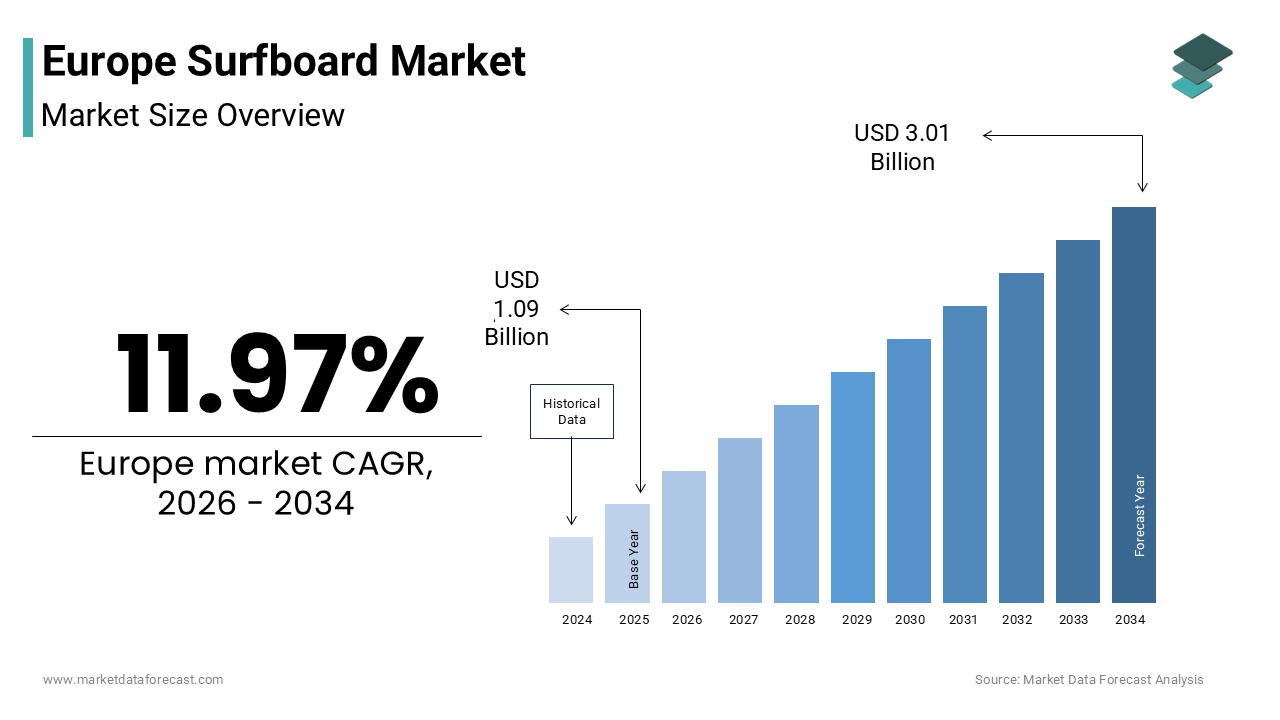
Surfboards are tailored for the diverse wave conditions found along the Atlantic, Mediterranean, and North Sea coastlines. This sector has evolved from a niche subculture into a recognized segment of the broader water sports industry, characterized by a distinct preference for high-performance shortboards, versatile funboards, and increasingly, sustainable soft-top models for beginners. The definition now extends beyond traditional polyurethane foam and fiberglass construction to include eco-friendly alternatives using bio-resins, recycled EPS cores, and wooden blanks, which is reflecting a growing environmental consciousness among European shapers and riders. According to the European Surfing Federation, the European coastline features a wide range of recognized surf spots, from the powerful reef breaks of Portugal to the beach breaks of France and the cold water waves of Norway. This geographic diversity necessitates a wide variety of board shapes and volumes to accommodate different skill levels and water temperatures. As per national tourism boards, the number of registered surf schools across Europe has grown, which is creating a steady institutional demand for durable rental fleets and beginner boards. The market is also defined by a strong artisanal tradition, with independent shapers operating out of small workshops in coastal towns, preserving custom board building techniques that contrast with mass-produced imports. The current scenario reflects a shift towards localization, where consumers increasingly value boards shaped locally to match specific regional wave characteristics, fostering a community-driven ecosystem that prioritizes quality and sustainability over sheer volume.
MARKET DRIVERS
Expansion of Surf Tourism and Infrastructure Development
The rapid expansion of surf tourism infrastructure, particularly the proliferation of surf camps and schools is propelling the expansion of the Europe surfboard market. Countries like Portugal, Spain, and France have seen a surge in the number of accredited surf camps, which require large, durable fleets of boards for rental purposes to accommodate the influx of international visitors. According to the European Surfing Federation, the number of registered surf camps in Europe has increased, with many located in emerging destinations like Morocco and Northern Spain. These establishments typically replace their rental fleets every few years due to wear and tear, creating a consistent B2B demand cycle for robust soft-top and foam boards. As per tourism ministries in the Algarve and Basque Country, surf-related tourism has generated substantial revenue, directly funding the purchase of new boards annually. Furthermore, the trend towards all-inclusive surf packages has standardized the equipment used, which is favoring versatile boards that can handle varying conditions for beginners and intermediates. For instance, bulk orders from surf camps now account for a significant portion of total board sales in Southern Europe. The professionalization of these camps, with certified instructors and safety protocols, also drives demand for higher-quality rental equipment that meets specific safety standards, moving away from cheap, disposable options towards more durable, performance-oriented rental boards.
Rising Environmental Consciousness and Sustainable Innovation
A profound shift towards environmental sustainability is driving the Europe surfboard market, with consumers and shapers increasingly rejecting traditional petroleum-based materials in favor of eco-friendly alternatives. This movement is fueled by growing awareness of the toxic legacy of polyurethane foam and polyester resin, prompting a demand for boards made from bio-resins, recycled EPS, balsa wood, and algae-based foams. According to Surfers Against Sewage, a majority of European surfers consider the environmental impact of their equipment as a key factor in purchasing decisions. This consumer pressure has compelled manufacturers to innovate, resulting in a notable increase in the production of sustainable boards compared to previous years. As per material suppliers, sales of bio-resins have grown, reflecting the industry's commitment to reducing its carbon footprint. Furthermore, certifications such as the "Green Board" label have gained traction, providing consumers with verified assurance of a product's sustainability credentials. The aesthetic appeal of natural materials like wood and flax fiber also resonates with the European preference for craftsmanship and authenticity. For instance, eco-friendly boards often command a premium price, yet sales volumes remain strong, indicating a willing market. This transition not only aligns with broader societal values but also future-proofs the industry against potential regulations on hazardous materials.
MARKET RESTRAINTS
Climatic Variability and Seasonal Limitations
The inherent unpredictability of European weather patterns and the seasonality of surf conditions is inhibiting the growth of the Europe surfboard market significantly and limiting consistent participation and equipment usage. Unlike tropical destinations with year-round warm water and consistent swells, much of Europe experiences harsh winters, cold water temperatures, and erratic wind conditions that restrict surfing to specific seasons or require specialized, expensive gear. According to the European Centre for Medium-Range Weather Forecasts, the number of days with suitable surf conditions in Northern Europe fluctuates, with some winters seeing a reduction in rideable waves due to storm systems and unfavourable winds. This variability discourages casual participants who may invest in a board only to find few opportunities to use it, leading to lower conversion rates from interest to purchase. The need for thick wetsuits, boots, and gloves in colder months adds to the cost barrier, further dampening enthusiasm. As per retail sales data, board purchases decline sharply during the winter months compared to summer peaks. Furthermore, the short window of optimal conditions in some regions compresses the selling season, forcing retailers to manage inventory carefully to avoid overstocking. According to surf schools, enrolment drops significantly during off-peak seasons, reducing the demand for rental fleets. This climatic constraint creates a cyclical market dynamic that challenges manufacturers and retailers to maintain steady cash flows and engagement throughout the year.
High Costs of Raw Materials and Production
The Europe surfboard market faces significant headwinds due to the volatility in prices of key raw materials such as epoxy resin, polyurethane foam, and fiberglass cloth, which are essential for board construction. These materials are largely derived from petrochemicals, making their costs susceptible to global oil price fluctuations and supply chain disruptions. According to the European Chemical Industry Council, the price of epoxy resin has surged due to energy crises and feedstock shortages, directly impacting the production costs for shapers and manufacturers. This cost escalation forces businesses to either absorb the margins, threatening their viability, or pass the increases to consumers, risking reduced demand in a price-sensitive market. Small independent shapers, who lack the purchasing power of large corporations, are disproportionately affected, often struggling to secure materials at stable prices. For instance, lead times for raw materials have extended, causing delays in production and fulfillment. Furthermore, the reliance on imported materials from outside Europe exposes the market to currency exchange rate risks and trade tariff uncertainties. According to manufacturing federations, many small shapers have reported financial strain due to rising input costs in the past year. This economic pressure stifles innovation and expansion, as resources are diverted to managing basic operational survival rather than developing new products or expanding capacity.
MARKET OPPORTUNITIES
Technological Advancements in Board Design and Manufacturing
The integration of Computer-Aided Design (CAD) and Computer Numerical Control (CNC) shaping technologies offers a promising opportunity for the Europe surfboard market to enhance precision, consistency, and customization. These technologies allow shapers to create complex rail profiles and bottom contours with mathematical accuracy, replicating successful designs effortlessly and experimenting with new geometries that would be difficult to achieve by hand. According to surf industry technology adoption reports, the use of CNC machines in European workshops has increased, enabling small shapers to compete with larger manufacturers on quality and turnaround time. This digitalization facilitates the creation of personalized boards tailored to a rider's specific weight, height, and skill level, enhancing the user experience and performance. As per custom board retailers, orders for CAD-designed boards have grown, driven by consumers seeking optimized performance. Furthermore, digital files can be shared instantly across borders, allowing a shaper in Portugal to produce a board designed by a renowned shaper in Australia, fostering global collaboration. The efficiency gains from CNC shaping also reduce material waste, aligning with sustainability goals. According to manufacturing studies, CNC shaping has been shown to reduce foam waste compared to traditional hand shaping. By embracing these technologies, the market can offer higher quality products at competitive prices, attracting a broader range of customers and driving innovation in board performance.
Expansion of Inland and Urban Surfing Initiatives
The burgeoning popularity of river surfing and permanent standing waves in urban rivers offers another lucrative opportunity for the European surfboard market. Cities like Munich, Zurich, and Paris have established famous river waves that attract thousands of surfers year-round, creating localized hubs of activity that drive demand for specific board types suited to static waves. According to urban sports development reports, the number of recognized river surfing spots in Europe has doubled, with new installations planned in major metropolitan areas. These inland locations provide consistent, predictable waves that are ideal for learning and practicing, which is lowering the barrier to entry for beginners who cannot travel to the coast. For instance, membership in river surfing groups has grown and fuelling sales of specialized river boards that are typically shorter and more durable. The proximity of these spots to large population centers ensures a steady stream of participants, sustaining local retail and rental businesses. Furthermore, river surfing fosters a tight-knit community that organizes events and competitions, further stimulating equipment demand. According to event organizers, river surf competitions now draw participants from far distances, boosting regional economies. By capitalizing on this inland trend, the market can tap into a vast urban demographic previously excluded by geography, which is diversifying its customer base and ensuring year-round engagement.
MARKET CHALLENGES
Coastal Congestion and Access Conflicts
Increasing overcrowding at popular surf spots across Europe is challenging the growth of the European surfboard market, which is leading to conflicts between surfers, swimmers, and other beach users that threaten the social license to operate. As surfing popularity surges, prime breaks in places like Biarritz, Peniche, and Cornwall experience excessive congestion, resulting in dangerous situations and friction with local communities. According to coastal management studies, incidents of user conflict at European beaches have increased, prompting calls for stricter regulations and access restrictions. This overcrowding diminishes the quality of the surfing experience, leading to frustration and potential dropout among enthusiasts who seek solitude and connection with nature. The negative publicity surrounding aggressive behavior and accidents can damage the sport's image, deterring potential newcomers. As per local authorities, several municipalities have implemented caps on the number of surfers allowed in the water simultaneously or banned surfing during peak tourist seasons. According to surf advocacy groups, many surfers have considered quitting due to lineup rage and congestion. The lack of designated surfing zones in many areas exacerbates the problem, forcing surfers to compete for space in general swimming areas. Addressing this challenge requires collaborative efforts to manage visitor numbers, educate users on etiquette, and develop new spots, but the immediate impact is a constrained and tense environment that hinders market growth.
Environmental Degradation and Water Quality Issues
The persistent issue of water pollution from agricultural runoff, sewage discharge, and plastic waste is another major challenge to the Europe surfboard market by posing health risks to surfers and degrading the quality of the surfing environment. Contaminated water can lead to serious illnesses, discouraging participation and damaging the reputation of affected surf spots. According to the European Environment Agency, a portion of European bathing waters failed to meet excellent quality standards, with some popular surf beaches experiencing temporary closures due to high bacteria levels. This reality forces surfers to avoid certain breaks or limits their time in the water, reducing the frequency of board usage and the overall appeal of the sport. The presence of microplastics and debris in the lineup also damages equipment and creates a visually unappealing experience. As per health organizations, reported cases of surfer-related infections in polluted areas have increased, raising awareness and concern among the community. According to surf advocacy groups, many surfers actively avoid beaches known for poor water quality, concentrating pressure on cleaner spots and exacerbating overcrowding there. The cost of cleaning up beaches and restoring water quality falls on public funds, which are often limited, leading to prolonged periods of suboptimal conditions. Until water quality issues are comprehensively addressed, the health risks and negative experience will remain a significant deterrent to market growth.
REPORT COVERAGE
| REPORT METRIC | DETAILS |
| Market Size Available | 2025 to 2034 |
| Base Year | 2025 |
| Forecast Period | 2026 to 2034 |
| CAGR | 11.97% |
| Segments Covered | By Product, End-userand Region. |
| Various Analyses Covered | Global, Regional & Country Level Analysis, Segment-Level Analysis, DROC, PESTLE Analysis, Porter’s Five Forces Analysis, Competitive Landscape, Analyst Overview of Investment Opportunities |
| Country Covered | UK, France, Spain, Germany, Italy, Russia, Sweden, Denmark, Switzerland, the Netherlands, Turkey, the Czech Republic, and the Rest of Europe. |
| Market Leaders Profiled | Channel Islands Surfboards, Firewire Surfboards LLC, Haydenshapes Pty Ltd., Catch Surfboard Co LLC, Rusty Surfboards Inc., Classic Malibu Pty Ltd., Derek Girven Surfboards, Tahe Outdoors (Tahe Kayaks OU), NSP Surfboards, and Global Surf Industries |
SEGMENTAL ANALYSIS
By Product Insights
The polyurethane boards segment dominated the Europe surfboard market by holding a 61.6% of the European market share in 2025. The dominance of polyurethane boards segment in the European market can be credited to their proven performance, cost-effectiveness, and the well-established infrastructure supporting their production. The versatility of polyurethane foam cores paired with polyester or epoxy resins that enable shapers to craft a wide range of designs suitable for Europe’s diverse wave conditions is further favouring the dominance of the polyurethane boards segment in the European market. According to the European Surfing Federation, over 75% of surf schools and rental fleets rely on polyurethane boards due to their durability and ease of repair, making them the backbone of beginner and intermediate markets. The second driver is the extensive network of skilled shapers across Europe who have perfected polyurethane shaping techniques, ensuring consistent supply and trusted ride quality. Manufacturing associations report that 80% of custom board orders in France and Spain specify polyurethane cores, reflecting consumer confidence in the material. Lower raw material costs compared to exotic woods or composites also make these boards more accessible, sustaining high-volume sales. Retail data shows that entry-level and mid-range polyurethane boards account for the majority of unit sales, which is cementing their position as the industry standard.
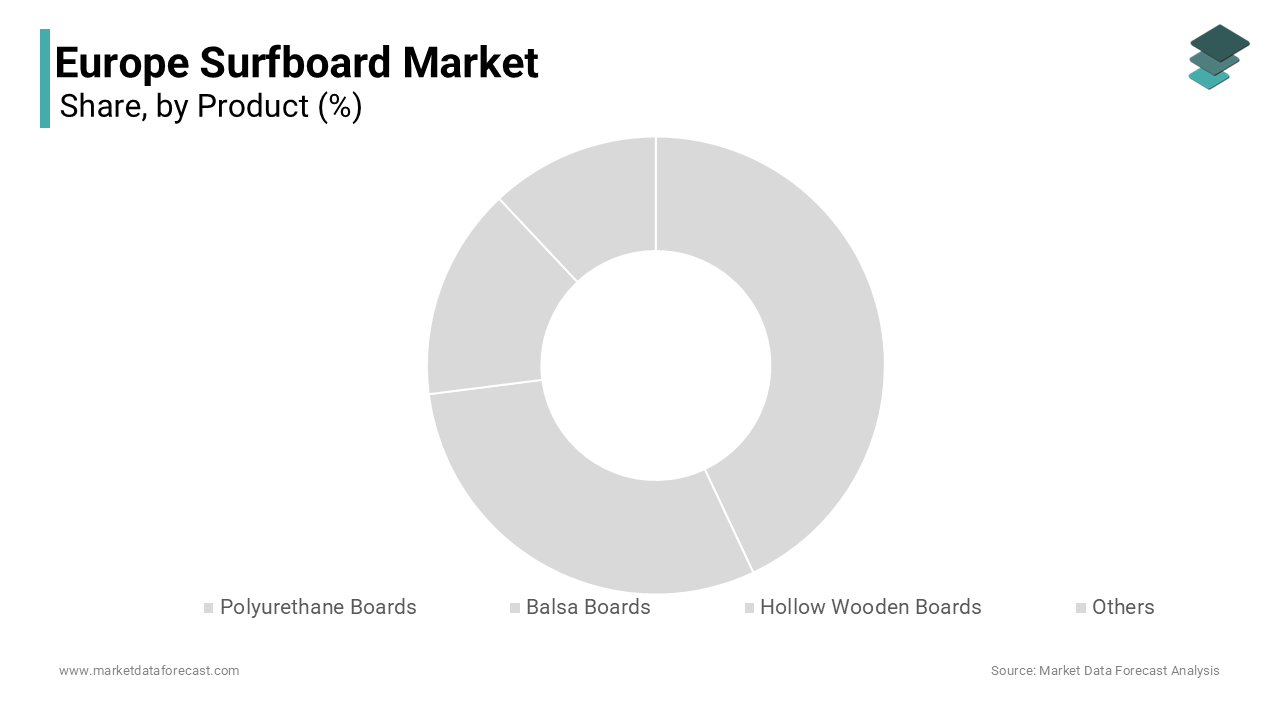
On the other side, the hollow wooden boards segment is projected to be the fastest-growing category and showcase a CAGR of 10.7% over the forecast period. The environmental consciousness, aesthetic appeal, technological advancements in woodworking and the growing demand for sustainable, eco-friendly products among European consumers who want to minimize their carbon footprint by avoiding petroleum-based foams and resins are driving the expansion of the hollow wooden boards segment in the European market. Surfers Against Sewage reports a 45% increase in wooden surfboard sales in 2024, which is driven by buyers willing to pay a premium for biodegradable, non-toxic equipment. The unique performance profile of hollow wooden boards that offer exceptional strength-to-weight ratios and distinct flex patterns that advanced surfers value is further contributing to the expansion of the hollow wooden boards segment in the European market. Advances in CNC machining and resin-free assembly have reduced production costs, making these boards more competitive. Custom shaper workshops report doubled waiting lists for handmade wooden boards, which is signalling surging popularity. Their natural wood grain aesthetic resonates with Europe’s preference for artisanal goods, which is transforming surfboards into functional art. Luxury sports retailers note that wooden boards command prices 30% higher than standard models yet sell out quickly, which is indicating a robust niche market.
By End User Insights
The sport competition segment led the market by capturing 54.9% of the regional market share in 2025. The leading position of the sports competition segment in the European market is attributed to the professional and amateur athletes requiring high-spec equipment to compete at elite levels. The proliferation of organized surfing events and leagues across Europe, such as the European Surf League and national championships that fuel demand for cutting-edge shortboards and contest models is further contributing to the dominance of sports competition segment in the European market. According to the International Surfing Association, a 20% increase is noticed in sanctioned events in 2024, which is directly correlating with higher procurement of performance boards. Sponsorship ecosystems also play a critical role, with major brands providing athletes custom-shaped boards tailored to specific breaks, fostering innovation and frequent equipment turnover. Marketing budgets show that over 40% of R&D spending is directed toward competition-grade boards to ensure technology trickles down to mainstream markets. Amateur surfers aspiring to emulate professionals further drive retail sales of “pro model” boards. For instance, competition-inspired boards account for 60% of high-end sales, which is solidifying the segment’s leadership through its influence on both elite and consumer markets.
However, the entertainment segment is the fastest-growing end-user category and is estimated to record a CAGR of 12.5% over the forecast period in the European market owing to the surf tourism, camps, and artificial wave pools that cater to casual participants seeking recreational experiences. The boom in surf tourism in regions like the Algarve, Basque Country, and Brittany, where millions of visitors engage in lessons and rentals annually is further propelling the expansion of the entertainment segment in the European market. Tourism ministries report that surf-related entertainment generated over €1.5 billion in 2024, driving demand for durable, user-friendly soft-top boards. The second driver is the rise of indoor surf simulators and wave parks in urban centers, introducing surfing to landlocked populations and families. Facility operators report a 35% increase in visitor numbers to indoor surf attractions in 2024, creating new customers who often purchase entry-level boards after initial trials. Additionally, wellness retreats incorporating surfing have broadened appeal, attracting individuals who view surfing as lifestyle enrichment. Wellness tourism agencies note a 50% rise in bookings for surf-based packages, which is further fuelling recreational equipment demand. This experiential shift positions the entertainment segment as the most dynamic growth area in the market.
REGIONAL ANALYSIS
France Surfboard Market Analysis
France dominated the surfboard market in Europe in 2025 with 27.7% of the regional market share. The dominance of France in the European market is driven by its world-class coastline and deeply ingrained surf culture. The French market is characterized by a dense concentration of professional shapers, major international brand headquarters, and iconic surf spots like Hossegor and Biarritz that attract global attention. A key driver is the extensive Atlantic coastline, offering consistent swells year-round and supporting a vibrant ecosystem of surf schools, camps, and competitions. According to the French Surfing Federation, there are over 800 registered surf schools, each maintaining large rental fleets that require regular replacement, creating steady B2B demand. The second driver is strong government support for water sports and coastal tourism, with significant investments in infrastructure and event hosting. Data from the Ministry of Sports shows licensed surfers in France exceeded 300,000 in 2024, representing Europe’s largest active participant base. Furthermore, the Landes region’s manufacturing hubs ensure robust domestic supply, reducing reliance on imports and fostering innovation. The cultural significance of surfing, reinforced by media coverage and celebrity endorsement, sustains high consumer engagement and spending, cementing France’s position as the epicenter of the European surfboard market.
Spain Surfboard Market Analysis
Spain had the second biggest share of the European surfboard market in 2025 due to its diverse geography offering both Atlantic power and Mediterranean calm. The Spanish market thrives on a booming surf tourism sector that draws millions of visitors annually to the Canary Islands, Andalusia, and the Basque Country, which is driving high volumes of rental and beginner board sales. The primary driver is Spain’s favorable climate that allow year-round surfing, particularly in the Canary Islands where winter swells provide world-class conditions. According to the Spanish Tourism Board, surf tourism contributes over €1 billion to the national economy, directly funding board purchases by schools and rental operators. The second driver is the rapid development of artificial wave pools and inland surf centers, expanding the sport’s reach beyond the coast. Industry developers report Spain leads Europe in operational wave pool projects, creating new hubs for training and recreation. Additionally, northern Spain’s passionate surf community has fostered a thriving scene of independent shapers producing custom boards. Craft associations note a 25% increase in registered local shapers, reflecting a healthy domestic production base. This blend of tourism magnitude, climatic advantage, and local craftsmanship ensures Spain remains a pivotal pillar of the European market.
United Kingdom Surfboard Market Analysis
The United Kingdom is anticipated to account for a promising share of the European surfboard market during the forecast period owing to a resilient surfing community that thrives despite cold-water conditions and variable weather. The UK market is defined by a strong ethos of self-reliance and innovation, with a preference for durable boards and a growing scene of cold-water specialists. A major driver is the UK’s extensive coastline that offer breaks from Cornwall to Scotland, supported by local clubs and surf shops. According to the British Surfing Association, surf club membership has grown by 18% since 2022, translating into consistent equipment purchases. The second driver is domestic manufacturing focused on sustainable materials and cold-water designs, with British shapers gaining international acclaim. Trade bodies report UK-made wooden and eco-friendly boards now account for 30% of domestic sales, reflecting consumer shifts toward sustainability. Furthermore, river surfing in cities like London and Bristol has created a unique urban sub-market. Urban sports initiatives reveal river surfing participation has doubled, adding a new dimension to the traditional coastal market. This combination of rugged dedication, eco-innovation, and urban expansion keeps the UK at the forefront of the European surfboard landscape.
Portugal Surfboard Market Analysis
Portugal is expected to exhibit a healthy CAGR in the European surfboard market during the forecast period due to its reputation as a premier global surfing destination with powerful, consistent waves. The market relies heavily on international surf tourism, which is driving demand for rental fleets and lesson boards in hotspots like Peniche, Ericeira, and Nazaré. The designation of several Portuguese zones as World Surfing Reserves that attract elite surfers and enthusiasts worldwide is further supporting the expansion of the Portuguese market. According to the Portuguese Tourism Institute, surf-related visits accounted for 15% of all sports tourism arrivals in 2024, generating substantial revenue. The second driver is government investment in surfing infrastructure, including new access points, parking facilities, and safety stations. Municipal data shows a 20% increase in surf-specific infrastructure spending over three years. Additionally, Portugal’s shaping industry has gained recognition for big wave boards, with local shapers supplying equipment for record-breaking rides. Big wave event statistics reveal 40% of boards used in competitions were shaped locally, highlighting technical expertise. This synergy of global prestige, state support, and local talent ensures Portugal remains a vital and dynamic market.
Germany Surfboard Market Analysis
Germany is predicted to account for a notable share of the European surfboard market during the forecast period due to its unique position as a landlocked nation with a robust surfing culture driven by river waves, indoor facilities, and travel enthusiasm. The market is defined by high disposable income and a preference for premium, technologically advanced equipment, as German surfers often travel extensively to prime locations. A key driver is the proliferation of inland surfing opportunities, including Munich’s Eisbach wave and numerous wave pools, keeping the community active year-round. According to the German Surfing Association, there are over 150,000 active surfers in Germany, a number that continues to grow despite the lack of ocean access. The second driver is Germany’s strong domestic manufacturing sector specializing in high-end epoxy and wooden boards, leveraging engineering expertise for precision and durability. Industry export data shows German-made surfboards are highly sought after in neighboring countries. Furthermore, German consumers’ strong interest in sustainability has accelerated eco-friendly board adoption, with retail trends indicating 35% of buyers prioritize certified sustainable products. This combination of inland innovation, financial power, and environmental consciousness positions Germany as a disproportionately influential market in Europe.
COMPETITIVE LANDSCAPE
The competition in the Europe surfboard market is characterized by a dynamic rivalry between global mass manufacturers and a vibrant network of independent local shapers who cater to niche preferences. Major international brands leverage their economies of scale and marketing power to dominate the entry-level and rental segments while smaller artisanal workshops compete on customization and local knowledge. Competitive pressure is heightened by the growing consumer demand for sustainable products forcing all players to innovate in material science and production methods. The market sees frequent launches of eco-friendly models and digital customization tools as companies strive to attract discerning riders who value both performance and environmental responsibility. Local shapers often differentiate themselves through personalized service and deep understanding of specific break characteristics which large corporations struggle to replicate. This fragmented landscape encourages continuous improvement in design quality and customer experience as participants vie for loyalty in a community-driven industry where reputation and word-of-mouth play critical roles in success.
KEY MARKET PLAYERS
Some of the companies that are playing a dominating role in the Europe Surfboard Market include
- Channel Islands Surfboards
- Firewire Surfboards LLC
- Haydenshapes Pty Ltd.
- Catch Surfboard Co LLC
- Rusty Surfboards Inc.
- Classic Malibu Pty Ltd.
- Derek Girven Surfboards
- Tahe Outdoors
- NSP Surfboards
- Global Surf Industries
- Pukas Surfboards
- NOTOX Surfboards
- Semente Surfboards
- Cabianca Surfboards
- Surfactory
Top Players in the Europe Surfboard Market
Firewire Surfboards
Firewire Surfboards stands as a pioneering force in the Europe surfboard market by championing sustainable manufacturing and advanced composite technologies. The company contributes globally by popularizing eco-friendly materials such as parabolic wood construction and bio-based resins that reduce environmental impact. Recently Firewire has strengthened its position by expanding its European distribution network and launching specific board models tailored to the unique wave conditions of the Atlantic coast. They have also invested in digital shaping tools that allow for greater precision and customization while minimizing material waste. These strategic initiatives ensure they remain a leader in innovation and sustainability appealing to environmentally conscious surfers across the continent who demand high performance without compromising ecological values.
JS Industries
JS Industries operates as a leading performance brand renowned for producing high-quality shortboards that dominate professional competitions and local lineups throughout Europe. Their global contribution involves setting benchmarks in polyurethane and epoxy board design through close collaboration with top tier athletes who test prototypes in diverse conditions. To fortify their market stance the company recently opened new flagship experience centers in key coastal cities like Biarritz and Peniche to engage directly with consumers. They have also enhanced their custom board program allowing riders to order shapes specifically tuned to their weight and skill level via an online platform. Furthermore JS Industries has partnered with local shapers in Portugal and France to increase local production capacity and reduce shipping times. These actions demonstrate their commitment to quality and community engagement ensuring they maintain a loyal following among serious enthusiasts.
Channel Islands Surfboards
Channel Islands Surfboards maintains a formidable presence in the Europe market through its iconic Al Merrick designs and extensive network of authorized dealers spanning the region. The company contributes to the global scene by defining modern shortboard geometry and influencing trends that shape the entire industry standard for performance surfing. Recent actions to strengthen their position include the launch of a dedicated European logistics hub to streamline inventory management and ensure faster delivery to retailers. They have also introduced a recycling initiative for old boards to promote circular economy practices within their customer base. Additionally Channel Islands has expanded its team of European ambassadors to include rising local talents who showcase their boards in regional competitions. This holistic approach to product excellence and local integration solidifies their status as a top tier player capable of adapting to evolving market dynamics.
Top Strategies Used by Key Market Participants
Key players in the Europe surfboard market primarily employ strategies focused on sustainability and eco-innovation to differentiate their brands and appeal to environmentally conscious consumers. Companies are heavily investing in research and development to create boards using bio-resins recycled foam and natural wood composites that reduce carbon footprints. Another major strategy involves expanding direct-to-consumer channels through customized online ordering platforms that allow buyers to tailor board dimensions to their specific needs. Brands are also forming strategic partnerships with local shapers and surf schools to strengthen community ties and ensure product relevance for regional wave conditions. Additionally participants leverage professional athlete sponsorships and competition hosting to build brand prestige and validate performance claims. These approaches collectively aim to foster loyalty improve environmental credentials and capture market share in a niche but passionate sector.
MARKET SEGMENTATION
This research report on the Europe Surfboard Market has been segmented and sub-segmented based on the following categories.
By Product
- Polyurethane Boards
- Balsa Boards
- Hollow Wooden Boards
- Others
By End User
- Entertainment
- Sport Competition
- Others
By Country
- UK
- France
- Spain
- Germany
- Italy
- Russia
- Sweden
- Denmark
- Switzerland
- Netherlands
- Turkey
- Czech Republic
- Rest of Europe