- Product Description Description
- Table of Contents TOC
- List of Table & Figure LOT
- Get Free Sample PDF Sample PDF
Market Size, 2025
$1.68 BnMarket Estimate, 2026
$1.78 BnMarket Forecast, 2034
$2.85 BnCAGR, 2026–2034
6.07%Executive Summary: Europe Swimming Pool Market
- Market Scope: Comprehensive analysis of the European swimming pool sector, covering end-user segments, revenue streams, pool sizes, country-level adoption frameworks, and the competitive industry landscape.
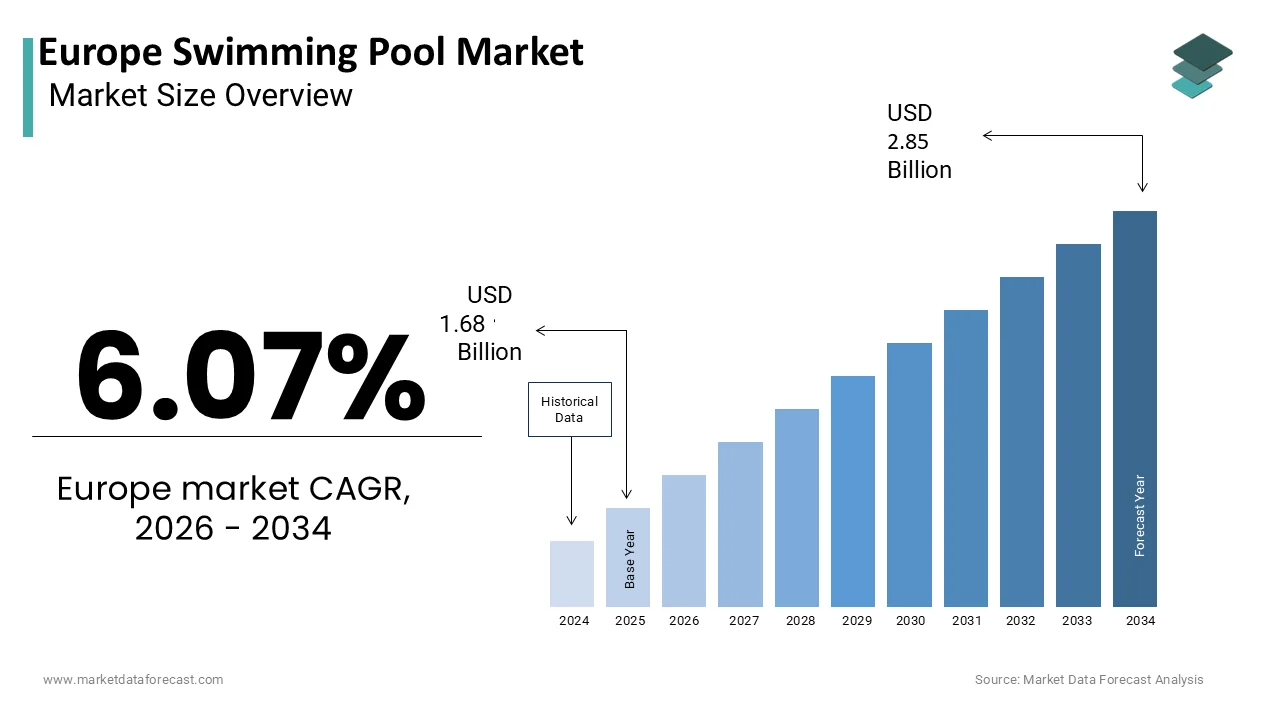
- Market Valuation: Valued at USD 1.68 billion in 2025, estimated to reach USD 1.78 billion in 2026, and projected to expand to USD 2.85 billion by 2034, growing at a steady CAGR of 6.07% from 2026 to 2034.
- Primary Growth Drivers: Increasing consumer focus on personal wellness and hydrotherapy alongside surging investments in premium residential projects and high-end hospitality venues.
Key Market Segment Metrics
| Category | Leading Segment (Base Position) | Fastest-Growing / High-Growth Segment |
|---|---|---|
| By End User | Hospitality & Recreation Pools (held a leading 45.3% share in 2025 driven by post-pandemic tourism recovery, hotels, and luxury resorts) | Commercial Sports & Fitness Facilities (fastest CAGR of 6.8% propelled by public wellness initiatives and aquatic fitness popularity) |
| By Revenue Source | Membership & Subscription (largest share of 55.8% in 2025 anchored by recurring payments, predictable cash flow, and corporate wellness) | Tick-and-Pay-Per-Entry (fastest CAGR of 5.5% fueled by tourism surges, waterparks, and flexible leisure consumption) |
| By Pool Size | Standard Commercial Pools (dominant share in 2025 spanning 15–25 meters for municipal centers, schools, and community hubs) | Semi-Olympic Pools (fastest CAGR of 7.2% driven by competitive sports standards, federation upgrades, and academic training) |
| By Region / Country | Germany (leading share of 18.8% in 2025 backed by high public facility density, municipal programs, and robust manufacturing) | France, Spain & UK (high-growth hubs driving tourism renovations, eco-friendly heating, and smart IoT pool automation) |
Major Market Players & Industry Landscape
Market Structure: Fragmented and competitive market featuring global multinational corporations, pool equipment manufacturers, and regional specialists competing on energy efficiency and smart tech.
Key Companies: Fluidra S.A., Pentair plc, Hayward Holdings, Inc., Intex Recreation Corp., Bestway Inflatables & Material Corp., Desjoyaux Pools, Waterco Limited, Zodiac Pool Systems LLC, AstralPool, BWT AG, Maytronics Ltd., and Emaux Water Technology Co., Ltd.
 Download Free Sample Report
Europe Swimming Pool Market Size
The Europe Swimming Pool Market was valued at USD 1.68 billion in 2025, is estimated to reach USD 1.78 billion in 2026, and is projected to reach USD 2.85 billion by 2034, growing at a CAGR of 6.07% from 2026 to 2034.
The swimming pool is the construction, maintenance,e and renovation of private, public,lic, and commercial aquatic facilities across the continent. As per Eurostat, approximately 22% of households in European Union member states had access to a garden or terrace in 2023, which serves as a foundational demographic for private pool installation. The integration of smart automation systems has become prevalent, with the European Commission noting that over 65% of new residential constructions in Southern Europe now include provisions for advanced home automation, including pool management. This evolution signifies a transition from mere leisure infrastructure to sophisticated wellness hubs that prioritize hygiene, safety, ty, and ecological responsibility. Stakeholders are increasingly focusing on modular and prefabricated solutions to reduce installation time and labor costs, sts thereby enhancing accessibility for a broader consumer base while adhering to strict European safety and environmental standards.
MARKET DRIVERS
Increasing Consumer Focus on Personal Wellness and Hydrotherapy Significantly Boosts Adoption
The heightened awareness regarding health and wellness is greatly influencing the growth of Europe swimming pool market. Consumers are increasingly viewing swimming not merely as a recreational activity but as a vital component of a holistic, healthy lifestyle. According to the World Health Organization, regular physical activity,y such as swimming, ng can reduce the risk of major illnesses like coronary heart disease, stroke, and type 2 diabetes by up to 30%. This medical endorsement has spurred demand for home installations, where individuals can exercise consistently without external constraints. A significant portion of this expenditure is attributed to spa and thermal experiences, which often feature specialized swimming pools, such as infinity pools, heated plunge pools, and hydrotherapy circuits. Hotels and resorts are consequently investing heavily in upgrading their aquatic facilities to attract health-conscious travelers. The trend extends to residential properties where homeowners are incorporating lap pools and swim spas to maintain fitness routines. This shift is particularly evident in countries like Germany and France, where health insurance providers occasionally offer incentives for preventive health measures, including access to swimming facilities.
Surging Investments in Premium Residential Projects and High-End Hospitality Venues Act as Primary Catalysts
The expansion of the luxury real estate sector and the continuous development of high-end hospitality infrastructure are accelerating the growth of Europe swimming pool market. Affluent consumers in Europe are increasingly prioritizing exclusive amenities that enhance property value and lifestyle appeal,l with swimming pools being a central feature of modern luxury homes. These installations often feature advanced technologies, such as automated cove, rs saltwater chlorination,tion and integrated lighting systems that align with contemporary aesthetic preferences. Simultaneously, the hospitality industry is leveraging unique aquatic experiences to differentiate itself in a competitive market. Resorts in destinations, such as the French Riviera, the Italian Coast, st and the Greek Islands are expanding their pool complexes to include multiple zones for relaxation, entertainment, dining, and fitness. This trend is not limited to coastal areas but is also visible in urban luxury apartments where rooftop pools are becoming a standard amenity. The synergy between real estate development and hospitality enhancement ensures a steady strehigh-value value projects that drive innovation and revenue within the swimming pool sector.
MARKET RESTRAINTS
Strict Legislative Frameworks Concerning Water Usage and Chemical Discharge Impose Significant Compliance Challenges
The implementation of stringent environmental regulations aimed at conserving water resources and minimizing chemical pollution is limiting the growth of Europe swimming pool market. European authorities are increasingly vigilant about the ecological impact of swimming pools, particularly in regions prone to drought and water scarcity. As per the European Environment Agency, more than 20% of the European Union territory faces high water stress conditions, which has led to the introduction of restrictive laws governing pool filling and maintenance. For instance, in Spain, local municipalities have imposed limits on the volume of water that can be used for non-essential purposes, es including private pools during the summer months. These restrictions necessitate the adoption of expensive water recycling and filtration systems, which increase the initial investment and ongoing maintenance costs for pool owners. Additionally, the European Chemicals Agency has tightened regulations on the use of certain disinfectants and algaecides due to their potential harm to aquatic ecosystems and human health. Compliance with these standards requires pool operators to invest in advanced treatment technologies such as ultraviolet sterilization and ozone generators, rs which are costlier than traditional chlorine-based methods. Small and medium-sized pool service companies often struggle to afford these upgrades, leading to market consolidation and reduced competition. The complexity of navigating varying national and local regulations further complicates operations for manufacturers and service providers, creating barriers to entry and slowing down market expansion in environmentally sensitive areas.
Substantial Upfront Capital Requirements Coupled with Economic Uncertainty Deter Potential Customers
The high initial cost associated with swimming pool installation, particularly in the context of prevailing economic volatility,y is additionally declining the growth of Europe swimming pool market. Constructing a swimming pool involves considerable expenditure on excavation, structural materials, as well as mechanical equipment, manpower,nt and labor, which can range from 30000 to 100000 Euros or more, depending on the size and complexity of the project. According to Eurostat, the inflation rate in the Euro area remained elevated at approximately 2.9% in early 2024, affecting the purchasing power of households and increasing the cost of construction materials such as concrete,ete steel, and plastics. This economic pressure makes discretionary spending on luxury items like swimming pools less attractive for middle-income families, who are prioritizing essential expenses. Furthermore, the rising interest rates implemented to combat inflation have increased the cost of borrowing for home improvement loans. Consequently, many potential customers are postponing or canceling their pool installation plans, leading to a slowdown in demand. The situation is exacerbated by labor shortages in the construction sector, which have driven up wages and extended project timelines. These financial and operational hurdles create a challenging environment for market players, who must navigate price sensitivity and reduced consumer confidence while maintaining profitability.
MARKET OPPORTUNITIES
The Adoption of Internet of Things-enabled devices and automated control systems offers lucrative avenues.
The integration of smart technology and automation, as consumers seek convenience, efficiency, and enhanced control over their aquatic environments, is setting up the growth of Europe swimming pool market. The proliferation of Internet of Things devices has enabled the development of intelligent pool management systems that allow users to monitor and adjust parameters, such as temperature,e pH levels, ls and filtration cycles remotely via smartphones. These technologies not only improve user experience but also contribute to resource conservation by optimizing energy and water usage. For example, smart pumps can adjust their speed based on real-time demand, reducing electricity consumption by up to 80% compared to traditional single-speed pumps. This alignment with sustainability goals appeals to environmentally conscious consumers and helps comply with regulatory standards. Moreover, the data collected by these systems can be used for predictive maintenance, alerting owners to potential issues before they escalate into costly repairs. Service providers can leverage this data to offer proactive maintenance contracts, thereby creating recurring revenue streams. The opportunity extends to the retrofitting of existing pools with smart upgrades, which represents a large untapped market segment.
Increasing Preference for Green Building Practices and Renewable Energy Integration Opens Promising Prospects
The growing demand for sustainable and eco-friendly pool solutions, which can offer environmentally responsible products and services, is another factor to leverage the growth of Europe swimming pool market. European consumers are increasingly aware of the environmental footprint of their lifestyles and are seeking ways to minimize it,t including in their choice of home amenities. This trend is supported by the European Green Deal, which aims to make Europe the first climate-neutral continent by 2050 and encourages the adoption of energy-efficient technologies. As per the International Energy Agency, the share of renewable energy in the European Union’s total energy consumption reached 23% in 2022, driving interest in solar-powered pool heating systems and heat pumps. These technologies reduce reliance on fossil fuels and lower operating costs, making them attractive to cost-conscious and environmentally aware buyers. Additionally, there is a rising interest in natural swimming pools, which use biological filtration methods instead of chemicals,s providing a safer and more natural swimming experience. Manufacturers and contractors who specialize in sustainable materials such as recycled composites and low-impact construction techniques can capitalize on this niche market. Furthermore, government incentives and subsidies for energy-efficient home improvements in countries like Germany and France further stimulate demand for green pool solutions.
MARKET CHALLENGES
Persistent Instability in Global Supply Chains and Scarcity of Raw Materials Hinder Project Completion
The supply chain disruptions and material shortages are affecting the ability of manufacturers and contractors to deliver projects on time and within budget, which is one of the major challenges for the growth of Europe swimming pool market. The aftermath of the global pandemic and geopolitical tensions has exposed vulnerabilities in the supply of components, such as pumps, filters, heaters,s and specialized plastics. The reliance on imports for certain electronic components and raw materials from Asia and other regions makes it susceptible to international logistics and trade restrictions. For instance, the shortage of semiconductors has impacted the production of smart pool controllers and automated systems, leading to inventory gaps and price hikes. These disruptions force companies to hold higher levels of safety stock, which ties up capital and increases storage costs. Additionally, the volatility in raw material prices, particularly for plastics and metals,s makes it difficult for businesses to provide accurate quotes and maintain profit margins. Small and medium-sized enterprises are particularly vulnerable as they lack the bargaining power and financial reserves to absorb these shocks. The unpredictability of supply availability also affects customer satisfaction, as delays can lead to contract disputes and reputational damage.
A Pronounced Deficit in Qualified Technicians and Installation Professionals Restricts Market Capacity
The shortage of skilled labor and technical expertise limits its capacity to meet growing demand and maintain high service standards, which is a major challenge for the growth of Europe swimming pool market. The construction and maintenance of swimming pools require specialized skills in plumbing, electrical work, hydraulic, cs, and chemistry, which are in short supply across many European countries. The resulting labor gap leads to longer waiting times for customers, increased labor costs, and potential compromises in workmanship quality. Incorrect installation or maintenance can result in equipment failure, water leakage, and safety hazards,s which undermine consumer confidence and lead to liability issues for service providers. Furthermore, the rapid advancement of pool technology, including smart systems and energy-efficient equipment, requires continuous upskilling of the workforce,e which many small businesses struggle to provide. The lack of standardized certification programs across different European countries further complicates the mobility and recognition of skilled workers. Addressing this challenge requires collaborative efforts between industry associations, educational institutions, and governments to promote vocational training and attract new talent to the sector.
REPORT COVERAGE
| REPORT METRIC | DETAILS |
| Market Size Available | 2025 to 2034 |
| Base Year | 2025 |
| Forecast Period | 2026 to 2034 |
| Segments Covered | By End User, Revenue Source, Pool Size, and Region. |
| Various Analyses Covered | Global, Regional and Country-Level Analysis, Segment-Level Analysis, Drivers, Restraints, Opportunities, Challenges; PESTLE Analysis; Porter’s Five Forces Analysis, Competitive Landscape, Analyst Overview of Investment Opportunities |
| Countries Covered | UK, France, Spain, Germany, Italy, Russia, Sweden, Denmark, Switzerland, Netherlands, Turkey, Czech Republic, Rest of Europe |
| Market Leaders Profiled | Fluidra S.A., Pentair plc, Hayward Holdings, Inc., Intex Recreation Corp., Bestway Inflatables & Material Corp., Desjoyaux Pools, Waterco Limited, Zodiac Pool Systems LLC, AstralPool, BWT AG, Maytronics Ltd., Emaux Water Technology Co., Ltd. |
SEGMENTAL ANALYSIS
By End User Insights
The hospitality and recreation pools segment accounted in holding 45.3% of the Europe swimming pool market share in 2025, with the relentless growth of the European tourism industry, which serves as an economic pillar for many nations within the region. According to the European Travel Commission, international tourist arrivals in Europe reached 90% opre-pandemicic levels by the end of 2023, signaling a strong recovery and sustained demand for high-quality accommodation. Hotels, resorts, and holiday villages are increasingly investing in premium aquatic facilities to differentiate their offerings and attract discerning travelers, who prioritize wellness and relaxation. Establishments are incorporating infinity pools, thermal spas, and water parks to enhance guest satisfaction and extend average stay durations. Furthermore, the rise of experiential travel has led to a surge in demand for unique pool designs such as rooftop infinity pools in urban centers and natural swimming ponds in rural retreats. This trend is particularly pronounced in Southern European countries like Spain, Italy, and Greece, where climate conditions favor year-round outdoor swimming.
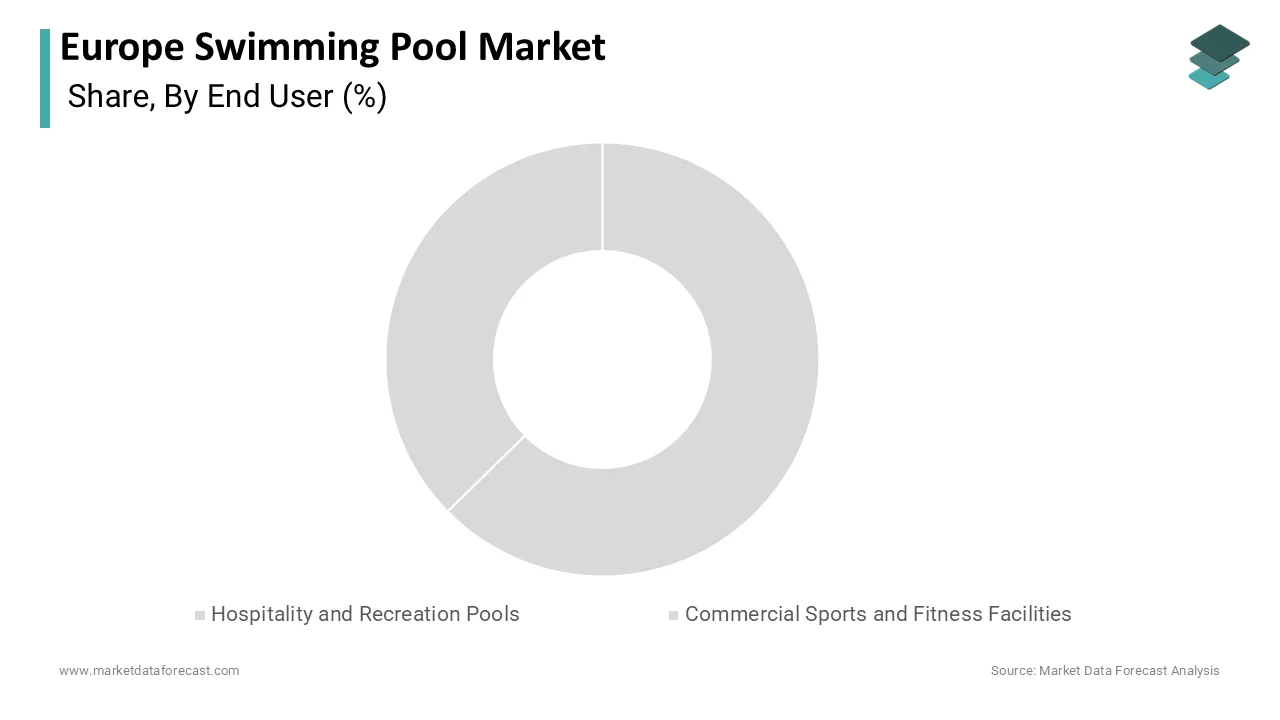
The commercial sports and fitness facilities segment is expected to witness the fastest CAGR of 6.8% from 2026 to 2034 due to heightened public awareness regarding the health benefits of swimming and increased participation in aquatic sports. Many European nations have launched national strategies to encourage swimming as a lifelong skill and fitness activity, leading to the construction of new public pools and the modernization of existing facilities. For instance, the French government announced a plan to renovate 1000 public swimming pools by 2025 to improve accessibility and energy efficiency. Additionally, the private fitness sector is expanding rapidly with health club operators integrating large swimming pools into their premises to offer comprehensive wellness solutions. The International Health Racquet and Sportsclub Association reported that the number of health club members in Europe exceeded 60 million in 202,3, reflecting a growing preference for holistic fitness environments. Swimming is increasingly recognized as a low-impact exercise suitable for all age groups, further broadening the customer base. The integration of advanced training technologies, such as underwater video analysis and resistance current systems in these facilities, also contributes to the segment's rapid expansion by attracting serious athletes and fitness enthusiasts.
By Revenue Source Insights
The membership and subscription revenue model segment was the largest by occupying 55.8% of the Europe swimming pool market share in 2025, owing to the shifting consumer behavior towards recurring payment structures that offer convenience and cost effectiveness. Individuals and families prefer monthly or annual subscriptions that provide unrestricted access to swimming pools, fitness centers,r s and associated amenities rather than paying per visit. This model ensures a steady cash flow for facility operators, enabling them to plan maintenance upgrades and staff training more effectively. The rise of digital platforms has further facilitated the adoption of subscription models by allowing users to manage their membership, book slots, and access exclusive content seamlessly. Moreover, the corporate wellness sector is contributing significantly to this trend as companies increasingly subsidize employee memberships to promote health and reduce absenteeism. This corporate engagement drives bulk subscriptions and long-term contracts for pool operators. The stability and predictability of subscription revenue make it the preferred financial model for both public and private pool facilities, ensuring sustainable operations and continuous service improvement.
The tick-and-pay-per-entry revenue stream segment is expected to grow at the fastest CAGR of 5.5% from 2026 to 2034, with the resurgence of domestic and international tourism, which has led to increased demand for short-term recreational activities. Tourists and occasional visitors often prefer the flexibility of paying per entry rather than committing to long-term memberships. According to the United Nations, World Tourism Organization, international tourist spending in Europe increased by 12% in 2023 compared to the previous year, reflecting a strong willingness to spend on leisure experiences. Waterparks, aqua therapy centers, and public lidos are benefiting from this trend, as they attract a diverse range of visitors, including families, groups,s and solo travelers. The emergence of pop-up swimming events and temporary aquatic installations in urban areas during summer months further boosts this revenue stream. These temporary facilities offer a unique experienceopen-airs open air cinema nights combined with swimming, appealing to younger demographics seeking social and interactive leisure options. Additionally, the introduction of dynamic pricing strategies allows operators to maximize revenue during peak seasons and special events. The flexibility of the pay-per-entry model caters to the spontaneous nature of modern leisure consumption, making it an increasingly attractive option for both consumers and operators in the dynamic European market.
By Pool Size Insights
The standard commercial pools segment accounted for a dominant share of the Europe swimming pool market in 2025. These pools typically measure between 15 meters and 25 meters in length and are designed to accommodate a wide range of activities, including leisure swimming,g basic fitness lessons, and recreational games. Their prevalence is due to their adaptability to various settings such as municipal community centers, tertiary school campuses, public mid-range hhotels and residential complexes. The widespread availability of standardized equipment and maintenance protocols further supports the dominance of this segment. Municipalities across Europe continue to invest in standard pools as part of public health initiatives aimed at promoting swimming literacy and physical activity among children and adults. For example, the German Swimming Federation reported that over 70% of public swimming facilities in Germstandard-sizedrd sized pools serving as hubs for local communities. The cost-effectiveness of constructing and operating standard pools compared to larger specialized facilities makes them an attractive option for budget-conscious investors and public authorities. Furthermore, the ability to partition these pools for different uses, such as lane swimming and aqua aerobics, enhances their utility and appeal to a broad demograph, i c ensuring consistent utilization and revenue generation.
The Tsemi-Olympic pools segment is swiftly emerging at a fastest CAGR of 7.2% from 2026 to 2034. Semi Olympic pools typically measure 25 meters in length and are designed to meet specific competitive standards, making them ideal for training aspiring athletes and hosting regional competitions. National governing bodies and sports federations are investing heavily in upgrading existing facilities and constructing new semi-olympic pools to nurture talent and improve performance standards. Universities and private sports academies are also contributing to this trend by installing semi-olympic pools to offer elite training programs and attract students. The versatility of these pools allows them to host both training sessions and local meets,s maximizing their operational efficiency. Additionally, the inclusion of advanced features such as startiblocksloc, KSs lanropesro, pes, and timing systems enhances their appeal to serious swimmers.
COUNTRY LEVEL ANALYSIS
Germany Swimming Pool Market Analysis
Germany was the top performer in the Europe swimming pool market with 18.8% of share in 025, with its robust economy and strong cultural emphasis on swimming as a fundamental life skill. The country boasts one of the highest densities of public swimming facilities,ities with thousands of municipal pools serving local communities. According to the German Swimming Federation, there are over 7000 public and private swimming pools in Germany, reflecting the nation's commitment to promoting aquatic activities. The market is further stimulated by government initiatives aimed at modernizing aging infrastructure to improve energy efficiency and accessibility. The Federal Ministry for Economic Affairs and Climate Action has allocated substantial funds for the renovation of public baths to meet contemporary environmental standards. This focus on sustainability has led to the widespread adoption of heat pumps, solar heating systems, and advanced filtration technologies. Additionally,lly the presence of major manufacturing companies specializing in pool equipment and chemicals strengthens the domestic supply chain and fosters innovation. The demand for private pools is also rising among affluent households, particularly in suburban areas where garden space is available.
France Swimming Pool Market Analysis
France swimming pool market was positioned second by capturing 11.2the market % of share in 2025 by leveraging its status as a top global tourist destination and its strong cultural affinity for aquatic leisure. The country is home to numerous iconic swimming facilities ranging from historic Art Deco pools to modern aqua centers. The French government has launched ambitious plans to renovate public swimming pools to ensure they remain safe and accessible. As per the Ministry of Sports and the Olympic and Paralympic Games, France aims to refurbish 1000 public pools by 2025 to prepare for major sporting events and promote local participation. This initiative has spurred significant activity in the construction and maintenance sectors. The tourism industry further bolsters the market with hotels and resorts along the French Riviera and in the Alps,s investing in luxury pool facilities to attract international visitors. The demand for heated pools is particularly high,igh extending the swimming season and increasing usage rates. Additionally, the popularity of natural swimming pools is growing in rural areas as consumers seek eco-friendly alternatives. The presence of leading European pool manufacturers and distributors in France facilitates the availability of high-quality products and services.
United Kingdom Swimming Pool Market Analysis
The United Kingdom swimming pool market growth is dridriven bye well-established network of public leisure centers and a growing private sector. Swimming is a popular activity in the U, with millions of participants engaging in regular sessions for fitness and recreation. According to Sport England, over 2.6 million adults swim at least once a week, highlighting the sustained demand for pool facilities. Recent efforts to integrate swimming facilities into broader leisure complexes have helped improve viability and attract a wider audience. The trend towards wellness and mental health awareness has further boosted the appeal of swimming as a therapeutic activity. Additionally, the UK has seen a rise in the installation of private indoor pools among high-net-worth individuals who seek year-roundibility despite the cooler climate. The adoption of energy-efficient technologies, such as heat recovery systems,s is becoming standard to mitigate high operating costs.
Spain Swimming Pool Market Analysis
Spain's swimming pool market growth is likely to grow with the warm climate, which allows for extended outdoor swimming seasons. Swimming pools are a standard feature in nearly all upscale accommodations and holiday rentals, making them essential for competitiveness in the hospitality industry. The construction of new residential developments in coastal areas frequently includes communal pool facilities. Furthermore, the Spanish government is promoting the modernization of public pools to improve energy efficiency and water conservation in response to periodic drought conditions. The adoption of solar heating and automated control systems is widespread, helping to reduce operational costs. The presence of a strong manufacturing base for pool components and chemicals supports the local market. The cultural importance of outdoor living and socializing around pools further sustains demand.
Italy Swimming Pool Market Analysis
Italy's swimming pool market growth is likely to grow with its rich cultural heritage and a strong focus on design and aesthetics in pool construction. According to the study, the hospitality sector experienced a strong recovery in 2023 with increased occupancy rates in luxury segments, prompting investments in premium amenities. Swimming pools are considered essential elements of the Italian Dolce Vita lifestyle, attracting both domestic and international tourists. The renovation of historic properties often includes the addition of modern pool facilities, es creating a unique fusion of old and new. The domestic market is also active,e with homeowners in regions like Tuscany and Lombardy investing in private pools. Sustainability is becoming a key consideration with growing interest in natural swimming pools, eco-friendly materials, and end-of-life materials.
COMPETITIVE LANDSCAPE
The competition in the Europe swimming pool market is characterized by a fragmented landscape with a mix of global giants and numerous regional specialists vying for dominance. Major multinational corporations leverage their extensive resources and brand recognition to offer integrated solutions ranging from construction to maintenance,ce while local players compete on personalized service and regional expertise. The market sees intense rivalry in terms of product innovation, particularly in the realm of energy efficiency and smart technology integration,ation as companies strive to meet evolving consumer demands and regulatory standards. Price competition remains significant in the standard equipment segment,,egment prompting manufacturers to optimize supply chains and production costs. However, differentiation through superior customer service and customized design solutions is becoming increasingly important for retaining clients in the premium sector.
KEY MARKET PLAYERS
Some of the companies that are playing a dominating role in the global Europe Swimming Pool Market include
- Fluidra S.A.
- Pentair plc
- Hayward Holdings, Inc.
- Intex Recreation Corp.
- Bestway Inflatables & Material Corp.
- Desjoyaux Pools
- Waterco Limited
- Zodiac Pool Systems LLC
- AstralPool (Fluidra brand)
- BWT AG
- Maytronics Ltd.
- Emaux Water Technology Co., Ltd.
TOP LEADING PLAYERS IN THE MARKET
- AstralPool stands as a premier entity in the European swimming pool sector, offering comprehensive solutions for construction, maintenance, and equipment. The company provides a vast array of pproductscts including filtration systems,, pum,, ps, a nd chemical treatments to residential and commercial clients globally. AstralPool has recently focused on expanding its digital presence by launching advanced online platforms for customer engagement and service booking. They have also invested heavily in research and development to introduce energy-efficient technologies that align with European sustainability standards. Their strategic partnerships with local distributors have strengthened their supply chain resilience across various countries.
- Fluidra is a global leader specializing in the design and distribution of equipment and accessories for swimming pools and wellness areas. The company operates through multiple brands catering to diverse consumer needs, from private homeowners to large commercial facilities. Fluidra has actively pursued growth through strategic acquisitions of regional competitors to broaden its product portfolio and geographic reach. Recent initiatives include the integration of smart connectivity features into their product lines, enabling remote monitoring and control via mobile applications. They have also emphasized sustainability by developing eco-friendly products that reduce water and energy consumption. Fluidra’s robust distribution network ensures timely delivery and support across Europe.
- Hayward Industries is a prominent manufacturer of high-performance swimming pool equipment known for its innovative technology and durability. The company offers a wide range of products, including pump,s, filter,s, heater,s and automated control systems for both residential and commercial applications. Hayward has recently intensified its focus on digital transformation by enhancing its software capabilities for pool management and maintenance scheduling. They have introduced energy-efficient models that comply with strict European environmental regulations, thereby appealing to eco-conscious consumers. The company has also expanded its technical support services to provide better assistance to installers and end users. Hayward’s commitment to quality and reliability has earned it a strong reputation among professionals in the industry.
TOP STRATEGIES USED BY KEY MARKET PARTICIPANTS
Key players in the Europe swimming pool market primarily employ strategies focused on product innovation and sustainability to maintain a competitive advantage. Companies are increasingly investing in research and development to create energy-efficient equipment, such as variable speed pumps and solar heating systems,s that align with stringent environmental regulations. Strategic acquisitions and mergers are common tactics used to expand geographic reach and diversify product portfolios, os allowing firms to offer comprehensive solutions under one brand. Digital transformation is another critical strategy with manufacturers integrating Internet of Things technology into their products to enable smart pool management and remote monitoring. This enhances customer convenience and creates a recurring revenue stream through subscription-based services. Additionally companiess are strengthening their distribution networks by forming partnerships with local dealers and contractors to improve market penetration and customer service.
MARKET SEGMENTATION
This research report on the europe swimming pool market is segmented and sub-segmented into the following categories.
By End User
- Hospitality and Recreation Pools
- Commercial Sports and Fitness Facilities
By Revenue Source
- Membership and Subscription
- Ticket / Pay-per-Entry
By Pool Size
- Standard Commercial Pools
- Semi-Olympic Pools
By Country
- Germany
- France
- United Kingdom
- Spain
- Italy
- Rest of Europe