- Product Description Description
- Table of Contents TOC
- List of Table & Figure LOT
- Get Free Sample PDF Sample PDF
Market Size, 2025
$36.19 BnMarket Estimate, 2026
$37.64 BnMarket Forecast, 2034
$51.60 BnCAGR, 2026–2034
4.02%Europe Swine Feed Market Report Summary
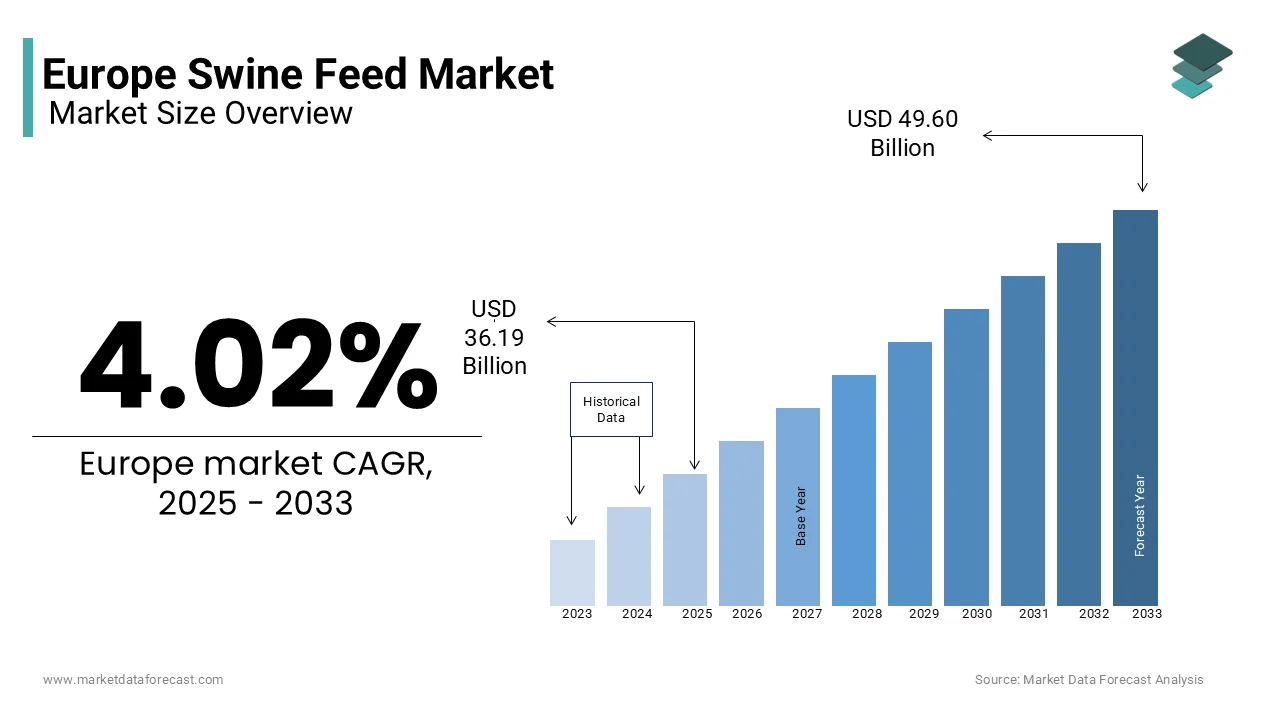
The Europe swine feed market was valued at USD 36.19 billion in 2025, is estimated to reach USD 37.64 billion in 2026, and is projected to grow to USD 51.60 billion by 2034, registering a CAGR of 4.02% during the forecast period from 2026 to 2034. The growth of the European swine feed market is primarily driven by steady pork consumption across the region, modernization of pig farming practices, and increasing focus on improving feed efficiency and animal health. Rising adoption of nutritionally balanced compound feeds, coupled with stricter regulations on antibiotic use, is encouraging the use of high-quality ingredients and functional feed additives. In addition, growing emphasis on sustainable livestock production and productivity optimization is supporting long-term market expansion.
Key Market Trends
- Increasing demand for high-energy and protein-rich feed formulations to improve growth rates and feed conversion ratios in swine production.
- Rising use of amino acids, enzymes, and probiotics as alternatives to antibiotic growth promoters, driven by regulatory pressure and animal welfare concerns.
- Growing focus on precision nutrition and customized feed solutions tailored to different growth stages of pigs.
- Expansion of integrated pork production systems, especially in Western Europe, is boosting demand for consistent and large-scale feed supply.
- Adoption of sustainable and traceable feed ingredients to align with environmental regulations and consumer expectations.
Segmental Insights
- Based on ingredients, the cereals segment dominated the Europe swine feed market in 2024, accounting for 48.4% of the market share. The segment’s dominance is attributed to the widespread availability of cereals such as wheat, barley, and corn, which serve as primary energy sources in swine diets and support cost-effective feed formulations.
- Based on supplements, the amino acids segment held the leading position in the Europe swine feed supplements market in 2024, capturing 32.5% of the regional share. This growth is driven by the increasing use of essential amino acids such as lysine, methionine, and threonine to enhance protein utilization, reduce nitrogen excretion, and improve overall animal performance.
Regional Insights
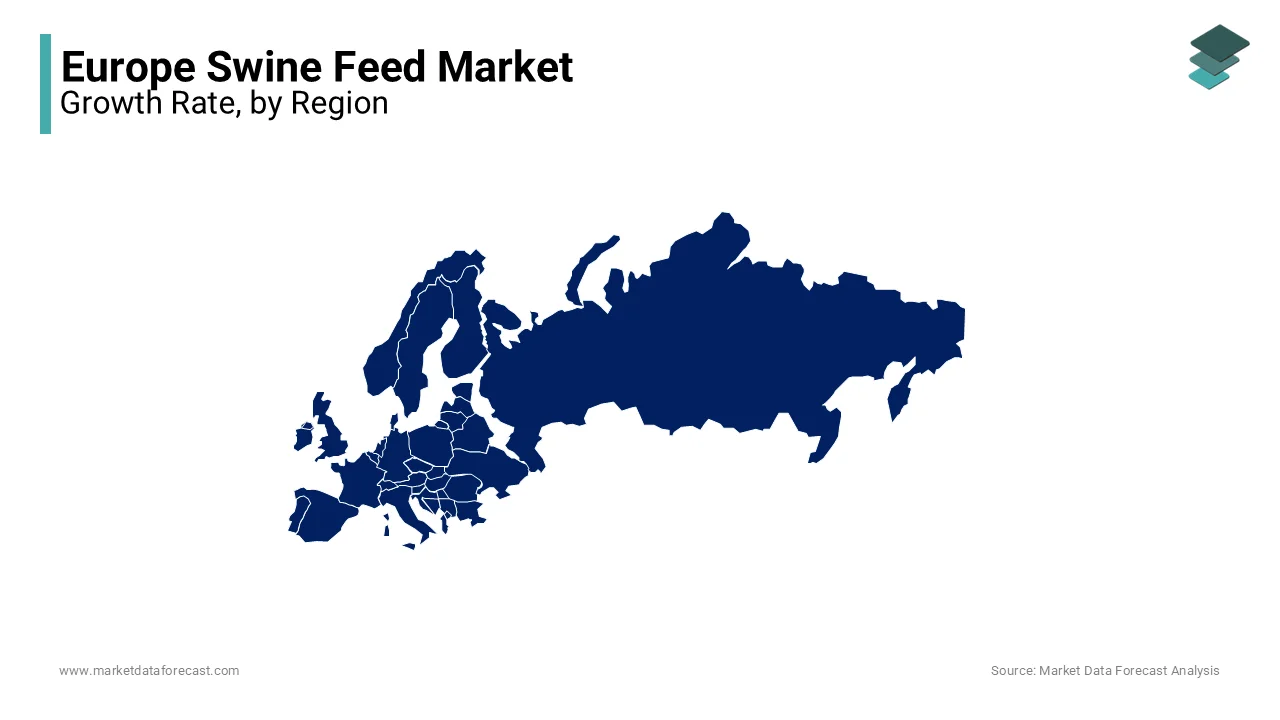
- The European swine feed market shows strong regional variation, reflecting differences in pig population density and pork production intensity.
- Spain emerged as the largest national market in 2024, accounting for 22.4% of the regional share, supported by its large commercial pig farming sector and strong export-oriented pork industry.
- Germany ranked as the second-largest market, driven by advanced livestock management practices and high feed quality standards.
- France, Denmark, and the Netherlands also held notable shares, benefiting from technologically advanced feed manufacturing, strong biosecurity frameworks, and well-established pork value chains.
Competitive Landscape
The Europe swine feed market is moderately consolidated, with the presence of multinational feed producers and specialized nutrition companies focusing on innovation and performance-driven solutions. Key players are investing in functional feed additives, research-driven formulations, and strategic partnerships with livestock producers to strengthen their market position. Leading companies operating in the Europe swine feed market include CHR Hansen Holdings A/S, Novus International Inc., Lallemand Inc., BASF, Royal DSM N.V., ADM, Alltech Inc., Charoen Pokphand Foods, Cargill Inc., and ABF Plc.
Europe Swine Feed Market Size
The Europe swine feed market size was valued at USD 36.19 billion in 2025 and is anticipated to reach USD 37.64 billion in 2026 to reach USD 51.60 billion by 2034, growing at a CAGR of 4.02% during the forecast period from 2026 to 2034.
Introduction to the Europe Swine Feed Market
Swine feed is a nutritionally balanced compound formulation designed to support the growth, health, and reproductive performance of domestic pigs across the farrowing, nursery, growing, and finishing stages. These feeds integrate cereals, protein meals, vitamins, minerals, and increasingly, functional additives such as phytogenic and organic acids, all subject to stringent EU regulations on animal nutrition and food safety. The market operates within a highly regulated framework governed by Regulation (EC) No 183 2005 on feed hygiene and Regulation (EC) No 767 2009 on feed labeling, which prohibit the use of antimicrobial growth promoters and mandate full traceability of ingredients. According to Eurostat, the European Union housed over 140 million pigs in 2023, with the majority raised under controlled indoor systems that require standardized feeding protocols. The European Food Safety Authority (EFSA) reports that feed accounts for 60–70% of total swine production costs, which is making nutritional efficiency a critical determinant of farm viability. As outlined in the European Commission’s Farm to Fork Strategy, the sector is transitioning toward reduced‑protein diets and alternative protein sources to lower environmental nitrogen excretion. These regulatory, economic, and ecological imperatives are reshaping the market, positioning feed not merely as a commodity but as a precision tool for sustainable pork production in Europe. This evolution underscores how policy frameworks, cost structures, and sustainability targets converge to drive innovation in swine nutrition, from formulation efficiency to alternative feed ingredients such as legumes, insect protein, and fermentation‑based solutions.
MARKET DRIVERS
Stringent EU regulations on antibiotic use drive demand for functional feed additives
The European Union’s ban on antimicrobial growth promoters, enforced since 2006 and reinforced by the 2022 Veterinary Medicinal Products Regulation, has reshaped swine feed formulation toward non‑antibiotic health solutions, which is majorly propelling the swine feed market growth in Europe. As per the European Medicines Agency (2024), antibiotic sales for food‑producing animals in the EU declined by 43% between 2011 and 2023, which directly increases demand for alternatives that sustain gut health and growth performance. As per the European Feed Manufacturers’ Federation, more than 85% of commercial swine feeds in Western Europe now include at least one gut health modulator, which demonstrates widespread adoption. In Germany, the Federal Ministry of Food and Agriculture documented a 37% increase in organic acid inclusion in nursery feeds between 2020 and 2023, which correlates with reduced post‑weaning diarrhea incidence. Similarly, according to Denmark’s Pig Research Centre, farms using multi‑strain probiotic blends achieved 8% higher average daily gain in piglets without antibiotics, which validates efficacy. The regulatory pressure transforms feed from a caloric source into a proactive health management platform, which is boosting the European swine feed market growth.
High concentration of industrial pig farming in key EU regions sustains bulk feed demand.
Europe’s swine production is concentrated in high‑density regions, sustaining large‑scale demand for standardized compound feed, which is further boosting the European swine feed market expansion. As per Eurostat (2024), Spain, Germany, and France together account for over 58% of the EU’s pig inventory, anchoring demand in regions such as Castilla y León, Lower Saxony, and Brittany. According to the European Environment Agency, 65% of EU pigs are raised in farms with more than 1,000 animals, which demands automated feeding systems and consistent feed batches. In Spain, the Ministry of Agriculture (2023) recorded 50 million pigs produced, with commercial feed mills supplying over 90% of swine operations. In Germany’s Lower Saxony, regional cooperatives deliver more than 2.3 million tonnes of swine feed annually, which supports 7.2 million pigs. This industrial concentration anchors a stable, high‑volume demand base and is contributing to the regional market expansion.
MARKET RESTRAINTS
Strict EU restrictions on alternative protein sources limit ingredient flexibility.
Despite pressure to reduce reliance on imported soybean meal, EU approval processes for novel proteins constrain formulation innovation, which is a notable factor hampering the European swine feed market. Regulation (EC) No 767/2009 requires EFSA evaluation before commercial use. As per the European Commission (2024), only 4 insect meal species and two single‑cell proteins have received full authorization for monogastric feed, despite more than 30 pending applications. As per the European Central Bank (2023), soybean meal prices fluctuated by 42% in 2023 due to South American droughts and shipping disruptions, which underscores vulnerability. In France, the National Federation of Pig Producers noted that 78% of feed mills still use over 18% soy in finishing diets, which reflects limited alternatives. These regulatory bottlenecks trap feed formulators in a high‑cost and import‑dependent paradigm is impeding the swine feed market growth in this region.
MARKET OPPORTUNITIES
Expansion of precision feeding technologies enables stage‑specific nutrient delivery
Digital monitoring and automated feeding systems are unlocking precision nutrition opportunities for the European swine feed market. As per the European Commission’s Digital Farming Observatory (2023), 28% of finishing units in Denmark and the Netherlands use automated feeders linked to weighing scales and growth prediction algorithms, which improves efficiency. In Germany, the Thünen Institute (2023) documented that precision feeding reduced nitrogen excretion by 19% and improved the feed conversion ratio by 0.28 points in trials across 12 farms. The EU’s Horizon Europe programme (2023) allocated €18 million to the “SmartFeed4Pigs” consortium to develop AI‑driven feeding protocols, which accelerate innovation. The precision feeding reduces waste, improves sustainability, and proves that digital integration is a structural opportunity for swine feed producers.
Development of locally sourced alternative proteins to reduce import dependency
The EU’s Protein Plan aims to increase plant protein self‑sufficiency from 31% to 50% by 2030, which directly benefits swine feed and is a promising opportunity for the European swine feed market. In France, the Ministry of Agriculture (2023) reported 850,000 hectares of peas and faba beans cultivated for feed, which is a 24% increase since 2020. In Germany, the Federal Office for Agriculture and Food (2023) noted rapeseed meal usage in swine diets rose by 17%, supported by domestic crushing expansion. Protix in the Netherlands supplies over 15,000 tonnes of black soldier fly meal annually, authorized for pig diets up to 5%. The European Investment Bank (2023) committed €300 million to scaling alternative protein facilities under the Bio‑Based Industries Joint Undertaking. This local protein development reduces reliance on volatile imports and provides an opportunity for the European swine feed market.
MARKET CHALLENGES
Vulnerability to global feed ingredient price volatility and geopolitical disruptions
Europe’s swine feed market remains exposed to global commodity volatility. As per the European Feed Manufacturers’ Federation (2023), more than 60% of EU soybean meal is imported from Brazil and Argentina, which exposes prices to weather and trade risks. The European Central Bank (2022) reported that the feed cost index surged by 31% due to the Ukraine war’s impact on wheat and sunflower meal supplies. In 2023, droughts in Argentina reduced soy harvests by 40%, triggering a 22% spike in EU soybean meal prices within three months. This external dependency creates persistent financial instability and challenges the swine feed market expansion in Europe.
Regulatory fragmentation in welfare labeling complicates feed marketing and formulation
National welfare labeling schemes create inconsistent feed requirements, which further challenge the regional market growth. As per the European Livestock Farmers’ Association (2023), a single feed mill serving Germany, France, and Belgium may need to produce up to eight different formulations for the same pig category to meet retailer demands. In Germany, Tier 3 welfare certification requires feeds free of palm kernel meal and non‑EU soy, while France’s Label Rouge mandates at least 10% locally grown cereals. These divergences increase production complexity, inventory costs, and risk of cross‑contamination. Without a harmonized EU welfare label, feed companies cannot achieve economies of scale. This fragmented welfare labeling fractures the single market and acts as a notable challenge to the swine feed market growth in Europe.
REPORT COVERAGE
| REPORT METRIC | DETAILS |
| Market Size Available | 2025 to 2034 |
| Base Year | 2025 |
| Forecast Period | 2026 to 2034 |
| CAGR | 4.02% |
| Segments Covered | By Ingredients, Supplements, And By Country |
| Various Analyses Covered | Global, Regional & Country Level Analysis; Segment-Level Analysis, DROC, PESTLE Analysis, Porter’s Five Forces Analysis, Competitive Landscape, Analyst Overview of Investment Opportunities |
| Regions Covered | UK, France, Spain, Germany, Italy, Russia, Sweden, Denmark, Switzerland, Netherlands, Turkey, Czech Republic & Rest of Europe |
| Market Leaders Profiled | CHR Hansen Holdings A/S (Denmark), Novus International Inc. (U.S), Lallemand Inc. (Canada), BASF (Badische Anilin und Soda Fabrik) (Germany), Royal DSM N.V. (The Netherlands), ADM (Archer Daniels Midland Company) (U.S), Alltech Inc. (U.S), Charoen Popkhand Foods (Thailand), Cargill Inc. (U.S), and ABF Plc (Associated British Foods) (U.K. ) |
SEGMENTAL ANALYSIS
By Ingredients Insights
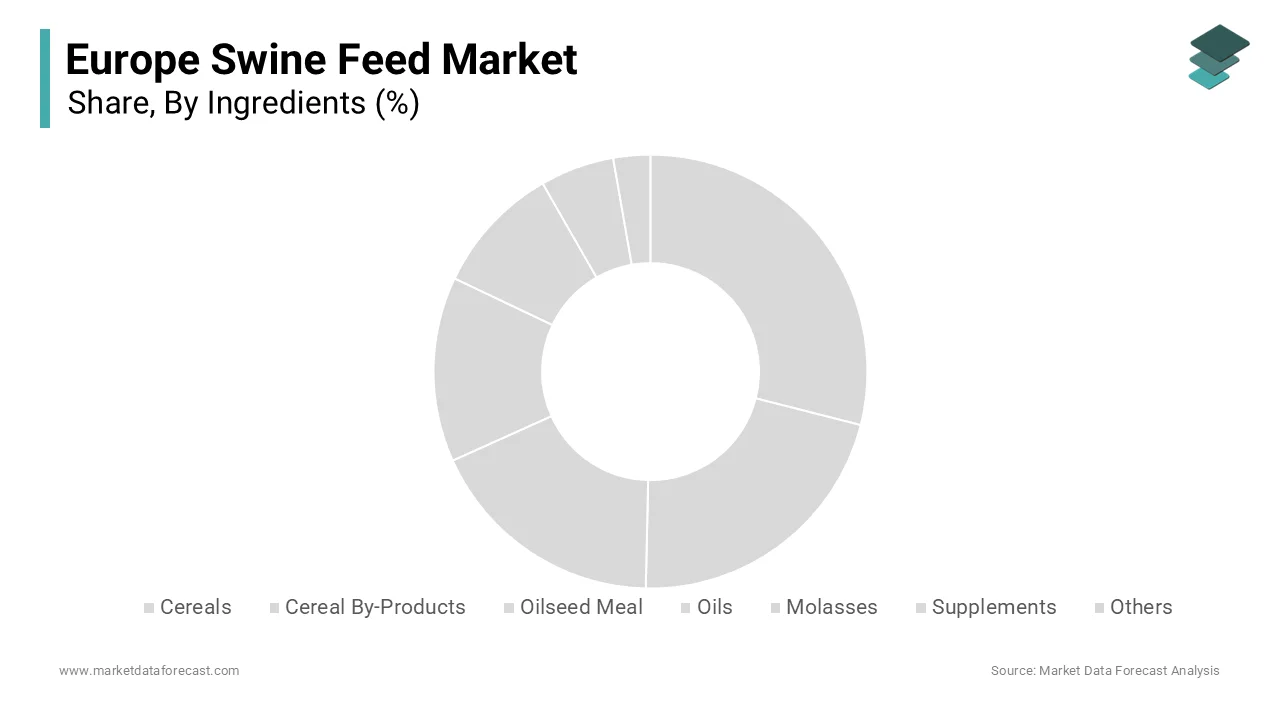
The cereals segment dominated the Europe swine feed market by holding 48.4% of the market in 2025. The dominance of the cereals segment in this European market is attributed to their role as the primary energy source in swine diets, providing highly digestible starch essential for growth and lactation. According to Eurostat, the European Union harvested 287 million tonnes of cereals in 2023, with more than one‑third allocated to animal feed. As per the German Federal Ministry of Food and Agriculture, Germany alone used over 12 million tonnes of wheat in compound feed, which indicates domestic integration. Wheat, barley, and corn together account for the majority of cereal usage, ensuring regional availability and price stability compared to imported proteins. Cereals also serve as carriers for supplements and binders in pelleted feed, enhancing physical quality and palatability. This segment is expected to remain dominant over the forecast period as nutritional value, agronomic availability, and regulatory alignment sustain their role as the foundation of European swine nutrition.
The supplements segment is expected to register the fastest CAGR of 7.9% over the forecast period in the European market. The shift from calorie delivery to precision health and performance management in the post‑antibiotic era is propelling the growth of the supplements segment in this European market. According to Denmark’s Pig Research Centre, enzyme and acidifier inclusion in nursery feeds increased significantly between 2021 and 2023, correlating with reductions in post‑weaning mortality. As per Germany’s Thünen Institute, amino acid supplementation enabled reductions in dietary crude protein without compromising growth performance. The European Food Safety Authority has authorized numerous feed additives for swine since 2020, streamlining innovation and compliance. This segment is expected to expand rapidly over the forecast period as functional supplements become integral to efficiency, sustainability, and animal health in European swine production.
By Supplements Insights
The amino acids segment held the leading position in the Europe swine feed supplements market in 2024 and occupied 32.5% of the regional market share. The dominance of the amino acids segment in this European market is driven by their indispensable role in enabling low‑protein diets, a cornerstone of the EU’s environmental and welfare strategy. According to the Netherlands Enterprise Agency, Dutch feed mills reduced average finishing diet protein levels from 16.5% to 14.2% between 2020 and 2023 through precise amino acid fortification, achieving significant reductions in manure nitrogen. As per France’s National Institute for Agricultural Research, balanced amino acid profiles improved feed conversion ratios in growing pigs, enhancing economic viability. The European Commission’s revised guidelines on nitrogen management explicitly endorse amino acid supplementation as a compliance mechanism. This segment is expected to remain dominant over the forecast period as scientific validation, environmental impact, and economic return reinforce amino acids as the anchor of modern swine supplementation.
The acidifiers segment is anticipated to grow at a promising CAGR of 9.3% over the forecast period in the European market. The proven efficacy of acidifiers as non‑antibiotic growth promoters in maintaining gut health and performance is supporting the growth of the acidifiers segment in this European market. According to Germany’s Federal Research Institute for Animal Health, buffered acidifier blends reduced post‑weaning diarrhea incidence by more than 25%, allowing higher daily gain without antibiotics. As per Spain’s Ministry of Agriculture, the inclusion of acidifiers in commercial nursery feeds rose sharply between 2020 and 2023 as part of national antimicrobial resistance action plans. The European Food Safety Authority has issued positive scientific opinions for multiple acidifier formulations, accelerating adoption. This segment is expected to expand rapidly over the forecast period as the EU intensifies its “One Health” approach, positioning acidifiers as a scalable solution at the intersection of animal health, food safety, and public health.
REGIONAL ANALYSIS
Spain Swine Feed Market Analysis
Spain remained the largest national market for swine feed in Europe in 2024 and captured 22.4% of the regional share. The dominance of Spain he Europe is attributed to its position as the EU’s top pork producer and exporter. According to Spain’s Ministry of Agriculture, Fisheries and Food, around 55 million pigs were slaughtered in 2023, confirming Spain’s leadership in EU pork output. Intensive production is concentrated in Castilla y León and Catalonia, where standardized compound feed dominates. Spain’s feed industry benefits from domestic cereal production and port access for soybean meal imports. In 2023, the government launched the “Plan Porcino Sostenible,” allocating funding to support low‑protein diets and improved manure management. Spain is expected to remain Europe’s volume engine, combining scale, vertical integration, and supportive policy.
Germany Swine Feed Market Analysis
Germany accounted for the second-largest share of the European swine feed market in 2024. Factors such as strict animal welfare standards, advanced feed technology, and dense pig populations in Lower Saxony and North Rhine‑Westphalia are fuelling the growth of the German swine feed market. According to the Federal Statistical Office (Destatis), Germany housed 22.4 million pigs in 2023, which reflects a decline from earlier years. Large farms dominate, requiring consistent, high‑quality feed. The Federal Ministry of Food and Agriculture enforces strict feed traceability and antibiotic reduction rules under national health databases. German feed mills lead in precision nutrition, with widespread use of near‑infrared spectroscopy for real‑time ingredient analysis. Germany is expected to remain Europe’s compliance and quality benchmark.
France Swine Feed Market Analysis
France held a notable share of the European swine feed market in 2024. The dual strength of France as a major cereal producer and pork exporter is contributing to the French market growth. According to FranceAgriMer, French wheat production reached about 36 million tonnes in 2023, with a significant share directed to animal feed. France’s “Plan Protéines” promotes faba beans and peas in swine diets to reduce soy dependency. The Label Rouge scheme drives demand for high‑quality feeds with specific cereal and supplement profiles. According to the French Pig Institute, widespread adoption of amino acid‑optimized diets is required to meet environmental permits. France is expected to remain a uniquely integrated and forward‑looking feed market.
Denmark Swine Feed Market Analysis
Denmark captured a prominent share of the European swine feed market in 2024. The world‑leading feed efficiency and an export‑oriented pork sector are supporting the swine feed market in Denmark. According to SEGES Innovation, Denmark’s feed standards emphasize amino acid balancing and nutrient optimization. The Danish Pig Research Centre mandates strict nutrient specifications, ensuring traceability and quality. Denmark’s cooperative feed model accelerates the adoption of innovations such as enzyme cocktails and phytogenic additives. According to the data of InterPIG and SEGES data, Denmark’s global leadership in feed efficiency, with finishing pigs achieving among the lowest feed conversion ratios in Europe. Denmark is expected to remain a high‑value, low‑volume leader in swine nutrition.
Netherlands Swine Feed Market Analysis
The Netherlands held a notable share of the European swine feed market in 2024 due to the sustainability initiatives, circular nutrient management, and cooperative innovation. According to the Netherlands Enterprise Agency, Dutch feed mills reduced nitrogen excretion by over 20% between 2020 and 2023 through precision amino acid feeding. The national “Proteins in Balance” strategy sets a target to rebalance protein sources by 2030, encouraging insect meal, algae, and food waste. The MINAS system fines farms exceeding nitrogen limits, incentivizing low‑protein formulations. With over 60% of swine feed produced by cooperatives such as AgruniekRijn and De Heus, innovation reaches farms quickly. The Netherlands is expected to remain Europe’s laboratory for next‑generation swine feed sustainability.
COMPETITIVE LANDSCAPE
The Europe swine feed market features intense competition among multinational nutrition companies, regional cooperatives, and specialized premix suppliers, all operating under the EU’s strict feed safety and environmental regulations. Competition is increasingly defined not by price alone but by scientific credibility, sustainability credentials, digital integration, and alignment with national protein and nitrogen policies. Large players like Nutreco and Cargill leverage global ingredient networks and R&D scale, while cooperatives such as ForFarmers excel in local integration and farmer trust. The market is consolidating as smaller mills struggle with the cost of compliance, precision nutrition systems, and alternative protein sourcing. Innovation centers on reducing crude protein, eliminating antibiotics, and lowering carbon footprints—goals that demand significant technical expertise. As retailers and consumers demand greater transparency, feed companies must demonstrate traceability, environmental responsibility, and measurable farm impact. In this complex landscape, the ability to merge regulatory adherence with practical on-farm value determines competitive success.
KEY MARKET PLAYERS
These are some of the important companies in the swine feed market.
- CHR Hansen Holdings A/S (Denmark)
- Novus International Inc. (U.S)
- Nutreco N.V.
- Lallemand Inc (Canada)
- BASF (Badishce Anilin und Soda Fabrik) (Germany)
- Royal DSM N.V. (The Netherlands)
- ADM (Archer Daniels Midland Company) (U.S.)
- Alltech Inc. (U.S)
- Charoen Popkhand Foods (Thailand)
- Cargill Inc. (U.S. )
- ABF Plc (Associated British Foods) (U.K)
Top Players In The Market
- Nutreco N.V. is a Dutch multinational that significantly influences the Europe swine feed market through its Trouw Nutrition brand, offering science-driven, sustainable feed solutions aligned with EU regulatory and environmental standards. The company contributes globally by pioneering precision feeding technologies and non-antibiotic gut health strategies. In Europe, Nutreco operates integrated feed mills across Spain, Germany, and France, supplying stage-specific formulations to large integrated producers and independent farms. In 2024, the company launched its “Feed4Pigs” digital platform, which uses real-time pig performance data to adjust amino acid and enzyme dosing dynamically. It also expanded its use of insect protein and European legumes in swine diets to reduce soy dependency. These initiatives reinforce Nutreco’s leadership in innovation, sustainability, and digital integration within Europe’s evolving swine nutrition landscape.
- Cargill Inc. is a US-based global agribusiness with a robust presence in the Europe swine feed market through its extensive network of feed mills and ingredient supply chains. The company supports European producers with customized feed formulations that comply with regional welfare and environmental regulations. Cargill leverages its global grain trading expertise to ensure stable access to cereals and alternative proteins while mitigating price volatility. In 2023, it introduced its “Pig360” precision nutrition program in Germany and Spain, combining feed formulation with health monitoring and carbon footprint tracking. The company also partnered with EU research consortia to validate novel feed additives like phytogenics and organic acid blends. By integrating global scale with local regulatory insight, Cargill strengthens its role as a reliable, science-based feed partner across diverse European markets.
- ForFarmers Group N.V. is a leading European animal nutrition company headquartered in the Netherlands, with deep integration across swine feed markets in the Benelux, Germany, and Poland. The company contributes to the global sector by advancing circular feed concepts, such as incorporating food industry byproducts and certified insect meal into swine rations. In Europe, ForFarmers supplies over 10 million tonnes of compound feed annually, with swine accounting for a major share. In 2024, it enhanced its “NutriOpt” swine platform to include real-time amino acid balancing based on regional cereal protein content, optimizing cost and nitrogen efficiency. The company also achieved full traceability certification for its soy sourcing under the European Soy Declaration, addressing deforestation concerns. These actions position ForFarmers as a sustainability-focused, regionally embedded leader committed to responsible and efficient swine production.
Top Strategies Used by the Key Market Participants
Key players in the Europe swine feed market are investing in precision feeding technologies that use real-time animal data to dynamically adjust amino acid and supplement levels for optimal efficiency. They are replacing imported soybean meal with locally sourced alternative proteins such as European legume, insect meal, and processed co-products to enhance sustainability and reduce supply chain risk. Companies are developing non-antibiotic gut health solutions, includingacidifiersrs enzymes, and phytogenics, to comply with EU antimicrobial reduction policies. Strategic integration of digital platforms for feed formulation traceability and carbon footprint tracking strengthens transparency and retailer trust. Additionally, allied firms are aligning feed programs with national welfare and nitrogen reduction schemes to support farmer compliance and market access.
MARKET SEGMENTATION
This research report on the Europe swine feed market is segmented and sub-segmented into the following categories.
By Ingredients
- Cereals
- Cereal By-Products
- Oilseed Meal
- Oils
- Molasses
- Supplements
- Others
By Supplements
- Antibiotics
- Vitamins
- Antioxidants
- Amino Acids
- Enzymes
- Acidifiers
By Country
- UK
- France
- Spain
- Germany
- Italy
- Russia
- Sweden
- Denmark
- Switzerland
- Netherlands
- Turkey
- Czech Republic
- Rest of Europe