- Product Description Description
- Table of Contents TOC
- List of Table & Figure LOT
- Get Free Sample PDF Sample PDF
Market Size, 2025
$0.24 BnMarket Estimate, 2026
$0.26 BnMarket Forecast, 2034
$0.39 BnCAGR, 2026–2034
5.30%Europe Toner Market Report Summary
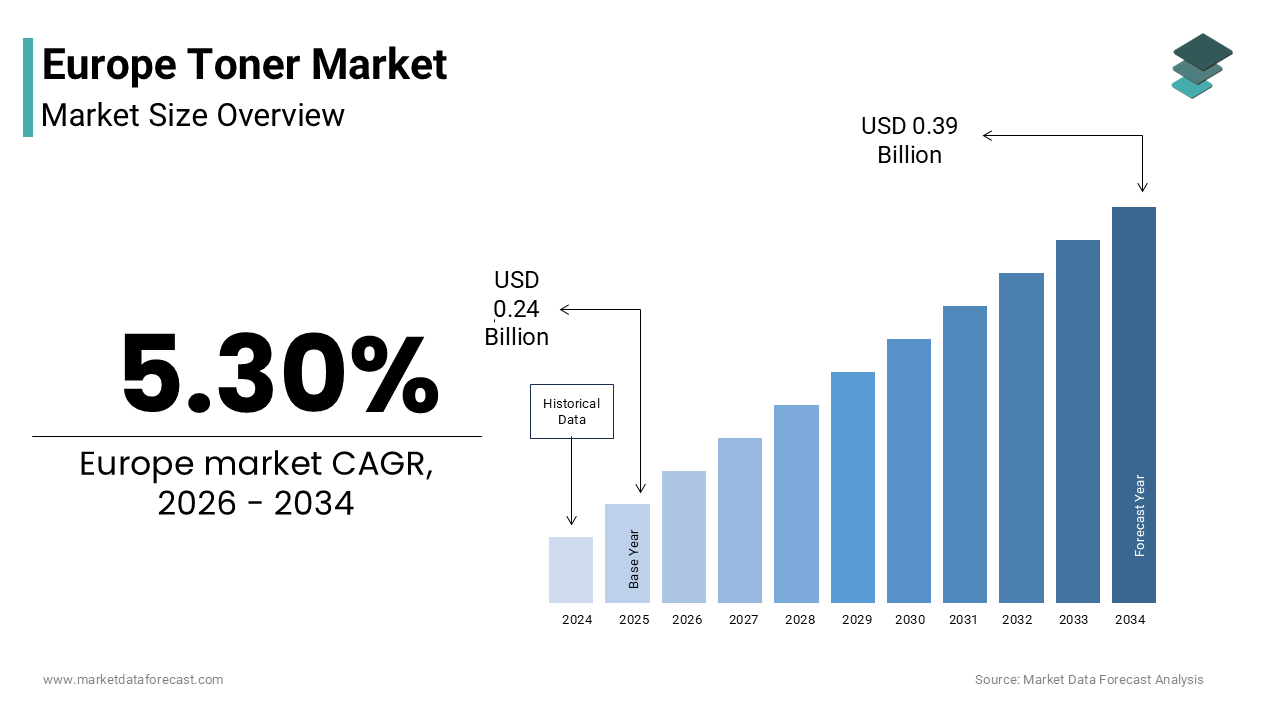
The Europe toner market was valued at USD 0.24 billion in 2025, is estimated to reach USD 0.26 billion in 2026, and is projected to reach USD 0.39 billion by 2034, growing at a CAGR of 5.30% during the forecast period from 2026 to 2034. The growth of the Europe toner market is driven by the continued demand for hard copy documentation across regulated sectors such as healthcare, legal, and public administration, along with the expansion of small and medium enterprises (SMEs) requiring reliable and cost-effective printing solutions. The widespread adoption of laser printing technology, supported by its efficiency and durability, is further fueling market growth. Additionally, the rise of managed print services, subscription-based models, and home office printing trends is reshaping consumption patterns across Europe. Despite the ongoing shift toward digitalization, the need for compliance-driven documentation and advancements in eco-friendly toner formulations continues to support market expansion.
Key Market Trends
- Rising demand for toneris driven by the continued need for physical documentation in regulated industries such as healthcare, legal, and government sectors.
- Growing adoption of managed print services and subscription-based models, ensuring automated toner replenishment and cost efficiency.
- Increasing focus on eco-friendly and bio-based toner formulations, driven by sustainability goals and environmental regulations.
- Expansion of e-commerce platforms and online procurement channels, improves accessibility and convenience for end users.
- Rising development of energy-efficient low-melt toners, reducing energy consumption and aligning with European energy standards.
Segmental Insights
- Based on form, the powder toner segment was the largest and held a significant share of the Europe toner market in 2025. The segment’s dominance is attributed to its widespread use in laser printers, offering superior print quality, durability, and cost efficiency for high-volume document printing.
- Based on product, the conventional toner segment accounted for the largest share of the Europe toner market in 2025. The leadership of this segment is driven by its compatibility with a large installed base of printers and its affordability for routine office applications.
- The organic toner segment is expected to witness notable growth during the forecast period. The growth of this segment is driven by increasing demand for sustainable and environmentally friendly printing solutions aligned with circular economy initiatives.
- Based on distribution channel, the specialty stores segment was the largest, occupying a prominent share of the Europe toner market in 2025. The dominance of this segment stems from strong business-to-business relationships, availability of technical expertise, and reliable supply chains for corporate customers.
Regional Insights
The Europe toner market is witnessing steady growth across major economies, supported by strong business activity, regulatory requirements, and ongoing demand for printed documentation.
- Germany was the largest contributor, accounting for 23.5% of the European toner market share in 2025, driven by its robust industrial base, large SME sector, and high adoption of energy-efficient printing technologies.
- The United Kingdom and France continue to perform well, fueled by strong service sectors, public administration demand, and increasing adoption of sustainable printing solutions.
- Italy is also emerging as a notable market, supported by its SME-driven economy, tourism sector, and growing demand for cost-effective toner products.
Competitive Landscape
The Europe toner market is characterized by strong competition among global OEMs and third-party manufacturers with a focus on innovation, pricing strategies, and sustainability. Leading companies are focusing on developing eco-friendly toner formulations, expanding subscription-based service models, and strengthening their presence across digital and e-commerce channels. Additionally, investments in anti-counterfeit technologies and recycling programs are enhancing brand trust and regulatory compliance. Prominent players in the Europe toner market include HP Inc., Canon Inc., Xerox Holdings Corporation, Ricoh Company Ltd., Konica Minolta Inc., Brother Industries Ltd., Seiko Epson Corporation, Lexmark International Inc., Panasonic Corporation, Toshiba Corporation, ACM Technologies, and IMEX Co. Ltd.
Europe Toner Market Size
The Europe toner market size was valued at USD 0.24 billion in 2025 and is anticipated to reach USD 0.26 billion in 2026 from USD 0.39 billion by 2034, growing at a CAGR of 5.30% during the forecast period from 2026 to 2034.
Toner is fine powder used in laser printers and photocopiers to form text and images on paper. This specialized consumable relies on electrostatic principles where toner particles are transferred from a cartridge to a drum and then fused onto the substrate through heat and pressure. The market is intrinsically linked to the operational continuity of corporate offices, educational institutions, and government bodies across the continent. As per Eurostat, the European Union recorded approximately 24.4 million active enterprises in 2022, many of which maintain physical documentation requirements that sustain demand for hard copy outputs. Furthermore, the European Environment Agency states that the waste electrical and electronic equipment directive mandates strict recycling protocols for printer cartridges, influencing product design and end of life management. The shift towards remote work has altered consumption patterns, with home office setups driving demand for compact laser devices. According to the International Energy Agency, energy efficiency standards for imaging equipment have tightened, prompting manufacturers to develop low melt toners that require less energy for fusing. The market also faces scrutiny regarding microplastic emissions from toner particles, leading to innovations in bio based formulations. Despite the digital transformation, the legal and healthcare sectors continue to rely heavily on printed records for compliance and archival purposes. This enduring need ensures that toner remains a critical component of the European office ecosystem, balancing technological advancement with regulatory compliance and environmental stewardship.
MARKET DRIVERS
Persistent Demand for Hard Copy Documentation in Regulated Sectors
The enduring necessity for physical documentation in highly regulated industries is driving the growth of the Europe toner market. Sectors such as healthcare, legal services and public administration require tangible records for compliance, auditing, and archival purposes. As per the European Commission, the General Data Protection Regulation mandates strict data retention policies, which often necessitate physical backups for sensitive information. Healthcare providers, for instance, must maintain patient records in formats that are easily accessible and verifiable, leading to consistent printing volumes. According to the Organisation for Economic Cooperation and Development, the healthcare sector in Europe accounts for a significant portion of administrative paperwork, with millions of prescriptions and referral letters printed annually. Legal firms also rely on hard copies for court submissions and contract signings, where digital signatures may not always be accepted or preferred. The reliability of laser printing, which offers smudge resistant and long lasting prints, makes it the preferred choice for these critical documents. Furthermore, the education sector continues to utilize printed materials for examinations and official certifications. As per the European University Association, universities across the continent process vast amounts of administrative documentation each year. This institutional reliance on physical media ensures a steady baseline demand for toner cartridges, unaffected by fluctuations in general office printing trends. The inability to fully digitize these processes due to legal and security constraints sustains the market for high quality toner products.
Growth of Small and Medium Enterprises Driving Office Equipment Adoption
The expansion of small and medium enterprises is another key factor contributing to the growth of the Europe toner market. These businesses often require cost effective and reliable printing solutions for invoices, contracts, and marketing materials. As per Eurostat, small and medium enterprises constitute 99% of all businesses in the European Union, employing around 100 million people. This vast network of entities generates a substantial volume of printed documents daily. Laser printers are favored by these organizations for their lower cost per page compared to inkjet alternatives, particularly for black and white text heavy documents. The economic resilience of the SME sector, despite broader macroeconomic challenges, ensures consistent procurement of office supplies. According to the European Central Bank, lending to non-financial corporations, including SMEs, has remained stable, supporting their operational expenditures. Many small businesses operate from home or shared workspaces, where compact laser multifunction printers are common. The ease of maintenance and longer shelf life of toner cartridges compared to liquid ink make them ideal for intermittent use patterns typical in smaller offices. Furthermore, the rise of e commerce has led to an increase in shipping labels and packing slips, which are predominantly printed using laser technology for durability and speed. This operational requirement drives recurring purchases of toner cartridges, sustaining market volume. The decentralized nature of SME operations also creates a diverse distribution channel for toner products, ranging from online retailers to local office supply stores.
MARKET RESTRAINTS
Digital Transformation and Paperless Initiatives Restraining Growth
The aggressive pursuit of digital transformation and paperless office initiatives is hampering the growth of the Europe toner market. Organizations are increasingly adopting cloud based document management systems and electronic signature platforms to reduce reliance on physical paper. As per the European Digital Progress Report, over 70% of large enterprises in the EU have implemented some form of digital workflow automation. This shift reduces the frequency of printing for internal communications, drafts, and routine correspondence. Governments are also promoting digital public services to enhance efficiency and reduce environmental impact. According to the European Commission, the once only principle aims to ensure that citizens and businesses provide standard information to public administrations only once, thereby minimizing paperwork. The adoption of electronic invoicing is another significant factor, with mandatory e invoicing frameworks being rolled out across several member states. For instance, Italy and France have made e invoicing compulsory for business to government transactions, significantly cutting down on printed invoices. The environmental consciousness among European consumers and corporations further accelerates this transition, as reducing paper usage is seen as a key sustainability metric. Consequently, the overall volume of pages printed per employee has declined, leading to slower toner consumption rates. While certain sectors remain dependent on hard copies, the broader trend towards digitization erodes the total addressable market for toner cartridges, forcing manufacturers to adapt to a shrinking demand base.
Stringent Environmental Regulations and Waste Management Costs
Strict environmental regulations concerning waste management and chemical safety are further impeding the expansion of the Europe toner market. The European Union enforces rigorous standards for the disposal and recycling of printer cartridges under the Waste Electrical and Electronic Equipment Directive. As per the European Environment Agency, the collection and recycling rates for small IT equipment, including cartridges, vary significantly across member states, creating compliance complexities for manufacturers. Companies must invest in reverse logistics systems to ensure proper recovery and processing of used toner cartridges, which increases operational costs. Additionally, the Registration, Evaluation, Authorisation and Restriction of Chemicals regulation scrutinizes the chemical composition of toner powders, particularly regarding hazardous substances like carbon black and styrene acrylate copolymers. Compliance with these regulations requires extensive testing and reformulation of products, adding to research and development expenses. According to the European Chemicals Agency, restrictions on certain substances used in toner production may limit material choices and increase sourcing costs. Furthermore, the growing emphasis on circular economy principles demands that toner cartridges be designed for easier disassembly and recycling. This design requirement can conflict with performance optimization, potentially affecting print quality or yield. The financial burden of adhering to these evolving regulatory frameworks discourages new entrants and squeezes profit margins for existing players. Companies must balance compliance costs with competitive pricing, which can be challenging in a price sensitive market. These regulatory pressures act as a persistent restraint on market expansion and profitability.
MARKET OPPORTUNITIES
Development of Bio Based and Eco Friendly Toner Formulations
The development of bio based and eco-friendly toner formulations is offering growth opportunity for the Europe toner market. Consumers and corporations are increasingly seeking sustainable alternatives to traditional petroleum based toners. Manufacturers are exploring the use of renewable resources such as plant oils and resins to create toners with a lower carbon footprint. As per the European Bioplastics association, the global production capacity for bioplastics is expected to reach 7.4 million tonnes by 2028, providing a potential supply chain for bio based toner components. These eco friendly toners often feature lower melting points, which reduce energy consumption during the printing process. This aligns with corporate sustainability goals and energy efficiency regulations. According to the International Energy Agency, improving the energy efficiency of office equipment can contribute significantly to overall energy savings. Companies that introduce certified green toner products can appeal to environmentally conscious buyers and gain a competitive edge. Furthermore, bio based toners may offer improved recyclability, addressing waste management concerns. The European Union’s Green Deal encourages the adoption of sustainable products, creating a favorable regulatory environment for such innovations. Partnerships with recycling firms to create closed loop systems for bio based cartridges can further enhance brand reputation. By leading the transition towards sustainable printing solutions, manufacturers can capture a growing niche market segment. This strategic shift not only mitigates regulatory risks but also opens new revenue streams through premium pricing for green products.
Expansion of Managed Print Services and Subscription Models
The expansion of managed print services and subscription based models is another significant opportunity for the Europe toner market. Instead of selling individual cartridges, companies are offering comprehensive print management solutions that include hardware, supplies, and maintenance for a fixed monthly fee. As per IDC, the managed print services market in Western Europe is mature but continues to evolve with digital integration. This model ensures a predictable demand for toner, as suppliers automatically replenish supplies based on usage data. It reduces the administrative burden on customers and minimizes downtime due to empty cartridges. The shift towards service oriented offerings allows manufacturers to build long term relationships with corporate clients. According to Gartner, organizations that adopt managed print services can reduce their printing costs by up to 30% through optimized usage and reduced waste. This value proposition is attractive to businesses seeking to control operational expenses. Furthermore, subscription models facilitate the collection of used cartridges for recycling, supporting sustainability initiatives. The integration of Internet of Things sensors in printers enables real time monitoring of toner levels, enhancing the efficiency of supply chain logistics. By transitioning from product sales to service provision, companies can differentiate themselves in a commoditized market. This approach also provides valuable data insights into printing habits, enabling further optimization and upselling opportunities. The stability of recurring revenue streams helps mitigate the volatility associated with traditional retail sales.
MARKET CHALLENGES
Volatility in Raw Material Prices Impacting Production Costs
Volatility in raw material prices is primarily challenging the growth of the Europe toner market. Toner production relies on petrochemical derivatives such as polyester resins, carbon black, and iron oxide. Fluctuations in crude oil prices therefore have a direct correlation with the cost of these inputs. As per the International Monetary Fund, global commodity prices have experienced significant instability in recent years due to geopolitical tensions and supply chain disruptions. This unpredictability makes it difficult for manufacturers to forecast costs and set stable pricing strategies. When raw material costs rise, companies face the dilemma of absorbing the increase or passing it on to customers, both of which can negatively affect competitiveness. The European chemical industry, a key supplier of toner components, is also affected by energy price spikes, further exacerbating cost pressures. According to the European Chemical Industry Council, energy costs for chemical production in Europe are higher than in other regions, impacting the global competitiveness of local manufacturers. Supply chain bottlenecks can lead to shortages of critical materials, causing production delays and inventory imbalances. These disruptions force companies to seek alternative suppliers, which may involve qualification risks and additional costs. The inability to fully hedge against raw material price volatility leaves manufacturers exposed to margin compression. This financial uncertainty hinders long term investment in research and development, potentially slowing innovation in the sector.
Counterfeit Products and Intellectual Property Infringement
The prevalence of counterfeit products and intellectual property infringement is further challenging the expansion of the Europe toner market. Counterfeit products often mimic the packaging and branding of original equipment manufacturer cartridges, deceiving consumers into purchasing inferior goods. As per the European Union Intellectual Property Office, counterfeiting and piracy cost European businesses approximately 16 billion euros in lost sales annually across key sectors, including electronics and consumables. These fake cartridges typically use low quality toner powder that can damage printer components, leading to poor print quality and increased maintenance costs for users. This negative experience erodes trust in the brand and can result in lost customers. Original manufacturers invest heavily in anti-counterfeit technologies such as holograms and chip authentication, but counterfeiters continually adapt to bypass these measures. The availability of cheap counterfeit options on online marketplaces undermines the pricing power of legitimate brands. According to a study by the Organisation for Economic Cooperation and Development, the trade in counterfeit goods costs the global economy billions of euros annually, with significant impacts on innovation and jobs. Legal enforcement against counterfeiters is complex and resource intensive, especially when operations span multiple jurisdictions. The presence of counterfeit goods distorts market dynamics and creates an uneven playing field. Manufacturers must constantly be vigilant and engage in consumer education to combat this issue, diverting resources from core business activities.
REPORT COVERAGE
| REPORT METRIC | DETAILS |
| Market Size Available | 2025 to 2034 |
| Base Year | 2025 |
| Forecast Period | 2026 to 2034 |
| CAGR | 5.30% |
| Segments Covered | By Form, Product, Gender, Distribution Channel and Region. |
| Various Analyses Covered | Global, Regional & Country Level Analysis, Segment-Level Analysis, DROC, PESTLE Analysis, Porter’s Five Forces Analysis, Competitive Landscape, Analyst Overview of Investment Opportunities |
| Country Covered | UK, France, Spain, Germany, Italy, Russia, Sweden, Denmark, Switzerland, the Netherlands, Turkey, the Czech Republic, and the Rest of Europe.. |
| Market Leaders Profiled | HP Inc., Canon Inc., Xerox Holdings Corporation, Ricoh Company Ltd., and Konica Minolta Inc., supported by other players including Brother Industries, Epson, Lexmark, Panasonic, and Toshiba. |
SEGMENTAL ANALYSIS
By Form Insights
The powder toner segment dominated the market and captured for 92.3% share in 2025. This overwhelming dominance is driven by the widespread installation of laser printing technology across corporate, educational, and governmental sectors which rely on dry toner for high volume and high speed document production. The primary factor sustaining this leadership is the superior cost efficiency and print quality associated with powder toner compared to liquid alternatives. As per the International Data Corporation, laser printers account for over 80% of all office printer shipments in Western Europe, directly correlating to the demand for powder toner cartridges. Powder toner offers sharper text resolution and better resistance to smudging, which is critical for legal and financial documents that require long term archival stability. Furthermore, the established infrastructure for recycling and remanufacturing powder cartridges is more developed than for liquid systems. According to the European Remanufacturing Council, the remanufacturing industry in Europe processes millions of laser cartridges annually, creating a robust secondary market that supports the continued use of powder toner. The compatibility of powder toner with a vast array of printer models from major manufacturers ensures that it remains the default choice for most users. The energy efficiency of modern low melt powder toners also aligns with European energy conservation standards, further cementing its market position. The reliability of powder toner in various environmental conditions, including humidity fluctuations, makes it indispensable for diverse office environments across the continent.
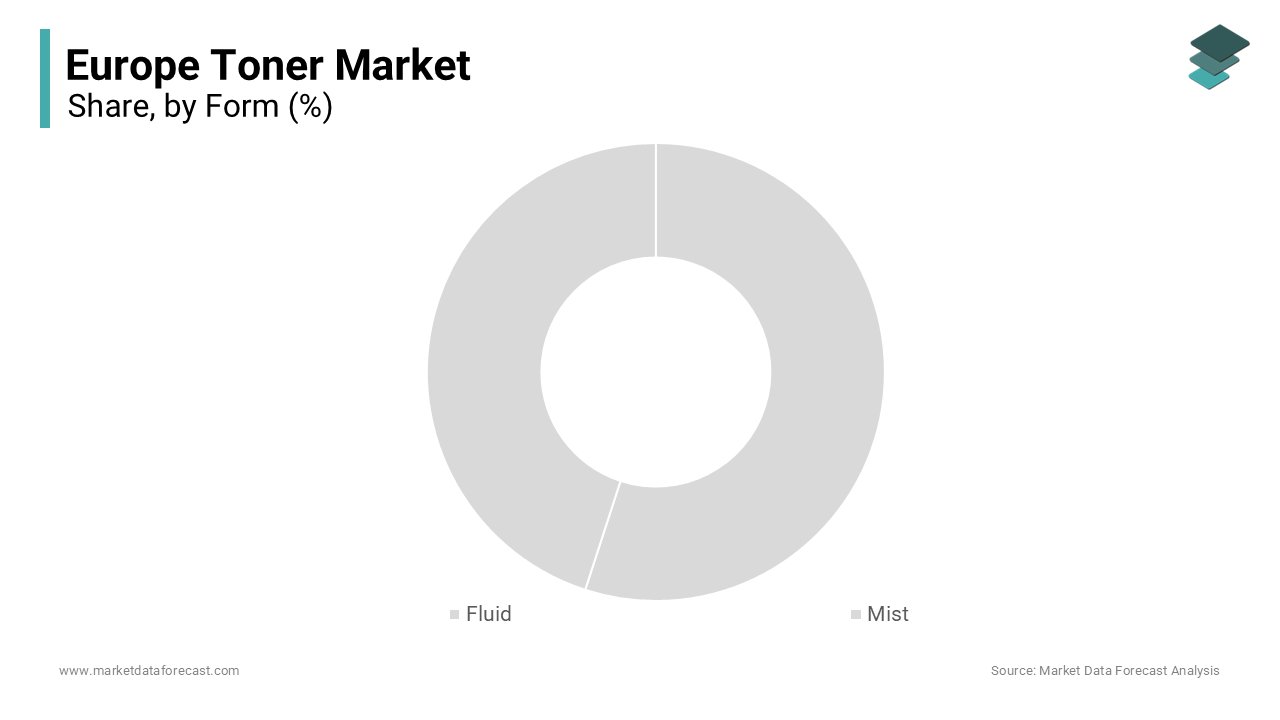
On the other hand, the liquid toner segment is projected to grow at a CAGR of 7.05% over the forecast period in the European market owing to its adoption in high end commercial printing and packaging applications where superior image quality and color consistency are paramount. Liquid toner, also known as electroink, allows for thinner ink layers and smoother gradients, making it ideal for photographic prints and marketing materials. As per Smithers, the global market for digital printing in packaging is expanding, with Europe being a key region for luxury goods packaging that demands high fidelity reproduction. Major commercial print shops in Germany and Italy are increasingly investing in liquid toner presses to compete with offset printing quality while offering shorter run lengths and faster turnaround times. The ability of liquid toner to adhere to a wider variety of substrates, including plastics and foils, opens new opportunities in the flexible packaging sector. According to the European Flexible Packaging Association, the demand for sustainable and high quality flexible packaging is rising, driving the need for advanced printing technologies. Liquid toner systems also produce less waste during startup and maintenance compared to traditional powder systems, appealing to environmentally conscious commercial printers. Although the initial investment is higher, the operational benefits and premium output quality justify the adoption for specialized printing tasks, driving the segment's accelerated growth rate.
By Product Insights
The conventional toner segment led the market by holding 84.4% of the regional market share in 2025. The growth of the commercial segment in the European market is attributed to the extensive installed base of laser printers that are designed specifically for standard polyester based toner formulations. Conventional toners are widely available, cost effective, and compatible with the majority of office equipment in circulation. As per Eurostat, the number of active enterprises in the European Union reached 24.4 million in 2022, with small and medium sized businesses forming the backbone of the economy. These entities predominantly use standard office printers that rely on conventional toner for daily operations such as invoicing, correspondence, and record keeping. The supply chain for conventional toner is highly optimized, ensuring consistent availability and competitive pricing. According to the European Chemical Industry Council, the production capacity for standard toner resins in Europe is substantial, supporting the steady supply of conventional products. The familiarity of users with conventional toner performance and the lack of need for specialized handling or disposal procedures further reinforce its dominance. Additionally, the compatibility of conventional toner with third party and remanufactured cartridges provides consumers with affordable alternatives to original equipment manufacturer products. This competitive landscape keeps prices low and accessibility high, ensuring that conventional toner remains the preferred choice for general purpose printing. The entrenched nature of this product type means that replacement cycles drive consistent revenue, unaffected by niche trends or specialized requirements.
However, the organic segment is estimated to register a CAGR of 7.5% over the forecast period in this regional market due to the increasing regulatory pressure and consumer demand for environmentally friendly printing solutions. Organic toners are formulated using bio based materials such as plant derived resins and natural pigments, reducing reliance on petroleum based chemicals. As per the European Commission’s Circular Economy Action Plan, there is a strong push towards reducing the carbon footprint of industrial products, including office supplies. Companies are seeking certifications such as the EU Ecolabel, which favors products with lower environmental impact. Organic toners often feature lower melting points, which reduces energy consumption during the fusing process. According to the International Energy Agency, improving the energy efficiency of office equipment is a key strategy for achieving climate goals. Furthermore, organic toners are easier to de ink during the paper recycling process, enhancing the quality of recycled pulp. This benefit is particularly valued in countries with advanced waste management systems like Germany and Sweden. The growing corporate social responsibility initiatives among European firms drive the procurement of green office supplies, including organic toner. Although currently more expensive than conventional options, economies of scale and technological advancements are expected to reduce costs, further accelerating adoption. The alignment with sustainability targets makes organic toner an attractive option for forward thinking organizations.
By Distribution Channel Insights
The specialty stores segment held the major share of 44.8% of the European market in 2025. This dominance is driven by the strong business to business relationships and the need for technical expertise in selecting appropriate toner products for specific printer models. Specialty office supply retailers provide value added services such as bulk ordering, contract management, and immediate availability of a wide range of cartridges. As per the European Office Products Association, business customers prefer specialized suppliers who can offer consistent supply chains and credit terms. These stores often cater to corporate clients who require reliable and timely delivery to maintain operational continuity. The ability of specialty stores to offer remanufactured and compatible toner options alongside original equipment manufacturer products provides customers with choice and flexibility. According to industry analysis, the trust factor plays a significant role in procurement decisions, with businesses preferring established suppliers who guarantee product quality and warranty support. Specialty stores also employ knowledgeable staff who can advise on cost saving strategies and printer maintenance, enhancing customer loyalty. The concentration of corporate headquarters in major European cities supports a dense network of specialty office supply outlets. Furthermore, these retailers often integrate their physical presence with online ordering platforms, offering a hybrid model that combines convenience with personalized service. This comprehensive approach ensures that specialty stores remain the primary channel for toner procurement in the professional sector.
On the other end, the e-commerce segment is predicted to witness a promising CAGR of 1.0.4% over the forecast period due to the rising preference for online shopping due to convenience, competitive pricing, and home delivery options. The shift towards remote work has further accelerated this trend, as individuals and small businesses procure supplies directly from online retailers. As per Eurostat, the percentage of individuals in the European Union who bought goods or services online reached 75% in 2023, reflecting a broad acceptance of digital commerce. Online platforms offer extensive product comparisons, customer reviews, and automated subscription services that simplify the replenishment process. According to Amazon Europe, office supplies remain one of the top categories for repeat purchases, driven by the predictable nature of toner consumption. The ability to access a global marketplace allows consumers to find rare or specific toner cartridges that may not be available locally. Competitive pricing algorithms and frequent discounts on online platforms attract price sensitive buyers. Furthermore, the integration of smart printer technologies that can automatically order toner when levels are low enhances the convenience of e commerce channels. Logistics improvements across Europe, including next day delivery services, have reduced the lead time advantage of physical stores. The seamless user experience and data driven personalization offered by e commerce platforms continue to draw customers away from traditional brick and mortar outlets.
REGIONAL ANALYSIS
Germany Toner Market Analysis
The Germany captured the dominating share of 23.5% of the regional market in 2025. The market in this region is expected to lead due to a robust industrial base and strict environmental adherence favoring energy efficient consumables. Germany holds the largest share of the Europe toner market, accounting for approximately 22% of regional consumption. This leading position is underpinned by the country’s robust industrial base and large number of small and medium sized enterprises that rely heavily on documentation. As per the Federal Statistical Office of Germany, the manufacturing and service sectors generate significant volumes of printed material for logistics, compliance, and administration. The German market is characterized by a high adoption rate of energy efficient laser printers, driven by strict environmental regulations and high energy costs. According to the German Environment Agency, businesses are increasingly opting for low melt toners to reduce electricity consumption. The presence of major office supply retailers and a well developed remanufacturing industry further supports market activity. German consumers are known for their preference for quality and durability, leading to a strong demand for original equipment manufacturer toner cartridges. The country’s emphasis on data security and privacy also necessitates physical records in certain sectors, sustaining toner demand. Furthermore, the government’s digitalization initiatives are balanced by the need for tangible archives in legal and healthcare fields. The mature infrastructure for recycling printer consumables ensures compliance with waste management laws. Germany’s economic stability and continuous business formation contribute to steady toner consumption. The market is also influenced by the strong presence of local printer manufacturers who drive innovation in toner technology.
United Kingdom Toner Market Analysis
The United Kingdom is expected to hold a promising share of the European market during the forecast period owing to a dominant service sector that requires high volumes of administrative and legal documentation. The United Kingdom ranks second in the Europe toner market, with an estimated 18% share. The market is driven by the dominant service sector, including finance, legal, and education, which require extensive documentation. As per the Office for National Statistics, the service industry accounts for approximately 81% of the UK economy, generating consistent demand for office supplies. The UK market is highly competitive, with a strong presence of both original equipment manufacturer and third party toner suppliers. The rise of remote work has shifted consumption patterns towards home offices, increasing retail and online sales of smaller capacity cartridges. According to the British Retail Consortium, online sales of office supplies have grown significantly, reflecting changing consumer behaviors. The UK’s exit from the European Union has introduced some supply chain complexities, but established distribution networks have adapted effectively. Environmental awareness is high, with many organizations adopting green printing policies that favor remanufactured or eco friendly toners. The Education Sector continues to be a major consumer of toner for examinations and administrative tasks. Furthermore, the legal profession’s reliance on hard copies for court proceedings sustains demand for high quality black and white toner. The market is also influenced by the prevalence of managed print services, which optimize toner usage and reduce waste. The UK’s dynamic business environment ensures a steady turnover of printing equipment and consumables.
France Toner Market Analysis
The France is anticipated to showcase a healthy CAGR in the European toner market over the forecast period due to high public sector demand and strong environmental waste management regulations. France occupies the third position in the Europe toner market, holding approximately 14% of the share. The French market is influenced by strong regulatory frameworks regarding environmental protection and waste management. As per the French Ministry of Ecological Transition, strict guidelines on the disposal of electronic waste drive the adoption of recyclable toner cartridges. The public sector is a significant consumer of toner, given the bureaucratic nature of government operations and the requirement for physical records. According to INSEE, the national statistics institute, the administrative and support service activities sector saw a 3.8% increase in revenue in 2023, supporting stable office supply demand. The French consumer market is also notable for its preference for premium brands and high quality printing outputs. Luxury goods and fashion industries in France utilize high end commercial printing for marketing materials, driving demand for specialized toners. The education system, with its extensive use of printed exams and textbooks, contributes to seasonal spikes in toner consumption. Furthermore, the growth of co working spaces in Paris and other major cities has increased the density of shared printing resources, boosting commercial toner sales. French companies are increasingly integrating sustainability into their procurement processes, favoring suppliers with certified environmental practices. The market is supported by a network of local distributors who provide tailored solutions to business clients. France’s commitment to reducing carbon emissions encourages the use of energy efficient printing technologies.
Italy Toner Market Analysis
The Italy is projected to account for a notable share of the European toner market over the forecast period due to the prevalence of SMEs and mandatory record-keeping requirements in design and tourism. Italy holds the fourth largest share of the Europe toner market, with an estimated 11% share. The market is characterized by a vast network of small and medium sized enterprises that form the backbone of the Italian economy. As per the Italian National Institute of Statistics, SMEs represent a vital economic force in manufacturing, design, and tourism sectors, all of which require regular documentation. The Italian market shows a high preference for cost effective solutions, driving a significant market for remanufactured and compatible toner cartridges. According to the Italian Ministry of Environment, green public procurement guidelines are increasingly influencing the purchase of office supplies, favoring low environmental impact toners. The tourism industry in Italy generates considerable demand for printed materials such as brochures, maps, and booking records. Furthermore, the legal requirement for physical signatures on certain contracts and official documents ensures continued printing activity. Italy’s decentralized business landscape supports a wide variety of distribution channels, from specialized local stores to growing e-commerce platforms. The emphasis on high quality design in Italian manufacturing sectors also drives demand for toners capable of producing detailed graphics and accurate colors. Italian businesses are also adopting managed print services to better control printing costs and improve operational efficiency. The market remains resilient, supported by the ongoing operational needs of the country’s diverse business sectors.
COMPETITIVE LANDSCAPE
The competition in the Europe toner market is intense and characterized by the presence of established global giants alongside numerous third party manufacturers. Original equipment manufacturers leverage their brand equity and proprietary technology to maintain dominance in the premium segment. They focus on integrated solutions that combine hardware software and supplies to lock in customers. Conversely independent suppliers compete aggressively on price and flexibility offering compatible and remanufactured cartridges that appeal to cost conscious buyers. The market is fragmented with many regional players specializing in niche segments or specific geographic areas. Innovation in sustainability serves as a key differentiator as companies strive to meet stringent European environmental regulations. Regulatory compliance regarding waste management and chemical safety creates barriers to entry for smaller firms. The rise of e commerce has lowered distribution costs enabling new entrants to reach customers directly. Price wars are common in the standard toner segment prompting manufacturers to seek value addition through services. Customer loyalty is increasingly driven by convenience factors such as subscription models and automated replenishment. Strategic alliances with office supply retailers and managed service providers further shape competitive dynamics. The market requires continuous adaptation to technological shifts and changing consumer preferences.
KEY MARKET PLAYERS
Some of the companies that are playing a dominating role in the Europe toner market include
- HP Inc.
- Canon Inc.
- Xerox Holdings Corporation
- Ricoh Company Ltd.
- Konica Minolta Inc.
- Brother Industries Ltd.
- Seiko Epson Corporation
- Lexmark International Inc.
- Panasonic Corporation
- Toshiba Corporation
- ACM Technologies
- IMEX Co. Ltd
Top Players in the Europe Toner Market
HP Inc
HP Inc remains a dominant force in the Europe toner market through its extensive portfolio of laser printing solutions and original equipment manufacturer cartridges. The company leverages its strong brand recognition and widespread distribution network to maintain a significant presence across corporate and consumer segments. HP focuses on integrating security features into its toner cartridges to prevent counterfeiting and ensure print quality. Recently the company has expanded its Instant Ink subscription service to include laser printers in several European countries. This move aims to create recurring revenue streams and enhance customer loyalty by automating supply replenishment. HP also invests heavily in research and development to produce more energy efficient toners that align with European sustainability standards. Their commitment to circular economy principles is evident in their cartridge recycling programs which are widely accessible across the region. By combining hardware innovation with service oriented models HP strengthens its market position and adapts to evolving consumer preferences for convenience and environmental responsibility.
Canon Inc
Canon Inc holds a prominent position in the Europe toner market by supplying both original equipment manufacturer cartridges and components to other printer brands. The company is renowned for its high quality imaging technology and reliable laser printing systems used in offices and commercial print environments. Canon actively promotes its green initiative by developing bio based toners and improving the recyclability of its cartridges. In recent years Canon has strengthened its partnerships with managed print service providers to offer comprehensive document management solutions. This strategy helps secure long term contracts with large enterprise clients across Europe. The company also focuses on educating consumers about the benefits of genuine toner versus compatible alternatives. Canon’s investment in advanced manufacturing techniques ensures consistent product quality and reduces production waste. By emphasizing sustainability and service integration Canon reinforces its reputation as a trusted provider of printing solutions. Their proactive approach to regulatory compliance and environmental stewardship further solidifies their standing in the competitive European landscape.
Brother Industries
Brother Industries is a key player in the Europe toner market known for its durable and cost effective laser printers and supplies. The company targets small and medium sized enterprises as well as home office users with reliable printing solutions that offer low total cost of ownership. Brother has recently enhanced its digital presence by optimizing its e commerce platforms for easier cartridge purchasing and subscription management. The company emphasizes the longevity and performance of its toner products which appeals to budget conscious consumers. Brother also participates in various recycling initiatives across Europe to support sustainable waste management practices. Their focus on user friendly design and minimal maintenance requirements distinguishes their offerings in the market. Brother continues to expand its product line to include more energy efficient models that meet strict European environmental regulations. By prioritizing customer satisfaction and operational efficiency Brother maintains a loyal customer base. Their strategic emphasis on value and reliability ensures continued relevance in the shifting dynamics of the European toner market.
Top Strategies Used by Key Market Participants
Key players in the Europe toner market primarily focus on product differentiation through technological innovation and sustainability enhancements. Companies are investing in the development of bio based and low melt toners to reduce energy consumption and environmental impact. Strategic partnerships with managed print service providers enable manufacturers to secure long term contracts and ensure steady demand. Expansion of subscription based models offers customers convenience and predictable costs while creating recurring revenue streams for suppliers. Brands are also strengthening their anti counterfeit measures to protect intellectual property and maintain consumer trust. Digital transformation initiatives include enhancing e commerce platforms for seamless purchasing experiences. Manufacturers emphasize circular economy practices by improving cartridge recyclability and establishing robust take back programs. Competitive pricing strategies for compatible and remanufactured options help capture price sensitive segments. Continuous investment in research and development ensures compliance with evolving regulatory standards. These combined approaches allow participants to adapt to market changes and sustain growth.
MARKET SEGMENTATION
This research report on the Europe Toner Market has been segmented and sub-segmented based on the following categories.
By Form
- Fluid
- Mist
By Product
- Organic
- Conventional
By Gender
- Men
- Women
By Distribution Channel
- Hypermarkets/Supermarkets
- Convenience Stores
- Specialty Stores
- E-commerce
- Others
By Country
- UK
- France
- Spain
- Germany
- Italy
- Russia
- Sweden
- Denmark
- Switzerland
- Netherlands
- Turkey
- Czech Republic
- Rest of Europe