- Product Description Description
- Table of Contents TOC
- List of Table & Figure LOT
- Get Free Sample PDF Sample PDF
Market Size, 2025
$743.23 MnMarket Estimate, 2026
$817.40 MnMarket Forecast, 2034
$1749.62 MnCAGR, 2026–2034
9.98%Executive Summary: Europe Ultra High Molecular Weight Polyethylene Market
- Market Scope: Comprehensive European UHMWPE industry analysis covering forms (sheets and films, fibers), end-use sectors (medical, aerospace and defense), regional leadership frameworks (Germany, UK, France), strategic corporate developments, and competitive landscapes.
- Market Valuation: Valued at USD 743.23 million (2025), estimated at USD 817.40 million (2026), and projected to reach USD 1,749.62 million by 2034, registering a steady CAGR of 9.98% (2026–2034).
- Primary Growth Drivers: Rising osteoarthritis prevalence and aging demographics for orthopedic joint implants, industrial modernization in mining/material handling, sustainable marine infrastructure, and lightweight body armor demand across defense sectors. Restraints include ethylene feedstock price volatility and thermal limitations.
Key Market Segment Metrics (2026–2034)
| Category | Leading Segment / Region (Position) | Fastest-Growing Segment |
|---|---|---|
| By Form & Application | Sheets and films (dominated with 60.2% share in 2025 for industrial lining) & Medical end-use segment (major share via joint arthroplasty and surgical implants) | Fibers segment (fastest CAGR of 10.14% fueled by lightweight ballistic protection and high-strength marine ropes) |
| By Industry End-Use | Medical technology, orthopedics, and industrial wear protection applications | Aerospace and defense segment (fastest-growing at a CAGR of 11.24% due to lightweight armor and aircraft interiors) |
| By Region / Country | Germany (dominated with 23.6% market share in 2025 via advanced medical devices) & UK (second-biggest share via defense and med-tech clusters) | European defense and sustainable marine infrastructure modernization hubs |
Major Market Players & Market Structure
Market Structure: Highly competitive European polymer and specialized materials landscape characterized by bio-based low-carbon footprint introductions, radiation-stabilized medical grades complying with ISO 5834 and EU REACH/MDR standards, and defense co-development initiatives.
Key Companies: Celanese Corporation, LyondellBasell Industries N.V., SABIC, dsm-firmenich (DSM), Asahi Kasei Corporation, Mitsui Chemicals Inc., Braskem S.A., Honeywell International Inc., Avient Corporation, and Ticona Engineering Polymers Group.
Europe Ultra High Molecular Weight Polyethylene Market Size
The europe ultra high molecular weight polyethylene market size was valued at USD 743.23 million in 2025 and is anticipated to reach USD 817.40 million in 2026 from USD 1749.62 million by 2034, growing at a CAGR of 9.98% during the forecast period from 2026 to 2034.
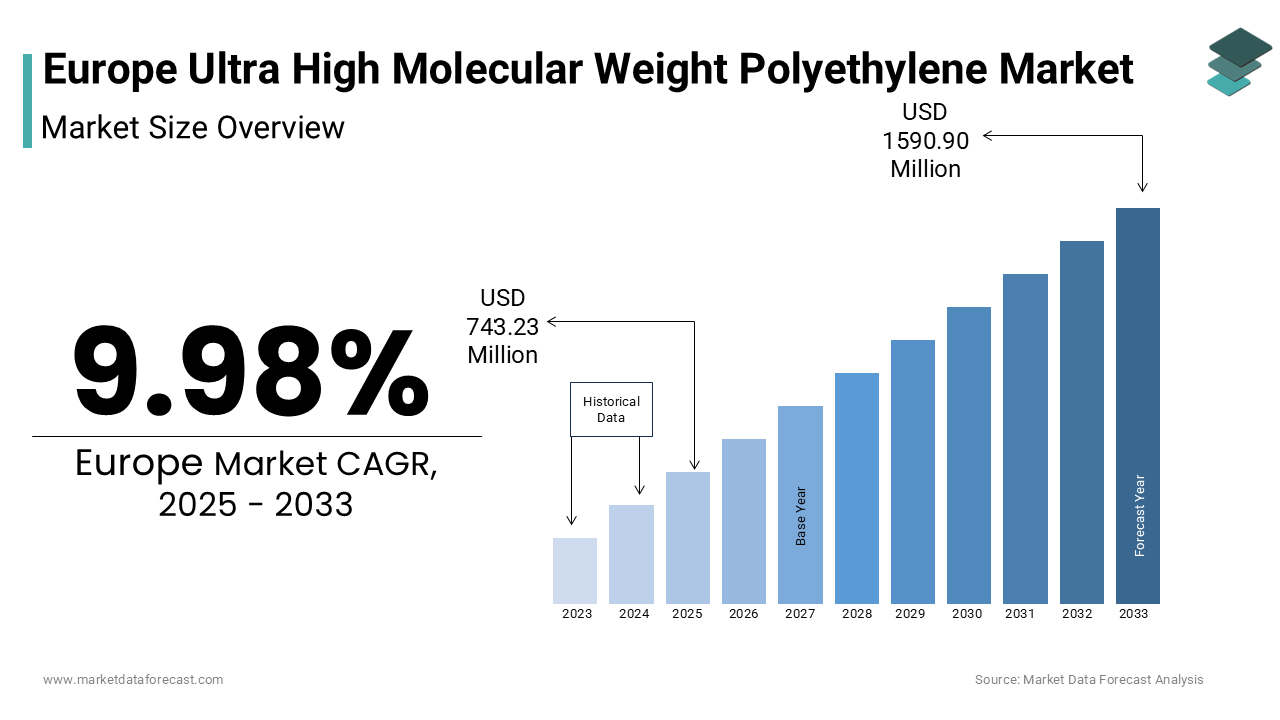
Ultra-high molecular weight polyethylene (UHMWPE) is a high-performance thermoplastic distinguished by exceptional impact resistance abrasion resistance and low coefficient of friction making it indispensable in demanding industrial medical and defense applications across Europe. Unlike conventional polyethylene grades, UHMWPE features molecular weights exceeding 3.5 million grams per mole which endows it with unique mechanical properties without the need for plasticizers or fillers. In Europe its adoption is closely tied to regulatory and operational imperatives in sectors where material failure is not an option. According to Eurostat, hundreds of thousands of joint replacement surgeries are performed annually in the EU, with UHMWPE serving as the bearing surface in the majority of hip and knee implants as noted by the European Orthopaedic Association. Simultaneously, the European Commission’s Circular Economy Action Plan emphasizes durability and reparability in industrial components, a principle that aligns with UHMWPE’s decades-long service life in mining conveyor systems and marine fendering. Despite being derived from fossil feedstocks, UHMWPE’s longevity and recyclability through mechanical reprocessing position it as a material of choice in Europe’s transition toward high-value circular material systems.
MARKET DRIVERS
Rising Demand for Joint Replacement Implants Drives Medical Grade Consumption
The expanding prevalence of osteoarthritis and aging demographics across Europe are intensifying demand for orthopedic implants where ultra‑high molecular weight polyethylene (UHMWPE) serves as the critical articulating surface, which is majorly propelling the growth of the European ultra-high molecular weight polyethylene market. According to OECD Health at a Glance Europe 2024, osteoarthritis is among the most common chronic conditions in older adults, affecting tens of millions across the EU. This burden translates into sustained surgical volume as per Eurostat surgical statistics, more than half a million hip and knee replacements are performed annually in the EU. UHMWPE remains the gold‑standard bearing material due to its biocompatibility, wear resistance, and decades of clinical validation. According to the European Hip Society, innovations such as highly cross‑linked and vitamin E‑stabilized UHMWPE have reduced wear debris significantly, which is up to 90% compared to conventional grades. Regulatory frameworks further support adoption; as per the EU Medical Device Regulation, UHMWPE consistently passes biocompatibility testing without leaching toxic additives. Leading implant manufacturers including Smith & Nephew and Zimmer Biomet source medical‑grade UHMWPE exclusively from EU‑certified producers, ensuring traceability and compliance. Clinical, regulatory, and demographic forces collectively anchor UHMWPE as a non‑substitutable material in Europe’s advanced healthcare ecosystem.
Industrial Modernization in Mining and Material Handling Fuels Engineering Applications
Europe’s ongoing efforts to enhance operational efficiency and reduce downtime in heavy industries are accelerating the use of UHMWPE in demanding mechanical environments, which is further fuelling the expansion of the European ultra-high molecular weight polyethylene market. According to the European Federation of Materials Handling, abrasive wear accounts for a large share of maintenance costs in mining, and UHMWPE liners can last several times longer than steel alternatives. As per the German Mechanical Engineering Industry Association, multiple mineral processing plants in Germany’s Ruhr region have retrofitted bulk material transfer points with UHMWPE components since 2022. Similarly, UHMWPE is widely used for ship fenders and dock linings due to its energy absorption and seawater resistance; according to Port of Rotterdam records, large volumes of UHMWPE fender systems were installed in 2023 to accommodate next‑generation container vessels. The material’s self‑lubricating nature also eliminates the need for external lubricants in food‑grade conveyor systems, aligning with EU hygiene regulations. Industrial imperatives cement UHMWPE’s role in Europe’s infrastructure resilience strategy.
MARKET RESTRAINTS
Volatility in Ethylene Feedstock Pricing Constrains Production Economics
The Europe UHMWPE market faces significant cost instability due to fluctuations in ethylene prices, which constitute the majority of raw material input costs. According to the European Petrochemical Association, ethylene supply in Europe is tightly linked to crude oil markets and refinery margins. As per ICIS market intelligence, Northwest Europe ethylene prices fluctuated between ~€980 and €1,250 per metric ton in 2024. Such volatility complicates long‑term pricing agreements and squeezes margins for UHMWPE producers who operate in a relatively niche and low‑volume segment compared to commodity polyolefins. Unlike polyethylene producers in the United States who benefit from cheap shale‑gas ethylene, European manufacturers lack feedstock cost advantages. Furthermore, according to the European Commission, the Carbon Border Adjustment Mechanism indirectly increases production costs by imposing implicit carbon pricing on energy‑intensive cracking processes. These structural and market‑driven pressures limit the ability of UHMWPE suppliers to offer stable pricing to end users, particularly in price‑sensitive industrial applications.
Limited High‑Temperature Performance Restricts Application Scope
UHMWPE’s relatively low melting point of approximately 130–136°C imposes a fundamental constraint on its use in elevated‑temperature environments, which is limiting penetration in automotive under‑the‑hood and aerospace applications and further restraining the growth of the European market. According to the European Materials Development Consortium, continuous exposure above 80°C accelerates oxidative degradation, leading to embrittlement and loss of mechanical integrity. This thermal limitation excludes UHMWPE from critical automotive components such as engine covers or transmission housings, as per the German Association of the Automotive Industry, where under‑hood temperatures routinely exceed 120°C. In contrast, engineering polymers like polyetheretherketone (PEEK) operate reliably up to 250°C, albeit at five to ten times the material cost. According to Fraunhofer Institute trials in 2024, radiation cross‑linking and nanofiller reinforcement improved heat deflection temperatures by only 10–15°C without compromising impact strength. Until breakthroughs in molecular architecture or hybrid composites overcome this ceiling, UHMWPE will remain confined to ambient or mildly heated operational zones across European industries.
MARKET OPPORTUNITIES
Expansion into Sustainable Marine Infrastructure Unlocks New Demand
Europe’s coastal resilience and blue economy initiatives are creating high‑value opportunities for ultra‑high molecular weight polyethylene (UHMWPE) in marine and offshore applications. As per the European Marine Board, a majority of EU ports are undergoing modernization to handle larger vessels and adapt to climate‑induced sea level rise. UHMWPE’s combination of buoyancy, impact absorption, and resistance to saltwater biofouling makes it ideal for next‑generation fender systems, floating docks, and underwater cable protection sleeves. According to the Swedish Maritime Administration, modular UHMWPE fenders were deployed across Baltic Sea terminals in 2024, with validation studies at the Royal Institute of Technology confirming reduced vessel impact forces compared to rubber alternatives. Additionally, as per the European Commission, the Mission “Restore Our Ocean and Waters” has allocated billions of euros to sustainable maritime infrastructure projects through 2027, which is creating a pipeline for UHMWPE adoption. The material’s recyclability further aligns with the EU Strategy for Plastics in the Circular Economy, which mandates recyclable design for all marine plastics by 2030. Policy and performance synergies position UHMWPE as a strategic material in Europe’s sustainable blue infrastructure transformation.
Growth of Lightweight Body Armor Drives Defense and Security Applications
The increasing emphasis on soldier and civilian protection in Europe is catalysing demand for UHMWPE in advanced ballistic solutions, which is another promising opportunity in the European ultra-high molecular weight polyethylene market. According to the European Defence Agency, UHMWPE fibers such as Dyneema and Spectra offer strength‑to‑weight ratios far exceeding steel, enabling body armor that is significantly lighter than traditional aramid alternatives. As per NATO’s Defence Innovation Accelerator for the North Atlantic, UHMWPE‑based vest designs were selected for field testing in 2024 across European rapid response units. Civilian applications are also expanding. According to Germany’s Federal Ministry of the Interior, more than 25,000 officers were equipped with UHMWPE‑reinforced tactical vests in 2023, reducing fatigue during extended operations. Regulatory standards further support adoption. As per the EU’s Personal Protective Equipment Regulation, UHMWPE consistently exceeds mandated impact absorption and ergonomic performance metrics. With defense budgets rising and public safety concerns increasing, UHMWPE’s role in lightweight, high‑performance protection systems is poised for sustained growth across military, law enforcement, and critical infrastructure sectors.
MARKET CHALLENGES
Recycling Infrastructure Gaps Hinder Circular Economy Integration
Despite its theoretical recyclability, UHMWPE faces systemic barriers to closed‑loop recovery in Europe due to the absence of dedicated collection and reprocessing streams, which is challenging the regional market growth. Unlike commodity plastics such as PET or HDPE, UHMWPE is not captured in standard municipal or industrial waste sorting systems because of its low volume and unique physical properties. According to the European Plastics Converters Association, less than 5% of post‑industrial UHMWPE scrap is mechanically recycled, with the remainder landfilled or incinerated. Medical‑grade UHMWPE is excluded from recycling due to strict EU medical waste regulations that classify implant residuals as hazardous regardless of material composition. Pilot projects such as the UHMWPE ReUse Initiative in the Netherlands have demonstrated successful granulation and recompounding, but as per industry reports, the lack of standardized decontamination protocols and economic scale prevents commercial viability. Without targeted policy intervention, UHMWPE’s circular potential will remain unrealized, undermining its sustainability credentials in a policy environment increasingly hostile to non‑recyclable materials.
Supply Chain Concentration Poses Strategic Vulnerability
The Europe UHMWPE market is exposed to significant supply risk due to extreme concentration in global manufacturing capacity, which undermines resilience and price stability. As per the International Council of Chemical Associations, only a handful of companies worldwide produce commercial‑grade UHMWPE resin, with Europe relying heavily on imports from the United States and Asia. According to the European Association of Medical Device Manufacturers, a prolonged maintenance outage at a major US facility in 2023 extended lead times for medical‑grade UHMWPE from 8 to over 20 weeks. This dependency became a strategic concern during the pandemic when export restrictions disrupted orthopedic supply chains across EU hospitals. Although Avient operates a UHMWPE compounding plant in Geleen, Netherlands, it does not produce base resin, limiting vertical integration. As per the European Commission’s Critical Raw Materials Act, UHMWPE is not currently classified as critical, despite its irreplaceable role in healthcare and defense. Until Europe develops secure domestic resin production or diversifies sourcing, the market will remain vulnerable to external shocks and logistical bottlenecks.
REPORT COVERAGE
| REPORT METRIC | DETAILS |
| Market Size Available | 2025 to 2034 |
| Base Year | 2025 |
| Forecast Period | 2026 to 2034 |
| CAGR | 9.98% |
| Segments Covered | By Form, End-User Industry and Region. |
| Various Analyses Covered | Global, Regional & Country Level Analysis, Segment-Level Analysis, DROC, PESTLE Analysis, Porter’s Five Forces Analysis, Competitive Landscape, Analyst Overview of Investment Opportunities |
| Regions Covered | United Kingdom, France, Spain, Germany, Italy, Russia, Sweden, Denmark, Switzerland, the Netherlands, Turkey, and the Czech Republic. |
| Market Leaders Profiled | Celanese Corporation, LyondellBasell Industries N.V., SABIC, dsm-firmenich (DSM), Asahi Kasei Corporation, Mitsui Chemicals, Inc., Braskem S.A., Honeywell International Inc., DuPont, Trinseo PLC, Avient Corporation (Dyneema), and Mitsubishi Chemical Group |
SEGMENTAL ANALYSIS
By Form Insights
The sheets and films segment dominated the market by accounting for 60.2% of the European ultra-high molecular weight polyethylene market share in 2025. The dominance of the sheets and films segment in the European market is driven by their versatility in industrial lining, wear protection, and food processing applications. These flat forms are extensively used as low friction liners in silos, hoppers, and conveyor systems across mining, agriculture, and bulk material handling sectors. According to the European Federation of Materials Handling, over 60% of new bulk transfer installations in Germany and the Netherlands incorporated UHMWPE sheets in 2024 to reduce material adhesion and maintenance downtime. In food manufacturing, the material’s compliance with EU Regulation 10/2011 on plastic food contact materials makes it the preferred choice for cutting boards and packaging guides. As per the European Food Safety Authority, UHMWPE exhibits no detectable migration of additives under normal use conditions. Additionally, sheets are easily fabricated using standard woodworking tools enabling on-site customization without specialized equipment, which is a key advantage for small and medium enterprises. The durability of UHMWPE sheets as validated by the British Plastics Federation, further justifies their upfront cost compared to alternatives like nylon or acetal.

The fibers segment is a promising segment and is anticipated to grow at a CAGR of 10.14% over the forecast period in this regional market owing to the surging demand for lightweight ballistic protection and high strength marine ropes. UHMWPE fibers such as Dyneema and Spectra offer tensile strength exceeding 3.5 gigapascals with a density 15% lower than water, which is enabling floating lifelines and ultra lightweight vests. According to the European Defence Agency, over 18 European nations have updated their personal protective equipment standards since 2022 to mandate UHMWPE-based solutions for military and police forces. As per the German Federal Office of Bundeswehr Equipment, 120 metric tons of UHMWPE fiber were procured in 2024 for next generation combat helmets and plate carriers. Simultaneously, the maritime sector is adopting these fibers for deep sea mooring lines; according to the International Maritime Organization’s 2023 guidelines on port safety, high modulus polyethylene ropes are recommended for LNG carriers due to their fatigue resistance and non-corrosive nature. As per a 2024 deployment by the Port of Rotterdam, UHMWPE mooring lines lasted three times longer than polyester equivalents under dynamic loading.
By End Use Insights
The medical held the major share of the Europe UHMWPE market in 2024. The dominating position of medical segment in the European market is primarily attributed to its irreplaceable role in joint arthroplasty and surgical implants. UHMWPE serves as the acetabular liner in over 95% of total hip replacements performed annually in the EU, according to the European Hip Society. Its biocompatibility, wear resistance, and load bearing capacity have been validated through more than four decades of clinical use with over 1.5 million orthopedic procedures conducted in Europe each year, as per Eurostat. Innovations such as highly cross-linked UHMWPE have reduced annual wear rates to below 0.05 millimeters, extending implant longevity beyond 20 years, as confirmed by long term studies from the Swedish Hip Register. Regulatory frameworks further reinforce adoption. The EU Medical Device Regulation requires exhaustive biostability testing which UHMWPE consistently passes without leaching plasticizers or stabilizers. Leading implant manufacturers including DePuy Synthes and Stryker source medical grade resin exclusively from EU compliant producers under ISO 13485 certification. Additionally, the aging European population ensures sustained surgical volume.
The aerospace and defense segment is the fastest growing in the Europe UHMWPE market and is estimated to grow at a CAGR of 11.24% over the forecast period owing to the material’s critical role in lightweight armor and aircraft interior components where weight reduction directly translates to fuel savings and mission endurance. UHMWPE fiber composites are now standard in helmets, vests, and vehicle panels for European military forces. In 2024, the French Ministry of Armed Forces awarded an €85 million contract for UHMWPE-based modular body armor systems following NATO STANAG 2920 ballistic certification. In aerospace applications, UHMWPE tapes and laminates are increasingly used in cargo liners and seat structures due to their flame resistance and low smoke toxicity. As per EASA CS 25.853 regulations. According to Airbus, a 2023 trial on A320neo interiors demonstrated a 12% weight reduction in overhead bins using UHMWPE composite panels without compromising impact performance. Furthermore, the EU’s Strategic Compass 2023 emphasizes autonomous defense capabilities, spurring national investments in domestic protective material supply chains.
REGIONAL ANALYSIS
Germany Ultra High Molecular Weight Polyethylene Market Analysis
Germany held the leading position in the Europe ultra-high molecular weight polyethylene (UHMWPE) market with a 23.6% share in 2025. The leading position of Germany in the European market is supported by its advanced medical device industry, robust manufacturing base, and stringent industrial safety standards. According to the German Society for Orthopaedics and Trauma Surgery, the country performs over 220,000 joint replacement surgeries annually is driving consistent demand for medical‑grade UHMWPE. Simultaneously, Germany’s industrial heartland in North Rhine‑Westphalia and Bavaria hosts thousands of bulk material processing plants that rely on UHMWPE sheets for wear protection in mining, recycling, and automotive assembly lines. As per the Federal Institute for Occupational Safety and Health, low‑friction and non‑sparking materials are mandated in explosion‑risk zones, a regulation that favors UHMWPE over metals and conventional plastics. Additionally, German engineering firms such as Bosch and Siemens integrate UHMWPE components in high‑cycle automation systems due to its dimensional stability and noise‑dampening properties. With over 40 certified UHMWPE fabricators and a strong culture of preventive maintenance, Germany’s market reflects a mature and diversified adoption ecosystem across healthcare and heavy industry.
United Kingdom Ultra High Molecular Weight Polyethylene Market Analysis
The United Kingdom held the second biggest share of the Europe UHMWPE market in 2025. The growth of the UK in the European market is driven by its defense sector and specialized medical technology cluster. The UK is home to leading defense contractors such as BAE Systems and QinetiQ which utilize UHMWPE fibers in lightweight vehicle armor and naval cable protection systems. According to the UK Ministry of Defence, over 70% of new personal protection kits issued since 2023 incorporate UHMWPE‑based ballistic panels. In healthcare, as per the National Institute for Health and Care Excellence, UHMWPE remains the standard bearing surface in implants, with the National Health Service performing more than 200,000 orthopedic procedures yearly. The UK also hosts Europe’s only dedicated UHMWPE fiber pilot line at the University of Leeds, which collaborates with industry on next‑generation gel spinning techniques. Despite Brexit, the UK maintains alignment with EU medical device and defense material standards through mutual recognition agreements, ensuring uninterrupted supply chains. These dual pillars of defense innovation and clinical excellence sustain the UK’s strong market position.
France Ultra High Molecular Weight Polyethylene Market Analysis
France commanded for a prominent share of the Europe UHMWPE market in 2025. The defense modernization and advanced medical research are propelling the French market growth. As confirmed by the Direction Générale de l’Armement, the French Armed Forces have integrated UHMWPE fiber composites into over 30,000 combat vests and helmet systems since 2022 under the Scorpion program. In the medical domain, France performs approximately 150,000 joint replacements annually, with institutions like Institut de la Moelle Épine and Hôpital Cochin leading clinical trials on vitamin E‑stabilized UHMWPE implants. The country also leverages its nuclear and aerospace industries; UHMWPE tapes are used in radiation shielding and Airbus cabin components assembled in Toulouse. According to the French National Research Agency, over 12 projects have been funded since 2021 focused on UHMWPE recycling and nanocomposite enhancement. These initiatives, combined with strong public procurement policies favoring domestically validated materials, create a resilient and innovation‑driven UHMWPE ecosystem aligned with France’s sovereignty and sustainability objectives.
Italy Ultra High Molecular Weight Polyethylene Market Analysis
Italy is estimate to witness a healthy CAGR in the Europe UHMWPE market over the forecast period owing to the orthopedic implant manufacturing and marine infrastructure projects. As per the Italian Trade Agency, globally recognized medical device companies such as LimaCorporate and Adler Ortho collectively export UHMWPE‑based joint systems to over 80 countries. According to ISTAT, Italy’s aging population 24% over 65—fuels domestic surgical demand with over 130,000 arthroplasties performed in 2024. Coastal regions like Liguria and Sicily are investing in UHMWPE marine fenders and dock linings to modernize ports under the National Plan for Ports and Logistics. The Port of Genoa installed 800 metric tons of UHMWPE fender systems in 2023, citing 50% lower maintenance costs compared to rubber. Additionally, SMEs in Emilia Romagna utilize UHMWPE sheets in food processing machinery compliant with EU hygiene directives. This blend of medical export strength, maritime renewal, and industrial pragmatism defines Italy’s dynamic UHMWPE consumption pattern.
Netherlands Ultra High Molecular Weight Polyethylene Market Analysis
The Netherlands is anticipated to account for a notable share of the Europe UHMWPE market over the forecast period owing to the fiber innovation and port logistics. The country hosts Avient’s former DSM Dyneema facility in Geleen which continues to supply advanced Dyneema products for defense and maritime applications. As validated by the Maritime Research Institute Netherlands, the Royal Netherlands Navy has equipped its frigates with UHMWPE‑based mooring and towing systems since 2022, citing superior fatigue resistance in North Sea conditions. In healthcare, according to the Dutch Orthopaedic Association, Dutch hospitals perform over 60,000 joint replacements yearly with strong adoption of cross‑linked UHMWPE implants. The Port of Rotterdam, Europe’s largest, utilizes over 1,500 metric tons of UHMWPE annually in fenders, hopper liners, and conveyor components to ensure 24/7 cargo handling reliability. As per the Dutch government’s High-Tech Materials strategy, R&D grants are provided for circular UHMWPE applications, including recyclable composite panels. These synergies between innovation, logistics, and sustainability affirm the Netherlands’ strategic role in the UHMWPE value chain.
COMPETITIVE LANDSCAPE
The Europe ultra-high molecular weight polyethylene market features a concentrated yet dynamic competitive environment defined by technological specialization regulatory compliance and application depth. A small group of multinational producers dominates resin supply while regional fabricators and compounders add value through machining and formulation. Competition is not based on volume but on performance consistency certification readiness and sector specific expertise. Medical and defense applications create high entry barriers due to decades long validation cycles and stringent quality management systems. New entrants from Asia struggle to gain traction due to lack of EU regulatory track records and limited technical service networks. Incumbents differentiate through innovation in purity stabilization and sustainability such as bio based or recyclable grades. Collaboration rather than confrontation often characterizes relationships with end users who seek long term material partners. This ecosystem rewards reliability over disruption and cements the position of established players with deep application understanding and regulatory credibility.
KEY MARKET PLAYERS
Some of the companies that are playing a dominating role in the Europe Ultra High Molecular Weight Polyethylene Market include
- Celanese Corporatio
- LyondellBasell Industries N.V.
- SABIC
- dsm-firmenich (DSM)
- Asahi Kasei Corporation
- Mitsui Chemicals, Inc
- Braskem S.A.
- Honeywell International Inc.
- DuPont
- Trinseo PL
- Avient Corporation (Dyneema)
- Mitsubishi Chemical Group
Top Players in the Market
LyondellBasell Industries N.V.
LyondellBasell Industries N.V. is a global leader in polyolefins with a significant footprint in the Europe ultra-high molecular weight polyethylene market through its Hostalen GUR product line. The company supplies medical industrial and defense grade UHMWPE resins to key European manufacturers requiring stringent quality and regulatory compliance. In 2024 LyondellBasell expanded its technical service center in Frankfurt Germany to support application development for wear resistant components in mining and food processing. The firm also intensified collaboration with European orthopedic implant makers to validate next generation high purity resin grades under EU Medical Device Regulation. These efforts reinforce its role as a vertically integrated supplier that bridges global scale with regional customization while advancing material performance across high value sectors in Europe and beyond.
Avient Corporation
Avient Corporation holds a prominent position in the Europe ultra-high molecular weight polyethylene market through its acquisition of DSM’s protective materials business including the Dyneema brand. The company is the primary producer of UHMWPE fibers used in ballistic protection maritime ropes and cut resistant textiles across European defense and industrial sectors. In 2024 Avient launched a new bio based Dyneema SK78 variant with 30% lower carbon footprint certified under the EU Ecolabel scheme. It also partnered with the Dutch Ministry of Defence to co-develop lightweight armor systems for rapid deployment units. These initiatives underscore Avient’s commitment to sustainable high-performance materials while strengthening its leadership in Europe’s security and marine infrastructure markets on a global scale.
Celanese Corporation
Celanese Corporation contributes significantly to the Europe ultra-high molecular weight polyethylene market through its GUR ultra-high molecular weight polyethylene portfolio which serves medical industrial and filtration applications. The company operates compounding facilities in Germany and Italy that tailor resin formulations for European joint implant manufacturers and bulk material handling OEMs. In 2024 Celanese introduced a radiation stabilized UHMWPE grade that meets ISO 5834 standards without post irradiation thermal treatment reducing processing complexity for medical device assemblers. It also enhanced its digital material datasheet platform to align with EU REACH and Medical Device Regulation documentation requirements. These actions demonstrate Celanese’s strategic focus on regulatory excellence application engineering and supply chain reliability across Europe’s high performance polymer landscape.
Top Strategies Used by the Key Market Participants
Key players in the Europe ultra-high molecular weight polyethylene market employ strategies centred on product differentiation regulatory alignment and application specific innovation. Companies invest in high purity and modified grades such as cross-linked vitamin E infused or bio-based variants to meet evolving medical and sustainability standards. Vertical integration from resin production to compounding ensures quality control and supply security. Strategic collaborations with defense agencies medical device OEMs and port authorities enable co development of mission critical components. Firms also enhance technical service capabilities through regional application labs and digital platforms that provide compliance documentation and processing guidance. Recycling initiatives and circular design frameworks are increasingly emphasized to align with the EU Plastics Strategy. These approaches collectively reinforce market presence through performance trust and regulatory foresight rather than price competition.
MARKET SEGMENTATION
This research report on the europe ultra high molecular weight polyethylene market has been segmented and sub–segmented into the following categories.
By Form
- Sheets & Films
- Rods & Tubes
- Fibers
- Tapes
- Others
By End-use Industry
- Automotive
- Aerospace & Defense
- Medical
- Chemical
- Electronics
- Others
By Country
- UK
- France
- Spain
- Germany
- Italy
- Russia
- Sweden
- Denmark
- Switzerland
- Netherlands
- Turkey
- Czech Republic
- Rest of Europe