- Product Description Description
- Table of Contents TOC
- List of Table & Figure LOT
- Get Free Sample PDF Sample PDF
Market Size, 2025
$1.21 BnMarket Estimate, 2026
$1.25 BnMarket Forecast, 2034
$1.64 BnCAGR, 2026–2034
3.46%Executive Summary: Europe Vaccine Adjuvants Market
- Market Scope: Comprehensive European vaccine adjuvants industry analysis covering adjuvant types (adjuvant emulsions, combination adjuvants, saponin-based systems, TLR agonists), regional leadership frameworks (Germany, France), strategic corporate developments, and competitive landscapes.
- Market Valuation: Valued at USD 1.21 billion (2025), estimated at USD 1.25 billion (2026), and projected to reach USD 1.64 billion by 2034, registering a steady CAGR of 3.46% (2026–2034).
- Primary Growth Drivers: Advanced vaccine formulations, aging population immunization demands, pandemic preparedness, vaccine innovation, oil-in-water emulsion adoption, and dose-sparing enhanced immunogenicity. Restraints include strict regulations and lengthy approval processes.
Key Market Segment Metrics (2026–2034)
| Category | Leading Segment / Region (Position) | Fastest-Growing Segment |
|---|---|---|
| By Adjuvant Type & Platform | Adjuvant emulsions segment (held largest share in 2025 via MF59 and AS03 systems in influenza and pandemic vaccines) | Combination adjuvants segment (projected to register highest CAGR of 12.4% for complex diseases like HIV, TB, and cancer) |
| By Technology & Immunology | Dose-sparing technologies, safety profiles, and scalability for elderly population protection | Next-generation immunology platforms targeting multi-pathway immune activation |
| By Region / Country | Germany (led regional market with 18.2% share in 2025) & France (15.7% share backed by biopharmaceutical ecosystems and public investment) | Advanced biopharmaceutical and vaccine manufacturing hubs across Western Europe |
Major Market Players & Market Structure
Market Structure: Highly specialized European biopharmaceutical landscape focused on innovation in advanced adjuvant technologies, scalable manufacturing platforms, and support for next-generation vaccine development.
Key Companies: GlaxoSmithKline plc, Seqirus, Croda International Plc, SEPPIC, Novavax, Inc., Merck KGaA, Evonik Industries AG, Valneva SE, Bavarian Nordic A/S, and InvivoGen.
 Download Free Sample Report
Europe Vaccine Adjuvants Market Size
The europe vaccine adjuvants market size was valued at USD 1.21 billion in 2025 and is anticipated to reach USD 1.25 billion in 2026 from USD 1.64 billion by 2034, growing at a CAGR of 3.46% during the forecast period from 2026 to 2034.
Vaccine adjuvants are pharmacological agents incorporated into vaccine formulations to amplify and prolong immune responses, and thereby enhances vaccine efficacy while often reducing the required antigen dose. In Europe, the use of adjuvants has gained strategic importance in the development of next generation vaccines targeting complex pathogens and vulnerable populations such as the elderly. Unlike traditional aluminum salt based adjuvants, newer formulations including oil in water emulsions, saponin based systems, and toll like receptor agonists are increasingly being adopted to address evolving immunological challenges. The European Medicines Agency has facilitated regulatory pathways that support innovation in adjuvant technologies, particularly in response to public health emergencies. A consistent and substantial number of fatalities occur each year from common respiratory illnesses, indicating a continuing need for improved preventative measures. There is an identified priority in current health initiatives to broaden the range of available immunization technologies, including research into vaccine-boosting compounds. Immunization uptake for routine preventative measures varies considerably across different regions, which emphasizes a need for formulations that offer strong protection across diverse populations and administration conditions. This evolving epidemiological and regulatory landscape positions adjuvants as a critical enabler of Europe’s future vaccine resilience.
MARKET DRIVERS
Expanded Immune Needs in Aging Populations Drive Adjuvant Demand
The aging global population's greater need for immune support is boosting the growth of the Europe vaccine adjuvants market. The region faces one of the world’s most rapidly aging demographics, with persons aged 65 years and older projected to constitute a portion of the European Union’s population by 2050, according to sources. This demographic shift profoundly influences vaccine development priorities, as immunosenescence significantly diminishes the immune responsiveness of older adults to conventional vaccines. Adjuvanted vaccines such as the high dose influenza vaccine or the recombinant zoster vaccine containing the AS01B adjuvant system have demonstrated markedly superior efficacy in this cohort. Without adjuvants, standard vaccines often fail to elicit protective immunity in elderly populations, resulting in higher rates of hospitalization and mortality from preventable diseases. Many influenza related deaths in the EU occur in individuals aged 65 and above, which emphasizes the public health urgency. Consequently, national immunization programs across Germany, France, and Italy have increasingly incorporated adjuvanted vaccines into their senior health strategies. This targeted clinical need, amplified by demographic inevitability, creates sustained and growing demand for advanced adjuvant platforms that can overcome age related immune deficits without compromising safety.
Accelerated Vaccine Development Mandates Adjuvant Innovation
The experience of the COVID 19 pandemic fundamentally altered the region’s approach to vaccine preparedness, with adjuvants emerging as indispensable tools for rapid and dose sparing vaccine deployment. This further contributes to the expansion of the Europe vaccine adjuvants market. During the pandemic, adjuvanted protein subunit vaccines enabled scalable manufacturing and enhanced immunogenicity, critical factors in achieving broad coverage under emergency conditions. Vaccine platforms incorporating immune-response boosters have seen substantial reliance when addressing widespread public health crises. A strategic focus on expanding available vaccine technologies has led to increased research and development efforts in immune-response booster discovery. Significant funding has been directed towards the advancement of innovative vaccine technologies, and numerous identified pathogens require novel vaccines, many of which depend on potent immune-response boosters to stimulate effective immune responses. For complex targets such as respiratory syncytial virus and universal influenza, adjuvants are not merely enhancers but essential components that determine clinical viability. This paradigm shift, from adjuvants as optional additives to non-negotiable elements of modern vaccinology, fuels consistent demand for innovative formulations across academic, public health, and industrial sectors in Europe.
MARKET RESTRAINTS
Stringent Regulatory Frameworks Delay Adjuvant Commercialization
The region classifies vaccine adjuvants as active components rather than inert excipients, which restrains the growth of the Europe vaccine adjuvants market. This distinction leads to intricate and extended approval processes, despite the strong existing regulatory framework for pharmaceutical safety. The European Medicines Agency requires comprehensive data on the adjuvant’s mechanism of action, long term immunotoxicity, and interaction with multiple antigens, which significantly extends development timelines. The regulatory review period for vaccines with novel adjuvants appears longer compared to conventional formulations. This difference in review duration can create delays in the deployment timeline for newer vaccines. A cautious approach in the review process is observed, which seems to be influenced by previous safety concerns related to an adjuvanted vaccine product. Historical safety associations, such as those involving a specific adjuvanted influenza vaccine and narcolepsy, appear to contribute to the ongoing cautious stance during review. These historical events inform current regulatory scrutiny regarding adjuvanted vaccines. The incident reinforced a cautious approach to regulation, even after specific antigenic components, not the adjuvant itself, were identified as the true cause. As a result, even clinically promising adjuvants like CpG 1018 or Matrix M face extensive post marketing surveillance requirements before broad adoption. These regulatory hurdles disproportionately affect small and medium sized biotechnology firms lacking resources for prolonged compliance processes, thereby constraining innovation diversity. Consequently, despite strong scientific rationale and public health need, many adjuvant candidates remain stalled in preclinical or early clinical phases, which limits the portfolio available to European vaccine developers.
Limited Standardization Hinders Cross Platform Adjuvant Application
The absence of universally accepted analytical and functional standards for adjuvant characterization limits the expansion of the Europe vaccine adjuvants market. Unlike active pharmaceutical ingredients, adjuvants often function through complex physicochemical interactions that resist simple quantification, leading to variability in performance across different antigen platforms. According to sources, a portion of adjuvant formulations used in clinical trials have undergone harmonized physicochemical profiling, complicating comparability and regulatory assessment. This lack of standardization impedes the reuse of adjuvants across multiple vaccines, forcing developers to revalidate safety and efficacy for each new combination. For instance, an adjuvant proven effective in a malaria vaccine may require an entirely new toxicology package when paired with a tuberculosis antigen, despite identical composition. Guidelines regarding adjuvant development indicate ongoing issues with inconsistent manufacturing processes and a lack of defined critical quality attributes. These challenges are seen as significant barriers to scaling up adjuvant production in high-income areas. Even familiar adjuvants can exhibit batch variability, potentially altering immune outcomes. The absence of coordinated EU-level initiatives to establish reference standards and validated assays fragments adjuvant innovation, which in turn slows the pace at which novel formulations can transition from research to public health implementation.
MARKET OPPORTUNITIES
Next Generation Adjuvants Enable Universal Influenza Vaccines
The pursuit of a universal influenza vaccine shows one of the region’s most ambitious immunological goals, and next-generation adjuvants are pivotal to its realization, a development which creates new opportunities for the Europe vaccine adjuvants market. Conventional seasonal vaccines offer limited cross protection due to antigenic drift, necessitating annual reformulation and achieving average effectiveness, according to sources. Novel adjuvants such as saponin based nanoparticles and TLR4 agonists have demonstrated the ability to elicit broadly neutralizing antibodies against conserved hemagglutinin stalk regions, a key requirement for universal coverage. Research indicates that certain vaccine components can elicit a wide-ranging immune response effective against multiple related health issues. Building on these findings, there is an increased focus in collaborative research to develop more universal preventative strategies. The aim is to create longer-lasting protection independent of specific variations, potentially eliminating the need for frequent immunizations. This transformative potential positions advanced adjuvants not merely as enhancers but as foundational elements of Europe’s next generation vaccine architecture.
Therapeutic Cancer Vaccines Unlock New Adjuvant Applications
The region’s expanding oncology pipeline is creating unprecedented demand for adjuvants capable of stimulating potent T cell mediated immunity, which is anticipated to fuel the expansion of the Europe vaccine adjuvants market. This function is currently beyond the reach of traditional aluminum-based systems. Therapeutic cancer vaccines, which aim to activate the immune system against established tumors, require adjuvants that promote dendritic cell maturation and cytotoxic T lymphocyte responses. According to research, Europe recorded large number of new cancer cases, intensifying the urgency for novel immunotherapeutic approaches. Companies are advancing clinical trials combining personalized neoantigen vaccines with TLR or STING pathway agonists to enhance tumor infiltration by immune cells. Emerging trends in medical research and policy indicate that a specific RNA technology vaccine, when combined with an enhancing component, has shown encouraging initial results in clinical trials for treating melanoma resistant to previous treatments. The potential of adjuvant-enhanced cancer vaccines is being observed, leading to their inclusion in strategic initiatives focused on developing new cancer therapies. This suggests a pattern in health policy prioritizing the acceleration of novel therapeutic cancer vaccines within future health goals. Unlike prophylactic vaccines, therapeutic applications demand precise immune polarization, creating a high value niche for adjuvants with tailored immunomodulatory profiles. This convergence of immuno oncology and vaccinology is redefining adjuvant utility and opening a high growth trajectory within Europe’s biopharmaceutical ecosystem.
MARKET CHALLENGES
Complex Manufacturing Requirements Limit Adjuvant Accessibility
The production of advanced vaccine adjuvants involves intricate processes that demand stringent control over particle size, stability, sterility, and endotoxin levels, posing challenges that ultimately obstruct the growth of the Europe vaccine adjuvants market. These parameters are technically challenging and capital intensive to maintain at a commercial scale. Unlike simple excipients, many modern adjuvants such as liposomes or oil in water emulsions require specialized equipment, aseptic processing environments, and real time analytical monitoring to ensure batch consistency. According to the European Vaccine Manufacturing Initiative, fewer than The capacity within the EU for contract development and manufacturing organizations to produce squalene-based emulsions at clinical-grade volumes is a recognized area of limitation or constraint within the vaccine manufacturing landscape. This scarcity constrains supply and inflates costs, particularly for small biotech firms lacking vertical integration. Over recent years in Germany, a proportion of vaccine development projects receiving clinical hold notices from the Paul Ehrlich Institute have been associated with manufacturing issues, including those related to adjuvants. Moreover, raw material sourcing presents additional vulnerabilities. These combined manufacturing barriers delay adjuvant availability, limit formulation diversity, and ultimately hinder Europe’s capacity to deploy next generation vaccines in a timely and equitable manner.
Incomplete Understanding of Adjuvant Mechanisms Undermines Design Rationalization
Despite decades of empirical use, the precise immunological mechanisms by which many adjuvants exert their effects remain incompletely elucidated, impeding rational design and predictable clinical outcomes. This inhibits the expansion of the Europe vaccine adjuvants market. This knowledge gap is particularly pronounced for newer platforms like cyclic dinucleotides or synthetic polymers, where off target effects or variable responses across populations are poorly understood. Most adjuvants under development do not have completely understood signaling pathways. This situation requires a development process that relies on empirical methods for optimization, which can introduce clinical uncertainty and risk. A clinical trial was paused after an uncharacterized adjuvant component caused an unexpected immune response. This pattern underscores a difficulty where the scientific knowledge of novel medical elements may not keep pace with their use in research. A lack of clarity regarding a drug's mechanism of action necessitates extensive safety studies by regulatory bodies, thus extending development timelines. Besides, genetic and environmental variability across European populations, such as HLA diversity or prior pathogen exposure, can modulate adjuvant efficacy in ways that are difficult to anticipate without deeper biological insight. Europe's future vaccine platforms will lack precision and reliability until the foundational science of adjuvant selection becomes more established and less empirical.
REPORT COVERAGE
| REPORT METRIC | DETAILS |
| Market Size Available | 2025 to 2034 |
| Base Year | 2025 |
| Forecast Period | 2026 to 2034 |
| CAGR | 3.46% |
| Segments Covered | By Type, Administration, Application, and Region. |
| Various Analyses Covered | Global, Regional & Country Level Analysis, Segment-Level Analysis, DROC, PESTLE Analysis, Porter’s Five Forces Analysis, Competitive Landscape, Analyst Overview of Investment Opportunities |
| Regions Covered | United Kingdom, France, Spain, Germany, Italy, Russia, Sweden, Denmark, Switzerland, the Netherlands, Turkey, and the Czech Republic. |
| Market Leaders Profiled | GlaxoSmithKline plc, Seqirus, Croda International Plc, SEPPIC, Novavax, Inc., Merck KGaA, Evonik Industries AG, Valneva SE, Bavarian Nordic A/S, InvivoGen |
SEGMENTAL ANALYSIS
By Type Insights
The adjuvant emulsions segment dominated the Europe vaccine adjuvants market in 2025. The dominance of the adjuvant emulsions segment is primarily attributed to the widespread adoption of oil in water emulsion systems such as MF59 and AS03 in licensed vaccines targeting influenza and pandemic preparedness. These formulations enhance antigen uptake and promote robust humoral and cellular immune responses with a well-established safety profile across diverse age groups. The majority of authorized influenza vaccines that use adjuvants for enhanced effectiveness have consistently used emulsion-based formulations. One specific emulsion-based adjuvant has seen widespread global use, with a concentration of its deployment in national immunization programs across Europe. A strong correlation exists between high vaccination rates among older adults in several countries and the primary use of vaccines containing adjuvants. Furthermore, the flexibility of emulsion platforms to accommodate multiple antigens without reformulation accelerates their integration into new vaccine candidates. The European Commission’s 2023 Vaccine Strategy explicitly endorses emulsion adjuvants as a cornerstone of next generation platform development due to their scalability, stability, and dose sparing capacity, factors that continue to reinforce their market leadership across Europe.
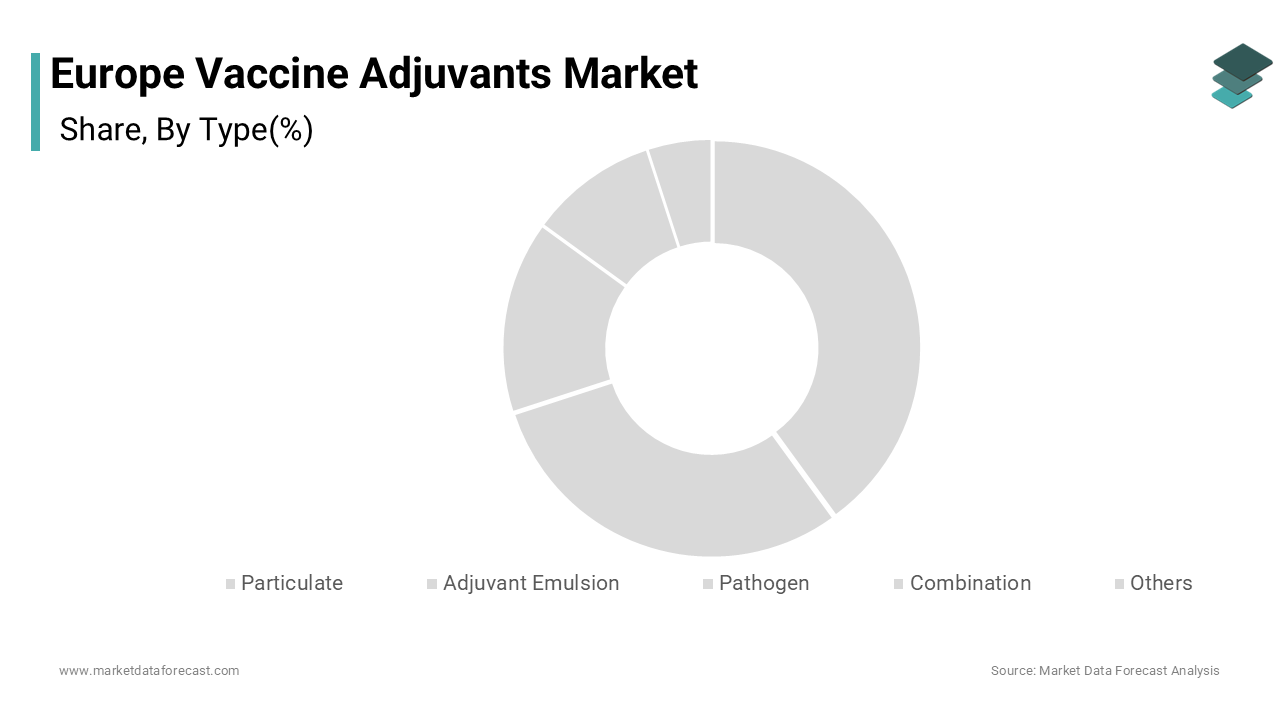
The combination adjuvants segment is predicted to witness the highest CAGR of 12.4% from 2026 to 2034 due to the increasing need for tailored immune polarization in complex vaccine targets such as HIV, tuberculosis, and therapeutic cancer vaccines. Unlike single mechanism adjuvants, combination systems simultaneously activate multiple innate immune pathways, resulting in synergistic enhancement of both T cell and antibody responses. The successful performance of a specific vaccine using a multi-component adjuvant system in older adults has demonstrated its effectiveness in clinical settings within a large geographical region. This approach is further supported by numerous vaccine candidates employing combination adjuvants that are currently undergoing advanced clinical trials, primarily for cancer and emerging infectious diseases. Comparative preclinical studies indicate that multiple adjuvants can achieve a more robust immune response compared to single agents, contributing to their increased integration into future vaccine design.
By Administration Insights
The intramuscular administration segment led the Europe vaccine adjuvants market in 2025. The leading position of the intramuscular administration segment is driven by its compatibility with established immunization infrastructure, predictable pharmacokinetics, and favorable reactogenicity profile for adjuvanted formulations. The predominant method for administering adjuvanted vaccines approved for use within the region is through intramuscular injection, according to sources. This route facilitates slow antigen release from the injection site, enabling sustained interaction with antigen presenting cells a mechanism particularly beneficial for depot forming adjuvants like aluminum salts and emulsions. National immunization programs across Germany, France, and Italy exclusively rely on intramuscular delivery for adult and pediatric adjuvanted vaccines due to decades of safety data and standardized training protocols for healthcare professionals. As per research, A notable share of all annual intramuscular vaccine doses administered are composed of adjuvanted products. The overwhelming majority of approved adjuvanted vaccines rely on the intramuscular route as their specified delivery method. Moreover, intramuscular delivery of substances results in lower general distribution throughout the body compared to other administration routes. This reduced systemic spread minimizes the presence of specific accompanying compounds in the broader circulation. A decrease in the circulation of these components lessens the potential for unwanted inflammatory responses in unintended areas. The entrenched clinical familiarity, regulatory precedence, and logistical simplicity of intramuscular delivery ensure its continued dominance across European vaccination campaigns.
The intranasal administration segment is estimated to register the fastest CAGR of 14.1% during the forecast period owing to the unique ability of mucosal delivery to induce both systemic and local secretory IgA immunity at the primary site of pathogen entry, particularly relevant for respiratory viruses like influenza, respiratory syncytial virus, and SARS CoV 2. Unlike injectable vaccines, intranasal formulations can block viral transmission at the portal of entry, a feature increasingly prioritized in post pandemic public health strategy. Observations indicate that a substantial majority of emerging infectious disease outbreaks stem from airborne pathogens, highlighting an urgent need for vaccines capable of blocking transmission. Recent patterns show regulatory bodies expediting the review of certain intranasal vaccine candidates that use different immune-boosting compounds and have demonstrated complete protection in animal models. Furthermore, clinical data suggests that some adjuvanted intranasal vaccines produce a significantly stronger immune response in the nasal passages compared to traditional injections, offering potential protection against related pathogen strains, while needle-free delivery methods are being considered to improve public acceptance. These combined scientific and behavioral advantages position intranasal adjuvant delivery as a transformative frontier in European vaccinology.
By Application Insights
The infectious diseases segment held the leading share of the Europe vaccine adjuvants market in 2025 The supremacy of the infectious diseases segment is credited to decades of public health investment, mature regulatory pathways, and high population level demand for preventable disease control. Adjuvanted vaccines in Europe are predominantly used to target infectious diseases caused by bacterial or viral pathogens. Infectious diseases preventable by vaccines are still associated with significant mortality in the region, with seasonal illnesses contributing substantially to fatalities during severe periods. Immunization programs in all member states consistently include multiple adjuvanted vaccines for infectious diseases, and regulatory approvals over the past two decades have overwhelmingly favored these vaccines compared to other applications. The established reimbursement mechanisms, clear clinical endpoints, and global burden metrics make infectious disease vaccines the most viable and scalable domain for adjuvant deployment across Europe.
The therapeutic cancer vaccines segment is anticipated to witness the fastest CAGR of 16.8% from 2026 to 2034 The rapid expansion of the therapeutic cancer vaccines segment is propelled by the convergence of personalized medicine, immuno oncology, and advanced adjuvant science aimed at overcoming tumor induced immune suppression. Unlike prophylactic vaccines, cancer vaccines require adjuvants that drive strong cytotoxic T lymphocyte responses against patient specific neoantigens, a function unattainable with traditional aluminum based systems. European biotechnology firms are at the forefront of this innovation. Innovative therapeutic platforms are combining tumor-specific antigens with specialized delivery components to improve clinical outcomes in skin cancer patients. The rising incidence of oncological conditions across the continent is driving a significant and sustained need for advanced medical interventions. Substantial regional funding initiatives are prioritizing the development of vaccine technologies that utilize performance-enhancing additives. Clinical observations indicate that the inclusion of specific adjuvants in vaccine formulations leads to a more robust immune response within tumor environments compared to standard methods. There is a clear strategic shift toward supporting multi-component therapeutic systems to address complex disease pathologies. These clinical and policy tailwinds position oncology as the most dynamic and high value growth frontier for adjuvant applications in Europe.
REGIONAL ANALYSIS
Germany Vaccine Adjuvants Market Analysis
Germany was the top performer in the Europe vaccine adjuvants market and captured a 18.2% share in 2025, with its robust biopharmaceutical ecosystem, centralized regulatory oversight, and proactive public health strategy. Home to global innovators, Germany integrates adjuvant research into national science priorities. Substantial public investment supports the creation of platforms designed for rapid vaccine development. The national regulatory authority demonstrates an accelerated approval process for novel vaccine technologies, including those used in pandemic response efforts. A high vaccination rate is maintained among specific adult populations for seasonal illnesses, which is notably higher than the regional average. Favorable policies that encourage the use of specific vaccine formulations appear to be a contributing factor to the high vaccination uptake in the elderly population. A strategic focus is observed on integrating therapeutic vaccine research into national health priorities, with current research efforts including numerous ongoing clinical studies that incorporate specific immune-enhancing components into therapeutic vaccines. The country’s dense network of university hospitals and contract research organizations further accelerates clinical translation, which makes Germany not only the market leader but also the innovation engine of Europe’s adjuvant pipeline.
France Vaccine Adjuvants Market Analysis
France was the next prominent country in the Europe vaccine adjuvants market and accounted for a 15.7% share in 2025 because of centralized vaccine procurement and strong institutional endorsement of adjuvanted products for aging populations. An official health policy suggests the use of specific influenza vaccines for older adults. The implementation of this policy is associated with high vaccination coverage among this demographic, positioning the region's rate among the highest observed across comparable areas. The country’s public health insurance system fully reimburses these vaccines, removing cost barriers and ensuring equitable access. France also hosts major manufacturing infrastructure. Large-scale manufacturing operations in Lyon sustain a high volume of adjuvant production to meet regional and international pharmaceutical demands. Low rates of reported side effects for these products help maintain a sense of security among healthcare providers and the general public. Collaborative research initiatives are shifting their focus toward developing sophisticated delivery methods, such as mucosal applications. New scientific projects are expanding the use of adjuvant technology beyond traditional vaccines to include therapeutic areas like oncology. Strategic investments are being directed toward the discovery of next-generation components to enhance future medical treatments. This blend of policy support, manufacturing capacity, and scientific investment solidifies France’s pivotal role in the European adjuvant market.
The United Kingdom Vaccine Adjuvants Market Analysis
The United Kingdom is another key player in the Europe vaccine adjuvants market by maintaining strong influence despite its departure from the European Union through sustained scientific leadership and agile regulatory frameworks. The Medicines and Healthcare products Regulatory Agency has fast tracked approvals for novel adjuvant platforms, including the AS01B based shingles vaccine and emerging RNA lipid formulations. Oxford University and Imperial College London remain global leaders in adjuvant immunology. Substantial funding has been directed towards numerous projects focused on developing adjuvant technologies. Public health policy shows a pattern of predominantly using adjuvanted vaccines for a specific adult demographic, aligning research investment with implementation in vaccination programs. The National Health Service’s centralized procurement model ensures rapid scale up, while the newly established UK Vaccine Taskforce prioritizes adjuvant enabled platforms for pandemic preparedness. A recent scientific discovery has attracted substantial private investment, reflecting confidence in its potential applications. This advancement is highlighted as an example of ongoing capacity to produce frontier science with influence beyond its immediate geography, shaping a broader regional market.
Italy Vaccine Adjuvants Market Analysis
Italy is moving ahead steadfastly in the Europe vaccine adjuvants market owing to a high burden of vaccine preventable diseases and progressive national immunization policies. A recurring public health challenge results in a notable number of fatalities during certain periods, with a specific demographic segment experiencing significantly higher rates compared to the general regional average. This drives an operational need for more robust protective measures, leading to a public health initiative that implements a specific type of vaccine for a designated age group, resulting in a considerable increase in the overall rate of vaccine administration over a recent period. The country also leads EU adoption of the recombinant zoster vaccine, with significant number of doses administered since 2020, as per sources. Italy hosts key clinical trial sites for novel adjuvants, particularly in oncology. These factors position Italy as a demand driven market where epidemiological necessity directly translates into adjuvant utilization.
Spain Vaccine Adjuvants Market Analysis
Spain is anticipated to grow in the Europe vaccine adjuvants market during the forecast period due to its decentralized yet coordinated approach to vaccine delivery across autonomous communities. Recommendations for a specific type of influenza vaccine have been harmonized for use across the country, corresponding to a substantial increase in elderly coverage rates relative to previous periods. A specific type of vaccine is administered to a large number of seniors each year, with effectiveness studies indicating a reduction in hospitalizations for those receiving the specific vaccine type compared to alternatives. The country is becoming more prominent as a location for clinical trials related to novel adjuvants, while a strong primary care network facilitates efficient vaccine delivery. This operational efficiency, combined with rising awareness of immunosenescence, cements Spain’s role as a high growth and high compliance market within the European adjuvant landscape.
COMPETITIVE LANDSCAPE
Competition in the Europe vaccine adjuvants market is characterized by a blend of established pharmaceutical leaders and specialized biotechnology firms vying for scientific and regulatory leadership. The landscape is not defined by price but by technological differentiation particularly in next generation adjuvant systems that enable dose sparing enhanced immunogenicity and tailored immune responses. Companies compete through intellectual property portfolios robust clinical data and integration into national immunization strategies. Regulatory alignment with the European Medicines Agency and participation in EU funded research initiatives such as Horizon Europe serve as key differentiators. Supply chain resilience and sustainable manufacturing have also become competitive benchmarks following pandemic induced disruptions. While large players leverage global reach and legacy platforms smaller innovators gain traction through novel mechanisms like STING or TLR agonists. This dynamic fosters a collaborative yet intensely competitive environment focused on advancing Europe’s vaccine sovereignty and public health preparedness.
KEY MARKET PLAYERS
Some of the companies that are playing a dominating role in the Europe Vaccine Adjuvants Market include
- GlaxoSmithKline plc
- Seqirus
- Croda International Plc
- SEPPI
- Novavax, Inc.
- Merck KGaA
- Evonik Industries AG
- Valneva SE
- Bavarian Nordic A/S
- InvivoGen
Top Players in the Europe Vaccine Adjuvants Market
GSK
GSK holds a prominent position in the Europe vaccine adjuvants market through its proprietary AS01 adjuvant system used in the Shingrix shingles vaccine and other advanced candidates. The company leverages deep immunological expertise to develop adjuvants that enhance both humoral and cellular immunity. In recent years GSK has expanded its adjuvant research capabilities by investing in next generation platforms including TLR agonists and combination systems. It collaborates extensively with European academic institutions and public health bodies to accelerate clinical validation of novel formulations. GSK’s recent partnership with the European Commission under the Horizon Europe program focuses on pandemic preparedness using adjuvant sparing technologies. These initiatives reinforce its scientific leadership and long term commitment to advancing vaccine efficacy across Europe and globally.
Novartis (through Seqirus)
Novartis contributes significantly to the Europe vaccine adjuvants market via its subsidiary Seqirus which commercializes the MF59 adjuvant used in seasonal and pandemic influenza vaccines. MF59 has been administered in over one hundred million doses across Europe with a well documented safety and efficacy profile. Seqirus continues to invest in manufacturing scale up at its Holly Springs facility and its UK based Liverpool plant to ensure reliable supply for European immunization programs. Recently the company enhanced its adjuvant analytics capabilities through a collaboration with the Paul Ehrlich Institute to standardize emulsion characterization. Seqirus also participates in the European Medicines Agency’s adaptive pathways pilot to expedite evaluation of adjuvanted vaccine candidates. These actions underscore its strategic focus on public health resilience and platform sustainability.
Croda International
Croda International has emerged as a key enabler in the Europe vaccine adjuvants market by supplying high purity squalene and lipid excipients essential for oil in water emulsions and RNA vaccine formulations. The company operates dedicated GMP facilities in the UK and Sweden ensuring compliance with European regulatory standards. Croda actively partners with vaccine developers to co engineer adjuvant delivery systems with optimized stability and immunogenicity. Additionally Croda joined the European Vaccine Manufacturing Initiative to support end to end localization of adjuvant supply chains. These efforts position Croda as a critical upstream innovator strengthening Europe’s vaccine self reliance.
Top Strategies Used by the Key Market Participants
Key players in the Europe vaccine adjuvants market prioritize strategic collaborations with academic and public health institutions to accelerate clinical validation of novel adjuvant platforms. They invest heavily in manufacturing scale up and supply chain localization to ensure reliable access during public health emergencies. Companies also focus on sustainable sourcing of raw materials such as squalene to align with environmental regulations and ethical standards. Regulatory engagement through adaptive licensing pathways and scientific advice procedures with the European Medicines Agency enables faster market entry. Furthermore firms pursue platform diversification by developing combination adjuvants that support both prophylactic and therapeutic vaccine applications across infectious diseases and oncology. These strategies collectively enhance innovation velocity and market responsiveness.
MARKET SEGMENTATION
This research report on the europe vaccine adjuvants market has been segmented and sub–segmented into the following categories.
By Type
- Particulate
- Adjuvant Emulsion
- Pathogen
- Combination
- Others
By Administration
- Intramuscular
- Intranasal
- Oral
- Intradermal
- Others
By Application
- Infectious Diseases
- Cancer
- Others
By Country
- UK
- France
- Spain
- Germany
- Italy
- Russia
- Sweden
- Denmark
- Switzerland
- Netherlands
- Turkey
- Czech Republic
- Rest of Europe