Europe Veterinary Medicine Market Size, Share, Trends, & Growth Forecast Report By Animal Type (Domesticated, Companion Animals), Product, Distribution Channel and Country (UK, France, Spain, Germany, Italy, Russia, Sweden, Denmark, Switzerland, Netherlands, Turkey, Czech Republic and Rest of Europe), Industry Analysis From 2026 to 2034
Market Size, 2025
$10.96 BnMarket Estimate, 2026
$11.47 BnMarket Forecast, 2034
$16.51 BnCAGR, 2026–2034
4.66%Europe Veterinary Medicine Market Report Summary
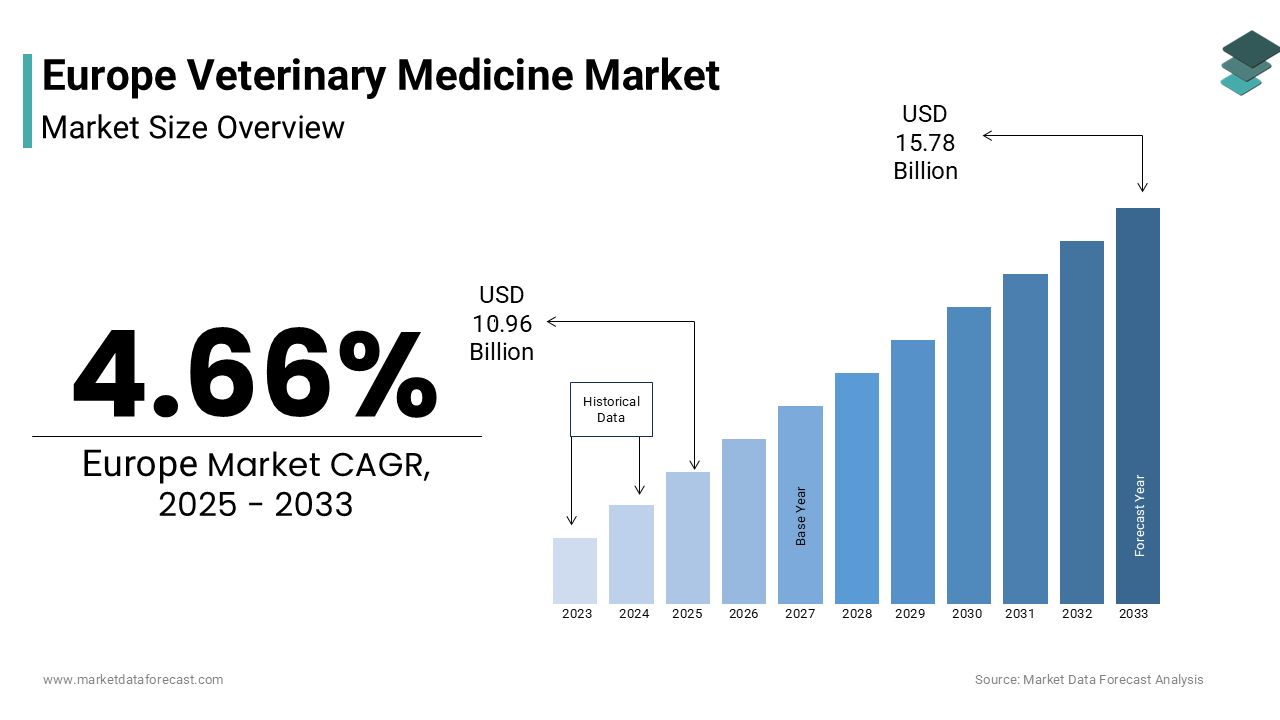
The Europe veterinary medicine market was valued at USD 10.96 billion in 2025, is estimated to reach USD 11.47 billion in 2026, and is projected to reach USD 16.51 billion by 2034, growing at a CAGR of 4.66% during the forecast period from 2026 to 2034. The growth of the Europe veterinary medicine market is driven by rising pet ownership, increasing humanization of companion animals, and expanding demand for preventive and chronic care treatments. Strong regulatory emphasis on livestock disease surveillance, stringent food safety standards, and growing adoption of advanced biologics and vaccines are further fueling market growth. Moreover, the rise of precision livestock farming, digital veterinary health tools, and broader access to innovative therapeutics for both companion and domesticated animals are strengthening the sector across Europe.
Key Market Trends
- Rising humanization of pets is driving demand for advanced diagnostics, preventive care, and specialized therapeutics.
- Expanding use of biologics, monoclonal antibodies, and next-generation vaccines for emerging and re-emerging animal diseases.
- Increasing integration of digital veterinary health platforms, telemedicine, and precision livestock monitoring technologies.
- Strong regulatory focus on food safety, antimicrobial stewardship, and surveillance of livestock diseases.
- Growing preference for natural, species-specific nutraceuticals and wellness solutions driven by evolving pet owner expectations.
Segmental Insights
- Based on animal type, the companion animals segment was the largest and held a significant share of the Europe veterinary medicine market in 2024, attributed to rising pet ownership, high spending on premium treatments, and greater adoption of chronic disease management therapies.
- Based on product, the drugs segment accounted for a prominent share of the Europe veterinary medicine market in 2024, driven by strong demand for anti-inflammatories, parasiticides, and therapeutics for both companion and production animals.
- Based on distribution channel, the veterinary hospitals and clinics segment held the largest share of the Europe veterinary medicine market in 2024, supported by regulatory requirements mandating prescription-only dispensing and the increasing integration of clinical services with pharmaceutical care.
Regional Insights
The Europe veterinary medicine market is witnessing healthy growth across major economies, supported by strong farming activity, rising pet adoption, and modernized veterinary healthcare systems.
- Germany was the largest contributor, accounting for 22.3% of the Europe veterinary medicine market share in 2024, driven by high pet healthcare spending, stringent livestock disease control regulations, and strong domestic manufacturing capabilities.
- France continues to perform well, supported by large-scale livestock production, strict regulatory oversight, and strong veterinary education networks.
- The United Kingdom shows steady growth, driven by digital prescription systems, rising vaccine adoption, and strong demand for companion animal therapeutics.
- Italy is emerging as a growing market, supported by national antimicrobial reduction programs, improving veterinary infrastructure, and rising companion animal ownership in urban areas.
Competitive Landscape
The Europe veterinary medicine market is characterized by the dominance of global animal health companies with strong product portfolios spanning pharmaceuticals, vaccines, biologics, and specialty therapeutics. Leading players are focusing on expanding vaccine development pipelines, strengthening antimicrobial stewardship compliance, and integrating digital health tools to support data-driven veterinary care. Strategic collaborations with veterinary institutions, investment in localized manufacturing, and expansion across companion and livestock health segments are strengthening competitiveness. Prominent players in the Europe veterinary medicine market include Boehringer Ingelheim, Ceva Santé Animale, MSD Animal Health, Zoetis, Elanco Animal Health, Virbac, Dechra Pharmaceuticals, and Vetoquinol.
Europe Veterinary Medicine Market Size
The europe veterinary medicine market size was valued at USD 10.96 billion in 2025 and is anticipated to reach USD 11.47 billion in 2026 from USD 16.51 billion by 2034, growing at a CAGR of 4.66% during the forecast period from 2026 to 2034
The veterinary medicine are pharmaceuticals vaccines biologics and parasiticides developed for the prevention treatment and management of diseases in companion animals livestock and equines. As per the European Commission, veterinary medicines are centrally authorized across the EU with thousands more approved nationally. Europe is home to more than 500 million domesticated animals including over 100 million companion animals and approximately 150 million cattle pigs and poultry raised annually for food production, according to data published.
MARKET DRIVERS
Rising Pet Ownership and Humanization of Companion Animals
Pet ownership in Europe has surged in recent years driven by shifts emotional well-being and lifestyle changes among urban populations is propelling the growth of Europe veterinary medicine market. The humanization of pets are treating animals as family members has fundamentally altered care expectations leading owners to demand advanced diagnostics chronic disease management and preventive therapeutics comparable to human standards. This willingness fuels demand for innovative products including monoclonal antibodies for atopic dermatitis non-steroidal anti inflammatories with improved safety profiles and species specific nutraceuticals. Veterinary clinics have responded by adopting telemedicine digital health records and specialized services in oncology dentistry and cardiology. This cultural and behavioral shift transforms veterinary medicine from reactive treatment to proactive wellness creating sustained demand for premium pharmaceuticals and biologics across the companion animal segment.
Stringent Food Safety Regulations and Livestock Disease Surveillance
Europe maintains one of the world’s most rigorous frameworks for animal derived food safety is directly influencing veterinary medicine usage in production animals. The stringent food safety regulaations and livestock disease surveillance is also a prominent factor fuelling the growth of Europe veterinary medicine market. As per the European Food Safety Authority, continuous monitoring of zoonotic pathogens antimicrobial residues and emerging epizootics across the livestock value chain. According to the European Commission’s 2023 Animal Health Report, many official veterinary inspections were conducted at farms and slaughterhouses to enforce compliance with Regulation EU 2016 429 on transmissible animal diseases. Similarly, the European Union’s Peste des Petits Ruminants eradication program has driven mass vaccination campaigns in sheep and goats across Southern Europe. This regulatory pressure encourages adoption of alternatives such as autogenous vaccines immune modulators and precision delivery systems that enhance efficacy while minimizing drug residues.
MARKET RESTRAINTS
Stringent Regulatory Approval Pathways and Prolonged Time to Market
The authorization process for veterinary medicinal products in Europe is notably complex and time consuming often deterring innovation particularly among small and medium enterprises. The stringent regulatory approval pathways and prolonged time is restraining the growth of Europe veterinary medicine market. The average time to obtain a centralized marketing authorization for a new veterinary medicine exceeds 24 months due to extensive requirements for target species safety residue studies and environmental risk assessments. For instance, a new antibiotic for cattle requires residue depletion studies across milk meat and offal along with ecotoxicity testing on soil microorganisms and aquatic life. The 2022 EU Veterinary Medicinal Products Regulation introduced mutual recognition procedures but national agencies still apply divergent interpretations leading to inconsistent approvals. This fragmentation increases development costs and delays market access particularly for niche indications such as equine metabolic syndrome or rabbit hemorrhagic disease.
Persistent Antimicrobial Use Restrictions Limiting Therapeutic Options
Europe’s aggressive stance against antimicrobial resistance has significantly curtailed the availability and use of antibiotics in veterinary practice creating therapeutic gaps in livestock and companion animal care. The persistent antimicrobial use restrictions is also impeding the growth of Europe veterinary medicine market. While this reflects successful policy implementation it has left veterinarians with fewer tools to manage bacterial infections particularly in intensive production systems. For example, outbreaks of porcine respiratory disease complex now often require management through vaccination and immune support rather than direct antimicrobial intervention due to prescribing restrictions. Although alternatives like phage therapy probiotics and antimicrobial peptides are under investigation none have achieved broad regulatory acceptance. The absence of rapid point of care diagnostics to guide targeted therapy further exacerbates empirical under treatment. Thus, while antimicrobial stewardship aligns with public health goals it simultaneously constrains clinical flexibility and drives demand for non-antibiotic solutions that remain in early development stages.
MARKET OPPORTUNITIES
Expansion of Biologicals and Vaccines for Emerging and Re emerging Diseases
The growing threat of emerging zoonoses and climate driven epizootics is investment in next generation veterinary biologicals across Europe. The expansion of biologics to promote new vaccines for various diseases is ascribed to bolster the growth of Europe veterinary medicine market. As per the World Organisation for Animal Health Europe, recorded 146 outbreaks of notifiable animal diseases in 2023 including bluetongue in sheep avian influenza in poultry and lumpy skin disease in cattle. These events have triggered national emergency vaccination programs and spurred development of novel platforms such as recombinant vector vaccines virus like particles and mRNA based immunogens. Companies are leveraging this support to advance candidates like the DIVA compatible African swine fever subunit vaccine now in phase III trials at the Friedrich Loeffler Institute. In companion animals, monoclonal antibody therapies for conditions like osteoarthritis and atopic dermatitis have gained traction with three new biologics approved by the European Medicines Agency since 2022. The regulatory pathway for biologicals has also been streamlined under the 2022 Veterinary Medicinal Products Regulation which allows adaptive licensing based on real world evidence.
Digital Health Integration and Precision Livestock Farming Technologies
The integration of veterinary medicine with digital agriculture is unlocking new models of disease prevention and treatment personalization, across European farms. The digital health integration and precision livestock farming technologies is additionally to promote new opportunities for the growth of Europe veterinary medicine market. Precision livestock farming systems now monitor individual animal health through sensors wearables and AI driven analytics enabling early intervention and targeted therapy. These systems generate data that guide precise dosing of anti-inflammatories antibiotics or supplements reducing overall drug use. In poultry and swine, operations thermal imaging and audio analysis predict respiratory disease outbreaks allowing preemptive vaccination or biosecurity adjustments. Companion animal clinics are adopting similar tools with smart collars tracking activity hydration and glucose levels in diabetic dogs. This digital transformation not only enhances animal welfare and productivity but creates demand for connected veterinary medicines, such as auto injectable devices with telemetry or RFID tagged doses by spositioning Europe at the forefront of data driven veterinary care.
MARKET CHALLENGES
Workforce Shortages and Uneven Distribution of Veterinary Professionals
The worsening shortage of qualified veterinary professionals, which directly impedes access to advanced medical care for animals is a major challenge for the growth of Europe veterinary medicine market. According to the source, the EU will face a deficit of more than 15,000 veterinarians by 2027 driven by retirement rates outpacing new graduates and urban concentration of practitioners. While Western European cities have one veterinarian per 2 000 companion animals rural and Eastern regions often have fewer than one per 20 000 livestock units. This imbalance limits the delivery of preventive medicine vaccination programs and disease surveillance particularly in extensive farming systems in Romania Bulgaria and Greece. Furthermore, specialized fields such as veterinary pharmacology radiology and surgery suffer even greater gaps with less than 200 board certified veterinary oncologists practicing across the entire EU.
Economic Disparities in Animal Healthcare Access Across Member States
The significant economic divergence among European countries creates stark inequalities in veterinary medicine accessibility and quality is limiting the growth of Europe veterinary medicine market. According to Eurostat, per capita spending on pet healthcare in Germany exceeds 120 euros annually while in Bulgaria it remains below 8 euros reflecting broader income disparities. Similarly, livestock producers in high income nations invest in premium vaccines diagnostics and herd health programs whereas farmers in lower income EU states often rely on basic treatments or informal care due to cost constraints. These gaps hinder the EU’s One Health objectives as untreated animals become reservoirs for resistant pathogens and zoonotic diseases. While EU cohesion funds support rural veterinary infrastructure uptake remains low due to co financing requirements and lack of local expertise.
REPORT COVERAGE
| REPORT METRIC | DETAILS |
| Market Size Available | 2025 to 2034 |
| Base Year | 2025 |
| Forecast Period | 2026 to 2034 |
| Segments Covered | By Animal Type, Product, Distribution Channel and Region |
| Various Analyses Covered | Global, Regional & Country Level Analysis, Segment-Level Analysis, Drivers, Restraints, Opportunities, Challenges, PESTLE Analysis, Porter’s Five Forces Analysis, Competitive Landscape, Analyst Overview of Investment Opportunities |
| Regions Covered | United Kingdom, France, Spain, Germany, Italy, Russia, Sweden, Denmark, Switzerland, the Netherlands, Turkey, and the Czech Republic. |
| Market Leaders Profiled | Boehringer Ingelheim, Ceva Santé Animale, MSD Animal Health, Zoetis, Elanco Animal Health, Virbac, Dechra Pharmaceuticals, and Vetoquinol. |
SEGMENTAL ANALYSIS
By Animal Type Insights
The companion animals segment was the largest by holding 58.3% of the Europe veterinary medicine market share in 2025 with the deep emotional and financial investment European households place in pets combined with increasingly sophisticated standards of care. According to some reports that over 90 million dogs and cats live in EU households with ownership rates exceeding 60% in countries like Portugal and Hungary. Unlike livestock which are managed under cost constrained production models companion animals receive individualized treatment including chronic disease management advanced diagnostics and premium therapeutics. The Federation of Veterinarians of Europe notes that 73% of companion animal consultations in Western Europe now include at least one prescription medication ranging from flea preventives to monoclonal antibodies for allergic dermatitis. This humanization trend transforms veterinary medicine from basic care to a high value health service aligned with human medical expectations.
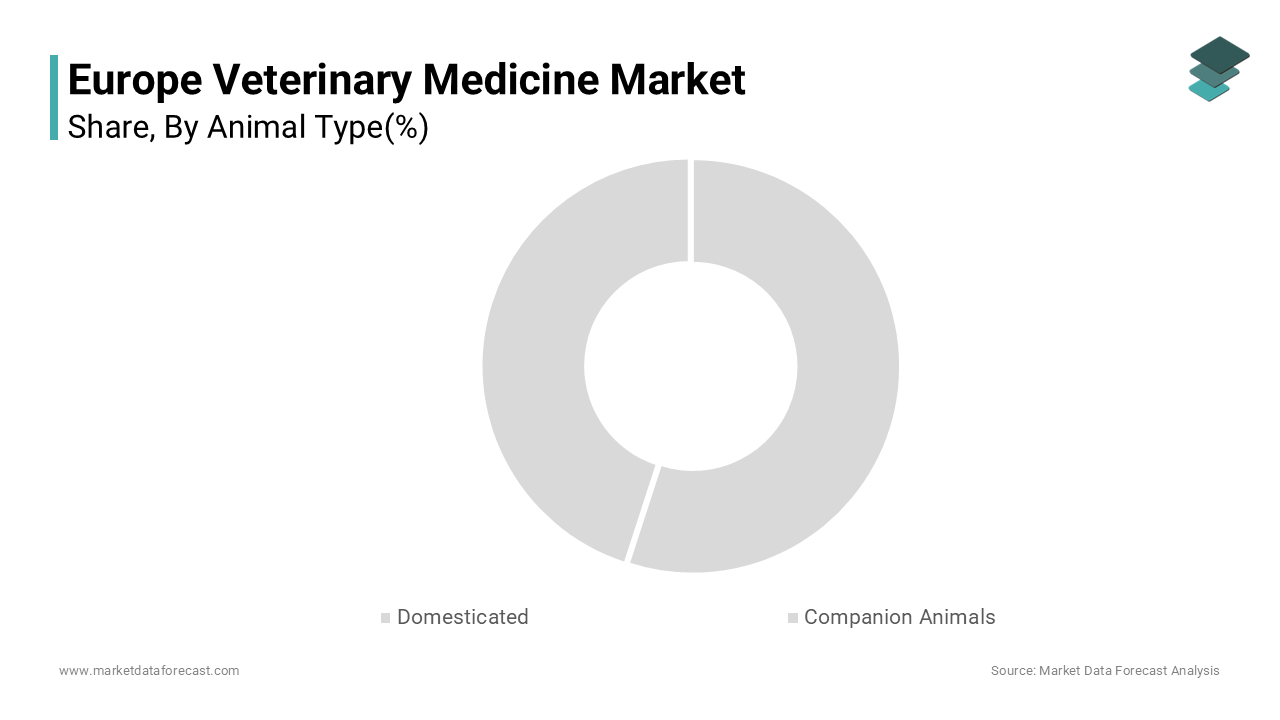
The domesticated animals segment is lucratively growing at a fastest CAGR of 6.8% throughout the forecast period from intensified biosecurity demands and disease outbreak pressures across livestock sectors. The European Food Safety Authority documented 212 outbreaks of notifiable animal diseases in 2023 including highly pathogenic avian influenza in poultry African swine fever in wild boar populations and bluetongue in ruminants. These events have triggered mandatory vaccination campaigns and heightened investment in prophylactic medicines. In response the EU’s Animal Health Law now requires all member states to implement disease prevention plans with pharmacological components. Additionally, the Farm to Fork Strategy’s antimicrobial reduction targets have spurred adoption of alternatives such as autogenous vaccines immune stimulants and microbiome modulators, which fall under veterinary medicinal product regulations. Precision livestock farming also enables targeted dosing reducing waste and improving compliance.
By Product Insights
The drugs segment was the largest by holding a significant share of the Europe veterinary medicine market in 2025 with the broad therapeutic scope of pharmaceuticals which address everything from parasitic infestations and pain management to chronic conditions like diabetes and hyperthyroidism in companion animals and metabolic disorders in livestock. Furthermore, the rise of non-antibiotic anti inflammatories like grapiprant and oclacitinib reflects demand for safer long term options in aging pets. Regulatory pathways for generic and hybrid drugs are also more streamlined than for vaccines enabling faster market entry and price competition. National prescribing guidelines in Germany and France now require veterinarians to justify off label use which has shifted formulary reliance toward authorized drug products with proven safety dossiers reinforcing their market position.
The vaccines segment is lucratively growing at a fastest CAGR of 8.2% from 2025 to 2033 with escalating disease threats and regulatory mandates rather than discretionary care. The European Commission’s 2023 Epizootic Surveillance Bulletin reported that 18 EU member states recorded African swine fever cases primarily in wild boar populations creating urgent demand for emergency vaccines despite none yet being commercially available. Meanwhile, bluetongue serotype 3 re emerged in the Netherlands and Germany in 2023 leading to compulsory vaccination of over 2 million ruminants as mandated by national authorities. Companion animal vaccination is also evolving with non-core vaccines for leishmaniasis and babesiosis gaining traction in Southern Europe due to climate driven vector spread.
By Distribution Channel Insights
The veterinary hospitals and clinics segment held a significant share of the Europe veterinary medicine market in 2025 from legal requirements and clinical integration. Across all EU member states prescription veterinary medicines including antibiotics antiparasitics and biologics must be dispensed by or under the supervision of a licensed veterinarian following a valid clinical examination. Furthermore, clinics increasingly bundle products with services such as dental prophylaxis chemotherapy or chronic disease monitoring creating sticky patient relationships. In Germany, for example over 80% of flea and tick preventives are sold during wellness visits rather than through external channels. The rise of in-house diagnostics also drives on site dispensing as treatment decisions are made in real time. National pharmacovigilance systems like the UK’s Veterinary Medicines Directorate adverse event portal require veterinarians to report treatment outcomes reinforcing their role as central dispensers. This legally anchored clinical ecosystem ensures that veterinary hospitals and clinics remain the primary and most trusted conduit for animal medicines across Europe.
The online pharmacies segment is likely to register a fastest CAGR of 12.4% throughout the forecast period with the digital adoption convenience and evolving regulatory interpretations particularly for non-prescription products. The 2022 EU Veterinary Medicinal Products Regulation permits online sales of authorized non-prescription items provided vendors are registered with national competent authorities a framework now implemented in 22 member states. Companies like Vetoquinol and Zoetis have launched direct to consumer portals integrated with veterinary oversight allowing remote prescription renewals after teleconsultations.
REGIONAL ANALYSIS
Germany Veterinary Medicine Market Analysis
Germany was the largest contributor of the Europe veterinary medicine market by occupying 22.3% of share in 2025 with its dense network of over 12 000 veterinary practices high pet ownership rates and stringent livestock health regulations. The national AMR strategy has reduced antibiotic use in food animals by 56% since 2018 per the Federal Office of Consumer Protection and Food Safety driving demand for vaccines and immune modulators. Reimbursement for advanced therapies is supported by a robust pet insurance market covering 38% of dogs. Furthermore, Germany hosts major manufacturing sites for Boehringer Ingelheim and Merck Animal Health ensuring local supply and R&D investment. The 2023 national animal health ordinance mandates digital treatment records and electronic prescription tracking reinforcing compliance and data driven medicine. These structural and regulatory advantages position Germany as the undisputed leader in both volume and innovation in European veterinary medicine.
France Veterinary Medicine Market Analysis
France veterinary medicine market held 18.9% of share in 2024 with its balanced mix of intensive livestock farming and high companion animal humanization. France is Europe’s largest poultry and second largest cattle producer requiring extensive use of vaccines and prophylactics. Regulatory enforcement is strict with mandatory veterinary prescriptions for all parasiticides since 2022. France also leads in veterinary education hosting Europe’s largest veterinary school in Lyon which collaborates with Merial now Boehringer Ingelheim on clinical trials. Recent investments in mobile veterinary units have improved rural access particularly in mountainous and agricultural zones.
The United Kingdom Veterinary Medicine Market Analysis
The United Kingdom veterinary medicine market growth is likely to grow with EU pharmacovigilance and Good Manufacturing Practice standards ensuring continued product availability. The UK’s mandatory electronic prescribing system implemented in 2022 has enhanced treatment traceability and reduced antimicrobial misuse. Livestock sectors remain significant with over 9 million cattle and major poultry operations driving vaccine demand especially amid recurrent avian influenza outbreaks. The UK also pioneers regulatory innovation with the Veterinary Medicines Regulations 2023 introducing a fast track pathway for novel biologics targeting rare conditions. Academic institutions like the Royal Veterinary College drive translational research while telemedicine adoption has doubled since 2021 per the British Veterinary Association.
Italy Veterinary Medicine Market Analysis
Italy veterinary medicine market growth is likely to grow with the large smallholder livestock sector and rapidly growing companion animal segment particularly in urban centers. The 2023 National Plan for Veterinary Antimicrobial Reduction achieved a 41% decline in antibiotic use in food animals, since 2019 accelerating demand for vaccines against clostridial diseases and mastitis. Southern regions face challenges with African swine fever incursions prompting mass wild boar vaccination trials. Regulatory enforcement is improving with the 2024 digital prescription hub connecting all 8,500 veterinary clinics to a centralized monitoring system.
Spain Veterinary Medicine Market Analysis
Spain veterinary medicine market growth is likely to grow with its extensive livestock operations. Climate change has intensified disease pressure with leishmaniasis now endemic in 42 provinces affecting over 15% of dogs in southern regions. This has driven widespread use of prophylactic vaccines and insecticide collars. Spain also faces recurrent bluetongue outbreaks necessitating compulsory vaccination of ruminants in affected zones. Additionally, Spain is a key trial site for Mediterranean disease vaccines due to its ecological conditions.
COMPETITIVE LANDSCAPE
The Europe veterinary medicine market is characterized by a blend of global innovators and specialized regional players competing on scientific credibility regulatory agility and service integration. Major companies leverage vertically integrated operations encompassing R&D manufacturing and veterinary education to create end to end value. The companion animal segment sees intense innovation in biologics and chronic disease management while the livestock side is shaped by biosecurity mandates and antimicrobial reduction policies. National regulatory fragmentation requires tailored market access strategies particularly in Eastern Europe. At the same time digital disruption is enabling new entrants to challenge incumbents through direct to consumer models and data driven health platforms.
KEY MARKET PLAYERS
Some of the companies that are playing a dominating role in the Europe Veterinary Medicine Market include
- Boehringer Ingelheim
- Ceva Santé Animale
- MSD Animal Health
- Zoetis
- Elanco Animal Health
- Virbac
- Dechra Pharmaceuticals
- Vetoquinol
Top Players in the Europe Veterinary Medicine Market
Boehringer Ingelheim
Boehringer Ingelheim is a global leader in animal health with a deeply entrenched presence across Europe through its Boehringer Ingelheim Animal Health division headquartered in Germany. The company offers a comprehensive portfolio spanning parasiticides vaccines and therapeutic drugs for both companion and food producing animals. It has reinforced its European position by investing in next generation biologics including monoclonal antibodies for canine osteoarthritis and novel vaccines against swine and poultry diseases.
Zoetis
Zoetis maintains a robust footprint in the Europe veterinary medicine market through its diversified product range and strategic focus on companion animal innovation. The company commercializes leading brands in parasiticides anti inflammatories and oncology therapeutics across major European markets. To strengthen its position Zoetis has accelerated its digital transformation by launching VetConnect Plus Europe a cloud based platform that integrates diagnostics prescriptions and pet health records for veterinary clinics.
Elanco Animal Health
Elanco Animal Health plays a pivotal role in the European veterinary medicine landscape with strong capabilities in both livestock and pet health segments. The company leverages its global R&D engine to address regional challenges such as antimicrobial reduction and emerging epizootics. Elanco has enhanced its European supply chain by upgrading its manufacturing site in Bad Oldesloe Germany to produce mRNA vaccine candidates for poultry and swine. Elanco actively participates in EU funded One Health consortia and supports veterinary continuing education programs across Eastern and Southern Europe to improve product adoption and responsible use.
Top Strategies Used by the Key Market Participants
Key players in the Europe veterinary medicine market prioritize regulatory alignment by actively engaging with the European Medicines Agency and national authorities to accelerate product approvals and ensure compliance with antimicrobial stewardship mandates. Companies invest heavily in localized manufacturing and cold chain infrastructure to secure supply amid geopolitical and logistical uncertainties. Strategic collaborations with veterinary universities research institutes and farming cooperatives drive co development of region-specific solutions for diseases like African swine fever and leishmaniasis. Digital health integration is another core strategy with firms deploying cloud-based practice management tools telemedicine platforms and AI enabled diagnostic support to enhance clinic efficiency.
MARKET SEGMENTATION
The research report on the Europe Veterinary Medicine Market has been segmented and sub-segmented based on categories.
By Animal Type
- Domesticated
- Companion Animals
By Product
- Drugs
- Vaccines
By Distribution Channel
- Veterinary Hospitals
- Clinics Retail Stores
- Online Pharmacies4
By Country
- UK
- France
- Spain
- Germany
- Italy
- Russia
- Sweden
- Denmark
- Switzerland
- Netherlands
- Turkey
- Czech Republic
- Rest of Europe
Frequently Asked Questions
What is the Europe Veterinary Medicine Market?
The Europe Veterinary Medicine Market refers to the industry focused on pharmaceuticals, vaccines, parasiticides, and therapeutics used for diagnosing, treating, and preventing diseases in livestock and companion animals across Europe.
What factors are driving the growth of the Europe Veterinary Medicine Market?
The Europe Veterinary Medicine Market is driven by rising pet ownership, increasing demand for animal-sourced food products, growing prevalence of zoonotic diseases, and advancements in veterinary pharmaceuticals and vaccines.
What are the major segments in the Europe Veterinary Medicine Market?
The Europe Veterinary Medicine Market is segmented by product (vaccines, pharmaceuticals, feed additives, diagnostics), by animal type (livestock & companion animals), and by route of administration (oral, injectable, topical).
Which countries are leading in the Europe Veterinary Medicine Market?
The Europe Veterinary Medicine Market is dominated by Germany, the U.K., France, Italy, Spain, and the Netherlands due to strong veterinary infrastructure and high livestock production.
Who are the key players in the Europe Veterinary Medicine Market?
Key players in the Europe Veterinary Medicine Market include Boehringer Ingelheim, Zoetis, MSD Animal Health, Ceva Santé Animale, Elanco Animal Health, Virbac, Dechra Pharmaceuticals, and Vetoquinol.
What challenges does the Europe Veterinary Medicine Market face?
The Europe Veterinary Medicine Market faces challenges such as strict EU regulations, high development costs for new veterinary drugs, increasing antimicrobial resistance, and supply chain disruptions.
What opportunities exist in the Europe Veterinary Medicine Market?
The Europe Veterinary Medicine Market offers opportunities in companion-animal healthcare, precision livestock farming, AI-driven diagnostics, preventive vaccines, and tele-veterinary services.
How is technology impacting the Europe Veterinary Medicine Market?
The Europe Veterinary Medicine Market is evolving with innovations in digital monitoring, wearable animal health devices, advanced diagnostics, biotechnology-based vaccines, and e-commerce distribution channels.
Which therapeutic areas dominate the Europe Veterinary Medicine Market?
The Europe Veterinary Medicine Market is dominated by parasiticides, anti-infectives, vaccines, dermatology treatments, and pain-management drugs for both pets and livestock.
What is the future outlook for the Europe Veterinary Medicine Market?
The Europe Veterinary Medicine Market is expected to grow steadily due to rising animal healthcare awareness, expanding pet insurance adoption, and continuous R&D in vaccines and therapeutics.
Access the study in MULTIPLE FORMATS
Purchase options starting from
$ 2000
Didn’t find what you’re looking for?
TALK TO OUR ANALYST TEAM
Need something within your budget?
NO WORRIES! WE GOT YOU COVERED!
Call us on: +1 888 702 9696 (U.S Toll Free)
Write to us: sales@marketdataforecast.com