- Product Description Description
- Table of Contents TOC
- List of Table & Figure LOT
- Get Free Sample PDF Sample PDF
Market Size, 2025
$18.93 BnMarket Estimate, 2026
$19.97 BnMarket Forecast, 2034
$30.62 BnCAGR, 2026–2034
5.48%Executive Summary: Europe Wafer Biscuits Market
- Market Scope: In-depth regional assessment of the European wafer biscuits market covering product variants, application types, distribution channels, and country-level developments across the confectionery and snack food sectors.
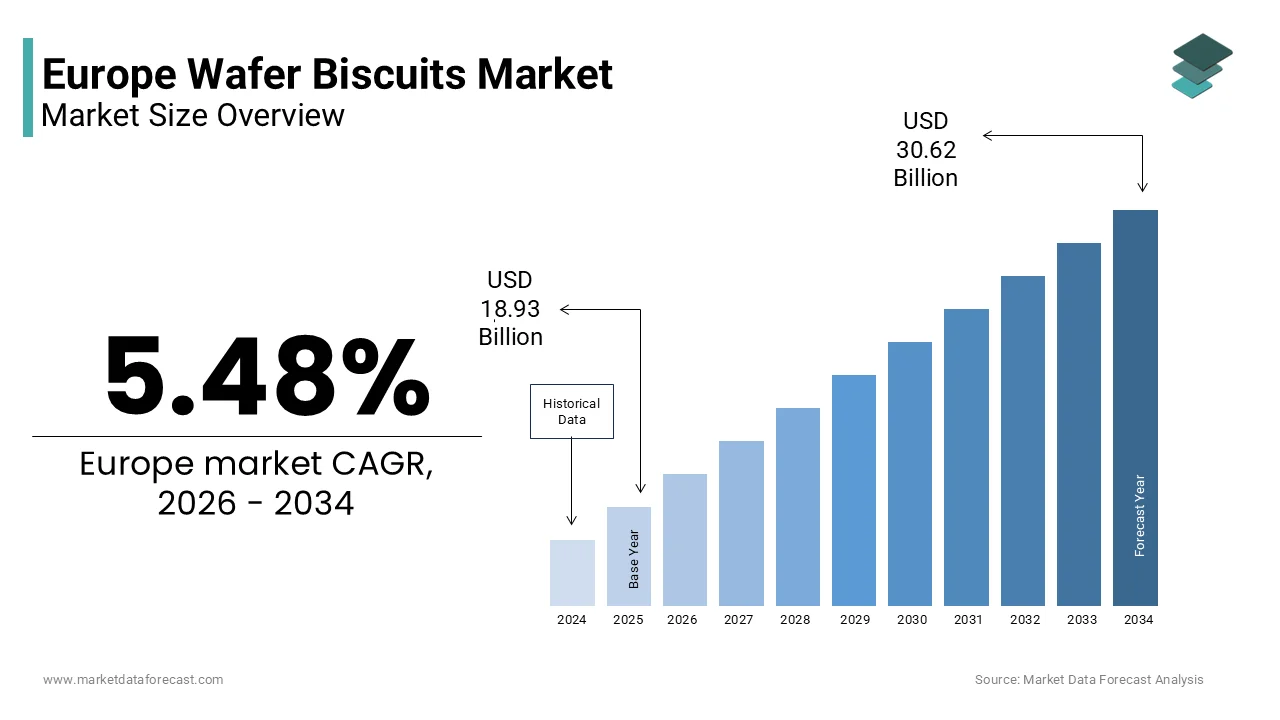
- Market Valuation: Valued at USD 18.93 billion in 2025, estimated at USD 19.97 billion in 2026, and projected to reach USD 30.62 billion by 2034, registering a steady CAGR of 5.48% during the forecast period from 2026 to 2034.
- Primary Growth Drivers: Ever-increasing consumer demand for convenience foods, rising disposable income levels, and widespread applications in popular confectionery lines such as ice cream sandwiches, chocolate bars, and frozen desserts. Key market restraints include growing health concerns regarding sugar and fat content in developed countries—pushing manufacturers toward healthier variants—alongside heavy market competition and alternative snack offerings.
Key Market Segment Metrics (2026–2034)
| Category | Leading Segment / Position | Fastest-Growing Segment |
|---|---|---|
| By Product | Cream-Filled Wafer Biscuits (preferred for classic taste profiles and broad consumer appeal) | Coated & Sugar-Free / Healthier Variant Wafers |
| By Application | Chocolate Bars (accounts for a major share of the market due to integration into confectionery) | Sandwich Cookies & Ice Cream Decorations |
| By Distribution Channel | Supermarkets (currently dominating the market with extensive product visibility and diverse brand selections) | Online Retailers & Food Specialty Stores |
| By Geography | United Kingdom & Germany (leading active consumer markets driven by high snack consumption and retail maturity) | Southern & Eastern European Markets (France, Italy, Spain) |
Major Market Players & Market Structure
Market Structure: A highly competitive regional market populated by dominant global food conglomerates and specialty European confectioners focusing on product portfolio diversification, clean-label ingredients, and health-conscious alternatives.
Key Companies: Nestle SA, Mars, Mondelez International, United Biscuits, Hershey Food Corp, Antonelli Bros, Artisan Biscuits, Bolero, Dukes, Kellogg, and Lago Group.
 Download Free Sample Report
Europe Wafer Biscuits Market Size
The Europe wafer biscuits market size was valued at USD 18.93 billion in 2025 and is expected to reach USD 30.62 billion by 2034 from USD 19.97 billion in 2026. The market is growing at a CAGR of 5.48% during the forecast period.
The Europe wafer biscuits market is distinct due to its deep integration with coffee culture, particularly in Southern and Central Europe, where wafers are traditionally consumed alongside espresso or cappuccino. According to Eurostat, the European Union imported over 1.2 million tons of wheat in 2024, which provides a robust agricultural foundation for wafer manufacturing given the region's reliance on high-quality grain inputs. As per the European Food Safety Authority, strict regulations on acrylamide levels in baked goods have forced manufacturers to optimize baking temperatures and formulations, ensuring safer products for consumers. The sector operates within a highly regulated environment that prioritizes sustainability and nutritional transparency, influencing packaging and ingredient sourcing strategies. Consequently, this market functions as a mature segment of the confectionery industry where innovation focuses on health-conscious reformulations and premium artisanal experiences rather than mere volume expansion.
MARKET DRIVERS
Strong Coffee Consumption Culture
The entrenched coffee consumption culture in Europe primarily fuels the Europe wafer biscuits market expansion by creating a natural pairing demand for light, crispy snacks. According to the European Coffee Federation, Europeans consume approximately 5.5 kilograms of coffee per capita annually, with countries like Finland and Norway leading global consumption rates. This high frequency of coffee drinking establishes a habitual context where wafer biscuits are viewed as an essential accompaniment rather than an optional treat. As per the International Coffee Organization, the rise of specialty coffee shops in urban centers has revitalized the tradition of enjoying pastries and wafers with premium brews. These establishments often source high-quality artisanal wafers to complement their beverages, driving demand for premium product variants. The sensory contrast between the bitterness of coffee and the sweetness of wafer fillings enhances the overall consumer experience. This cultural synergy ensures consistent daily demand regardless of economic fluctuations. Manufacturers leverage this association by marketing wafers specifically as coffee companions in retail displays. The stability of coffee habits provides a reliable baseline for wafer sales across diverse European demographics.
Premiumization and Artisanal Appeal
The rising demand for high-quality ingredients further propels the regional market expansion by encouraging manufacturers to use premium cocoa butter, hazelnuts, and vanilla. According to the European Commission, imports of high-grade cocoa and nuts into the EU rose by 12% in 2024 as confectionery makers seek to differentiate their products through superior taste profiles. Consumers are increasingly willing to pay a premium for wafers made with recognizable natural ingredients rather than artificial flavorings. As per the German Confectionery Industry Association, sales of artisanal wafers featuring single-origin chocolate or organic fillings grew by 15%, outpacing standard mass-market products. This shift reflects a broader trend toward food authenticity and traceability in Europe. Manufacturers respond by highlighting sourcing stories and craftsmanship on packaging to justify higher price points. The use of traditional recipes passed down through generations adds heritage value that appeals to discerning buyers. This focus on quality over quantity allows brands to maintain margins despite rising input costs. The artisanal segment thus becomes a key growth engine for the overall market.
MARKET RESTRAINTS
Strict Health and Nutrition Regulations
Strict sugar reduction mandates majorly impedes the regional market expansion by forcing manufacturers to reformulate products, which can compromise texture and taste. According to the World Health Organization Regional Office for Europe, several countries including the United Kingdom and France have implemented taxes on sugary drinks and snacks to combat rising obesity rates. These fiscal measures increase the cost of traditional high-sugar wafers, making them less attractive to price-sensitive consumers. As per the European Public Health Alliance, mandatory front-of-pack nutrition labels such as Nutri-Score often classify standard wafers as less healthy due to their sugar and fat content. This labeling discourages health-conscious shoppers from purchasing these items regularly. Reformulating with alternative sweeteners often results in a different mouthfeel that loyal customers may reject. The regulatory pressure creates a complex compliance landscape that varies by country. Manufacturers must invest heavily in research and development to create compliant products that still satisfy consumer expectations. This ongoing adjustment process slows down product launches and increases operational costs.
Economic Volatility and Input Costs
Volatile energy prices further hampers the growth of the Europe wafer biscuits market by significantly increasing production costs for energy-intensive baking processes. According to Eurostat, industrial electricity prices in the European Union remained 30% higher in 2024 compared to pre-crisis levels due to geopolitical tensions and supply chain disruptions. Wafer production requires precise temperature control for baking and cooling, which consumes substantial amounts of energy. As per the European Energy Agency, many manufacturers have been forced to pass these increased costs onto consumers through price hikes, which dampens demand in inflation-sensitive markets. High energy costs also discourage investment in new capacity or technology upgrades. Some smaller facilities have reduced operating hours to manage expenses, leading to supply inconsistencies. The uncertainty surrounding future energy prices makes long-term planning difficult for producers. This financial pressure squeezes profit margins and reduces competitiveness against imports from regions with lower energy costs. The industry faces a constant struggle to balance affordability with sustainable production practices.
MARKET OPPORTUNITIES
Plant-Based and Vegan Innovations
The growing vegan consumer base is a significant opportunity for the Europe wafer biscuits market by driving demand for dairy-free and egg-free formulations. According to the European Vegetarian Union, the number of vegans in Europe has doubled since 2020, with millions more identifying as flexitarians who actively reduce animal product consumption. Traditional wafers often contain milk powder or egg whites, which excludes them from this expanding demographic. As per the Plant-Based Foods Association Europe, sales of plant-based snacks grew by 18% in 2024, indicating strong market potential for vegan wafers. Manufacturers can replace dairy with oat, almond, or soy-based creams to create inclusive products. Labeling these items clearly as vegan attracts ethical consumers and those with lactose intolerance. Innovation in plant-based fats also allows for improved texture without compromising on taste. This segment offers higher-margin opportunities as consumers are willing to pay a premium for specialized dietary products. Expanding the vegan portfolio allows brands to tap into a loyal and growing customer base.
Functional and Health-Oriented Products
Fortification with nutrients presents a lucrative opportunity for the Europe wafer biscuits market by transforming snacks into functional food items. According to the European Federation of Associations of Dietitians, there is increasing interest in snacks that provide additional health benefits such as fiber, protein, or vitamins. Manufacturers can incorporate whole grain flours, chia seeds, or protein isolates into wafer recipes to enhance nutritional value. As per the International Food Information Council, 40% of European consumers actively look for functional benefits in their snack choices. Positioning wafers as energy-boosting or digestive health-supporting products opens new usage occasions such as pre-workout snacks or office breaks. Clinical validation of these health claims can further strengthen consumer confidence. Collaboration with nutritionists helps in formulating balanced products that meet dietary guidelines. This strategy allows wafers to compete with health bars and other functional snacks. It expands the target audience beyond traditional sweet-tooth consumers to health-focused individuals.
MARKET CHALLENGES
Changing Consumer Preferences
The shift toward healthy snacking is a notable challenge for the Europe wafer biscuits market as consumers increasingly avoid processed carbohydrates and sugars. According to the European Institute of Oncology, public health campaigns linking excessive sugar intake to chronic diseases have altered consumer behavior significantly. Many individuals are replacing traditional biscuits with fresh fruit, nuts, or yogurt, which are perceived as healthier options. As per the Mintel Global New Products Database, launches of low-sugar or no-added-sugar snacks have surged by 25% in Europe, reflecting this trend. Wafers are often viewed as indulgent treats rather than nutritious snacks, limiting their frequency of consumption. Brands struggle to reconcile the inherent nature of wafers with health demands without compromising taste. Reformulation efforts often fail to replicate the original sensory experience, leading to consumer dissatisfaction. The perception of wafers as unhealthy persists despite innovation. This cultural shift requires fundamental changes in marketing and product development strategies.
Intense Competitive Pressure
The rapid growth of private label products further challenges the Europe wafer biscuits market expansion by offering cheaper alternatives that erode brand loyalty. According to the Private Label Manufacturers Association, private label share in the European biscuit category has reached 35% in several major markets due to improved quality and aggressive pricing. Retailers invest in high-quality packaging and formulations that mimic leading brands at lower costs. As per the European Retail Round Table, economic inflation has driven more consumers to switch from branded to private label wafers to save money. Established brands find it difficult to justify price premiums when private labels offer comparable taste and texture. This pressure forces branded manufacturers to increase promotional spending, which hurts profitability. Differentiation becomes harder as private labels innovate quickly. The dominance of large retail chains gives them significant bargaining power over suppliers. This dynamic compresses margins and limits investment in innovation for branded players.
REPORT COVERAGE
| REPORT METRIC | DETAILS |
| Market Size Available | 2025 to 2034 |
| Base Year | 2025 |
| Forecast Period | 2026 to 2034 |
| CAGR | 5.48% |
| Segments Covered | By Product, Application, and Region |
| Various Analyses Covered | Global, Regional, & Country Level Analysis; Segment-Level Analysis; DROC, PESTLE Analysis; Porter’s Five Forces Analysis; Competitive Landscape; Analyst Overview of Investment Opportunities |
| Regions Covered | UK, France, Spain, Germany, Italy, Russia, Sweden, Denmark, Switzerland, Netherlands, Turkey, and the Czech Republic |
| Market Leaders Profiled | Nestle SA, Mars, Mondelez International, United Biscuits, Hershey Food Corp, Antonelli Bros, Artisan Biscuits, Bolero, Dukes, Kellogg, Ferrero Group, and Lago Group |
SEGMENTAL ANALYSIS
By Product Insights
The cream-filled wafers segment accounted for the dominant share of 54.6% of the regional market share in 2025. The dominance of coffee-filled wafers segment in the European market is attributed to their deep cultural alignment with established coffee consumption rituals across the continent. According to the European Coffee Federation, over 60% of European adults consume coffee daily, which creates a consistent demand for complementary sweet snacks that balance bitterness. The light texture and sweet cream filling of these wafers provide an ideal sensory contrast to espresso or cappuccino without overwhelming the palate. As per the Italian Espresso National Institute, traditional cafes in Southern Europe serve wafer biscuits as standard accompaniments, reinforcing this pairing habit among millions of consumers daily. This cultural integration ensures stable volume sales independent of seasonal fluctuations or economic downturns. Manufacturers capitalize on this by designing packaging specifically for cafe service and home coffee stations. The affordability of cream-filled variants compared to chocolate-coated options also makes them accessible to broader demographics, including students and pensioners. Consequently, this segment maintains leadership through habitual consumption patterns deeply embedded in European social life.
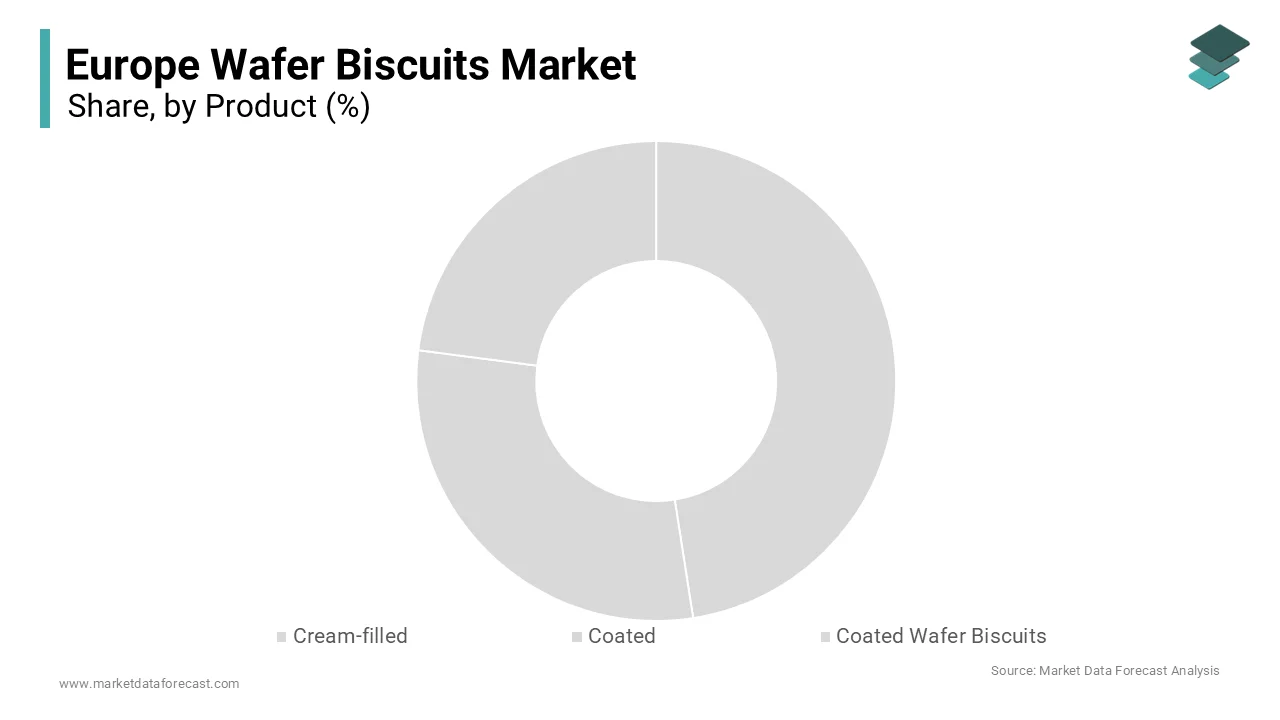
On the other side, the coated wafers segment is expected to exhibit a CAGR of 7.2% over the forecast period in the European market owing to the growing premiumization and indulgence trends among affluent consumers. According to the European Cocoa Association, demand for high cocoa content chocolate coatings has increased by 14% in 2024 as shoppers seek richer sensory experiences. These products are positioned as affordable luxuries that offer momentary escape and satisfaction in stressful times. As per the Swiss Chocolate Manufacturers Association, artisanal coated wafers featuring single-origin chocolate or exotic inclusions command price premiums of up to 40% over standard variants. Consumers perceive these items as higher-quality treats suitable for gifting or self-reward occasions. The visual appeal of glossy chocolate coatings also enhances shelf presence in competitive retail environments. Manufacturers invest in superior coating technologies to ensure smooth texture and snap that signal quality. This shift toward premium indulgence drives revenue growth faster than volume-driven basic segments.
By Application Insights
The sandwich cookies segment led the market by capturing 54.9% of the European market share in 2025. The dominance of sandwich cookies segment in the European market is majorly driven by their ubiquity across retail and foodservice channels as a staple snack item. According to Eurostat, biscuits account for over 30% of total confectionery sales volume in the European Union, with sandwich formats representing the largest share. Their standardized size and shape facilitate efficient packaging stacking and display optimization in supermarkets and convenience stores. As per the British Biscuit Cake and Chocolate Federation, sandwich wafers are included in school meal programs and workplace canteens across multiple countries, ensuring consistent institutional demand. This widespread availability makes them a default choice for consumers seeking quick energy or comfort. Manufacturers benefit from economies of scale in production, which keeps unit costs low and margins stable. The familiarity of the format reduces purchase risk for budget-conscious shoppers. This entrenched distribution advantage secures the segment’s dominance in volume terms across diverse European markets.
On the other end, the ice cream decorations segment is the fastest-growing application segment in the Europe wafer biscuits market and is predicted to register a CAGR of 8.1% during the forecast period owing to the expansion of premium frozen dessert offerings. According to the International Dairy Federation, premium ice cream sales in Europe grew by 9% in 2024 as consumers sought restaurant-quality experiences at home. Wafer cones, cups, and shards are essential components that add texture, visual appeal, and perceived value to these products. As per the Italian Gelato Association, artisanal gelaterias increasingly use customized wafer garnishes to differentiate their creations and justify premium pricing. This trend extends to retail where packaged ice creams feature elaborate wafer inclusions to signal indulgence. The growth of home entertaining and dessert customization further boosts demand for decorative wafers. Manufacturers innovate with flavored, colored, and shaped wafers to meet creative needs of both commercial and consumer users. This symbiotic relationship with the booming premium ice cream sector drives accelerated growth.
REGIONAL ANALYSIS
Germany Market Analysis
Germany led the market with 28.7% of the European market share in 2025 and is anticipated to witness intense retail discounting competition and accelerated innovation in clean-label products over the next few years due to the high per capita consumption and discount retail dominance. According to the German Confectionery Industry Association, Germans consume approximately 8 kilograms of biscuits annually, with wafers being a core component. As per GfK Consumer Panel, discounters like Aldi and Lidl drive over 50% of wafer sales through aggressive private label strategies. Branded players compete via innovation in organic, vegan, and functional segments to justify premiums. Strict sustainability expectations push adoption of recyclable packaging and certified sourcing. The market is volume driven, with growth hinging on value-added differentiation rather than price alone. Efficiency and scale are paramount for success.
United Kingdom Market Analysis
The UK occupied a substantial share of the Europe wafer biscuits market in 2025 and is likely to experience steady volume resilience and continued private label expansion over the next few years due to the strong tea culture and high private label penetration. According to the UK Tea and Infusions Association, Britons consume over 100 million cups of tea daily, creating sustained demand for accompanying biscuits and accounting for a country share of 22% in 2025. As per the British Retail Consortium, private label wafers account for nearly 40% of category sales due to value-seeking behavior amid cost of living pressures. Major retailers continuously refine own-brand offerings to match branded quality at lower prices. Health regulations like the HFSS restrictions influence product placement and formulation, pushing innovation toward reduced sugar options. The market remains mature, with growth driven by premiumization and functional variants rather than volume expansion.
France Market Analysis
France is expected to maintain resilient specialty sales and robust patisserie demand over the next few years, occupying a prominent position in the Europe Wafer Biscuits Market driven by its rich patisserie heritage and café culture. According to the French Bakery Confederation, traditional boulangeries and patisseries remain vital channels for artisanal wafer sales, emphasizing craftsmanship and local ingredients. As per INSEE, household spending on baked goods remained resilient in 2024 despite inflation, reflecting cultural prioritization of food quality. Premium coated and cream-filled wafers perform well as affordable luxuries. Strict Nutri-Score labeling encourages reformulation toward healthier profiles without sacrificing taste. Tourism also boosts demand for regional specialty wafers as edible souvenirs. The market balances tradition with modern health expectations, supporting steady value growth.
Spain Market Analysis
Spain is projected to record steady household consumption and rising popularity of frozen dessert pairings over the next few years, maintaining a robust presence in the Europe wafer biscuits market fueled by strong social snacking habits and family-oriented consumption. According to the Spanish Confectionery Association, wafer biscuits are staples in merienda afternoon snack routines for children and adults alike. As per the National Statistics Institute, multi-pack formats dominate sales, reflecting larger household sizes and sharing occasions. Local brands leverage regional flavors like turrón-inspired creams to foster loyalty. Economic sensitivity drives high private label adoption, but premium segments grow via indulgence positioning. Hot climate increases demand for ice cream decoration wafers, linking two key categories. Cultural embeddedness ensures baseline stability despite economic headwinds.
Italy Market Analysis
Italy is expected to experience steady export growth and heightened demand for artisanal specialty items over the next few years as the birthplace of many iconic wafer brands and coffee pairing traditions, while achieving the fastest-growing regional CAGR of 6.5%. According to the Italian Espresso National Institute, the ritual of caffè e wafer is deeply ingrained in daily life, sustaining consistent demand and a regional share of 15% in 2025. As per ISTAT, domestic production exceeds consumption, making Italy a net exporter of premium wafers to other European markets. Artisanal and regional specialties command strong loyalty and export potential. Health trends drive whole-grain and reduced-sugar innovations while preserving sensory authenticity. Tourism amplifies exposure to local wafer varieties, boosting both domestic and international sales. Heritage and quality define Italy’s market leadership.
COMPETITIVE LANDSCAPE
The competition in the Europe wafer biscuits market is intense and characterized by the presence of global multinational corporations alongside strong regional artisans and private label brands. Global players leverage their brand recognition and extensive distribution networks to dominate mainstream retail channels and drive volume sales. Regional companies compete effectively by offering unique traditional flavors and high quality artisanal products that appeal to local pride and taste preferences. Private label brands from major supermarket chains exert significant pressure by providing comparable quality at lower price points which attracts budget conscious consumers. Price sensitivity remains a critical factor influencing consumer choices leading to frequent promotional activities and discount strategies. Innovation in health focused formulations such as gluten free or vegan options serves as a key differentiator in this crowded landscape. Regulatory compliance regarding sugar content and sustainability standards requires continuous adaptation and investment. Companies must balance cost efficiency with premium positioning to retain customer loyalty in an economically volatile environment. Digital engagement and transparent sourcing practices are increasingly important for building long term brand equity and distinguishing products in a commoditized sector.
KEY MARKET PLAYERS
Some of the key players in the Europe wafer biscuits market are
- Nestle SA
- Mars
- Mondelez International
- United Biscuits
- Hershey Food Corp
- Antonelli Bros
- Artisan Biscuits
- Bolero
- Dukes
- Ferrero Group
- Kellogg
- Lago Group
Top Players in the Market
- Nestlé S.A. maintains a formidable presence in the Europe Wafer Biscuits Market through its iconic KitKat brand which is deeply embedded in European snacking culture. The company leverages extensive distribution networks to ensure widespread availability across supermarkets and convenience stores. Recently Nestlé launched reformulated wafer products with reduced sugar content to align with strict European health regulations and consumer preferences. This strategic move addresses growing demand for healthier options while preserving the beloved taste profile. The corporation also invests heavily in sustainable cocoa sourcing programs to enhance brand equity among environmentally conscious consumers. By focusing on digital engagement and localized flavor innovations Nestlé strengthens its connection with diverse European demographics. These initiatives ensure continued relevance and loyalty in a highly competitive confectionery landscape characterized by evolving dietary standards.
- Mondelez International Inc. contributes significantly to the Europe Wafer Biscuits Market with its premium Oreo and Belvita portfolios which enjoy strong recognition. The company focuses on innovation by introducing limited edition flavors inspired by regional culinary traditions such as speculoos and hazelnut. Mondelez recently expanded its manufacturing capabilities in Central Europe to improve supply chain efficiency and reduce carbon footprint. This expansion allows the company to respond quickly to market demands and minimize logistics disruptions. The firm actively engages with consumers through interactive digital campaigns and partnerships with local influencers to drive brand engagement. Mondelez also prioritizes recyclable packaging solutions to meet stringent environmental targets. These strategic initiatives enhance operational resilience and strengthen its competitive position against private label competitors in the region.
- Ferrero Group is a leading player in the Europe Wafer Biscuits Market known for its high quality Kinder and Ferrero Rocher wafer products. The company specializes in premium coated wafers that cater to indulgent consumption occasions and gift giving. Recently Ferrero introduced new plant based wafer variants to appeal to the growing vegan demographic across major European cities. This initiative aligns with public health goals and enhances the perceived value of their products among ethical consumers. The company utilizes its robust direct store delivery infrastructure to ensure optimal product freshness and shelf presence. Ferrero also invests in community engagement programs to build brand loyalty and trust. These actions solidify its reputation as a provider of premium artisanal quality snacks in the competitive European market.
Top Strategies Used by Key Market Participants
Key players in the Europe wafer biscuits market primarily focus on health oriented reformulation and sustainability initiatives to maintain competitive advantage. Companies invest heavily in research and development to create reduced sugar and whole grain variants that comply with strict nutritional labeling laws. Strategic partnerships with certified sustainable cocoa and palm oil suppliers help address environmental concerns and enhance brand reputation. Manufacturers also expand their premium product lines featuring artisanal flavors and high quality ingredients to capture value from affluent consumers. Digital marketing campaigns targeting younger demographics through social media platforms drive engagement and trial of new launches. Additionally firms optimize supply chains to mitigate energy cost volatility and ensure consistent product availability. These combined efforts ensure sustained growth and resilience in a mature and regulated market environment.
MARKET SEGMENTATION
This research report on the Europe wafer biscuits market has been segmented and sub-segmented based on categories.
By Product
- Cream-Filled
- Coated
- Coated Wafer Biscuits
By Application
- Sandwich Cookies
- Ice Cream Decorations
- Chocolate Bars
By Country
- UK
- France
- Spain
- Germany
- Italy
- Russia
- Sweden
- Denmark
- Switzerland
- Netherlands
- Turkey
- Czech Republic
- Rest of Europe