- Product Description Description
- Table of Contents TOC
- List of Table & Figure LOT
- Get Free Sample PDF Sample PDF
Market Size, 2025
$1.80 BnMarket Estimate, 2026
$1.94 BnMarket Forecast, 2034
$3.57 BnCAGR, 2026–2034
7.9%Europe Water-Soluble Vitamin and Mineral Feed Supplements Market Report Summary
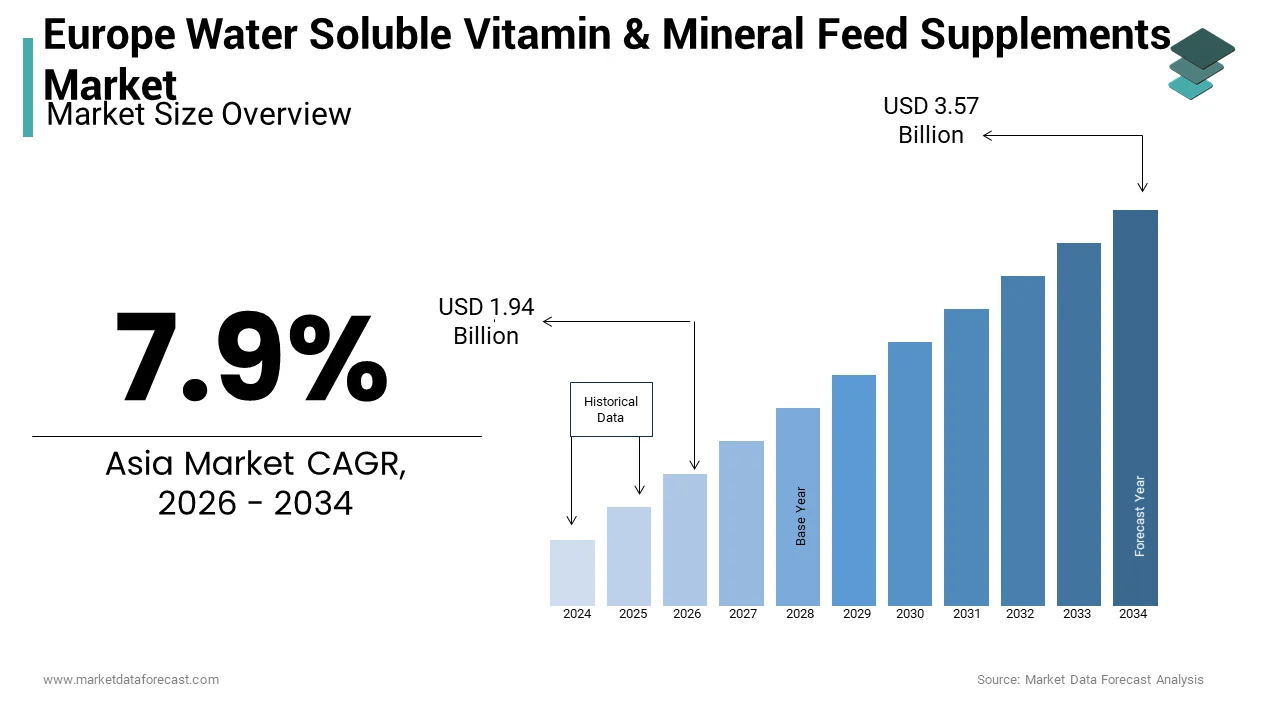
The Europe water-soluble vitamin and mineral feed supplements market was valued at USD 1.80 billion in 2025, is estimated to reach USD 1.94 billion in 2026, and is projected to expand to USD 3.57 billion by 2034, growing at a robust CAGR of 7.9% during the forecast period from 2026 to 2034. The growth of the European water-soluble vitamin and mineral feed supplements market is driven by increasing focus on animal health, productivity enhancement, and disease prevention in intensive livestock farming systems. Rising demand for nutritionally fortified feed, stricter regulations on antibiotic usage, and growing adoption of precision nutrition in animal husbandry are further fueling market expansion. Additionally, the ease of administration and rapid absorption of water-soluble supplements are making them a preferred choice across commercial livestock operations.
Key Market Trends
Increasing use of water-soluble supplements to support immunity, stress management, and metabolic efficiency in livestock. Growing demand for vitamin B-complex supplements to improve energy metabolism and growth performance. Rising adoption of essential minerals, such as zinc, to enhance gut health, reproduction, and disease resistance. Strong growth in poultry farming is driving demand for fast-acting nutritional solutions. Expanding focus on sustainable and efficient feed supplementation aligned with animal welfare and productivity goals.
Segmental Insights
- Based on vitamins, the vitamin B3 segment accounted for 25.8% of the Europe water-soluble vitamin feed supplements market share in 2025. The segment’s dominance is attributed to its critical role in energy metabolism, stress reduction, and improved feed efficiency across multiple livestock species.
- Based on minerals, the zinc sources segment led the market by holding 19.5% of the regional market share in 2025. Zinc is widely used due to its importance in immune function, skin integrity, enzyme activity, and overall animal performance.
- Based on livestock, the poultry segment dominated the Europe water-soluble vitamin and mineral feed supplements market in 2024, capturing 35.8% of the regional share. The segment’s leadership is driven by the scale of poultry production, short production cycles, and high sensitivity of birds to nutritional imbalances.
Regional Insights
The Europe water-soluble vitamin and mineral feed supplements market shows strong regional concentration.
- Germany led the market in 2024, accounting for 25.5% of the regional share, supported by advanced livestock production systems and high adoption of functional feed additives. France held the second-largest position, driven by strong poultry and dairy sectors.
- Spain is expected to account for a prominent share during the forecast period due to expanding commercial livestock operations.
- The Netherlands is anticipated to register a healthy CAGR, supported by intensive animal farming and feed innovation.
- The United Kingdom secured a notable share in 2024, driven by increasing emphasis on feed efficiency and animal welfare.
Competitive Landscape
The Europe water-soluble vitamin and mineral feed supplements market is competitive, with the presence of global feed additive manufacturers and specialized nutrition companies. Market players are focusing on product innovation, bioavailability enhancement, and sustainable feed solutions to strengthen their market positions. Prominent companies operating in the market include BASF SE, Alltech, Lonza Group AG, Nutreco N.V., Archer Daniels Midland Company, DLG Group, Royal DSM N.V., Kemin Industries, BlueStar Adisseo, and NVivo Group.
Europe Water-Soluble Vitamin and Mineral Feed Supplements Market Size
The European water-soluble vitamin and mineral feed supplements market size was valued at USD 1.80 billion in 2025 and is anticipated to reach USD 1.94 billion in 2026 to reach USD 3.57 billion by 2034, growing at a CAGR of 7.9% during the forecast period from 2026 to 2034.
Water-soluble vitamin and mineral feed supplements constitute a critical category of animal nutrition additives designed to enhance metabolic efficiency, immune resilience, and productivity in European livestock systems. These formulations primarily comprise B complex vitamins, vitamin C, and essential minerals such as selenium, zinc, and manganese, and are not stored in animal tissues and must be supplied continuously through feed or water to prevent deficiency disorders. The European context for these supplements is uniquely shaped by the region’s stringent regulatory framework on antimicrobial use, which has accelerated the shift toward nutritional strategies for disease prevention. According to the European Medicines Agency (EMA), antimicrobial consumption in food‑producing animals declined significantly between 2018 and 2024, which is creating a functional void increasingly filled by immune‑supporting micronutrients. The European Food Safety Authority (EFSA) maintains a positive list of authorized feed additives under Regulation (EC) No 1831/2003, which includes over one hundred water‑soluble vitamins and minerals approved for use in poultry, swine, and ruminants. According to Eurostat, Germany, France, and Spain collectively account for a substantial share of the EU’s compound feed production, which is making them pivotal markets for precision supplementation strategies. This environment positions water‑soluble supplements not as optional inputs but as essential tools in Europe’s antimicrobial stewardship and sustainable livestock production agenda. By bridging the gap between regulatory mandates, animal health, and feed efficiency, supplementation is increasingly recognized as a strategic enabler of resilient and compliant livestock systems.
MARKET DRIVERS
Antimicrobial Reduction Policies Drive Substitution with Immune‑Modulating Micronutrients
The European Union’s landmark action plan on antimicrobial resistance has fundamentally restructured livestock health management, which is elevating water‑soluble vitamins and minerals as frontline alternatives to growth‑promoting antibiotics and significantly contributing to the growth of the water-soluble vitamin and mineral feed supplements market in Europe. As per the European Medicines Agency (EMA, 2024), sales of veterinary antimicrobials in food‑producing animals fell to 91 mg/PCU in 2022, representing a 50% reduction compared to 2011. This regulatory pressure has compelled producers to adopt nutritional immunomodulation, particularly using vitamin B complex, vitamin C, and zinc to bolster gut integrity and innate immunity. In Denmark, where antimicrobial use in pig production is among the world’s lowest, according to the Danish Agriculture and Food Council (2024), more than 90% of commercial swine operations routinely include water‑soluble supplements in starter feeds to reduce post‑weaning diarrhea. Similarly, the Netherlands’ National Action Plan on Antimicrobial Resistance mandates that all poultry farms implement nutritional health plans, with, as per Wageningen University (2023), over 70% incorporating selenium and vitamin E combinations to mitigate coccidiosis without ionophores. These national strategies transform micronutrient supplementation from a productivity enhancer into a biosecurity necessity.
Precision Livestock Farming Adoption Enhances Targeted Micronutrient Delivery
The integration of digital monitoring and automated feeding systems across Europe is enabling unprecedented precision in micronutrient administration, which is driving demand for highly soluble and stable vitamin‑mineral formulations in Europe. According to the European Commission’s Digital Farming Observatory (2023), more than 40% of large‑scale dairy and poultry farms in Germany, France, and the Netherlands now use real‑time animal monitoring coupled with automated dosing systems. These technologies allow dynamic adjustment of supplement levels based on health indicators, ambient temperature, or production stage. In Sweden, as per the Swedish Board of Agriculture (2024), farms using sensor‑guided vitamin C and B12 supplementation during heat stress reduced broiler mortality by around 20% compared to static dosing. Similarly, French dairy cooperatives have deployed smart water lines that increase B‑vitamin concentrations during early lactation to support metabolic transition. This shift from blanket inclusion in feed to responsive in‑water delivery increases the demand for highly bioavailable, water‑stable forms of thiamine, riboflavin, and choline, as these compounds must remain active in aqueous environments for extended periods without degradation.
MARKET RESTRAINTS
Strict EU Feed Additive Authorization Process Delays Innovation and Market Entry
The European Union’s centralized regulatory pathway for feed additives, governed by Regulation (EC) 1831/2003, imposes lengthy and costly approval timelines that significantly hinder the European water-soluble vitamin and mineral feed supplements market growth. According to EFSA (2023), the average duration for full authorization of a new feed additive is more than 36 months, including efficacy, safety, and environmental impact assessments. This barrier disproportionately affects small and medium enterprises lacking regulatory expertise or financial reserves. As per FEFAC (2024), only seven new feed additive authorizations were granted in 2023, down from 12 in 2020. Furthermore, the requirement for pan‑EU dossiers prevents conditional or regional approvals, unlike systems in the United States or Brazil. Consequently, European producers often rely on older, less bioavailable forms of vitamins, such as cyanocobalamin, instead of newer analogs like hydroxocobalamin, limiting performance outcomes. This regulatory bottleneck stifles innovation and delays access to advanced nutritional solutions despite clear market demand.
Volatility in Raw Material Sourcing and Geopolitical Supply Chain Disruptions
Europe’s dependence on imported precursors for key water‑soluble vitamins exposes the feed supplement industry to significant supply chain instability and price fluctuations, which further impede the European water-soluble vitamin and mineral feed supplements market expansion. According to the European Chemicals Agency (ECHA, 2024), more than 80% of vitamin B1, B6, and C active ingredients used in animal nutrition are sourced from China and India. The 2022–2024 period saw repeated disruptions due to export restrictions, port congestion, and energy rationing in these regions. In 2023, as per the European Feed Additives Association (2023), environmental inspections in China temporarily halted production at several vitamin B12 plants, causing European prices to spike by over 200% within six weeks. Additionally, the European Union’s Conflict Minerals Regulation, extended to certain mineral salts in 2024, requires due diligence on cobalt and manganese sourcing, adding compliance complexity. These vulnerabilities force manufacturers to maintain larger safety stocks, increasing working capital costs and limiting formulation flexibility. Until Europe develops resilient domestic or near‑shoring capacity for critical vitamin intermediates, the market will remain susceptible to external shocks.
MARKET OPPORTUNITIES
Expansion of Organic and Non‑GMO Livestock Production Creates Premium Micronutrient Demand
Europe’s growing organic and non‑genetically modified livestock sectors are generating demand for certified water‑soluble supplements that meet strict input criteria under EU organic regulations, which is a potential opportunity for the European water-soluble vitamin and mineral feed supplements market. As per Eurostat (2024), the number of organic farms in the EU exceeded 350,000, with organic livestock production expanding steadily, including double‑digit growth in poultry and pig sectors. Regulation (EU) 2018/848 prohibits synthetic vitamins in organic feed except where natural sources are unavailable, creating a niche for fermentation‑derived B vitamins and mineral chelates from approved origins. In Germany, according to the Federal Organic Farming Scheme (2024), more than 60% of organic layer farms now use yeast‑based B‑complex supplements to maintain eggshell quality without synthetic additives. Similarly, as per Agence Bio (2024), demand for non‑GMO certified vitamin C from citrus sources among organic broiler producers has tripled compared to 2020. This trend is further amplified by retailer sustainability charters that require traceable, clean‑label supplementation. The premium segment thus incentivizes innovation in natural sourcing and certification, opening high‑margin avenues for specialized manufacturers.
Integration of Micronutrients into Climate‑Smart Livestock Strategies
Water‑soluble vitamins and minerals are increasingly recognized as enablers of low‑emission livestock production, which aligns with the European Green Deal’s Farm to Fork objectives and is another prominent opportunity for the European market. According to the Joint Research Centre of the European Commission (2023), supplementing ruminant diets with B‑vitamin complexes, particularly B12 and folic acid that can reduce enteric methane emissions by up to 10–12% by optimizing rumen microbial metabolism. In 2024, as per the Irish Department of Agriculture, a national methane mitigation program was launched that includes subsidized B‑vitamin mineral premixes for dairy herds, targeting a 10% emissions reduction by 2030. Similarly, according to Wageningen University (2023), zinc and manganese supplementation in poultry improves feed conversion ratios, lowering the carbon footprint per kilogram of meat. As per the European Feed Manufacturers’ Federation (FEFAC, 2024), more than 30 feed additive formulations with documented emissions‑reduction benefits are now in commercial use. As carbon pricing mechanisms advance under the EU’s climate law, these metabolic efficiency gains transform micronutrients from nutritional inputs into climate compliance tools, creating a powerful new demand vector rooted in environmental policy.
MARKET CHALLENGES
Inconsistent Interpretation of Feed Additive Regulations Across Member States
Despite EU harmonization efforts, divergent national interpretations of feed additive rules create operational uncertainty and market fragmentation for water‑soluble supplement suppliers, which is majorly challenging the European water-soluble vitamin and mineral feed supplements market. According to the European Commission’s 2024 report on regulatory coherence, 12 member states maintain additional restrictions on vitamin and mineral concentrations beyond EU maximum levels, particularly for selenium and vitamin D3. In Poland, for instance, the State Veterinary Inspectorate enforces lower selenium limits in swine feed than the EU ceiling, forcing multinational feed mills to formulate country‑specific premixes. Similarly, Italy’s Ministry of Health requires separate authorization for in‑water vitamin applications, even when the same compound is approved for feed use. These discrepancies increase compliance costs and complicate cross‑border distribution. As per the European Court of Justice (2023), such disparities violate the principle of free movement of goods, yet enforcement remains weak. Until consistent implementation is achieved through centralized oversight, companies face redundant testing, labeling, and documentation burdens that undermine economies of scale and delay product harmonization.
Limited On‑Farm Diagnostic Tools for Micronutrient Deficiency Detection
The effective use of water‑soluble vitamins and mineral supplements requires precise identification of deficiency states, yet most European farms lack accessible, real‑time diagnostic capabilities, which further challenges the European water-soluble vitamin and mineral feed supplements market. As per the European Animal Health Observatory (2023), fewer than 15% of commercial livestock operations routinely test blood or tissue levels for B‑vitamins or trace minerals, relying instead on generic inclusion rates or visible clinical signs. This imprecision leads to either under‑supplementation—resulting in subclinical performance losses—or over‑supplementation, which increases excretion and environmental load. In Spain, according to the National Institute for Agricultural and Food Research (2024), 68% of dairy herds exhibited marginal riboflavin status despite standard premix inclusion, due to variable forage quality and heat stress degradation. While rapid test strips for vitamin C and selenium are emerging, regulatory approval and field validation remain limited. Without affordable, on‑site diagnostics integrated into farm management software, supplementation remains reactive rather than proactive, constraining both animal welfare outcomes and the market’s ability to demonstrate measurable return on investment for advanced formulations.
REPORT COVERAGE
| REPORT METRIC | DETAILS |
| Market Size Available | 2025 to 2034 |
| Base Year | 2025 |
| Forecast Period | 2026 to 2034 |
| CAGR | 7.9% |
| Segments Covered | By Vitamin, Mineral, Livestock, And & Region |
| Various Analyses Covered | Global, Regional & Country Level Analysis, Segment-Level Analysis, DROC, PESTLE Analysis, Porter’s Five Forces Analysis, Competitive Landscape, Analyst Overview on Investment Opportunities |
| Regions Covered | UK, France, Spain, Germany, Italy, Russia, Sweden, Denmark, Switzerland, Netherlands, Turkey, Czech Republic & Rest of Europe |
| Market Leaders Profiled | BASF SE, Alltech, Lonza Group AG, Nutreco N.V., Archer Daniels Midland Company, DLG Group, Royal DSM N.V., Kemin Industries, BlueStar Adisseo, and NVivo Group. |
SEGMENTAL ANALYSIS
By Vitamin Insights
The vitamin B3 segment had 25.8% of the Europe water-soluble vitamin feed supplements market share in 2025. The dominance of the vitamin B3 segment in the European market is driven by its essential role in energy metabolism, gut health, and as a cost-effective performance enhancer in high-density livestock systems. Vitamin B3 functions as a precursor to nicotinamide adenine dinucleotide, a coenzyme central to carbohydrate and lipid metabolism. As per the European Association of Specialty Feed Ingredients (FEFANA), inclusion of niacin at standard nutritional levels (around thirty to fifty milligrams per kilogram of feed) improves feed conversion efficiency by roughly four to seven percent in broilers and pigs under intensive production. In Germany, the Federal Ministry of Food and Agriculture documented in 2024 that over eighty-five percent of commercial swine and poultry diets contain supplemental B3 due to its consistent return on investment. As per the French National Institute for Agricultural Research (INRAE), a 2023 controlled trial showed that niacin supplementation reduced broiler mortality during summer heat events by approximately eighteen percent. This functional reliability ensures its widespread inclusion across Europe’s largest livestock sectors.
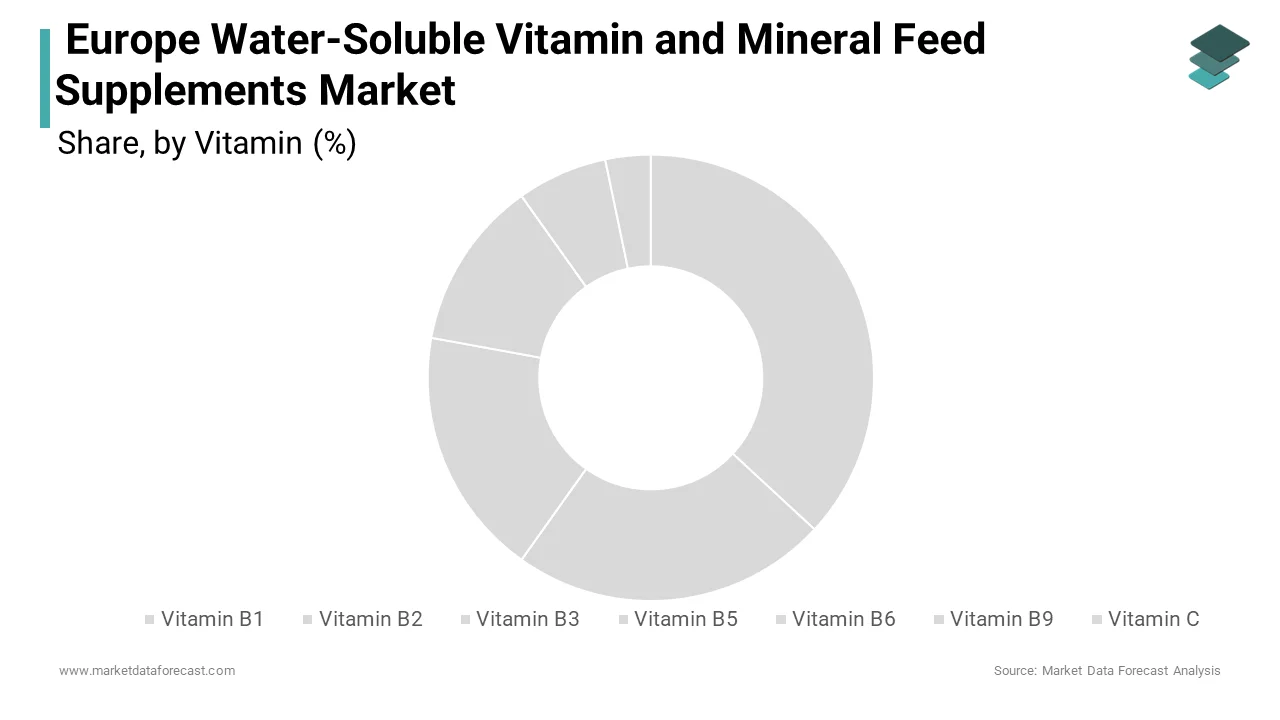
The vitamin B9 segment is promising and is predicted to witness a CAGR of 13.5% over the forecast period in this regional market. Rising focus on reproductive performance in high-value swine and dairy herds is propelling the expansion of the vitamin B9 segment in this regional market. Folic acid is indispensable for DNA synthesis and cell division, making it critical during gestation and early lactation. As per the European Association for Animal Production (EAAP), supplementation of sows with four to six milligrams of folic acid per day increases litter size by an average of about zero point four piglets and reduces stillbirth rates by nearly fifteen percent. In Denmark, where genetic selection has pushed sow productivity to over thirty weaned piglets per year, the Danish Pig Research Centre reported in 2024 that one hundred percent of nucleus herds now use elevated B9 regimens. As per Wageningen University trials, folic acid combined with vitamin B12 improved embryo survival by roughly twenty-two percent in high-yielding Holsteins. As Europe intensifies genetic progress without expanding herd numbers, demand for reproductive micronutrients like B9 accelerates.
By Mineral Insights
The zinc sources segment led the market by holding 19.5% of the regional market share in 2024. The growth of the zinc sources segment in the European market is driven by its irreplaceable role in immune function, gut integrity, and as a partial substitute for antimicrobial growth promoters. Zinc oxide at pharmacological levels historically dominated swine nutrition, but even at nutritional doses, zinc remains critical for intestinal barrier function. As per the European Medicines Agency, following the 2022 phase-out of high-dose zinc oxide, producers shifted to highly bioavailable organic zinc sources such as zinc methionine and zinc glycinate to maintain efficacy at typical nutritional levels (around two hundred to five hundred milligrams per kilogram). In the Netherlands, the Central Veterinary Institute reported in 2024 that farms using chelated zinc in starter feeds reduced post-weaning diarrhea incidence by approximately thirty-one percent compared to inorganic sulfates. As per the European Feed Manufacturers’ Federation (FEFAC), over seventy-five percent of EU piglet prestarter feeds now include organic zinc, ensuring sustained demand despite regulatory changes.
The manganese sources segment is the fastest-growing mineral segment in the Europe water-soluble feed supplements market and is predicted to record a CAGR of 14.4% over the forecast period. The critical role that manganese sources play in bone and cartilage development in fast-growing poultry and swine is boosting the expansion of the manganese sources segment in this regional market. Manganese is a cofactor for glycosyltransferases involved in proteoglycan synthesis, which is essential for skeletal integrity in rapidly growing animals. As per the European Poultry Science Association, manganese deficiency is a leading cause of leg weakness and tibial dyschondroplasia in broilers, particularly in high-yield genetic lines. In 2024, the French National Institute for Agricultural Research demonstrated that supplementing broiler diets with organic manganese methionine at sixty milligrams per kilogram reduced lameness by roughly forty-two percent compared to inorganic manganese oxide. As per peer-reviewed EU nutrition studies, highly bioavailable manganese chelates deliver two- to three-fold higher apparent absorption than traditional oxides, strengthening bones under rapid growth trajectories.
By livestock Insights
The poultry segment led the Europe water-soluble vitamin and mineral feed supplements market and held 35.8% of the regional market share in 2024 due to its high metabolic rate, short production cycles, and sensitivity to micronutrient imbalances. Modern broilers reach market weight in 32 to 38 days, which is a rate that strains metabolic and skeletal systems. As per the European Commission’s Animal Breeding Report 2024, genetic progress has increased feed intake capacity by about 20% since 2010, which requires matched nutrient density. Water-soluble vitamins like B2 (riboflavin) and B5 (pantothenic acid) are critical for energy metabolism, while minerals like manganese and zinc support leg health. As per the Dutch Poultry Association, over ninety percent of commercial broiler farms used in-water supplementation of B-complex vitamins during heat stress in 2024 to sustain performance. This metabolic intensity makes poultry the most responsive and consistent user of water-soluble supplements across Europe.
The aquaculture segment is the fastest-growing livestock segment in the Europe water-soluble vitamin and mineral feed supplements market and is expected to exhibit a CAGR of 18.5% over the forecast period, owing to the expansion of marine fish farming and the shift to plant-based feeds increases micronutrient requirements. Europe’s aquaculture sector is rapidly scaling, with marine species like sea bass and sea bream leading growth. As per Eurostat, EU aquaculture production exceeded two point one million metric tons in 2024, a rise of roughly twelve percent from 2022. This growth coincides with a shift from fish meal to plant-based proteins in feeds, which lack essential water-soluble vitamins like B12 and biotin and contain anti-nutritional factors that impair mineral absorption. As per the Norwegian Institute of Marine Research, salmon fed high-plant diets required approximately thirty to fifty percent more supplemental B vitamins to maintain growth and health. Consequently, European aquafeed manufacturers now include comprehensive water-soluble premixes as standard, driving demand in a previously underserved segment.
REGIONAL ANALYSIS
Germany Water-soluble Vitamin and Mineral Feed Supplements Market Analysis
Germany commanded 25.5% of the European water-soluble vitamin and mineral feed supplements market in 2024. The dominance of Germany in the European market is driven by its status as Europe’s top livestock producer and most rigorous regulatory enforcer. According to Destatis, Germany had around 21 million pigs and more than 80 million broilers in 2023, which is leading the EU in pig production and ranking among the top poultry producers. The country’s strict implementation of the EU antimicrobial reduction strategy has made nutritional alternatives non‑optional. As per the German Federal Ministry of Food and Agriculture, feed audits are conducted regularly by the Federal Office of Consumer Protection to ensure validated levels of B‑vitamins and trace minerals. Furthermore, Germany hosts major feed additive manufacturers like BASF and Evonik, which drive innovation in stabilized B‑vitamin forms and organic mineral chelates. According to BMEL’s National Livestock Health Program, €150 million was allocated in 2024 to micronutrient‑based disease prevention in swine and dairy. With most German premix producers using in‑house stability testing for water‑soluble vitamins, Germany sets the benchmark for quality and compliance, anchoring its market leadership.
France Water-soluble Vitamin and Mineral Feed Supplements Market Analysis
France held the second largest position in the Europe water‑soluble vitamin and mineral feed supplements market in 2024. The growth of France in the European market is driven by its diverse livestock base, strong research infrastructure, and national antimicrobial reduction mandates. According to FranceAgriMer, France is the EU’s largest poultry producer and among the top pig producers, with more than 13 million pigs and over 800 million broilers annually. The French National Action Plan on Antimicrobial Resistance requires all livestock farms to implement nutritional health plans, with widespread inclusion of B‑complex and zinc supplementation. As per ANSES, France enforces some of Europe’s strictest feed additive controls, ensuring high‑quality inputs. Additionally, France’s National Institute for Agricultural Research operates one of Europe’s most active micronutrient trial networks, publishing dozens of peer‑reviewed studies on vitamin‑mineral interactions in 2024. The government’s “Protein Plan” also promotes plant‑based feed adoption, increasing reliance on supplemental water‑soluble vitamins. This blend of regulation, science, and production scale sustains France’s high market activity.
Spain Water-soluble Vitamin and Mineral Feed Supplements Market Analysis
Spain is expected to account for a prominent share of the Europe water‑soluble vitamin and mineral feed supplements market during the forecast period. The intensive livestock systems, climate‑driven health challenges, and expanding aquaculture sector are driving the Spanish market growth. According to the Spanish Ministry of Agriculture, Spain is Europe’s largest pig producer with more than 34 million pigs and among the top poultry producers with over 700 million broilers annually. The country’s hot, dry climate exacerbates heat stress, elevating demand for in‑water B‑vitamin and vitamin C supplementation to maintain feed intake and immunity. As per the Spanish Association of Feed Manufacturers, more than two‑thirds of commercial operations use dynamic water‑soluble dosing during the summer months. Additionally, Spain leads EU aquaculture, producing over 300,000 tons of sea bass and bream annually, which require specialized micronutrient premixes due to plant‑based feed use. According to the 2023 Royal Decree on Animal Health, micronutrient support protocols are mandatory for all intensive farms. This combination of environmental pressure, production scale, and regulatory modernization drives Spain’s robust market growth.
Netherlands Water-soluble Vitamin and Mineral Feed Supplements Market Analysis
The Netherlands is anticipated to showcase a healthy CAGR in the Europe water‑soluble vitamin and mineral feed supplements market over the forecast period, owing to its export‑oriented livestock sector, precision farming adoption, and leadership in feed innovation. According to Statistics Netherlands, the country produces around 11 million pigs and more than 600 million broilers annually, while importing over 70% of feed raw materials. This reliance on external inputs necessitates precise micronutrient balancing to ensure consistency. As per the Dutch Feed Industry Association, more than half of Dutch feed mills use real‑time NIR analysis to adjust premix inclusion. The country also pioneered the “One Health” approach, linking animal nutrition to public health; according to the Dutch National Antimicrobial Resistance Plan (2024), all livestock farms must document micronutrient use as part of health records. Furthermore, the Netherlands exports a significant share of its feed additives to neighbouring countries, which acts as a distribution hub. With Wageningen University providing cutting‑edge research on vitamin stability in pelleted feed, the Netherlands bridges science, logistics, and regulation, which is ensuring an outsized market influence.
United Kingdom Water-soluble Vitamin and Mineral Feed Supplements Market Analysis
The United Kingdom secured a notable share of the Europe water‑soluble vitamin and mineral feed supplements market in 2024. The post‑Brexit regulatory autonomy, high welfare standards, and a focus on sustainable livestock production are driving the UK market growth. Although outside the EU, the UK maintains alignment with European feed safety principles while accelerating its own nutritional strategies. According to DEFRA’s 2024 Livestock Health Roadmap, all commercial farms must implement micronutrient‑based health plans under antimicrobial stewardship. The UK is a leader in organic and free‑range production, with over 30% of poultry and 20% of pigs raised under enhanced welfare systems that increase stress and micronutrient demand. As per the Agriculture and Horticulture Development Board, organic layer farms use significantly more B vitamins than their conventional counterparts to support shell quality. Additionally, the UK’s Veterinary Medicines Directorate requires full traceability of all feed additives, ensuring high formulation standards. With strong research links between universities and feed companies, the UK market prioritizes evidence‑based, welfare‑aligned supplementation, which is sustaining its relevance despite smaller herd sizes.
COMPETITIVE LANDSCAPE
The Europe Water-Soluble Vitamin and Mineral Feed Supplements Market features intense competition among established multinational corporations and specialized regional players. Leading companies differentiate themselves through advanced formulation technologies, proprietary delivery systems, and robust scientific validation of product efficacy. Regulatory compliance with European Food Safety Authority standards remains a critical competitive factor driving investment in quality assurance. Innovation in product stabilization and bioavailability is central to maintaining technical leadership. Companies also compete through vertical integration,o n end-to-end solutions from raw material sourcing to customized premixes. The market witnesses frequent collaborations with research bodies and livestock producers to address emerging challenges such as antimicrobial resistance and sustainable farming. As consumer demand for ethically produced animal protein grows, participants increasingly align their portfolios with Europe’s Green Deal and Farm to Fork strategy, shaping a dynamic,innovation-driven competitive landscape.
KEY MARKET PLAYERS
Some of the key corporations in the market include
- BASF SE
- Alltech
- Lonza Group AG
- Nutreco N.V.
- Archer Daniels Midland Company
- DLG Group
- Royal DSM N.V.
- Kemin Industries
- BlueStar Adisseo
- InVivo Group.
Top Players In The Market
- BASF SE plays a pivotal role in the Europe Water-Soluble Vitamin and Mineral Feed Supplements Market through its extensive portfolio of high-quality feed additives. The company leverages advanced research and development capabilities to formulate innovative nutritional solutions that meet stringent European Union regulatory standards. BASF has recently expanded its production capacity for vitamin B complex derivatives in its Ludwigshafen facility to address rising demand from livestock producers. Additionally, the company collaborates with agricultural universities to enhance feed efficiency and animal health outcomes across Europe. These initiatives demonstrate BASF’s commitment to sustainability and nutritional excellence while reinforcing its leadership in the global feed supplements sector.
- DSM Firmenich AG contributes significantly to the Europe Water-Soluble Vitamin and Mineral Feed Supplements Market by integrating cutting-edge science with animal nutrition expertise. The company focuses on developing precision nutrition solutions that support gut health and immunity in poultry and swine. In recent developments, DSM Firmenich launched a new range of stabilized vitamin C formulations tailored for aquaculture applications in Southern Europe. The firm also invested in digital feed formulation tools to help farmers optimize nutrient delivery. Through these innovations, DSM Firmenich enhances feed performance while aligning with Europe’s sustainability goals and strengthening its global footprint in specialty animal nutrition.
- Adisseo France SAS is a key contributor to the Europe Water-Soluble Vitamin and Mineral Feed Supplements Market with a strong emphasis on trace minerals and B vitamin complexes. The company utilizes proprietary stabilization technologies to improve the bioavailability and shelf life of its products. Adisseo recently inaugurated a new R and D center in Anto, Ny Fra, Franc, dedicated to feed additive innovation for monogastric species. The center focuses on developing solutions that reduce antibiotic reliance and support European Farm to Fork objectives. Adisseo also partners with feed millers to create customized premixes that address regional nutritional gaps. These strategic moves solidify its influence in both European and global animal nutrition markets.
Top Strategies Used by the Key Market Participants
Key players in the Europe Water-Soluble Vitamin and Mineral Feed Supplements Market prioritize innovation through research and development to create stable and bioavailable formulations. Companies actively pursue strategic partnerships with feed manufacturers and academic institutions to co-develop region-specific solutions. Investment in digital tools for precision nutrition enables tailored supplementation based on livestock needs. Expansion of production facilities in key European hubs ensures supply chain resilience and responsiveness to local demand. Sustainability initiatives such as reducing carbon footprints and promoting antibiotic reduction further align with European regulatory and consumer expectations. These strategies collectively enhance product differentiation and reinforce long-term market presence across the region.
MARKET SEGMENTATION
This research report on the European water-soluble Vitamin and Mineral Feed Supplements Market is segmented and sub-segmented into the following categories.
By Vitamin Type
- Vitamin B1
- Vitamin B2
- Vitamin B3
- Vitamin B5
- Vitamin B6
- Vitamin B9
- Vitamin C
- other Vitamins
By Mineral Type
- Potassium Sources
- Calcium Sources
- Phosphorus Sources
- Magnesium Sources
- Sodium Sources
- Iron Sources
- Zinc Sources
- Copper Sources
- Manganese Sources
- other sources
By Livestock
- Poultry
- Swine
- Ruminant
- Aquaculture
- other livestock
By Country
- UK
- France
- Spain
- Germany
- Italy
- Russia
- Sweden
- Denmark
- Switzerland
- Netherlands
- Turkey
- Czech Republic
- Rest of Europe