- Product Description Description
- Table of Contents TOC
- List of Table & Figure LOT
- Get Free Sample PDF Sample PDF
Market Size, 2025
$785.15 MnMarket Estimate, 2026
$948.01 MnMarket Forecast, 2034
$4,280.91 MnCAGR, 2026–2034
20.74%Europe Whole Exome Sequencing Market Report Summary
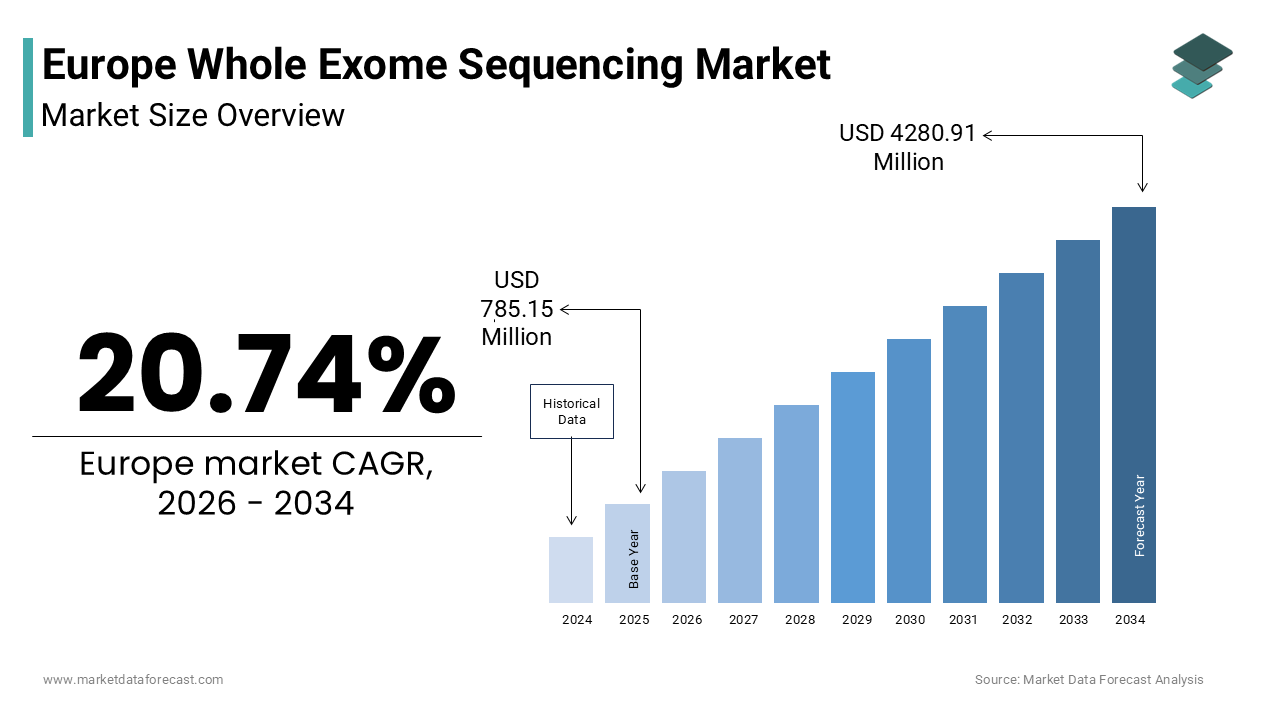
The Europe whole exome sequencing market was valued at USD 785.15 million in 2025, is projected to reach USD 948.01 million in 2026, and is expected to grow to USD 4,280.91 million by 2034, registering a CAGR of 20.74% from 2026 to 2034. The growth of the Europe whole exome sequencing market is primarily driven by the increasing adoption of genomic technologies in clinical diagnostics, particularly for rare diseases and precision oncology. Whole exome sequencing has become a critical tool for identifying genetic mutations responsible for hereditary disorders, enabling clinicians to provide personalized treatment strategies. Furthermore, government-supported genomics initiatives, expanding biobanking programs, and the integration of genomic data into healthcare systems are significantly accelerating market growth across Europe.
Key Market Trends
-
Increasing use of whole exome sequencing in rare disease diagnostics is reducing diagnostic timelines for patients with genetic disorders.
-
Expansion of precision oncology programs utilizing exome sequencing to identify tumor mutations and guide targeted therapies.
-
Rising adoption of AI-powered genomic interpretation platforms to improve variant classification and reporting efficiency.
-
A growing number of population-scale genomic projects and biobanks are incorporating exome sequencing data.
-
Increasing collaborations between biopharmaceutical companies and genomic research institutes for biomarker discovery and drug development.
Segmental Insights
- Based on product, the kits segment accounted for the largest share of the Europe whole exome sequencing market in 2025. The growth of this segment is attributed to the recurring demand for library preparation kits, target enrichment reagents, and capture kits that are required for every sequencing workflow in clinical and research laboratories.
- Based on technology, the sequencing by synthesis (SBS) segment held the dominant share of the Europe whole exome sequencing market in 2025. The dominance of this segment is due to the widespread adoption of SBS-based sequencing platforms in clinical laboratories because of their high accuracy, scalability, and compatibility with large-scale genomic studies.
- Based on end user, the hospitals and diagnostic centers segment occupied the largest share of the Europe whole exome sequencing market in 2025. The growth of this segment is driven by the integration of genomic sequencing into routine diagnostic pathways for rare diseases, hereditary cancer syndromes, and prenatal genetic testing.
Regional Insights
The Europe whole exome sequencing market is expanding significantly due to increasing investments in genomic research, national healthcare genomics programs, and rising demand for personalized medicine.
-
Germany held the largest share of the Europe whole exome sequencing market in 2025 due to strong research funding, advanced healthcare infrastructure, and early adoption of genomic medicine in clinical diagnostics.
-
The United Kingdom represents a major market driven by national genomics initiatives such as the 100,000 Genomes Project and the integration of genomic testing into the National Health Service.
-
France is witnessing strong growth due to the implementation of the France Médecine Génomique 2025 program, which aims to expand genomic sequencing capacity across the country.
-
The Netherlands plays an important role due to its highly digitized healthcare system and advanced data-driven genomic research initiatives.
-
Sweden is emerging as a key market due to its advanced biobanking infrastructure and progressive reimbursement policies for genomic testing.
Competitive Landscape
The Europe whole exome sequencing market is highly competitive and driven by technological innovation, regulatory compliance, and strong collaborations between research institutions and industry players. Companies focus on improving sequencing accuracy, expanding bioinformatics capabilities, and developing population-specific genomic content to strengthen their market presence. Major companies operating in the Europe whole exome sequencing market include Illumina Inc., Thermo Fisher Scientific Inc., Agilent Technologies Inc., BGI Genomics Co. Ltd., Roche Sequencing Solutions, QIAGEN N.V., Eurofins Scientific SE, Macrogen Inc., Oxford Nanopore Technologies plc, and Pacific Biosciences of California Inc.
 Download Free Sample Report
Europe Whole Exome Sequencing Market Size
The Europe whole exome sequencing market size was valued at USD 785.15 million in 2025 and is anticipated to reach USD 948.01 million in 2026 from USD 4280.91 million by 2034, growing at a CAGR of 20.74% during the forecast period from 2026 to 2034.
Whole exome sequencing is a targeted genomic technique that focuses on sequencing all protein coding regions of the human genome which collectively constitute approximately 1 to 2% of the total DNA yet harbor about 85% of known disease-causing variants. In Europe this technology has become integral to clinical diagnostics rare disease investigation and precision oncology programs. Unlike whole genome sequencing whole exome sequencing offers a cost effective and analytically manageable approach for identifying pathogenic mutations in known genes without the burden of interpreting non coding regions of uncertain significance. According to the European Society of Human Genetics, over 60% of clinical genetics centers across Western Europe now routinely use whole exome sequencing as a first tier diagnostic test for neurodevelopmental disorders and unexplained intellectual disability.
MARKET DRIVERS
Integration of Whole Exome Sequencing into National Rare Disease Diagnostic Pathways
European healthcare systems are increasingly embedding whole exome sequencing into standardized diagnostic algorithms for rare diseases, which affect an estimated 30 million people across the EU. According to the European Reference Network for Rare Diseases, over 70% of member states have adopted whole exome sequencing as a reimbursed diagnostic service for pediatric patients with suspected monogenic conditions. In Germany, statutory health insurers began covering trio based exome sequencing for children with severe developmental disorders in 2022 following a recommendation from the Federal Joint Committee. Similarly, as per the French National Authority for Health whole exome sequencing reduced the diagnostic odyssey for rare disease patients from an average of 5 years to under 12 months in pilot programs conducted between 2020 and 2023.
Expansion of Precision Oncology Programs Leveraging Somatic Exome Profiling
The oncology applications represent a rapidly growing domain for whole exome sequencing in Europe, particularly in the identification of tumor specific somatic mutations and mutational signatures that inform therapy selection. The expansion of precision oncology programs is eventually leveraging the growth of Europe whole exome sequencing market. Unlike targeted panels exome sequencing enables comprehensive assessment of tumor mutational burden microsatellite instability and homologous recombination deficiency all of which are critical biomarkers for immunotherapy and PARP inhibitor eligibility. The Netherlands Cancer Institute reported in 2024 that integrating exome sequencing into routine molecular tumor boards increased actionable findings by 32% compared to panel-based approaches. This emergence of clinical research regulatory science and therapeutic innovation is transforming exome sequencing from a diagnostic tool into a strategic enabler of data driven oncology care.
MARKET RESTRAINTS
Stringent Regulatory Requirements for Clinical Validation of Genomic Tests
The translation of whole exome sequencing into routine clinical practice due to rigorous regulatory frameworks governing in-vitro diagnostic devices is hampering the growth of Europe whol exome sequencing market. Under the EU In Vitro Diagnostic Regulation, which became fully applicable in May 2022 laboratories must demonstrate analytical and clinical validity for each intended use of their sequencing assays through extensive documentation and conformity assessments. The requirement for notified body oversight has also led to bottlenecks with only seven notified bodies designated for high risk genomic tests as of early 2024. As per the European Molecular Quality Assurance Network delays in certification have forced several mid-sized diagnostic labs to suspend or scale back exome services pending regulatory clearance. These constraints disproportionately affect smaller institutions lacking resources for extensive validation studies thereby limiting equitable access and slowing market penetration despite strong clinical demand.
Limited Reimbursement Coverage for Adult Onset and Non Pediatric Indications
While reimbursement for whole exome sequencing is well established for pediatric rare diseases many European countries restrict coverage for adult patients or complex conditions such as neuropsychiatric disorders and late onset hereditary cancers. This factor is also inhibiting the growth of Europe whole exome sequencing market. According to the European Observatory on Health Systems and Policies only five EU member states provide nationwide reimbursement for exome sequencing in adults with undiagnosed neurological conditions as of 2024. In Italy, for example the National Health Service covers exome testing only for children under 18 or for specific cancer predisposition syndromes leaving adult patients with idiopathic epilepsy or cardiomyopathy to bear out of pocket costs exceeding 1500 euros. As per a 2023 survey by the European Society of Human Genetics 68% of clinical geneticists reported that lack of reimbursement was the primary barrier to ordering exome sequencing for adult patients. This fragmented payer landscape creates significant disparities in access and discourages investment in bioinformatics infrastructure needed to interpret adult onset variants which often involve complex polygenic or environmental interactions.
MARKET OPPORTUNITIES
Rise of Population Scale Genomic Biobanks Incorporating Exome Data
A surge in large scale biobanking initiatives that systematically integrate whole exome sequencing to link genomic variation with longitudinal health records is to create new opportunities for the growth of Europe whole exome sequencing market. These efforts create unprecedented research infrastructure while simultaneously driving demand for high throughput sequencing services. The UK Biobank completed exome sequencing for all 500000 participants in 2023, making it the world’s largest publicly available exome resource. According to Genomics England over 200 peer reviewed studies have already leveraged this dataset to identify novel gene disease associations and drug targets. Similarly, Finland’s FinnGen project which combines exome data from 500000 biobank donors with national health registries has enabled discovery of population specific variants with therapeutic relevance. These initiatives not only advance scientific knowledge but also stimulate local sequencing economies by contracting regional laboratories and fostering public private data partnerships under strict ethical governance frameworks.
Adoption of AI Enhanced Variant Interpretation Platforms
The data generation to interpretation and artificial intelligence is emerging as a transformative solution to accelerate clinical reporting, which is also gaining huge tarction over the growth of Europe whole exome sequencing market. European developers are deploying machine learning models trained on diverse European populations to prioritize pathogenic variants reduce false positives and predict variant effects with higher accuracy. In 2023, the German Center for Neurodegenerative Diseases launched an AI platform that integrates exome data with brain imaging and cognitive metrics to diagnose atypical dementias with 89% concordance to expert panels. As per the Horizon Europe program, over 28 million euros were allocated in 2024 to projects developing explainable AI tools for genomic medicine with a focus on reducing interpretation turnaround time from weeks to hours.
MARKET CHALLENGES
Shortage of Qualified Clinical Bioinformaticians Across EU Member States
The workforce gap in professionals, who can translate raw exome data into clinically actionable insights is one of the challenges for the growth of Europe whole exome sequencing market. Clinical bioinformaticians must possess interdisciplinary expertise in genomics statistics software engineering and medical genetics, yet formal training pathways remain scarce. The European Society of Human Genetics estimates that each clinical exome case requires an average of 8 to 12 hours of manual curation by skilled personnel yet many laboratories operate with staffing levels below recommended thresholds. This deficit leads to prolonged reporting times inconsistent variant classifications and underutilization of sequencing capacity particularly in Southern and Eastern Europe where training programs are underfunded.
Ethical and Legal Complexities Surrounding Incidental Findings and Data Sharing
Whole exome sequencing often reveals secondary or incidental findings unrelated to the initial clinical indication but with potential health implications such as BRCA1 mutations or Lynch syndrome markers. This is also to degrade the growth of the Europe whole exome sequencing market. Managing these findings within Europe’s diverse ethical and legal frameworks presents significant operational challenges. According to the Council of Europe’s Bioethics Committee only 11 EU countries have explicit national guidelines on whether and how to return incidental findings from clinical exome tests. In Germany, patients must provide granular consent for each category of secondary findings whereas in Sweden a more permissive opt out model is used creating inconsistencies in clinical practice. Furthermore, as per the General Data Protection Regulation sharing anonymized exome data across borders for research requires complex data processing agreements that many hospitals lack capacity to negotiate. These ethical and regulatory ambiguities not only increase administrative burden but also hinder the aggregation of statistically powerful datasets needed to interpret rare variants in diverse populations.
REPORT COVERAGE
| REPORT METRIC | DETAILS |
| Market Size Available | 2025 to 2034 |
| Base Year | 2025 |
| Forecast Period | 2026 to 2034 |
| CAGR | 20.74% |
| Segments Covered | By Product, Technology, End-User and Region. |
| Various Analyses Covered | Global, Regional & Country Level Analysis, Segment-Level Analysis, DROC, PESTLE Analysis, Porter’s Five Forces Analysis, Competitive Landscape, Analyst Overview of Investment Opportunities |
| Country Covered | UK, France, Spain, Germany, Italy, Russia, Sweden, Denmark, Switzerland, the Netherlands, Turkey, the Czech Republic, and the Rest of Europe.. |
| Market Leaders Profiled | Illumina, Inc., Thermo Fisher Scientific Inc., Agilent Technologies, Inc., BGI Genomics Co., Ltd., Roche Sequencing Solutions, QIAGEN N.V., Eurofins Scientific SE, Macrogen, Inc., Oxford Nanopore Technologies plc, and Pacific Biosciences of California, Inc.. |
SEGMENTAL ANALYSIS
By Product Insights
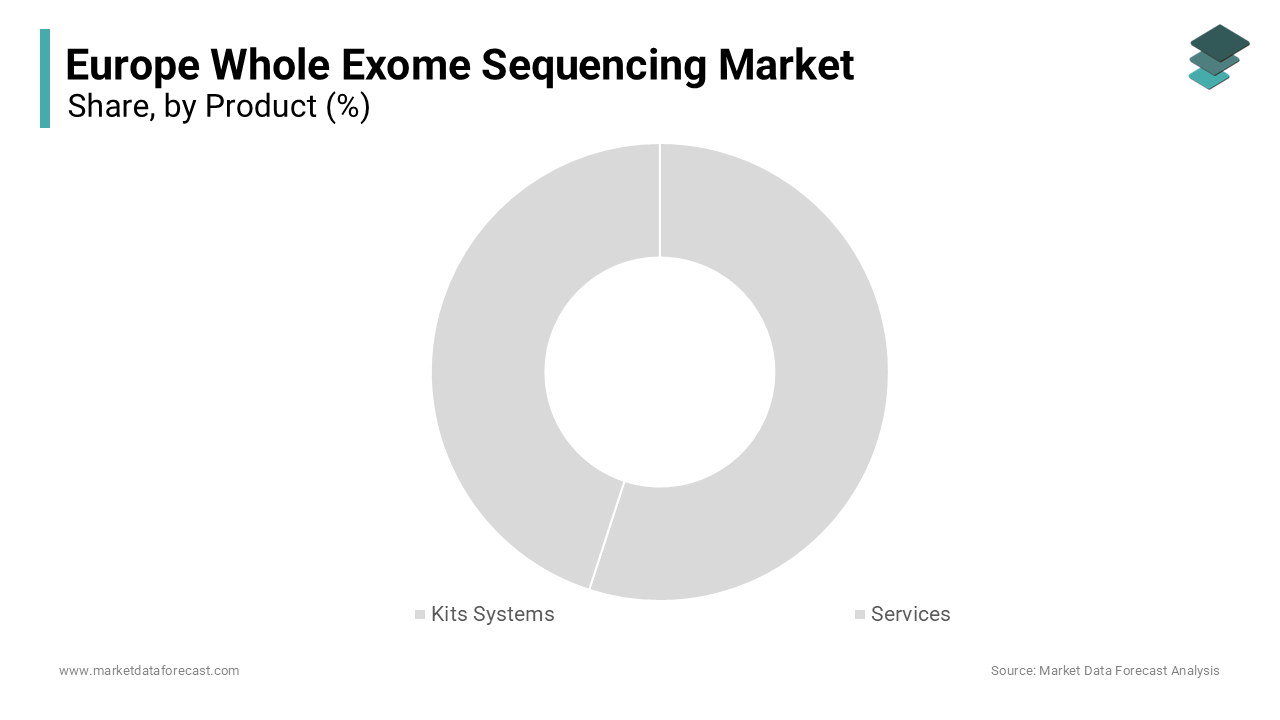
The kits segment was the largest by holding 48.6% of the Europe whole exome sequencing market share in 2025. The growth of the segment is driven by the recurring need for high quality capture reagents library preparation components and target enrichment kits that are essential for every sequencing run. European laboratories prioritize standardized off the shelf kits due to their compatibility with established workflows and regulatory traceability under the EU In Vitro Diagnostic Regulation. According to the European Molecular Genetics Quality Network, clinical genomics labs in Western Europe rely on commercially validated exome capture kits rather than in house probe designs to ensure reproducibility and audit readiness. The shift toward automation has further cemented kit dependency as integrated liquid handling systems require pre formulated reagent cartridges with precise chemical stability profiles.
The services segment is projected to expand at a CAGR of 16.8% from 2026 to 2034 owing to the increasing outsourcing of complex bioinformatics analysis variant interpretation and clinical reporting to specialized genomic service providers. Many European hospitals, particularly in Southern and Eastern regions lack in house expertise to manage the computational burden of exome data which averages 4 to 6 gigabytes per sample. Furthermore, as per the Innovative Medicines Initiative pharmaceutical companies are increasingly contracting end to end sequencing services for biomarker discovery in clinical trials to ensure GDPR compliant data handling and standardized pipelines across multi country studies. The rise of cloud based analytics platforms hosted on EU sovereign infrastructure such as Gaia X has also enabled secure scalable service delivery without local IT investment.
By Technology Insights
The sequencing by synthesis segment was the largest by holding a dominant share of the Europe whole exome sequencing market in 2025 owing to the widespread deployment of Illumina platforms which offer high accuracy long read lengths and scalable throughput suited for both clinical diagnostics and large cohort studies. European reference laboratories favor SBS due to its low error rate of less than 0.1% which is critical for detecting single nucleotide variants in heterogeneous samples. According to the European Nucleotide Archive, over 95% of publicly deposited human exome datasets from EU institutions between 2020 and 2023 were generated using SBS chemistry. Moreover, national genomics programs such as Genomics England and France Medecine Genomique have standardized on Illumina instruments ensuring cross site data harmonization. As per the European Commission’s 1+ Million Genomes Initiative, interoperability requirements explicitly recommend SBS derived data formats for federated analysis across member states. This institutional entrenchment reinforced by extensive validation records and regulatory acceptance under IVDR makes SBS the de facto standard for high fidelity exome applications across the continent.
The ION semiconductor sequencing segment is anticipated to register a fastest CAGR of 14.2% in next coming years with the demand for rapid turnaround and benchtop accessibility in point of care and small hospital settings. Unlike SBS which requires cluster generation and lengthy run times ION platforms deliver results in under 24 hours making them suitable for urgent diagnostic scenarios such as neonatal intensive care. According to the European Society of Clinical Microbiology and Infectious Diseases, several pediatric hospitals in Sweden and the Netherlands have piloted ION based exome workflows for critically ill infants where time to diagnosis directly impacts survival. Additionally, as per the German Medical Association the portability and lower capital cost of ION systems have enabled regional diagnostics centers in rural Bavaria and Saxony to offer in house sequencing without relying on central hubs. These improvements are gradually expanding ION’s clinical credibility beyond niche applications.
By End User Insights
The hospitals and diagnostics centers segment was the largest by capturing a significant share of the Europe whole exome sequencing market in 2025. The integration of exome sequencing into routine clinical pathways for rare diseases cancer predisposition and prenatal diagnostics across national healthcare systems. European hospitals benefit from centralized reimbursement mechanisms and standardized testing protocols that facilitate high volume adoption. According to the European Reference Network for Rare Diseases, over 200 accredited clinical genetics units across the EU now perform exome sequencing as a first line test for children with unexplained developmental delay. As per the French High Authority for Health exome testing reduced misdiagnosis rates in neurogenetic clinics between 2021 and 2023, leading to expanded coverage. The emergence of electronic health records with genomic data in hospital information systems further streamlines ordering and reporting creating a self-reinforcing cycle of clinical utility and operational efficiency that sustains this segment’s leadership.
The pharmaceuticals and biotechnology companies segment is expected to grow at a fastest CAGR of 19.4% throughout the forecast period owing to the strategic use of exome data in target identification patient stratification and pharmacogenomic safety profiling during drug development. European biopharma firms increasingly leverage population scale exome datasets to validate novel disease associations and assess allele frequency distributions across diverse ancestries. Furthermore, as per the Innovative Medicines Initiative the EU funded BEAt Dx consortium used exome sequencing from 12000 patients to identify genetic modifiers of treatment response in autoimmune disorders accelerating companion diagnostic co development. Regulatory agencies including the European Medicines Agency now encourage submission of exome evidence to support label expansions particularly for orphan drugs. This alignment between genomic science and regulatory incentives is transforming exome sequencing from a research tool into a core asset in Europe’s precision medicine innovation pipeline.
REGIONAL ANALYSIS
Germany Whole Exome Sequencing Market Analysis
Germany was the largest contributor of the Europe whole exome sequencing market by holding 24.3% of share in 2025 with its robust public healthcare infrastructure strong research funding and early adoption of genomic medicine. The country hosts over 80 certified human genetics centers many of which operate high throughput sequencing facilities under the umbrella of university hospitals. According to the German Federal Ministry of Education and Research, the National Decade Against Cancer initiative allocated 180 million euros to integrate whole exome sequencing into routine oncology care by 2025. Furthermore, Germany’s stringent data protection laws have spurred investment in local bioinformatics clouds ensuring compliance while enabling collaborative analysis.
United Kingdom Whole Exome Sequencing Market Analysis
The United Kingdom whole exome sequencing market was positioned second by holding 18.3% of share in 2025. The UK was among the first countries globally to embed whole exome sequencing into national healthcare with the 100000 Genomes Project laying the foundation for routine clinical use. According to the UK Office for Life Sciences, over 120000 whole exomes have been sequenced for diagnostic purposes since 2018 with turnaround times now averaging 8 weeks. The country’s regulatory sandbox approach allows rapid validation of new sequencing indications while maintaining ethical oversight through the Human Tissue Authority.
France Whole Exome Sequencing Market Analysis
France whole exome sequencing market growth is likely to be driven by its ambitious Plan France Medecine Genomique 2025, which aims to sequence 235000 genomes annually by 2025 including a significant proportion via whole exome. The plan established 12 regional sequencing hubs equipped with standardized Illumina platforms ensuring equitable access across metropolitan and overseas territories. According to the Research, over 90% of rare disease diagnoses involving exome sequencing are now reimbursed by the national health insurance system. The country also leads in ethical governance with the Biomedicine Agency overseeing consent protocols and data usage. As per the Pasteur Institute French researchers have used exome data to identify novel variants in Mediterranean populations improving diagnostic accuracy for inherited metabolic disorders.
Netherlands Whole Exome Sequencing Market Analysis
The Netherlands whole exome sequencing market growth is likely to grow with the highly digitized healthcare system and pioneering role in data driven genomics. Dutch hospitals routinely link exome results with longitudinal electronic health records through the national Personal Health Train architecture enabling real time phenotype genotype correlation. The country’s participation in the European 1+ Million Genomes Initiative has facilitated cross border data sharing while maintaining strict privacy through federated analysis. As per the Hubrecht Institute Dutch researchers developed the first AI assisted variant prioritization tool validated on a pan European cohort, which is now deployed in six EU countries.
Sweden Whole Exome Sequencing Market Analysis
Sweden whole exome sequencing market growth is with the advanced biobanking infrastructure and universal healthcare coverage. The country’s national healthcare system covers whole exome sequencing for all suspected monogenic disorders regardless of age reflecting a progressive reimbursement policy. Sweden’s unique personal identity number system enables seamless linkage of genomic data with nationwide registries on cancer birth and prescription records creating one of the world’s richest resources for genomic epidemiology. Furthermore, the country actively participates in Nordic collaboration frameworks that harmonize variant classification and reporting standards across Denmark Finland and Norway amplifying its analytical power.
COMPETITIVE LANDSCAPE
The Europe whole exome sequencing market features intense competition centered on regulatory readiness analytical performance and integration into public health systems. While global leaders dominate instrument and kit supply regional players and specialized bioinformatics firms are gaining ground through tailored services and compliance expertise. Competition is less about price and more about reliability data governance and clinical utility with laboratories favoring vendors that offer end to end solutions from sample prep to report generation. The implementation of the In Vitro Diagnostic Regulation has raised barriers to entry favoring established companies with resources for conformity assessments yet creating opportunities for niche providers in variant interpretation and data management. Academic medical centers often act as gatekeepers influencing vendor selection through validation studies and protocol recommendations.
KEY MARKET PLAYERS
Some of the companies that are playing a dominating role in the Europe Whole Exome Sequencing Market include
- Illumina, Inc.
- Thermo Fisher Scientific Inc.
- Agilent Technologies, Inc.
- BGI Genomics Co., Ltd.
- Roche Sequencing Solutions (F. Hoffmann-La Roche Ltd.)
- QIAGEN N.V.
- Eurofins Scientific SE
- Macrogen, Inc.
- Oxford Nanopore Technologies plc
- Pacific Biosciences of California, Inc.
Top Players in the Market
Illumina
Illumina Inc plays a pivotal role in the Europe whole exome sequencing market through its dominant sequencing by synthesis platforms and comprehensive exome enrichment kits. Illumina has strengthened its European footprint by establishing GDPR compliant data processing centers in Germany and Ireland to support clinical customers. It launched the TruSeq DNA Exome v2 kit with improved coverage uniformity and reduced GC bias specifically validated on European population samples. Additionally, Illumina collaborates with the European Molecular Genetics Quality Network to develop standardized quality metrics for clinical exome workflows enhancing reproducibility across laboratories.
Thermo Fisher Scientific
Thermo Fisher Scientific is a key enabler of accessible exome sequencing in Europe through its Ion Torrent semiconductor platforms and AmpliSeq Exome Research Panel. The company targets mid sized hospitals and research institutes seeking rapid turnaround and lower capital expenditure. To bolster its position Thermo Fisher expanded its European clinical genomics support team in 2024 and partnered with university hospitals in Sweden and Spain to validate ION based exome protocols for neonatal diagnostics. It also integrated its Ion Reporter software with EU hosted cloud environments to ensure compliance with data sovereignty requirements. These efforts have enhanced the clinical credibility and operational feasibility of its exome solutions across diverse European settings.
Agilent Technologies
Agilent Technologies contributes significantly to the Europe whole exome sequencing market through its high performance SureSelect target enrichment technology. Widely adopted by reference laboratories and biopharma companies Agilent’s exome capture kits are known for superior on target rates and compatibility with degraded DNA from formalin fixed samples. Agilent launched the SureSelect XT Human All Exon v9 kit featuring updated content aligned with ClinVar and gnomAD European subpopulations. The company also established a dedicated application support center in Milan to assist Southern European labs with protocol optimization and regulatory documentation under IVDR. This focus on content relevance technical support and regulatory alignment reinforces Agilent’s strategic value in the European clinical genomics ecosystem.
Top Strategies Used by the Key Market Participants
Key players in the Europe whole exome sequencing market prioritize regulatory compliance by aligning their kits and software with the EU In Vitro Diagnostic Regulation through extensive clinical validation and technical documentation. They invest in localized bioinformatics infrastructure to ensure data residency and GDPR adherence. Companies actively collaborate with national genomics initiatives and reference laboratories to embed their technologies into standardized diagnostic pathways. Product enhancements increasingly focus on European population specific genomic content and improved performance on challenging sample types. Additionally, firms are expanding regional application support teams to assist laboratories with IVDR certification and workflow integration thereby strengthening trust and long term adoption.
MARKET SEGMENTATION
This research report on the Europe Whole Exome Sequencing Market has been segmented and sub-segmented based on the following categories.
By Product
- Kits Systems
- Services
By Technology
- Sequencing by Synthesis (SBS)
- ION Semiconductor Sequencing
By End User
- Research Centers and Government Institutes
- Hospitals and Diagnostics Centers
- Pharmaceuticals & Biotechnology Companies
By Country
- UK
- France
- Spain
- Germany
- Italy
- Russia
- Sweden
- Denmark
- Switzerland
- Netherlands
- Turkey
- Czech Republic
- Rest of Europe