Europe Wind Turbine Market Size, Share, Growth, Trends, And Forecasts Report, Segmented By Application, Type, End-User, And By Country (UK, France, Spain, Germany, Italy, Russia, Sweden, Denmark, Switzerland, Netherlands, Turkey, Czech Republic & Rest of Europe), Industry Analysis From 2026 to 2034
Market Size, 2025
$3.57 BnMarket Estimate, 2026
$3.88 BnMarket Forecast, 2034
$7.60 BnCAGR, 2026–2034
8.75%Europe Wind Turbine Market Report Summary
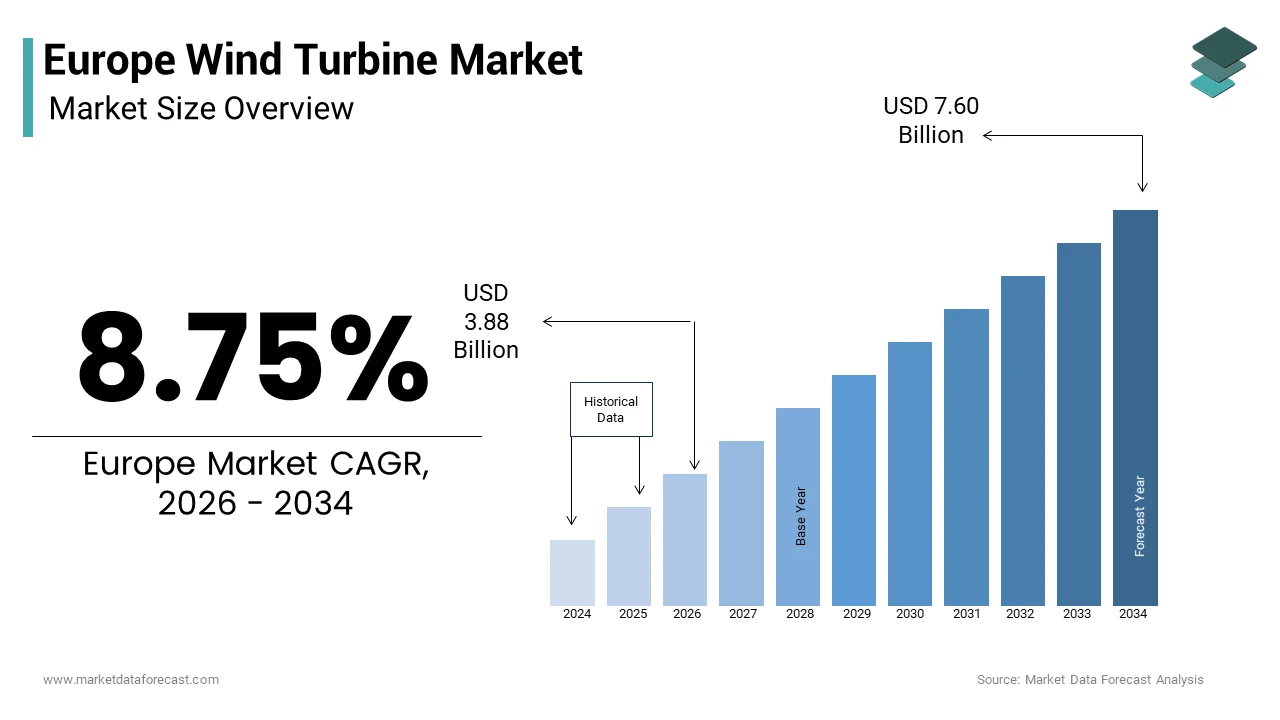
The Europe wind turbine market was valued at USD 3.57 billion in 2025, is estimated to reach USD 3.88 billion in 2026, and is projected to reach USD 7.60 billion by 2034, growing at a CAGR of 8.75% during the forecast period from 2026 to 2034. The growth of the European wind turbine market is driven by increasing investments in renewable energy infrastructure, supportive government policies promoting clean energy adoption, and the region’s strong commitment to reducing carbon emissions. The transition toward sustainable energy sources, rising electricity demand, and large-scale deployment of wind farms across Europe are further contributing to market expansion. In addition, technological advancements in turbine efficiency, increasing installation of high-capacity turbines, and the expansion of both onshore and offshore wind energy projects are supporting the steady growth of the wind turbine market across the region.
Key Market Trends
- Increasing investments in renewable energy projects across Europe as governments aim to achieve carbon neutrality and energy transition goals.
- Growing deployment of large-capacity wind turbines to improve energy output and operational efficiency in wind farms.
- Expansion of onshore wind farms due to lower installation costs and faster project development timelines.
- Rising collaboration between energy companies, turbine manufacturers, and governments to accelerate renewable energy adoption.
- Increasing focus on advanced turbine technologies and predictive maintenance systems to enhance turbine performance and reduce operational costs.
Segmental Insights
- Based on application, the onshore segment dominated the Europe wind turbine market and held the largest share in 2025. The dominance of this segment is attributed to the relatively lower installation costs, easier grid connectivity, and strong government support for onshore wind energy projects across several European countries.
- Based on type, the OEM (Original Equipment Manufacturer) segment held the dominant share of the Europe wind turbine market in 2025. The segment’s growth is supported by increasing demand for advanced turbine components, maintenance services, and integrated solutions offered by turbine manufacturers.
- Based on end-user, the wind farm operators segment captured the largest share of the Europe wind turbine market in 2025. The increasing number of large-scale wind farm installations and the growing involvement of independent power producers and energy utilities are driving the demand for wind turbines among wind farm operators.
Regional Insights
The European wind turbine market is witnessing steady growth across major economies as countries accelerate the adoption of renewable energy to meet climate targets and reduce reliance on fossil fuels.
- Germany dominated the European wind turbine market and accounted for 27.5% of the regional market share in 2025, supported by its strong renewable energy policies, extensive wind farm installations, and significant investments in wind power infrastructure.
- The United Kingdom held the second-largest position in the European wind turbine market in 2025, driven by its ambitious renewable energy targets and expanding onshore and offshore wind energy projects.
- Spain remains a notable contributor to the European wind turbine market due to its favorable wind resources, established wind energy infrastructure, and continuous investments in renewable power generation.
- France is expected to exhibit a healthy CAGR during the forecast period as the country accelerates the development of wind power projects to meet national clean energy targets.
- Sweden is also anticipated to hold a notable share of the Europe wind turbine market, supported by increasing investments in renewable energy projects and strong government incentives promoting sustainable power generation.
Competitive Landscape
The Europe wind turbine market is highly competitive and characterized by the presence of major turbine manufacturers, renewable energy developers, and specialized service providers. Companies operating in the market are focusing on technological innovations, strategic partnerships, and expansion of wind energy projects to strengthen their market presence. Additionally, players are investing in high-capacity turbines, digital monitoring solutions, and predictive maintenance technologies to improve turbine performance and operational efficiency.
Prominent players in the Europe wind turbine market include Acciona SA, B9 Energy Ltd., Buss Energy Group GmbH, Deutsche Windtechnik AG, E.ON SE, Emergya Wind Technologies BV, Enercon Services Inc., Fassmer Industrial Service GmbH and Co. KG, Fred. Olsen Ocean AS, General Electric Co., Ingeteam Corp. S.A., Nordex SE, Orsted AS, P and A Renewable Services, PNE AG, Repower AG, Siemens AG, Suzlon Energy Ltd., and Vestas Wind Systems AS.
Europe Wind Turbine Market Size
The Europe wind turbine market size was valued USD 3.57 billion in 2025 and is anticipated to reach USD 3.88 billion in 2026 to reach from USD 7.60 billion by 2034, growing at a CAGR of 8.75% billion by 2034, during the forecast period from 2026 to 2034.
Current Introduction of the Europe Wind Turbine Market
Wind turbines represent a critical industrial ecosystem dedicated to the engineering, manufacturing, and deployment of kinetic energy conversion systems that harness atmospheric flow to generate electricity across onshore and offshore environments. This sector is uniquely defined by its transition from mature onshore installations to the frontier of deep-water floating offshore platforms, serving as the cornerstone of the continental strategy for energy independence and decarbonization. The region distinguishes itself through a regulatory framework that mandates not only capacity expansion but also circularity in turbine design, pushing manufacturers toward fully recyclable blades and low-carbon steel towers. According to Eurostat, wind energy has recently become one of the leading sources of electricity generation in the European Union, which is indicating its pivotal role in the regional power mix. Furthermore, the European Environment Agency emphasizes the necessity of repowering aging assets to maximize land use efficiency, a trend that reshapes the market definition from pure greenfield development to include comprehensive lifecycle management and modernization. Unlike other global regions focused solely on cost per kilowatt hour, the European landscape prioritizes grid stability, biodiversity integration, and community ownership models. The market now encompasses advanced digital twins and predictive maintenance algorithms that optimize performance in real time, reflecting a shift where the physical turbine acts as a data node within a broader smart grid architecture designed to achieve climate neutrality by 2050.
MARKET DRIVERS
Strategic Imperative for Energy Sovereignty Following Geopolitical Shifts
The urgent geopolitical necessity to achieve energy sovereignty and reduce dependence on imported fossil fuels, which is a priority that has intensified dramatically following recent global conflicts and is propelling the expansion of the Europe wind turbine market. The REPowerEU plan, launched by the European Commission, explicitly identifies wind energy as the central pillar for replacing Russian gas imports, setting ambitious targets to accelerate permitting and deployment across member states. According to the International Energy Agency, the European Union is aiming to expand solar and wind capacity significantly by 2030 to ensure energy security, with wind turbines accounting for the majority of this new infrastructure. This strategic shift has transformed wind power from an environmental preference into a national security imperative, prompting governments to streamline bureaucratic hurdles and designate wind development areas as being in the overriding public interest. As per data from the European Network of Transmission System Operators for Electricity, the integration of wind assets is essential to stabilize the grid and prevent supply shortages during peak demand periods. The drive for autonomy extends to the supply chain itself, with initiatives like the European Wind Power Action Plan aiming to bolster domestic manufacturing capabilities for nacelles, blades, and towers. This convergence of security concerns, policy mandates, and economic resilience creates a robust demand stream that guarantees long-term investment in wind turbine technologies regardless of short-term market fluctuations.
Technological Advancements in Offshore Floating Platforms
The breakthrough in floating offshore wind technology that unlocks vast wind resources in deep waters previously inaccessible to fixed-bottom foundations is further contributing to the expansion of the Europe wind turbine market. Traditional monopile structures are limited to shallow coastal shelves, whereas floating platforms can operate in waters where wind speeds are higher and more consistent. According to the European Wind Energy Association, a large share of Europe's offshore wind potential lies in deep waters, particularly in the Atlantic coast of France, the Mediterranean, and the Norwegian Sea, representing a massive untapped resource. The commercialization of semi-submersible and spar-buoy designs has reduced the levelized cost of energy for floating projects, making them increasingly competitive with established energy sources. As per research from the Fraunhofer Institute for Wind Energy Systems, floating turbines offer the added advantage of reduced visual impact and lower conflict with marine biodiversity compared to near-shore installations. Major energy companies are launching multi-gigawatt floating wind farms off the coasts of Scotland, Portugal, and Norway, demonstrating the scalability of this technology. This technological leap expands the geographical addressable market significantly, allowing nations with steep coastlines to become major wind energy producers and driving a new wave of turbine orders specifically engineered for dynamic marine environments.
MARKET RESTRAINTS
Persistent Supply Chain Bottlenecks and Raw Material Volatility
The Europe wind turbine market faces a significant restraint due to persistent bottlenecks in the global supply chain and extreme volatility in the prices of critical raw materials required for manufacturing large-scale turbines. The production of modern wind turbines relies heavily on specialized steel for towers, copper for generators, and rare earth elements like neodymium and dysprosium for permanent magnets in direct-drive generators, many of which are sourced from outside Europe. According to the European Raw Materials Alliance, Europe depends heavily on imports for rare earth needs, leaving the industry exposed to geopolitical trade restrictions and export controls that can disrupt production schedules. The surge in global demand for these materials, driven concurrently by the electric vehicle sector, has led to sharp price increases and prolonged lead times for key components. As per data from the European Steel Association, energy-intensive steel production in Europe has faced capacity constraints due to high electricity costs, forcing some manufacturers to curtail output or rely on more expensive imports. The lack of diversified sourcing strategies and insufficient domestic refining capacity forces turbine makers to maintain costly inventory buffers or risk project delays. Furthermore, logistical challenges in transporting oversized components like blades and nacelles from factories to ports exacerbate these issues. Until Europe develops a more resilient and self-sufficient supply chain for these strategic inputs, the wind turbine market will remain susceptible to external shocks that hinder deployment rates and inflate project costs.
Complex Permitting Procedures and Local Opposition Dynamics
The implementation of cumbersome and fragmented permitting regimes across European member states acts as a major restraint on the wind turbine market by delaying project execution and increasing development costs despite high-level political support. While the European Union has issued directives to accelerate renewable energy deployment, the actual authorization process often involves navigating a labyrinth of local, regional, and national regulations regarding environmental impact assessments, spatial planning, and grid connection approvals. According to the European Commission, the time required to obtain permits for a new onshore wind farm can be extensive in some jurisdictions, causing significant bottlenecks that stall investment and deter developers. This bureaucratic inertia is frequently compounded by local opposition based on concerns over visual impact, noise pollution, and potential effects on wildlife, leading to legal challenges that further extend timelines. As per feedback from WindEurope, the lack of harmonized procedures across the single market creates uncertainty that discourages long-term capital allocation and slows down the repowering of older sites. The delay in grid connection approvals also means that completed wind farms may sit idle before becoming operational, eroding financial returns. These structural inefficiencies act as a persistent brake on market growth, preventing the rapid scale-up necessary to meet climate targets and undermining the competitiveness of European wind energy projects.
MARKET OPPORTUNITIES
Integration of Green Hydrogen Production with Wind Farms
The convergence of wind energy and green hydrogen production is a prominent opportunity in the Europe wind turbine market. As Europe strives to decarbonize hard-to-abate sectors like heavy industry, shipping, and aviation, the need for carbon-free hydrogen produced via electrolysis powered by wind turbines is becoming paramount. According to the European Hydrogen Backbone initiative, plans are underway to establish a dedicated hydrogen pipeline network across multiple countries, which will require large amounts of wind-generated electricity to feed electrolysers located at or near wind farms. This synergy allows wind operators to sell power directly to hydrogen producers even when grid capacity is constrained or electricity prices are negative, thereby improving the economics of wind projects. As per the European Clean Hydrogen Alliance, the target is to install renewable hydrogen electrolysers in the EU by 2030, driving a corresponding surge in wind turbine installations specifically configured for hydrogen production. The opportunity extends to offshore wind hubs where electricity is converted to hydrogen on-site and transported via pipelines, bypassing the need for expensive subsea cables. By positioning wind turbines as the primary engine for the emerging hydrogen economy, manufacturers can tap into a lucrative new market segment that offers stable long-term off-take agreements and enhances the strategic value of wind assets.
Repowering of Aging Onshore Wind Assets
The systematic repowering of aging onshore wind farms offers a substantial opportunity for the Europe wind turbine market by replacing older, smaller turbines with fewer but significantly larger and more efficient modern units. Thousands of wind turbines installed in the 1990s and early 2000s are approaching the end of their operational lifespans, presenting a chance to double or triple the energy output of existing sites without requiring new land acquisition or extensive new infrastructure. According to WindEurope, repowering could potentially add significant new capacity across Europe by 2030, utilizing the same grid connections and access roads while drastically improving efficiency. Modern turbines with taller towers and longer blades can capture stronger winds at higher altitudes, generating substantially more electricity per unit than their predecessors. As per data from national energy agencies in Germany and Denmark, repowering projects often face fewer permitting hurdles than greenfield developments because the sites are already established and accepted by local communities. This approach maximizes land use efficiency and accelerates the transition to renewable energy by leveraging existing assets. The opportunity also includes the recycling of old turbine components, fostering a circular economy where materials from decommissioned units are reused in new manufacturing processes. By focusing on repowering, the industry can achieve rapid capacity growth and efficiency gains while minimizing environmental footprint and social resistance.
MARKET CHALLENGES
Intense Global Competition and Unfair Trade Practices
The aggressive competition from international manufacturers, particularly those from China, who benefit from state subsidies, lower labor costs, and control over critical raw material supply chains is a significant challenge to the growth of the Europe wind turbine market. These competitors have rapidly expanded their global footprint, offering wind turbines at lower price points that undercut European manufacturers who adhere to stricter labor and environmental standards. According to the European Wind Turbine Manufacturers Association, the influx of low-cost Chinese turbines has compressed profit margins for European firms, threatening the viability of the domestic supply chain and leading to financial losses for major players. The ability of Asian rivals to vertically integrate their operations, from rare earth mining to final assembly, allows them to offer turnkey solutions at prices that are difficult for European companies to match without compromising quality or innovation. As per analysis from the World Trade Organization, trade distortions and unfair subsidy practices create an uneven playing field that jeopardizes the strategic autonomy of the European energy sector. This price pressure is exacerbated by the tender-based nature of large energy projects, where cost is often the primary deciding factor, forcing European manufacturers to either retreat to niche premium segments or risk insolvency. The relentless downward pressure on pricing undermines the ability of European firms to reinvest in research and development, potentially eroding their technological leadership in the long term.
Grid Congestion and Lack of Transmission Infrastructure
The Europe wind turbine market grapples with a critical challenge stemming from severe grid congestion and the insufficient pace of transmission infrastructure development relative to the speed of wind farm deployment. While wind capacity is being added rapidly, particularly in northern offshore locations, the high-voltage transmission lines required to transport this electricity to major consumption centers in central and southern Europe are lagging behind schedule. According to the European Network of Transmission System Operators for Electricity, renewable energy projects are currently stuck in connection queues, unable to feed power into the grid due to bottlenecks and lack of capacity. This mismatch leads to frequent curtailment events where wind turbines are forced to shut down despite favorable wind conditions, resulting in significant revenue losses for operators and inefficient use of installed assets. As per data from national regulators, the permitting and construction of new transmission lines often take longer than building the wind farms themselves, creating a structural bottleneck that stifles market growth. The lack of coordinated cross-border grid planning further exacerbates the issue, preventing the optimal sharing of renewable resources across the continent. Until the transmission infrastructure is massively upgraded and streamlined, the full potential of the European wind turbine market will remain constrained by the physical limitations of the grid, hindering the achievement of climate goals and reducing investor confidence.
REPORT COVERAGE
| REPORT METRIC | DETAILS |
| Market Size Available | 2025 to 2034 |
| Base Year | 2025 |
| Forecast Period | 2026 to 2034 |
| CAGR | 8.75% |
| Segments Covered | By Application, Type, End-User, and Country |
| Various Analyses Covered | Global, Regional, and Country Level Analysis, Segment-Level Analysis; DROC, PESTLE Analysis; Porter’s Five Forces Analysis; Competitive Landscape; Analyst Overview of Investment Opportunities |
| Regions Covered | UK, France, Spain, Germany, Italy, Russia, Sweden, Denmark, Switzerland, Netherlands, Turkey, the Czech Republic, and the Rest of Europe |
| Market Leaders Profiled | Acciona SA, B9 Energy Ltd., Buss Energy Group GmbH, Deutsche Windtechnik AG, E.ON SE, Emergya Wind Technologies BV, Enercon Services Inc., Fassmer Industrial Service GmbH and Co. KG, Fred. Olsen Ocean AS, General Electric Co., Ingeteam Corp. S.A., Nordex SE, Orsted AS, P and A Renewable Services, PNE AG, Repower AG, Siemens AG, Suzlon Energy Ltd., Vestas Wind Systems AS |
SEGMENTAL ANALYSIS
By Application Insights
Dominant Segment: On-shore
The on-shore segment dominated the market by capturing the largest share of the European wind turbine market in 2025. The dominance of on-shore segment in the European market is attributed to its established infrastructure, lower installation costs, and proximity to existing transmission grids. According to WindEurope, onshore wind is the leading contributor to total installed wind capacity in the European Union, reflecting its role as the most cost-effective source of new electricity generation. The levelized cost of energy for onshore projects remains significantly lower than offshore alternatives, making it the preferred choice for utilities seeking to meet renewable targets without excessive capital expenditure. As per the International Renewable Energy Agency, the repowering of aging onshore farms with modern, larger turbines is further bolstering this segment by increasing output without requiring new land permits. Furthermore, the shorter development timelines for onshore projects compared to the complex logistical challenges of offshore installations allow for faster deployment and quicker returns on investment. The extensive supply chain and skilled workforce dedicated to onshore construction also ensure efficient project execution. This combination of economic viability, technological maturity, and operational speed secures the onshore segment its leading position in the regional market.
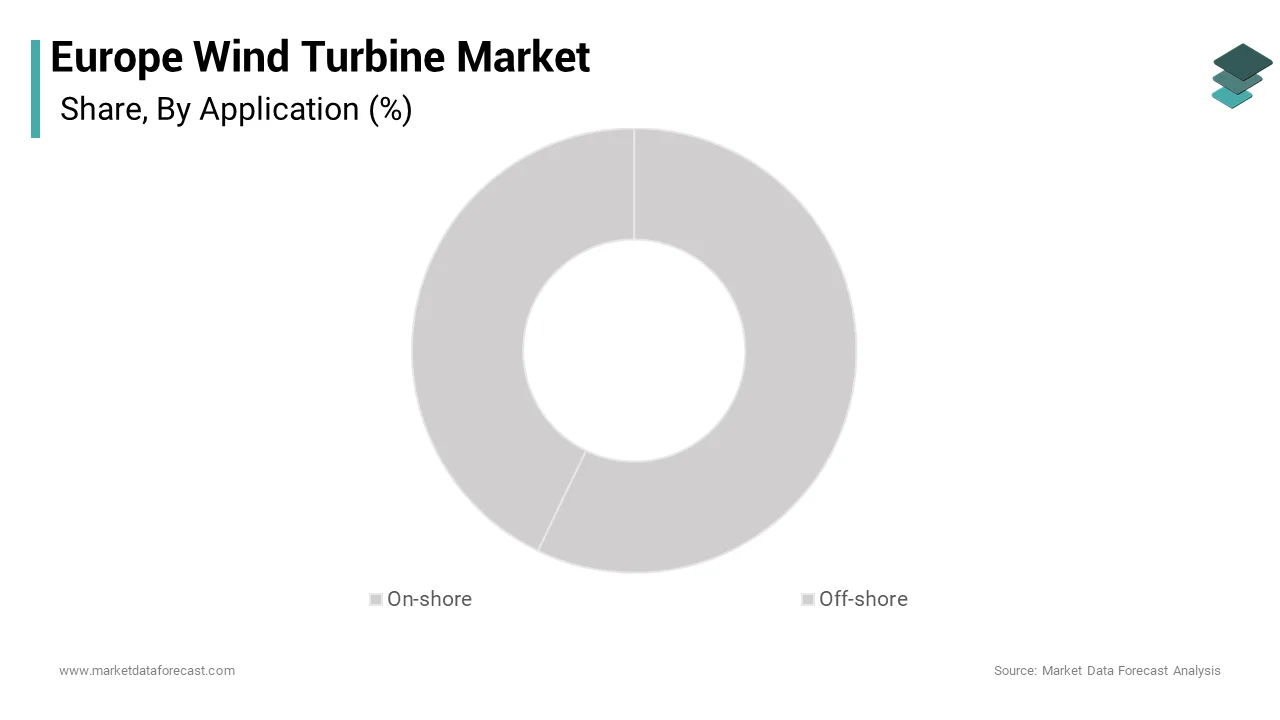
The off-shore segment is anticipated to register a CAGR of 15.5% over the forecast period in the European wind turbine market. The immense potential of deep-water wind resources, stronger and more consistent wind speeds at sea, and the strategic push by coastal nations to develop massive gigawatt-scale energy hubs are propelling the growth of the off-shore segment in the European market. According to the European Commission, the EU strategy for offshore renewable energy aims to install large-scale offshore wind capacity by 2050, creating an unprecedented pipeline of projects. The ability of offshore farms to generate power closer to major coastal load centers reduces transmission losses and grid congestion issues often faced by inland projects. As per the Global Wind Energy Council, offshore turbines generally achieve higher capacity factors compared to onshore units, which improves the economic case despite higher initial costs. Government auctions specifically dedicated to offshore zones in countries like the Netherlands, France, and the United Kingdom are driving record-breaking investments. This convergence of technological innovation, policy ambition, and superior resource quality propels the offshore segment to outpace all others in growth rate.
By Type Insights
The OEM segment had the dominating share of the Europe wind turbine market in 2025. The growth of the OEM segment in the European market is driven by the critical need for integrated warranty coverage, proprietary technology, and comprehensive lifecycle support that only original manufacturers can provide. According to the European Wind Turbine Manufacturers Association, most new wind turbine installations in Europe are sourced directly from major OEMs such as Vestas, Siemens Gamesa, and Nordex, who offer full-service agreements covering maintenance, spare parts, and performance guarantees for up to twenty years. Utilities and investors prefer OEM contracts because they mitigate technical risks and ensure that the latest efficiency upgrades and safety recalls are implemented immediately. As per industry analysts, the trend towards larger and more complex turbines, especially in the offshore sector, has further consolidated the market around OEMs who possess the necessary research and development capabilities to innovate. The inability of independent service providers to access proprietary diagnostic codes or manufacture certified replacement parts for newer models reinforces the reliance on OEMs. This combination of technological exclusivity, risk mitigation, and long-term value assurance secures the OEM segment its leading market share.
The ISP segment is poised to register a CAGR of 11.2% over the forecast period in this regional market owing to the maturing wind fleet and the increasing desire of asset owners to reduce operation and maintenance costs after warranty periods expire. This growth is propelled by the fact that thousands of wind turbines installed in the early 2000s are now exiting their original OEM service contracts, creating a vast aftermarket for competitive third-party maintenance services. A major factor is the cost advantage offered by ISPs, who can often provide high-quality maintenance, repairs, and component upgrades at lower prices due to leaner overhead structures and flexible sourcing strategies. According to the International Wind Service Operators Association, the European independent service market is expanding rapidly as farm operators seek to maximize profitability and extend the operational life of their assets beyond the standard twenty-year design life. The rise of specialized ISPs focusing on specific components like gearboxes, blades, or control systems allows for highly expert and cost-effective interventions. As per energy consultancies, the fragmentation of wind farm ownership, with many assets held by financial investors rather than utilities, has increased the demand for unbiased, cost-optimized service solutions. The ability of ISPs to offer customized service levels and faster response times for older fleets fuels the rapid expansion of this segment.
By End-user Insights
The wind farm operators segment led the market by capturing the highest share of the Europe wind turbine market in 2025. The dominance of wind farm operators segment in the European market can be credited to their role as the primary entities responsible for the development, ownership, and daily management of wind energy assets across the continent. According to WindEurope, a significant portion of Europe's wind capacity is owned and operated by dedicated wind farm operators who focus exclusively on maximizing asset performance and longevity. These operators drive the demand for new turbines through continuous expansion plans and repowering initiatives to replace aging units with more efficient models. As per the European Renewable Energy Federation, the professionalization of wind farm management has led to higher standards for turbine reliability and efficiency, forcing operators to invest in top-tier equipment and advanced monitoring systems. The scale of operations managed by these entities, often spanning multiple countries, creates substantial volume demand for turbines and associated services. Furthermore, the shift towards community-owned wind projects has expanded the base of small to medium-sized operators, further diversifying and strengthening this segment. Their direct financial stake in energy production ensures a consistent and robust demand stream for wind turbine technologies.
The government and municipal bodies segment is anticipated to expand at a CAGR of 12.2% over the forecast period in this regional market. Factors such as the aggressive national climate targets, the push for energy sovereignty at the local level and the increasing trend of municipalities taking direct ownership of wind projects to retain energy revenues within local communities and ensure affordable electricity for residents are driving the growth of the government and municipal bodies segment in the European market. According to the European Committee of the Regions, many cities and regions have declared climate emergencies and are actively investing in municipal wind farms to meet their carbon neutrality goals ahead of national deadlines. The REPowerEU plan has further accelerated this by providing specific funding streams and regulatory support for public sector renewable energy initiatives. As per national energy agencies, the rise of "energy communities" legislation in countries like Germany and Denmark allows municipalities to collaborate on large-scale wind developments, pooling resources and expertise. The desire to reduce exposure to volatile wholesale energy prices also drives local authorities to invest in their own generation capacity. This convergence of policy support, community engagement, and economic resilience fuels the rapid growth of government and municipal participation in the wind market.
COUNTRY ANALYSIS
Germany Wind Turbine Market Analysis
Germany dominated the wind turbine market in Europe with 27.5% of the regional market share in 2025. The dominance of Germany in the European market can be credited to its ambitious energy transition policies, robust industrial base, and status as the largest electricity consumer in the continent. According to the Federal Ministry for Economic Affairs and Climate Action, Germany is aiming to derive a large share of its electricity from renewable sources by 2030, necessitating the rapid installation of new onshore and offshore wind capacity. The presence of world-leading original equipment manufacturers such as Siemens Gamesa and Nordex within Germany fosters a strong domestic supply chain and drives continuous innovation in turbine technology. As per the German Wind Energy Association, the nation continues to lead Europe in total installed wind capacity, while simultaneously pioneering floating offshore wind projects in the North Sea. The government's recent legislative reforms to streamline permitting and designate land area for wind use are unlocking significant new potential. This synergy of policy ambition, industrial prowess, and technological leadership secures Germany's position as the most influential and largest market for wind turbines in the region.
United Kingdom Wind Turbine Market Analysis
The United Kingdom occupied the second largest position in the Europe wind turbine market in 2025. The growth of the UK in the European market is attributed to its world-leading offshore wind sector and exceptional wind resources in the North Sea. According to the Department for Energy Security and Net Zero, the UK plans to deploy significant offshore wind capacity by 2030, driving sustained orders for massive next-generation wind turbines. The country hosts some of the largest operational offshore wind farms in the world, serving as a testing ground for floating technologies and giant turbines. As per RenewableUK, the pipeline of approved offshore projects remains the largest in Europe, attracting major international turbine manufacturers to establish local assembly and service hubs. The retirement of coal plants and the reduction of North Sea gas production have increased the strategic urgency for domestic wind power. The combination of favorable geography, strong regulatory support, and a mature investment framework ensures the UK remains a critical growth engine for the European wind turbine industry.
Spain Wind Turbine Market Analysis
Spain is a notable regional segment in the European wind turbine market. The diverse renewable energy portfolio, extensive land availability for onshore wind, and growing focus on green hydrogen production are driving the Spanish market growth. According to the Spanish Ministry for Ecological Transition, the country aims to install new wind power capacity annually, leveraging its vast inland areas for onshore farms and developing floating wind technologies for its deep coastal waters. The emergence of Spain as a potential green hydrogen hub for Europe drives additional demand for wind turbines to power electrolysers. As per the Spanish Wind Energy Association, the sector benefits from a mature supply chain and strong public acceptance, facilitating faster project execution compared to other regions. The integration of wind technology with desalination and industrial processes further diversifies the market. This convergence of resource abundance, strategic planning, and industrial capability reinforces Spain's standing as a key player in the regional market.
France Wind Turbine Market Analysis
France is expected to exhibit a healthy CAGR in the Europe wind turbine market during the forecast period. The unique energy mix that combines a strong nuclear baseload with a rapidly expanding wind sector to meet EU climate targets, the government's dual strategy of maintaining nuclear independence while aggressively deploying renewables to diversify the electricity grid are contributing to the expansion of the French market. According to the French Ministry of Energy Transition, several large-scale offshore wind projects are currently under construction along the Atlantic and Channel coasts, generating substantial orders for fixed-bottom and floating wind turbines. Additionally, the modernization of France's extensive hydroelectric fleet with wind-solar hybrids offers a steady market segment. As per the French Wind Energy Association, the simplification of administrative procedures has recently accelerated project approvals, unlocking a backlog of developments. The push for industrial decarbonization also drives demand for wind-powered hydrogen production. This blend of nuclear stability, renewable expansion, and hydro modernization ensures France remains a vital and dynamic market for wind turbine technologies.
Sweden Wind Turbine Market Analysis
Sweden is likely to hold a notable share of the Europe wind turbine market over the forecast period owing to its abundant wind resources, progressive environmental policies, and strong export-oriented electricity market. According to the Swedish Energy Agency, the nation has streamlined permitting processes and designated specific national interest areas for wind power development, facilitating rapid deployment. The low population density in northern Sweden provides vast tracts of land ideal for large-scale onshore wind parks that export power to neighboring countries. As per the Swedish Wind Energy Association, the corporate power purchase agreement market is thriving, with major industries like steel and battery manufacturing signing long-term contracts for wind energy to decarbonize their operations. The integration of wind power with green steel production initiatives further boosts demand. This combination of natural advantages, policy clarity, and industrial demand ensures Sweden punches above its weight in the European wind landscape.
COMPETITIVE LANDSCAPE
The competition in the Europe wind turbine market is characterized by intense rivalry among established global giants and agile regional specialists who constantly innovate to capture market share through technological superiority and cost efficiency. Major players differentiate themselves by securing exclusive contracts for massive offshore wind projects and offering comprehensive end-to-end solutions that span manufacturing, installation, and long-term maintenance. The market sees frequent announcements of strategic alliances aimed at pooling resources for developing next-generation hydrogen-capable turbines and floating wind platforms. Price competition is fierce particularly in the onshore sector where tender processes often prioritize the lowest levelized cost of energy forcing manufacturers to optimize production scales. Regional specialists compete by providing niche capabilities in repowering older sites or specific industrial applications that complement the offerings of larger integrators. The barrier to entry remains extremely high due to significant capital requirements for research and manufacturing infrastructure as well as complex certification standards. Collaboration between industry leaders and research institutes is accelerating the development of breakthrough technologies like carbon capture integration and advanced materials. Overall the landscape is dynamic with companies vying to establish leadership in the transition towards sustainable flexible and highly efficient power generation architectures across the continent.
KEY MARKET PLAYERS
A few of the dominating players that are in the Europe wind turbine market are
- Acciona SA
- B9 Energy Ltd.
- Buss Energy Group GmbH
- Deutsche Windtechnik AG
- E.ON SE
- Emergya Wind Technologies BV
- Enercon Services Inc.
- Fassmer Industrial Service GmbH and Co. KG
- Fred. Olsen Ocean AS
- General Electric Co.
- Ingeteam Corp. S.A.
- Nordex SE
- Orsted AS
- P and A Renewable Services
- PNE AG
- Repower AG
- Siemens AG
- Suzlon Energy Ltd.
- Vestas Wind Systems AS
Top Players In The Market
- Vestas Wind Systems stands as a global pioneer in the Europe wind turbine market, delivering comprehensive onshore and offshore solutions that define industry standards for reliability and energy yield. The company significantly contributes to the international landscape by installing more wind capacity than any other manufacturer, setting benchmarks for operational efficiency across diverse climates. Vestas recently strengthened its European position by launching next-generation offshore platforms designed for deeper waters and higher wind speeds to maximize output. The firm focuses on circular economy principles by developing fully recyclable wind turbine blades to eliminate waste at the end of the product lifecycle. Through strategic partnerships with utility providers and governments, Vestas secures long-term service agreements that ensure optimal operation of installed fleets. Their dedication to research and development results in smarter turbines that integrate seamlessly with grid infrastructure and storage systems. This customer-centric approach combined with continuous technological evolution ensures the company remains a trusted partner for sustainable energy projects worldwide.
- Siemens Gamesa Renewable Energy leverages its extensive engineering heritage to maintain a dominant presence in the Europe wind turbine market through specialized offerings in massive offshore units and repowering services. The company contributes globally by manufacturing some of the largest direct-drive turbines available, which reduce maintenance needs and increase availability for critical offshore farms. Siemens Gamesa recently enhanced its European footprint by securing massive contracts for floating wind projects in the North Sea and advancing its recyclable blade technology. The firm focuses on digitalization services that optimize plant performance and predict maintenance needs through artificial intelligence and data analytics. By expanding its manufacturing footprint in Germany and the United Kingdom, the company ensures robust supply chains for critical components like nacelles and generators. Their commitment to sustainability drives the development of carbon capture ready systems and fully renewable energy portfolios. This strategic focus on innovation and decarbonization solidifies their reputation as a leader in the global power sector.
- Nordex Group is a leading innovator in the Europe wind turbine market, distinguished by its strong focus on onshore solutions tailored for low to medium wind sites prevalent across the continent. The company plays a pivotal role globally by providing cost-effective and robust turbines that enable profitable wind energy generation in diverse geographical conditions. Nordex recently strengthened its market position in Europe by deploying its latest Delta4000 series turbines which offer superior energy yields and grid compliance features. The firm actively invests in hybrid power plant solutions that combine wind generation with battery storage to provide stable and dispatchable electricity. By collaborating with European energy giants, Nordex drives the adoption of integrated systems that maximize land use efficiency and grid stability. Their focus on digital twin technology allows operators to simulate and optimize performance before physical installation. This holistic approach to combining hardware excellence with advanced software enables Nordex to meet the evolving needs of the modern energy landscape across the continent.
Top Strategies Used by Key Market Participants
Key players in the Europe wind turbine market primarily employ strategies focused on technological innovation and sustainability to differentiate their offerings and meet stringent regulatory demands. Companies heavily invest in research and development to create larger rotors and taller towers that capture more energy while reducing the levelized cost of electricity. Strategic partnerships with government bodies and utility providers enable firms to secure large-scale contracts for offshore wind farms and grid modernization projects. Expanding local manufacturing capacities helps companies mitigate supply chain risks and comply with regional content requirements while reducing logistics costs. Firms increasingly adopt circular economy practices by developing recyclable blades and using green steel to minimize environmental impact. Offering comprehensive long-term service agreements allows providers to generate recurring revenue streams and build deep customer relationships. Acquisitions of specialized technology startups in energy storage and grid management allow major players to offer integrated hybrid solutions. Diversifying product portfolios to include floating wind technologies addresses emerging market niches and future energy needs.
MARKET SEGMENTATION
This research report on the Europe wind turbine market is segmented and sub-segmented into the following categories.
By Application
- On-shore
- Off-shore
By Type
- OEM
- ISP
- In-house
By End-user
- Wind farm operators
- Power generation companies
- Government and municipal bodies
By Service Type
- Operation and maintenance
- Monitoring and inspection
- Repair and refurbishment
- Installation and commissioning
By Country
- UK
- France
- Spain
- Germany
- Italy
- Russia
- Sweden
- Denmark
- Switzerland
- Netherlands
- Turkey
- Czech Republic
- Rest of Europe
Frequently Asked Questions
What role do wind turbines play in Europe’s clean energy landscape?
They convert natural wind movement into electricity that supports renewable power generation.
Which design features determine the efficiency of a wind turbine?
Blade length, tower height, and generator capacity strongly influence energy output.
What makes offshore wind turbines different from onshore installations?
Offshore models are larger and engineered to withstand marine weather conditions.
Which factors influence the placement of wind turbines across Europe?
Wind availability, land suitability, and grid connectivity guide site selection.
What improvements have increased turbine performance in recent years?
Advanced aerodynamics and digital monitoring have enhanced energy capture efficiency.
Which industries support the manufacturing of wind turbines?
Steel production, electronics, and engineering sectors contribute to turbine components.
What maintenance practices help extend wind turbine lifespan?
Regular inspections and predictive diagnostics reduce mechanical wear.
Which technological upgrades are common in modern turbines?
Smart sensors and automated control systems optimize power output.
What environmental benefit results from large-scale wind turbine deployment?
They generate electricity with minimal emissions during operation.
Which challenges affect turbine installation projects in Europe?
Transporting large components and securing suitable installation sites can be complex.
Access the study in MULTIPLE FORMATS
Purchase options starting from
$ 2000
Didn’t find what you’re looking for?
TALK TO OUR ANALYST TEAM
Need something within your budget?
NO WORRIES! WE GOT YOU COVERED!
Call us on: +1 888 702 9696 (U.S Toll Free)
Write to us: sales@marketdataforecast.com