- Product Description Description
- Table of Contents TOC
- List of Table & Figure LOT
- Get Free Sample PDF Sample PDF
Europe Wound Care Market Report Summary
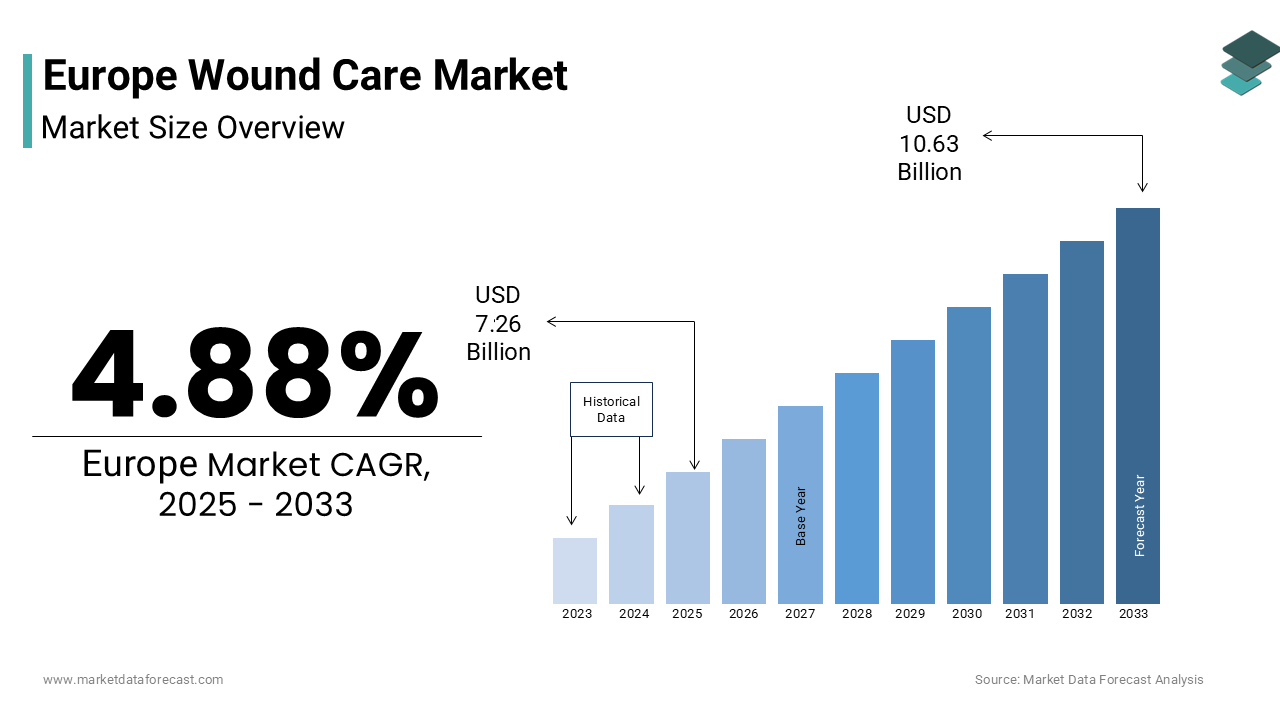
The Europe wound care market was valued at USD 6.92 billion in 2024, is estimated to reach USD 7.2 billion in 2025, and is projected to reach USD 10.63 billion by 2033, growing at a CAGR of 4.88% during the forecast period from 2025 to 2033. The growth of the Europe wound care market is driven by the region’s rapidly aging population, rising prevalence of diabetes and vascular disorders, and increasing incidence of chronic non-healing wounds. Wound care plays a critical role in managing acute injuries, surgical wounds, and long-term chronic conditions through infection control, moisture regulation, and tissue regeneration. The growing adoption of advanced wound dressings, negative pressure wound therapy, and bioactive solutions, along with healthcare system efforts to reduce hospital readmissions and treatment costs, is further supporting market expansion across Europe.
Key Market Trends
- Rising demand for advanced wound dressings that accelerate healing and reduce infection risk in chronic wounds.
- Increasing integration of negative pressure wound therapy (NPWT) in hospitals for complex surgical and pressure wounds.
- Growing shift toward home-based wound care supported by telehealth and community nursing services.
- Expansion of bioactive and regenerative wound care products, including skin substitutes and collagen-based matrices.
- Greater emphasis on value-based care, with advanced wound solutions adopted to lower long-term healthcare costs.
Segmental Insights
- Based on type, the advanced wound dressings segment held the largest share of the Europe wound care market in 2024. The segment’s dominance is attributed to superior clinical outcomes in chronic wound management, including faster healing rates, reduced infection risk, and fewer dressing changes compared to traditional gauze products.
- Based on application, the chronic wounds segment accounted for the largest share of the Europe wound care market in 2024. This dominance is driven by the high prevalence of diabetic foot ulcers, venous leg ulcers, and pressure injuries among Europe’s elderly population, which require prolonged and specialized wound care interventions.
- Based on end user, the hospitals segment was the leading contributor to the Europe wound care market in 2024. Hospitals manage the most severe and complex wound cases, including post-surgical wounds, burns, and infected ulcers, which require advanced therapies such as NPWT, antimicrobial dressings, and bioengineered products.
Regional Insights
- The Europe wound care market demonstrates steady growth across major countries, supported by strong public healthcare systems and increasing adoption of advanced treatment protocols.
- Germany was the largest contributor, accounting for a significant share of the Europe wound care market in 2024, driven by comprehensive reimbursement policies, a high number of certified wound care centers, and strong adoption of advanced dressings in both hospital and home care settings.
- The United Kingdom continues to perform strongly due to evidence-based national guidelines, centralized procurement through the NHS, and widespread use of advanced wound dressings in community care.
- France remains a key market, supported by full reimbursement for chronic wound treatments, structured diabetic foot programs, and national initiatives aimed at reducing hospital-acquired pressure injuries.
- Italy and Spain are emerging growth markets, driven by aging demographics, expanding home care services, and recent reimbursement reforms that improve access to advanced wound care products.
Competitive Landscape
The Europe wound care market is characterized by the presence of established global players and strong European manufacturers competing through clinical evidence, product innovation, and alignment with national treatment guidelines. Leading companies are focusing on advanced and bioactive wound care solutions, expanding homecare-friendly product designs, and integrating digital support tools to align with telehealth-driven care models. Strategic collaborations with healthcare providers, wound care societies, and public health systems are strengthening market positioning. Increasing regulatory scrutiny and reimbursement evaluation are pushing manufacturers to demonstrate both clinical efficacy and long-term cost savings. Prominent players operating in the Europe wound care market include Smith & Nephew, Mölnlycke Health Care, ConvaTec Group, Coloplast, 3M (Solventum), Essity (BSN Medical), Paul Hartmann AG, B. Braun Melsungen AG, Medtronic, Johnson & Johnson (Ethicon), Baxter International, Organogenesis, Integra LifeSciences, Urgo Medical, and Lohmann & Rauscher.
Europe Wound Care Market Size
The europe wound care market size was valued at USD 6.92 billion in 2024 and is anticipated to reach USD 7.2 billion in 2025 from USD 10.63 billion by 2033, growing at a CAGR of 4.88% during the forecast period from 2025 to 2033.
Wound care includes a wide array of medical products and therapeutic protocols designed to manage acute traumatic and chronic non healing wounds through infection control moisture balance and tissue regeneration support. This segment spans advanced dressings antimicrobial barriers negative pressure wound therapy systems and bioengineered skin substitutes deployed across hospitals outpatient clinics and home care settings. The clinical urgency driving this market stems from Europe’s aging demographic and rising burden of comorbidities that impair wound healing. According to the International Diabetes Federation (IDF) Europe Regional Review, tens of millions of people in the European Union live with diabetes as of 2025, which is a condition that significantly increases the risk of foot ulcers. As per the estimations of the European Wound Management Association (EWMA), chronic wounds affect millions of patients annually across the region, with venous leg ulcers accounting for the majority of long‑term cases. Compounding this burden is the growing prevalence of hospital‑acquired pressure injuries, which affected a notable share of hospitalized adults in a 2024 multicenter study coordinated by the European Pressure Ulcer Advisory Panel (EPUAP). These clinical realities underscore wound care not merely as a product category but as a critical component of integrated patient safety and public health strategy.
MARKET DRIVERS
Escalating prevalence of chronic diseases linked to impaired wound healing
The rising incidence of diabetes cardiovascular disorders and peripheral vascular disease across Europe is directly amplifying demand for advanced wound care interventions, which is primarily driving the European wound care market growth. According to the European Commission’s Joint Research Centre (2024), about 19% of Europeans aged 65 and older are living with type 2 diabetes, with projections indicating a rise toward roughly 22% by 2030. As per the European Society for Vascular Surgery, diabetic foot ulcers develop in roughly 20–25% of patients during their lifetime and carry a 15% risk of amputation if not managed with specialized dressings and offloading protocols. According to the European Venous Forum, chronic venous insufficiency affects approximately 30 million adults in the EU, with around 1–2% progressing to active venous leg ulcers that require months of hydrocolloid or silver impregnated dressing therapy. These conditions necessitate long term use of high margin advanced products rather than basic gauze. The clinical complexity of such wounds has shifted treatment from reactive bandaging to proactive healing ecosystems involving moisture retentive matrices antimicrobial barriers and protease modulating technologies thereby structurally expanding the market’s therapeutic and economic footprint.
Integration of wound care into national health cost containment strategies
European healthcare systems are increasingly recognizing that investing in advanced wound care reduces overall treatment costs by preventing complications hospital readmissions and surgical interventions, which is further boosting the wound care market expansion in Europe. According to Germany’s Federal Joint Committee (2024), using antimicrobial dressings for infected chronic wounds lowered average treatment costs by around 1,800 euros per patient over six months by avoiding intravenous antibiotic regimens and inpatient stays. As per the UK’s National Institute for Health and Care Excellence (2023), early adoption of negative pressure wound therapy for deep pressure ulcers reduced healing time by approximately 32% and generated savings of about 2,100 pounds per case. According to Sweden’s National Wound Registry (2024), standardized use of advanced dressings across primary care clinics reduced amputation rates in diabetic patients by roughly 27% over three years. Such evidence-based policy shifts are converting wound care from a consumable expense into a value-based care lever thereby accelerating procurement of clinically validated advanced solutions across public health networks.
MARKET RESTRAINTS
Fragmented reimbursement policies across European healthcare systems
Reimbursement for advanced wound care products remains inconsistent across European countries creating significant market access barriers and delaying adoption of innovative therapies, which is hindering the wound care market growth in Europe. According to the European Health Management Association’s Wound Care Access Survey (2024), fewer than one third of EU member states provide full or partial public reimbursement for bioengineered skin substitutes, while others such as Spain and Poland restrict coverage largely to hospital inpatient use. This disparity forces manufacturers to navigate over two dozen separate pricing and listing procedures with variable evidence requirements. As per the Italian National Agency for Regional Healthcare Services (2024), regional procurement criteria resulted in a Milan hospital accessing foam dressings reimbursed at about 9 euros per unit while a comparable facility in Naples paid around 13 euros for the same product. Such fragmentation discourages investment in next generation products with high development costs but uncertain reimbursement pathways particularly in Southern and Eastern Europe where budget constraints prioritize low-cost gauze over high efficacy alternatives.
Persistent reliance on conventional dressings in primary and home care settings
Despite clinical evidence supporting advanced wound care, many healthcare providers across Europe continue to use basic gauze and non-adherent pads due to familiarity cost perception and inadequate training, which is further hampering the wound care market growth in Europe. According to the European Wound Management Association (2024), a survey involving 2,800 primary care practitioners revealed that 58% still initiate treatment with traditional dressings even for chronic wounds citing insufficient guidance on product selection and limited access to wound care specialists. As per the World Health Organization’s 2024 Europe Primary Care Assessment, in rural areas of Romania and Bulgaria more than 70% of leg ulcer patients receive care exclusively through general practitioners who lack access to multidisciplinary wound clinics. This inertia is reinforced by procurement systems that prioritize lowest price over clinical outcome with gauze costing as little as 0.15 euros per unit compared to about 12 euros for a silver impregnated dressing. Until education and incentive structures align with evidence-based protocols the market will remain bifurcated between high tech hospital use and low-tech community care.
MARKET OPPORTUNITIES
Expansion of home based and telehealth enabled wound management programs.
The shift toward decentralized care models is a significant opportunity for the European wound care market. According to the European Commission’s Digital Health Action Plan (2024), approximately 380 million euros were allocated to scale remote patient monitoring pilots including wound image analysis via smartphone applications. As per the Danish Health Authority’s 24-month evaluation (2024), countries like Denmark and the Netherlands integrating tele-dermatology platforms into national wound pathways allowed nurses to upload wound photos for specialist review, reducing clinic visits by about 45%. These virtual consultations create demand for user friendly advanced dressings that maintain integrity between assessments such as self-adherent foam or moisture sensing hydrogels. Companies like Mölnlycke and Convatec have launched home care kits with QR coded dressings that link to instructional videos and usage logs. According to Eurostat, roughly 68% of chronic wound patients in Europe are over 70 years old and prefer home treatment. Such innovations align clinical efficacy with patient convenience and system efficiency.
Development of personalized and biomarker guided wound therapies
Emerging research into wound microenvironment biomarkers is paving the way for precision wound care that tailors treatment to individual healing profiles, which is another promising opportunity for the European wound care market. According to The Lancet Digital Health (2024), a multicentre study identified four distinct inflammatory phenotypes in diabetic foot ulcers each responding differently to antimicrobial versus moisture modulating dressings. As per Horizon Europe (2024), 12 million euros were awarded to the WOUND PERSONA consortium to develop point of care diagnostic patches that detect protease levels pH and bacterial load in real time. According to preliminary trials at Charité Hospital in Berlin (2024), such tools guided clinician selection of dressings with about 85% accuracy compared to roughly 42% with visual assessment alone. This shift from empirical to diagnostic driven care creates demand for companion diagnostics and modular dressing platforms that can be adapted based on biomarker feedback. It also positions wound care at the forefront of personalized medicine within European healthcare innovation frameworks.
MARKET CHALLENGES
Rising antimicrobial resistance is undermining the efficacy of silver and iodine-based dressings.
The growing prevalence of multidrug resistant organisms in European wound environments is compromising the reliability of widely used antimicrobial dressings, which is challenging the wound care market growth in Europe. According to the European Centre for Disease Prevention and Control (2024), methicillin resistance among Staphylococcus aureus isolates in EU intensive care settings remains high, with rates reported around the mid‑20% range, and documented cases of reduced susceptibility to silver compounds in clinical wound isolates. As per a clinical audit at Karolinska University Hospital (2024), silver dressings failed to reduce bioburden in about 31% of chronic wounds infected with Pseudomonas aeruginosa strains exhibiting resistance mechanisms confirmed by genomic sequencing. This erosion of antimicrobial efficacy forces clinicians to cycle through multiple dressing types increasing costs and delaying healing. Moreover regulatory agencies such as the UK’s Medicines and Healthcare products Regulatory Agency have begun requiring enhanced resistance data for new antimicrobial product approvals further lengthening the time to market. Until next generation alternatives such as bacteriophage or quorum sensing inhibitors achieve clinical validation the market faces a strategic vulnerability in its core infection control arsenal.
Shortage of certified wound care specialists across primary and community settings
Europe faces a critical deficit of healthcare professionals formally trained in advanced wound management creating gaps in appropriate product utilization and patient monitoring, which is further challenging the European market growth. According to the European Wound Management Association, fewer than 15,000 certified wound care nurses serve the entire EU population despite over 2 million annual chronic wound cases. As per the European Federation of Nurses Associations (2024), only about 12% of general practitioners in Southern Europe had received formal wound care training. This knowledge gap leads to suboptimal dressing selection delayed escalation to advanced therapies and poor patient education on adherence. According to a French national audit, approximately 44% of venous leg ulcer patients were incorrectly using occlusive dressings without compression therapy drastically reducing healing rates. While countries like Germany and the Netherlands have established national certification programs these remain unavailable in 14 EU member states. Without coordinated investment in specialist education the full therapeutic and economic potential of advanced wound care products cannot be realized at scale.
REPORT COVERAGE
| REPORT METRIC | DETAILS |
| Market Size Available | 2024 to 2033 |
| Base Year | 2024 |
| Forecast Period | 2025 to 2033 |
| Segments Analysed | By Type, Application, End-use and region |
| Various Analyses Covered | Global, Regional & Country Level Analysis, Segment-Level Analysis, Drivers, Restraints, Opportunities, Challenges; PESTLE Analysis; Porter's Five Forces Analysis, Competitive Landscape, Analyst Overview of Investment Opportunities |
| Regions Analysed | United Kingdom, France, Spain, Germany, Italy, Russia, Sweden, Denmark, Switzerland, the Netherlands, Turkey, and the Czech Republic. |
| Key Market Players | Smith & Nephew, Mölnlycke Health Care, ConvaTec Group, Coloplast, 3M (Solventum), Essity (BSN Medical), Paul Hartmann AG, B. Braun Melsungen AG, Medtronic, Johnson & Johnson (Ethicon), Baxter International, Organogenesis, Integra LifeSciences, Urgo Medical, and Lohmann & Rauscher. |
SEGMENTAL ANALYSIS
By Type Insights
The advanced wound dressings segment led the market by holding 47.4% of the regional market share in 2024. The dominance of the advanced wound dressings segment in the European market is driven by their superior clinical performance in managing complex chronic wounds compared to traditional gauze and tapes. Advanced dressings such as hydrocolloids, foam, and alginate formulations actively support moist wound healing, reduce infection risk, and minimize dressing change frequency, which are critical advantages for non‑healing ulcers. According to a 2024 meta‑analysis in the Journal of Wound Care, patients using advanced dressings healed nearly one month faster on average than those using traditional gauze. As per the European Society for Vascular Surgery, antimicrobial foam dressings lowered amputation risk in diabetic foot ulcers by about 20% over six months. According to Germany’s Federal Joint Committee, advanced dressings have been mandated as first‑line therapy for stage II and above pressure injuries since 2023. This evidence‑based policy shift has institutionalized advanced dressings as the standard of care in hospital and community settings alike.
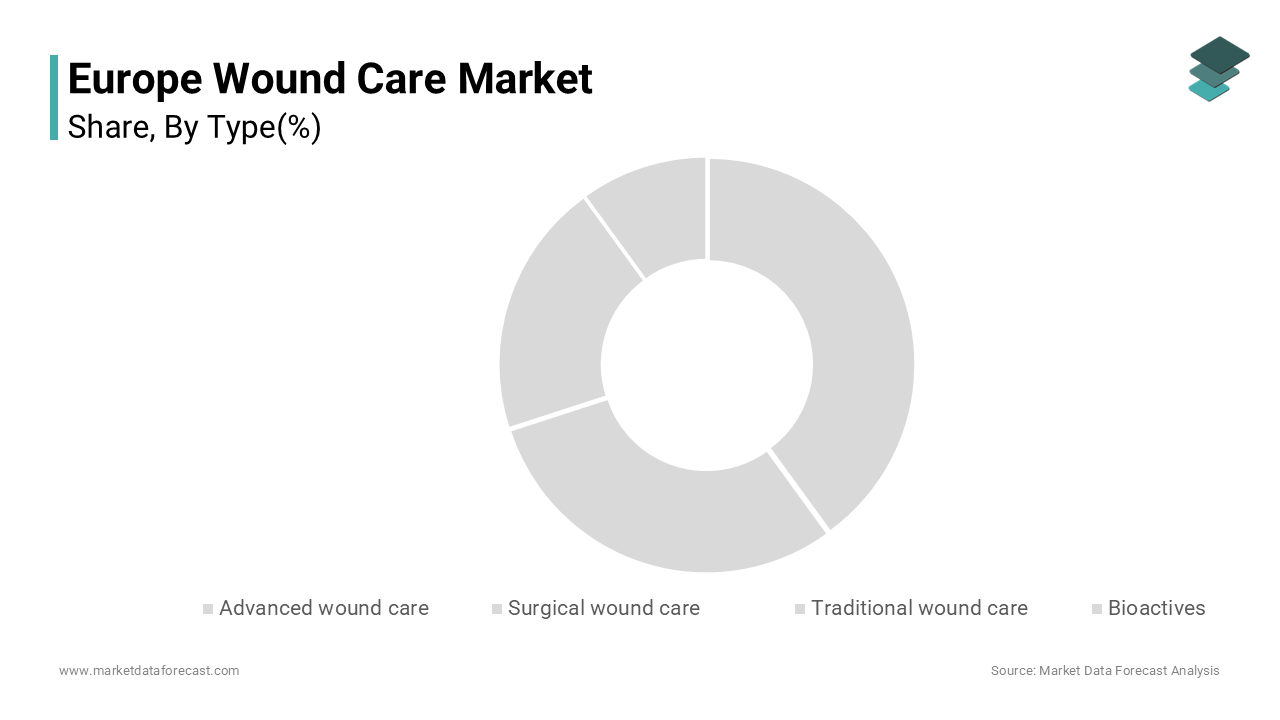
The bioactives segment is on the rise and is likely to witness a CAGR of 10.4% over the forecast period. Regulatory acceleration for regenerative wound therapies is one of the major factors contributing to the rapid expansion of the bioactives segment in the European market. According to the European Medicines Agency, approval timelines for bioengineered skin substitutes under the ATMP framework have been shortened from 210 to 120 days for priority wound care indications. As per EU phase III trial data, bioactive matrices achieved 50% faster re‑epithelialization in venous leg ulcers compared to standard care. According to Germany’s Paul Ehrlich Institute, conditional marketing authorization was granted in 2024 to new collagen‑based wound matrices based on surrogate endpoints of granulation tissue formation. Such regulatory agility aligns with the EU’s Innovation Health Initiative, which prioritizes regenerative solutions for high‑burden conditions like non‑healing wounds.
By Application Insights
The chronic wounds segment accounted for the dominating share of 65.5% of the European wound care market in 2024. The growth of the chronic wounds segment in this regional market is attributed to the high prevalence, duration, and complexity of conditions like diabetic foot ulcers, venous leg ulcers, and pressure injuries. Chronic wounds disproportionately affect Europe’s aging population. According to Eurostat’s 2024 Health and Ageing Survey, more than 70% of chronic wound cases occur in people aged 65 and older. As per the European Venous Forum, venous leg ulcers affect around 1.5 million Europeans, with average healing times of 6–12 months. According to the International Diabetes Federation, diabetic foot ulcers affect about 15% of Europe’s diabetic population, with recurrence rates exceeding 40% within one year. This persistent clinical need creates sustained product consumption far exceeding the episodic demand from acute wounds. National health systems now classify chronic wounds as long‑term conditions eligible for home care reimbursement, reinforcing continuous product access.
By End User Insights
The hospitals segment represents the largest end user segment in the Europe wound care market and held 46.5% of the regional market share in 2024 due to their role in managing complex acute injuries, severe burns, and postsurgical complications. Hospitals treat the most clinically severe wounds including deep surgical site infections, major trauma, and extensive burns which require advanced negative pressure wound therapy, biological grafts, and antimicrobial dressings. According to the European Centre for Disease Prevention and Control, hospitals in Europe managed over 1.2 million postsurgical wound complications in 2024, with about one‑third classified as deep incisional requiring NPWT. As per the European Burn Association, collagen‑based dressings and skin substitutes were used in more than 90% of moderate to severe burn cases in France and Germany. These high‑intensity cases consume large volumes of premium products per patient, often exceeding €2,000 in dressing costs per hospitalization. The concentration of specialized staff and reimbursement mechanisms further solidifies hospitals as the primary consumption hub.
The homecare settings segment is the fastest growing end user segment in the Europe wound care market and is anticipated to record a CAGR of 11.8% over the forecast period owing to the policy‑driven shift toward decentralized chronic disease management. According to the European Commission’s 2023 Integrated Care Framework, €210 million was allocated to expand home‑based wound programs, with 14 member states launching initiatives by the end of 2024. As per the Swedish National Board of Health and Welfare, 78% of venous leg ulcer patients in Sweden received dressing changes at home in 2024, supported by telehealth consultations. According to reimbursement reforms in Italy and Spain, home dressing supplies for chronic wounds are now covered under national health insurance.
REGIONAL ANALYSIS
Germany Wound Care Market Analysis
Germany led the wound care market in Europe with 23.5% of the regional market share in 2024. The dominance of Germany in the European market is driven by the universal health coverage, robust reimbursement for advanced products, and a strong network of wound care specialists. According to the German Wound Healing Society, Germany maintains more than 320 certified wound centers with mandatory specialist nurse training for chronic ulcer management. As per the statutory health insurance system, advanced dressings such as antimicrobial foam and hydrocolloids have been reimbursed without prior authorization for stage two and above pressure injuries since 2023. According to the national diabetic foot program, approximately 5 million patients are screened annually to identify high‑risk cases early and trigger preventive dressing use. Germany also hosts leading manufacturers like BSN Medical and Lohmann & Rauscher which drive domestic innovation and clinical adoption. The combination of policy support, clinical infrastructure, and manufacturing presence ensures Germany’s continued market leadership.
United Kingdom Wound Care Market Analysis
The United Kingdom holds the second largest share of the Europe wound care market. Its strength lies in evidence‑based national guidelines, integrated electronic health records, and centralized procurement. According to NICE, wound management guidelines were updated in 2023 to mandate advanced dressings for all chronic wounds with automatic inclusion in NHS formularies. As per NHS Supply Chain, more than €200 million worth of advanced dressings are procured annually through framework agreements, ensuring consistent access across all trusts. According to the National Wound Registry, healing outcomes are tracked by dressing type, enabling data‑driven product selection. As per NHS Digital, over 280,000 patients receive community‑based wound care monthly, underscoring the UK’s scale and standardization. Recent investments in community nursing and telehealth further reinforce demand for user‑friendly advanced products in home settings.
France Wound Care Market Analysis
France commanded a prominent share of the Europe wound care market in 2024. Its growth is fueled by strong diabetic foot programs, national wound registries, and hospital quality incentives. According to the French Society for Vascular Medicine, France operates more than 180 certified diabetic foot centers that follow standardized protocols requiring antimicrobial and bioactive dressings for high‑grade ulcers. As per the national health insurance system, advanced dressings are reimbursed at 100% for chronic wounds with no patient copayment, accelerating adoption. According to the Ministry of Health, the Wound Zero initiative launched in 2024 targets a 30% reduction in hospital‑acquired pressure injuries by 2027 through mandatory advanced dressing use in at‑risk patients. This policy is enforced through hospital certification requirements monitored by the Haute Autorité de Santé. The combination of full reimbursement, clinical standardization, and regulatory enforcement ensures sustained demand for premium wound care products.
Italy Wound Care Market Analysis
Italy captured a notable place in the Europe wound care market in 2024. The large aging population, high diabetes prevalence, and recent regional reimbursement reforms are propelling the Italian wound care market growth. According to ISTAT’s 2024 Health Survey, Italy has more than 12 million citizens aged 75 and older, with nearly one‑quarter living with diabetes, creating an extensive chronic wound burden. Historically fragmented regional procurement limited advanced dressing access, but recent reforms have changed this landscape. As per Lombardy and Lazio regional health authorities, full reimbursement for hydrocolloid and foam dressings was introduced in 2023 for venous and diabetic ulcers, covering more than 18 million residents. According to the Ministry of Health, the National Recovery and Resilience Plan allocated €90 million to train 5,000 community nurses in advanced wound care by 2026. These initiatives are transforming Italy from a traditional gauze‑dominated market into a growing adopter of advanced therapies, particularly in home settings where most wound care now occurs.
Spain Wound Care Market Analysis
Spain is estimated to showcase a healthy CAGR in the European wound care market over the forecast period due to the national wound care strategies and decentralized regional innovation. According to the Ministry of Health, the National Strategy for Chronic Wound Management launched in 2023 established standardized protocols across all 17 autonomous communities. The strategy mandates advanced dressings for diabetic foot and pressure ulcers and funds wound nurse training in every province. As per the Spanish Society of Wound Healing, Catalonia and Andalusia have pioneered telehealth wound monitoring programs reaching more than 45,000 patients annually. According to the Spanish Vascular Society, venous leg ulcers affect an estimated 1.2 million patients nationwide, creating steady demand for compression‑compatible dressings. Recent inclusion of silver dressings in regional hospital formularies and home care packages has further accelerated the adoption of advanced products across both public and private care pathways.
COMPETITIVE LANDSCAPE
Competition in the Europe wound care market is characterized by a blend of global innovators European specialists and generic manufacturers vying for inclusion in national formularies and clinical pathways. Leading firms differentiate through robust clinical data regulatory compliance and integration into value based care models rather than price alone. The market is witnessing increased consolidation as larger players acquire bioactive and digital health startups to enhance regenerative and remote monitoring capabilities. Regulatory scrutiny from bodies like the European Medicines Agency and national health technology assessment agencies has raised the evidence bar for new product adoption. Simultaneously the shift toward home care is pressuring companies to develop intuitive easy to apply dressings supported by digital guidance. Talent in clinical science health economics and regulatory affairs has become a key competitive asset as companies navigate fragmented but stringent European reimbursement landscapes. This environment rewards those who combine therapeutic efficacy with system level cost savings and patient centered design.
KEY MARKET PLAYERS
Some of the companies that are playing a dominating role in the europe wound care market include
- Smith & Nephew
- Mölnlycke Health Care
- ConvaTec Group
- Coloplast
- 3M (Solventum
- Essity (BSN Medical)
- Paul Hartmann AG
- B. Braun Melsungen AG
- Medtronic
- Johnson & Johnson (Ethicon)
- Baxter International
- Organogenesis
- Integra LifeSciences
- Urgo Medical
- Lohmann & Rauscher
Top Players in the Market
Mölnlycke Health Care
Mölnlycke Health Care is a global leader in advanced wound care solutions with deep roots in the European healthcare system. The company specializes in evidence based dressings including hydrocolloid foam and antimicrobial technologies that are widely adopted across hospitals and home care networks. Mölnlycke contributes significantly to global clinical standards through its research partnerships with European wound care societies and participation in multicenter trials. In 2024 the company launched a next generation self adherent foam dressing with an integrated moisture indicator for chronic wound management. This innovation enhances patient compliance and supports remote monitoring initiatives across national health services thereby strengthening its strategic relevance in value based care environments.
ConvaTec Group
ConvaTec Group is a multinational medical products company with a strong footprint in the Europe wound care market through its AQUACEL and VERSAJET portfolios. The company plays a pivotal role in advancing infection control and debridement technologies for complex wounds including diabetic foot ulcers and surgical site infections. ConvaTec actively collaborates with European health technology assessment bodies to demonstrate cost effectiveness of its advanced dressings. Recently the company expanded its bioactive platform by introducing a new ionic silver hydrofiber dressing validated in a 12 country European trial. This product addresses rising antimicrobial resistance concerns and aligns with national stewardship programs reinforcing ConvaTec’s position as a clinical and economic partner to public health systems.
3M Company
3M Company leverages its broad materials science expertise to deliver innovative wound care solutions across Europe including Tegaderm film dressings and Sensura moisture management systems. The company’s global R and D infrastructure enables rapid translation of clinical insights into product enhancements tailored to regional needs. In Europe 3M works closely with nursing associations and wound care networks to integrate its products into standardized care pathways. In 2024 3M introduced a transparent antimicrobial film dressing with extended wear capability designed specifically for venous leg ulcer protocols in Nordic and Benelux countries. This launch reflects its strategy of aligning product design with national treatment guidelines and home care delivery models.
Top Strategies Used by the Key Market Participants
Key players in the Europe wound care market are investing heavily in clinical evidence generation through multicenter trials and real world data studies to support health technology assessments and reimbursement applications. They are developing integrated dressing systems that combine infection control moisture balance and patient comfort to address complex chronic wounds holistically. Companies are also aligning product portfolios with national wound care guidelines and digital health initiatives by incorporating features compatible with telehealth monitoring. Strategic partnerships with nursing associations and wound care societies enhance education and standardization of product use across diverse care settings. Finally they are expanding home care focused packaging with user friendly designs instructional support and reimbursement navigation tools to capture decentralized care trends.
MARKET SEGMENTATION
This research report on the Europe Wound Care Market has been segmented and sub–segmented into the following categories.
By Type
- Advanced wound care
- Surgical wound care
- Traditional wound care
- Bioactives
By Application
- Chronic Wounds
- Acute Wounds
By End-User
- Hospitals
- Clinics
- Homecare Settings
- Others
By Country
- UK
- France
- Spain
- Germany
- Italy
- Russia
- Sweden
- Denmark
- Switzerland
- Netherlands
- Turkey
- Czech Republic
- Rest of Europe