- Product Description Description
- Table of Contents TOC
- List of Table & Figure LOT
- Get Free Sample PDF Sample PDF
Market Size, 2025
$3.28 BnMarket Estimate, 2026
$3.43 BnMarket Forecast, 2034
$5.08 BnCAGR, 2026–2034
4.46%Global Excitation Systems Market Report Summary
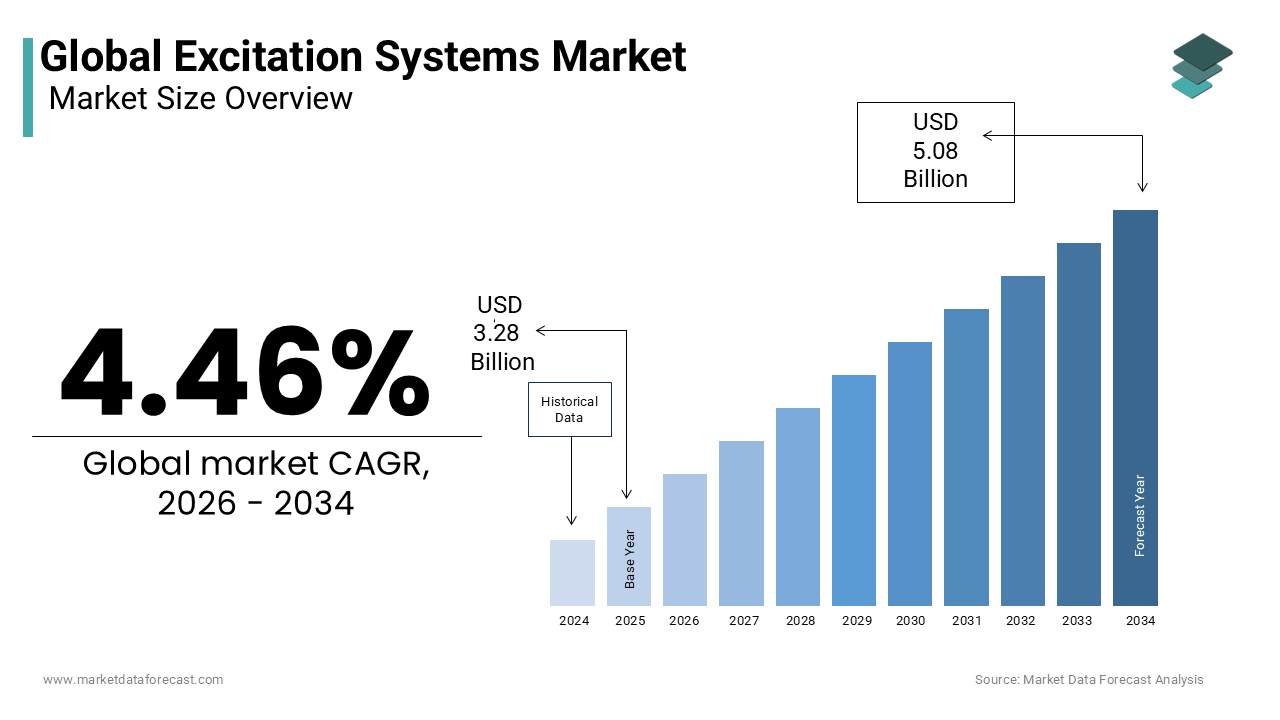
The global excitation systems market was valued at USD 3.28 billion in 2025 and is anticipated to reach USD 3.43 billion in 2026 from USD 5.08 billion by 2034, growing at a CAGR of 4.46% during the forecast period from 2026 to 2034. The growth of the global excitation systems market is driven by the rising global electricity demand, increasing modernization of aging power infrastructure, and expanding investments in power generation facilities. Growing integration of renewable energy sources into existing grids, increasing adoption of smart grid technologies, and the need for reliable voltage regulation and grid stability are further accelerating market growth. Moreover, advancements in digital excitation controllers, integration of artificial intelligence and IoT-enabled monitoring systems, and increasing investments in grid automation are supporting the expansion of the global excitation systems market.
Key Market Trends
-
Rising adoption of digital excitation systems with advanced monitoring and diagnostic capabilities.
-
Increasing integration of excitation systems with renewable energy and smart grid infrastructure.
-
Growing utilization of artificial intelligence and predictive maintenance technologies in power generation.
-
Rising investments in modernization and refurbishment of aging power plants.
-
Increasing demand for intelligent excitation controllers supporting real-time grid management.
Segmental Insights
- Based on type, the static excitation systems segment dominated the global excitation systems market and accounted for 58.5% of the market share in 2025. The dominance of the segment is attributed to its superior response speed, precise voltage regulation, reduced maintenance requirements, and enhanced operational reliability. The increasing deployment of digital static exciters across thermal, hydroelectric, and industrial power generation facilities continues to strengthen segment growth.
- The brushless excitation systems segment is projected to witness the fastest CAGR of 6.4% during the forecast period owing to the growing deployment of offshore wind farms, remote hydroelectric stations, and distributed power generation facilities. The elimination of brushes and slip rings, reduced maintenance requirements, improved operational reliability, and enhanced performance in harsh environments are further accelerating segment growth.
- Based on controller type, the digital controller segment dominated the global excitation systems market and held 64.2% of the market share in 2025. The growth of the segment is driven by increasing demand for advanced monitoring, predictive maintenance, real-time diagnostics, seamless smart grid integration, and enhanced communication capabilities through digital control platforms. Continuous technological advancements and increasing automation in power generation further support segment dominance.
- Based on application, the synchronous generators segment accounted for 84.2% of the global excitation systems market share in 2025. The dominance of the segment is attributed to the extensive deployment of synchronous generators across thermal, hydroelectric, nuclear, and industrial power plants. Their critical role in maintaining grid stability, voltage regulation, inertia support, and reliable electricity generation continues to strengthen demand for advanced excitation systems.
- The synchronous motors segment is expected to witness steady growth during the forecast period due to increasing industrial automation, expanding adoption across mining, oil & gas, cement, and manufacturing industries, and growing demand for energy-efficient motor control systems in heavy industrial applications.
Regional Insights
- The Asia Pacific dominated the global excitation systems market in 2025 and accounted for 36.9% of the global market share. The region's leadership is driven by rapid industrialization, large-scale power infrastructure investments, increasing electricity demand, and significant additions to thermal, hydroelectric, and renewable power generation capacity. Countries such as China, India, Japan, and South Korea continue to invest heavily in grid modernization and advanced power generation technologies.
- North America held a substantial share of the global excitation systems market owing to the modernization of aging power infrastructure, increasing replacement of obsolete excitation systems, expanding natural gas power generation, and strong investments in grid reliability initiatives. Growing adoption of digital excitation controllers and predictive maintenance technologies further supports regional market growth.
- Europe continues to maintain a significant position in the global market due to ambitious renewable energy targets, modernization of hydroelectric power plants, expansion of offshore wind projects, and increasing deployment of smart grid technologies. Stringent grid stability requirements and investments in digital substations continue to accelerate market expansion.
- Latin America is witnessing steady growth supported by increasing investments in hydroelectric power generation, modernization of existing generation assets, expanding renewable energy projects, and rising electricity demand across developing economies. Countries such as Brazil and Mexico continue to invest in advanced excitation technologies to improve grid reliability.
- The Middle East & Africa is expected to experience notable growth during the forecast period due to expanding electricity access initiatives, increasing investments in utility-scale renewable energy projects, growing thermal power generation capacity, and ongoing power infrastructure development across emerging economies. Countries including Saudi Arabia, the United Arab Emirates, South Africa, and Egypt are increasingly adopting advanced excitation systems to support grid modernization and energy diversification strategies.
Competitive Landscape
The global excitation systems market is highly competitive and characterized by the presence of multinational electrical equipment manufacturers and specialized power system solution providers competing through technological innovation, digitalization, product reliability, and after-sales service excellence. Leading companies are focusing on developing intelligent digital excitation systems, integrating artificial intelligence and IoT technologies, enhancing predictive maintenance capabilities, and expanding smart grid compatibility. Strategic collaborations with utilities, generator manufacturers, and engineering service providers, along with investments in research and development, are further strengthening market positioning across the global excitation systems ecosystem. Increasing emphasis on renewable energy integration, grid stability, and digital power infrastructure continues to intensify competition within the market. The key players operating in the global excitation systems market include ABB Ltd., Amtech Power Ltd., ANDRITZ AG, Basler Electric Company, General Electric Company, KONČAR - Electronics and Informatics Inc., Siemens AG, Tenel, s.r.o., VEO Group, and Voith GmbH & Co. KGaA.
Global Excitation Systems Market Size
The size of the global excitation systems market was worth USD 3.28 billion in 2025. The global market is anticipated to grow at a CAGR of 4.46% from 2026 to 2034 and be worth USD 5.08 billion by 2034 from USD 3.43 billion in 2026.
Excitation systems constitute a critical component within synchronous generators, responsible for regulating voltage and reactive power output to ensure grid stability and operational efficiency. These systems supply direct current to the rotor windings of generators, enabling precise control over electrical parameters in power generation facilities ranging from thermal plants to hydroelectric dams. As global energy infrastructure undergoes modernization, the demand for advanced excitation technologies has intensified due to their role in maintaining frequency stability during fluctuating load conditions. The integration of renewable energy sources into existing grids necessitates robust excitation controls to manage intermittent power flows effectively. The transition toward smart grids and digital substations further amplifies the relevance of sophisticated excitation controllers capable of real time data processing and adaptive response capabilities. This technological evolution positions excitation systems as indispensable assets in contemporary power networks where precision and reliability are paramount for uninterrupted service delivery across residential commercial and industrial sectors worldwide.
MARKET DRIVERS
Rising Global Electricity Demand Drives Excitation System Adoption
The exponential growth in global electricity consumption is one of the major factors fuelling the expansion of the global excitation systems market. As per the International Energy Agency, worldwide electricity demand is projected to grow by an average of 3.4% annually through 2030, driven by electrification of transport heating and industrial processes. This surge necessitates expanded generation capacity where excitation systems play a pivotal role in ensuring voltage stability and optimal generator performance. In emerging economies such as India and China, rapid urbanization and industrial expansion have led to substantial investments in new power plants. According to the Ministry of Power in India, the country added 11.8 gigawatts of thermal capacity between 2020 and 2023, each requiring sophisticated excitation controls for efficient operation. Similarly, China’s National Energy Administration reported that the nation commissioned 47.5 gigawatts of new coal-fired capacity in 2022 alone, all equipped with modern excitation systems to meet stringent grid code requirements. The increasing penetration of variable renewable energy sources further compounds this demand as conventional generators must provide enhanced voltage support to compensate for intermittency. As per the Global Wind Energy Council, wind power capacity reached 906 gigawatts globally in 2022, creating additional stress on grid stability that excitation systems help mitigate. These factors collectively drive manufacturers to develop more responsive and intelligent excitation solutions capable of handling complex grid dynamics while maintaining high reliability standards essential for continuous power supply.
Modernization of Aging Power Infrastructure Accelerates Market Growth
The urgent need to upgrade obsolete power generation infrastructure is further boosting the excitation systems market expansion forward. Many developed nations operate power plants that have exceeded their original design life, requiring comprehensive retrofits to maintain operational efficiency and comply with contemporary regulatory standards. According to the U.S. Energy Information Administration, approximately 35% of coal-fired generating capacity in the United States is older than 50 years, necessitating extensive modernization efforts including excitation system replacements. In Europe, the situation is equally pressing as per Eurostat data indicating that nearly 40% of thermal power installations were commissioned before 1990. These aging facilities often feature outdated analog excitation controls that lack the precision and diagnostic capabilities of modern digital systems. Upgrading to contemporary excitation technology enables plant operators to achieve better voltage regulation, improved fault tolerance, and enhanced integration with automated control systems. The European Commission’s Clean Energy Package mandates stricter performance standards for grid-connected generators, compelling facility owners to invest in advanced excitation solutions. Additionally, as per the International Hydropower Association, over 60% of global hydropower capacity requires refurbishment to extend operational life and improve efficiency. Such retrofitting projects create sustained demand for excitation system suppliers who can deliver customized solutions compatible with legacy equipment while incorporating latest technological advancements. This ongoing infrastructure renewal cycle ensures consistent market opportunities for excitation system manufacturers across mature markets worldwide.
MARKET RESTRAINTS
High Initial Investment Costs Restrict Market Penetration
The substantial capital expenditure required for implementing advanced excitation systems poses a significant barrier to market expansion, particularly in developing regions and smaller utility operations. Modern digital excitation controllers equipped with sophisticated monitoring diagnostics and communication interfaces command premium prices that may deter budget-constrained buyers. According to the World Bank, approximately 600 million people globally still lack access to electricity, primarily in sub-Saharan Africa and parts of South Asia where financial resources for infrastructure development remain limited. In these contexts, utilities often prioritize basic generation capacity over advanced control systems due to cost considerations. The initial investment for a comprehensive excitation system upgrade can range from 500,000 to 2 million dollars depending on generator size and complexity, as per industry estimates from the Electric Power Research Institute. This financial burden is exacerbated by additional costs associated with installation commissioning and staff training required for proper system operation. Furthermore, as per the Asian Development Bank, many developing nations face fiscal constraints that limit their ability to allocate sufficient funds for power sector modernization. Small and medium-sized independent power producers also struggle with these high upfront costs as they typically operate with tighter margins compared to large utility companies. The return on investment for excitation system upgrades may take several years to materialize through improved efficiency and reduced maintenance costs, making it difficult for cash-strained operators to justify the expenditure. Consequently, price sensitivity remains a persistent challenge that restricts broader adoption of state-of-the-art excitation technologies in price-conscious markets.
Shortage of Skilled Technical Personnel Impedes Implementation
The scarcity of qualified engineers and technicians proficient in operating and maintaining advanced excitation systems is another major restraint to the global market expansion. Modern digital excitation controllers incorporate complex algorithms, communication protocols, and diagnostic features that require specialized knowledge for effective utilization. According to the International Labour Organization, the global energy sector faces a deficit of approximately 3.5 million skilled workers needed to support the transition to clean energy and modernized infrastructure. This shortage is particularly acute in emerging markets where educational institutions have not kept pace with technological advancements in power generation equipment. In India, as per the All India Council for Technical Education, only 15% of engineering graduates possess the practical skills required for immediate employment in specialized power sector roles. Similarly, in Southeast Asia, the Association of Southeast Asian Nations reports that less than 20% of technical vocational education programs include curriculum focused on modern power system controls. This skills gap leads to prolonged implementation timelines, increased dependency on external consultants, and higher operational risks due to improper system configuration or maintenance. Utilities often struggle to retain trained personnel as experienced professionals migrate to regions offering better compensation and career prospects. As per the Edison Electric Institute, American utilities spend an average of 12,000 dollars annually per employee on continuous training to keep pace with evolving technologies. The inability to adequately staff excitation system projects with competent personnel results in suboptimal performance, reduced system reliability, and increased likelihood of operational failures. Until educational frameworks and workforce development initiatives address this competency deficit, the full potential of advanced excitation technologies will remain unrealized in many markets.
MARKET OPPORTUNITIES
Integration of Renewable Energy Sources Creates Expansion Opportunities
The accelerating transition toward renewable energy generation opens substantial avenues for excitation system manufacturers to expand their product portfolios and service offerings. As solar and wind power capacities grow globally, conventional synchronous generators must provide enhanced grid support services including voltage regulation, frequency control, and inertia provision. According to the International Renewable Energy Agency, global renewable capacity additions reached 295 gigawatts in 2022, representing a 9.6% increase from the previous year. This rapid expansion creates demand for hybrid excitation solutions that enable seamless interaction between renewable sources and traditional generation assets. Modern excitation systems equipped with advanced power electronics can facilitate synthetic inertia emulation and fast frequency response capabilities essential for maintaining grid stability in high renewable penetration scenarios. In Germany, as per the Federal Network Agency, renewable sources accounted for 46.2% of electricity consumption in 2022, necessitating sophisticated grid management tools including upgraded excitation controls at remaining thermal plants. Similarly, Denmark achieved 50% wind power share in its electricity mix as reported by Energinet, the national transmission system operator, driving investments in complementary technologies that ensure reliable operation. Excitation system providers can capitalize on this trend by developing specialized controllers designed for mixed generation environments that incorporate predictive analytics and adaptive control strategies. Furthermore, the emergence of grid-forming inverters paired with synchronous condensers creates new application areas where excitation technology plays a crucial role. As per Bloomberg New Energy Finance, global investment in energy transition technologies reached 1.1 trillion dollars in 2022, indicating strong financial commitment to infrastructure that supports renewable integration. Manufacturers who position their excitation solutions as enablers of renewable energy adoption stand to benefit significantly from this structural shift in power generation paradigms.
Digitalization and Smart Grid Initiatives Offer Growth Potential
The widespread adoption of digital technologies and smart grid infrastructure presents lucrative opportunities for excitation system vendors to introduce next-generation solutions with enhanced connectivity and intelligence features. As power networks evolve toward decentralized, automated, and data-driven architectures, excitation systems must integrate seamlessly with supervisory control and data acquisition platforms, distributed energy resource management systems, and artificial intelligence-based optimization tools. According to the International Electrotechnical Commission, over 120 countries have initiated smart grid development programs aimed at improving efficiency, reliability, and sustainability of electricity networks. These initiatives require excitation controllers capable of real-time data exchange, remote monitoring, and autonomous decision-making capabilities. In China, as per the State Grid Corporation, more than 400 million smart meters have been deployed, creating vast amounts of operational data that can be leveraged for predictive maintenance and performance optimization of excitation systems. Similarly, the European Union’s Digital Single Market strategy promotes interoperability standards that facilitate integration of advanced control systems across borders. Excitation system manufacturers can develop cloud-based analytics platforms that aggregate performance data from multiple installations to identify patterns, predict failures, and recommend optimization measures. As per McKinsey and Company, digital solutions in the energy sector could generate up to 90 billion dollars in annual value by 2030 through improved asset utilization and reduced operational costs. By embedding Internet of Things sensors, edge computing capabilities, and machine learning algorithms into excitation controllers, vendors can offer differentiated products that deliver tangible value to utility customers. This digital transformation trajectory ensures sustained demand for innovative excitation technologies that align with evolving smart grid requirements and customer expectations for transparency and control.
MARKET CHALLENGES
Supply Chain Disruptions Pose Operational Challenges
The excitation systems market faces significant challenges stemming from global supply chain vulnerabilities that affect component availability, lead times, and production costs. Modern excitation controllers rely on specialized electronic components, semiconductors, and microprocessors that are subject to international trade dynamics, geopolitical tensions, and manufacturing bottlenecks. According to the Semiconductor Industry Association, global semiconductor sales declined by 13% in 2023 following years of unprecedented demand and subsequent inventory corrections. This volatility directly impacts excitation system manufacturers who depend on steady supplies of integrated circuits, power modules, and communication chips. The Russia-Ukraine conflict exacerbated these issues as per the United Nations Conference on Trade and Development, which noted that disruptions in Eastern European logistics routes increased shipping costs by 300% during peak crisis periods. Additionally, rare earth elements critical for certain excitation system components face concentrated supply risks with China controlling approximately 60% of global production as reported by the U.S. Geological Survey. Trade restrictions, export controls, and environmental regulations further complicate procurement strategies, forcing manufacturers to diversify supplier bases and hold larger inventories. As per the Institute for Supply Management, the manufacturing purchasing managers index indicated that 78% of respondents experienced longer supplier lead times in 2023 compared to pre-pandemic levels. These supply chain pressures result in delayed project completions, increased working capital requirements, and reduced profit margins for excitation system providers. Companies must invest in supply chain resilience measures including dual sourcing, strategic stockpiling, and nearshoring arrangements to mitigate these risks. However, such adaptations require substantial capital investment and organizational restructuring that may strain resources particularly for smaller market participants lacking economies of scale.
Stringent Regulatory Compliance Increases Complexity
Navigating the complex landscape of international regulatory requirements presents considerable challenges for excitation system manufacturers seeking global market access, which is further challenging the global market expansion. Different jurisdictions impose varying technical standards, certification procedures, and environmental mandates that necessitate customized product designs and extensive documentation. According to the International Organization for Standardization, over 25,000 standards relate to electrical equipment and power systems, creating a fragmented compliance environment that increases development costs and time to market. In the European Union, the CE marking directive requires rigorous testing and conformity assessment for excitation systems sold within member states as per the European Committee for Electrotechnical Standardization. Similarly, North American markets mandate compliance with Underwriters Laboratories and Canadian Standards Association certifications which involve separate testing protocols and approval processes. Emerging markets often introduce unique local content requirements and technical specifications that differ from international norms. As per the World Trade Organization, non-tariff barriers including technical regulations and conformity assessment procedures affect approximately 65% of global merchandise trade. Excitation system manufacturers must maintain dedicated regulatory affairs teams, legal counsel, and testing facilities to ensure compliance across multiple markets. The cost of obtaining necessary certifications can exceed 200,000 dollars per product variant as estimated by the Conformity Assessment Bodies Association. Furthermore, evolving grid codes imposed by transmission system operators require continuous product updates and re-certification efforts. For instance, the North American Electric Reliability Corporation periodically revises reliability standards that impact excitation system design parameters. Failure to maintain compliance can result in market exclusion, financial penalties, and reputational damage. These regulatory complexities disproportionately affect smaller manufacturers lacking resources to navigate multi-jurisdictional requirements effectively, thereby limiting competitive dynamics and innovation potential in the excitation systems market.
REPORT COVERAGE
| REPORT METRIC | DETAILS |
| Market Size Available | 2025 to 2034 |
| Base Year | 2025 |
| Forecast Period | 2026 to 2034 |
| CAGR | 4.46% |
| Segments Covered | By Type, Controller Type, Application, and Region. |
| Various Analyses Covered | Global, Regional & Country Level Analysis, Segment-Level Analysis, DROC, PESTLE Analysis, Porter’s Five Forces Analysis, Competitive Landscape, Analyst Overview of Investment Opportunities |
| Regions Covered | North America, Europe, APAC, Latin America, Middle East & Africa |
| Market Leaders Profiled | ABB Ltd., Amtech Power Ltd., ANDRITZ AG, Basler Electric Company, General Electric Company, KONCAR - Electronics and Informatics Inc., Siemens AG, Tenel, s.r.o, VEO Group, Voith GmbH & Co. KGaA, and Others. |
SEGMENTAL ANALYSIS
By Type Insights
The static excitation segment accounted for a dominant share of 58.5% of the global market in 2025. The growth of the static excitation segment in the global market can be credited to its superior response speed and precise voltage control capabilities which are critical for modern grid stability requirements. Static systems utilize thyristor-based rectifiers to convert alternating current to direct current without moving parts, thereby reducing maintenance needs and increasing reliability. According to the Electric Power Research Institute, static exciters can achieve field forcing responses within 20 milliseconds, which is significantly faster than brushless alternatives. This rapid response is essential for maintaining synchronism during grid faults or sudden load changes. The absence of slip rings and brushes eliminates wear-related failures, which historically accounted for 30% of generator downtime as per data from the International Council on Large Electric Systems. Furthermore, static systems offer better efficiency at partial loads, making them ideal for plants that operate under variable demand conditions. The integration of digital control units with static exciters allows for advanced features such as power system stabilizers and adaptive gain tuning. As per the Institute of Electrical and Electronics Engineers, over 75% of new thermal power installations globally now specify static excitation due to these operational advantages. The declining cost of power electronics components has further enhanced the economic viability of static systems, encouraging wider adoption across both new builds and retrofit projects in mature markets.
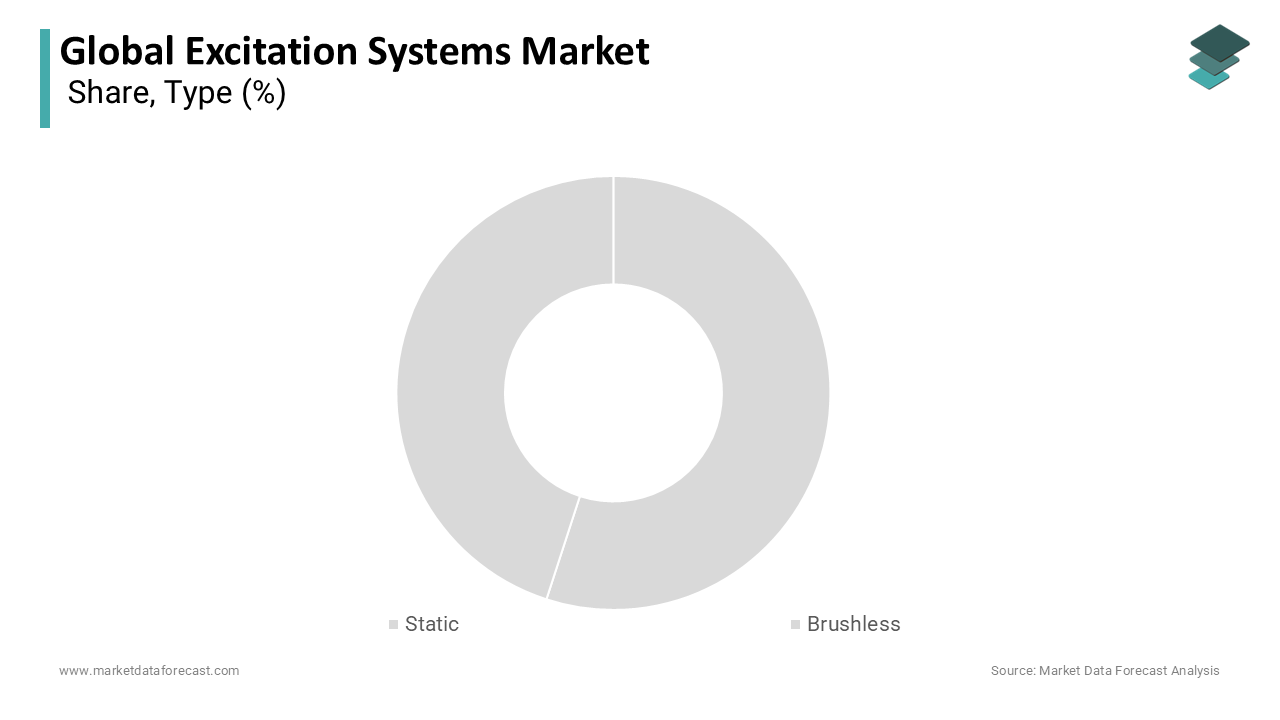
On the other side, the brushless excitation system segment is projected to register the fastest CAGR of 6.4% during the forecast period owing to the expansion of offshore wind farms and remote hydroelectric projects where maintenance accessibility is severely limited. Brushless systems eliminate the need for carbon brushes and slip rings which require regular inspection and replacement in harsh environments. According to the Global Wind Energy Council, offshore wind capacity is expected to reach 380 gigawatts by 2032, creating substantial demand for low-maintenance generation equipment. In these offshore installations, the cost of technician deployment for routine maintenance can exceed 50,000 dollars per visit as reported by the European Wind Association. Brushless exciters mitigate this operational expenditure by offering sealed, robust designs that withstand salt spray, humidity, and vibration. Additionally, the growing deployment of small modular reactors and distributed generation units favors brushless technology due to its compact footprint and inherent safety features. The U.S. Department of Energy notes that brushless systems reduce fire risks associated with brush arcing by 90%, making them preferable for enclosed or unmanned facilities. Advances in rotating rectifier technology have also improved the efficiency of brushless systems, narrowing the performance gap with static alternatives. As per the International Hydropower Association, new greenfield hydro projects in Southeast Asia and Africa increasingly specify brushless exciters to minimize long-term operational complexities in remote locations.
By Controller Type Insights
The digital controller segment led the market by capturing 64.2% of the global market share in 2025. The dominance of digital controller segment in the global market is attributed to the imperative for enhanced diagnostic capabilities and seamless integration with smart grid infrastructure. Digital controllers utilize microprocessors to execute complex control algorithms, enabling precise regulation of voltage, reactive power, and power factor. According to the International Electrotechnical Commission, digital systems provide real-time monitoring of over 200 operational parameters, allowing predictive maintenance and fault identification before catastrophic failures occur. This capability reduces unplanned outages, which cost the global economy an estimated 150 billion dollars annually as per the Lawrence Berkeley National Laboratory. Digital controllers facilitate communication via standard protocols such as Modbus and IEC 61850, enabling integration with supervisory control and data acquisition systems. The U.S. Federal Energy Regulatory Commission mandates that new generation facilities incorporate digital controls capable of supporting grid stability services including frequency regulation and voltage support. Furthermore, digital platforms allow for remote firmware updates and configuration changes, reducing the need for onsite technical visits. As per the Edison Electric Institute, utilities report a 40% reduction in maintenance labor hours after transitioning from analog to digital excitation controls.
By Application Insights
The synchronous generators segment had 84.2% of the global market share in 2025 owing to their ubiquitous use in utility-scale power generation facilities worldwide. Synchronous generators are the backbone of thermal, hydro, and nuclear power plants where stable voltage and frequency output are non-negotiable. According to the International Energy Agency, thermal power plants accounted for 61% of global electricity generation in 2022, requiring robust excitation systems to maintain grid synchronism. The inherent ability of synchronous generators to provide inertia and short-circuit current makes them indispensable for grid stability, particularly as renewable penetration increases. As per the Global Coal Plant Tracker, despite the energy transition, over 200 new coal-fired units were under construction in 2023, each requiring high-capacity excitation systems. Hydroelectric projects also contribute significantly with the International Hydropower Association reporting 15 gigawatts of new capacity additions annually. These large-scale installations prefer synchronous machines due to their proven reliability and ease of synchronization with the grid. The industrial sector also relies heavily on synchronous generators for captive power plants, ensuring uninterrupted supply for critical processes. According to the Manufacturing Institute, industrial facilities in the United States operate over 5,000 megawatts of captive generation capacity. The requirement for black start capabilities in emergency scenarios further cements the dominance of synchronous generators. Excitation systems for these applications are designed for high durability and continuous operation under varying load conditions. The standardization of generator designs across manufacturers facilitates the deployment of compatible excitation solutions, creating a stable and predictable demand base for market participants.
REGIONAL ANALYSIS
Asia Pacific Excitation Systems Market Analysis
Asia Pacific led the market by holding 36.9% of the global market share in 2025. The growth of the Asia-pacific region in the global market is majorly driven by rapid industrialization and massive investments in power infrastructure across China, India, and Southeast Asian nations. The region is home to the world’s largest coal-fired power expansion programs with China alone commissioning 47.5 gigawatts of new thermal capacity in 2022 as per the Global Energy Monitor. India’s Ministry of Power targets 500 gigawatts of non-fossil fuel capacity by 2030, necessitating extensive grid upgrades and excitation system deployments to manage renewable integration. The Association of Southeast Asian Nations reports that regional electricity demand is growing at 5.2% annually, outpacing global averages. This growth fuels demand for new generation assets and retrofitting of existing plants. Japan and South Korea contribute through technological advancements and export of high-quality excitation equipment. The Belt and Road Initiative has facilitated cross-border power projects, enhancing regional connectivity and requiring standardized excitation solutions. According to the Asian Development Bank, infrastructure investment in the region exceeds 1.7 trillion dollars annually with a significant portion allocated to energy sectors. The presence of major manufacturing hubs in China and India also lowers production costs for local market participants. Government policies promoting energy security and access further stimulate market activity. The diverse mix of hydro, thermal, and renewable resources in the region creates varied requirements for excitation systems, driving innovation and customization among suppliers.
North America Excitation Systems Market Analysis
North America accounted for a prominent share of the global market in 2025 due to a distinct focus on grid modernization and the replacement of aging infrastructure. The U.S. Energy Information Administration states that 35% of American coal-fired capacity is older than 50 years, requiring comprehensive upgrades including excitation system replacements. The Federal Energy Regulatory Commission enforces strict reliability standards, compelling utilities to invest in advanced digital excitation controls. Canada’s commitment to phasing out conventional coal power by 2030 drives investments in hydroelectric refurbishment and natural gas peaking plants. According to Natural Resources Canada, hydroelectric facilities represent 60% of the country’s generation capacity, many of which are undergoing life-extension projects. The increasing integration of renewable energy sources in states like California and Texas necessitates enhanced voltage support from remaining synchronous generators. The North American Electric Reliability Corporation mandates specific performance criteria for excitation systems to ensure grid stability during extreme weather events. The shale gas boom has led to the construction of numerous combined cycle power plants which utilize sophisticated excitation technologies for efficient operation. High labor costs in the region favor low-maintenance solutions such as static and brushless exciters. The presence of leading technology providers and research institutions fosters innovation in control algorithms and diagnostic features. Trade policies and domestic content requirements also influence procurement decisions in this mature market.
Europe Excitation Systems Market Analysis
Europe is predicted to showcase a prominent CAGR in the global market during the forecast period due to the aggressive decarbonization targets and the transition toward renewable energy systems. The European Commission’s Green Deal aims for climate neutrality by 2050, prompting the closure of coal plants and the expansion of wind and solar capacity. According to Eurostat, renewable sources accounted for 23% of final energy consumption in 2022. This shift requires robust excitation systems in remaining thermal and hydro plants to provide grid stability services. Germany’s Energiewende policy has led to the decommissioning of nuclear and coal facilities while investing in grid reinforcement. The European Network of Transmission System Operators for Electricity imposes stringent grid codes requiring dynamic voltage support from generators. Norway and Sweden leverage their extensive hydroelectric resources with ongoing modernization projects to enhance flexibility. As per the International Hydropower Association, Europe has 150 gigawatts of installed hydro capacity, much of which is being upgraded with digital excitation controls. The United Kingdom’s offshore wind ambitions create demand for synchronous condensers equipped with advanced excitation systems to compensate for loss of inertia. Eastern European countries are upgrading Soviet-era infrastructure to meet European Union standards. The region’s emphasis on energy efficiency and digitalization drives the adoption of smart excitation solutions. Regulatory harmonization across member states facilitates cross-border trade of equipment and services.
Latin America Excitation Systems Market Analysis
Latin America represents a notable share of the global market in 2025, with Brazil and Mexico leading in power generation investments. Brazil relies heavily on hydroelectric power, which accounts for 65% of its electricity matrix as per the Brazilian Energy Research Office. Fluctuations in rainfall patterns due to climate change necessitate thermal backup and grid stabilization measures, driving demand for excitation systems. The National Electric Energy Agency of Brazil mandates technical standards for generator performance, encouraging upgrades. Mexico’s energy reform has opened the sector to private investment, leading to new combined cycle and renewable projects. According to the Inter-American Development Bank, the region requires 100 billion dollars in energy infrastructure investment by 2030. Chile and Peru are expanding solar and wind capacities, requiring complementary excitation technologies for grid integration. The Caribbean islands are transitioning from diesel generators to renewable hybrid systems, creating niche opportunities for specialized excitation controls. Political instability and currency fluctuations pose challenges, but long-term demographic and economic growth support market expansion. Local manufacturing capabilities are limited, leading to a strong reliance on imports from North America and Europe. Regional integration initiatives aim to improve cross-border electricity trade, enhancing the need for standardized control systems.
Middle East and Africa Excitation Systems Market Analysis
The Middle East and Africa shows a healthy CAGR in the global market during the forecast period owing to the oil-rich nations diversifying their energy mixes and African countries expanding power access. Saudi Arabia’s Vision 2030 includes massive investments in solar and wind power to reduce domestic oil consumption. According to the King Abdullah City for Atomic and Renewable Energy, the kingdom targets 50% renewable energy by 2030. The United Arab Emirates is developing nuclear power capabilities requiring state-of-the-art excitation systems. In Africa, the African Development Bank reports that 600 million people lack electricity access, driving off-grid and mini-grid developments. South Africa, Egypt, and Nigeria are investing in thermal and hydro projects to meet growing demand. The Desert Sun initiative aims to export solar power to Europe, necessitating robust transmission and generation infrastructure. Political conflicts and funding constraints hinder progress in some areas, but international aid and private sector participation are filling gaps. The region’s harsh environmental conditions require highly durable excitation equipment resistant to extreme heat and dust. Local content policies in some countries encourage joint ventures with international manufacturers. The gradual shift away from subsidized fossil fuels promotes continuous efficiency improvements in existing power plants.
COMPETITIVE LANDSCAPE
The competition in the excitation systems market is characterized by the presence of established multinational corporations and specialized niche players vying for market share through technological differentiation and service excellence. Major competitors leverage their extensive distribution networks and brand recognition to secure large scale utility contracts while smaller firms focus on customized solutions for specific industrial applications. The market exhibits moderate consolidation as leading companies acquire innovative startups to enhance their digital capabilities and product offerings. Price competition remains intense in standardized segments prompting manufacturers to differentiate through value added services such as remote monitoring and predictive maintenance. Technological advancement serves as a key competitive frontier with companies investing in artificial intelligence and internet of things integration to offer smarter excitation controls. Regulatory compliance and adherence to international standards create barriers to entry for new participants favoring incumbents with proven track records. Customer loyalty is driven by reliability and after sales support rather than initial cost alone. The shift toward renewable energy integration opens new competitive dimensions where providers must demonstrate expertise in hybrid system management. Geographic diversification allows companies to mitigate regional economic fluctuations and capitalize on growth in emerging markets. Overall the competitive landscape rewards innovation agility and customer centricity as the market evolves toward digitalization and sustainability.
KEY MARKET PLAYERS
Companies playing a prominent role in the global excitation systems market include
- ABB Ltd.
- Amtech Power Ltd.
- ANDRITZ AG
- Basler Electric Company
- General Electric Company
- KONČAR - Electronics and Informatics Inc.
- Siemens AG
- Tenel, s.r.o.
- VEO Group
- Voith GmbH & Co. KGaA
- Others
Top Players in the Market
Basler Electric Company
Basler Electric Company is a prominent provider of excitation systems known for its robust digital voltage regulators and comprehensive service offerings. The company serves a diverse clientele including utilities independent power producers and original equipment manufacturers globally. Basler focuses on innovation in control algorithms and user friendly interfaces to enhance operational efficiency. Recent initiatives include the launch of next generation DECS series regulators featuring advanced communication protocols and cybersecurity features. The company strengthens its market position through strategic partnerships with generator manufacturers and extensive training programs for technicians. Basler emphasizes reliability and ease of installation which appeals to customers seeking minimal downtime. Their global support network ensures timely assistance and spare parts availability. The company actively participates in industry standards development contributing to best practices in excitation technology. Basler’s commitment to sustainability aligns with global trends toward efficient power generation. Their products are widely used in thermal hydro and renewable energy applications demonstrating versatility. The company continues to invest in research and development to address emerging grid challenges.
GE Vernova
GE Vernova is a major player leveraging its extensive experience in power generation and grid solutions to offer integrated excitation systems. The company provides comprehensive packages that include generators exciters and control systems ensuring seamless compatibility. GE Vernova focuses on digital transformation incorporating artificial intelligence and predictive analytics into its excitation solutions. Recent actions include the enhancement of its EX2100e excitation control platform with cloud based monitoring capabilities. The company collaborates with utilities to optimize plant performance and extend asset life. GE Vernova’s global footprint enables it to serve large scale projects in emerging and mature markets. The company emphasizes cybersecurity and compliance with international standards. Its strong brand reputation and technical expertise attract customers seeking reliable long term solutions. GE Vernova actively engages in retrofitting aging infrastructure with modern digital controls. The company’s investment in renewable energy technologies positions it well for the energy transition. Their holistic approach to power system management differentiates them from component only suppliers.
Siemens Energy
Siemens Energy is a leading contributor to the excitation systems market offering advanced solutions for various generation technologies. The company integrates excitation controls with its broader portfolio of automation and digitalization services. Siemens Energy focuses on sustainability and efficiency developing excitation systems that support renewable integration. Recent developments include the SIMOREG excitation system with enhanced dynamic response and diagnostic features. The company collaborates with research institutions to innovate in power electronics and control theory. Siemens Energy serves a global customer base with localized support and engineering services. The company emphasizes lifecycle management offering maintenance and upgrade services to maximize asset value. Its strong presence in Europe and Asia provides competitive advantages in key markets. Siemens Energy actively participates in grid modernization projects contributing to stability and reliability. The company’s commitment to digital twins and simulation tools helps customers optimize performance. Their comprehensive product range covers small distributed generators to large utility scale plants. Siemens Energy continues to expand its service offerings to meet evolving customer needs.
Top Strategies Used by Key Market Participants
Key players in the excitation systems market primarily employ product innovation and strategic partnerships to strengthen their competitive positions. Companies invest heavily in research and development to create digital controllers with advanced diagnostic capabilities and cybersecurity features. They focus on integrating artificial intelligence and machine learning algorithms to enable predictive maintenance and optimal performance. Strategic collaborations with generator manufacturers and utilities facilitate the development of customized solutions that meet specific grid code requirements. Market participants also pursue geographic expansion by establishing local service centers and manufacturing facilities in emerging economies. Mergers and acquisitions are utilized to acquire specialized technologies and expand product portfolios. Companies emphasize after sales services including training maintenance and software updates to build long term customer relationships. Compliance with international standards and regulatory requirements is prioritized to ensure global market access. Sustainability initiatives drive the development of energy efficient excitation systems that support renewable energy integration. Digital marketing and participation in industry conferences enhance brand visibility and thought leadership. These strategies collectively enable companies to adapt to changing market dynamics and capture growth opportunities in the evolving power generation landscape.
RECENT MARKET HAPPENINGS
- Soft-start is available to reduce input current, and in-built DC excitation and forced-commutation patterns commence desired rotation regardless of whether the motor was stopped or rotated in the wrong direction when a start order was received.
- ABB's equipment package for Himilaya Shipping's ultra-large bulk carriers will include innovative shaft generators with a Power-Take-Off (PTO) solution, which will include new drive systems and permanent magnet technology, boosting the vessels' energy efficiency by up to 4% while increasing operational flexibility. In addition, low-voltage drives and transformers, as well as engineering, project management, and commissioning services, are all part of ABB's comprehensive spectrum of supply for the Himalaya Shipping vessels.
MARKET SEGMENTATION
This research report on the global excitation systems market has been segmented and sub-segmented based on type, controller type, application and region.
By Type
- Static
- Brushless
By Controller Type
- Analog
- Digital
By Application
- Synchronous Generators
- Synchronous Motors
By Region
- North America
- Europe
- Asia Pacific
- Latin America
- Middle East & Africa