- Product Description Description
- Table of Contents TOC
- List of Table & Figure LOT
- Get Free Sample PDF Sample PDF
Market Size, 2025
$4.56 BnMarket Estimate, 2026
$4.85 BnMarket Forecast, 2034
$7.92 BnCAGR, 2026–2034
6.32%Global Fly Ash Market Report Summary
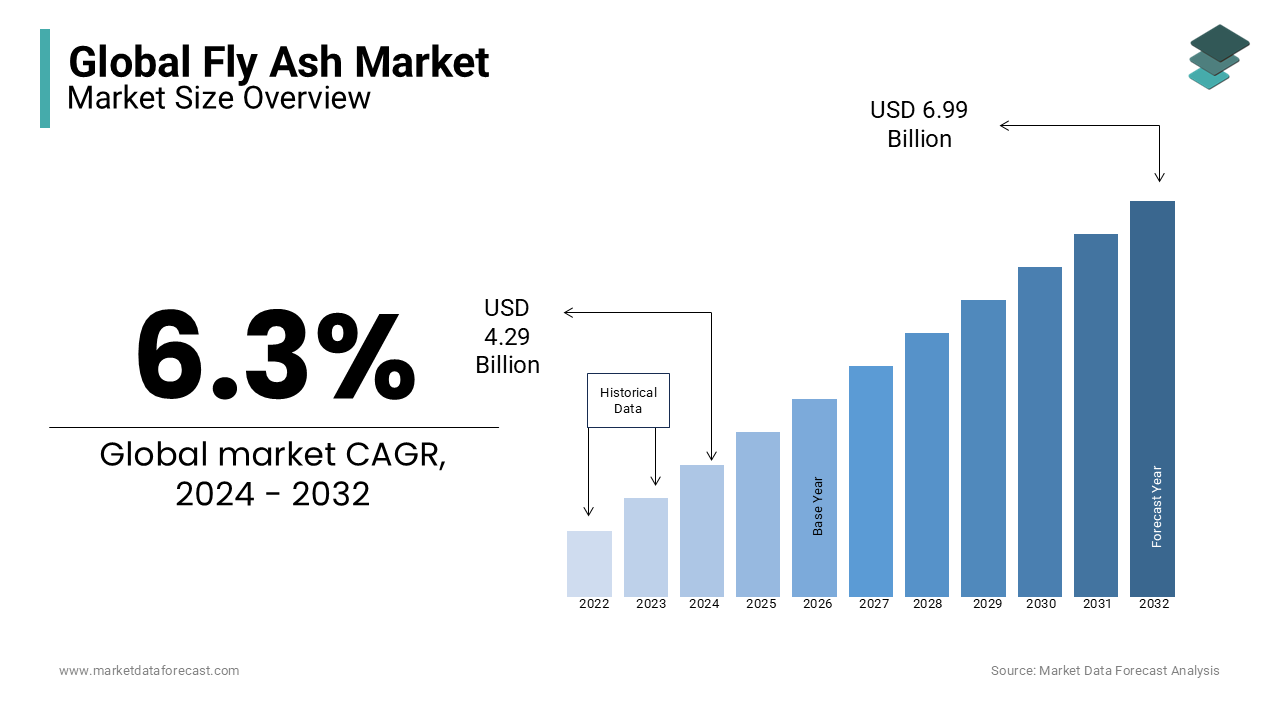
The global fly ash market was valued at USD 4.56 billion in 2025 and is estimated to reach USD 4.85 billion in 2026 and USD 7.92 billion by 2034, growing at a CAGR of 6.32% during the forecast period. Market growth is driven by increasing infrastructure development, rising demand for sustainable construction materials, and growing use of fly ash in cement and concrete applications. Fly ash is widely utilized due to its ability to improve durability, reduce construction costs, and lower carbon emissions in building materials. The increasing focus on green construction and waste utilization is further supporting strong market expansion globally.
Key Market Trends
- Rising infrastructure and construction activities are driving market growth.
- Increasing demand for sustainable and low carbon building materials is boosting fly ash consumption.
- Growing use of fly ash in cement and concrete production is supporting market expansion.
- Expansion of urbanization and industrial development projects is enhancing product demand.
- Innovation in fly ash processing and recycling technologies is influencing market development.
Segmental Insights
- Based on type, the Type F fly ash segment accounted for 64.6% of the global fly ash market share in 2025. This dominance is attributed to its superior pozzolanic properties and extensive use in high performance concrete applications.
- Based on application, the Portland cement and concrete segment held 54.5% of the global fly ash market share in 2025, driven by rising demand for durable and cost efficient construction materials.
Regional Insights
- The global fly ash market is experiencing strong growth across regions, supported by increasing infrastructure investments and sustainable construction practices.
- Asia Pacific was the leading contributor in 2025 and is expected to maintain its dominance during the forecast period, driven by rapid urbanization, expanding infrastructure projects, and large scale construction activities across China and India.
Competitive Landscape
The global fly ash market is moderately competitive, with key players focusing on supply chain expansion, sustainable material solutions, and advanced processing technologies to strengthen their market position. Companies are investing in recycling initiatives, cement additive technologies, and strategic partnerships with construction firms. Prominent players in the global fly ash market include Boral Limited, Charah Solutions, CEMEX S.A.B. de C.V., Lafarge North America Inc., FlyAshDirect, Separation Technologies LLC, Aggregate Industries, Salt River Materials Group, and Ashtech (India) Pvt. Ltd..
Global Fly Ash Market Size
The global fly ash market size was valued at USD 4.56 billion in 2025, and the global market size is expected to reach USD 7.92 billion by 2034 from USD 4.85 billion in 2026. The market is growing at a CAGR of 6.32% from 2026 to 2034.
Fly ash is the industrial byproduct generated from the combustion of pulverized coal in electric power generating plants. This fine particulate residue is captured by emission control devices and has evolved from a waste disposal challenge into a valuable resource for the construction and infrastructure sectors. The material is primarily composed of silicon dioxide, aluminum oxide, and calcium oxide, which impart pozzolanic properties essential for enhancing concrete durability and strength. According to the International Energy Agency, global coal demand reached an all-time high of more than 8 billion tonnes in 2022, ensuring a consistent supply of this raw material despite energy transition efforts. The utilization of fly ash aligns with circular economy principles by reducing the need for virgin materials such as cement and aggregates. As per the American Coal Ash Association, the recycling rate of coal combustion products reached 62% in 2022, demonstrating significant industrial adoption. Regulatory frameworks in major economies mandate sustainable waste management practices, thereby encouraging the integration of fly ash in civil engineering projects. The construction industry benefits from the cost effectiveness and performance enhancements provided by fly ash blended cement. Infrastructure development initiatives worldwide rely on this material to meet the growing demand for durable and sustainable building solutions. The market dynamics are influenced by environmental regulations, technological advancements in ash processing, and the shifting landscape of energy production. Understanding these factors is crucial for stakeholders aiming to capitalize on the potential of fly ash as a key component in modern construction materials.
MARKET DRIVERS
Surging Global Infrastructure Development and Urbanization Drive Demand for Sustainable Construction Materials
The rapid pace of urbanization and extensive infrastructure development projects across emerging economies is propelling the growth of the global fly ash market. Governments in countries such as India, China, and Brazil are investing heavily in transportation networks, residential complexes, and commercial structures to accommodate growing populations. According to the United Nations, approximately 68% of the world population is projected to live in urban areas by 2050, necessitating massive construction activities. Fly ash is extensively used in the production of concrete, bricks, and blocks due to its ability to improve workability and reduce permeability. The material allows for the replacement of up to 35% of Portland cement in concrete mixes, which significantly lowers the carbon footprint of construction projects. As per the Global Cement and Concrete Association, the cement industry accounts for approximately 7% of global carbon dioxide emissions, prompting a shift towards supplementary cementitious materials like fly ash. The durability of fly ash enhanced concrete reduces maintenance costs and extends the lifespan of infrastructure assets. Large scale projects such as high speed rail systems and highway expansions prefer fly ash blended cement for its superior long term performance. The cost advantage of fly ash compared to traditional cement further incentivizes its adoption in budget conscious markets. Regulatory mandates in several nations require the use of fly ash in government funded projects to promote sustainability. This structural demand ensures a steady growth trajectory for the market as construction activities continue to expand globally.
Stringent Environmental Regulations and Waste Management Policies Mandate Coal Ash Utilization
Strict environmental regulations and waste management policies implemented by governments worldwide are compelling power plants and construction firms to utilize fly ash rather than dispose of it in landfills, which is further boosting the expansion of the global market. Regulatory bodies aim to minimize the environmental impact of coal combustion residues by promoting their beneficial use in various applications. According to the United States Environmental Protection Agency, regulations like the Resource Conservation and Recovery Act establish a comprehensive framework for the safe disposal and beneficial use of coal combustion residuals to prevent groundwater contamination and soil degradation. In India, the Ministry of Environment, Forest and Climate Change mandates that every construction agency within a 100 kilometer radius from a coal or lignite based thermal power plant shall use fly ash bricks or blocks for construction activities to mitigate air and water pollution. These regulatory frameworks create a forced demand for fly ash as power generators seek compliant disposal methods. Construction companies are increasingly adopting fly ash to comply with green building standards such as LEED and BREEAM, which award points for using recycled content. As per the European Union Landfill Directive, member states must take measures to ensure that only treated waste is landfilled, which has increased the cost of disposal and made recycling a more economically viable option. The push towards a circular economy further supports these regulations by emphasizing resource efficiency and waste reduction. Compliance with these laws not only avoids penalties but also enhances the corporate social responsibility profile of organizations. Consequently, the regulatory environment acts as a powerful catalyst for the widespread adoption of fly ash in industrial and construction applications.
MARKET RESTRAINTS
Declining Coal Based Power Generation Due to Renewable Energy Transition Restricts Supply Availability
The global transition towards renewable energy sources and the subsequent decline in coal based power generation pose a significant restraint to the global fly ash market by reducing the availability of raw material. Many developed nations are phasing out coal fired power plants to meet climate change targets and reduce greenhouse gas emissions. According to the International Energy Agency, coal demand in the European Union and the United States is forecast to decline by 153 million tonnes and 106 million tonnes respectively by 2030, as wind, solar, and nuclear energy gain prominence. This shift directly impacts the production volume of fly ash, leading to potential supply shortages in regions heavily dependent on coal combustion. As per the United States Energy Information Administration, more than 25% of the current coal fired capacity in the United States is scheduled to retire by 2029, resulting in a steady decrease in fly ash generation. The scarcity of high quality fly ash can drive up prices and disrupt supply chains for construction projects that rely on this material. Manufacturers of cement and concrete face challenges in sourcing consistent quantities of fly ash, forcing them to explore alternative supplementary cementitious materials. The unpredictability of supply due to plant closures creates uncertainty for long term infrastructure planning. While some regions still rely on coal, the overall global trend towards decarbonization threatens the long term viability of fly ash as a abundant byproduct. This structural shift in the energy mix necessitates adaptation strategies for market participants to ensure continuity.
Presence of Heavy Metals and Environmental Concerns Regarding Leaching Limit Application Scope
The presence of heavy metals such as arsenic, lead, mercury, and selenium in fly ash raises environmental and health concerns that restrict its application in certain sensitive areas, which is further hampering the expansion of the global fly ash market. Although fly ash is beneficial for construction, there is a risk of these toxic elements leaching into groundwater and soil if not properly managed. According to the United States Geological Survey, coal combustion products contain trace elements that can pose risks to human health and the environment if they are released into the air or leach into water sources. Regulatory agencies impose strict limits on the use of fly ash in environments where leaching could occur, such as near water bodies or in residential landscaping. As per the European Chemicals Agency, substances like fly ash are subject to REACH registration and evaluation to ensure the safe handling and monitoring of chemical properties to prevent environmental contamination. These concerns limit the versatility of fly ash and restrict its use to controlled industrial applications such as concrete production where the material is encapsulated. Public perception and community opposition to fly ash storage facilities further complicate logistics and distribution. Construction firms must conduct rigorous testing to ensure compliance with safety standards, which adds to project costs and timelines. The liability associated with potential environmental damage makes some developers hesitant to use fly ash despite its technical benefits. Addressing these environmental risks through advanced processing and containment technologies is essential but remains a significant barrier to broader market expansion.
MARKET OPPORTUNITIES
Advancements in Beneficiation Technologies Enhance Quality and Expand Application Potential
Technological advancements in fly ash beneficiation processes is a significant opportunity for the fly ash market by improving the quality and consistency of the material for high value applications. Beneficiation techniques such as air classification, grinding, and chemical treatment remove unburned carbon and coarse particles, resulting in finer and more reactive fly ash. According to the American Coal Ash Association, approximately 46.8 million tons of coal combustion products were beneficially used in 2022, with increasing industry strategies to improve quality and availability of these materials through advanced processing. These enhanced properties allow fly ash to be used in precast concrete, ready mix concrete, and even in the production of geopolymers, which are low carbon alternatives to traditional cement. As per the National Ready Mixed Concrete Association, the inclusion of fly ash as a supplementary cementitious material enhances the long term compressive strength and durability of concrete structures, thereby extending their service life. The development of new applications such as mine reclamation, soil stabilization, and wastewater treatment further diversifies the market opportunities. Innovations in processing technologies enable the recovery of valuable cenospheres, which are lightweight hollow spheres used in aerospace and automotive industries. The ability to customize fly ash properties through beneficiation opens up new revenue streams for producers. Investment in research and development continues to unlock the potential of fly ash as a versatile industrial material. This technological evolution transforms fly ash from a waste product into a premium resource, driving market growth and sustainability.
Growing Adoption of Green Building Certifications and Sustainable Construction Practices Drives Preference
The increasing adoption of green building certifications and sustainable construction practices offers a substantial opportunity for the Fly Ash Market as developers seek to reduce the environmental impact of their projects. Certifications such as Leadership in Energy and Environmental Design (LEED) and Building Research Establishment Environmental Assessment Method (BREEAM) award credits for using recycled and locally sourced materials like fly ash. According to the U.S. Green Building Council, the LEED v4.1 framework provides specific points for using products that meet recycled content criteria and life cycle impact reduction goals, reflecting a strong commitment to sustainability in the construction sector. Fly ash contributes to these certifications by reducing the embodied carbon of concrete and minimizing the extraction of virgin raw materials. As per the World Green Building Council, the global building and construction sector is responsible for 37% of energy related carbon dioxide emissions, prompting the industry to adopt low carbon solutions. The use of fly ash in geopolymer concrete, which eliminates the need for Portland cement entirely, represents a frontier in sustainable construction. Government incentives and tax benefits for green buildings further encourage the use of eco friendly materials. Developers and architects are increasingly specifying fly ash blended concrete to meet sustainability goals and appeal to environmentally conscious clients. The alignment of fly ash usage with corporate sustainability targets enhances its market appeal. This trend towards responsible construction practices ensures a growing demand for fly ash as a key component in achieving net zero carbon objectives in the built environment.
MARKET CHALLENGES
Variability in Chemical Composition and Quality Consistency Poses Technical Challenges for End Users
The variability in the chemical composition and physical properties of fly ash from different sources is a significant challenge for the global fly ash market expansion. The quality of fly ash depends on the type of coal burned, the combustion temperature, and the efficiency of emission control systems, leading to inconsistencies in fineness, loss on ignition, and reactivity. According to the American Society for Testing and Materials, standards like ASTM C618 establish mandatory requirements for chemical and physical properties of fly ash for use in concrete, but meeting them consistently can be difficult for suppliers. Variations in quality can affect the setting time, strength development, and durability of concrete, causing engineering concerns and potential project delays. As per the Federal Highway Administration, proper testing of fly ash for properties such as fineness and carbon content is necessary because excessive amounts can adversely affect the air entrainment and workability of concrete mixes, increasing operational costs and complexity. End users often hesitate to specify fly ash due to the risk of performance issues arising from batch to batch variations. The lack of standardized processing across all power plants exacerbates this issue, making it challenging to guarantee uniform product quality. Suppliers must invest in rigorous quality control measures and beneficiation processes to mitigate these variations, but this adds to the production cost. The technical challenge of ensuring consistency limits the confidence of engineers and contractors in using fly ash for critical structural applications. Addressing this variability through advanced monitoring and processing technologies is essential to overcome this barrier.
Logistical Constraints and High Transportation Costs Impact Economic Viability and Market Reach
Logistical constraints and the high cost of transportation significantly impact the economic viability of the fly ash market, which is limiting its geographic reach and profitability. Fly ash is a bulk commodity with relatively low value per ton, making long distance transportation economically unfeasible compared to local alternatives. According to the United States Department of Transportation, bulk materials like coal ash are predominantly moved by rail and truck, where transportation costs can exceed the material's market value when distances increase beyond a certain threshold. The reliance on rail and truck transport subjects the supply chain to fuel price volatility and infrastructure bottlenecks. As per the Bureau of Transportation Statistics, rising diesel prices and freight network congestion can disrupt timely delivery and increase operational expenses for low value industrial minerals. Power plants located in remote areas face additional challenges in distributing fly ash to urban construction hubs where demand is highest. The lack of dedicated infrastructure for handling and storing fly ash at intermediate locations further complicates logistics. Seasonal weather conditions can also hinder transportation, leading to supply interruptions during critical construction periods. These logistical barriers reduce the competitiveness of fly ash against locally sourced cement and aggregates in distant markets. Efficient supply chain management and strategic location of processing facilities are required to mitigate these costs. However, the inherent weight and volume of the material remain a persistent challenge for market expansion.
REPORT COVERAGE
| REPORT METRIC | DETAILS |
| Market Size Available | 2025 to 2034 |
| Base Year | 2025 |
| Forecast Period | 2026 to 2034 |
| CAGR | 6.32% |
| Segments Covered | By Type, Application, and Region. |
| Various Analyses Covered | Global, Regional, and Country Level Analysis, Segment-Level Analysis, DROC, PESTLE Analysis, Porter’s Five Forces Analysis, Competitive Landscape, Analyst Overview of Investment Opportunities |
| Regions Covered | North America, Europe, Asia Pacific, Latin America, Middle East & Africa |
| Market Leaders Profiled | Boral Limited (Australia), Charah Solutions (US), CEMEX S.A.B. de C.V. (Mexico), Lafarge North America Inc. (US), FlyAshDirect (US), Separation Technologies LLC (US), Aggregate Industries (UK), Salt River Materials Group (US), and Ashtech (India) Pvt. Ltd. (India), and Others. |
SEGMENTAL ANALYSIS
By Type
The Type F fly ash segment dominated the market by accounting for 64.6% of the global market share in 2025. The growth of the type F fly ash segment in the European market is driven by its widespread availability from the combustion of anthracite and bituminous coal, which are the primary fuel sources for thermal power plants in major economies such as China, India, and the United States. Type F fly ash is characterized by its low calcium content and high silica and alumina content, which provide excellent pozzolanic properties when used in concrete mixtures. According to the American Coal Ash Association, Type F fly ash is effective in reducing the heat of hydration in mass concrete, which helps prevent thermal cracking in large structures. The material enhances the long term durability and resistance of concrete to sulfate attack and alkali silica reaction, making it ideal for bridges, dams, and high rise buildings. As per the Federal Highway Administration, the use of fly ash as a partial replacement for cement in infrastructure projects is standard practice because it improves the durability and workability of the final concrete product. The cost effectiveness of Type F fly ash compared to Portland cement further drives its adoption in cost sensitive markets. Regulatory standards such as ASTM C618 specifically categorize and validate the performance of Type F fly ash, ensuring consistent quality and reliability for engineers and contractors. The established supply chains and extensive technical data supporting its use reinforce its market leadership.
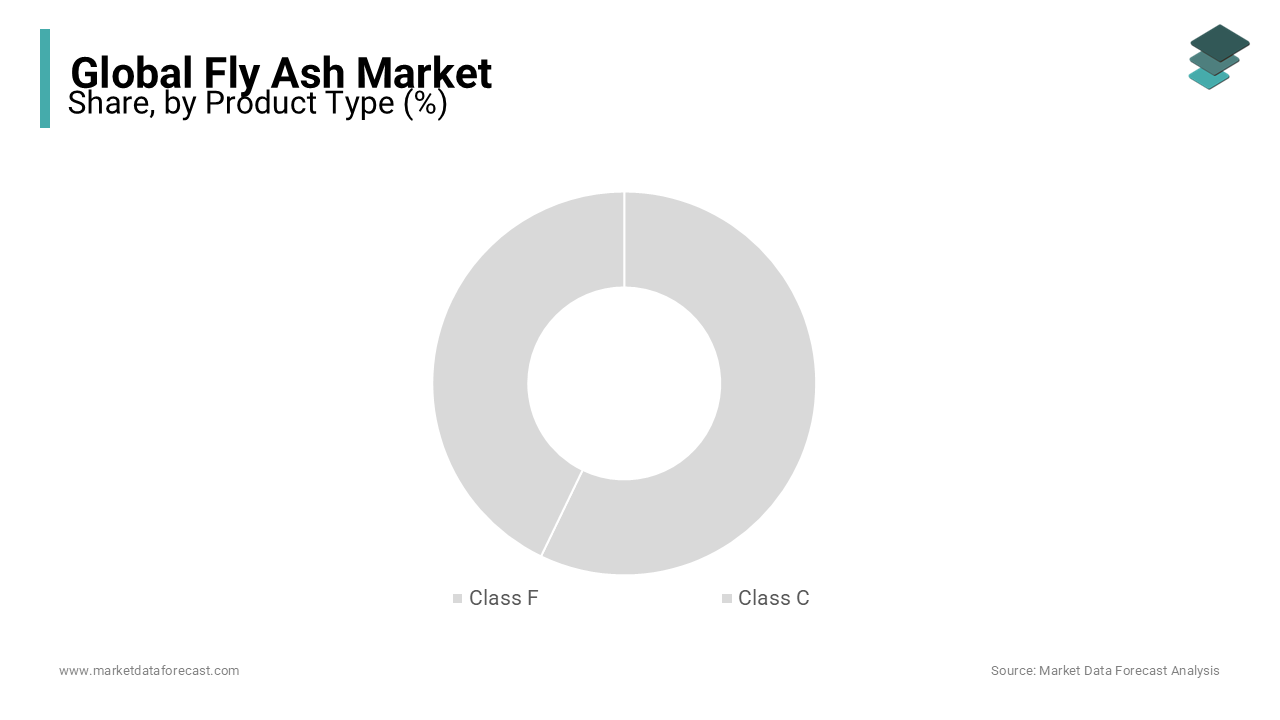
On the other end, the type C fly ash segment is estimated to showcase the fastest CAGR of 7.2% during the forecast period in the global market owing to its unique chemical composition derived from lignite or sub bituminous coal, which contains higher levels of calcium oxide. Unlike Type F, Type C fly ash possesses self-cementing properties that allow it to harden and gain strength when mixed with water without the need for additional activators. According to the National Ready Mixed Concrete Association, high calcium fly ash can exhibit cementitious properties on its own, making it particularly valuable for soil stabilization and road base construction where rapid strength development is critical. The ability of Type C fly ash to set quickly reduces construction timelines and labor costs, appealing to contractors working on tight schedules. As per the United States Department of Transportation, Type C fly ash is frequently used in geotechnical applications to increase the shear strength and reduce the compressibility of soil. The increasing focus on sustainable road construction practices further boosts demand, as Type C fly ash reduces the need for virgin aggregates and lime. Its versatility in various geotechnical applications beyond traditional concrete uses expands its market potential. The growing awareness of its benefits in cold weather concreting, where early strength is essential, also contributes to its rapid adoption. These functional advantages position Type C fly ash as a high growth segment in the industry.
By Application Insights
The Portland cement and concrete segment dominated the market by capturing 54.5% of the global market share in 2025. The dominance of this segment in the global market can be credited to the massive global demand for concrete in residential, commercial, and infrastructure construction projects. Fly ash is widely used as a supplementary cementitious material in concrete production, replacing up to 30% of Portland cement, which significantly lowers the carbon footprint of construction activities. According to the Global Cement and Concrete Association, the use of supplementary cementitious materials is a key lever in the industry's roadmap to achieve net zero CO2 emissions by 2050. The incorporation of fly ash improves the workability, pumpability, and long term strength of concrete, while reducing permeability and enhancing resistance to chemical attacks. As per the American Concrete Institute, fly ash provides improved sulfate resistance and reduced heat of hydration, making it the preferred choice for marine structures and industrial facilities. The cost savings associated with using fly ash instead of cement provide economic incentives for developers and contractors. Regulatory mandates in many countries require the use of recycled materials in public infrastructure projects, further boosting demand. The well-established technical standards and extensive field experience with fly ash in concrete ensure confidence among engineers and architects. The sheer volume of concrete produced globally ensures that this segment remains the largest consumer of fly ash.
However, the road construction segment is the fastest growing application segment in the global fly ash market and is predicted to grow at a CAGR of 8.4% during the forecast period due to the extensive government investments in transportation infrastructure and the increasing need for effective soil stabilization techniques. Fly ash is extensively used to stabilize weak subgrade soils, improving their load bearing capacity and reducing settlement risks. According to the World Bank, the global infrastructure gap is significant, and investment in sustainable transportation networks is critical for economic growth in developing regions. The use of fly ash in road bases and embankments reduces the consumption of natural aggregates and lowers construction costs. As per the Federal Highway Administration, fly ash is an effective agent for stabilizing silts and clays, leading to longer lasting roads with reduced moisture susceptibility. The environmental benefits of using fly ash in road construction align with sustainable infrastructure goals, promoting its adoption in green building projects. The ability of fly ash to fill voids and create a dense stable base layer enhances the overall performance of pavement structures. Technical advancements in mixing and compaction techniques have made the application of fly ash more efficient and reliable. The growing emphasis on maintaining existing road networks also drives demand for fly ash based repair and rehabilitation solutions. These factors collectively contribute to the robust growth of the road construction segment.
REGIONAL ANALYSIS
Asia Pacific Fly Ash Market Analysis
Asia Pacific segment dominated the market in 2025 and is likely to maintain its regional market leadership for the next few years as China and India accelerate infrastructure spending to support record breaking urban growth. China and India are the largest producers and consumers of fly ash due to their heavy reliance on coal for electricity. According to the International Energy Agency, China and India together account for approximately 71% of global coal consumption, ensuring a steady supply of fly ash. The region is witnessing unprecedented infrastructure development, including high speed rail networks, highways, and urban housing projects which utilize fly ash extensively. As per the Ministry of Power in India, the national fly ash utilization rate has seen steady improvement with some years reporting a utilization of over 90% across various thermal power plants. Government initiatives promoting affordable housing and smart cities further boost demand. The presence of numerous cement manufacturers who integrate fly ash into their production processes supports market growth. Environmental regulations are becoming stricter, encouraging the recycling of coal combustion residuals. The region benefits from low labor costs and established supply chains. However, challenges such as variability in ash quality and logistical issues persist. Despite these hurdles, the sheer scale of construction activities and energy production positions Asia Pacific as the undisputed leader in the fly ash market.
North America Fly Ash Market Analysis
North America is expected to see a shift toward ash harvesting from legacy impoundments for the next few years as current coal production declines and infrastructure repair needs increase. The United States is the primary contributor, driven by the need for sustainable building materials and infrastructure maintenance. According to the American Coal Ash Association, approximately 62% of the coal ash produced in 2022 was recycled, marking several consecutive years where more than half of the ash was beneficially used. The region focuses on high value applications such as high performance concrete and soil stabilization. As per the Federal Highway Administration, the use of fly ash in road projects continues to be supported by federal guidelines that encourage the use of recycled materials. The closure of coal plants has led to supply constraints, prompting the import of fly ash from other regions. Regulatory frameworks such as the Coal Combustion Residuals Implementation Rule ensure safe handling and disposal. The demand for green building certifications like LEED drives the adoption of fly ash in commercial construction. Technological advancements in ash processing improve quality consistency. The market is characterized by strong technical expertise and established standards. Economic factors and energy transition policies influence market dynamics. The focus on sustainability and infrastructure resilience ensures steady demand.
Europe Fly Ash Market Analysis
Europe is likely to blend increased imports with high-efficiency recycling for the next few years as the region balances coal phase-outs with aggressive circular economy targets. Countries such as Germany, Poland, and the United Kingdom are transitioning towards renewable energy sources, reducing domestic fly ash production. According to the European Environment Agency, renewables accounted for 25.2% of final energy consumption in the EU in 2024, reflecting the ongoing structural decline of coal. However, the demand for fly ash remains strong due to strict waste management regulations and the circular economy action plan. As per the European Union Landfill Directive, the landfilling of waste that is suitable for recycling is being restricted to promote resource efficiency. The region relies increasingly on imports to meet demand. The construction sector emphasizes sustainability, driving the use of supplementary cementitious materials. Research and development efforts focus on optimizing fly ash usage in low carbon concrete. The market is characterized by high environmental standards and innovative applications. Supply chain adjustments are necessary to address the shortfall in domestic production. The commitment to green construction practices sustains market interest. Regulatory support for recycling ensures continued utilization.
Middle East and Africa Fly Ash Market Analysis
The Middle East and Africa are likely to experience a surge in fly ash utilization for the next few years as South Africa modernizes its coal infrastructure and Saudi Arabia expands its urban construction projects. Countries such as South Africa and Saudi Arabia are key players due to their coal based power generation and construction activities. According to the African Development Bank, substantial investment is required to bridge the continent's infrastructure gap, specifically in transport and power sectors. Fly ash is used in concrete production and road construction to enhance durability and reduce costs. As per the South African National Roads Agency, technical specifications allow for the use of fly ash in various pavement layers to improve structural performance. The region faces challenges related to logistics and quality consistency. However, government initiatives to improve infrastructure and promote sustainable construction practices are driving demand. The availability of coal resources in certain countries ensures local supply. The market is evolving with increasing awareness of environmental benefits. Investment in power generation projects supports fly ash production. The potential for growth is significant as construction activities expand. Regulatory frameworks are developing to manage coal combustion residuals effectively.
Latin America Fly Ash Market Analysis
Latin America is projected to lead in low-cost sustainable housing innovation for the next few years as Brazil and Mexico integrate fly ash into large-scale urban development schemes. Brazil and Mexico are the primary markets due to their large construction sectors and power generation capabilities. According to the Economic Commission for Latin America and the Caribbean, investment in sustainable infrastructure is vital for regional economic recovery and climate resilience. Fly ash is used in concrete and cement production to improve performance and reduce costs. As per the Brazilian Cement Association, the use of mineral additions like fly ash is a common strategy to produce high performance, eco-efficient cements. The region faces challenges related to regulatory consistency and supply chain infrastructure. However, growing environmental awareness and government support for sustainable construction are driving market growth. The availability of coal in certain countries supports local production. The market is characterized by potential for expansion as infrastructure needs grow. Investment in energy and construction sectors influences demand. Regulatory improvements are expected to enhance market dynamics. The focus on cost effective and durable building materials supports fly ash adoption.
COMPETITIVE LANDSCAPE
The competition in the Fly Ash Market is characterized by a mix of large multinational construction material companies regional processors and independent suppliers vying for market share. Large players leverage their integrated business models and extensive distribution networks to offer reliable supply and technical support. Regional processors compete on price and local availability catering to specific geographic needs. The market sees intense rivalry in securing supply contracts with thermal power plants as coal generation declines in some regions. Quality consistency and adherence to environmental standards serve as key differentiators. Companies invest in beneficiation technologies to produce high grade fly ash that meets rigorous specifications. Strategic alliances with cement manufacturers and construction firms enhance market penetration. The shift towards sustainable construction practices drives innovation in product offerings. Regulatory frameworks influence competitive dynamics by mandating utilization rates and disposal standards. Price volatility due to transportation costs and supply fluctuations impacts competitiveness. Companies with robust logistics capabilities gain an advantage in serving distant markets. The entry of alternative supplementary cementitious materials adds pressure to maintain cost effectiveness. Continuous improvement in product quality and service delivery is essential for sustaining competitive advantage in this evolving landscape.
KEY MARKET PLAYERS
The major key players in the global fly ash market are
- Boral Limited (Australia)
- Charah Solutions (US)
- CEMEX S.A.B. de C.V. (Mexico)
- Lafarge North America Inc. (US)
- FlyAshDirect (US)
- Separation Technologies LLC (US)
- Aggregate Industries (UK)
- Salt River Materials Group (US)
- Ashtech (India) Pvt. Ltd.
Top Players in the Market
- Boral Limited is a prominent construction materials company with significant operations in the fly ash sector particularly in North America and Australia. The company contributes to the global market by processing and distributing high quality fly ash for concrete and cement applications. Boral recently strengthened its market position by investing in advanced beneficiation technologies to improve the consistency and quality of its fly ash products. In March 2023 the company expanded its distribution network in the United States to ensure reliable supply to key construction hubs. Boral focuses on sustainable solutions by promoting the use of fly ash as a supplementary cementitious material to reduce carbon emissions. The organization collaborates with power generators to secure long term supply agreements ensuring stability. Their commitment to environmental stewardship and product innovation enhances their reputation among engineers and contractors. Boral also engages in technical support services to educate customers on optimal fly ash usage. These strategic initiatives reinforce its leadership in the industrial byproducts market and drive sustainable growth.
- CEMEX S.A.B. de C.V. is a global building materials company that plays a crucial role in the fly ash market through its integrated cement and concrete operations. The company contributes to the global market by incorporating fly ash into its diverse portfolio of low carbon cementitious products. CEMEX recently launched new eco friendly concrete mixes featuring high volumes of fly ash to meet sustainability targets. In June 2022 the company partnered with several thermal power plants in Europe to secure consistent supplies of high quality fly ash. This strategic sourcing ensures production continuity and supports their decarbonization goals. CEMEX invests heavily in research and development to optimize fly ash performance in various construction applications. The company promotes circular economy principles by utilizing industrial byproducts effectively. Their global presence allows them to leverage best practices across different regions. CEMEX also provides technical expertise to clients seeking sustainable building solutions. These actions strengthen its competitive edge and align with global environmental regulations.
- Aditya Birla Group is a major conglomerate with substantial interests in the fly ash market through its cement and power businesses in Asia. The company contributes to the global market by producing large volumes of fly ash from its captive power plants and utilizing it in cement manufacturing. Aditya Birla Group recently enhanced its fly ash utilization rates by integrating advanced processing facilities at its plants. In September 2023 the group initiated a project to produce value added fly ash products such as blended cement and bricks in India. This move diversifies its revenue streams and supports sustainable construction practices. The company adheres to strict environmental standards and promotes the beneficial use of coal combustion residuals. Aditya Birla Group collaborates with government agencies to promote fly ash adoption in infrastructure projects. Their focus on operational efficiency and sustainability drives market growth. The group leverages its extensive distribution network to reach diverse customer segments. These efforts solidify its position as a key player in the Asian fly ash market.
Top Strategies Used by the Key Market Participants
Key players in the Fly Ash Market employ several strategic initiatives to maintain competitiveness and drive growth. Supply chain integration is central as companies establish long term contracts with power plants to secure consistent raw material availability. Investment in beneficiation technologies improves product quality and consistency meeting stringent industry standards. Strategic partnerships with construction firms and cement manufacturers enhance market access and application development. Companies focus on sustainability branding by highlighting the environmental benefits of fly ash in reducing carbon footprints. Expansion into emerging markets with growing infrastructure needs drives volume growth. Diversification into value added products such as cenospheres and specialized blends creates new revenue streams. Regulatory compliance and proactive engagement with policymakers ensure favorable operating conditions. Digital tools are used for logistics optimization and customer relationship management. Research and development efforts focus on novel applications in soil stabilization and geopolymer concrete. These multifaceted strategies enable key participants to navigate market complexities and sustain their leadership positions effectively.
MARKET SEGMENTATION
This research report on the global fly ash market has been segmented and sub-segmented based on type, application, and region.
By Type
- Class F
- Class C
By Application
- Portland Cement and Concrete
- Bricks and Blocks
- Road Construction
- Agriculture
- Others
By Region
- North America Europe
- Asia Pacific
- Europe
- Latin America
- Middle East and Africa