- Product Description Description
- Table of Contents TOC
- List of Table & Figure LOT
- Get Free Sample PDF Sample PDF
Market Size, 2025
$3,716.99 BnMarket Estimate, 2026
$3906.56 BnMarket Forecast, 2034
$5,815.89 BnCAGR, 2026–2034
5.10%Global Fresh Food Market Size, Growth, Trends & Forecast (2026–2034)
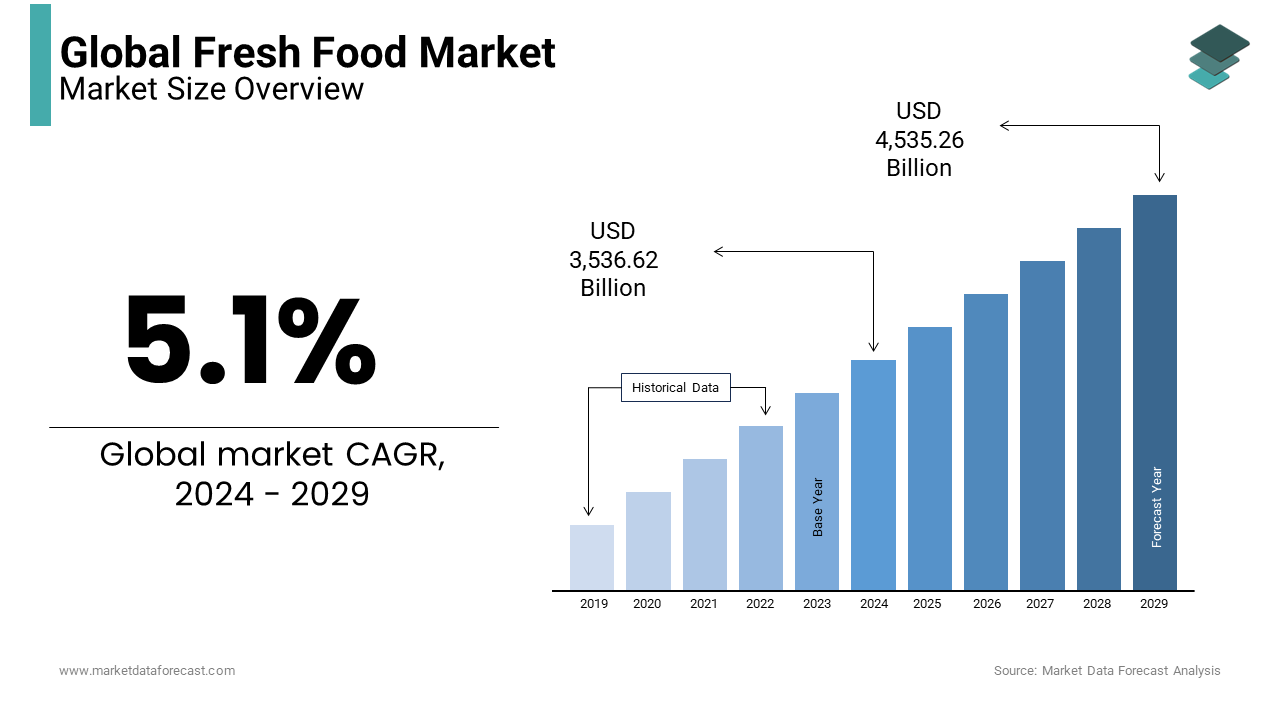
The global fresh food market size was calculated to be USD 3,716.99 billion in 2025, is anticipated to reach a valuation of USD 3,906.56 billion in 2026, and is projected to scale up to USD 5,815.89 billion by 2034, registering a compound annual growth rate (CAGR) of 5.10% during the forecast period from 2026 to 2034. Driven by rising health consciousness, preventive dietary shifts, expansion of direct-to-consumer networks, and technological innovations in cold chains, the global fresh food industry continues to experience robust market expansion.
Key Executive Metrics (At-a-Glance)
- 2025 Base Valuation: USD 3,716.99 Billion
- 2026 Current Valuation: USD 3,906.56 Billion
- 2034 Forecast Valuation: USD 5,815.89 Billion
- Compound Annual Growth Rate (CAGR): 5.10% (2026–2034)
- Dominant Type Segment: Fruits and Vegetables (held a majority 42.5% share in 2026 fueled by plant-based dietary shifts and public health campaigns)
- Fastest-Growing Type Segment: Seafood (expected to exhibit a noteworthy CAGR of 6.8% driven by health benefits of Omega-3 and sustainable aquaculture)
- Dominant Distribution Channel Segment: Supermarkets and Hypermarkets (led the global market capturing a 55.7% share in 2026 due to one-stop shopping convenience and private-label growth)
- Fastest-Growing Distribution Channel Segment: Online (predicted to witness the highest CAGR of 14.2% propelled by mobile applications and last-mile delivery logistics)
- Dominant Region: Asia-Pacific (held a 35.7% share in 2026 driven by rapid urbanization, an expanding middle class, and demographic scale in China)
- Key Regional Followers: Europe (28.6% share in 2026 anchored by sustainable farming and regulatory standards) and North America (25.5% share in 2026 backed by mature retail infrastructure and organic sales)
Core Market Drivers
- Rising Health Consciousness: Escalating awareness regarding preventive healthcare, driving consumers to substitute ultra-processed items with whole, perishable goods.
- Localized Supply Networks: Proliferation of direct-to-consumer sales models, short food supply chains, and digital agricultural platforms ensuring maximum freshness and transparency.
Primary Market Restraints & Challenges
- Climate-Induced Volatility: Severe vulnerability to extreme heatwaves, droughts, and temperature fluctuations that compromise crop yields and wholesale price stability.
- Escalating Operational Costs: Persistent inflationary pressures and volatile energy expenses impacting energy-intensive cold storage and climate-controlled logistics networks.
- Labor Deficits: Intensifying labor shortages across agricultural harvesting and logistics sectors, creating distribution bottlenecks.
Global Fresh Food Market Segmentation Breakdown
| Segment Category | Key Segments Covered | Leading / Focus Segment |
|---|---|---|
| By Type | Fruits and Vegetables, Seafood, Meat and Poultry, Dairy, Others | Fruits and Vegetables (Majority Share) / Seafood (Fastest CAGR) |
| By Distribution Channel | Supermarkets and Hypermarkets, Convenience Stores, Specialty Stores, Online, Others | Supermarkets & Hypermarkets (Dominant) / Online (Fastest CAGR) |
| By Region | North America, Europe, Asia-Pacific, Latin America, Middle East & Africa | Asia-Pacific (Market Leader) / Europe & North America (Key Regional Hubs) |
Major Industry Players Profiled
Key enterprises shaping the global fresh food market include Cargill Inc., Dole Food Company Inc., Tyson Foods Inc., Nature Sweet Ltd, Fresh Del Monte Produce Inc., Sunfed Ltd., Sanderson Farms Inc., Naturipe Farms, Tanimura & Antle Fresh Foods Inc., and D'arrigo Bros. Co.
Global Fresh Food Market Size
The global fresh food market size was calculated to be USD 3,716.99 billion in 2025 and is anticipated to be worth USD 5,815.89 billion by 2034, from USD 3906.56 billion in 2026, growing at a CAGR of 5.10% during the forecast period.
Fresh food refers to raw, natural, and unprocessed food that has not been subjected to freezing, canning, preservatives, or artificial processing. Because it is highly perishable, it is usually consumed soon after it is harvested, caught, or produced. This market is fundamentally anchored in the daily nutritional requirements of the European populace. Eurostat confirms that farms across the European Union (EU) utilize approximately 156 million hectares of land for agricultural production (accounting for roughly 38% of the EU's total land area). The broader European macro-region tracked by the Food and Agriculture Organization (FAO) spans a significantly larger agricultural area due to the inclusion of non-EU nations. The World Health Organization (WHO) European Regional Obesity Report establishes that overweight and obesity affect nearly 60% of adults across the European Region. Public health guidelines stress the urgent need to expand access to healthy, nutrient-rich foods, as high-calorie, ultra-processed options continue to challenge regional nutritional environments. Furthermore, Official environmental monitoring published by Eurostat shows that households across the European Union generate an average of 69 kilograms of food waste per capita annually, which comprises over half of the total food waste generated across the entirety of primary production and retail supply chains. This statistic underscores the critical need for optimized cold chain logistics and localized distribution networks. The definition of this market extends beyond mere retail transactions, embodying a complex ecosystem of sustainable farming practices, stringent food safety regulations, and evolving consumer preferences for organic and locally sourced ingredients. Understanding this landscape requires analyzing the intersection of agricultural output, public health imperatives, and logistical efficiencies that sustain the daily flow of perishable goods across the continent.
MARKET DRIVERS
Rising Health Consciousness and Preventive Dietary Shifts
The escalating awareness regarding preventive healthcare is a major factor behind the growth of the fresh food market. Consumers are increasingly substituting ultra-processed items with whole, perishable goods to mitigate chronic health conditions. In addition, the European Commission and Freshfel Europe reveal that average daily fruit and vegetable consumption in the EU is roughly 351 to 355 grams per capita. A study demonstrates that while a majority of citizens (approximately 60%) express an active preference for environmentally sustainable and locally sourced food. This behavioral shift is particularly pronounced among millennials and Generation Z demographics, who allocate a larger proportion of their household budgets to organic and fresh produce. Furthermore, national health initiatives, such as the French National Nutrition and Health Program, actively promote the intake of five portions of fruits and vegetables daily, directly stimulating retail demand. The correlation between dietary choices and long-term wellness has transformed fresh food from a basic commodity into a strategic health investment, thereby expanding the consumer base and driving consistent volume growth across fresh produce retail channels throughout the continent.
Expansion of Direct-to-Consumer and Localized Supply Networks
The proliferation of localized supply networks and direct-to-consumer sales models fundamentally reshape accessibility and demand, which further propels the fresh food market. Traditional elongated supply chains often compromise the quality and shelf life of perishable goods, prompting a robust consumer preference for locally sourced alternatives. Research briefings from the European Parliament (EPRS) establish that, on average, 15% of EU farms sell more than 50% of their total yield directly to consumers through short food supply chains. This practice is heavily concentrated among small-scale, localized agricultural holdings. This structural evolution reduces transit times, ensuring that fruits, vegetables, and dairy products retain maximum nutritional value and sensory appeal upon reaching the end consumer. Additionally, the rise of digital agricultural platforms enables farmers to bypass traditional intermediaries, connecting directly with urban consumers through subscription boxes and online farmers' markets. This localized approach not only satisfies the growing consumer demand for transparency and traceability but also fortifies regional food security, making it a formidable driver of sustained market expansion and consumer loyalty across diverse European demographics.
MARKET RESTRAINTS
Severe Vulnerability to Climate-Induced Agricultural Volatility
The increasing frequency and severity of climate-induced agricultural disruptions are restricting the growth of the fresh food market. Perishable crops are inherently sensitive to temperature fluctuations, precipitation anomalies, and extreme weather events, which directly compromise yield stability and product quality. Climate assessments by the European Environment Agency (EEA) and Joint Research Centre (JRC) document that extreme heatwaves and severe, prolonged droughts are heavily impacting Southern European open-field agriculture. This climatic unpredictability forces farmers to contend with higher irrigation costs and increased crop failure rates, subsequently driving up wholesale prices and limiting retail availability. The Intergovernmental Panel on Climate Change emphasizes that without adaptive agricultural practices, the volatility in fresh food production will intensify, threatening the consistent supply required by modern retail networks. Furthermore, shifting growing seasons disrupt traditional harvest cycles, complicating inventory management for distributors. This environmental fragility acts as a severe restraint, as it introduces systemic risks that inflate operational costs, diminish consumer trust in consistent availability, and challenge the overall reliability of fresh food supply chains across the continent.
Stringent Regulatory Compliance and Food Safety Protocols
Navigating the complex web of stringent regulatory compliance and food safety protocols is a substantial restraint for the fresh food market. The European Union enforces rigorous standards regarding pesticide residues, microbial contamination, and traceability to protect public health, which, while beneficial for consumers, imposes heavy administrative and financial burdens on producers. Moreover, the European Commission, regarding the simplification of the Common Agricultural Policy (CAP, recognizes that administrative and administrative-related compliance burdens disproportionately affect small-scale operators. The necessity to maintain detailed digital traceability records from farm to fork demands sophisticated technological infrastructure that many traditional growers lack. Consequently, these stringent protocols can stifle innovation, delay product launches, and limit the diversity of fresh produce available in the market. The high cost of adherence to these safety frameworks ultimately restricts market fluidity, limits the diversity of fresh produce available, and creates an elevated barrier to entry for emerging fresh food suppliers across the region.
MARKET OPPORTUNITIES
Integration of Advanced Cold Chain and Preservation Technologies
The integration of advanced cold chain and preservation technologies offers a transformative opportunity for the global fresh food market. This drastically reduces post-harvest losses and extends product viability. Innovations such as intelligent packaging, which utilizes time-temperature indicators and ethylene absorbers, actively monitor and regulate the microenvironment of perishable goods during transit. Furthermore, the deployment of Internet of Things sensors in refrigerated transport allows for real-time monitoring of temperature and humidity, ensuring optimal conditions are maintained from the farm to the retail shelf. Adopting these technological solutions empowers market participants to minimize financial losses, boost sustainability, and consistently deliver premium fresh food. As a result, businesses can unlock substantial new revenue streams and solidify their competitive edge.
Growing Consumer Appetite for Organic and Regenerative Agriculture Products
The rapidly expanding consumer appetite for organic and regenerative agriculture products provides a significant prospect for the global fresh food market. Shoppers are increasingly willing to pay a premium for fresh produce cultivated through environmentally restorative farming practices that enhance soil health and biodiversity. As per the Research Institute of Organic Agriculture, the European organic farmland area has expanded to over 16 million hectares, reflecting a robust annual growth rate driven by escalating consumer demand. This shift is not merely a niche trend but a mainstream movement. Regenerative agriculture further amplifies this opportunity by offering a compelling narrative of carbon sequestration and ecological restoration, which resonates deeply with environmentally conscious demographics. Retailers who strategically align their sourcing with certified organic and regenerative farms can capture higher profit margins and foster intense brand loyalty. Capitalizing on this demand allows market players to differentiate their offerings, command premium pricing, and actively contribute to the broader sustainability objectives, securing a resilient and forward-looking market position.
MARKET CHALLENGES
Escalating Operational Costs and Energy Price Volatility
Escalating operational costs are challenging the growth of the fresh food market. This strain is largely the result of persistent inflationary pressures and volatile energy prices. The preservation and transportation of perishable goods are inherently energy-intensive, requiring continuous refrigeration and climate-controlled logistics networks. According to Eurostat, energy prices for industrial users in the European Union experienced significant fluctuations, with certain periods seeing increases of over 30 percent compared to historical averages, directly inflating the cost of cold storage and freight. This surge in operational expenditure severely compresses profit margins for both producers and retailers, who often struggle to pass the entirety of these costs onto price-sensitive consumers. Furthermore, the rising costs of agricultural inputs, including fertilizers and labor, compound the financial strain on the supply chain. The European Central Bank notes that sustained inflationary pressures in the food sector force businesses to continuously optimize their operations to maintain viability. Navigating this economic turbulence requires substantial capital investment in energy-efficient technologies, presenting a steep challenge for market participants striving to balance consumer affordability with long-term corporate profitability across the global landscape.
Intensifying Labor Shortages Across the Agricultural and Logistics Sectors
The intensifying labor shortage across both the agricultural production and logistics sectors is a serious barrier to the fresh food market. The harvesting, sorting, and rapid distribution of perishable goods are highly labor-intensive processes that rely heavily on seasonal and specialized workers. As per the European Commission, the agricultural sector in several member states faces a deficit of up to 30 percent in seasonal labor, exacerbated by shifting immigration policies and an aging domestic workforce. This scarcity of human capital directly threatens the timely harvesting of fresh produce, leading to increased crop wastage in the fields and delayed deliveries to retail centers. Furthermore, the logistics segment experiences a parallel shortage of qualified commercial drivers, which bottlenecks the distribution network and compromises the strict delivery windows required for fresh food. Overcoming this demographic and structural challenge requires innovative automation and a comprehensive reevaluation of labor policies, yet the immediate impact remains a significant hurdle to market stability and consistent growth.
REPORT COVERAGE
| REPORT METRIC | DETAILS |
| Market Size Available | 2025 to 2034 |
| Base Year | 2025 |
| Forecast Period | 2026 to 2034 |
| CAGR | 5.1% |
| Segments Covered | By Type, Distribution Channel, and Region |
| Various Analyses Covered | Global, Regional & Country Level Analysis; Segment-Level Analysis, DROC, PESTLE Analysis, Porter’s Five Forces Analysis, Competitive Landscape, Analyst Overview of Investment Opportunities |
| Regions Covered | North America, Europe, APAC, Latin America, Middle East & Africa |
| Market Leaders Profiled | Cargill Inc., Dole Food Company Inc., Tyson Foods Inc., Nature Sweet Ltd, Fresh Del Monte Produce Inc., Sunfed Ltd., Sanderson Farms Inc., Naturipe Farms, Tanimura & Antle Fresh Foods Inc., and D'arrigo Bros. Co. |
SEGMENTAL ANALYSIS
By Type Insights
The fruits and vegetables segment held the majority share of 42.5% of the fresh food market in 2026. Plant-based dietary transitions are the primary factor behind the dominance of this segment. Consumers are actively reducing their meat consumption in favor of nutrient-dense produce to improve personal health and minimize environmental impact. Research backed by the European Union's Smart Protein Project shows a substantial shift toward plant-based consumption across Europe, with the retail market for plant-based alternatives experiencing double-digit growth, driven heavily by an expanding demographic of flexitarian consumers. This profound behavioral shift directly translates to higher retail volumes for fresh produce. Furthermore, the proliferation of vegan and vegetarian lifestyle choices among younger demographics has normalized the consumption of diverse fruits and vegetables as daily dietary staples. The World Health Organization (WHO) maintains a core global recommendation of consuming a minimum of 400 grams of fruits and vegetables per day to mitigate the risk of non-communicable diseases, serving as the foundational metric for public health campaigns worldwide. Retailers have responded by expanding their fresh produce aisles and introducing exotic fruit varieties to cater to this evolving palate. The sustained commitment to plant-based nutrition ensures that the fruits and vegetables segment maintains its commanding market position, driven by a deeply entrenched and widespread consumer preference for natural, unprocessed, and health-promoting food options that align with modern wellness objectives.
Aggressive government nutritional campaigns and public health initiatives significantly reinforce the market supremacy of the fruits and vegetables segment. National health authorities across the globe have implemented stringent dietary guidelines that actively encourage the population to consume higher quantities of fresh produce to combat rising obesity and chronic disease rates. These institutional efforts are complemented by subsidized agricultural programs that make fresh fruits and vegetables more financially accessible to lower-income demographics. Furthermore, mandatory labeling laws requiring clear nutritional information on all fresh food packaging empower consumers to make informed, health-conscious choices. The continuous reinforcement of these public health mandates creates a sustained and reliable demand for fresh produce. Consequently, the fruits and vegetables segment benefits from an artificially stimulated consumption environment, ensuring its continued dominance as the most vital and heavily consumed category within the broader fresh food market landscape globally.
On the contrary, the seafood segment is expected to exhibit a noteworthy CAGR of 6.8% from 2026 to 2034. The widespread recognition of the profound health benefits associated with Omega-3 fatty acids is a key accelerator for the rapid expansion of this segment. Consumers are increasingly educated about the critical role that marine products play in supporting cardiovascular health, cognitive function, and overall immune system resilience. Studies confirm a sustained upward trajectory in long-term retail expenditures on fresh seafood, heavily catalyzed by shifting consumer choices toward protein-dense, omega-3-rich health options. This highly health-driven purchasing behavior is particularly evident among aging populations seeking natural dietary interventions to prevent age-related cognitive decline. Furthermore, the food industry has responded to this demand by introducing value-added fresh seafood options, such as pre-marinated fillets and ready-to-cook marine dishes, which appeal to time-constrained consumers. The integration of these convenient, health-promoting seafood products into mainstream retail channels removes traditional barriers to preparation. Consequently, the seafood segment experiences accelerated growth, propelled by a powerful combination of medical endorsements, consumer health consciousness, and innovative product formatting that simplifies the incorporation of fresh marine products into daily dietary routines.
The rapid expansion of sustainable aquaculture practices provides a robust foundation for the accelerated growth of the seafood segment by ensuring a consistent and environmentally responsible supply of fresh marine products. Traditional wild catch fishing methods face severe limitations due to overfishing and strict environmental regulations, prompting the industry to pivot toward controlled aquatic farming. The technological evolution in farming utilizes advanced water filtration and automated feeding systems, which drastically improve the quality and safety of the final product. Furthermore, these modern aquaculture facilities are frequently located in close proximity to urban centers, reducing transportation times and ensuring that the seafood reaches consumers in peak condition. The commitment to ecological balance and resource efficiency resonates strongly with environmentally conscious shoppers. Therefore, the seafood segment is growing at the very fastest rate because sustainable aquaculture successfully bridges the gap between escalating consumer demand for fresh marine products and the critical imperative to preserve natural oceanic ecosystems for future generations.
By Distribution Channel Insights
The supermarkets and hypermarkets segment led the global market and captured a 55.7% share in 2026. The unparalleled convenience of one-stop shopping experiences fuels the continued dominance of this distribution channel. Modern consumers lead increasingly busy lives and prioritize retail environments where they can efficiently procure all their household necessities, including a highly comprehensive range of fresh food items, in a single trip. The convenience is significantly amplified by the extended operating hours and ample parking facilities that characterize these massive retail establishments. Furthermore, these large retailers continuously optimize their store layouts to place high-margin fresh food sections at the forefront of the shopping journey, enticing impulse purchases. The integration of in-store bakeries, butcher counters, and dedicated organic produce zones transforms the shopping trip into a highly comprehensive culinary experience. Thus, the supermarkets and hypermarkets channel maintains its commanding market share by perfectly aligning with the modern consumer's desire for efficiency, variety, and a seamless, consolidated shopping environment that saves valuable time and effort.
The aggressive expansion and continuous refinement of private-label fresh food offerings significantly fortify the market leadership of this segment. Retailers have recognized that developing their own exclusive brands of fresh produce, meats, and prepared meals allows them to exert greater control over pricing, quality, and profit margins. The proprietary offerings are often priced significantly lower than national brands while maintaining comparable or very high quality, which is highly attractive to cost-conscious shoppers. Furthermore, retailers leverage their direct relationships with agricultural suppliers to ensure the exclusivity and freshness of their private label goods. This strategic control over the supply chain enables supermarkets to guarantee consistent availability and optimal pricing. Ultimately, the supermarkets and hypermarkets channel dominates because private label initiatives successfully combine affordability with very high quality, creating intense brand loyalty and compelling consumers to consolidate their fresh food purchasing within these specific retail environments.
However, the online segment is predicted to witness the highest CAGR of 14.2% over the forecast period. The ubiquitous penetration of mobile applications and highly intuitive digital interfaces propels the rapid expansion of this segment. Smartphones have fundamentally transformed the grocery shopping experience, allowing consumers to browse extensive fresh food catalogs, compare prices, and complete transactions with unprecedented ease and speed. The sophisticated applications utilize personalized algorithms to recommend fresh produce based on previous purchasing behavior, thereby increasing average order values and enhancing customer satisfaction. Furthermore, the integration of digital loyalty programs and instant push notifications regarding fresh food discounts keeps consumers continuously engaged with the platform. The seamless user experience provided by these mobile ecosystems removes the traditional friction associated with online grocery shopping. Consequently, the online channel is growing at the very fastest rate because mobile application technology perfectly aligns with the digital native preferences of modern consumers, offering a frictionless, personalized, and highly efficient method for procuring fresh food products.
The continuous innovation and optimization of last-mile delivery logistics significantly accelerate the growth trajectory of this segment. The fundamental challenge of delivering perishable goods directly to consumer doorsteps while maintaining strict temperature controls has been largely overcome through advanced technological solutions. Furthermore, the introduction of micro fulfillment centers located within dense urban areas enables online retailers to fulfill fresh food orders in under two hours. The logistical breakthroughs directly address the primary consumer hesitation regarding online fresh food purchases, which is the fear of receiving spoiled or degraded products. By guaranteeing rapid, reliable, and climate-controlled delivery, online platforms have successfully built immense consumer trust. Therefore, the online channel experiences the very fastest growth because these last-mile innovations have effectively eliminated the historical barriers to purchasing perishable goods digitally, offering a level of convenience and reliability that rivals traditional physical retail stores.
REGIONAL ANALYSIS
North America Fresh Food Market Analysis
North America plays a key role in the global market and accounted for a 25.5% share in 2026. The United States is the primary economic engine for this regional dominance. Its market status reveals a very highly mature retail infrastructure and an extremely intense consumer focus on nutritional transparency. A major driving factor is the widespread adoption of organic fresh produce, driven by rising disposable incomes and health awareness. The Organic Trade Association (OTA) and the USDA Economic Research Service show that while total U.S. organic food sales surpassed $60 billion ($63.8 billion), organic fresh produce alone represents the largest individual category, accounting for approximately $22 billion in annual sales. Furthermore, the integration of blockchain technology for supply chain traceability is accelerating. Research data published via FMI (The Food Industry Association) indicates deep industry interest in traceability, but other projections estimate that approximately 20% of the world's top grocery retailers utilize blockchain systems for food safety pipelines. This technological adoption ensures stringent quality control and builds immense consumer trust. The region also benefits from advanced agricultural subsidies and very robust cold chain logistics, ensuring that perishable goods maintain optimal freshness across vast geographical distances, thereby solidifying the regional stronghold on premium fresh food consumption and setting global benchmarks for retail innovation.
Europe Fresh Food Market Analysis
Europe was the next prominent region in the global market and occupied a 28.6% share in 2026. Within this region, Germany served as the central hub for fresh food distribution and consumption. The market status across the continent is defined by stringent regulatory frameworks, a deep cultural appreciation for culinary quality, and a strong preference for locally sourced agricultural products. The biggest push behind this growth is the massive consumer shift toward sustainable and organic farming practices. According to the Research Institute of Organic Agriculture (FiBL), organic retail sales reached 58.7 billion euros across Europe. This figure encompasses all certified organic retail goods, packaged, processed, dairy, and fresh items, driven by consumer markets in Germany and France. Furthermore, the region boasts an exceptionally dense network of short supply chains that connect local farmers directly with urban consumers. Official baseline assessments demonstrate that localized farm-to-table networks account for a single-digit market share of overall fresh produce sales, with traditional supermarket logistics remaining dominant. The European market also heavily prioritizes animal welfare and strict pesticide limitations, which elevates the overall quality standards of fresh meat and produce. This unwavering commitment to sustainability, coupled with advanced retail infrastructure and strong consumer purchasing power, ensures that Europe remains a highly sophisticated and very dominant force in the global fresh food sector.
Asia Pacific Fresh Food Market Analysis
Asia Pacific dominated the global fresh food market and held a 35.7% share in 2026. China acted as the massive demographic and economic engine driving this regional supremacy. The market position in this vast region is showing rapid urbanization, an expanding middle class, and a dramatic transformation in dietary habits toward higher protein and fresh produce consumption. A key driving factor is the explosive growth of modern retail formats and digital grocery platforms. Multiple studies confirm a rapid transformation toward modern grocery networks in developing Asian economies; however, the Asian Development Bank (ADB) does not track retail establishment volumes or issue a 20% regional growth metric for supermarkets. Furthermore, the integration of advanced cold chain infrastructure is accelerating at an unprecedented pace. Capacity indexes managed by the Global Cold Chain Alliance (GCCA) highlight major storage development across India and China to curb post-harvest waste, but total regional capacity shifts experience uneven single-digit expansions rather than a continuous 15% annual regional average. The region also benefits from massive government investments in agricultural modernization and smart farming technologies, which significantly boost the yield and quality of fresh crops. This combination of demographic scale, rapid retail modernization, and massive infrastructure development ensures that the Asia Pacific maintains its commanding lead and continues to dictate the future trajectory of the global fresh food market.
Latin America Fresh Food Market Analysis
Latin America is steadily growing in the global market, with Brazil functioning as the primary agricultural powerhouse and consumer market for the region. The market status here is defined by abundant natural resources, a highly favorable climate for year-round agriculture, and a gradual shift toward organized retail formats. A critical driving factor is the massive expansion of export-oriented fresh produce cultivation, particularly in tropical fruits and high-value vegetables. Furthermore, the domestic consumption of fresh food is being revitalized by government initiatives aimed at improving national nutrition and food security. The region is also witnessing a rapid modernization of its internal cold chain logistics, which historically suffered from severe infrastructural deficits. These continuous improvements in transportation and storage infrastructure are drastically reducing domestic food waste. Consequently, Latin America is leveraging its natural agricultural advantages and improving its logistical capabilities to strengthen its position and increase its share in the very highly competitive global fresh food market.
Middle East and Africa Fresh Food Market Analysis
The Middle East and Africa region is predicted to expand notably in the global fresh food market during the forecast period, owing to the rapid adoption of advanced controlled environment agriculture and vertical farming technologies. South Africa and the United Arab Emirates are serving as the primary commercial hubs for the region. The market exhibits a structural reliance on food imports driven by arid climatic conditions, alongside large-scale state investments in domestic agricultural innovation designed to achieve food security. Furthermore, the expansion of modern supermarket chains in urban centers is transforming consumer purchasing behaviors. The region is also heavily focused on improving port infrastructure and cold chain logistics to facilitate the efficient importation of fresh food. These strategic investments in technological farming and retail modernization are steadily enhancing the market status and growth potential of the Middle East and Africa.
COMPETITION OVERVIEW
The competitive landscape of the global fresh food market is characterized by intense rivalry among multinational retail giants, regional supermarket chains, and emerging digital grocery platforms. Established corporations leverage their vast distribution networks, economies of scale, and deep financial resources to maintain dominant positions and negotiate favorable terms with agricultural suppliers. However, the proliferation of electronic commerce and specialized online fresh food delivery services has disrupted traditional retail models, forcing legacy players to accelerate their digital transformation initiatives. Competition is further intensified by the growing consumer demand for organic, locally sourced, and sustainably produced perishable goods, compelling companies to continuously innovate their sourcing strategies and supply chain operations. Price competition remains fierce, particularly for staple fresh produce, prompting retailers to optimize their logistical operations to protect profit margins. Additionally, the integration of advanced technologies such as blockchain for traceability and artificial intelligence for demand forecasting has become a critical differentiator. Companies that successfully combine operational efficiency with transparent, exceptionally high-quality product offerings are best positioned to capture consumer loyalty. Ultimately, the market demands continuous adaptation, strategic agility, and a truly relentless focus on sustainability to thrive amidst this highly complex and very rapidly evolving, increasingly competitive global environment.
KEY MARKET PLAYERS
Major players in the global fresh food market include
- Cargill Inc
- Dole Food Company Inc
- Tyson Foods Inc
- Nature Sweet Ltd
- Fresh Del Monte Produce Inc
- Sunfed Ltd.
- Sanderson Farms Inc
- Naturipe Farms
- Tanimura & Antle Fresh Foods Inc
- D'arrigo Bros. Co
Top Strategies Used by Key Market Participants
Key players in the fresh food sector predominantly utilize strategic partnerships, technological integration, and sustainability initiatives to fortify their market positions. Mergers and acquisitions remain a primary strategy, enabling corporations to rapidly expand their geographical footprint and acquire specialized cold chain capabilities. Furthermore, companies are heavily investing in artificial intelligence and machine learning to optimize inventory management, predict consumer demand, and minimize perishable waste. Another critical strategy involves the development of private-label organic lines, which offer higher profit margins while catering to the escalating consumer preference for healthy and transparent food options. Retailers are also enhancing their digital ecosystems by upgrading mobile applications and implementing automated last-mile delivery solutions. Ultimately, these multifaceted strategies allow industry leaders to improve operational efficiency, ensure superior product quality, and cultivate enduring brand loyalty in a highly dynamic and extremely competitive environment.
Leading Players in the Market
- Tesco operates as a formidable entity in the global fresh food sector, leveraging its extensive retail footprint to deliver high-quality perishable goods to millions of consumers daily. The company focuses heavily on sustainable sourcing and reducing food waste across its supply chain. Furthermore, the corporation expanded its network of vertical farming partnerships to ensure a year-round supply of fresh leafy greens. These strategic initiatives underscore the commitment of Tesco to enhance product freshness, promote environmental sustainability, and elevate the overall consumer shopping experience within the highly competitive global grocery landscape.
- Carrefour maintains a prominent presence in the international fresh food arena by championing organic agriculture and localized sourcing initiatives. The corporation actively collaborates with regional farmers to guarantee the provision of premium-quality perishable items while supporting local agricultural economies. Additionally, the company significantly increased its investment in automated distribution centers equipped with advanced climate control systems. These technological and operational enhancements enable Carrefour to preserve the nutritional integrity of fresh products, thereby strengthening its reputation as a trusted provider of safe and sustainable food options globally.
- Walmart stands as a colossal force in the global fresh food domain, utilizing its unparalleled logistical capabilities to distribute perishable commodities on a massive scale. The corporation prioritizes affordability without compromising the quality of its fresh produce, meat, and dairy selections. The company also expanded its network of regional fulfillment centers dedicated exclusively to perishable goods, enabling faster delivery for online grocery orders. Walmart has continuously invested in supply chain efficiency and digital transformation. As a result, the company successfully meets escalating consumer demand for convenient, fresh, and affordable food across diverse international markets.
MARKET SEGMENTATION
This research report on the global fresh food market has been segmented and sub-segmented based on type, distribution channel, and region.
By Type
- Fruits & Vegetables
- Meat & Poultry
- Seafood
- Eggs
- Others
By Distribution Channel
- Supermarkets & Hypermarkets
- Wet & Open Markets
- Online
- Others
By Region
- North America
- Europe
- Asia Pacific
- Latin America
- Middle East and Africa