- Product Description Description
- Table of Contents TOC
- List of Table & Figure LOT
- Get Free Sample PDF Sample PDF
Market Size, 2025
$6.65 BnMarket Estimate, 2026
$7.45 BnMarket Forecast, 2034
$18.45 BnCAGR, 2026–2034
12%Executive Summary: Gas Detectors Market
- Market Scope: Comprehensive global gas detectors market analysis covering system types, industrial applications, safety requirements, regional coverage, and mergers & acquisitions activity.
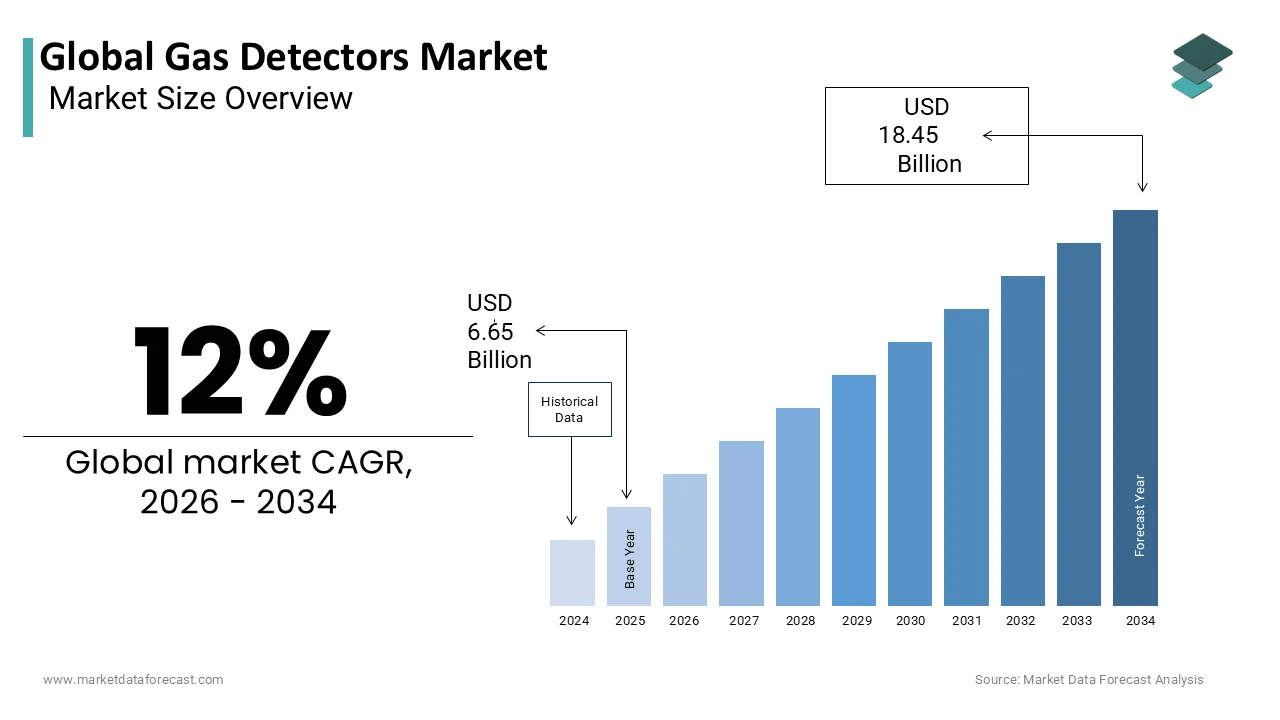
- Market Valuation: Valued at USD 6.65 billion (2025), estimated at USD 7.45 billion (2026), and projected to reach USD 18.45 billion by 2034, registering a robust CAGR of 12% (2026–2034).
- Primary Growth Drivers: Heightened industrial safety compliance and gas-detection requirements across oil & gas, chemicals, mining, industrial plants, refineries, wastewater treatment, automobiles, and household applications. Key recent industry developments include Teledyne Technologies completing the acquisition of 3M’s gas and flame detection business for approximately USD 230 million in 2025.
Key Market Segment Metrics (2026–2034)
| Category | Leading Segment (2025 Position) | Fastest-Growing Segment |
|---|---|---|
| By System | Fixed gas detectors (held a prominent market share supported by demand across gas extraction and processing facilities) | Advanced automated and portable gas detection systems |
| By Application | Oil & gas and chemicals (identified as essential end-user markets driven by process-safety mandates) | Oil & gas, chemicals, and industrial mining applications (driven by hazardous gas release management) |
| By Region / Country | North America and Europe (major industrial hubs supporting stringent safety frameworks) | Asia-Pacific (accelerating due to rapid industrialization and manufacturing expansion) |
Major Market Players & Market Structure
Market Structure: Highly competitive industrial safety equipment landscape featuring major global detection solution providers competing on sensor precision, technological innovation, portfolio acquisitions (such as Teledyne’s acquisition of 3M’s detection unit), and compliance standards.
Key Companies: Dräger AG & Co, Airtest Technologies, Honeywell International, Bacharach, GE Measurement & Control Solutions, BW Technologies, Mine Safety Appliances Company, Industrial Scientific Corporation, Siemens, RAE Systems, Sierra Monitor Corporation, Scott Health & Safety, Sensidyne, Tyco International, and Thermo Fisher Scientific.
 Download Free Sample Report
Global Gas Detectors Market Size
The global gas detectors market was worth USD 6.65 billion in 2025 and is anticipated to reach a valuation of USD 18.45 billion by 2034 from USD 7.45 billion in 2026. It is predicted to register a CAGR of 12% from 2026 to 2034.
The gas detectors market encompasses a critical array of safety instrumentation designed to identify and measure hazardous gases such as carbon monoxide, hydrogen sulfide, and combustible vapors in industrial and residential environments. These devices utilize various sensing technologies, including electrochemical, infrared, and semiconductor sensors, to prevent accidents and ensure regulatory compliance. According to the International Labour Organization, approximately 2.78 million work-related deaths occur annually globally, with occupational accidents and diseases accounting for a significant portion, underscoring the urgent need for reliable monitoring systems in high-risk sectors. According to the United States Occupational Safety and Health Administration, exposure to hazardous chemicals results in over 190,000 illnesses and 50,000 deaths each year in the United States alone, driving mandatory adoption of detection equipment in manufacturing and chemical processing facilities. These statistics highlight the indispensable role of gas detectors in safeguarding human life and maintaining operational continuity. The market is further influenced by stringent environmental regulations and the increasing integration of Internet of Things capabilities for real-time data analytics. As industries prioritize worker safety and environmental stewardship, the demand for advanced, connected, and highly sensitive gas detection solutions continues to rise across diverse geographic regions.
MARKET DRIVERS
Stringent Occupational Safety Regulations and Compliance Mandates
Strict occupational safety regulations and government mandates fuel the global gas detectors market expansion. Regulatory bodies enforce rigorous standards for air quality monitoring in confined spaces and hazardous work environments to minimize health risks and legal liabilities. According to the European Agency for Safety and Health at Work, over 40% of workers in the European Union are exposed to hazardous substances during their working hours, necessitating continuous monitoring and immediate alert systems. This high exposure rate compels companies to invest in compliant detection infrastructure to avoid hefty fines and operational shutdowns. Furthermore, according to the Mine Safety and Health Administration in the United States, the use of approved gas monitoring equipment is mandated in all underground coal mines to detect methane and carbon monoxide levels. These legal requirements create a non-negotiable baseline demand for both portable and fixed gas detectors. As regulations evolve to include lower permissible exposure limits for toxic gases, older equipment often fails to meet new sensitivity thresholds, prompting widespread upgrades. The imperative to maintain legal compliance and protect workforce health acts as a powerful catalyst for market growth, ensuring consistent procurement cycles regardless of economic fluctuations.
Rapid Industrialization and Expansion of Oil and Gas Infrastructure
The rapid expansion of oil and gas infrastructure and heavy industrial activities significantly propels the expansion of the global gas detectors market. Exploration, refining, and transportation processes involve handling volatile and toxic substances that require constant surveillance to prevent catastrophic leaks and explosions. According to the International Energy Agency, global oil demand is projected to reach 105 million barrels per day by 2030, leading to increased drilling and refining operations that inherently carry higher safety risks. This surge in activity expands the addressable market for fixed-point detectors and area monitors in refineries and pipelines. Additionally, according to the Chemical Safety Board, there were over 150 significant chemical incidents in the United States in recent years, many of which could have been mitigated with proper gas detection protocols. These incidents highlight the critical need for robust monitoring systems in chemical processing plants. As emerging economies in Asia and the Middle East expand their petrochemical capacities, the installation of comprehensive safety networks becomes standard practice. The correlation between industrial output and safety investment ensures that gas detectors remain essential capital expenditures for facility operators aiming to protect assets and personnel.
MARKET RESTRAINTS
High Maintenance Costs and Sensor Calibration Requirements
The substantial ongoing costs associated with maintenance, calibration, and sensor replacement significantly restrain the widespread adoption of gas detectors, particularly for small and medium-sized enterprises. Electrochemical and catalytic bead sensors have limited lifespans and require regular calibration to ensure accuracy, creating a recurring financial burden. According to the National Institute for Occupational Safety and Health, sensor drift can occur within months of installation, necessitating frequent testing to prevent false negatives or positives. This technical requirement forces organizations to allocate significant budgets for service contracts and specialized technician visits. Furthermore, according to the American Industrial Hygiene Association, improper calibration accounts for nearly 30% of detector failures in field operations, highlighting the complexity of maintenance. For companies operating multiple remote sites, the logistics of maintaining a large fleet of devices become prohibitively expensive. The high total cost of ownership discourages some entities from deploying comprehensive monitoring networks, leading them to rely on minimal compliance measures instead. This financial barrier limits market penetration in price-sensitive segments and slows the replacement cycle of outdated equipment. Until manufacturers develop self-calibrating or longer-lasting sensor technologies, maintenance costs will remain a persistent obstacle to market expansion.
Complexity of Integration with Legacy Industrial Systems
The technical complexity of integrating modern gas detection systems with legacy industrial control and safety infrastructure is a significant barrier to market growth. Many existing facilities operate with outdated supervisory control and data acquisition systems that lack compatibility with newer digital detectors and communication protocols. According to the International Society of Automation, interoperability issues cause delays in deployment and increase the risk of data silos, preventing real-time hazard analysis. Retrofitting old plants with advanced smart detectors often requires extensive rewiring and software upgrades, which are costly and disruptive to ongoing operations. Additionally, the lack of standardized communication interfaces among different manufacturers complicates the creation of unified safety networks. According to the Engineering News Record, integration challenges contribute to 20% of project delays in industrial automation upgrades. This friction discourages facility managers from adopting innovative solutions that offer enhanced connectivity and analytics. The fear of system incompatibility and potential operational downtime leads many organizations to stick with basic standalone units rather than investing in integrated ecosystems. Until industry-wide standards for connectivity are universally adopted, integration difficulties will continue to hinder the seamless expansion of advanced gas detection capabilities.
MARKET OPPORTUNITIES
Integration of IoT and Wireless Connectivity for Real-Time Monitoring
The integration of Internet of Things technology and wireless connectivity presents a prominent opportunity for the global gas detectors market. Smart detectors equipped with wireless modules enable real-time data transmission to central monitoring stations and mobile devices, facilitating immediate response to hazards. According to the Global System for Mobile Communications Association, industrial IoT connections are expected to exceed 1 billion globally by 2025, providing a robust infrastructure for connected safety devices. This connectivity allows for predictive maintenance alerts, reducing downtime and ensuring continuous operational readiness. Furthermore, cloud-based analytics platforms can process vast amounts of environmental data to identify trends and potential risk zones before incidents occur. According to the Industrial Internet Consortium, connected safety systems improve decision-making and resource allocation by providing actionable insights. Manufacturers can offer subscription-based software services alongside hardware, creating new revenue streams and strengthening customer relationships. As industries digitize their operations, the demand for smart, interconnected gas detectors will surge. This technological evolution opens avenues for comprehensive safety management solutions that go beyond simple detection, driving market growth through enhanced utility and efficiency.
Growing Demand in Residential and Commercial Building Safety
The increasing focus on indoor air quality and safety in residential and commercial buildings offers significant opportunities for the expansion of the gas detector market. Rising awareness of carbon monoxide poisoning and natural gas leaks has prompted homeowners and property managers to install detection devices as standard safety features. According to the Centers for Disease Control and Prevention, unintentional carbon monoxide poisoning causes over 400 deaths and 100,000 emergency room visits annually in the United States, indicating the critical need for residential monitoring. Building codes in many jurisdictions are now mandating the installation of CO detectors in new construction and renovations, driving volume sales. Additionally, the proliferation of smart home ecosystems allows gas detectors to integrate with lighting and ventilation systems for automated hazard mitigation. According to the Consumer Technology Association, smart home security devices are among the fastest-growing categories in consumer electronics. This trend encourages manufacturers to develop user-friendly, aesthetically pleasing detectors that appeal to residential consumers. As urbanization increases and living spaces become more sealed for energy efficiency, the risk of gas accumulation rises, further boosting demand. This shift from purely industrial applications to consumer markets diversifies the customer base and sustains long-term growth.
MARKET CHALLENGES
False Alarms and Lack of User Trust
The prevalence of false alarms due to sensor interference from non-target gases or environmental factors poses a significant challenge to user trust and market acceptance. Frequent false positives lead to alarm fatigue, causing users to ignore warnings or disable devices, which compromises safety. According to the National Fire Protection Association, nuisance alarms account for a significant portion of emergency service calls, straining resources and reducing public confidence in detection technology. In industrial settings, false alarms can trigger unnecessary shutdowns, resulting in substantial financial losses and operational disruptions. The complexity of distinguishing between similar molecular structures, such as different hydrocarbons, remains a technical hurdle for many sensor types. Users often lack the technical expertise to troubleshoot these issues, leading to frustration and brand switching. Manufacturers face pressure to improve selectivity and accuracy without significantly increasing costs. Until reliability improves, skepticism will hinder the adoption of advanced detectors in critical applications. Addressing this challenge requires continuous innovation in sensor materials and algorithm development to enhance specificity. Without greater reliability, the perceived value of gas detectors diminishes, limiting their effectiveness as true safety safeguards.
Shortage of Skilled Technicians for Installation and Maintenance
The acute shortage of skilled technicians capable of installing, calibrating, and maintaining complex gas detection systems challenges the effective deployment and longevity of these devices. Proper installation requires knowledge of airflow dynamics, sensor placement, and electrical safety standards, skills that are not widely available in the current workforce. According to the Associated Builders and Contractors, the construction and maintenance industry faces a labor gap of over 500,000 workers in North America, affecting the availability of qualified safety instrument technicians. This shortage leads to improper installations that compromise detection accuracy and increase the risk of system failure. Additionally, the lack of trained personnel delays routine maintenance and calibration, causing devices to drift out of specification. Companies struggle to find certified professionals who understand the nuances of different sensor technologies and regulatory requirements. This human resource constraint increases operational risks and costs for end users. Training programs have not kept pace with technological advancements, leaving a skills gap that hinders market efficiency. Until the workforce pipeline is strengthened through vocational training and certification initiatives, the lack of technical expertise will remain a persistent barrier to optimal market performance.
REPORT COVERAGE
| REPORT METRIC | DETAILS |
| Market Size Available | 2025 to 2034 |
| Base Year | 2025 |
| Forecast Period | 2026 to 2034 |
| Segments Covered | By Technology, Application, System, and Region. |
| Various Analyses Covered | Global, Regional, and Country-Level Analysis, Segment-Level Analysis, DROC, PESTLE Analysis, Porter’s Five Forces Analysis, Competitive Landscape, Analyst Overview of Investment Opportunities |
| Regions Covered | North America, Europe, APAC, Latin America, Middle East & Africa |
| Market Leaders Profiled | Dräger AG & Co, Airtest Technologies Inc., Honeywell International Inc., Bacharach Inc., GE Measurement & Control Solutions, BW Technologies Ltd, Mine Safety Appliances Company, Industrial Scientific Corporation, Siemens AG, RAE Systems Inc., Sierra Monitor Corporation, Scott Health & Safety, Sensidyne LP, Tyco International, and Thermo Fisher Scientific Inc. |
SEGMENTAL ANALYSIS
By Technology Insights
The electrochemical sensors segment held 25.9% of the global market share in 2025. The dominance of the electrochemical sensors segment in the global market is mainly attributed to their high sensitivity, specificity for toxic gases, and cost-effectiveness. The dominance of electrochemical sensors is further driven by their superior sensitivity and ability to detect low concentrations of toxic gases accurately. Occupational health regulations require precise monitoring of hazardous substances like carbon monoxide and hydrogen sulfide to prevent acute poisoning. According to the National Institute for Occupational Safety and Health, exposure to carbon monoxide causes over 400 deaths annually in the United States, necessitating detectors with low detection limits and high accuracy. Electrochemical sensors excel in this regard by providing linear output proportional to gas concentration, ensuring reliable alarms. According to the International Labour Organization, toxic gas exposure accounts for a significant portion of occupational illnesses, driving demand for dependable monitoring tools. These sensors consume minimal power, making them ideal for portable, battery-operated devices used by field workers. Their proven track record in life-saving applications fosters trust among safety managers and regulatory bodies. As industries prioritize worker protection, the reliance on electrochemical technology remains steadfast. The ability to customize sensors for specific target gases allows for tailored safety solutions across diverse sectors. This technical versatility and regulatory alignment sustain their market leadership despite the emergence of newer technologies.

On the other hand, the infrared sensors segment is anticipated to register the highest CAGR of 8.15 during the forecast period in the global gas detectors market owing to their immunity to sensor poisoning and ability to operate reliably in harsh industrial environments. Traditional catalytic sensors can be deactivated by silicones, lead, or sulfur compounds, leading to false negatives and safety risks. According to the Chemical Safety Board, sensor failure due to poisoning contributes to numerous undetected gas leaks in chemical processing plants. Infrared sensors, which operate on the principle of light absorption, are unaffected by these contaminants, ensuring continuous protection. This reliability is crucial in oil and gas refineries where exposure to poisons is common. Furthermore, according to the International Electrotechnical Commission, infrared sensors have a longer operational lifespan, reducing replacement frequency and maintenance downtime. Industries prioritizing uptime and safety integrity are shifting towards infrared technology for critical monitoring points. The ability to function in high humidity and extreme temperatures further expands their application scope. As operational efficiency becomes a key competitive advantage, the demand for robust, low-maintenance sensors rises. This technological superiority drives adoption in high-risk sectors, propelling the segment's growth trajectory. The reduced total cost of ownership over the device lifecycle also appeals to facility managers seeking sustainable safety solutions.
By Application Insights
The oil & gas segment captured 41.4% of the global market share in 2025. The dominance of the oil & gas segment in the global market is mainly driven by the inherent presence of flammable and toxic gases throughout the exploration, production, and refining processes. The dominance of the Oil & Gas segment is further driven by the high risk of flammable gas leaks and the potential for catastrophic explosions in extraction and processing facilities. Methane and other hydrocarbons are prevalent in drilling sites, pipelines, and refineries, requiring constant monitoring. According to the United States Pipeline and Hazardous Materials Safety Administration, thousands of pipeline incidents occur annually, many involving gas releases that pose significant safety and environmental risks. This high incidence rate mandates the installation of comprehensive fixed and portable detection networks. Furthermore, according to the International Association of Oil & Gas Producers, process safety management relies heavily on real-time gas monitoring to prevent major accident hazards. Facilities must adhere to strict safety integrity levels, driving the adoption of high-reliability sensors. The complexity of offshore platforms and remote drilling sites further increases the need for robust, wireless-capable detectors. Any failure in detection can lead to massive financial losses and reputational damage. Consequently, oil and gas companies invest heavily in state-of-the-art detection technologies to mitigate these risks. This unwavering commitment to safety ensures that the sector remains the largest consumer of gas detection equipment globally.
On the other hand, the healthcare segment is expected to grow at the fastest CAGR of 7.055 during the forecast period owing to the increasing use of medical gases and sterilization agents that require precise monitoring for safety. Hospitals rely on gases such as oxygen, nitrous oxide, and medical air for patient care, while sterilization processes often involve ethylene oxide or hydrogen peroxide vapors. According to the World Health Organization, healthcare-associated infections affect millions of patients annually, driving the use of rigorous sterilization protocols that emit hazardous byproducts. Detecting leaks of these gases is critical to prevent fire hazards and toxic exposure to staff and patients. Additionally, according to the Centers for Disease Control and Prevention, the risks of anesthetic gas exposure to operating room personnel necessitate effective scavenging and monitoring systems. As surgical volumes increase and healthcare facilities expand, the demand for specialized gas detectors rises. Modern hospitals are integrating these detectors into building management systems for centralized monitoring. The focus on patient safety and occupational health drives the adoption of advanced sensing technologies in clinical environments. This trend is further supported by accreditation standards that require regular testing and maintenance of medical gas systems. Consequently, the healthcare sector emerges as a fast-growing market for specialized gas detection solutions.
By System Insights
The fixed gas detectors segment accounted for 56.5% of the global market share in 2025. The dominance of fixed segment in the global market is primarily driven by their role in continuous area monitoring in industrial facilities and their capability for continuous area monitoring and seamless integration with process safety systems. Industrial facilities such as refineries and chemical plants require constant surveillance of potential leak sources to prevent accidents. According to the Center for Chemical Process Safety, effective layers of protection analysis rely on fixed detectors to initiate automatic shutdowns or ventilation systems upon gas detection. This integration minimizes human error and response time, enhancing overall plant safety. Furthermore, according to the International Society of Automation, fixed systems provide comprehensive coverage of large areas, ensuring that no hazardous zone is left unmonitored. These detectors are hardwired into control rooms, allowing central operators to monitor conditions in real time. The reliability and stability of fixed installations make them the preferred choice for critical infrastructure. Regulatory mandates often require fixed monitoring in high-risk zones, driving consistent demand. As industrial automation advances, fixed detectors are becoming smarter, offering diagnostic data and predictive maintenance features. This evolution enhances their value proposition, sustaining their market leadership. The inability of portable devices to provide continuous coverage ensures that fixed systems remain the backbone of industrial gas safety strategies.
On the other hand, the portable gas detectors segment is estimated to record a prominent CAGR of 8.1% over the forecast period in the global market owing to the critical need for personal protection when workers enter confined spaces or perform maintenance tasks. Confined spaces such as tanks, sewers, and silos often contain unknown or fluctuating gas concentrations that pose immediate threats. According to the Occupational Safety and Health Administration, confined space entries result in numerous fatalities annually, many due to atmospheric hazards. Mandatory safety protocols require workers to carry portable multi-gas detectors to monitor oxygen, combustibles, and toxics before and during entry. This requirement drives high-volume sales of personal monitoring devices. Furthermore, according to the National Institute for Occupational Safety and Health, the importance of real-time feedback for workers in dynamic environments is paramount. Portable detectors provide immediate alerts, allowing individuals to evacuate before exposure reaches dangerous levels. The versatility of these devices allows them to be used across various industries, from construction to utilities. As safety culture improves, the use of personal monitors becomes standard practice for all field personnel. This widespread adoption for individual safety ensures robust growth for the portable segment.
COUNTRY LEVEL ANALYSIS
North America Gas Detectors Market Analysis
North America dominated the market by capturing the leading share of the global market in 2025 and is likely to maintain steady market expansion over the next few years due to the strong regulatory enforcement and a mature industrial base, stringent occupational safety regulations and a mature industrial base. The United States and Canada have well-established safety cultures and rigorous enforcement mechanisms. According to the Occupational Safety and Health Administration in the United States, strict permissible exposure limits for hazardous gases are enforced, mandating continuous monitoring in many industries. This regulatory framework drives consistent demand for both fixed and portable detectors. The region is home to major oil and gas producers, particularly in the Gulf of Mexico and shale regions, which require extensive safety infrastructure. According to the American Petroleum Institute, best practices for gas detection are promoted in upstream and downstream operations. Additionally, the high prevalence of industrial automation in North America facilitates the integration of smart gas detectors into broader safety systems. The presence of key market players and advanced research institutions fosters innovation in sensor technology. High labor costs encourage the adoption of automated and reliable detection systems to minimize downtime. The region also leads in the adoption of wireless and IoT-enabled detectors for real-time data analytics. Strong enforcement of environmental regulations further boosts demand for emission monitoring devices. These factors combine to make North America a stable and technologically advanced market for gas detection solutions.
Europe Gas Detectors Market Analysis
Europe is expected to experience steady and highly compliant market growth over the next few years, driven by rigorous green initiatives and industrial modernization. Europe represents a mature and highly regulated market for gas detectors, characterized by strict safety standards and environmental directives. The European Union implements comprehensive legislation such as the ATEX directive and the Industrial Emissions Directive, which mandate rigorous gas monitoring in hazardous areas. According to the European Agency for Safety and Health at Work, occupational safety is a top priority, driving widespread adoption of detection technologies across member states. The region has a strong chemical and pharmaceutical industry, particularly in Germany and Switzerland, which requires precise monitoring of toxic substances. The push for reducing greenhouse gas emissions has increased the demand for methane leak detection systems in the energy sector. Europe is also a leader in developing innovative sensor technologies, with many research initiatives focused on improving accuracy and miniaturization. The aging industrial infrastructure in some countries necessitates retrofitting with modern detection systems, creating replacement demand. Strict labor laws and strong unions ensure that worker safety protections are rigorously enforced. The region’s commitment to sustainability and digitalization supports the growth of smart, connected gas detectors. These regulatory and industrial dynamics ensure steady market growth and high adoption rates for advanced safety solutions.
Asia-Pacific Gas Detectors Market Analysis
Asia-Pacific is projected to experience rapid, double-digit growth and emerge as the dominant regional engine over the next few years, driven by aggressive industrialization and expanding manufacturing hubs. Asia-Pacific is the fastest-growing region in the gas detectors market, with a projected compound annual growth rate of 8.2%, driven by rapid industrialization, urbanization, and increasing safety awareness. Countries like China, India, and South Korea are expanding their manufacturing, oil and gas, and mining sectors, creating substantial demand for safety equipment. According to the International Labour Organization, occupational accidents remain a significant challenge in the region, prompting governments to strengthen safety regulations. China’s Made in China 2025 initiative emphasizes smart manufacturing, which includes integrated safety systems. India’s growing chemical and petrochemical industries are adopting international safety standards to compete globally. The region’s large workforce and expanding industrial base drive high-volume sales of portable detectors for personal protection. Increasing foreign investment in infrastructure projects further boosts demand for fixed monitoring systems. Government initiatives to improve workplace safety, such as India’s Factories Act amendments, are raising compliance levels. The rising middle class and urbanization also drive demand for residential gas detectors, particularly in densely populated cities. While price sensitivity remains a factor, the shift towards quality and reliability is gaining momentum. The presence of local manufacturers is increasing competition and lowering costs, making detectors more accessible. These dynamics position Asia-Pacific as a key growth engine for the global market.
Latin America Gas Detectors Market Analysis
Latin America is likely to show moderate and gradual market advancement over the next few years, driven by essential energy modernization and infrastructure investments. Latin America presents an emerging market for gas detectors, driven by its significant oil and gas reserves and growing industrial activities. Brazil and Mexico are the primary contributors, with substantial investments in energy exploration and processing. According to the Pan American Health Organization, the need for improved occupational health standards in the region is evident, driving gradual adoption of safety technologies. State-owned oil companies like Petrobras enforce strict safety protocols, requiring advanced gas detection systems in offshore and onshore facilities. The mining sector in Chile and Peru also contributes to demand, given the risks of toxic gas exposure in underground operations. Economic volatility can impact capital expenditure, but safety remains a non-negotiable priority for multinational operators. The region is seeing increased adoption of portable detectors for contractor and maintenance work. Regulatory frameworks are evolving, with countries aligning more closely with international standards to attract foreign investment. The growth of the manufacturing sector in Mexico, driven by nearshoring trends, is boosting demand for industrial safety equipment. Local distribution networks are expanding to reach remote industrial sites. While challenges related to budget constraints exist, the imperative to protect workers and assets ensures steady market growth. The focus on modernizing infrastructure and improving safety culture supports long-term expansion.
Middle East and Africa Gas Detectors Market Analysis
The Middle East and Africa region is expected to achieve sustained industrial growth over the next few years, propelled by massive energy infrastructure projects and stringent national safety visions. The Middle East and Africa region holds a substantial share of 31.4% in 2025 in the Gas Detectors Market, primarily driven by the vast oil and gas industry in the Gulf Cooperation Council countries. Saudi Arabia, the United Arab Emirates, and Qatar are major investors in safety infrastructure to protect their critical energy assets. According to the International Energy Agency, the Middle East holds a significant portion of global oil reserves, necessitating robust monitoring systems. National oil companies adhere to international safety standards, driving demand for high-quality fixed and portable detectors. The region’s harsh environmental conditions require rugged and reliable equipment, favoring advanced technologies like infrared sensors. Africa’s mining sector, particularly in South Africa and Ghana, also contributes to demand due to the risks of methane and carbon monoxide in underground mines. The African Union promotes industrial safety initiatives to reduce accident rates. Infrastructure development projects across the continent are increasing the need for construction site safety monitoring. While regulatory enforcement varies, multinational operators set high benchmarks for safety compliance. The region is increasingly adopting digital safety solutions to enhance operational efficiency. Government visions like Saudi Vision 2030 emphasize industrial diversification and safety, supporting market growth. The combination of resource wealth and safety imperatives ensures a strong and sustained demand for gas detection technologies in this region.
COMPETITIVE LANDSCAPE
The competition in the Gas Detectors Market is characterized by the presence of established multinational corporations and specialized niche manufacturers who compete on technology and reliability. Major companies dominate the industrial segment with advanced fixed and portable systems designed for hazardous environments. They differentiate themselves through superior sensor accuracy, rugged durability, and integrated software solutions that streamline compliance reporting. Smaller players focus on specific niches such as residential carbon monoxide detectors or specialized medical gas monitors, offering cost-effective or application-specific value propositions. Competitive dynamics are driven by continuous innovation in sensor longevity and power efficiency, as well as the integration of digital platforms for data analytics. Price competition is moderate in the high-end industrial segment where safety certification is paramount but intense in the consumer market where affordability drives purchasing decisions. Companies also compete on after-sales service quality, offering rapid calibration and repair services to build institutional loyalty. The entry of new technologies like laser-based detection challenges incumbents to accelerate research and development cycles. Strategic acquisitions and partnerships are common tactics used to expand product portfolios and geographic reach. This dynamic environment encourages constant improvement and ensures that customers benefit from increasingly sophisticated and reliable gas detection solutions tailored to diverse safety needs.
KEY MARKET PLAYERS
Some of the companies that are playing a dominant role in the Global Gas Detectors Market include:
- Dräger AG & Co.
- Airtest Technologies Inc.
- Honeywell International Inc.
- Bacharach Inc.
- GE Measurement & Control Solutions
- BW Technologies Ltd.
- Mine Safety Appliances Company
- Industrial Scientific Corporation
- Siemens AG
- RAE Systems Inc.
- Sierra Monitor Corporation
- Scott Health & Safety
- Sensidyne LP
- Tyco International
- Thermo Fisher Scientific Inc.
TOP LEADING PLAYERS IN THE MARKET
- Honeywell International Inc maintains a robust presence in the Gas Detectors Market through its comprehensive portfolio of portable and fixed safety solutions. The company focuses on delivering high-reliability sensors for toxic and combustible gases across industrial sectors. Recent initiatives include the launch of connected gas detection platforms that integrate with cloud-based analytics for real-time monitoring. Honeywell collaborates with global safety organizations to enhance training programs for emergency responders. Their commitment to innovation drives the development of miniaturized sensors with extended battery life. By expanding service networks and offering predictive maintenance tools, Honeywell ensures operational continuity for clients. These strategic efforts reinforce their reputation for technological leadership and strengthen their competitive position in the evolving industrial safety landscape worldwide.
- MSA Safety Incorporated contributes significantly to the market by providing advanced personal protective equipment and gas detection instruments designed for harsh environments. The company emphasizes durability and user-centric design to ensure worker safety in critical applications. MSA has recently strengthened its market position by introducing smart helmet-integrated gas detectors that offer hands-free monitoring capabilities. These innovations address the need for seamless safety integration in dynamic work zones. The company actively participates in industry forums to share best practices on confined space entry. Their focus on digital connectivity allows for centralized fleet management and compliance reporting. These actions enhance customer loyalty and drive sustained growth by addressing complex safety challenges in oil and gas and mining sectors.
- Drägerwerk AG & Co. KGaA plays a pivotal role in the market by offering specialized medical and industrial gas detection technologies. The company is dedicated to protecting life through precise sensing solutions and comprehensive service support. Dräger has recently expanded its manufacturing capabilities in Asia to improve supply chain resilience and reduce delivery times. This localization strategy ensures faster access to critical safety equipment for growing markets. The company alsointroduces eco-friendlyy sensor technologies that align with global sustainability goals. Dräger partners with local distributors to provide tailored technical assistance and calibration services. Their commitment to quality and rapid response makes them a preferred choice for emergency services and industrial facilities. These comprehensive efforts solidify Dräger’s position as a key innovator driving accessibility and reliability in the regional gas detector market.
TOP STRATEGIES USED BY KEY MARKET PARTICIPANTS
Key players in the Gas Detectors Market employ several strategic approaches to strengthen their competitive standing and expand their reach. One primary strategy involves continuous product innovation focused on miniaturization and wireless connectivity to enhance portability and data integration. Companies are incorporating Internet of Things capabilities into devices to enable real-time remote monitoring and predictive maintenance. Another critical strategy is the expansion of global service and calibration networks to ensure high customer retention and regulatory compliance. Providers offer comprehensive training programs and technical support to help users maximize device lifespan and accuracy. Strategic partnerships with industrial automation firms also play a vital role in integrating gas detection into broader safety management systems. Additionally, firms are focusing on developing ruggedized devices for extreme environments to differentiate their offerings. By combining technological advancement with robust service ecosystems and strategic alliances, market participants create long-term value and maintain leadership positions in this highly regulated sector.
GLOBAL GAS DETECTORS MARKET NEWS
- In 2025, Teledyne Technologies Inc. completed the acquisition of 3M’s gas and flame detection business for around USD 230 million. Simtronics, Gas Measurement Instruments, Oldham, Detcon, and select Scott Safety Products are part of this gas and flame detection business of 3M.
- Gas Measurement Instruments (GMI) 2019 announced the improvements in their PS200 multi-gas detection instrument, which now includes some exciting features like collecting all relevant calibration and session information for over six months and the new quick-press field calibration mode that can simplify the current field calibration method.
MARKET SEGMENTATION
This research report on the global gas detectors market is segmented and sub-segmented into the following categories:
By Technology
- Electrochemical
- Infrared
- Metal Oxide Semiconductor (MOS)
- Catalytic
- Zirconia
- Photoionization Detection (PID)
- Paramagnetic
- Laser
- Others
By Application
- Oil & Gas
- Chemicals
- Buildings & Construction
- Food & Beverages
- Healthcare
- Mining
- Others
By System
- Fixed
- Portable
By Country
- North America
- Europe
- Asia Pacific
- Latin America
- The Middle East and Africa