- Product Description Description
- Table of Contents TOC
- List of Table & Figure LOT
- Get Free Sample PDF Sample PDF
Market Size, 2025
$816.52 BnMarket Estimate, 2026
$860.61 BnMarket Forecast, 2034
$1311 BnCAGR, 2026–2034
5.40%Executive Summary: Global Geotourism Market
- Market Scope: Comprehensive global geotourism market analysis covering tourism types, accommodation categories, demographic profiles, and regional leadership frameworks for geological and heritage-based travel worldwide.
- Market Valuation: Valued at USD 816.52 billion (2025), estimated at USD 860.61 billion (2026), and projected to reach USD 1311 billion by 2034, expanding at a steady CAGR of 5.40% (2026–2034).
- Primary Growth Drivers: Rising consumer demand for authentic, educational travel experiences emphasizing geological heritage and cultural authenticity. Additionally, UNESCO Global Geopark designations stimulate infrastructure investment and community training, turning geological sites into viable assets while enforcing conservation.
Key Market Segment Metrics (2026–2034)
| Category | Leading Segment (2025 Position) | Fastest-Growing Segment |
|---|---|---|
| By Tourism Type | Geological parks and sites segment (dominated with a 37.4% share, backed by international recognition) | Indigenous cultural experiences segment (anticipated to witness the fastest CAGR of 14.9%) |
| By Accommodation Type | Homestays segment (led the market with a 33.7% share due to community immersion alignment) | Eco-lodges segment (expected to grow at the fastest CAGR of 12.4%) |
| By Demographic Profile | Travelers aged 26 to 35 years (held the largest market share of 29.1% in 2025) | Above 55 years segment (projected to be the fastest-growing demographic group) |
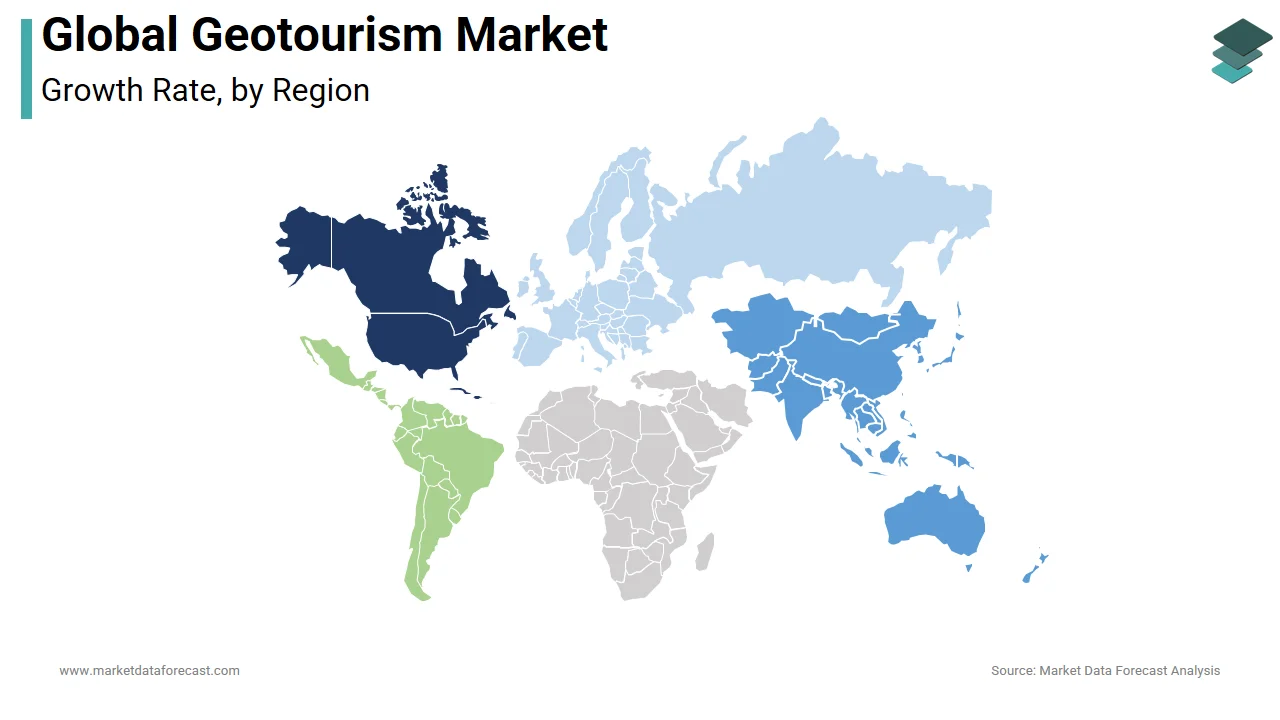
| By Region / Country | Europe (commanded the largest share at 35% due to dense UNESCO Geoparks and infrastructure) | Expanding sustainable geotourism hubs across Asia-Pacific and the Americas |
Major Market Players & Market Structure
Market Structure: Highly collaborative global exploration and sustainable travel ecosystem driven by indigenous community partnerships, sustainability certifications, and digital platform features (such as TripAdvisor’s sustainable features and Airbnb’s virtual geological tours).
Key Companies: National Geographic, Earthwatch, Geotours, Adventure Life, GeoEx, Explorandes, Quark Expeditions, Geotourism Development, Laguna del Maule, Global Geoparks, Australian Geoparks, Geological Society, European Geoparks, Japanese Geoparks, Turismo Chile, GSSA (Geological Society of South Africa), and GeoTours Belize.
Global Geotourism Market Size
The global geotourism market was valued at USD 816.52 billion in 2025, is estimated to reach USD 860.61 billion in 2026, and is projected to reach USD 1311 billion by 2034, growing at a CAGR of 5.40% from 2026 to 2034.
Geotourism is a form of sustainable travel that emphasizes the geographical character of a destination, including its environment, culture, heritage, and aesthetics, while fostering stewardship and benefiting local communities. Unlike conventional tourism geotourism prioritizes conservation of natural landscapes, geological formations, and indigenous traditions through low-impact visitor engagement and community-led interpretation. As per the National Geographic Society, geotourism is defined by its commitment to place based authenticity and ecological integrity numerous globally recognized geotourism destinations certified under UNESCO Global Geoparks as of twenty twenty three. According to sources, millions of travelers annually visit sites of geological significance such as volcanic terrains, fossil beds, and glacial valleys, with a portion citing educational enrichment as their primary motivation. As per the World Tourism Organization, a portion of national tourism boards in Europe and Latin America now integrate geotourism principles into destination branding. This paradigm shift reflects a global traveler preference for meaningful immersive experiences that preserve rather than exploit the cultural and physical identity of a place.
MARKET DRIVERS
Rising Demand for Authentic and Educational Travel Experiences
Modern travelers increasingly reject mass tourism in favor of immersive place-based journeys that offer intellectual enrichment and cultural authenticity, driving the growth of the geotourism market. According to the Adventure Travel Trade Association, a portion of global travelers aged twenty-five to forty-five prioritize learning about local geology, history, and traditions when selecting destinations. As per the United Nations Educational, Scientific, and Cultural Organization, visits to its Global Geoparks increased. Educational institutions are also formalizing demand. Social media amplifies awareness. Travelers now seek guided hikes, fossil digs, and indigenous storytelling sessions, not just scenic views. This experiential shift transforms geotourism from niche interest to mainstream preference, particularly among millennials and Gen Z who valupurpose-drivenen travel and environmental responsibility.
UNESCO Global Geopark Designation Stimulates Infrastructure and Investment
The formal recognition of geological sites as UNESCO Global Geoparks is another key factor propelling the expansion of the geotourism market. It drives public and private investment in sustainable infrastructure conservation and community training, which enhances geotourism viability. According to UNESCO as of 2023, there are 95 designated geoparks across forty-four countries, with each receiving technical support and international branding to attract responsible visitors. Furthermore, the Dong Van Karst Plateau Geopark was recognized by UNESCO in October 2010. By 2011, tourism revenue for the entire province of Ha Giang, which includes the Geopark area, was 300 billion VND. This indicates a significant boost in tourism. National governments also respond with policy support, with China allocating funds for geopark development and community training. This institutional endorsement transforms geological heritage into economically viable assets while enforcing conservation standards and equitable benefit sharing with local populations.
MARKET RESTRAINTS
Lack of Standardized Certification and Greenwashing Affects Credibility
The absence of a globally enforceable certification framework restrains the rise of the geotourism market. It allows operators to falsely claim sustainability or cultural stewardship, eroding consumer trust and diluting the concept’s integrity. According to sources, a smaller share of businesses marketing themselves as geotourism providers met sustainability criteria. Social media influencers frequently promote geologically sensitive sites like Iceland’s Fjaðrárgljúfur canyon without disclosing conservation guidelines, leading to erosion and overcrowding, as noted by the Icelandic Environment Agency. This misrepresentation confuses travelers and disadvantages legitimate operators who invest in conservation training and revenue sharing. So, geotourism risks becoming a marketing buzzword rather than a conservation-driven movement until a mandatory global standard with third-party verification is adopted.
Infrastructure Deficits in Remote Geological Sites Limit Accessibility
Many of the world’s most significant geological formations are located in remote or underdeveloped regions and are lacking basic tourism infrastructure, which constrains visitor volume and economic return for local communities and thereby slowing down the expansion of the geotourism market. According to the World Bank, a portion of UNESCO Global Geoparks are situated in rural or mountainous areas with limited road access, sanitation, or digital connectivity. Even in developed nations found that a share of proposed geotourism sites lacked interpretive signage or trained local guides. Mobile network coverage is also sparse. These deficits deter mainstream travelers and force operators to subsidize logistics, reducing profitability and sustainability. Investment in low-impact infrastructure remains an important barrier to scaling responsible geotourism.
MARKET OPPORTUNITIES
Integration with Indigenous Knowledge Systems Creates Differentiated Cultural Offerings
Collaborative geotourism models that embed indigenous geological knowledge, storytelling, and stewardship practices offer travelers unique culturally rooted experiences that cannot be replicated elsewhere, which are a major driver of new opportunities for the growth of the geotourism market. According to the International Indigenous Tourism Network, a portion of global geotourism destinations partner with native communities to co-design interpretive programs with jointly managed by custodians. These models transform geological sites from scenic backdrops into living cultural landscapes, fostering deeper engagement and ethical tourism. Indigenous co-stewardship becomes the ultimate value differentiator as travelers seek authenticity beyond photo ops.
Digital Interpretation and Augmented Reality Enhance Geological Storytelling
The deployment of mobile apps, augmented reality, and geospatial storytelling tools allows visitors to visualize geological processes in real time by transforming passive sightseeing into interactive earth science education, which further opens potential opportunities for the expansion of the geotourism market. According to studies, a portion of geoparks offer AR-enabled mobile guides that overlay tectonic shifts fossil formation, or glacial movement onto physical landscapes. Startups have partnered with institutions to create gamified learning modules where users collect virtual rock samples and unlock geological timelines. Gen Z and millennial travelers demand tech-enhanced but meaningful experiences. AR and mobile storytelling bridge scientific complexity with accessible immersive engagement. This makes geology not just visible but also emotionally resonant.
MARKET CHALLENGES
Overtourism in Geologically Fragile Sites Accelerates Environmental Degradation
The rising popularity of geotourism paradoxically threatens the very landscapes it seeks to preserve. Unmanaged visitor influx erodes trails, tramples fossil beds, and disrupts endemic ecosystems, which in turn challenges the growth of the geotourism market. Even low-impact activities like drone photography disturb nesting birds in coastal geoparks, with the UK National Trust pointing out a decline in cliff nesting species near popular sites. Local communities often lack enforcement capacity, with only a portion of geoparks employing full-time rangers, according to UNESCO. Geotourism risks becoming an agent of ecological harm rather than conservation. This is without dynamic visitor management and carrying capacity modeling.
Community Benefit Leakage Due to External Operator Dominance
A significant portion of revenue often flows to external tour operators, hotels, and transport companies, leaving host communities with minimal economic return and thus hampering the expansion of the geotourism market. According to the United Nations, a smaller share of geotourism spending in Latin American and Southeast Asian geoparks remained within local economies. Digital platforms further exacerbate leakage by enabling global booking without revenue-sharing mechanisms. As per sources, fewer geotourism jobs in developing nations offer formal contracts or benefits. This economic disconnect weakens the core ethos of geotourism and fuels community resentment. Geotourism will struggle to deliver equitable development until transparent revenue models and direct booking platforms, and local ownership mandates are enforced.
REPORT COVERAGE
| REPORT METRIC | DETAILS |
| Market Size Available | 2025 to 2034 |
| Base Year | 2025 |
| Forecast Period | 2026 to 2034 |
| Segments Covered | By Tourism, Accommodation, Age Group, and Region. |
| Various Analyses Covered | Global, Regional and Country-Level Analysis, Segment-Level Analysis, Drivers, Restraints, Opportunities, Challenges; PESTLE Analysis; Porter’s Five Forces Analysis, Competitive Landscape, Analyst Overview of Investment Opportunities |
| Regions Covered | North America, Europe, APAC, Latin America, Middle East & Africa |
| Market Leaders Profiled | National Geographic, Earthwatch, Geotours, Adventure Life, GeoEx, Explorandes, Quark Expeditions, Geotourism Development, Laguna del Maule, GeoTenerife, Global Geoparks, Australian Geoparks, Geological Society, European Geoparks, Japanese Geoparks, Turismo Chile, GSSA (Geological Society of South Africa), GeoTours Belize, and Others. |
SEGMENTAL ANALYSIS
By Tourism Insights
The geological parks and sites segment was the largest segment and held a 37.4% share of the geotourism market in 2025. Formal international recognition, infrastructure investment and educational programming that attracts mass responsible visitation has majorly contributed to the expansion of the geological parks and sites segment. Government funding enables trail networks interpretive centers and trained local guides. Educational institutions also drive demand. The branding power of UNESCO status assures travelers of conservation standards and community benefit, which creats a trusted global network that anchors the geotourism ecosystem.
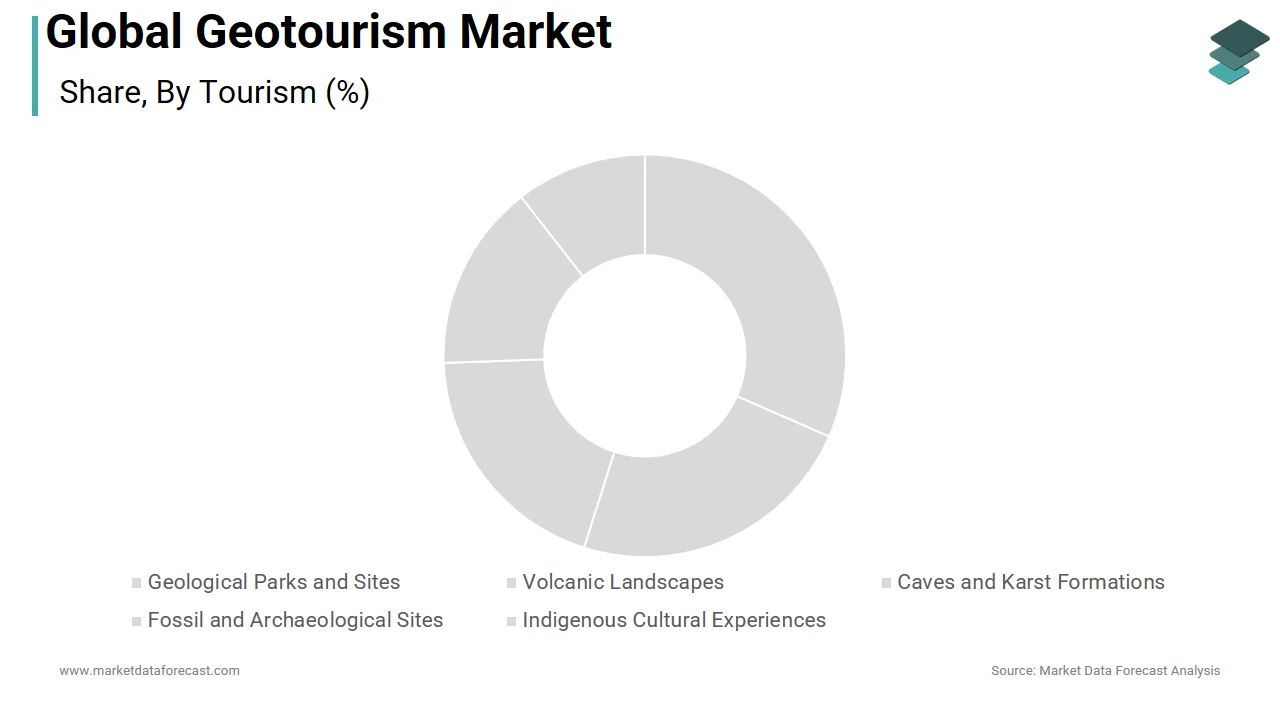
The indigenous cultural segment is anticipated to witness the fastest CAGR of 14.9% from 2026 to 2034. The growth of the indigenous cultural segment is fueled by traveler demand for authentic place-based storytelling and ethical engagement with native custodians of geological landscapes. According to the International Indigenous Tourism Network, a portion of global geotourism destinations co-design programs with indigenous communities. In Peru, local Quechua guides in Colca Canyon lead trekking tours and have incorporated local knowledge and cosmology into their offerings. Travelers are rejecting commodified experiences in favor of reciprocal cultural exchange. Indigenous co-stewardship becomes the highest growth and most differentiated offering in geotourism.
By Accommodation Insights
The homestays segment led the geotourism market by accounting for 33.7% share in 2025. The prominence of the homestays segment is driven by geotourism’s core ethos of community immersion economic equity and low environmental impact. According to UNESCO, a portion of Global Geoparks actively promote homestays as the preferred lodging option to ensure revenue remains within host communities. In Indonesia’s Batur Caldera Geopark homestays account for a portion of overnight stays with local families retain a notable share of guest spending compared to twelve percent when booked through external operators. Travelers also prefer homestays for cultural authenticity. National tourism boards subsidize homestay training and certification programs. This alignment of sustainability traveler preference and economic justice strengthens homestays as the dominant and most ethically resonant accommodation model.
On the other hand, the eco lodges segment is likely to experience the fastest CAGR of 12.4% from 2026 to 2034. The rapid expansion of the eco lodges segment is attributed to rising demand for comfort without compromising sustainability particularly among older travelers and families seeking low impact yet amenity rich stays. According to the International Ecotourism Society, a significant number of geotourism accommodations launched were certified eco lodges featuring solar power rainwater harvesting and zero waste systems. As per sources, eco lodges command a price premium while maintaining higher guest satisfaction scores. Eco lodges are now bridging the gap between conservation, comfort, and community benefit, which attracts a broader demographic as geotourism matures beyond backpacker trails without diluting sustainability principles.
By Age Group Insights
The travelers aged 26 to 35 Years segment dominated the geotourism market by occupying 29.1% of the global market share in 2025. Factors like their financial independence digital fluency and strong preference for experiential meaningful travel are largely the reason behind the growth of the travelers aged twenty six to thirty five segment. This age group spends more on travel than any other cohort with a potion prioritizing learning about geology culture and conservation over conventional sightseeing. Social media plays a vital role with Instagram and TikTok driving discovery of geosites which saw visitation surge after viral posts. This cohort also leads in booking community based experiences. Educational background further fuels demand. Their spending power and values align perfectly with geotourism’s emphasis on authenticity stewardship and immersive learning.
The travelers above 55 years segment is on the rise and is expected to be the fastest growing segment in the global market by witnessing a CAGR of 11.8% share during the forecast period. The rising disposable income desire for intellectually stimulating travel and improved accessibility to remote sites are boosting the growth of the travelers above 55 years segment. Health and wellness also play a role. Geotourism offers a blend of education, gentle activity, and scenic beauty. This makes it an ideal fit for aging populations who are seeking a purposeful and active retirement.
REGIONAL ANALYSIS
Europe Market Analysis
Europe outperformed other regions in the global geotourism market and held a 35% share of the global market in 2025. Its dense concentration of UNESCO Global Geoparks strong public funding and mature sustainable tourism infrastructure are the main factors primarily driving the prominence of the Europe in the global market. Germany France and Italy together host multiple designated geoparks. National tourism boards including Spain’s Turespaña and Portugal’s Turismo de Portugal actively promote geotourism itineraries with digital storytelling and rail based access to reduce carbon footprints. High traveler awareness and stringent environmental regulations further strengthen Europe’s prominance in conservation led tourism.
Asia Pacific Market Analysis
Asia Pacific is another region in the geotourism market and captured 28.4% share in 2025. The growth of the Asia Pacific is propelled by government led geopark development rising middle class travel and integration of indigenous knowledge. China and Japan together account for a share of regional volume. As per studies, UNESCO recognition has supported revenue growth and tourism development in locations like Batur Caldera Geopark. According to sources, locally run homestays are becoming the preferred choice for most travelers in certain regions. As per studies, iconic destinations such as Uluru Kata Tjuta draw significant visitor numbers every year. According to sources, guided storytelling tours are often regarded as a highlight by guests.
North America Market Analysis
North America experienced consistent growth in the geotourim market owing to its vast protected geological landscapes strong indigenous partnerships and tech enabled interpretation. According to sources, the United States is home to numerous UNESCO-recognized geoparks showcasing diverse geological heritage. These sites collectively welcome millions of visitors each year. According to sources, the introduction of digital tools and mobile applications has encouraged longer visitor engagement within park areas. Indigenous co management is expanding. Strong venture funding for AR startups and university led field programs further enhance educational appeal. This blend of technology conservation and cultural authenticity sustains North America’s dominance in high value geotourism.
Latin America Market Analysis
Latin America expanded moderately in the global geotourism market. Brazil Mexico and Peru fuelling regional demand which is driven by biodiversity geological uniqueness and community led tourism models. As per studies, many geoparks across Latin America have improved their trail systems and visitor information facilities in recent years. Despite infrastructure gaps demand is sustained by rising global interest in Andean Amazonian and Mesoamerican geological heritage. Medical tourism and adventure travel convergence also drives growth with geotourism packages increasingly bundled with wellness and trekking itineraries.
Middle East and Africa Market Analysis
Middle East and Africa is anticipated to the geotourism market during the forecast period. Morocco and South Africa lead adoption driven by desert geology cultural heritage and government investment. According to sources, digital innovations like augmented reality trails are enhancing visitor engagement at major geological sites. As per studies, guided experiences along Egypt’s Nile Valley continue to draw increasing numbers of tourists each year. Despite political and infrastructural challenges mobile technology and community training programs are enabling scalable low cost models. The region’s unique geology and living cultures offer untapped potential for global travelers seeking underexplored landscapes.
COMPETITIVE LANDSCAPE
The gasoline fuel additives market features intense competition among multinational chemical firms regional specialists and technology innovators. Companies compete primarily on performance efficiency regulatory compliance and pricing. Major players invest heavily in research and development to create advanced detergent dispersant and octane boosting formulations that meet evolving emission standards and engine requirements. Strategic alliances with automotive manufacturers and oil refiners are common to secure supply contracts and co develop next generation solutions. Regional players often focus on niche applications or localized regulatory needs creating fragmented yet dynamic competition. Mergers and acquisitions are frequent as firms seek to expand portfolios geographic reach and technical capabilities. Marketing efforts emphasize sustainability with growing emphasis on bio based and low toxicity additives. Regulatory burdens particularly in Europe and North America drive innovation in cleaner combustion technologies. Overall competition remains fierce with differentiation hinging on innovation speed customer service and adaptability to shifting environmental policies.
KEY MARKET PLAYERS
Some of the companies that are playing a dominating role in the global allergy diagnostics market include
- National Geographic
- Earthwatch
- Geotours
- Adventure Life
- GeoEx
- Explorandes
- Quark Expeditions
- Geotourism Development
- Laguna del Maule
- Global Geoparks
- Australian Geoparks
- Geological Society
- European Geoparks
- Japanese Geoparks
- Turismo Chile
- GSSA (Geological Society of South Africa)
- GeoTours Belize
Top Players in the Geotourism Market
- National Geographic Expeditions designs immersive travel experiences that connect travelers with nature culture and science across continents Their global presence is anchored in storytelling and conservation driven itineraries. Their educational approach and alignment with scientific exploration elevate geotourism standards globally. They continue investing in local partnerships and digital content to enhance authenticity and broaden appeal strengthening their dominance in responsible global travel without compromising ecological integrity
- Intrepid Travel operates small group adventures focused on sustainability cultural immersion and low impact tourism. They lead the market in ethical operations by training local guides supporting community enterprises and minimizing environmental footprints. They also expanded carbon offset programs and launched regenerative tourism pilot projects. Their transparent reporting and B Corp certification validate their values attracting travelers seeking meaningful and accountable experiences thereby strengthening their influence in shaping the future of the global geotourism market
- G Adventures pioneers community based tourism by empowering local economies through employment training and fair trade principles Their global network spans more than a hundred countries with emphasis on authentic human connections and grassroots development. Their Planeterra Foundation further amplifies social good through nonprofit partnerships. These initiatives support trust and differentiate their brand as a enabler for equitable sustainable growth within the global geotourism market
Top Strategies Used by Key Market Participants
Key players prioritize authentic local engagement through hiring training and partnering with indigenous communities. They invest heavily in sustainability certifications and environmental policies to meet rising consumer expectations. Digital innovation including virtual previews and mobile storytelling enhances pre trip education and post trip advocacy. Collaborations with conservation bodies and academic institutions lend credibility and expand educational value. Companies also focus on transparency using impact metrics and third party audits to build consumer trust. Customization and small group formats cater to demand for personalized meaningful travel. Experiential design emphasizes interactivity participation and skill building to deepen emotional connection. Continuous staff education and feedback loops ensure service excellence and cultural sensitivity. These strategies collectively drive differentiation customer loyalty and long term market relevance
GLOBAL GEOTOURISM MARKET NEWS
- In 2021, TripAdvisor incorporated more geotourism-related features, allowing users to discover and review geological landmarks, scenic routes, and eco-friendly travel options. The platform aimed to guide travelers towards sustainable and enriching experiences.
- In 2021, Airbnb introduced virtual experiences, enabling hosts to conduct virtual tours of geological wonders and cultural sites. This innovation allowed travelers to explore geological marvels remotely, aligning with the shift towards virtual travel experiences during the pandemic.
- In 2021, National Geographic expanded its online presence, offering virtual experiences and educational content related to geological and cultural sites. They focused on immersive storytelling through multimedia platforms to engage audiences interested in geotourism.
MARKET SEGMENTATION
This research report on the global geotourism market has been segmented and sub-segmented based on tourism, accommodation, age group, and region.
By Tourism
- Geological Parks and Sites
- Volcanic Landscapes
- Caves and Karst Formations
- Fossil and Archaeological Sites
- Indigenous Cultural Experiences
By Accommodation
- Farm Stays
- Cottage Rentals
- Eco-Lodges
- Homestays
By Age Group
- Below 15 years
- 16 to 25
- 26 to 35
- 36 to 45
- 46 to 55
- Above 55
By Region
- North America
- Europe
- Asia-pacific
- Middle-east and Africa
- Latin America