- Product Description Description
- Table of Contents TOC
- List of Table & Figure LOT
- Get Free Sample PDF Sample PDF
Market Size, 2025
$11.07 BnMarket Estimate, 2026
$11.34 BnMarket Forecast, 2034
$13.70 BnCAGR, 2026–2034
2.4%Executive Summary: Global Feed Vitamin Market
- Market Scope: Comprehensive global feed vitamin market analysis covering vitamin types, livestock categories, physical formulations, functional benefits, regional leadership frameworks, key growth drivers, market restraints, and competitive landscape.
- Market Valuation: Valued at USD 11.07 billion (2025), estimated at USD 11.34 billion (2026), and projected to reach USD 13.70 billion by 2034, registering a steady CAGR of 2.4% (2026–2034).
- Primary Growth Drivers: Increasing demand for high-quality animal nutrition, rising livestock production, growing awareness of animal health and productivity, global consumption of animal protein, and stricter animal welfare/sustainability regulations.
Key Market Segment Metrics (2026–2034)
| Category | Leading Segment (2025 Position) | Fastest-Growing Segment |
|---|---|---|
| By Vitamin Type & Livestock | Vitamin A (dominated with a 33.8% share in 2025) and Poultry segment (accounted for 40.2% share) | Aquatic Animals segment (projected to witness the fastest growth during the forecast period) |
| By Region & Geography | Asia Pacific (led the global market with 36.3% share in 2025 via China and India) | Expanding commercial feed and sustainable livestock markets across global regions |
Major Market Players & Market Structure
Market Structure: Highly competitive global animal nutrition and chemical manufacturing landscape featuring major enterprises competing through product innovation, bio-based vitamin production, capacity expansion, and nutrient stability research.
Key Companies: BASF SE, Archer Daniels Midland Company (ADM), DSM N.V., Evonik Industries, CSPC Pharmaceutical Group Ltd., Zhejiang Medicine Co. Ltd., Pharmative LLC, and North China Pharmaceutical Corporation.
Global Feed Vitamin Market Size
The global feed vitamin market was valued at USD 11.07 billion in 2025 and is anticipated to reach USD 11.34 billion in 2026 from USD 13.70 billion by 2034, growing at a CAGR of 2.4% during the forecast period from 2026 to 2034.
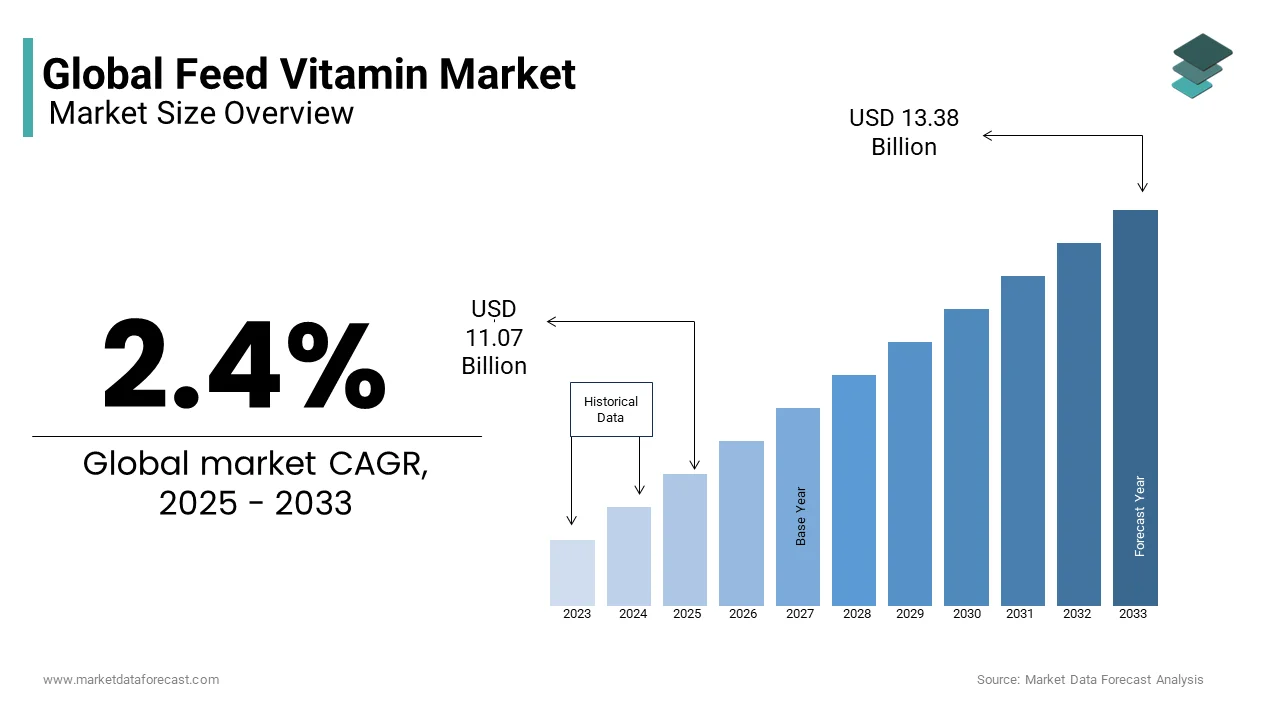
The global feed vitamin market plays a critical role in the livestock industry and contributes to animal nutrition and overall productivity. The growth of the market is primarily driven by increasing demand for animal-derived food products, awareness of animal health, and the growth of sustainable farming practices. Feed vitamins such as vitamins A, D, E, and B-complex are essential for improving immune function, growth rates, and reproductive health in livestock. Vitamin A, for instance, is crucial for vision and immunity, while vitamin D supports bone development. These nutrients are often incorporated into feed for cattle, poultry, swine, and aquaculture.
Asia-Pacific is dominating the feed vitamin market worldwide owing to the large livestock populations and high meat consumption, with China and India as the primary consumers. North America and Europe also show steady growth due to stringent animal welfare regulations and the demand for quality meat products. Sustainability trends are pushing for organic and bio-based vitamin sources in feed, a shift encouraged by consumer preferences for eco-friendly meat. Major players in this sector include DSM, BASF, and ADM, which are expanding their portfolios to include innovative, high-quality feed vitamins.
MARKET DRIVERS
Rising Global Demand for Animal Protein Driving the Feed Vitamins Market
The demand for animal protein from the global population is rapidly increasing, particularly in developing regions. For instance, the FAO estimates that poultry production alone will grow by 24% by 2030 to meet rising consumer demand. Feed vitamins are essential in optimizing animal growth rates and product quality, with vitamins like A and D improving immune function and bone health. This demand is especially notable in China and India, where protein consumption is rising swiftly, emphasizing the need for high-quality feed additives to enhance livestock productivity and meat quality.
Animal Welfare Regulations Driving Increased Use of Vitamins in Livestock Feed
The rising awareness of animal welfare and stringent regulations is leading producers to prioritize nutritional standards in livestock feed. Europe, for example, has regulatory frameworks that encourage reduced antibiotic use and emphasize preventive health, partly achieved through enhanced vitamin supplementation. Feed vitamins such as E and C are known to strengthen animals’ immunity, thus minimizing reliance on antibiotics. This trend is reflected globally, with nearly 85% of livestock feed now including fortified vitamins to prevent disease and improve growth efficiency.
Rising Demand for Sustainable and Organic Feed Vitamins
With nearly 40% of consumers worldwide now favoring sustainable and organic products, demand is growing for bio-based, eco-friendly vitamin sources. Organic feed vitamins, derived from natural sources, help lower the environmental impact of livestock farming. In the U.S., organic livestock feed demand has grown by about 10% annually as more producers shift away from synthetic additives. This shift is most pronounced in the poultry and dairy sectors, which increasingly adopt natural vitamins to meet consumer expectations for sustainability and quality.
MARKET RESTRAINTS
High Cost and Price Volatility of Feed Vitamins Limiting Market Growth
The high cost of vitamin supplements is a significant restraint to the growth of the feed vitamin market. Feed vitamins can be costly, and their prices are influenced by raw material costs and manufacturing complexities. For example, synthetic vitamin E prices spiked in recent years due to supply chain disruptions, making feed supplementation more expensive. Since vitamins account for around 2-4% of overall feed costs, price volatility can deter small- and medium-scale livestock producers from consistent use. In price-sensitive markets like Asia and Africa, this can hinder adoption, as producers prioritize cost-effective feed solutions over nutritional fortification, impacting the growth potential of the feed vitamin market.
Stringent Regulatory Frameworks Restricting Feed Vitamin Market Growth
Stringent regulatory standards are further hampering the global market growth. The feed vitamin market faces strict regulations, particularly in developed regions, where quality control and safety standards are rigorous. In the EU, for instance, each additive must be approved by the European Food Safety Authority (EFSA) before use, adding to development and compliance costs for manufacturers. Regulatory hurdles can delay the introduction of new vitamins or changes to existing formulations, slowing innovation. Moreover, the potential for regulatory changes adds uncertainty for producers, creating a restrictive environment that can limit the market's growth, especially for companies looking to expand globally.
REPORT COVERAGE
| REPORT METRIC | DETAILS |
| Market Size Available | 2025 to 2034 |
| Base Year | 2025 |
| Forecast Period | 2026 to 2034 |
| CAGR | 2.4% |
| Segments Covered | By Type of Vitamin, Type of Livestock, Formulation, and Region |
| Various Analyses Covered | Global, Regional, and Country Level Analysis, Segment-Level Analysis, DROC, PESTLE Analysis, Porter’s Five Forces Analysis, Competitive Landscape, Analyst Overview of Investment Opportunities |
| Regions Covered | North America, Europe, APAC, Latin America, Middle East & Africa |
| Market Leaders Profiled | like S.A.S., Aland BASF SE, CSPC Pharmaceutical Group Ltd., Zhejiang Medicine Company Ltd., Pharmative LLC, North China Pharmaceutical Corporation, Archer Daniels Midland Company, Evonik Industries, and DSM N.V. |
SEGMENT ANALYSIS
By Vitamins Insights
The Vitamin A segment dominated the market by accounting for 33.8% of the global market share in 2025. This dominance is driven by vitamin A’s critical role in supporting immune function, reproduction, and vision in livestock, particularly cattle and poultry. It is essential for growth and development, making it indispensable in intensive animal farming, where productivity is a priority. Vitamin A deficiencies can lead to issues such as weakened immunity, impaired reproduction, and poor growth rates, prompting high demand for this supplement across all types of animal feed. In poultry, which constitutes a significant portion of global livestock, vitamin A is especially crucial for preventing diseases and enhancing egg production. This widespread utility across various livestock sectors ensures vitamin A's leadership in the market.
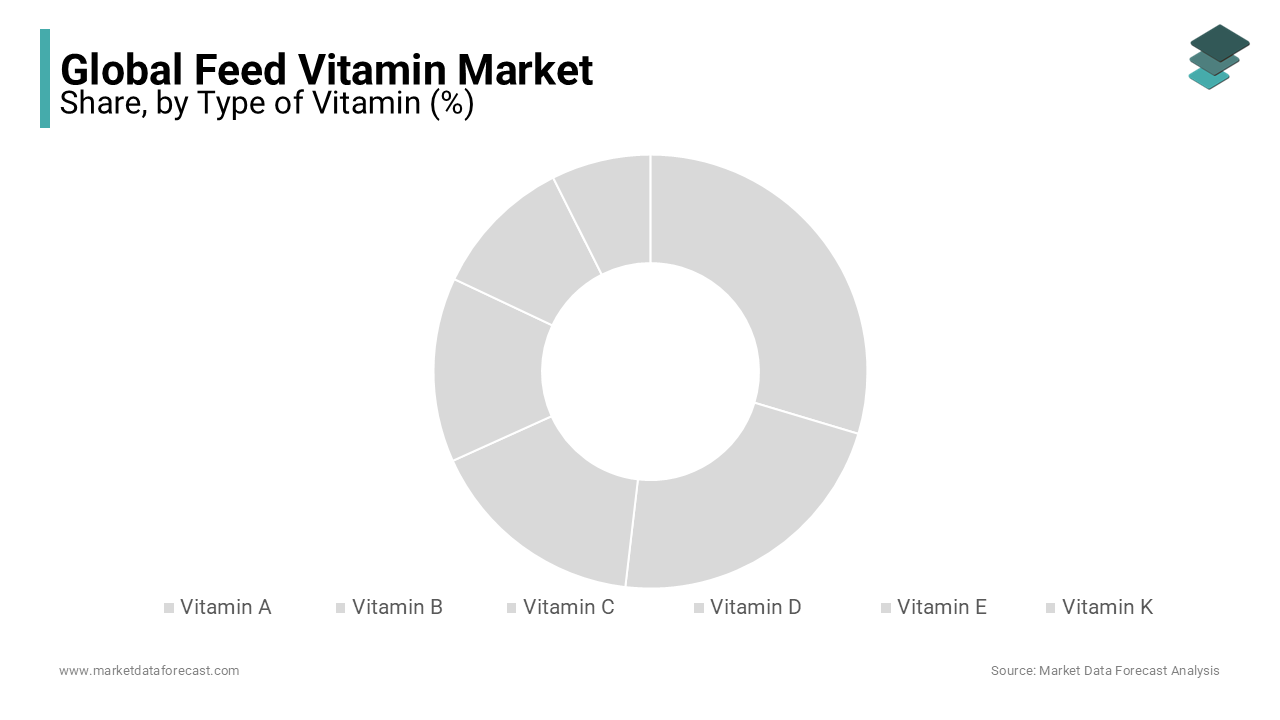
The Vitamin E segment is the fastest-growing segment and is expected to grow at a CAGR of 6.62% over the forecast period. This growth is fueled by rising awareness of the antioxidant benefits vitamin E provides, which help improve immune function and reduce the risk of diseases in animals. Vitamin E’s natural antioxidant properties support cell membrane integrity and reduce oxidative stress, making it critical in intensive farming conditions where animals are prone to stress. For instance, vitamin E is often used to enhance the quality and shelf life of meat by preventing oxidation. As consumer demand for high-quality animal products increases, the livestock industry is prioritizing vitamin E to enhance animal health and improve meat quality, driving its rapid growth in the feed vitamin market.
By Livestock Insights
The poultry segment led the market and had 40.2% of the global market share in 2025. The dominance of the poultry segment is attributed to its status as one of the most consumed animal protein sources worldwide, especially in rapidly growing markets like Asia and North America. Chickens and other poultry have high nutritional needs, requiring vitamins such as A, D, and E to support immune health, growth rates, and egg production. The Food and Agriculture Organization (FAO) projects that global poultry production will continue to rise by around 24% by 2030, reflecting increased demand for poultry feed vitamins. Producers prioritize vitamin-rich feed formulations to meet consumer demand for high-quality poultry products, ensuring this segment’s leadership in the market.
The aquatic animal segment is expected to be the fastest-growing, and grow at a CAGR of 7.74% over the forecast period. This growth is driven by the booming aquaculture industry, as fish and seafood consumption continues to rise globally due to their health benefits and popularity as protein sources. Vitamins in aquatic feed, especially vitamins C and E, are essential for improving fish growth rates, immune response, and resilience against waterborne diseases. The increasing focus on sustainable aquaculture, along with consumer demand for quality seafood, is driving producers to incorporate essential vitamins in fish feed. The rapid growth of aquaculture in regions such as Asia-Pacific and Europe, which are known for intensive fish farming, further propels the demand for vitamin-enriched feed, making aquatic animals the fastest-growing segment in the market.
REGIONAL ANALYSIS
Asia Pacific Market Analysis
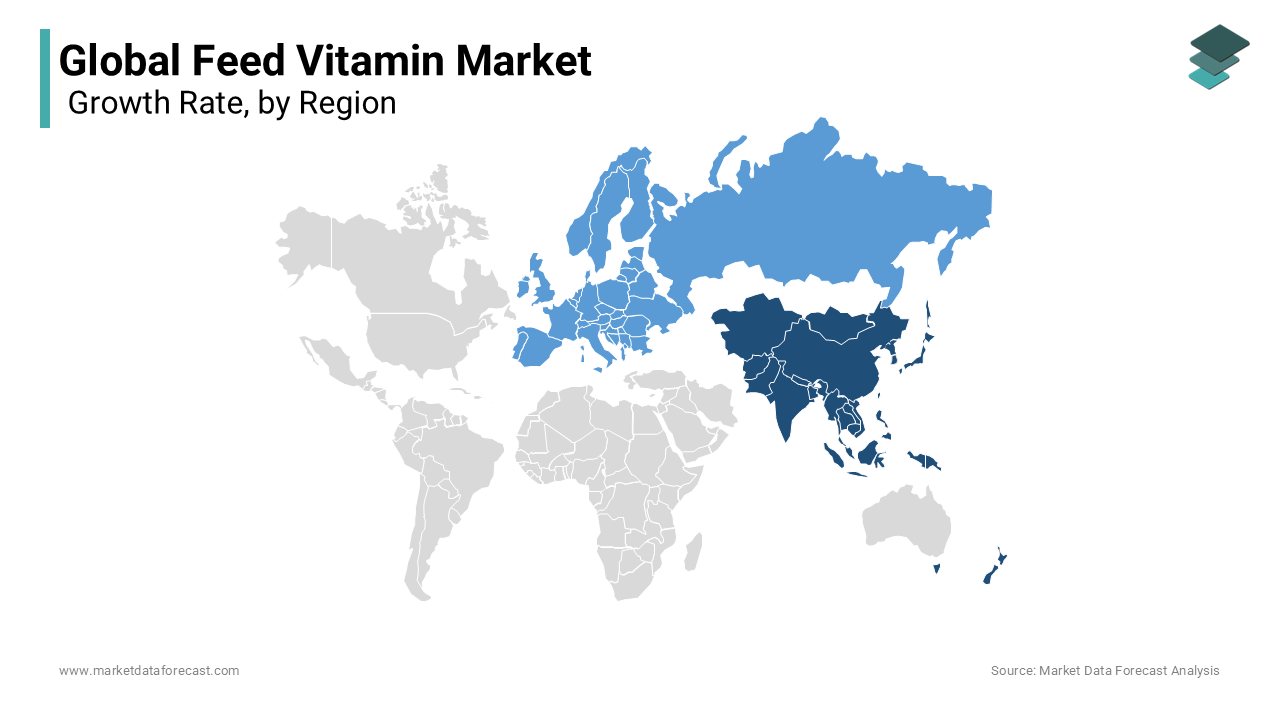
Asia-Pacific led the feed vitamin market and had 36.3% of the global market share in 2025. The domination of the Asia-Pacific region in the global market is mainly due to its large livestock populations and growing meat consumption in countries like China and India. The Asia-Pacific region is likely to maintain its dominant position in the global market throughout the forecast period as rising disposable incomes and population growth drive demand for animal protein. China, the top consumer in the region, prioritizes feed vitamins for productivity gains in livestock and aquaculture. This emphasis on improving animal health and increasing livestock efficiency positions Asia-Pacific as a critical market for feed vitamins globally.
North America Market Analysis
North America is a notable regional segment for feed vitamins and is expected to grow at a CAGR of 5.68% during the forecast period. The rising focus on quality and animal welfare, especially in the United States and Canada, is boosting the feed vitamin market in North America. The strict regulatory standards and strong consumer demand for high-quality meat products further propel the regional market expansion. The U.S., as the leading consumer in this region, uses feed vitamins extensively to boost livestock productivity and reduce antibiotic use, particularly in the dairy and poultry industries. North America's commitment to stringent animal nutrition standards supports consistent market growth.
Europe Market Analysis
Europe is estimated to do well in the global market over the forecast period, owing to the stringent animal welfare regulations and a demand for sustainable animal products. As sustainability initiatives and organic feed options gain traction, the market in Europe is expected to continue to grow. Germany and France are the primary consumers, and Germany also contributes significantly to aquaculture. Europe’s focus on environmental sustainability and reducing antibiotic use in animal feed ensures moderate but steady growth, positioning it as a region with high regulatory compliance and consumer awareness.
Latin America Market Analysis
Latin America is anticipated to register steady growth over the forecast period. The feed vitamin market in Latin America is driven by rising meat exports and livestock sector expansion. Brazil, with its extensive poultry and cattle industries, leads the region, followed by Argentina’s robust beef sector. Chile’s growing aquaculture market also supports the demand for feed vitamins. With expanding livestock production and an increasing emphasis on quality animal nutrition, Latin America’s feed vitamin market is positioned for strong future growth, catering to both domestic needs and export markets.
Middle East and Africa Market Analysis
The Middle East and Africa account for a moderate share of the global feed vitamin market. However, the regional market is expected to grow at a healthy CAGR due to the increasing demand for animal protein. Improving economic conditions and investments in livestock sectors are fueling market growth, especially in South Africa, Saudi Arabia, and Egypt. South Africa leads in the region’s poultry industry, while the Middle East countries focus on expanding their livestock sectors to meet domestic needs. The Middle East and Africa region, though smaller, is showing steady growth potential, driven by increasing consumption and a commitment to enhancing animal feed quality.
COMPETITIVE LANDSCAPE
The feed vitamin market features intense competition among global chemical and nutrition powerhouses like DSM, BASF, and Evonik, alongside strong regional manufacturers in China and India. Differentiation hinges on formulation stability, bioavailability, manufacturing scale, and sustainability credentials. While multinationals lead in R&D and global distribution, Asian producers compete on cost and local regulatory alignment. Rising demand for antibiotic-free, high-performance animal production fuels innovation in vitamin delivery systems and synergistic blends. Digital integration for precision nutrition and carbon footprint tracking is becoming a key battleground. Regulatory harmonization and quality consistency remain critical for global buyers. Companies increasingly bundle vitamins with enzymes and organic acids for holistic solutions. Leaders combine scientific innovation, supply chain agility, and ESG transparency to meet the evolving needs of integrators and feed manufacturers in a market where nutritional precision and environmental accountability define competitive advantage.
KEY MARKET PLAYERS
This market is dominated by companies like
- S.A.S.
- Aland, BASF SE,
- CSPC Pharmaceutical Group Ltd.
- Zhejiang Medicine Company Ltd
- Pharmative LLC
- North China Pharmaceutical Corporation
- Archer Daniels Midland Company
- Evonik Industries
- DSM N.V.
Top Players In The Market
- DSM is a global science and nutrition leader in feed vitamins, supplying a comprehensive portfolio including vitamins A, D, E, B-complex, and specialty blends tailored for livestock, poultry, aquaculture, and ruminants. The company drives innovation through stabilized, heat-resistant formulations compatible with pelleted feed and premixes. Recently, DSM launched next-generation microencapsulated vitamin technologies to enhance bioavailability and shelf life. It expanded digital nutrition platforms, enabling precision vitamin dosing based on animal performance data. Collaborations with integrators and sustainability initiatives validate reduced environmental footprints. DSM also invested in green manufacturing and circular sourcing.
- BASF SE is a major global supplier of feed vitamins, leveraging its chemical and biotech expertise to produce high-purity, stable vitamins fo, ms including A, E, and B-vitamins for diverse animal species. The company focuses on formulation innovations that ensure efficacy under high-temperature feed processing. Recently, BASF expanded its fermentation and synthesis capacities in Asia and North America to meet rising global demand. It introduced digital tools for vitamin stability prediction and partnered with feed manufacturers on customized premix solutions. BASF also strengthened its sustainability profile through lifecycle assessments and low-carbon production methods.
- Evonik Industries is a key innovator in the feed vitamin market, specializing in high-performance vitamin solutions such as vitamin B2 (riboflavin), B5 (D-panthenol), and choline, produced via advanced biotechnology. Its offerings support metabolic efficiency, immunity, and growth in livestock and aquaculture. Recently, Evonik expanded its fermentation-based production facilities and launched stabilized liquid vitamin formats for flexible dosing. It integrated its vitamin portfolio into digital feed formulation platforms and partnered with nutritionists to optimize inclusion rates. Evonik promotes resource-efficient bioprocesses and publishes environmental impact data. Through biotech leadership, formulation versatility, and science-backed application support, Evonik cements its role as a critical enabler of efficient, responsible, and future-ready animal nutrition globally.
Top Strategies Used by Key Market Participants
Key players invest in biotech and chemical R&D to enhance vitamin stability, bioavailability, and heat resistance for feed processing. Strategic capacity expansions in Asia and Latin America ensure supply chain resilience. Companies develop digital formulation tools for precision dosing and performance tracking. Partnerships with feed mills and integrators enable customized premix solutions. Sustainability initiatives, such as low-carbon production and circular sourcing, meet ESG demands. Product innovations include microencapsulation and liquid formats for flexible application. Regulatory compliance and third-party certifications build global trust. Educational outreach to nutritionists drives adoption. M&A and joint ventures consolidate technology and market access. Emphasis on traceability and carbon footprint labeling differentiates offerings in increasingly eco-conscious global animal nutrition markets.
MARKET SEGMENTATION
This research report on the global feed vitamins market has been segmented and sub-segmented based on vitamin type, livestock, formulation, and region.
By Type Of Vitamin
- Vitamin A
- Vitamin B
- Vitamin C
- Vitamin D
- Vitamin E
- Vitamin K
By Type Of Livestock
- Swine
- Ruminants
- Poultry
- Aquatic animals
- Others
By Region
- North America
- Europe
- Asia Pacific
- Latin America
- Middle East and Africa