- Product Description Description
- Table of Contents TOC
- List of Table & Figure LOT
- Get Free Sample PDF Sample PDF
Market Size, 2025
$2.07 BnMarket Estimate, 2026
$2.23 BnMarket Forecast, 2034
$4.06 BnCAGR, 2026–2034
7.78%Global Fermenters Market Size
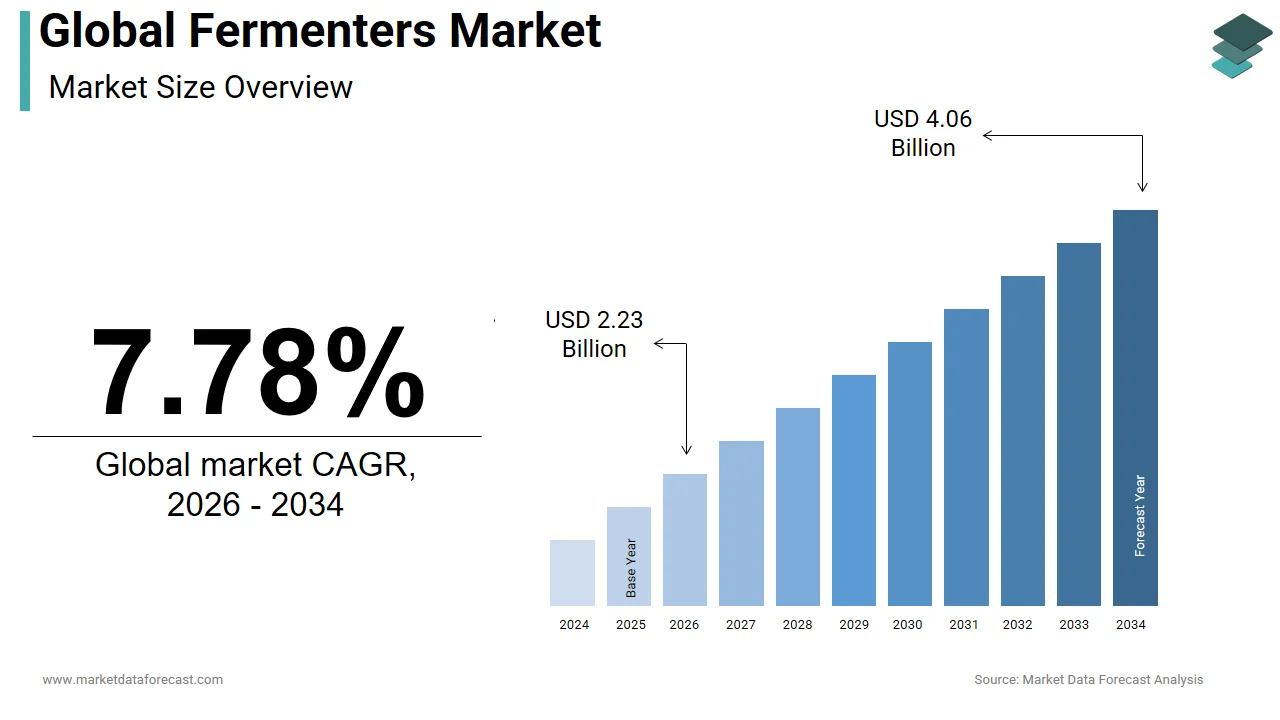
The size of the global fermenters market was worth USD 2.07 billion in 2025. The global market is anticipated to grow at a CAGR of 7.78% from 2026 to 2034 and be worth USD 4.06 billion by 2034, up from USD 2.23 billion in 2026.
Fermenters are controlled bioreactors engineered to cultivate microorganisms under precise environmental conditions for the production of pharmaceuticals, biofuels, enzymes, and fermented foods. Unlike passive storage vessels, modern fermenters integrate real-time monitoring of pH, dissolved oxygen, temperature, and shear stress, enabling scalable, sterile, and reproducible biological synthesis. According to the study, a portion of global food processing facilities now rely on automated fermentation systems to produce staples like soy sauce, yogurt, and plant-based proteins, reflecting a shift from traditional open-tank methods to closed-loop bioprocessing. In industrial biotechnology, as per research, a portion of bioethanol in the United States is produced via continuous fermentation in stainless steel vessels exceeding 100,000 litersin capacity. These systems are no longer ancillary tools but foundational infrastructure for sustainable manufacturing across sectors where biological precision replaces chemical synthesis.
MARKET DRIVERS
Expansion of Alternative Protein Production
The rise of cellular agriculture and plant-based meat alternatives has fundamentally reconfigured demand for high-capacity and contamination-free fermenters are the primary factors driving the growth of the fermenters market. As per the study, global investment in alternative protein startups surpassed a notable amount, with companies like Impossible Foods and Perfect Day utilizing microbial fermentation to synthesize heme, whey, and myoglobin without livestock. Advanced fermentation platforms now enable large-scale production of dairy proteins with high purity, supported by precise thermal control and stringent contamination management. Regulatory approvals in major markets since 2020 have accelerated facility upgrades across North America and Europe. This reflects a broader structural shift toward bio-manufactured proteins, reducing land-use inefficiencies, with fermentation accounting for a growing share of global dairy alternative output.
Regulatory Mandates for Pharmaceutical Biologics Purity
Stricter global standards for monoclonal antibody and vaccine production have rendered conventional batch reactors obsolete, further bolstering the fermenters market. According to the research, new biologic manufacturing facilities must comply with Guidelines, mandating single-use or fully autoclavable systems with zero cross-contamination risk, a criterion met only by modular, clean-in-place fermenters with integrated CIP/SIP protocols. In 2022, the NMPA's Center for Drug Evaluation (CDE) and Center for Medical Device Evaluation (CMDE) issued numerous guidelines, technical requirements, and regulations for drug and medical device registration and manufacturing. These regulatory shifts are not optional upgrades. They are legal prerequisites for market access by compelling manufacturers to replace decades-old infrastructure with next-generation systems capable of real-time analytics and process analytical technology (PAT) integration.
MARKET RESTRAINTS
High Capital Intensity and Long Payback Periods
The acquisition and installation of industrial-scale fermenters impose prohibitive upfront costs, particularly for small-to-medium enterprises, are a key factor limiting the expansion of the fermenters market. According to the study, a single 5,000-liter stainless steel fermenter with full automation, sterilization, and sensor integration exceeds a notable amount in capital expenditure, with additional costs for facility HVAC compliance and validation documentation adding another. Many operators delay upgrades despite efficiency gains because cash flow constraints prevent reinvestment, which leads to reliance on outdated, inefficient systems prone to contamination. The result is a latent productivity gap. Economic barriers prevent adoption in emerging economies where capital markets remain underdeveloped for long-term industrial tech.
Skilled Labor Deficit in Bioprocess Engineering
Shortage of skilled labour in bioprocess engineering also acts as a major obstacle in the fermenters market. Modern fermenters demand operators trained not merely in maintenance, but in real-time data interpretation, microbial kinetics, and PAT system diagnostics. According to the study, a share of biopharmaceutical plants in the U.S. report difficulty filling roles for bioprocess engineers with hands-on experience in fermentation scale-up, a deficit projected to widen to notable unfilled positions globally by 2027. Training pipelines lag behind technological advancement. Operators trained on 1990s-era batch systems struggle to interpret AI-driven fermentation optimization dashboards introduced in 2022. This skills chasm creates operational fragility, where equipment functions flawlessly but human error in parameter adjustment leads to batch failures costing upwards of per incident.
MARKET OPPORTUNITIES
Integration of AI-Driven Fermentation Optimization
Emerging machine learning algorithms are transforming fermenters from static vessels into adaptive biological factories, providing potential opportunities for the fermenters market. Companies embed predictive analytics directly into fermenter control systems, enabling real-time adjustment of nutrient feed rates based on metabolic flux signatures detected via Raman spectroscopy. Research projects and commercial products in Germany and elsewhere use AI and neural networks to improve automated insulin delivery and blood glucose prediction for diabetic patients. This focuses on managing the condition. The shift reduces reliance on trial-and-error scaling by allowing smaller labs to replicate large-scale yields without costly pilot runs. The opportunity lies not in hardware alone, but in software-hardware convergence.
Decentralized Fermentation for Localized Food Security
Decentralized fermentation is emerging as a resilience strategy for regional food sovereignty because climate disruption threatens global supply chains, which is likely to unlock fresh prospects for the fermenters market growth. These systems require no refrigeration, use minimal water, and reduce dependence on imported soy or fishmeal. A large number of people lack regular access to adequate protein. So, this model bypasses centralized logistics entirely. Governments are now subsidizing community fermenter units as part of national nutrition security plans, which turn industrial biotechnology into grassroots infrastructure.
MARKET CHALLENGES
Cross-Border Regulatory Fragmentation in Biopharma Fermentation
Fermenters used in pharmaceutical production face a labyrinth of divergent regulatory frameworks governing sterility, material compatibility, and data integrity, which is a primary factor constraining the growth of the fermenters market. According to the study, while the U.S. FDA requires 21 CFR Part 11 compliance for electronic records in bioreactor control systems, China mandates local server storage for all process data collected during fermentation. A single fermenter installed in a multinational facility may need to simultaneously satisfy five distinct audit trails, each with unique validation protocols. The absence of harmonized digital documentation standards forces manufacturers to duplicate validation efforts across regions, which increases time-to-market and stifles innovation in low-resource settings where compliance overhead outweighs return on investment.
Corrosion and Biofilm Accumulation in Continuous-Use Systems
Prolonged exposure to acidic metabolites, saline buffers, and microbial colonies continues to degrade fermenter interiors, which slows down the growth rate of the fermenters market. According to the study, stainless steel 316L, the industry standard, experiences measurable pitting corrosion after hours of continuous operation in high-shear yeast fermentation environments, leading to metal ion leaching that contaminates sensitive biologics. In ethanol production, biofilms formed by lactic acid bacteria on agitator blades reduce mixing efficiency, as per a study. Cleaning-in-place (CIP) systems, designed to mitigate this, often fail to reach crevices around weld seams or sensor ports, creating persistent reservoirs of contamination. No current coating or alloy eliminates this entirely, and replacement cycles every 5–7 years incur downtime costs per unit, which makes reliability a silent bottleneck in otherwise optimized production lines.
REPORT COVERAGE
| REPORT METRIC | DETAILS |
| Market Size Available | 2025 to 2034 |
| Base Year | 2025 |
| Forecast Period | 2026 to 2034 |
| Segments Covered | By Microorganism, Application, Process, Mode of Operation & Region |
| Various Analyses Covered | Global, Regional & Country Level Analysis, Segment-Level Analysis, Drivers, Restraints, Opportunities, Challenges; PESTLE Analysis, Porter's Five Forces Analysis, Competitive Landscape, Analyst Overview of Investment Opportunities |
| Regions Covered | North America, Europe, Asia Pacific, Latin America, the Middle East, and Africa |
SEGMENTAL ANALYSIS
By Process Insights
The fed-batch fermentation segment accounted for a dominant share of 61.8% of the fermenters market in 2024. Its unique ability to balance microbial growth kinetics with substrate inhibition, critical in high-value biopharmaceutical production, propels the growth of the fed-batch fermentation segment in the global market. In monoclonal antibody manufacturing, where cell viability must be maintained above 90% for over 14 days, fed-batch systems allow controlled nutrient infusion that prevents ammonia toxicity while sustaining productivity. The flexibility of this mode by enabling extended culture duration without full medium replacement, which makes it indispensable for processes requiring precise metabolic control, especially when downstream purification demands consistent product quality across batches. This avoids genetic drift risks, unlike continuous systems. It also maximizes yield without compromising sterility, unlikea a pure batch.
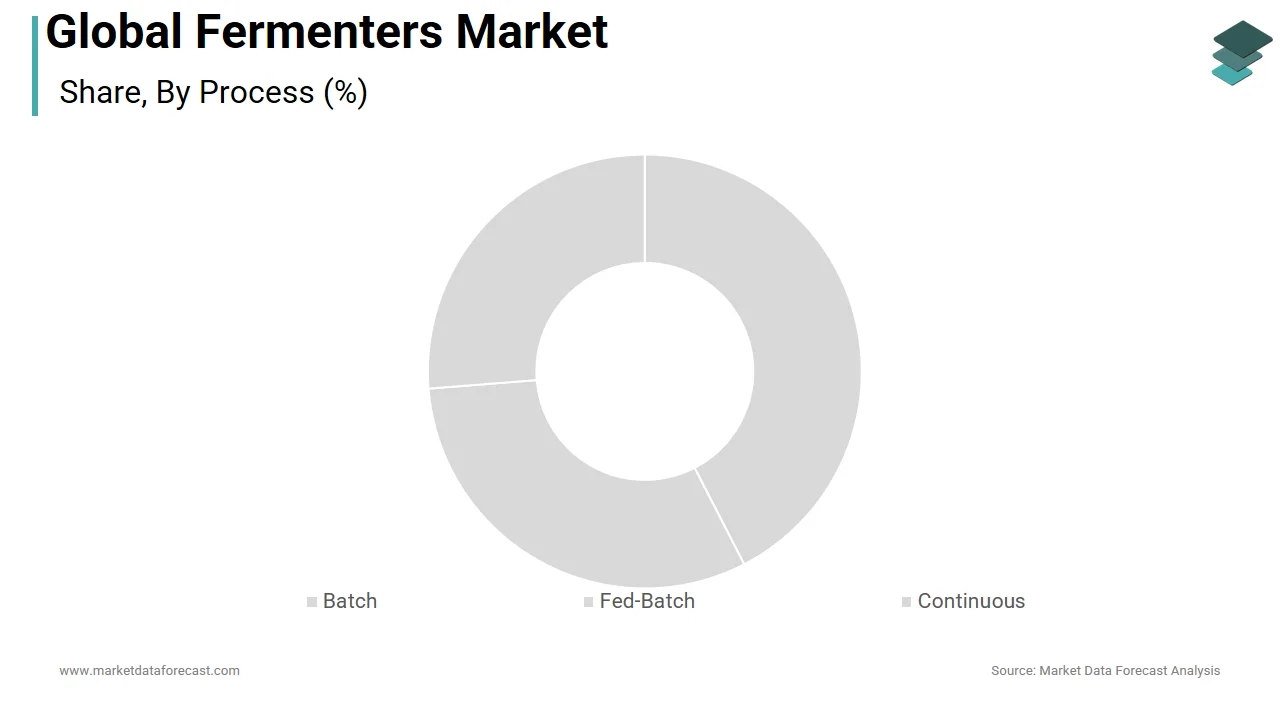
The continuous fermentation segment is on the rise and is expected to be the fastest-growing segment in the global market by witnessing a CAGR of 15.8% from 2026 to 2034. Factors such as breakthroughs in immobilized-cell technology and real-time process analytics are primarily propelling the expansion of the continuous fermentation segment in the global market. Brazilian industrial process (fed-batch) uses a cycle of fed-batch fermentation, centrifugation, and acid wash to recycle free yeast cells. The high cell density allows for quick fermentation cycles (around 12 hours), which is a key factor in its high efficiency. This shift is driven by the need for lean manufacturing. Continuous systems reduce labor costs and water usage. Crucially, AI-driven feedback loops now enable autonomous adjustment of flow rates based on metabolite profiles, which eliminates human intervention. It is a capability absent in traditional modes. Regulatory bodies are increasingly endorsing continuous manufacturing under ICH Q13 guidelines, which accelerates adoption among mid-tier producers seeking efficiency without sacrificing compliance.
By Application Insights
The healthcare and personal care applications segment held a prominent position in the fermenters market by capturing 54.8% share in 2024. The dominance of the healthcare and personal care applications segment in the global market is fuelled by the irreplaceable role of fermentation in producing active pharmaceutical ingredients, from antibiotics like penicillin, which still relies on Penicillium chrysogenum in a percentage of global production, to recombinant human insulin synthesized via engineered E. coli. Beyond therapeutics, fermented probiotics such as Lactobacillus rhamnosus and Bifidobacterium longum are embedded in dermatological serums and oral care products. The convergence of microbiome science and clinical validation has transformed fermentation from a legacy process into a precision tool for biological efficacy. This makes it non-negotiable in high-margin, science-backed personal care innovation.
The food segment is set to achieve the highest CAGR of 13.9% over the forecast period due to traditional dairy or soy products and novel protein platforms. Microbial fermentation produces mycoprotein (Quorn), heme (Impossible Foods), and precision-fermented casein (Perfect Day) at an industrial scale. In China, there has been an increase in commercial fermenter installations for plant-based meat. The driver is not taste preference but necessity, as climate volatility disrupts livestock supply chains, fermentation offers scalable, land-efficient protein synthesis. Governments fund these systems as strategic infrastructure and not luxury innovations.
By Microorganisms Insights
The bacteria segment was the largest segment by capturing a significant share of the global fermenters market in 2024. Rapid doubling times, genetic tractability, and compatibility with high-density processes are boosting the expansion of the bacteria segment in the global market. Escherichia coli remains the workhorse of biopharma, responsible for synthesizing a share of recombinant human proteins, including growth hormones, vaccines, and enzymes. In industrial chemistry, Clostridium acetobutylicum drives solvent production in a share of acetone-butanol-ethanol plants. Bacteria thrive in environments where speed, scalability, and metabolic versatility matter more than complexity. Their prokaryotic simplicity allows direct pathway engineering without organelle interference.
The fungi segment is expected to exhibit a noteworthy CAGR of 16.2% from 2026 to 2034. The rapid growth of the fungi segment in the global market is fueled by their unmatched capacity for secondary metabolite synthesis and extracellular enzyme secretion. Aspergillus niger, used to produce citric acid at volumes exceeding large metric tons annually, now also serves as a host for fungal-derived enzymes in detergents and textile processing, replacing chemical detergents in a share of EU textile mills under REACH regulations. More critically, filamentous fungi like Fusarium venenatum enable mycoprotein production at densities unattainable by bacteria by yielding 12 kg/m³ biomass versus 3 kg/m³ for E. coli.
By Mode of Operation Insights
The automatic segment is poised to grow with a high CAGR during the forecast period owing to higher outputs and productivity rates, cost-effectiveness, and wide acceptance in commercial and industrial applications. These are also preferred in medium and large-scale production due to the more efficient use of materials and better product quality.
The semi-automatic brewery plant relies more on the traditional form, which includes beer recipes, a brewing facility, and training. Also, these systems have an extensive price range for different capacities.
REGIONAL ANALYSIS
North America Fermenters Market Analysis
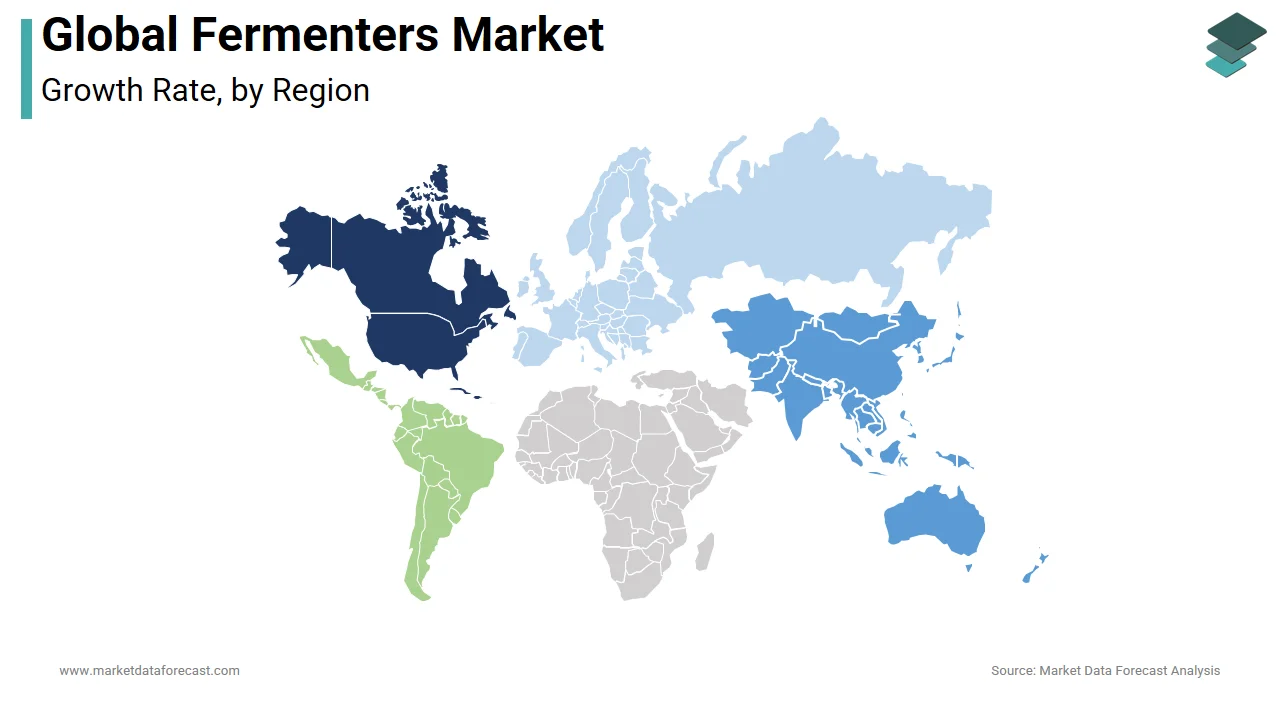
North America was the second most prominent region in the fermenters market by occupying 28.9% share in 2024. The growth of North America in the global market is mainly driven by its dominance in biopharmaceutical innovation and regulatory sophistication. The United States operates many GMP-certified fermentation facilities, as per a study, with a portion dedicated to monoclonal antibodies and gene therapies. The Industrial Decarbonization and Improvement of Grid Operations (INDIGO) program provides incentives for industrial projects that reduce emissions and improve the electrical grid. The region’s strength lies not in volume, but in fidelity. Every fermenter is calibrated to meet exacting FDA and Health Canada standards, which makes it the global benchmark for traceability, validation, and compliance-driven automation.
Europe Fermenters Market Analysis
Europe is another key region for the fermenters market, with its integration of sustainability mandates into bioprocess design. Germany hosts industrial fermenters compliant with the EU Green Deal’s Circular Bioeconomy Strategy, where wastewater from fermentation is recycled into nutrient streams for algae cultivation, as documented by the Fraunhofer Institute. The Netherlands’ initiative supports plants converting wheat bran into amino acids using Aspergillus oryzae, reducing fossil-derived inputs. Europe’s advantage is systemic. Policy doesn’t just regulate, it redefines efficiency by turning environmental accountability into a competitive advantage through certified carbon-neutral fermentation.
Asia Pacific Fermenters Market Analysis
Asia Pacific leads with 41% of global fermenter deployment, driven by state-backed industrialization and population-scale demand. China operates many large-scale fermenters, as per the study, with a share concentrated for antibiotic and enzyme production. Across Asia, investment in local fermentation capacity has risen sharply by supporting domestic production of biopharmaceuticals and functional foods once reliant on imports. In Japan, government-backed programs encourage small and medium enterprises to adopt advanced fed-batch systems, cutting development timelines for new enzymes. Southeast Asia’s momentum is tied to food security, with community-scale fermenters turning agricultural residues into alternative protein and reducing reliance on imported feed. Regional expansion is therefore not only economic but also a strategic response to population growth and resource constraints.
Latin America Fermenters Market Analysis
Latin America is anticipated to expand considerably in the global fermenters market due to pioneering low-cost, modular systems tailored to regional feedstocks and energy constraints. The region is known for nascent but strategically targeted expansion. Latin America is advancing fermentation technology through renewable energy, waste conversion, and targeted policy support. In Brazil, solar-powered systems are being deployed to replace fossil-fuel-driven processes in biofuel and agrochemical production. Colombia has promoted the reuse of agricultural byproducts, turning coffee pulp into animal feed to cut costs for smallholder farmers. Mexico’s pharmaceutical industry still depends on imported equipment due to limited local manufacturing, but new incentives are beginning to stimulate domestic production hubs. The region’s trajectory hinges on decentralization rather than replicating Western mega-facilities. Latin America is making fermentation an instrument of rural resilience.
Middle East and Africa Fermenters Market Analysis
The Middle East and Africa are likely to fermenters the market during the forecast period, which exhibits the most disruptive potential due to urgent resource constraints. In April 2025, the NEOM Investment Fund announced a partnership with Liberation Labs to design and build a precision fermentation facility in Saudi Arabia. This biomanufacturing plant is intended to produce high-value food ingredients and proteins using microbes. In parts of Africa, fermentation technologies are being adapted to address resource scarcity and resilience. Portable, solar-powered systems are helping pastoral communities convert organic waste into nutrient-rich feed, lowering livestock losses during droughts. Research groups in South Africa are engineering affordable fermenters from recycled materials, dramatically reducing startup costs for small biotech ventures. In these contexts, fermentation functions less as an industrial upgrade and more as a survival tool, turning waste into food and energy where conventional farming falls short. Progress remains gradual, but the long-term impact is transformative.
COMPETITIVE LANDSCAPE
Competition in the fermenters market has evolved beyond technical specs into a battle over systemic integration, ethical scalability, and regulatory foresight. Traditional manufacturers now compete with software-driven platforms offering predictive analytics as a service, while startups challenge incumbents with decentralized, low-cost systems tailored for circular economies. Regulatory bodies increasingly dictate design parameters, not through mandates alone, but by certifying only those systems that enable traceability, carbon efficiency, and contamination-free operation. The most formidable competitors are not those with the largest tanks, but those who make fermentation invisible: seamless, autonomous, and aligned with planetary boundaries. Success now hinges on whether a company can turn a vessel into a steward of biological integrity.
KEY MARKET PLAYERS
Some of the companies that are playing a dominating role in the global fermenters market include
- BBI-Biotech
- Bioengineering AG
- Electrolab Biotech Ltd
- PIERRE GUERIN SAS
- GEA Group Aktiengesellschaft
- Eppendorf AG
- General Electric Company
- Thermo Fisher Scientific Inc.
- ZETA Holding GmbH
Top Strategies Used by Key Market Participants
Key players are shifting from equipment suppliers to ecosystem enablers by embedding digital intelligence, sustainability, and regulatory compliance into core product design. They now integrate AI-powered process optimization directly into fermenter controls, eliminating manual parameter tuning. Strategic alliances with public health agencies and research institutions allow them to co-develop solutions for global challenges like protein scarcity and vaccine equity. Modular, scalable designs replace monolithic systems, lowering entry barriers for mid-tier producers. Closed-loop water and energy recovery systems are being standardized to meet green manufacturing certifications. Finally, companies are expanding service offerings, training, validation support, remote monitoring, to transform one-time sales into long-term operational partnerships, which ensures customer dependency beyond hardware procurement.
Top Players in the Fermenters Market
- Sartorius Stedim Biotech has redefined bioprocess infrastructure through integrated, single-use fermenter systems that eliminate cross-contamination risks in high-value biologics manufacturing. Its BioPAT platform embeds real-time analytics directly into bioreactor control logic, enabling dynamic adjustment of pH, dissolved oxygen, and feed rates based on metabolic signatures.
- Thermo Fisher Scientific has embedded its fermenter technology into end-to-end biomanufacturing workflows by integrating upstream bioreactors with downstream purification and data management systems. Its CelliGen series features fully automated CIP/SIP protocols validated for continuous operation under EU Annex 1 guidelines. In addition, it introduced a cloud-connected fermenter module capable of remote diagnostics and predictive maintenance alerts, reducing unplanned downtime in pilot biopharma sites.
- Eppendorf AG has carved a niche in precision-scale fermentation for research and early-phase development through micro-fermenters engineered for reproducibility at volumes under 1 liter. Its BioFlo line integrates microfluidic nutrient delivery and inline Raman spectroscopy, allowing researchers to simulate industrial conditions without scaling up prematurely. It also introduced a biodegradable disposable fermenter liner made from polylactic acid derived from sugarcane by reducing plastic waste per run compared to traditional glass systems.
GLOBAL FERMENTERS MARKET NEWS
- In September 2022, a plant-based ingredient Dutch company, Fooditive, introduced Bee-free-Honey with a fermenter, which gives the taste, color, and even health benefits like the honey collected from bees.
- In October 2022, EfficienZ produced a new fermentation product, a non-nutritive feed additive in Purina supplements, to support improved feed conversion in the cattle, allowing to use of feed into profits and the fermentation of feed simply and economically.
MARKET SEGMENTATION
This research report on the global fermenters market has been segmented and sub-segmented based on the microorganism, application, process, mode of operation & region.
By Process
- Batch
- Fed-Batch
- Continuous
By Application
- Beverages
- Healthcare and Personal Care
- Food
By Microorganisms
- Bacteria
- Fungi
By Mode of Operation
- Automatic
- Semi-Automatic
By Region
- North America
- Europe
- Asia-Pacific
- Latin America
- The Middle East and Africa