- Product Description Description
- Table of Contents TOC
- List of Table & Figure LOT
- Get Free Sample PDF Sample PDF
Market Size, 2025
$3.74 BnMarket Estimate, 2026
$4.10 BnMarket Forecast, 2034
$8.47 BnCAGR, 2026–2034
9.5%Executive Summary: Global HIV Diagnostics Market
- Market Scope: Comprehensive global analysis of HIV diagnostics, spanning testing products, specific assay types, end-user settings, and regional demand dynamics.
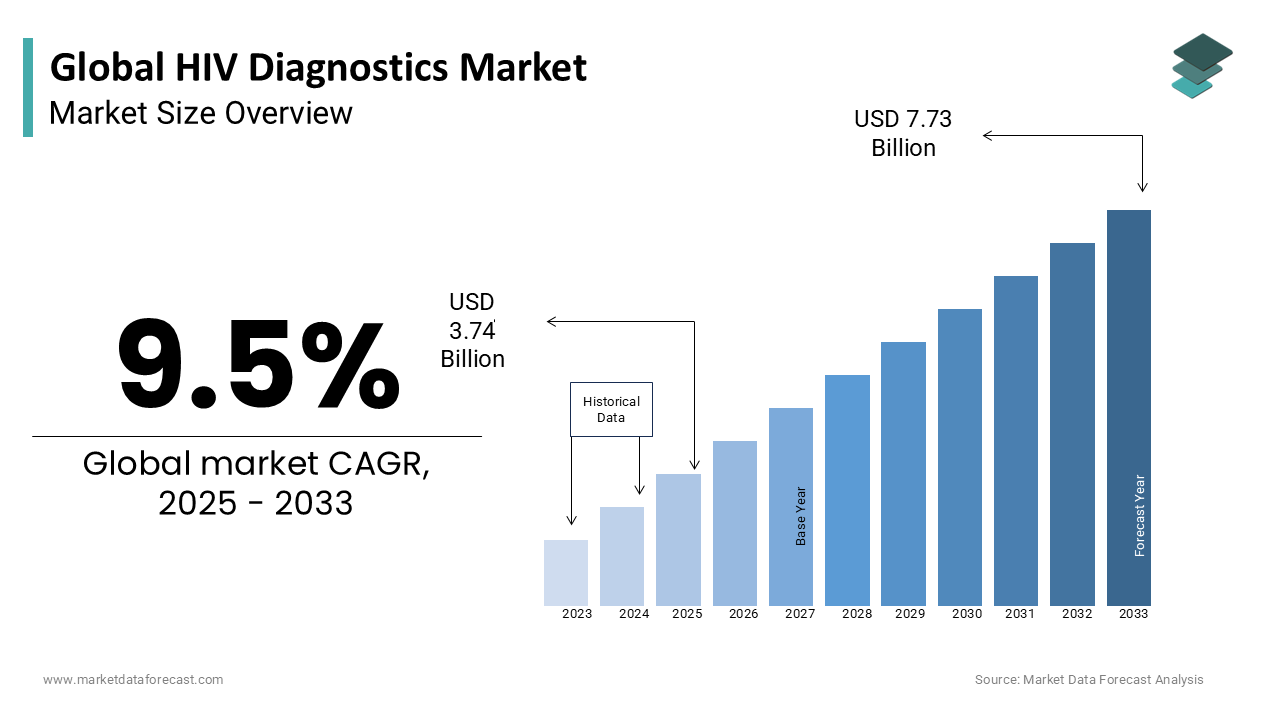
- Market Valuation: Valued at USD 3.74 billion (2025), estimated at USD 4.10 billion (2026), and projected to reach USD 8.47 billion by 2034, registering a consistent CAGR of 9.5% (2026–2034).
- Primary Growth Drivers: Rising global HIV-diagnosed population, technological breakthroughs in rapid/point-of-care (POC) assays, increasing home-testing adoption, and substantial public-private investment in advanced diagnostic infrastructure.
Key Market Segment Metrics (2026–2034)
| Category | Leading Segment | Fastest-Growing Segment / Trend |
|---|---|---|
| By Product | Consumables (Kits & Reagents) (due to high routine usage in hospitals and labs) | POC Instruments & Software (increasing integration for faster data monitoring) |
| By Test Type | Antibody Tests (ELISA/Rapid) (the foundational standard for screening and blood donations) | Viral Identification & CD4 Testing (crucial for staging and therapeutic monitoring of AIDS patients) |
| By End-User | Diagnostic Laboratories (most lucrative segment due to advanced, high-tech infrastructure) | Home Care Settings (rising adoption of self-testing and rapid screening kits) |
| By Region | North America (dominated with 38% market share in 2025) | Asia-Pacific (significant unmet demand in India and China driving high regional growth) |
Major Market Players & Market Structure
Market Structure: A highly competitive landscape with prominent global healthcare leaders focusing on innovation, R&D in rapid assay development, and global partnerships to reduce transmission rates.
Key Companies: Abbott Healthcare, Roche Diagnostics, Gilead Sciences, AbbVie Inc., Janssen Therapeutics, Merck & Co., Inc., BD Biosciences, ViiV Healthcare, Beckman Coulter, Sysmex, and Mylan Inc.
 Download Free Sample Report
Global HIV Diagnostics Market Size
The global HIV diagnostics market size was valued at USD 3.74 billion in 2025. The HIV diagnostics market was valued at USD 4.10 billion in 2026. It's further predicted to be growing at a CAGR of 9.5% and a value of USD 8.47 billion by 2034.
The HIV diagnostics market encompasses a critical array of technologies and services designed to detect Human Immunodeficiency Virus infection, monitor disease progression, and guide therapeutic interventions globally. This sector includes enzyme immunoassays, rapid diagnostic tests, nucleic acid amplification tests, and home-based self-testing kits that are essential for early diagnosis and viral load management. According to UNAIDS, approximately 40.8 million people were living with HIV globally in 2024, underscoring the persistent need for widespread and accessible diagnostic infrastructure. According to the Centers for Disease Control and Prevention, immediate initiation of antiretroviral therapy reduced the risk of HIV transmission by 96% among heterosexual mixed-status couples in the HPTN 052 trial, highlighting the pivotal role of diagnosis and treatment in epidemic control. These statistics illustrate the direct correlation between testing coverage and public health outcomes. Regulatory bodies enforce stringent standards for sensitivity and specificity to ensure accurate results across diverse populations. Technological advancements focus on reducing the window period of detection and enabling point-of-care solutions for remote areas. Integration with digital health platforms facilitates better patient tracking and data analysis. Public health initiatives prioritize screening among high-risk groups to achieve global elimination targets. The market is driven by the imperative to identify undiagnosed cases and link them to care effectively.
MARKET DRIVERS
Global Public Health Initiatives and Funding Programs Propel Testing Accessibility
Global public health initiatives and funding programs propel the HIV diagnostics market by providing substantial financial resources and strategic frameworks that expand testing accessibility in resource-limited settings. The Global Fund to Fight AIDS, Tuberculosis and Malaria has disbursed billions of dollars to support HIV prevention and treatment programs, including the procurement of diagnostic kits for low- and middle-income countries. This sustained investment ensures that even the most vulnerable populations have access to essential testing services. According to UNAIDS, 88% of people living with HIV knew their status in 2025, demonstrating substantial progress in expanding HIV diagnosis through coordinated global efforts. National governments align their health budgets with international guidelines mandating routine screening in prenatal care and tuberculosis clinics, which creates consistent demand for diagnostic products. The President's Emergency Plan for AIDS Relief provides technical assistance and supplies to partner countries, enhancing laboratory capacity and workforce training. These programs often prioritize high-throughput automated systems for central laboratories and rapid tests for community-based screening. The alignment of political will with scientific capability creates a stable demand environment for manufacturers. Grants supporting non-governmental organizations enable outreach to marginalized communities who face structural barriers to healthcare. These coordinated efforts ensure that diagnostic tools are not only available but actively promoted as essential public health instruments.
Technological Advancements in Point-of-Care and Self-Testing Boost Adoption
Technological advancements in point-of-care and self-testing boost the global HIV diagnostics market expansion by enhancing convenience, privacy, and speed of results for consumers worldwide. The Food and Drug Administration and other regulatory bodies have approved numerous over-the-counter home HIV test kits, allowing individuals to collect oral fluid or blood samples in private and receive results within minutes. This shift empowers users to bypass traditional clinical settings, which may be perceived as stigmatizing or inconvenient, particularly in conservative regions. According to the World Health Organization, HIV self-testing is a convenient and confidential option that can reach people who may not otherwise test, including key populations, men, and young people. Rapid point-of-care devices used in clinics provide results in under 30 minutes, enabling immediate counseling and linkage to care if positive. Improved sensitivity and specificity of fourth-generation assays reduce the window period for detection, increasing confidence in negative results. Digital integration allows users to register their kits online and access support resources seamlessly. Pharmacies and retail chains increasingly stock home test kits, making them as accessible as other health products. Insurance reimbursement for self-testing kits is expanding in many regions, further driving consumer adoption. Manufacturers invest in user-friendly designs and clear instructions to minimize errors and enhance user experience. According to the U.S. Food and Drug Administration, the OraQuick In-Home HIV Test provides results within 20 to 40 minutes, demonstrating the speed and convenience offered by home-based testing. These innovations transform HIV testing from a clinical procedure into a routine personal health practice.
MARKET RESTRAINTS
Social Stigma and Privacy Concerns Restrict Testing Uptake
Social stigma and privacy concerns restrict testing uptake in the HIV diagnostics market by discouraging individuals from seeking testing in traditional healthcare settings, particularly in regions with conservative cultural norms. According to the Kaiser Family Foundation, fear of discrimination and judgment remains a significant barrier for many individuals, leading to avoidance of testing despite available services. Patients often worry that their diagnosis will be disclosed to family members, employers, or community members, resulting in social isolation or economic hardship. According to UNAIDS, approximately 5.0 million people living with HIV did not know their status in 2025, demonstrating that important gaps in diagnosis and testing access remain. Confidentiality breaches or perceived lack of privacy in small clinics deter at-risk populations from accessing services. Young adults and minority groups are disproportionately affected by stigma, leading to lower testing rates in these demographics. Mental health challenges associated with potential diagnosis further complicate the decision to seek testing. Healthcare providers may lack training in delivering sensitive counseling, exacerbating patient anxiety. Without robust protections and destigmatization efforts, diagnostic volumes will remain below optimal levels. Community-based interventions aim to address these cultural barriers, but progress is slow and uneven across different geographic regions.
High Cost of Advanced Diagnostic Tests and Limited Reimbursement Impede Access
High cost of advanced diagnostic tests and limited reimbursement impede access to comprehensive HIV screening in the HIV diagnostics market, particularly for uninsured or underinsured populations in developing economies. According to the World Bank, while basic screening is often subsidized, confirmatory testing and viral load monitoring can incur significant out-of-pocket expenses for patients without adequate insurance coverage. Complex nucleic acid tests required for early infant diagnosis or acute infection detection are expensive to perform and may not be fully reimbursed by all payers. According to the World Health Organization, routine viral load monitoring is recommended at six months and 12 months after treatment initiation and then every 12 months for people established on antiretroviral therapy, demonstrating the continuing need for laboratory monitoring. Uninsured individuals often rely on free community clinics, which may have limited capacity and outdated equipment, leading to longer wait times and delayed results. Budget constraints in public health departments force prioritization of high-risk groups, leaving others without access to routine screening. Laboratory costs for maintaining quality control and compliance with regulatory standards further drive up prices. Small independent labs struggle to compete with large reference laboratories offering bundled pricing. Financial toxicity prevents some patients from completing the diagnostic cascade, including follow-up testing. Until reimbursement structures are standardized and costs reduced, equitable access to advanced diagnostics will remain a challenge.
MARKET RESTRAINTS
Expansion of Telehealth and Digital Health Integration Creates New Pathways
Expansion of telehealth and digital health integration creates new pathways for the HIV diagnostics market by facilitating remote consultation and streamlined testing processes globally. According to the World Health Organization, telehealth adoption has increased significantly, establishing a permanent infrastructure for remote healthcare delivery in both developed and developing nations. Patients can now consult with providers virtually, receive prescriptions for home testing kits, and discuss results via secure platforms, reducing the need for physical clinic visits. Digital apps allow users to track testing reminders, view results, and connect with counselors instantly, enhancing engagement and adherence to screening guidelines. The integration of electronic health records ensures that test results are automatically shared with primary care providers, facilitating timely intervention and continuity of care. Data analytics from digital platforms help public health officials identify hotspots and allocate resources more effectively. Partnerships between tech companies and diagnostic manufacturers enable innovative solutions, such as AI-driven risk assessment tools. Reimbursement codes for telehealth services are expanding in many countries, making these models financially viable for providers. This digital transformation lowers barriers to entry and makes HIV testing a seamless part of modern healthcare consumption. It also enables better longitudinal tracking of patient health outcomes.
Growth in Routine Screening Mandates and Preventive Care Models Drives Volume
Growth in routine screening mandates and preventive care models drives volume in the HIV diagnostics market by institutionalizing testing as a standard component of medical checkups worldwide. According to the U.S. Preventive Services Task Force, clinicians should screen adolescents and adults aged 15 to 65 years for HIV infection, as well as younger adolescents and older adults at increased risk and all pregnant persons. This guideline influences insurance coverage policies, requiring payers to cover annual screening without cost sharing in many national health systems. The United Nations Programme on HIV/AIDS advocates for opt-out screening in emergency departments and prenatal care settings, which significantly increases testing rates among diverse populations. Hospitals implementing electronic medical record alerts for overdue screenings see substantial increases in testing compliance. Corporate wellness programs increasingly include HIV screening as part of comprehensive health assessments, promoting workplace health. Value-based care models incentivize providers to meet screening metrics, linking reimbursement to preventive performance. Pharmaceutical companies partner with diagnostic firms to bundle testing with prevention medications like PrEP, creating integrated service offerings. These systemic changes embed HIV diagnostics into the fabric of routine healthcare, ensuring consistent and high-volume demand. This shift supports the global goal of ending the AIDS epidemic by 2030.
MARKET OPPORTUNITIES
Regulatory Complexity and Approval Delays Hinder Innovation Speed
Regulatory complexity and approval delays hinder innovation speed in the HIV diagnostics market by creating lengthy and costly pathways for new product launches across different jurisdictions. The World Health Organization Prequalification of In Vitro Diagnostics Programme requires rigorous clinical and manufacturing assessment for eligible diagnostic products. According to the World Health Organization, the current full prequalification assessment has a target review period of 270 calendar days, while the abridged assessment has a target review period of 100 calendar days. Manufacturers must navigate varying national regulations regarding laboratory licensing and personnel qualifications, adding layers of administrative burden. Changes in regulatory guidelines often require revalidation of existing products, forcing companies to divert resources from research to compliance. Small startups lack the regulatory expertise and capital to manage these complexities effectively, limiting competition and innovation. International harmonization efforts are limited, meaning companies must tailor submissions specifically for each target market. Post-market surveillance requirements demand continuous monitoring and reporting of adverse events, increasing operational costs. Uncertainty around approval timelines makes strategic planning difficult for investors and developers. These regulatory hurdles slow the introduction of potentially life-saving technologies and maintain higher prices due to limited competition.
Supply Chain Vulnerabilities and Raw Material Shortages Threaten Stability
Supply chain vulnerabilities and raw material shortages threaten stability in the HIV diagnostics market by disrupting production and causing inconsistent product availability globally. According to the World Health Organization, global health product supply chains can face procurement, manufacturing, transportation, and distribution disruptions that affect availability in resource-limited settings. Dependence on single-source suppliers for critical materials such as enzymes and antibodies creates bottlenecks when production issues occur in specific regions. Geopolitical tensions and trade restrictions further complicate sourcing strategies, increasing lead times and costs for manufacturers. According to the United Nations Children's Fund, alerts have been issued regarding delays in receiving test kits during peak demand periods, affecting public health response capabilities in vulnerable countries. Laboratories face challenges in maintaining inventory levels, leading to rationing of tests or cancellation of appointments. Quality control issues with alternative suppliers can result in batch failures, requiring costly recalls and replacements. Transportation logistics remain fragile, with port congestion and labor strikes impacting delivery schedules. Manufacturers struggle to predict demand fluctuations accurately, making just-in-time inventory models risky. Building resilient supply chains requires significant capital investment in diversification and stockpiling, which smaller firms cannot afford. These operational fragilities undermine confidence in diagnostic reliability and hinder consistent patient care.
REPORT COVERAGE
| REPORT METRIC | DETAILS |
| Market Size Available | 2025 to 2034 |
| Base Year | 2025 |
| Forecast Period | 2026 to 2034 |
| CAGR | 9.5% |
| Segments Covered | By Product, Test Type, End-User, and Region. |
| Various Analyses Covered | Global, Regional & Country Level Analysis, Segment-Level Analysis, Drivers, Restraints, Opportunities, Challenges, PESTLE Analysis, Porter’s Five Forces Analysis, Competitive Landscape, Analyst Overview on Investment Opportunities |
| Regions Covered | North America, Europe, Asia Pacific, Latin America, Middle East & Africa |
| Market Leaders Profiled | Abbott Healthcare, Alere Inc, Bristol-Myers Squibb, AbbVie Inc, Gilead Sciences, Janssen Therapeutics, Merck & Co., Inc, B.D. Biosciences, VIIV Healthcare, Beckman Coulter, Partec, Sysmex, Apogee Flow Systems, Zyomyx Inc., and Mylan Inc. |
SEGMENTAL ANALYSIS
By Product Insights
The consumables segment dominated the market and accounted for 61.2% of the global market share in 2025 due to the recurring nature of HIV testing and the lifelong requirement for viral load monitoring in diagnosed patients. According to the World Health Organization, routine viral load monitoring can be conducted at six months and 12 months after antiretroviral therapy initiation and annually thereafter for people established on treatment, creating recurring demand for reagents, test strips, and collection materials. This chronic care model ensures that consumable usage far outpaces one-time instrument purchases. According to the Centers for Disease Control and Prevention, over 1.2 million people in the United States are living with HIV, each requiring regular laboratory assessments to manage their condition effectively. This large patient base drives substantial volume sales for diagnostic consumables across clinical and reference laboratories globally. Additionally, routine screening initiatives targeting high-risk populations generate millions of additional tests annually, further boosting consumable consumption. Hospitals and clinics prioritize bulk purchasing of disposables to maintain operational efficiency and cost-effectiveness. The disposable nature of these items prevents reuse and mandates continuous replenishment, ensuring steady revenue streams for manufacturers. Regulatory standards for single-use devices reinforce this consumption pattern by prohibiting sterilization and reuse of certain diagnostic components.
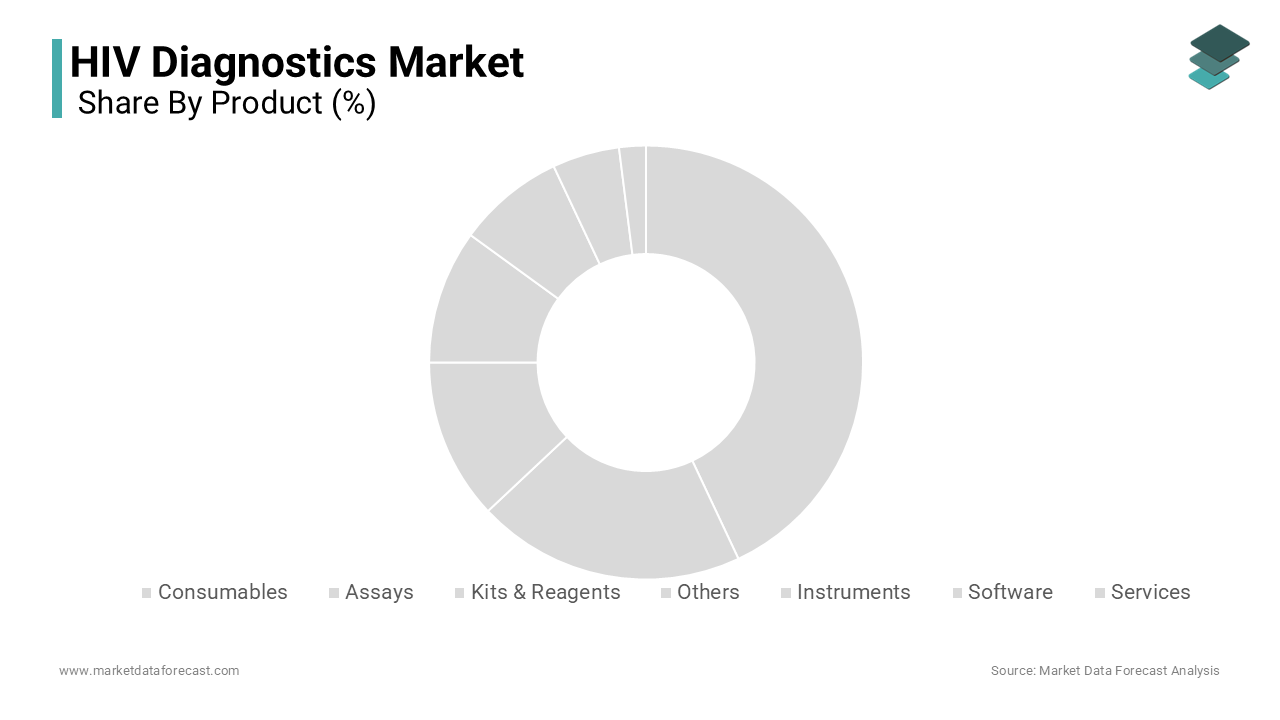
On the other side, the software segment is expanding as the fastest growing segment and is predicted to grow at a CAGR of 8.8% over the forecast period owing to the critical need for digital health integration and seamless connectivity with electronic health records. According to the Office of the National Coordinator for Health Information Technology, interoperability standards are mandated that require diagnostic systems to communicate effectively with hospital information systems. HIV diagnostic software facilitates automatic data transfer, reducing manual entry errors and ensuring timely reporting to public health authorities. According to the World Health Organization, the importance of real-time data surveillance is emphasized for tracking HIV trends and allocating resources efficiently across regions. Software platforms enable laboratories to manage high volumes of test results, track patient histories, and generate compliance reports automatically. Cloud-based solutions offer scalability and remote access, allowing healthcare providers to monitor outcomes from multiple locations. These digital tools enhance workflow efficiency and reduce administrative burdens on laboratory staff. As value-based care models gain traction, software analytics help identify gaps in care and improve patient retention. The ability to integrate with telehealth platforms further extends the utility of diagnostic software. This technological evolution transforms software from a supportive tool into a central component of modern HIV management strategies, driving rapid adoption globally.
By Test Type Insights
The HIV screening tests segment led the market by holding the leading share of the global market in 2025 due to mandatory routine screening guidelines issued by major health organizations globally. According to the U.S. Preventive Services Task Force, clinicians should screen adolescents and adults aged 15 to 65 years for HIV infection, regardless of perceived risk, with screening also recommended for pregnant persons and people outside the age range who have increased risk. This universal recommendation drives millions of tests annually in primary care settings, emergency departments, and prenatal clinics. According to UNAIDS, approximately 40.8 million people were living with HIV globally in 2024, with 87% knowing their HIV status, demonstrating the scale of the population reached through HIV testing and diagnosis. These fourth-generation antigen-antibody combination tests are preferred for their ability to detect early infections during the window period. High-throughput automated platforms in large laboratories process these samples efficiently, ensuring rapid turnaround times. Insurance mandates under various national health acts require coverage for preventive screening without cost sharing, removing financial barriers for patients. Public health campaigns promote regular testing as a normal part of healthcare, reducing stigma and increasing participation. The sheer volume of routine screenings dwarfs confirmatory and specialized testing, establishing screening tests as the market leader. Manufacturers focus on optimizing these assays for speed and accuracy to meet the demands of high-volume laboratories.
However, the viral load testing segment is anticipated to record a CAGR of 11.3% over the forecast period in the global market owing to the focus on treatment as prevention and the Undetectable equals Untransmittable campaign. According to the Centers for Disease Control and Prevention, the U=U message is promoted, which states that individuals with undetectable viral loads cannot transmit HIV sexually. According to the World Health Organization, viral load is the preferred approach for monitoring treatment response and detecting and confirming treatment failure among people receiving antiretroviral therapy. Patients typically undergo viral load testing every three to six months, creating a recurring demand for these specialized assays. Healthcare providers use viral load data to adjust medication regimens and detect treatment failure early. Insurance coverage for viral load monitoring is comprehensive in most developed countries, reflecting its critical role in disease management. The shift toward long-acting injectable therapies also requires rigorous viral load monitoring to assess efficacy. As more patients achieve viral suppression, the need for ongoing monitoring remains constant, ensuring stable market growth.
By End User Insights
The diagnostic laboratories segment occupied the largest share of the global HIV diagnostics market in 2025 due to their centralized high-volume processing capabilities and advanced technological infrastructure. According to the College of American Pathologists, reference laboratories process the majority of HIV screening and confirmatory tests, leveraging economies of scale to reduce costs. These facilities utilize automated high-throughput analyzers capable of processing thousands of samples daily, ensuring rapid turnaround times for healthcare providers. Reimbursement bodies pay laboratory tests at established rates, providing a stable revenue model for these entities. Large commercial laboratories offer comprehensive testing panels, including HIV, hepatitis, and other sexually transmitted infections, attracting contracts from hospitals and insurance companies. Their extensive network of collection sites ensures convenient sample acquisition for patients across wide geographic areas. Quality assurance programs in certified laboratories minimize error rates and ensure regulatory compliance. The ability to perform complex confirmatory testing, such as Western Blot and nucleic acid amplification, further cements their role as primary diagnostic hubs. Hospitals often outsource specialized testing to these laboratories to avoid capital expenditure on equipment.
On the other hand, the home care settings segment is estimated to expand at a CAGR of 12.2% over the forecast period in the global market owing to the privacy concerns and the convenience of self-administered testing. According to the Kaiser Family Foundation, stigma remains a significant barrier to clinic-based testing, with many individuals preferring the anonymity of home kits. According to the World Health Organization, HIV self-testing is a convenient and confidential option that can reach people who may not otherwise test, including key populations, men, and young people. Over-the-counter HIV self-tests allow users to collect samples and obtain results privately without interacting with healthcare providers. Regulatory approvals of multiple home testing options have legitimized this channel and increased consumer confidence. Younger demographics and marginalized groups are particularly likely to utilize home testing due to fear of judgment or discrimination. Telehealth integration allows users to consult with professionals remotely after receiving results, bridging the gap between self testing and clinical care. Insurance coverage for home testing kits is expanding, making them more affordable for broader populations. Retail partnerships with pharmacies and online retailers enhance accessibility and visibility of home testing products. Marketing campaigns emphasize empowerment and control over personal health, resonating with modern consumers.
REGIONAL ANALYSIS
North America HIV Diagnostics Market Analysis
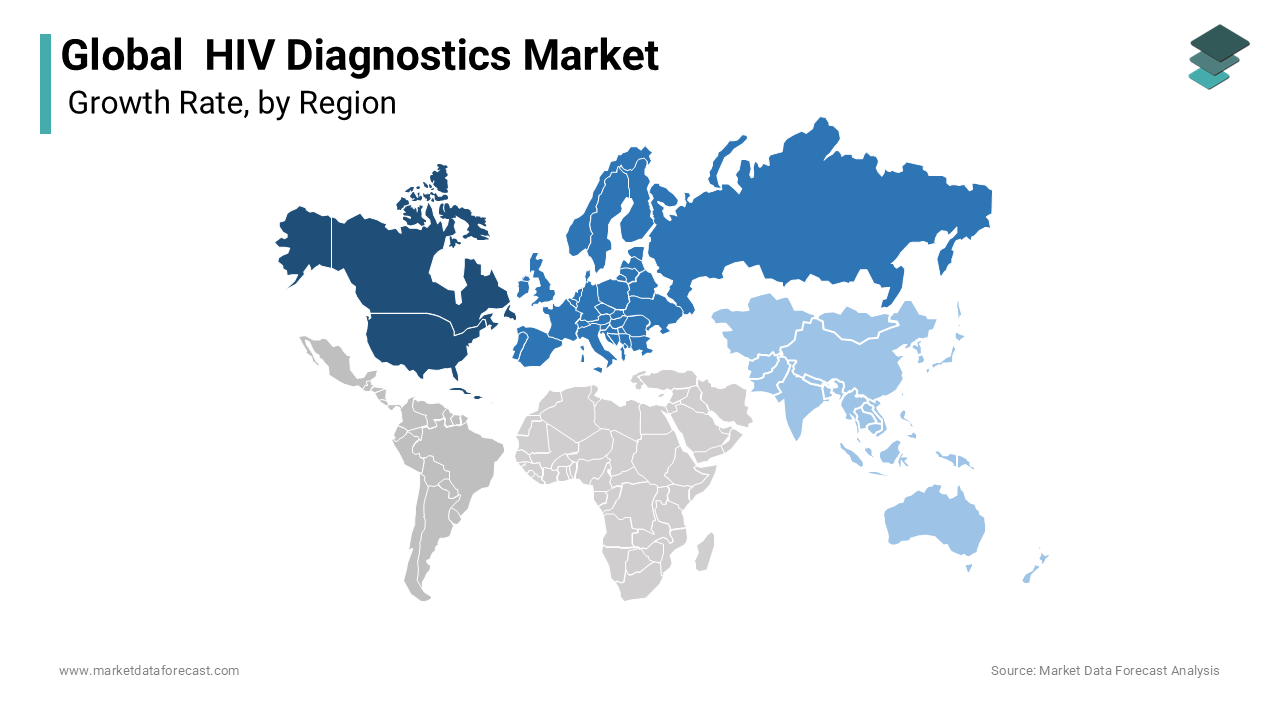
North America held the dominant share of 33.6% of the global market share in 2025 and is expected to maintain a leading position in the HIV diagnostics market over the next few years, supported by established healthcare infrastructure, extensive testing programs, and continued adoption of advanced diagnostic technologies. North America holds the dominant regional share of the global HIV diagnostics market, driven by its advanced healthcare infrastructure, high prevalence of HIV, and robust reimbursement framework. According to the Centers for Disease Control and Prevention, approximately 1.2 million Americans are living with HIV, creating a substantial patient population requiring diagnostic and therapeutic interventions. The presence of leading medical device manufacturers fosters continuous innovation and early adoption of new technologies such as rapid tests and home kits. According to the Centers for Medicare and Medicaid Services, comprehensive coverage is provided for HIV screening and monitoring, although recent payment adjustments have pressured providers to demonstrate value. The proliferation of ambulatory surgical centers and community health clinics facilitates high-volume outpatient testing, increasing device turnover. High healthcare expenditure per capita enables access to premium devices despite cost containment efforts. Strong regulatory oversight by the Food and Drug Administration ensures high safety standards while accelerating approval for breakthrough devices. Academic medical centers serve as hubs for clinical trials and training, driving adoption of complex techniques. The competitive landscape is intense, with major players investing heavily in marketing and education. These factors combine to make North America the most lucrative and dynamic market for HIV diagnostics globally.
Europe HIV Diagnostics Market Analysis
Europe is expected to experience steady growth in the HIV diagnostics market over the next few years, supported by established public healthcare systems, continuing HIV surveillance, and investment in testing and prevention programs. Europe represents a sophisticated and regulated market for HIV diagnostics, characterized by strong public healthcare systems and an emphasis on cost-effectiveness. According to the European Centre for Disease Prevention and Control, 112,883 HIV diagnoses were reported across 47 countries in the WHO European Region in 2023, including 24,731 diagnoses from the European Union and European Economic Area. Regulatory bodies maintain rigorous standards for medical devices, ensuring safety and efficacy before market entry. National health authorities manage procurement through tender processes, which often favor established brands with proven clinical outcomes and competitive pricing. The aging population contributes to rising incidence of comorbidities, particularly in rural areas where access to specialized care is improving through telemedicine and mobile clinics. Adoption of new technologies may be slower compared to North America due to budget constraints and health technology assessment requirements. However, government initiatives to reduce wait times for elective surgeries are increasing investment in diagnostic capabilities. Local distributors play a crucial role in navigating regional regulatory nuances and building relationships with key opinion leaders. The market is stable, with moderate growth driven by demographic trends and gradual modernization of diagnostic labs. Collaboration between industry and public health agencies focuses on improving patient outcomes through evidence-based practice.
Asia Pacific HIV Diagnostics Market Analysis
Asia Pacific is likely to remain the fastest-growing regional market for HIV diagnostics over the next few years, supported by expanding testing access, a large population affected by HIV, and increasing adoption of point-of-care technologies. Asia Pacific is projected to record the fastest regional CAGR of approximately 12.4% through 2034. According to the World Health Organization, the WHO South-East Asia Region and Western Pacific Region continue to carry a substantial HIV burden and require expanded access to HIV testing, diagnosis, treatment, and prevention services. Rapid middle-class expansion in China, India, and Southeast Asia increases purchasing power for healthcare services. According to the Asian Development Bank, modern retail and e-commerce penetration is accelerating, improving cold chain access and product availability across tier-two and tier-three cities. Government initiatives promoting gut health and preventive nutrition support market education efforts. Lactose intolerance prevalence drives growth of plant-based and lactose-free probiotic alternatives. Youth demographics influenced by K-pop and J-beauty trends associate health with wellness benefits, creating unique demand drivers. Price sensitivity remains, but affordable sachet and small-pack formats enable mass trial. The region offers immense long-term growth potential as penetration rates remain low relative to Western markets.
Latin America HIV Diagnostics Market Analysis
Latin America is expected to record continued growth in HIV diagnostics over the next few years as countries strengthen HIV testing, prevention, and treatment programs and address persistent gaps in diagnosis. Latin America demonstrates dynamic growth in the HIV diagnostics market, driven by improving economic conditions and increasing health consciousness among urban consumers. According to the Pan American Health Organization, around 2.7 million people were living with HIV in Latin America and the Caribbean in 2023, while approximately 135,000 people acquired HIV during that year. Brazil and Mexico lead market development with established healthcare frameworks and growing diagnostic segments. According to the Economic Commission for Latin America and the Caribbean, middle-class expansion has increased household spending on health-oriented initiatives by 25% over the past decade. Traditional healthcare models provide cultural entry points for modern diagnostic products. Local brands dominate by offering affordable formats and familiar services, while multinationals introduce premium segmented offerings. Retail modernization improves cold chain reliability and product visibility in secondary cities. Government school programs increasingly include health initiatives supporting child nutrition and market education.
Top Players in the HIV Diagnostics Market
Abbott Laboratories
Abbott Laboratories maintains a prominent position in the HIV Diagnostics Market through its comprehensive portfolio of fourth generation antigen and antibody assays. The company focuses on high throughput automated platforms that enable early detection and accurate viral load monitoring for diverse patient populations. Recent strategic initiatives include expanding access to self testing kits and enhancing digital connectivity features for improved data management. Abbott actively collaborates with global health organizations to support large scale screening programs in resource limited settings. The corporation invests heavily in research to reduce window periods and improve assay sensitivity across varied sample types. These efforts solidify Abbott as a trusted partner for laboratories seeking reliable and efficient diagnostic solutions worldwide.
Bio-Rad Laboratories
Bio-Rad Laboratories contributes significantly to the market by offering specialized confirmatory tests and quality control products essential for validating HIV diagnoses. The company emphasizes precision and regulatory compliance ensuring its assays meet stringent international standards for accuracy. Recent actions involve upgrading automated workflows to reduce manual intervention and enhance laboratory efficiency. Bio-Rad expands its distribution network to reach underserved regions and supports educational initiatives for healthcare professionals. Strategic partnerships with reference laboratories facilitate broader access to advanced testing technologies. The firm also develops innovative reagents compatible with multiple platforms increasing flexibility for users. These strategies reinforce Bio-Rad reputation for technical excellence and reliability in the competitive diagnostics landscape.
Hologic Inc.
Hologic Inc. plays a pivotal role in the HIV Diagnostics Market with its fully automated molecular systems designed for sensitive viral load quantification. The company specializes in nucleic acid amplification technologies that are critical for managing patients on antiretroviral therapy and detecting treatment failure. Recent developments include launching software updates that streamline laboratory operations and improve result interpretation. Hologic focuses on integrating its diagnostic platforms with laboratory information systems to enhance operational workflow. The company engages with key opinion leaders to demonstrate clinical value and supports training programs globally. Expansion into point of care molecular testing aims to bring rapid results to decentralized settings. These innovations strengthen Hologic position as a leader in advanced molecular diagnostics.
Top Strategies Used by Key Market Participants
Key players in the HIV Diagnostics Market primarily employ product innovation strategies by developing high sensitivity assays with shorter window periods to detect early infections accurately. Companies focus on expanding point of care and self testing portfolios to increase accessibility and reach underserved populations effectively. Strategic partnerships with public health agencies and non governmental organizations facilitate large scale screening initiatives and enhance brand visibility globally. Investment in digital health integration allows seamless data exchange with electronic health records improving patient management and surveillance capabilities. Regulatory compliance remains central to maintaining trust and securing approvals across diverse jurisdictions. Pricing strategies emphasize value based care demonstrating cost effectiveness through reduced transmission rates and improved health outcomes. Manufacturers prioritize supply chain resilience to ensure consistent availability of critical diagnostic kits during peak demand periods. Educational programs for healthcare providers help promote proper test usage and interpretation driving adoption of new technologies. These combined approaches enable participants to navigate regulatory complexities and sustain competitive advantages in a dynamic global market environment.
COMPETITIVE LANDSCAPE
The competitive landscape of the HIV Diagnostics Market is characterized by intense rivalry among established multinational corporations and specialized niche players vying for dominance through technological superiority and regulatory compliance. Large companies leverage extensive distribution networks and broad product portfolios to secure contracts with major reference laboratories and hospital systems globally. However smaller innovators gain traction by focusing on specific unmet needs such as ultra rapid point of care tests or highly sensitive molecular assays for viral load monitoring. Price competition remains significant due to centralized procurement processes and government tenders that prioritize cost efficiency in public health programs. Differentiation through superior sensitivity specificity and ease of use helps premium brands justify higher prices despite budget constraints. Regulatory barriers and high research and development costs protect incumbents but also slow the entry of disruptive technologies into the market. Intellectual property disputes are common as companies seek to protect proprietary assay designs and biomarkers from competitors. Collaboration with public health authorities ensures alignment with national screening guidelines and funding priorities across regions. This dynamic environment requires continuous investment in innovation and strategic agility to maintain market relevance and drive growth amidst evolving healthcare economics and public health goals.
KEY MARKET PLAYERS
Notable participants in this report in the global HIV diagnostics market include
- Abbott Healthcare
- Alere Inc.
- Bristol-Myers Squibb
- AbbVie Inc.
- Gilead Sciences
- Janssen Therapeutics
- Merck & Co., Inc.
- BD Biosciences
- ViiV Healthcare
- Beckman Coulter
- Partec
- Sysmex
- Apogee Flow Systems
- Zyomyx Inc.
- Mylan Inc.
RECENT MARKET HAPPENINGS
- In 2022, to control HIV transmission, AMREF Health Africa launched the Afya Kamilifu Project. This Project will reduce the county's high burden of HIV and AIDS. The Project will also launch an HIV data monitoring system using innovative technology to give accurate results to the patients.
- In 2020, Atomo signed an agreement with PrEP Health Pty Limited to supply the Atomo HIV Self-Test to PrEP users in Australia.
- In 2020, OraSure Technologies developed rapid HIV tests.
- In November 2019, Abbott Laboratories' scientific team discovered a new subtype of HIV called HIV-1 Group M, subtype L. The Abbott Laboratories team announced the discovery of this new strain.
MARKET SEGMENTATION
This market research report on the global HIV diagnostics market has been segmented and sub-segmented based on the product type, test type, end-user, and region.
By Product
- Consumables
- Assays
- Kits & Reagents
- Others
- Instruments
- Software
- Services
By Test Type
- Antibody Tests
- HIV Screening Tests
- Elisa
- Rapid Tests
- Home Access Dried Blood Spots
- HIV-1 Antibody Confirmatory Tests
- Western Blot Tests
- Indirect Immunofluorescence Assays (IFA)
- Line Immunoassays
- Radio-Immunoprecipitation Assays
- HIV-2 & Group O Diagnostic Tests
- Blood Antibody Tests
- DBS Tests
- Line Immunoassay (HIV2)
- Viral Identification Tests
- p24 Antigen Test
- Qualitative PCR Tests
- Viral Culture
- CD4 Testing
- Viral load testing
- Early Infant Diagnostics
By End-User
- Diagnostic Laboratories
- Hospitals
- Blood Banks
- Home Care Settings
- Other End-Users
By Region
- North America
- Europe
- Asia-Pacific
- Latin America
- The Middle East and Africa