- Product Description Description
- Table of Contents TOC
- List of Table & Figure LOT
- Get Free Sample PDF Sample PDF
Market Size, 2025
$4.49 BnMarket Estimate, 2026
$4.81 BnMarket Forecast, 2034
$8.39 BnCAGR, 2026–2034
7.2%Global Glycerine Market Research Report: Size, Share, Trends & Forecasts (2026–2034)
- Market Scope: Comprehensive global glycerine (glycerol) market analysis covering sources (vegetable oils, synthetic, soaps, biodiesel), manufacturing processes (saponification, transesterification, fat splitting), application fields (industrial chemicals, food & beverages, personal care), and regional performance across North America, Europe, APAC, Latin America, and Middle East & Africa.
- Market Valuation: Valued at USD 4.49 billion in 2025, estimated at USD 4.81 billion in 2026, and projected to reach USD 8.39 billion by 2034, registering a healthy CAGR of 7.2% during the forecast period from 2026 to 2034.
- Primary Growth Drivers: Escalating demand for natural ingredients in personal care and cosmetics, surging biodiesel production (which yields glycerine as a co-product), and widespread utilization as a humectant and sweetener in food formulations.
Key Global Glycerine Market Segment Metrics (2026–2034)
| Category | Leading Segment / Options Covered | Focus / Growth Driver |
|---|---|---|
| By Source | Vegetable Oils, Synthetic, Soaps, and Biodiesel | Rising consumer preference for natural ingredients in cosmetics, food, and personal care drives natural source adoption. |
| By Process | Saponification, Transesterification, and Fat Splitting | Transesterification expansion tied directly to the growth of renewable biodiesel energy plants. |
| By Application | Industrial chemicals, Food & Beverages, Personal Care, and Others | Personal care segment projected to develop at the highest growth rate driven by hair and oral care products. |
| By Region | North America, Europe, Asia Pacific, Latin America, and Middle East & Africa | Asia-Pacific dominates revenue share led by surging consumption in China, India, and Japan. |
Major Glycerine Industry Players & Competitive Landscape
Market Structure: Highly consolidated and competitive global market featuring major chemical producers and consumer goods conglomerates optimizing large-scale biodiesel co-product refining and specialized chemical applications.
Key Companies: The Dow Chemical Company, Procter & Gamble, Parchem fine & specialty chemicals, NOW Foods, Essential Depot, VVF L.L.C, Cargill Incorporated, Dutch Glycerin Refinery (DGR), and Avril Group, Inc.
Global Glycerine Market Size
The global glycerine market size was valued at USD 4.49 billion in 2025 and is anticipated to reach USD 4.81 billion in 2026 to reach USD 8.39 billion by 2034, growing at a CAGR of 7.2% during the forecast period from 2026 to 2034.
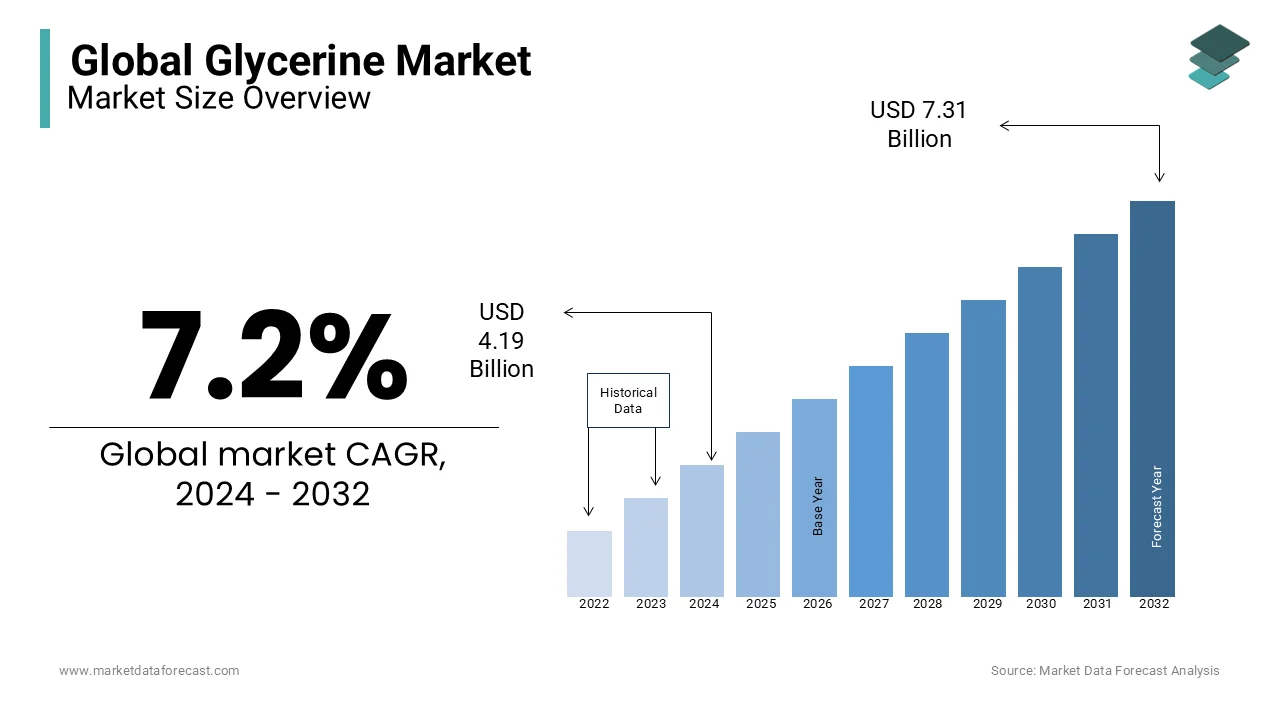
Glycerine, which is also known as glycerol, is a polyhydric alcohol mainly found in vegetable and animal oils. The product is derived from either natural resources or petroleum feedstock and is generated during the manufacturing process of biodiesel and soap. The market has numerous applications in medical formulations, industrial chemical manufacturing, and moisture retention. It is also extensively utilized in the food industry as a sweetener and humectant.
REPORT COVERAGE
| REPORT METRIC | DETAILS |
| Market Size Available | 2025 to 2034 |
| Base Year | 2025 |
| Forecast Period | 2026 to 2034 |
| CAGR | 7.2% |
| Segments Covered | By Source, Process, Application,n, and Region. |
| Various Analyses Covered | Global, Regional & Country Level Analysis, Segment-Level Analysis, DROC, PESTLE Analysis, Porter’s Five Forces Analysis, Competitive Landscape, Analyst Overview on Investment Opportunities |
| Regions Covered | North America, Europe, APAC, Latin America, Middle East & Africa |
| Market Leaders Profiled | The Dow Chemical Company, Procter & Gamble, Parchem fine & specialty chemicals, NOW Foods, Essential Depot, VVF L.L.C, Cargill Incorporated, Dutch Glycerin Refinery (DGR), Avril Group, Inc., and Others. |
SEGMENTAL ANALYSIS
By Source Insights
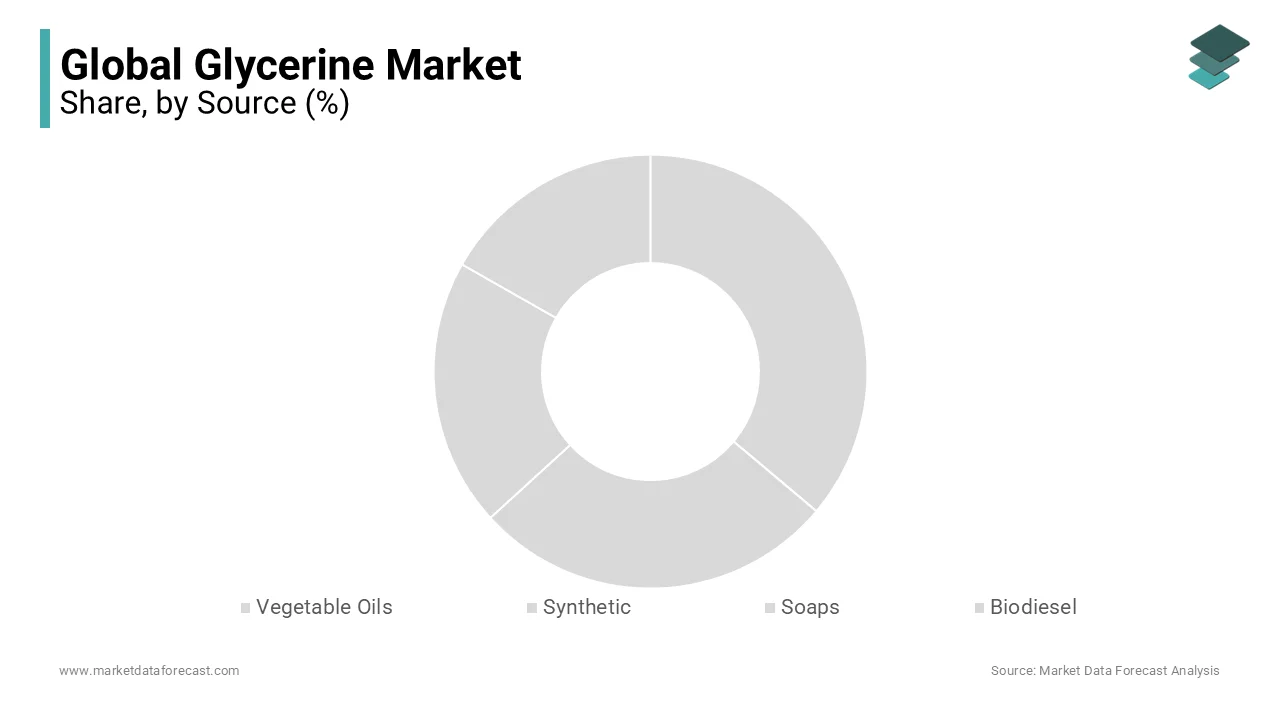
Growing demand for natural ingredients among end-use shoppers with respect to cosmetics, food & beverages, and personal care Industries is predicted to contribute significantly towards the growth of the market.
By Process Insights
Transesterification of triglycerides with alcohols is a reaction that's extensively employed in biodiesel production plants. The growing demand for renewable sources of energy is predicted to drive the biodiesel market over the next decade, thereby driving the growth of the overall Glycerine market.
By Application Insights
The personal care segment is projected to develop at the highest growth rate during the forecast period.
REGIONAL ANALYSIS
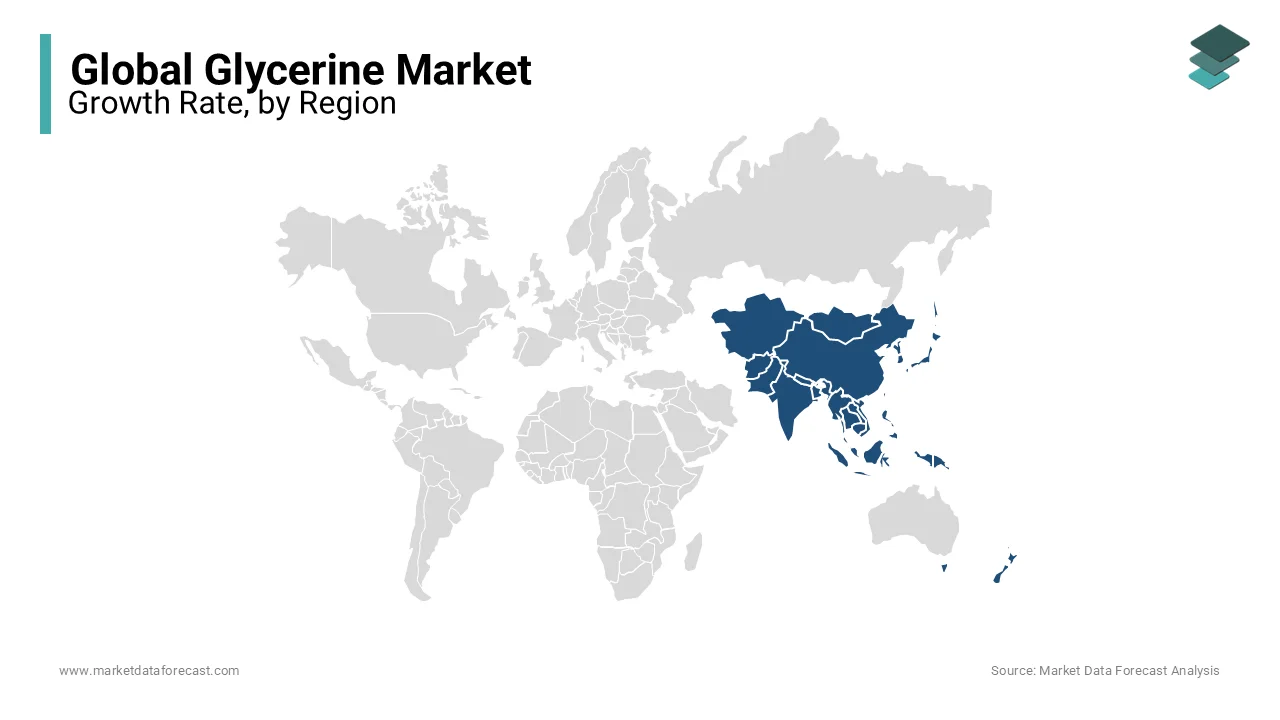
The Asia-Pacific region is the largest marketplace for glycerol, in terms of revenue, followed by Europe and North America. The expansion is mainly attributed to the increasing consumption in countries like China, India, and Japan, withregards to personal care products. A significant rise in demand for hair care and oral care products is also leading to the expansion of the Glycerine market.
KEY MARKET PLAYERS
Some of the market players dominate the global glycerine market.
- The Dow Chemical Company
- Procter & Gamble
- Parchem fine & specialty chemicals
- NOW Foods
- Essential Depot
- VVF L.L.C
- Cargill Incorporation
- Dutch Glycerin Refinery (DGR)
- Avril Group, Inc
MARKET SEGMENTATION
This research report on the global glycerine market is segmented and sub-segmented into the following categories.
By Source
- Vegetable Oils
- Synthetic
- Soaps
- Biodiesel
By Process
- Saponification
- Transesterification
- Fat Splitting
By Application
- Industrial chemicals
- Food and Beverages
- Personal Care
- others
By Region
- North America
- Europe
- Asia Pacific
- Latin America
- Middle East and Africa