- Product Description Description
- Table of Contents TOC
- List of Table & Figure LOT
- Get Free Sample PDF Sample PDF
Market Size, 2025
$99.01 BnMarket Estimate, 2026
$121.79 BnMarket Forecast, 2034
$638.47 BnCAGR, 2026–2034
23.01%Executive Summary: Green Data Center Market
- Market Scope: Comprehensive global green data center industry analysis covering equipment components, cooling technologies, end-user adoption, regional leadership frameworks, strategic corporate developments, and competitive landscapes.
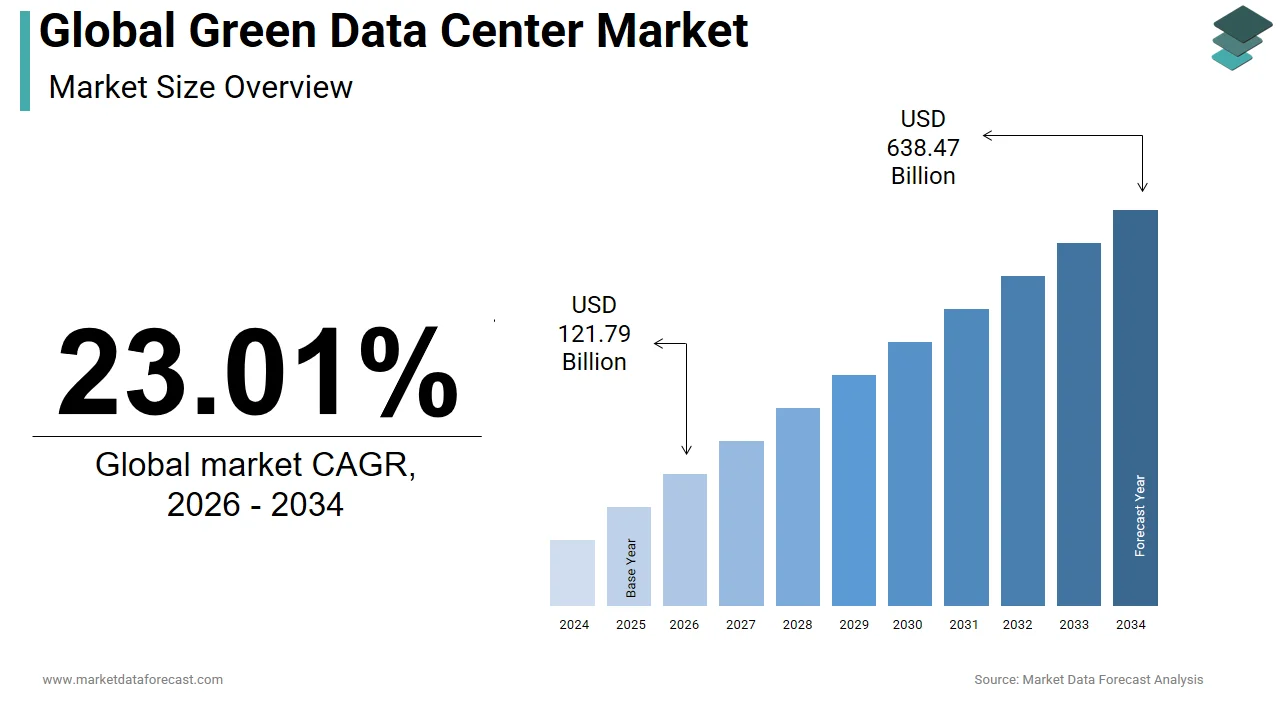
- Market Valuation: Valued at USD 99.01 billion (2025), estimated at USD 121.79 billion (2026), and projected to reach USD 638.47 billion by 2034, registering a robust CAGR of 23.01% (2026–2034).
- Primary Growth Drivers: Escalating energy costs, stringent environmental regulations mandating carbon neutrality, high power consumption from AI/IoT/big data workloads, renewable energy integration, and AI-driven energy management. Restraints include high initial CapEx and legacy infrastructure constraints.
Key Market Segment Metrics (2026–2034)
| Category | Leading Segment / Region (Position) | Fastest-Growing Segment |
|---|---|---|
| By Component & End-User | Equipment (primary component segment) & Cloud Service Providers (lead end-user adoption) | Immersion cooling systems and AI-driven energy management optimization platforms |
| By Organization & Application | Large enterprises (dominate organization size) & BFSI / Medical Care & Life Sciences verticals | SMEs adopting modular, energy-efficient containerized data center solutions |
| By Region | North America (dominated global green data center market in 2024 with the largest share) | Asia-Pacific (fastest-growing regional market driven by economic development in China and India) |
Major Market Players & Market Structure
Market Structure: Highly competitive global digital infrastructure ecosystem characterized by corporate renewable energy procurement, edge computing innovations, modular containerized deployments, and rigorous cybersecurity compliance (ISO 27001, SOC 2).
Key Companies: Cisco Systems, Oracle, Hewlett-Packard, Dell, IBM, EMC Corp, APC Corp, Huawei Technologies, and Fujitsu Corp.
Global Green Data Center Market Size
The global green data center market was valued at USD 99.01 billion in 2025. The global market is predicted to reach USD 121.79 billion in 2026 and USD 638.47 billion by 2034, growing at a CAGR of 23.01% from 2026 to 2034.
Green data centers represent specialized computing facilities designed to minimize environmental impact through energy-efficient hardware, renewable power sources, and advanced cooling technologies. According to the International Energy Agency, data centers consumed approximately 460 terawatt-hours of electricity globally in 2022, which accounts for nearly 2% of total worldwide electricity demand, highlighting the urgent need for efficiency improvements. According to the European Environment Agency, the digital sector accounts for a notable share of greenhouse gas emissions, prompting stringent regulatory frameworks that require operators to adopt cleaner technologies. Modern green data centers utilize liquid cooling systems, waste heat recovery mechanisms, and solar or wind energy integration to achieve net-zero targets. The shift involves replacing traditional air conditioning with immersion cooling, which reduces energy consumption by up to 40%. Furthermore, these facilities employ intelligent software-defined infrastructure to dynamically allocate resources, ensuring servers operate at optimal efficiency levels. This evolution supports the growing demand for sustainable digital services as enterprises seek to align their IT operations with environmental stewardship principles while managing escalating operational costs associated with power consumption.
MARKET DRIVERS
Rigorous Environmental Regulations and Carbon Neutrality Targets
Governments worldwide are implementing rigorous environmental regulations and carbon neutrality target primarily drive the global green data center market growth. According to the European Union Green Deal, member states are legally bound to achieve climate neutrality by 2050, requiring significant reductions in industrial emissions, including those from the digital infrastructure sector. As per the United States Environmental Protection Agency, federal agencies must procure 100% carbon pollution-free electricity by 2030, setting a precedent for private sector compliance and influencing broader market behavior. These regulatory pressures manifest in mandatory energy efficiency standards, such as the Energy Star certification for servers and strict limits on water usage effectiveness in cooling systems. In China, the Ministry of Industry and Information Technology has issued guidelines requiring new large-scale data centers to maintain a power usage effectiveness ratio below 1.25, compelling operators to invest in advanced cooling and renewable energy integration. Non-compliance results in substantial fines restricted operating licenses, and reputational damage, which drives proactive adoption of green technologies. Furthermore, carbon pricing mechanisms in various jurisdictions increase the operational cost of fossil fuel-based energy, making renewable sources financially attractive. Operators must regularly report their carbon footprints and energy consumption metrics, creating transparency that stakeholders use to evaluate corporate sustainability performance. This regulatory landscape creates a non-negotiable demand for green data center solutions as organizations seek to avoid legal penalties and align with national climate strategies while maintaining continuous service delivery.
Corporate Sustainability Commitments and ESG Criteria
Major corporations are increasingly prioritizing environmental, social, and governance (ESG) criteria in their operational strategies, which is further contributing to the global market expansion. According to CDP (formerly the Carbon Disclosure Project), over 18,700 companies disclosed environmental data in recent reporting periods, with many setting ambitious net-zero targets that extend to their supply chains, including cloud and hosting providers. As per BlackRock, the world's largest asset manager, sustainability risks are now central to investment decisions, with investors actively divesting from companies with poor environmental records and favoring those with robust green infrastructure. Tech giants such as Microsoft, Amazon, and Google have pledged to operate on 100% renewable energy and achieve carbon-negative status by 2030, driving massive investments in green data center technologies. These corporate buyers require detailed transparency regarding the energy sources and efficiency metrics of their service providers, forcing vendors to adopt verifiable green practices. The competitive advantage of branding services as environmentally friendly attracts enterprise clients who face similar pressure from their own customers and regulators. Furthermore, green bonds and sustainability-linked loans offer favorable financing terms for companies that demonstrate measurable progress in reducing their carbon footprint, enabling them to fund expensive infrastructure upgrades. This financial and reputational incentive structure ensures that sustainability is not merely a marketing tactic but a core operational requirement. Consequently, data center providers must integrate renewable energy procurement, energy-efficient hardware, and circular economy principles to retain and attract high-value corporate clients who view environmental responsibility as critical to long-term business viability.
MARKET RESTRAINTS
High Upfront Capital Investment and Extended Payback Periods
The substantial upfront investment required to deploy green data center technologies is a significant barrier to entry, particularly for small and medium-sized operators who lack the financial resources of major hyperscalers. For instance, constructing an advanced green data center with cutting-edge cooling systems and renewable energy integration incurs a considerable capital premium over traditional facilities due to the specialized equipment required. As per Deloitte insights, the implementation of liquid cooling systems, which are essential for high-density computing environments, requires extensive retrofitting of existing infrastructure, further escalating capital outlays. Renewable energy sources such as onsite solar arrays or wind turbines demand significant land area and storage solutions like battery energy storage systems to ensure an uninterrupted power supply, adding to the initial burden. Small operators often rely on debt financing, which becomes expensive when interest rates are high, limiting their ability to compete with well-capitalized tech giants who can absorb these costs through economies of scale. The long payback period for green investments, typically ranging from 5 to 7 years, discourages short-term-oriented investors who prefer quicker returns. Additionally, the rapid pace of technological obsolescence means that expensive green hardware may become outdated before it fully amortizes, creating financial risk. This capital intensity consolidates the market among large players who can spread costs across vast customer bases, leaving smaller entities struggling to modernize their facilities and meet emerging green standards without compromising profitability or service quality.
Severe Shortage of Skilled Technical Talent
The green data center market faces a critical shortage of skilled professionals capable of designing, operating, and maintaining complex sustainable infrastructure systems, which is creating a bottleneck for the global green data center market. According to industry workforce studies, there is a global deficit of millions of skilled data center technicians and engineers, with specific expertise in energy efficiency and renewable energy integration remaining largely unfilled. As per LinkedIn Workforce Reports, jobs related to sustainability and green technology have grown by 35% year over year, yet the talent pool has expanded by only 12%, indicating a severe mismatch between demand and supply. Managing green data centers requires multidisciplinary knowledge encompassing thermodynamics for liquid cooling, electrical engineering for renewable integration, and data science for AI-driven energy optimization skills that few traditional IT professionals possess. Universities and vocational training programs have been slow to update curricula to include these specialized skills, leaving employers to rely on expensive external consultants or lengthy internal training periods. The complexity of new technologies such as immersion cooling and hydrogen fuel cells means that even experienced staff require continuous upskilling to handle maintenance and troubleshooting effectively. High turnover rates in the tech industry exacerbate the problem, as trained personnel are frequently poached by competitors offering higher salaries. This talent gap leads to suboptimal performance of green systems, increased downtime, and higher operational risks as inexperienced staff struggle to manage sophisticated sustainability tools. Without a robust pipeline of qualified professionals, the industry cannot scale green initiatives efficiently, forcing operators to delay projects or rely on less effective manual processes that undermine the intended environmental benefits.
MARKET OPPORTUNITIES
Integration of Artificial Intelligence and Machine Learning Optimization
The application of artificial intelligence (AI) and machine learning (ML) algorithms in data center operations is a prominent opportunity for the green data center market. According to International Data Corporation (IDC), AI-driven data center management solutions can reduce energy consumption by up to 40% by dynamically adjusting cooling loads, server utilization, and power distribution based on real-time workload demands. As per Google DeepMind research, the implementation of machine learning models to control cooling systems in their data centers resulted in a 15% reduction in energy used for cooling, demonstrating the tangible financial and environmental benefits of intelligent automation. AI platforms analyze vast amounts of telemetry data from sensors monitoring temperature, humidity, airflow, and power usage to identify inefficiencies and predict potential failures before they occur. This proactive approach allows operators to optimize resource allocation, ensuring servers run at peak efficiency while minimizing idle power draw. Furthermore, AI enables dynamic workload shifting, where computationally intensive tasks are routed to locations with excess renewable energy availability, maximizing the use of clean power and reducing reliance on fossil fuels. The integration of digital twins allows operators to simulate changes and test efficiency improvements without disrupting live operations. As energy costs rise and sustainability targets become stricter, AI-powered optimization becomes indispensable for maintaining competitiveness. This technology not only lowers operational expenditures but also enhances reliability and extends the lifespan of hardware by preventing overheating and stress, thereby supporting the broader adoption of green data center practices across the industry.
Adoption of Circular Economy Models and E-Waste Management
The shift toward circular economy models in data center operations provides a lucrative opportunity for companies to reduce waste, recover valuable materials and create new revenue streams through responsible hardware lifecycle management. According to the Ellen MacArthur Foundation, adopting circular practices such as refurbishing, repurposing, and recycling IT equipment can reduce electronic waste by up to 80% while recovering critical raw materials like gold, copper, and rare earth elements. As per Statista, the global e-waste market is projected to reach 74 million metric tons by 2030, presenting a significant challenge and opportunity for data center operators to implement take-back programs and certified recycling partnerships. Companies can extend the life of servers and storage devices by upgrading components rather than replacing entire units, reducing the carbon footprint associated with manufacturing new hardware. Selling refurbished equipment to secondary markets or donating it to educational institutions enhances corporate social responsibility profiles and generates residual value from assets that would otherwise be discarded. Furthermore, designing data centers with modularity in mind allows for easier disassembly and material recovery at end-of-life, aligning with emerging extended producer responsibility regulations. This approach reduces dependency on volatile raw material supplies and mitigates the environmental impact of mining and processing. By integrating circular economy principles into their core business models, data center providers can differentiate themselves in a crowded market, appealing to environmentally conscious clients and investors. This strategy transforms waste management from a cost center into a value-generating activity supporting both economic and ecological sustainability goals.
MARKET CHALLENGES
Challenges in Measuring Scope 3 Emissions and Greenwashing Risks
Accurately measuring and verifying the carbon footprint of green data centers remains a significant challenge due to the lack of standardized methodologies, inconsistent data quality, and the complexity of Scope 3 emissions. According to the Greenhouse Gas Protocol, calculating Scope 3 emissions is notoriously difficult and often relies on estimates rather than precise measurements. As per Carbon Trust, many organizations struggle to obtain granular data from suppliers regarding the embodied carbon of servers, networking equipment, and construction materials, leading to incomplete or inaccurate sustainability reports. The absence of universal standards for defining what constitutes a green data center allows for greenwashing, where operators exaggerate their environmental credentials without substantive proof. Different regions use varying grid emission factors to calculate the carbon intensity of electricity consumption, making cross-border comparisons unreliable and confusing for global clients. Furthermore, the dynamic nature of renewable energy sources means that the carbon intensity of power fluctuates hourly, requiring sophisticated monitoring tools that many operators lack. Auditing these complex systems requires specialized expertise and third-party verification, which is costly and time-consuming. Without reliable and comparable data, stakeholders cannot make informed decisions about the true environmental impact of data center services. This uncertainty undermines trust in green claims and slows down the adoption of best practices as operators hesitate to commit to ambitious targets they cannot accurately measure or defend against scrutiny.
Intermittency of Renewable Energy and Grid Reliability
The inherent intermittency of renewable energy sources such as solar and wind power presents a critical challenge for green data centers that require an uninterrupted power supply (UPS) to maintain service level agreements (SLAs) and prevent data loss. According to the National Renewable Energy Laboratory, solar and wind generation can vary significantly due to weather conditions, time of day, and seasonal changes, creating mismatches between energy production and data center demand. As per the International Energy Agency, without adequate energy storage solutions, relying solely on renewables can compromise the reliability of critical IT infrastructure, necessitating backup from fossil fuel-based generators, which defeats the purpose of going green. Battery energy storage systems (BESS), while improving in capacity and cost, remain expensive and have limited lifespans, requiring frequent replacement and posing environmental disposal challenges. Hydrogen fuel cells offer a promising alternative, but the infrastructure for green hydrogen production and distribution is still in nascent stages and lacks scalability for large-scale data center applications. Grid instability in regions with high renewable penetration further complicates operations, as frequency fluctuations can damage sensitive electronic equipment. Operators must invest in sophisticated hybrid power management systems that seamlessly switch between renewable sources, battery storage, and grid power, ensuring continuous availability. However, these systems add complexity and cost to the infrastructure. The technical difficulty of balancing variable renewable supply with constant high demand forces many operators to maintain diesel generators as a fallback, which conflicts with net-zero goals. Until energy storage technology becomes more affordable and efficient, the reliability concern will remain a major hurdle for fully green data center deployments.
REPORT COVERAGE
| REPORT METRIC | DETAILS |
| Market Size Available | 2025 to 2034 |
| Base Year | 2025 |
| Forecast Period | 2026 to 2034 |
| Segments Covered | By Component, Organization Size, End User, Vertical, and Region |
| Various Analyses Covered | Global, Regional, and Country-Level Analysis, Segment-Level Analysis, Drivers, Restraints, Opportunities, Challenges; PESTLE Analysis; Porter’s Five Forces Analysis, Competitive Landscape, Analyst Overview of Investment Opportunities |
| Regions Covered |
|
| Market Leaders Profiled | Cisco Systems, Oracle, Hewlett-Packard, Schneider Electric SE, Dell, IBM, EMC Corp, APC Corp, Siemens AG, Huawei Technologies, Vertiv Holdings Co, Fujitsu Corp, among others. |
SEGMENTAL ANALYSIS
By Component Insights
The equipment segment dominated the market by capturing the leading share of the global market in 2025 due to the fundamental necessity of physical hardware infrastructure, including energy-efficient servers, advanced cooling systems, and renewable power generation units. The dominance of the equipment segment is primarily driven by the massive capital expenditure required to procure specialized hardware designed for minimal energy consumption and maximum thermal efficiency. According to Gartner, global spending on data center systems reached approximately 200 billion dollars in 2023, with a significant portion allocated to high-efficiency models that meet strict power usage effectiveness standards. According to the Uptime Institute, the cost of physical infrastructure accounts for nearly 60% of total data center construction budgets, highlighting the financial weight of hardware procurement in green initiatives. Modern green data centers rely on liquid-cooled servers, immersion cooling tanks, and direct-to-chip cooling technologies, which are significantly more expensive than traditional air-cooled racks but offer superior performance and energy savings. The transition to these advanced systems requires a complete overhaul of existing facilities, involving the replacement of legacy servers with next-generation processors that operate at lower voltages and generate less heat. Furthermore, the integration of renewable energy infrastructure adds substantial upfront costs to the equipment category. Organizations must also invest in smart power distribution units and uninterruptible power supplies that optimize energy flow and reduce waste. The continuous need to upgrade hardware to keep pace with increasing computational demands while maintaining sustainability goals ensures that equipment remains the largest component segment. This persistent demand for physical assets sustains the segment's leadership as operators prioritize tangible infrastructure improvements to achieve measurable reductions in carbon footprints and operational energy costs.
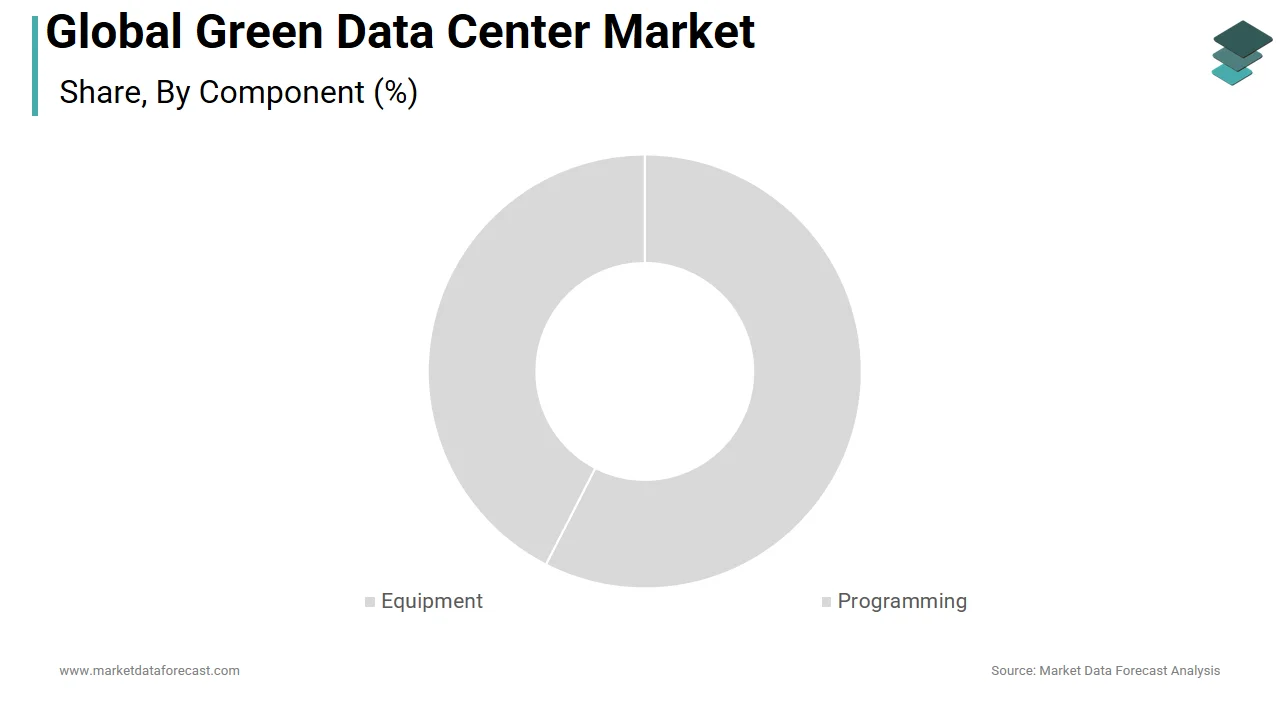
On the other hand, the programming segment is the fastest-growing component in the green data center market and is estimated to exhibit a CAGR of 15.4% over the forecast period owing to the increasing complexity of managing sustainable operations and the need for real-time data analytics to minimize waste. The integration of artificial intelligence and machine learning into data center management software is a primary driver for the rapid growth of the programming segment as organizations seek automated solutions to optimize energy usage. According to International Data Corporation (IDC), the market for AI-driven data center infrastructure operations software is expected to grow at twice the rate of traditional management tools, reaching 4.5 billion dollars by 2027. As per Google DeepMind research, AI algorithms can reduce cooling energy consumption by up to 40% by predicting thermal patterns and adjusting cooling systems proactively rather than reactively. These software solutions analyze vast amounts of sensor data, including temperature, humidity, airflow, and power draw, to identify inefficiencies and recommend corrective actions in real time. The ability to dynamically allocate workloads to servers based on energy availability and thermal conditions allows operators to maximize the use of renewable energy sources and minimize reliance on grid power. Furthermore, predictive maintenance features embedded in these programs help prevent equipment failures that could lead to energy spikes or downtime. The scalability of software solutions makes them attractive to operators of all sizes as they can be deployed across multiple facilities without significant physical infrastructure changes. As energy costs rise and sustainability reporting becomes more stringent, the demand for intelligent software that provides actionable insights and automated control continues to surge. This technological shift transforms energy management from a manual, reactive process to an automated, proactive strategy, driving substantial investment in programming components.
By Organization Size Insights
The large enterprises segment accounted for a dominant share of the global market in 2025. The growth of the large enterprises segment in the global market is attributed to their extensive IT infrastructure, substantial financial resources, and heightened exposure to regulatory and stakeholder pressure regarding environmental sustainability. These organizations operate massive data centers that consume significant amounts of energy, making efficiency improvements a top priority. Large enterprises possess the necessary capital to invest in expensive green technologies such as liquid cooling systems, renewable energy integration, and advanced server hardware, which are often prohibitive for smaller organizations. According to the PwC Global CEO Survey, large corporations allocate an average of 5% of their annual revenue to technology investments, including sustainability initiatives, enabling them to undertake comprehensive data center modernization projects. As per the Accenture Technology Vision report, 76% of large enterprises have established dedicated sustainability offices with budgets exceeding 50 million dollars annually, specifically tasked with reducing carbon footprints and improving energy efficiency. These financial capabilities allow large firms to partner with leading technology providers and engage top-tier consultants to design and implement state-of-the-art green data centers. They can also absorb the higher upfront costs of renewable energy infrastructure, such as onsite solar farms or power purchase agreements (PPAs) for wind energy, which provide long-term savings but require significant initial outlay. Furthermore, large enterprises benefit from economies of scale when purchasing green equipment, negotiating better prices and terms with vendors due to the volume of their orders. This financial advantage enables them to lead the market in adopting innovative technologies and setting industry standards for sustainability. The ability to invest in pilot projects and experimental technologies also allows large firms to stay ahead of regulatory curves and competitive pressures, ensuring their data centers remain efficient and compliant.
However, the small and medium-sized enterprises segment is estimated to showcase the fastest CAGR of 17.4% over the forecast period in the global market owing to the availability of affordable cloud-based green solutions and increasing awareness of operational cost savings. The proliferation of cloud computing services offered by major providers who prioritize sustainability has enabled small and medium-sized enterprises to access green data center capabilities without significant capital investment. According to Gartner, by 2025, over 85% of small and medium-sized enterprises will rely on cloud providers for their infrastructure needs, benefiting from the energy efficiency and renewable energy commitments of hyperscalers. As per the Microsoft Azure sustainability report, small businesses migrating to cloud platforms can reduce their carbon footprint by up to 98% compared to running on-premises servers due to the superior efficiency of large-scale data centers. Cloud providers leverage economies of scale to implement advanced cooling technologies and renewable energy sources that are inaccessible to smaller organizations. This shift allows SMEs to claim indirect sustainability benefits by associating with green cloud providers, enhancing their brand image and meeting customer expectations. Furthermore, managed service providers offer tailored green hosting solutions that include energy-efficient hardware and carbon offset programs at affordable monthly rates. The ease of migration and lack of maintenance burden make these solutions highly attractive to SMEs with limited IT staff. As cloud adoption continues to rise among smaller businesses, the demand for green data center services through indirect channels grows rapidly. This democratization of sustainability technology enables SMEs to participate in the green economy, driving significant growth in this segment.
REGIONAL ANALYSIS
North America Green Data Center Market Analysis
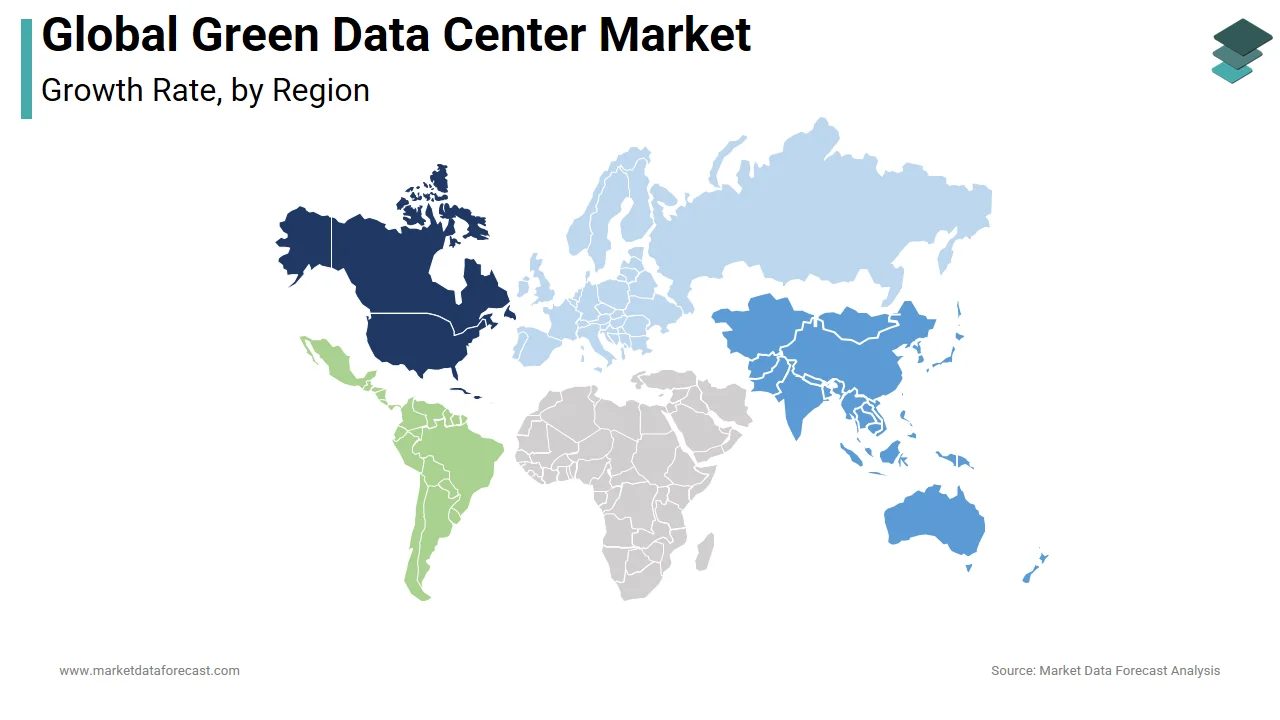
North America dominated the market with 36.5% of the global market share in 2025 and is likely to maintain robust market expansion over the next few years due to advanced technology infrastructure, strong regulatory frameworks, and a high concentration of major cloud providers. The region benefits from early adoption of sustainability practices and significant investment in renewable energy sources. The United States leads the regional market with substantial investments in green data center technologies driven by federal and state-level incentives. According to the U.S. Department of Energy, the federal government has allocated billions of dollars for clean energy projects, including those supporting data center efficiency. As per the American Council for an Energy-Efficient Economy, several states have implemented strict energy efficiency standards for data centers, encouraging the adoption of green technologies. Major tech hubs in California, Virginia, and Texas host large-scale green data centers operated by leading cloud providers who prioritize renewable energy usage. The presence of innovative startups and venture capital funding further accelerates the development of new green solutions. Corporate demand for sustainable IT services is high, with many Fortune 500 companies setting ambitious carbon neutrality goals. This combination of policy support, corporate leadership, and technological innovation maintains North America's dominant position in the global green data center market.
Europe Green Data Center Market Analysis
Europe is poised to accelerate its green infrastructure transition over the next few years, driven by tightening climate mandates, circular economy initiatives, stringent environmental regulations, ambitious climate goals, and high awareness of sustainability issues among consumers and businesses. The region is a leader in implementing circular economy principles and energy efficiency standards. Germany leads the European market with a robust industrial base and a strong commitment to the Energiewende (energy transition) policy. According to the German Federal Ministry for Economic Affairs and Climate Action, the country aims to phase out nuclear power and increase its renewable energy share, driving demand for green data centers. As per the German Data Center Association, operators are increasingly adopting waste heat recovery systems to supply district heating networks, enhancing overall efficiency. Strict adherence to European Union energy efficiency directives ensures high standards for new constructions. Frankfurt remains a major hub for data centers due to its connectivity and infrastructure. The focus on sustainability and innovation keeps Germany at the forefront of the European green data center market.
Asia Pacific Green Data Center Market Analysis
Asia Pacific is projected to experience rapid acceleration over the next few years, fueled by surging digitalization, supportive government policies, increasing internet penetration, and government initiatives to promote sustainable infrastructure. China leads the region with massive-scale data center construction and national policies promoting green computing. According to the Ministry of Industry and Information Technology, China has launched the "East Data, West Computing" project to optimize resource allocation and promote the use of renewable energy in western regions. As per the China Academy of Information and Communications Technology, large-scale data centers are required to meet strict power usage effectiveness targets, driving the adoption of liquid cooling and other green technologies. Major tech companies are investing heavily in green facilities to support cloud and AI services. The scale of investment and policy support makes China a key driver of growth in the Asia Pacific market. India exhibits exceptional growth fueled by the Digital India initiative and rising demand for cloud services. According to the Ministry of Electronics and Information Technology, the government is promoting green data centers through incentives and guidelines for energy efficiency. As per the National Association of Software and Service Companies (NASSCOM), Indian IT companies are increasingly adopting sustainable practices to meet global client requirements. Hyderabad and Bangalore are emerging as hubs for green data centers due to favorable climates and policy support. The combination of digital growth and sustainability focus drives rapid expansion in India.
Middle East and Africa Green Data Center Market Analysis
Middle East and Africa is anticipated to show steady market development over the next few years as regional economies leverage solar resources for digital expansion. Middle East and Africa represents an emerging market with growing investments in digital infrastructure and renewable energy projects, driving gradual adoption of green data center solutions. The region is leveraging its immense solar potential to power sustainable computing facilities. The United Arab Emirates leads the region with ambitious smart city projects and renewable energy targets. According to the Dubai Electricity and Water Authority, the emirate aims to generate 75% of its energy from clean sources by 2050, supporting green data center development. As per the Dubai Digital Authority, new data centers are required to meet high efficiency standards, encouraging the adoption of green technologies. Dubai and Abu Dhabi are becoming hubs for sustainable digital infrastructure in the region. Strong government support and investment in renewables drive market growth. Furthermore, Saudi Arabia demonstrates rapid growth supported by its Vision 2030 diversification program. According to the Saudi Energy Efficiency Center, the kingdom is actively promoting energy-efficient technologies across all sectors, including digital infrastructure and data centers.
COMPETITIVE LANDSCAPE
The green data center market exhibits intense competition characterized by the presence of established industrial giants alongside specialized technology providers and emerging sustainable infrastructure startups. Major competitors differentiate themselves through comprehensive product portfolios, advanced energy efficiency technologies, and strong sustainability credentials rather than price alone. The landscape features continuous innovation cycles where companies regularly release new cooling systems, power management solutions, and software platforms to meet evolving environmental standards and performance requirements. Strategic alliances between hardware manufacturers, software developers, and renewable energy providers create integrated ecosystems that offer end-to-end green solutions for complex data center challenges. New entrants focusing on niche technologies such as hydrogen fuel cells or advanced battery storage challenge incumbent players by offering alternative pathways to decarbonization. The market witnesses frequent mergers and acquisitions as larger firms seek to acquire specialized expertise and expand their sustainable technology offerings. Customer retention becomes critical as switching costs remain high due to deep integration of infrastructure components, forcing vendors to provide exceptional support and continuous innovation. Regulatory pressures drive competition based on compliance capabilities and verified sustainability metrics, making transparency and third-party certifications essential for maintaining competitive advantage in this rapidly evolving sector.
KEY MARKET PLAYERS
The leading companies operating in the global green data center market include:
- Cisco Systems
- Oracle
- Hewlett-Packard
- Schneider Electric SE
- Dell
- IBM
- EMC Corp.
- APC Corp.
- Siemens AG
- Huawei Technologies
- Vertiv Holdings Co.
- Fujitsu Corp.
TOP PLAYERS IN THE MARKET
- Schneider Electric SE stands as a global leader in energy management and automation, providing comprehensive solutions for green data centers, including the EcoStruxure platform and advanced cooling technologies. The company actively strengthens its market position by integrating artificial intelligence into its power and cooling systems to optimize energy efficiency and reduce carbon footprints for clients worldwide. Schneider Electric recently expanded its portfolio of liquid cooling solutions to support high-density computing environments required by artificial intelligence workloads. The organization collaborates with major cloud providers to design net-zero data centers utilizing renewable energy sources and circular economy principles. Their commitment to sustainability is demonstrated through rigorous certification programs and partnerships that promote energy-efficient infrastructure development. By focusing on digital transformation and electrification, Schneider Electric enables data center operators to achieve significant reductions in power usage effectiveness while maintaining operational reliability and performance standards across diverse geographic regions.
- Vertiv Holdings Co specializes in critical digital infrastructure and continuity solutions, offering innovative power, cooling, and IT management technologies designed for sustainable data center operations. The company enhances its market presence by developing advanced thermal management systems such as immersion cooling and direct-to-chip cooling that significantly lower energy consumption. Vertiv recently launched new modular power distribution units that integrate seamlessly with renewable energy sources, enabling flexible and scalable green data center deployments. The organization focuses heavily on software-defined power solutions that provide real-time visibility and control over energy usage, allowing operators to make data-driven decisions for efficiency improvements. Vertiv also emphasizes lifecycle services, including refurbishment and recycling programs that support circular economy goals. Their strategic investments in research and development ensure continuous innovation in energy-efficient technologies that meet the evolving needs of hyperscale colocation and enterprise customers seeking to minimize environmental impact.
- Siemens AG contributes significantly to the green data center market through its smart infrastructure division, which provides integrated electrical and digital solutions for energy-efficient facility management. The company strengthens its position by offering comprehensive building management systems that optimize heating, ventilation, and air conditioning operations in data centers using predictive analytics. Siemens recently introduced new switchgear and transformer technologies designed specifically for high-efficiency power distribution in sustainable data centers, reducing energy losses during transmission. The organization partners with technology providers to create holistic solutions that combine hardware efficiency with software intelligence for maximum sustainability impact. Siemens actively promotes the use of digital twins to simulate and optimize data center performance before construction, ensuring optimal energy usage from inception. Their focus on decarbonization and digitalization helps clients achieve regulatory compliance and corporate sustainability goals while enhancing operational resilience and reducing total cost of ownership for critical infrastructure assets globally.
TOP STRATEGIES USED BY KEY MARKET PARTICIPANTS
Key players in the green data center market predominantly focus on technological innovation by developing advanced cooling systems such as liquid immersion and direct-to-chip solutions that significantly reduce energy consumption for high-density computing workloads. Companies actively pursue strategic partnerships with renewable energy providers to secure long term power purchase agreements, ensuring a stable and sustainable electricity supply for their facilities. Investment in artificial intelligence and machine learning algorithms enables vendors to offer predictive maintenance and automated energy optimization tools that enhance operational efficiency and reduce waste. Expansion into emerging markets through localized manufacturing and tailored solutions helps companies capture growth opportunities in regions with rising digital infrastructure demands and supportive government policies. Development of circular economy practices, including hardware refurbishment and recycling programs, allows firms to minimize electronic waste and recover valuable materials, aligning with environmental regulations. Focus on comprehensive software platforms that provide real-time monitoring and reporting of sustainability metrics builds trust with clients facing strict regulatory compliance requirements and corporate social responsibility mandates.
MARKET SEGMENTATION
The global green data center market is fragmented based on component, organization size, end-user, vertical, and region.
By Component
- Equipment
- Programming
By Organization Size
- large
- SMEs
By End-User
- Cloud Service Providers
- Colocation Providers
By Vertical
- Medical Care and Life Sciences
- Banking, Financial Services, and Insurance
- IT & Telecom
- Public Area
By Region
- North America
- Europe
- Asia-Pacific
- Latin America
- The Middle East and Africa