- Product Description Description
- Table of Contents TOC
- List of Table & Figure LOT
- Get Free Sample PDF Sample PDF
Market Size, 2025
$425.1 MnMarket Estimate, 2026
$482.6 MnMarket Forecast, 2034
$1,330.9 MnCAGR, 2026–2034
13.52%Global Hemp Milk Market Size, Growth, Trends & Forecast (2025–2034)
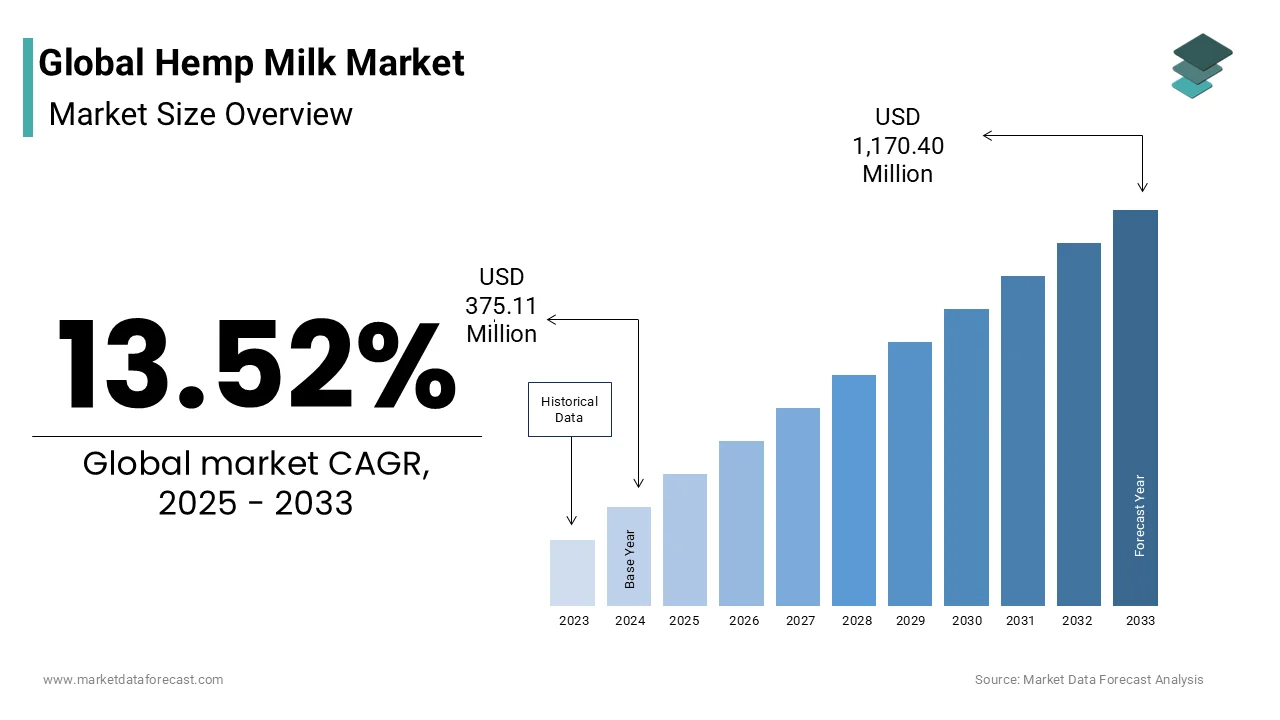
The global hemp milk market size was valued at USD 425.12 million in 2025, is anticipated to reach USD 482.60 million in 2026, and is projected to touch USD 1,330.96 million by 2034, expanding at a compound annual growth rate (CAGR) of 13.52% from 2026 to 2034. The market expansion is driven by the rising prevalence of lactose intolerance, allergen-free diets, consumer demand for sustainable and low environmental footprint beverages, and robust innovations in functional and fortified plant-based nutrition.
Key Executive Metrics (At-a-Glance)
- 2025 Base Valuation: USD 425.12 Million
- 2026 Current Valuation: USD 482.60 Million
- 2034 Forecast Valuation: USD 1,330.96 Million
- Compound Annual Growth Rate (CAGR): 13.52% (2026–2034)
- Dominant Variant Segment: Unflavored (led due to clean label trends, versatility, and high repeat purchase rates)
- Fastest-Growing Variant Segment: Flavored (projected to experience the fastest CAGR of 12.7% from 2026 to 2034)
- Dominant Category Segment: Unsweetened (captured 65.2% share in 2025 aligned with preventive health and sugar-reduction goals)
- Fastest-Growing Category Segment: Sweetened (expected to be the fastest-growing category segment with a CAGR of 14.2% from 2026 to 2034)
- Dominant Product Segment: Organic Hemp Milk (occupied 58.4% share in 2025 driven by chemical-free farming and environmental consciousness)
- Fastest-Growing Product Segment: Non-Organic (exhibiting a noteworthy CAGR of 13.8% due to price sensitivity in mass retail channels)
- Dominant Distribution Channel: Offline (accounted for a substantial share in 2025 through supermarkets, grocery stores, and physical retail infrastructure)
- Fastest-Growing Distribution Channel: Online (witnessing the highest CAGR of 19.4% driven by subscription models and quick commerce)
- Dominant Region: North America (accounted for 41.6% share in 2025 supported by regulatory clarity, mature retail frameworks, and high awareness)
Core Market Drivers
- Rising Prevalence of Lactose Intolerance and Allergen-Free Diets: High global burden of lactose malabsorption and widespread avoidance of common allergens like soy and nuts creating structural demand for safe plant-based substitutes.
- Sustainability and Low Environmental Footprint: Minimal water and land requirements compared to almond or dairy production, coupled with carbon-sequestering hemp cultivation cycles, attracting eco-conscious consumers.
Primary Market Restraints & Challenges
- Regulatory Ambiguity and Misconceptions: Inconsistent state-level labeling laws and persistent consumer stigma regarding hemp's botanical association with cannabis creating compliance hurdles.
- Fragmented Supply Chain & Sensory Acceptance: Immature food-grade processing infrastructure, high raw material costs, and a distinct earthy aftertaste constraining mass-market appeal.
Global Hemp Milk Market Segmentation Breakdown
| Segment Category | Largest Segment | Fastest-Growing Segment |
|---|---|---|
| By Variants | Unflavored (Leading Share in 2025) | Flavored (12.7% CAGR, 2026–2034) |
| By Categories | Unsweetened (65.2% Share in 2025) | Sweetened (14.2% CAGR, 2026–2034) |
| By Products | Organic (58.4% Share in 2025) | Non-Organic (13.8% CAGR) |
| By Distribution Channels | Offline (Substantial Share in 2025) | Online (19.4% CAGR) |
| By Region | North America (41.6% Share in 2025) | Asia Pacific & Latin America (High Growth Potential) |
Major Industry Players Profiled
Key global providers shaping the hemp milk market include Braham & Murray, Healthy Brands Collective, Wild Harvest Organics, Waska Farms, Pacific Foods of Oregon, and Drink Daily Greens.
Global Hemp Milk Market Size
The global hemp milk market size was valued at USD 425.12 million in 2025 and is expected to reach USD 1,330.96 million by 2034 from USD 482.60 million in 2026. The market's promising CAGR for the predicted period is 13.52%.
Hemp milk is a plant based dairy alternative derived from the seeds of the industrial hemp plant, scientifically known as Cannabis sativa, which contains negligible levels of tetrahydrocannabinol and is legally cultivated across numerous jurisdictions. Unlike other nut or grain based milks, hemp milk offers a naturally balanced profile of omega three and omega six fatty acids, complete plant protein with all nine essential amino acids, and is inherently free from lactose, soy, and gluten, which makes it suitable for a wide spectrum of dietary restrictions. As per the United States Department of Agriculture, over one point six million acres of hemp were licensed for cultivation in the United States in two thousand twenty one, which indicates a rapidly expanding raw material base for derivative products including beverages. Consumer interest in sustainable and nutrient dense alternatives to dairy has surged. Regulatory clarity under the two thousand eighteen Farm Bill in the United States and similar frameworks in Canada and the European Union have enabled mainstream retail distribution, while consumer education campaigns by advocacy groups such as the Hemp Industries Association have contributed to destigmatizing the product’s botanical origin.
MARKET DRIVERS
Rising Prevalence of Lactose Intolerance and Allergen Free Diets Is Driving Consumer Adoption
Increasing prevalence of lactose intolerance and allergen free diets is driving consumer adoption is among key drivers of the hemp milk market. The global burden of lactose malabsorption affects approximately sixty eight percent of the world’s population, according to a comprehensive review published in The Lancet Gastroenterology and Hepatology, creating a structural demand for non dairy alternatives. Within this demographic, many consumers also avoid soy and nuts due to allergenic concerns, which the American Academy of Allergy Asthma and Immunology estimates affect nearly two point five percent and one point two percent of American children, respectively. Hemp milk, being free from these common allergens, serves as a safe nutritional substitute without requiring medical supervision or specialized labeling.
Sustainability and Low Environmental Footprint Are Reshaping Consumer Preference
Hemp cultivation requires significantly less water and land compared to almond or dairy production, which further fuels the expansion of the hemp milk market. This makes it an environmentally rational choice for conscientious consumers. According to research conducted by the Stockholm Environment Institute, hemp uses more liters of water per liter of milk produced, than almond milk and dairy milk per liter. Apart from these, hemp plants sequester tons of carbon dioxide per hectare during a single growing season, as per the European Industrial Hemp Association, contributing to carbon negative production cycles when managed regeneratively. Major food service chains including Pret A Manger and Sweetgreen have incorporated hemp milk into their beverage menus, which cites sustainability metrics as a core criterion in supplier selection
MARKET RESTRAINTS
Regulatory Ambiguity and Misconceptions About Hemp Continue to Hinder Market Penetration
Hemp derived products still face inconsistent enforcement and lingering stigma due to their botanical association with cannabis, which restricts the growth of the hemp milk market. As per the National Conference of State Legislatures, as of two thousand twenty four, seventeen states maintain ambiguous or restrictive labeling laws that require disclaimers or prohibit the use of the word “milk” on plant based packaging, creating compliance complexity for national brands. According to a survey by the Consumer Brands Association, a portion of American consumers mistakenly believe hemp milk contains psychoactive compounds, a misconception that persists despite educational efforts. Retailers in conservative regions report reluctance to allocate prime shelf space due to perceived customer resistance.
Limited Flavor Profile and Sensory Acceptance Constrain Mass Market Appeal
It possesses a distinct earthy and nutty aftertaste that is less universally palatable, particularly among children and first time users, which hampers the expansion of the hemp milk market. As per studies, a portion of untrained panelists rated original hemp milk as pleasant compared to seventy eight percent for oat milk and seventy two percent for soy milk. Manufacturers have responded with vanilla and chocolate variants, but added sugars and stabilizers often compromise the clean label positioning that attracts health conscious buyers. Flavored hemp milk represents a smaller share than almond milk flavors.
MARKET OPPORTUNITIES
Expansion Into Functional and Fortified Beverage Categories Offers a High Growth Pathway
Expansion into functional and fortified beverage categories offers potential opportunities for the growth of the hemp milk market. It’s inherent nutritional density provides a natural platform for functional enhancement without synthetic additives, positioning it favorably in the rapidly growing functional beverage market valued at over one hundred seventy billion dollars globally, according to data from Euromonitor International. Manufacturers are launching hemp milk variants fortified with probiotics, vitamin D, calcium, and adaptogens such as ashwagandha and reishi, targeting specific wellness concerns including gut health, bone density, and stress resilience. As per the Global Wellness Institute, a portion of consumers now actively seek functional benefits in everyday beverages, beyond basic nutrition. Brands lhave introduced protein enhanced hemp milk per serving by appealing to fitness oriented demographics and competing directly with whey and pea protein shakes.
Emerging Markets in Asia and Latin America Offer Untapped Distribution and Cultural Integration Potential
Emerging economies in Asia and Latin America offer significant white space due to rising urban middle class populations, increasing prevalence of lifestyle diseases, and growing openness to plant based diets, which in turn creates new opportunities for the expansion of the hemp milk market. According to the Food and Agriculture Organization of the United Nations, per capita dairy consumption in countries like India and Brazil is rising but remains below global averages by creating an opening for alternative formats that align with local culinary traditions. In India, where lactose intolerance exceeds sixty five percent and religious dietary norms favor plant derived foods, startups like HEMP Mylk Co are introducing masala and turmeric infused hemp beverages tailored to chai culture. As per Brazil’s Ministry of Agriculture, a notable increase in registered hemp food product applications between two thousand twenty two and two thousand twenty four, which signals regulatory readiness. Localized production is also reducing import dependency.
MARKET CHALLENGES
Fragmented Supply Chain Limits Hemp Milk Market Growth
Supply chain disruptions due to fragmented seed sourcing and immature processing infrastructure is a major impediment to the hemp milk market growth. As per research, there are very few large-scale hemp seed processing facilities in North America, which has compelled many producers to depend on smaller processors or import from regions such as Canada and Eastern Europe where product quality may differ. According to sources, a major portion of the U.S. hemp seed supply has been directed toward CBD extraction, resulting in limited availability for food-grade use and leading to higher raw material costs. Weather volatility further compounds risk. Unlike soy or almond industries, which benefit from decades of commodity trading infrastructure and futures markets, hemp lacks standardized grading, storage protocols, and price hedging mechanisms. This exposes producers to margin compression and inventory instability, which discourages long term contracts with retailers and limiting promotional investment.
Consumer Confusion Around Nutritional Equivalence to Dairy Affects Category Credibility
Perception that it is nutritionally inferior to dairy, particularly regarding calcium and protein content, further affects the expansion of the hemp milk market. According to sources, a portion of respondents believed plant-based milks ‘cannot fully replace dairy nutritionally. Pediatricians and dietitians frequently caution parents that unfortified hemp milk contains only about two to three grams of protein per cup compared to eight grams in dairy, as confirmed by the United States Department of Agriculture FoodData Central database. Fortification can address micronutrient gaps, but inconsistent labeling and a lack of standardized enrichment protocols across brands create confusion. This knowledge gap suppresses household penetration and relegates hemp milk to niche or occasional use rather than daily dietary staple status.
REPORT COVERAGE
|
| DETAILS |
| Market Size Available | 2025 to 2034 |
| Base Year | 2025 |
| Forecast Period | 2026 to 2034 |
| CAGR | 13.52% |
| Segments Covered | By Variants, Categories, Product, Distribution Channel, and Region |
| Various Analyses Covered | Global, Regional & Country Level Analysis, Segment-Level Analysis, DROC, PESTLE Analysis, Porter’s Five Forces Analysis, Competitive Landscape, Analyst Overview of Investment Opportunities |
| Regions Covered | North America, Europe, APAC, Latin America, Middle East & Africa |
| Market Leaders Profiled | Braham & Murray, Healthy Brands Collective, Wild Harvest Organics, Waska Farms, Pacific Foods of Oregon, and Drink Daily Greens, and others |
SEGMENTAL ANALYSIS
By Variants Insights
The unflavored variant held the leading share of the hemp milk market in 2025. This dominance stems from its alignment with clean label trends and its versatility in culinary applications. Consumers seeking minimally processed, additive free nutrition gravitate toward unflavored options, particularly for use in smoothies, oatmeal, and coffee where neutral taste is preferred. According to the International Food Information Council, a portion of plant based milk buyers prioritize no artificial flavors or sweeteners as a top purchasing criterion. Also, unflavored hemp milk has the highest repeat purchase rate compared to that for flavored alternatives, as per research. Nutritionists also recommend unflavored versions for children and elderly populations to avoid unnecessary sugar intake. This health centric positioning, combined with broader compatibility in food service and home cooking, strengthens unflavored hemp milk as the volume leader.
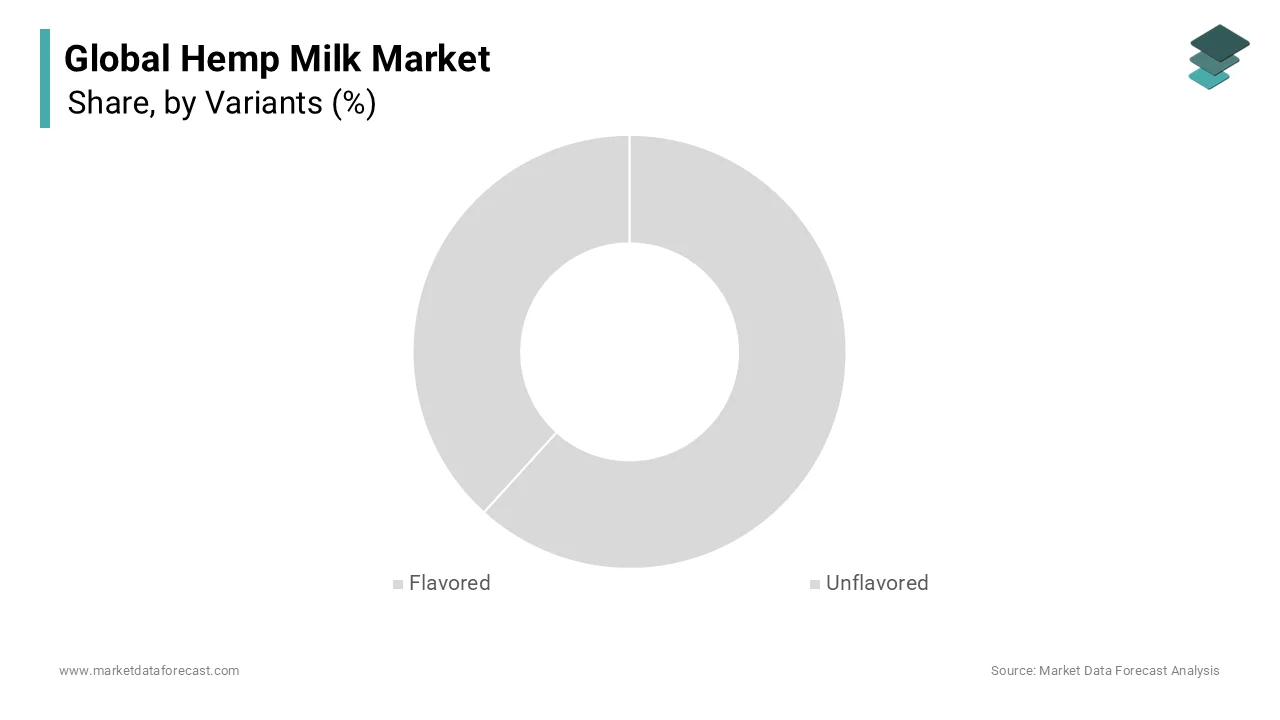
The flavored segment is likely to experience the fastest CAGR of 12.7% from 2026 to 2034. The expansion of the flavored segment is propelled by aggressive product innovation targeting younger demographics and expanding flavor profiles that mask hemp’s earthy aftertaste. Vanilla and chocolate remain top sellers, but new introductions like matcha swirl and turmeric chai are capturing attention in urban wellness cafes. As per sources, many consumers are likely to try a plant milk if it features an adventurous or globally inspired flavor. Food service chains such as have added flavored hemp milk to seasonal menus, which drives trial and social media visibility. Besides, reformulation using monk fruit and stevia instead of cane sugar has expanded appeal among diabetic and keto diet consumers.
By Categories Insights
The unsweetened segment dominated the hemp milk market by capturing 65.2% share in 2025. The dominance of the unsweetened segment is driven by the rising consumer demand for low sugar and low calorie alternatives aligned with preventive health goals. As per the Centers for Disease Control and Prevention, a portion of American adults are clinically obese, and sugar reduction is a primary dietary intervention recommended by physicians. Unsweetened hemp milk contains zero grams of added sugar per serving, which makes it a preferred choice for diabetics, intermittent fasters, and fitness enthusiasts. According to the Hartman Group’s two thousand twenty four Wellness and Nutrition Report, eighty three percent of frequent plant milk buyers actively check sugar content before purchase. This convergence of health policy, clinical guidance, and consumer vigilance sustains unsweetened hemp milk’s volume dominance.
The sweetened segment is on the rise and is expected to be the fastest growing segment in the global market by witnessing a CAGR of 14.2% from 2026 to 2034. The growth of the sweetened segment is fueled by flavor masking technology and targeted marketing toward children and convenience driven consumers. Parents seeking dairy alternatives for picky eaters are increasingly choosing lightly sweetened hemp milk, especially when fortified with calcium and vitamin D. Beverage companies are also leveraging natural sweeteners like coconut nectar and date syrup to appeal to clean label shoppers without compromising taste. Furthermore, coffee chains including Starbucks and Peet’s have introduced sweetened hemp milk as a default option in lattes and cold brews, which normalizes its consumption in mainstream beverage culture. These strategic placements and reformulations are accelerating trial and habitual adoption.
By Product Insights
The organic hemp milk segment was the top performer in the hemp milk market by occupying 58.4% share in 2025. The prominence of the organic hemp milk segment is attributed to the values of the core plant based consumer, including environmental stewardship, chemical free farming, and holistic wellness. As per sources, organic hemp is grown without synthetic pesticides or fertilizers, a key differentiator for million of American households that prioritize organic products. Organic plant-based milk consumers are often ready to spend more on certified products and tend to remain loyal to specific brands, as per research. Retail chains in the United States are giving prominent shelf space to organic hemp milk because it offers better profitability and fewer product returns. As per studies, organic hemp farming improves soil health compared to conventional practices by aligning well with the preferences of environmentally conscious buyers, according to sources.
The non organic segment is expected to exhibit a noteworthy CAGR of 13.8% during the forecast period owing the price sensitivity in mass retail channels and expansion into emerging markets where organic certification infrastructure is limited. Non organic hemp milk retails lower compared to that for organic, which makes it accessible to budget constrained households. As per research, major retailers like Walmart and Aldi have increased their range of non-organic hemp milk products, reflecting steady sales growth. In countries such as Brazil and Thailand, where hemp cultivation has only recently been legalized, non-organic production remains dominant because it is more cost-effective and easier to expand.
By Distribution Channel Insights
The offline segment accounted for substantial share of the hemp milk market in 2025. The entrenched grocery shopping habits of the core demographic and the important role of in store discovery and sampling had majorly contributed to the growth of the offline segment. Supermarkets, natural food stores, and club retailers offer consumers the ability to compare labels, check expiration dates, and immediately integrate purchases into weekly meal planning. According to the Food Marketing Institute, a portion of plant based milk buyers make their selection while physically browsing the refrigerated aisle. Retailers also drive trial through end cap promotions and in aisle demos. The perishable nature of refrigerated hemp milk also favors brick and mortar logistics, as same day purchase and consumption reduce spoilage concerns. Major chains have expanded cold case capacity for plant based beverages, which signals long term commitment to offline growth. This physical retail infrastructure, combined with shopper immediacy and tactile decision making, ensures offline channels remain the primary route to market.
The online segment is predicted to witness the highest CAGR of 19.4% over the forecast period due to factors such as subscription models, quick commerce delivery, and personalized digital marketing. online subscription platforms are witnessing strong recurring demand for hemp milk, making it one of the fastest-growing products in the plant-based category. According to sources, urban consumers, especially younger adults, prefer ordering hemp milk online during weekdays as part of their regular wellness habits. Digital retailers are increasingly using personalized recommendations and bundled deals like combining hemp milk with protein supplements to encourage larger purchases.
REGIONAL ANALYSIS
North America Market Analysis
North America outperformed other regions in the global hemp milk market in 2025 and accounted for 41.6% share in 2025. Regulatory clarity, mature retail infrastructure, and high consumer awareness of plant based nutrition are the main factors behind the dominance of the North America in the global market. The United States alone accounts for a portion of regional volume, driven by states like California and Colorado where hemp cultivation is widespread and dietary innovation is culturally embraced. According to sources, hemp acreage dedicated to food use grew by ensuring stable raw material supply. Retailers have expanded national distribution of hemp milk, with sales growing. Medical and nutrition communities also play a pivotal role. This convergence of policy, supply chain maturity, and professional endorsement supports North America’s dominance position.
Europe Market Analysis
Europe followed closely in the hemp milk market by capturing 32.7% share in 2025. The growth of the Europe is driven by stringent food safety standards, environmental consciousness, and strong governmental support for sustainable agriculture. Germany and the United Kingdom are the top consuming countries. Major retail chains in Europe are showcasing hemp milk in their plant-based sections with detailed nutritional information to help educate consumers. As per research, a large share of European consumers prefer products with confirmed environmental benefits, and hemp milk’s sustainable qualities fit well with these preferences, according to sources. Besides, school and workplace wellness programs in Scandinavia are increasingly incorporating hemp milk, institutionalizing its presence beyond retail.
Asia Pacific Market Analysis
Asia Pacific grew steadily in the hemp milk market and the growth is concentrated in Australia, Japan, and increasingly India, where urbanization and rising disposable incomes are reshaping dietary preferences. Australia’s Therapeutic Goods Administration classifies hemp seed as a novel food, which enabling clear regulatory pathways for manufacturers. According to the sources, plant based milk consumption grew, with hemp milk outpacing almond and rice alternatives in dollar sales growth. In Japan, convenience store chains have introduced chilled hemp milk in single serve formats by targeting health conscious office workers. Local startups are tailoring flavors to regional palates, which accelerates cultural acceptance. This blend of regulatory evolution, retail innovation, and culinary localization is propelling Asia Pacific’s ascent.
Latin America Market Analysis
Latin America expanded moderately in the hemp milk market. Brazil and Mexico are the primary growth engines, driven by rising lactose intolerance awareness and expanding middle class health consciousness. Brazil’s Ministry of Agriculture approved fifteen new hemp food processing facilities in two thousand twenty three, reducing import dependency and lowering retail prices. In Mexico, major retailers have launched private label hemp milk by leveraging local hemp cultivation in states like Jalisco. Social media influencers and fitness communities are also amplifying awareness, with Instagram campaigns driving trial among urban millennials. Hence, Latin America is positioned for accelerated growth as domestic supply chains mature and consumer education expands.
Middle East and Africa Market Analysis
Middle East and Africa region is anticipate to grow in the hemp milk market during to the forecast period owing to progress in South Africa, the United Arab Emirates, and increasingly Egypt, where expatriate communities and wellness tourism are driving trial. Diabetes rates are high in Gulf Cooperation Council countries, which encourages a shift toward plant-based options with lower glycemic impact, as per research. Selective placement in luxury hotels and health clubs is helping build a premium market presence while awareness and infrastructure are still developing outside major cities. The region shows potential for specialized yet profitable market growth with evolving regulations and scaling local production.
COMPETITIVE LANDSCAPE
KEY MARKET PLAYERS
A few of the notable players in the global hemp milk market include
- Braham & Murray
- Healthy Brands Collective
- Wild Harvest Organics
- Waska Farms
- Pacific Foods of Oregon
- Drink Daily Greens
TOP STRATEGIES USED BY THE KEY MARKET PLAYERS
Leading companies in the hemp milk market prioritize nutritional differentiation through protein fortification and essential fatty acid emphasizing to stand out in a crowded plant based category. They invest in sustainable packaging and carbon neutral certifications to appeal to environmentally conscious consumers. Strategic retail partnerships ensure prominent shelf placement and in store sampling to drive trial. Digital engagement via recipe content and influencer collaborations builds community and repeat purchase behavior. Product reformulation to mask earthy aftertastes using natural flavors expands sensory appeal. Regional flavor customization and entry into food service channels broaden accessibility and usage occasions globally.
COMPETITION OVERVIEW
The gasoline fuel additives market is defined by fierce competition among multinational chemical corporations and specialized formulation houses vying for contracts with refiners, distributors, and original equipment manufacturers. Players compete on technical performance, regulatory compliance, supply chain agility, and pricing efficiency. Innovation in deposit control, octane enhancement, and emission reduction technologies serves as the primary differentiator. Companies invest heavily in proprietary additive packages and long term supply agreements to lock in market access. Regional players focus on cost dominance and localized customer service while global giants leverage R and D scale and brand equity. Mergers and acquisitions are frequent as firms seek to consolidate intellectual property and expand geographic footprint. Customer education and technical support teams play a vital role in maintaining loyalty and ensuring correct product application. Regulatory shifts toward cleaner fuels compel continuous reformulation and testing.
MARKET SEGMENTATION
This research report on the global hemp milk market is segmented and sub-segmented into the following categories.
By Variants
- Flavored
- Unflavored
By Categories
- Sweetened
- Unsweetened
By Products
- Organic
- Non-Organic
By Distribution Channels
- Online
- Offline
By Region
- North America
- Europe
- Asia Pacific
- Latin America
- The Middle East and Africa