- Product Description Description
- Table of Contents TOC
- List of Table & Figure LOT
- Get Free Sample PDF Sample PDF
Market Size, 2025
$12.85 BnMarket Estimate, 2026
$13.36 BnMarket Forecast, 2034
$18.23 BnCAGR, 2026–2034
3.96%Global Ilmenite Market Report Summary
The global ilmenite market was valued at USD 12.85 billion in 2025, is estimated to reach USD 13.36 billion in 2026, and is projected to reach USD 18.23 billion by 2034, growing at a CAGR of 3.96% during the forecast period. Market growth is driven by increasing demand for titanium dioxide, rising applications in paints, coatings, plastics, and paper, and expanding industrial activities. Ilmenite is a key raw material for titanium dioxide production, which is widely used as a pigment due to its brightness and opacity. The growth of construction, automotive, and packaging industries is further supporting steady market expansion globally.
Key Market Trends
- Rising demand for titanium dioxide in paints and coatings is driving market growth.
- Increasing use in plastics and packaging industries is boosting demand.
- Growing construction and infrastructure activities are supporting market expansion.
- Expansion of automotive and industrial manufacturing sectors is enhancing demand.
- Technological advancements in mineral processing are improving efficiency and output.
Segmental Insights
- Based on type, the grey ilmenite segment held a dominant share of the global ilmenite market in 2025. This dominance is attributed to its wide availability and suitability for titanium dioxide production.
- Based on application, the titanium dioxide segment accounted for a prominent share of the global ilmenite market in 2025. The segment’s growth is driven by high demand for pigments across multiple industries.
Regional Insights
- The global ilmenite market is experiencing steady growth across regions, supported by industrial demand and mineral availability.
- Asia Pacific was the largest contributor, accounting for 45.3% of the global ilmenite market share in 2025, driven by strong manufacturing base, high consumption of titanium dioxide, and presence of key producing countries.
Competitive Landscape
The global ilmenite market is moderately competitive, with key players focusing on mining capacity expansion, supply chain optimization, and technological advancements to strengthen their market position. Companies are investing in efficient extraction, processing technologies, and global distribution networks. Prominent players in the global ilmenite market include Shanghai Yuejiang Titanium Chemical Manufacturer Co Ltd, Jiangxi Jinshibao Mining Machinery Manufacturing Co Ltd, Abbott Blackstone, Yucheng Jinhe Industrial Co Ltd, Rio Tinto, TiZir Ltd, VV Minerals, Trimex Industries, Industrial Mineral Company, Saraf Agencies Private Limited, Monokem, Iluka Resources, World Titane Holdings, Kenmare Resources, China Vanadium Titano Magnetite Mining, Lomon Billions Group, and others.
Global Ilmenite Market Size
The global ilmenite market size was valued at USD 12.85 billion in 2025, and the global market size is expected to reach USD 18.23 billion by 2034 from USD 13.36 billion in 2026. The market is growing at a CAGR of 3.96% during the forecast.
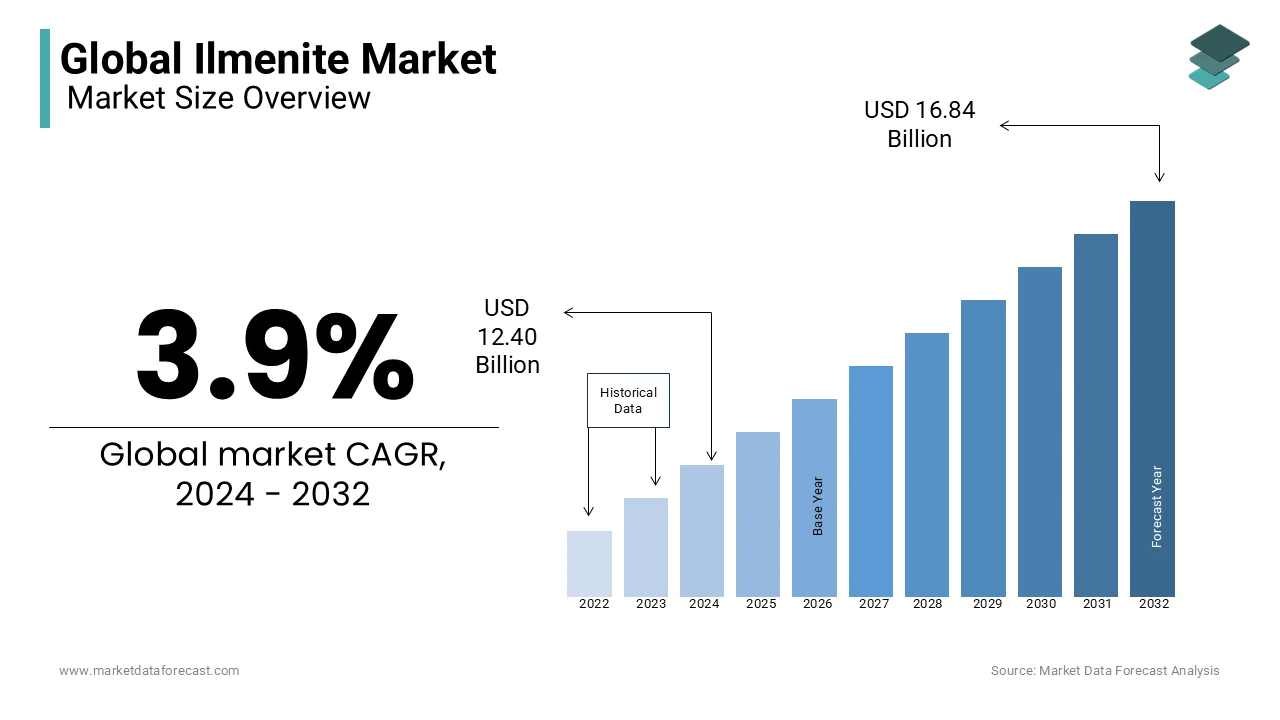
The ilmenite centers on the extraction and processing of iron titanium oxide, which serves as the primary ore for producing titanium dioxide pigment and metallic titanium. This mineral is predominantly sourced from heavy mineral sands found in coastal deposits, across Australia, South Africa, India, and Norway. Titanium dioxide derived from ilmenite is indispensable in industries requiring high opacity and brightness, such as paints coatings plastics and paper. As per the United States Geological Survey, global production of ilmenite reached approximately 7.4 million metric tons in recent years reflecting its critical role in the global supply chain. The demand for titanium metal in aerospace and defense sectors further underpins the strategic importance of this mineral. According to the International Energy Agency, the construction and automotive sectors, which are major consumers of titanium based coatings continue to expand particularly in emerging economies. Environmental regulations regarding mining practices and waste management are becoming increasingly stringent influencing operational costs and site viability. The industry faces pressure to adopt sustainable extraction methods and reduce the environmental footprint of processing facilities. Technological advancements in beneficiation processes allow for the recovery of higher grade concentrates from lower quality ores enhancing resource efficiency. Manufacturers are investing in vertical integration to secure raw material supplies and mitigate price volatility. The interplay between industrial growth environmental compliance and technological innovation defines the current trajectory of the ilmenite sector.
MARKET DRIVERS
Surging Demand From Paints and Coatings Industry Drives Consumption
The surging demand from the paints and coatings industry due to the extensive use of titanium dioxide as a white pigment is majorly fuelling the growth of ilmenite market. Titanium dioxide provides exceptional opacity brightness and durability making it an essential component in architectural paints industrial coatings and automotive finishes. In emerging economies, such as China and India rapid construction activities have significantly increased the consumption of protective and decorative coatings. According to the World Bank, infrastructure investment in developing nations is projected to rise substantially supporting the demand for high quality paint products. Ilmenite is the most economical source of titanium dioxide accounting for a significant portion of feedstock used in sulfate process plants. The preference for durable and weather resistant coatings in harsh climates further boosts the requirement for titanium dioxide derived from ilmenite. Manufacturers are expanding production capacities to meet the rising needs of end users in the construction and automotive sectors. The trend towards premium and eco-friendly paints also supports the adoption of high purity titanium dioxide. Consequently, the robust growth of the paints and coatings industry directly translates into sustained demand for ilmenite ore. This structural dependency ensures that ilmenite remains a critical raw material in the global chemical supply chain.
Expansion Of Aerospace and Defense Sectors Boosts Titanium Metal Demand
The expansion of the aerospace and defense sectors by increasing the demand for metallic titanium, which is produced from titanium slag derived from ilmenite. The expansion of aerospace and defense sector is boosting the growth of ilmenite market. Titanium metal is valued for its high strength to weight ratio corrosion resistance and ability to withstand extreme temperatures making it ideal for aircraft engines airframes and military equipment. As per the International Air Transport Association, global air traffic is recovering and growing leading to increased orders for new commercial aircraft. Boeing and Airbus have reported strong order backlogs necessitating a steady supply of titanium components. According to the research, defense spending globally has risen prompting governments to invest in advanced military hardware that utilizes titanium alloys. Ilmenite serves as a key precursor in the production of titanium sponge through the chloride process, which is then refined into metal. The strategic importance of titanium in national security ensures consistent government support for domestic production capabilities. Countries like the United States, China, and Russia are prioritizing self-sufficiency in titanium supply chains reducing reliance on imports. The geopolitical dynamic drives investment in ilmenite mining and processing facilities. The long lifecycle of aerospace components ensures stable long-term demand.
MARKET RESTRAINTS
Stringent Environmental Regulations Increase Operational Costs
The stringent environmental regulations by imposing rigorous standards on mining operations and waste disposal is limiting the growth of ilmenite market. Ilmenite mining often involves the disturbance of large land areas and the generation of tailings, which can have significant ecological impacts. As per the United Nations Environment Programme, mining activities are subject to increasing scrutiny regarding water usage soil erosion and biodiversity loss. Governments in key producing countries such as Australia and South Africa have implemented stricter permitting processes and rehabilitation requirements. According to the World Bank, compliance with these regulations requires substantial capital investment in environmental management systems and technology. Mining companies must invest in dust suppression water treatment and land restoration initiatives which increase operational expenses. The cost of obtaining and maintaining environmental permits has risen significantly affecting the profitability of marginal projects. Non-compliance can result in heavy fines operational shutdowns and reputational damage. The pressure to adopt sustainable practices forces companies to reconsider expansion plans in sensitive ecological zones. Community opposition to mining projects due to environmental concerns further delays project approvals. These regulatory hurdles create uncertainty and increase the time required to bring new mines into production.
Volatility In Raw Material Prices And Energy Costs Impacts Profitability
The volatility in raw material prices and energy costs by creating uncertainty in production economics and profit margins is another factor degrading the growth of ilmenite market. The processing of ilmenite into titanium dioxide or titanium slag is energy intensive requiring substantial amounts of electricity and fossil fuels. As per the International Energy Agency, global energy prices have experienced significant fluctuations due to geopolitical tensions and supply chain disruptions. These variations directly impact the operating costs of smelters and processing plants. According to the World Bank commodity price instability affects the profitability of mining operations making financial planning challenging. Ilmenite producers often face fluctuating demand from downstream industries which influences spot prices and contract negotiations. The dependence on imported equipment and chemicals for processing adds another layer of cost vulnerability due to currency exchange rate fluctuations. High energy costs can render certain low grade ilmenite deposits economically unviable forcing companies to halt production or seek alternative sources. Small and medium sized miners are particularly vulnerable to these economic shocks as they lack the financial resilience of larger corporations.
MARKET OPPORTUNITIES
Development Of High Purity Titanium Slag For Advanced Applications
The development of high purity titanium slag to tap with the adoption of advanced technologies is to leverage new opportunities for the growth of ilmenite market. High purity slag is essential for producing premium titanium dioxide pigments and metallic titanium used in aerospace and medical applications. As per the American Chemical Society, advancements in smelting technologies allow for the production of slag with higher titanium content and lower impurities. This enhances the efficiency of downstream processing and reduces waste generation. According to the survey, the demand for high grade titanium feedstock is growing, as manufacturers seek to improve product quality and reduce environmental impact. Companies investing in upgraded smelting facilities can differentiate themselves by offering superior quality products command higher prices. The shift towards chloride process pigment production, which requires high grade feedstock further drives this opportunity. Partnerships with titanium metal producers ensure stable off take agreements for high purity slag. The ability to process lower grade ilmenite ores into high value slag extends the life of existing mines and maximizes resource utilization.
Expansion Into Emerging Markets With Growing Infrastructure Needs
The expansion into emerging countries with growing infrastructure needs to capture new demand sources is another attribute to elevate the growth of ilmenite market. Countries in Southeast Asia, Latin America, and Africa are experiencing rapid urbanization and industrialization driving the need for construction materials and consumer goods. As per the study, investment in Asia is expected to reach 26 trillion US dollars by 2030 creating substantial demand for paints and coatings. Ilmenite derived titanium dioxide is a key ingredient in these products making it essential for construction and manufacturing sectors. The rising middle class populations in these regions are increasing consumption of packaged goods automobiles and appliances, which utilize titanium based coatings. Local production of titanium dioxide is expanding in countries like India and Vietnam, reducing reliance on imports. Ilmenite suppliers can establish strategic partnerships with local processors to secure long term contracts. The availability of untapped ilmenite deposits in some emerging markets also offers opportunities for greenfield projects. Government initiatives to promote domestic mining and processing industries provide incentives for foreign investment.
MARKET CHALLENGES
Depletion Of High Grade Ilmenite Deposits Increases Processing Complexity
The depletion of high-grade ilmenite deposits by increasing the complexity and cost of processing lower quality ores is key challenge for the growth of ilmenite market. Many established mines are facing declining ore grades requiring more extensive beneficiation efforts to achieve acceptable concentrate levels. As per the United States Geological Survey, the average grade of ilmenite ore being mined has decreased over the past decade necessitating advanced separation technologies. The presence of impurities, such as chromium and magnesium in lower grade ores complicates the smelting process and affects the quality of the final product. Manufacturers must invest in sophisticated equipment and process optimization to maintain productivity and product standards. The reduced yield from lower grade ores also increases the volume of waste tailings posing environmental management challenges. Finding economically viable methods to extract titanium from lean ores is a significant technical hurdle. The scarcity of high quality reserves limits the options for new mine development forcing companies to explore remote or difficult to access locations.
Supply Chain Disruptions and Geopolitical Tensions Affect Stability
The supply chain disruptions and geopolitical tensions by affecting the stability of raw material flows and prices is also to impede the growth of ilmenite market. Ilmenite production is concentrated in a few key countries including Australia South Africa and Canada making the supply chain vulnerable to regional instabilities. According to the International Monetary Fund, geopolitical conflicts can lead to sanctions or export bans affecting global supply dynamics. Logistics challenges, such as port congestion and shipping delays that further exacerbate supply chain vulnerabilities. The dependence on specific trade routes increases the risk of disruption due to political or natural events. Companies face difficulties in securing reliable transportation and storage facilities during periods of instability. Price volatility resulting from supply uncertainties makes it difficult for buyers and sellers to negotiate long term contracts. The lack of diversified supply sources limits the ability of manufacturers to mitigate risks. Investment in new mining projects is often delayed due to uncertain regulatory and political environments. Ensuring supply chain resilience requires diversification of sourcing and investment in local processing capabilities.
REPORT COVERAGE
| REPORT METRIC | DETAILS |
| Market Size Available | 2025 to 2034 |
| Base Year | 2025 |
| Forecast Period | 2026 to 2034 |
| CAGR | 3.96% |
| Segments Covered | By Size, Type, Application, and Region. |
|
Various Analyses Covered | Global, Regional, and Country Level Analysis, Segment-Level Analysis, DROC, PESTLE Analysis, Porter’s Five Forces Analysis, Competitive Landscape, Analyst Overview of Investment Opportunities |
| Regions Covered | North America, Europe, Asia Pacific, Latin America, Middle East and Africa. |
| Market Leaders Profiled | Shanghai Yuejiang Titanium Chemical Manufacturer Co., Ltd., Jiangxi Jinshibao Mining Machinery Manufacturing Co., Ltd., Abbott Blackstone, Yucheng Jinhe Industrial Co., Ltd., Rio Tinto, and Others. |
SEGMENTAL ANALYSIS
By Type Insights
The grey ilmenite segment was accounted in holding a dominant share of the ilmenite market in 2025 with its abundance in heavy mineral sand deposits which are the primary source of titanium minerals worldwide. As per the United States Geological Survey, major producing countries such as Australia, South Africa, and Canada, possess vast reserves of grey ilmenite associated with coastal sands. The extraction process for grey ilmenite is well established and cost effective compared to hard rock mining making it the preferred feedstock for titanium dioxide producers. The mining sector in these regions benefits from developed infrastructure and regulatory frameworks that support large scale operations. Grey ilmenite, typically contains between 45 and 60% titanium dioxide, which is sufficient for most sulfate process plants that produce pigment for paints and coatings. The consistent quality and availability of grey ilmenite ensure a stable supply chain for downstream manufacturers. Major mining companies have optimized their beneficiation processes to recover high yields of grey ilmenite concentrate efficiently.
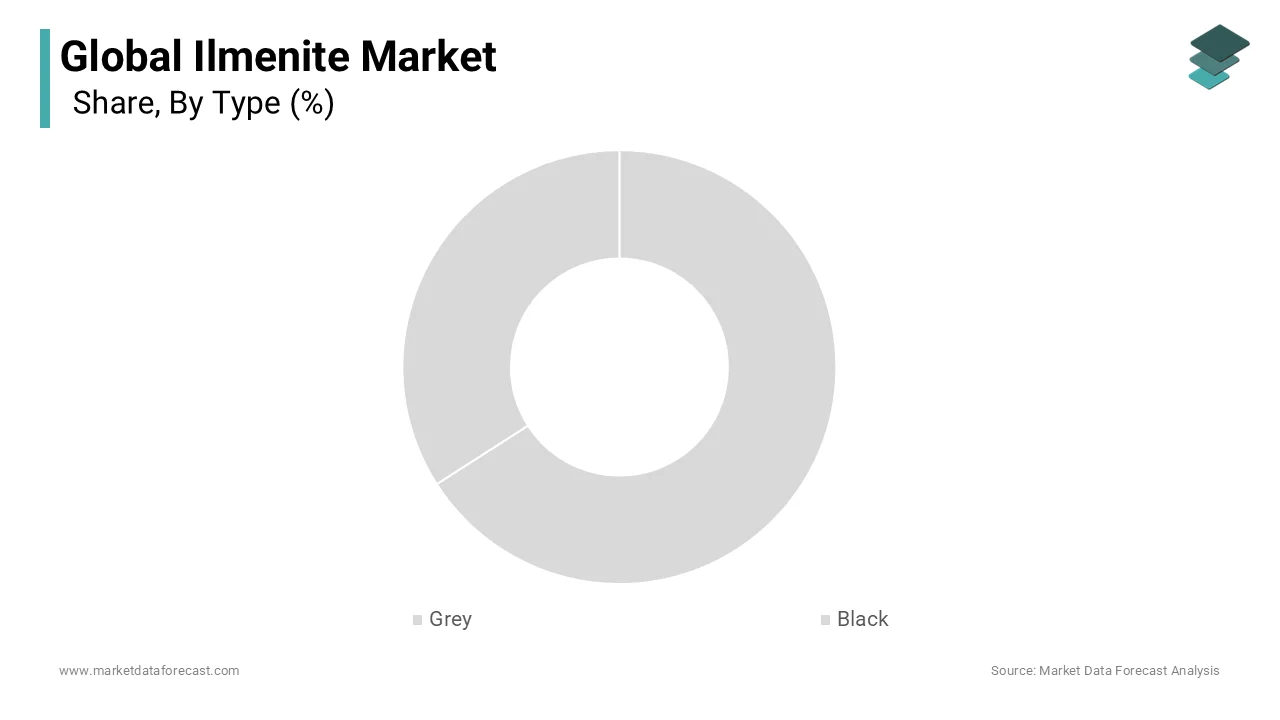
The black ilmenite segment is esteemed to witness a fastest CAGR of 5.2% from 2026 to 2034 with its higher titanium dioxide content, which makes it ideal for the chloride process used in producing high quality pigment. As per the study, the chloride process is gaining preference due to its environmental benefits and ability produce brighter and more durable pigments. Black ilmenite, typically contains over 60% titanium dioxide reducing the amount of waste generated during processing. According to the Journal of Cleaner Production, the efficiency gains from using black ilmenite translate into lower energy consumption and reduced chemical usage. This aligns with stringent environmental regulations pushing manufacturers towards cleaner production methods. The demand for premium titanium dioxide in automotive and industrial coatings requires the high purity achievable through the chloride process. Black ilmenite serves as a crucial feedstock for producing titanium slag which is then converted into pigment. The shift towards high performance coatings in developing economies further boosts demand for black ilmenite. Mining companies are investing in technologies to upgrade black ilmenite concentrates to meet specific grade requirements.
By Application Insights
The titanium dioxide segment was accounted in holding a prominent share of the ilmenite market in 2025 with the ubiquitous use of titanium dioxide pigment in paints coatings plastics and paper industries. As per the research, the global demand for architectural and industrial coatings continues to rise driven by urbanization and infrastructure development. Titanium dioxide provides essential properties, such as opacity brightness and UV resistance, which are for product performance. According to the study, construction activities in emerging markets are expanding rapidly increasing the consumption of protective coatings. Ilmenite is the primary raw material for producing titanium dioxide via both sulfate and chloride processes. The versatility of titanium dioxide allows it to be used in a wide range of applications from household paints to automotive finishes. The durability and aesthetic appeal provided by titanium dioxide make it indispensable for manufacturers. Regulatory standards for product quality and safety further reinforce the use of high purity titanium dioxide. The established supply chain and technical expertise in titanium dioxide production ensure steady demand for ilmenite.
The titanium metal is likely to witness a fastest CAGR of 6.5% from 2026 to 2034 with the expansion of the aerospace and defense sectors, which rely heavily on titanium alloys for their strength and light weight. As per the International Air Transport Association, the recovery of air travel post pandemic has led to increased aircraft orders driving demand for titanium components. Boeing and Airbus have reported significant backlogs requiring substantial amounts of titanium for airframes and engines. According to the Stockholm International Peace Research Institute, defense spending is rising globally prompting investments in advanced military hardware. Titanium metal derived from ilmenite via titanium slag is essential for these applications due to its corrosion resistance and high temperature stability. The strategic importance of titanium in national security ensures government support for domestic production. Countries are investing in secure supply chains to reduce dependence on imports.
REGIONAL ANALYSIS
Asia Pacific Ilmenite Market Analysis
Asia Pacific was the top performer in the ilmenite market by holding 45.3% of the share in 2025 with the massive consumption of titanium dioxide driven by rapid industrialization and urbanization. China and India are leading consumers of paints coatings and plastics, which rely on ilmenite derived pigments. China is also a major producer of ilmenite leveraging its domestic reserves to support its vast chemical industry. According to the study, the manufacturing sector in Asia continues to expand creating sustained demand for raw materials. The presence of major titanium dioxide producers in the region ensures a steady market for ilmenite suppliers. Government initiatives to boost infrastructure development further stimulate consumption. Import dependencies for high grade ilmenite drive trade flows from Australia and Africa. The dynamic economic landscape and growing middle class support long term market growth.
North America Ilmenite Market Analysis
North America ilmenite market was ranked second by holding 11.2% of the share in 2025 with the advanced technological capabilities and a strong aerospace industry. As per the United States Geological Survey, the United States is a significant producer and consumer of titanium minerals supporting domestic defense and aviation sectors. The demand for high purity titanium metal drives the import of upgraded ilmenite products. Environmental regulations influence mining practices promoting sustainable extraction methods. The region is a leader in chloride process technology requiring high grade feedstocks. Trade policies impact the flow of ilmenite from international suppliers. The focus on supply chain security encourages domestic processing initiatives. The mature market structure supports steady consumption of titanium dioxide in paints and coatings. Innovation in material science drives the development of new titanium applications.
Europe Ilmenite Market Analysis
Europe ilmenite market growth is likely to register a fastest CAGR in next coming years with the stringent environmental standards and a focus on sustainability. The influenced by the Green Deal, which promotes eco-friendly production methods. As per the European Commission, the region is shifting towards chloride process pigment production, which requires high grade ilmenite or slag. Norway is a key producer of high-quality ilmenite contributing to regional supply. According to Eurostat, the construction and automotive sectors drive demand for titanium dioxide despite economic fluctuations. The emphasis on circular economy principles encourages recycling and efficient resource use. Regulatory frameworks limit the expansion of new mining projects favoring existing operations. Imports from Africa and Australia supplement domestic production. Research and development initiatives focus on reducing the environmental footprint of titanium production.
Middle East and Africa Ilmenite Market Analysis
The Middle East And Africa ilmenite market growth is likely to grow with the South Africa, which is one of the world's largest producers of ilmenite. As per the Minerals Council, South Africa the country possesses vast reserves of heavy mineral sands supporting global supply. Export oriented production serves markets in Asia, Europe, and North America. According to the research, infrastructure development in the region is improving logistics and mining efficiency. Political stability and regulatory clarity are crucial for attracting foreign investment. The region benefits from low production costs due to abundant resources and energy. Geopolitical factors can impact trade routes and supply reliability. Diversification of mining operations reduces dependency on single commodities. The potential for value addition through local smelting is being explored.
Latin America Ilmenite Market Analysis
Latin America ilmenite market growth is driven by the mining activities in Brazil and other countries with mineral sand deposits. As per the Economic Commission for Latin America and the Caribbean, the region is exploring opportunities to expand titanium production. Limited domestic processing capacity means most ilmenite is exported as raw concentrate. According to the study, investment in mining infrastructure is needed to unlock potential. Regulatory challenges and environmental concerns affect project development. The proximity to North American markets offers logistical advantages. Growing interest in value added products could transform the regional market. Political and economic volatility poses risks to long term planning.
COMPETITIVE LANDSCAPE
The competition in the Ilmenite Market is characterized by a consolidated landscape dominated by a few large multinational mining corporations and state owned enterprises. These major players control significant reserves and production capacities creating high barriers to entry for new competitors. The structure limits the volume of ilmenite available on the open market affecting spot prices and contract negotiations. Competition is based on product quality consistency of supply and cost efficiency rather than just price. Companies strive to differentiate themselves through sustainable mining practices and technological innovation in beneficiation processes. Geopolitical factors and trade policies also shape competitive interactions as countries seek to secure domestic supply chains. Smaller producers often niche specialize in high grade ores to compete effectively. The interplay between integrated giants and independent miners defines the strategic landscape. Continuous investment in capacity expansion and environmental compliance remains critical for maintaining market position.
KEY MARKET PLAYERS
Some of the notable key players in the Europe Ilmenite market are
- Shanghai Yuejiang Titanium Chemical Manufacturer Co. Ltd.
- Jiangxi Jinshibao Mining Machinery Manufacturing Co. Ltd.
- Abbott Blackstone
- Yucheng Jinhe Industrial Co. Ltd.
- Rio Tinto
- TiZir Ltd
- VV Minerals
- Trimex Industries
- Industrial Mineral Company
- Saraf Agencies Private Limited
- Monokem
- Iluka Resources
- World Titane Holdings
- Kenmare Resources
- China Vanadium Titano-Magnetite Mining
- Lomon Billions Group
- Others
Top Players in the Market
- Rio Tinto Group is a leading global mining corporation with significant involvement in the ilmenite market through its Richards Bay Minerals operation in South Africa. The company produces high quality ilmenite and titanium slag which are essential feedstocks for the titanium dioxide industry. Rio Tinto contributes to the global market by ensuring a stable supply of raw materials to major pigment manufacturers worldwide. Recent actions include investing in renewable energy projects to power its smelting operations thereby reducing carbon emissions. The corporation also focuses on community development and environmental stewardship to maintain its social license to operate. These strategic initiatives strengthen its position as a reliable and sustainable supplier in the global ilmenite market.
- Iluka Resources Limited is a prominent Australian producer of mineral sands including ilmenite rutile and zircon. The company plays a crucial role in the global ilmenite market by supplying high grade concentrates to international customers. Iluka operates integrated mining and processing facilities that ensure consistent product quality and reliability. Recent actions involve optimizing production processes to reduce costs and improve yield from existing assets. The company is also exploring new deposit opportunities to extend mine life and secure future supply chains. Iluka emphasizes safety and environmental performance in all its operations. Their focus on operational excellence and sustainable practices ensures long term competitiveness in the evolving global minerals sector.
- Tronox Holdings plc is a vertically integrated mining and inorganic chemicals company with substantial ilmenite mining operations globally. The company extracts ilmenite from sites in Australia South Africa and Brazil to feed its own titanium dioxide production facilities. This vertical integration allows Tronox to control costs and ensure supply security for its pigment business. Recent actions include upgrading processing infrastructure to enhance efficiency and reduce environmental impact. Tronox also invests in research and development to improve product quality and develop new applications. The company prioritizes health and safety standards across all its operations.
Top Strategies Used by the Key Market Participants
Key players in the Ilmenite Market, primarily focus on vertical integration and operational efficiency to maintain competitive advantage. Companies invest in upgrading processing technologies to produce higher grade concentrates and slag which command premium prices. Strategic partnerships with downstream titanium dioxide producers ensure stable off take agreements and reduce market volatility risks. Sustainability initiatives such as adopting renewable energy and improving waste management are increasingly used to comply with regulations. Exploration of new deposits extends mine life and secures long term supply chains. Diversification into value added products like synthetic rutile enhances profitability. These strategies enable companies to address environmental concerns while capturing growth opportunities in the global titanium industry.
MARKET SEGMENTATION
This research report on the global ilmenite market has been segmented and sub-segmented based on size, type, application, and region.
By Size
- <52%
- 52%-55%
- >55%
By Type
- Grey
- Black
By Application
- Titanium Dioxide
- Welding Electrodes
- Titanium Metal
- Coatings and Lining for Blast Furnace Hearth
- Other
By Region
- North America
- Europe
- Asia Pacific
- Latin America
- Middle East & Africa