- Product Description Description
- Table of Contents TOC
- List of Table & Figure LOT
- Get Free Sample PDF Sample PDF
Market Size, 2025
$11.08 BnMarket Estimate, 2026
$11.63 BnMarket Forecast, 2034
$17.19 BnCAGR, 2026–2034
5%Global Industrial Centrifuges Market Report Summary
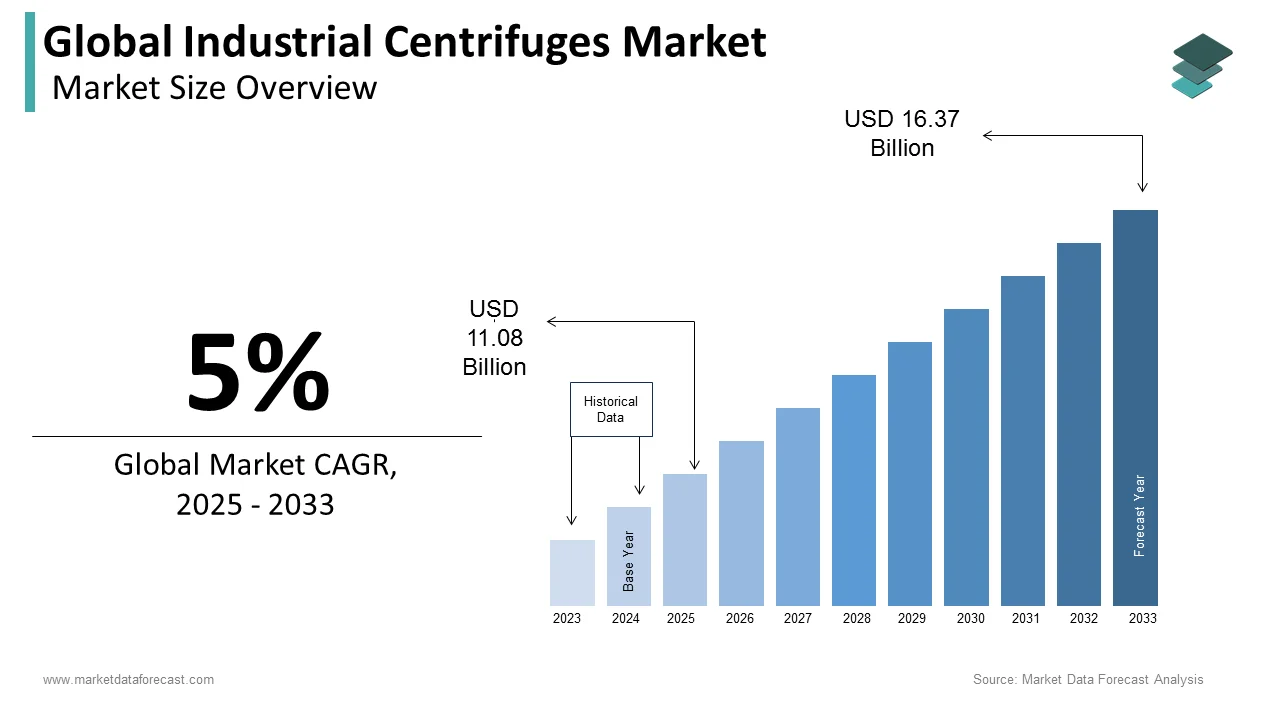
The global industrial centrifuges market was valued at USD 11.08 billion in 2025 and is projected to grow from USD 11.63 billion in 2026 to USD 17.19 billion by 2034, registering a CAGR of 5.0% from 2026 to 2034. Market growth is driven by increasing demand for efficient solid-liquid separation technologies across the chemical, wastewater treatment, food and beverage, pharmaceutical, and mining industries. Industrial centrifuges play a critical role in improving process efficiency, reducing operating costs, and supporting environmental compliance. Growing investments in industrial automation, resource recovery, and sustainable manufacturing practices are further supporting market expansion.
Key Market Trends
- Rising adoption of high-efficiency separation technologies across industrial sectors.
- Increasing investment in wastewater treatment and resource recovery projects.
- Growing demand for continuous processing and automated manufacturing systems.
- Expansion of chemical, pharmaceutical, and food processing industries worldwide.
- Increasing focus on energy-efficient and environmentally sustainable centrifuge technologies.
Segmental Insights
- Based on product, the decanter centrifuges segment dominated the global industrial centrifuges market in 2025, driven by their high separation efficiency, versatility, and widespread use in wastewater treatment, chemical processing, and food production.
- Based on operation, the continuous centrifuges segment led the market by accounting for 60.6% share in 2025, supported by their ability to provide uninterrupted processing, higher throughput, and improved operational efficiency in large-scale industrial applications.
- Based on end user, the chemical industry segment held the largest share of the market in 2025, driven by increasing demand for advanced separation technologies in chemical manufacturing, petrochemicals, and specialty chemical production.
Regional Insights
The global industrial centrifuges market continues to expand across major regions, supported by industrial modernization, environmental regulations, and increasing investments in process optimization.
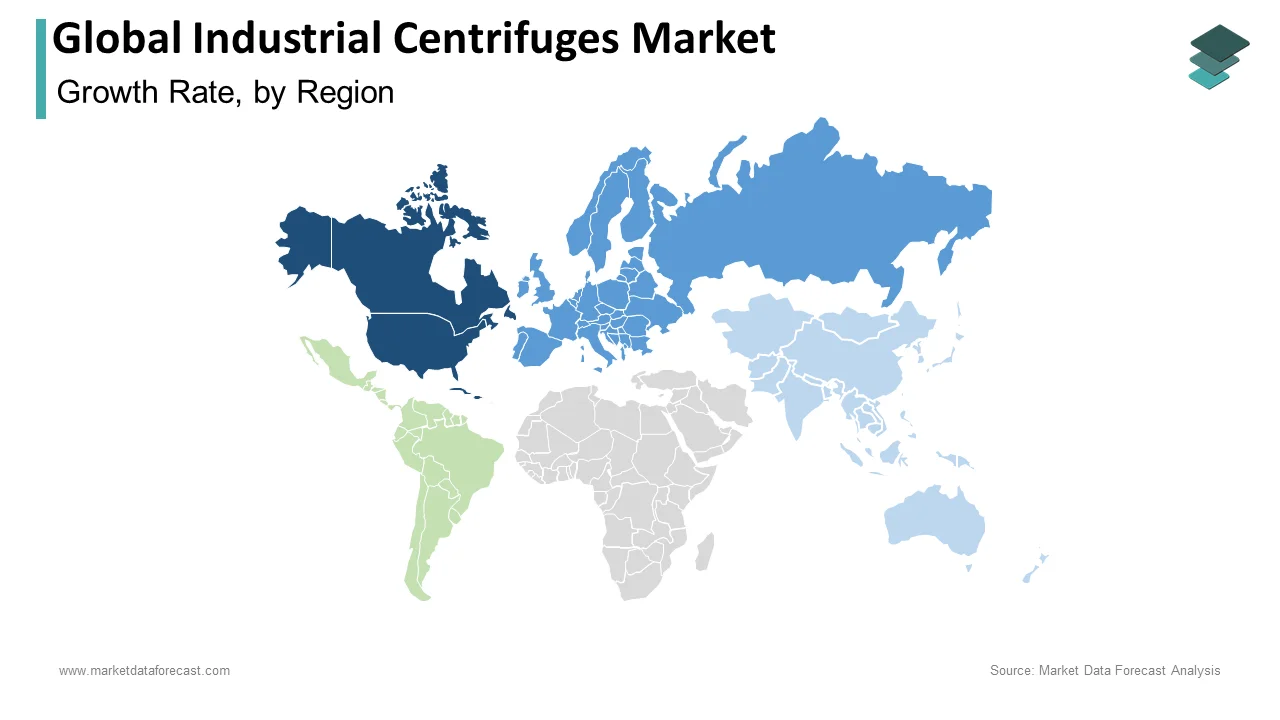
- North America dominated the global market in 2025 by accounting for 30.6% share, driven by advanced manufacturing capabilities, increasing industrial automation, and stringent environmental regulations encouraging the adoption of efficient separation technologies.
- Europe remained a significant regional market, supported by strong policy initiatives promoting resource recovery, circular economy practices, and sustainable industrial operations.
- Asia-Pacific is expected to witness the fastest growth during the forecast period, driven by rapid industrialization, expanding manufacturing capacity, large-scale infrastructure development, and increasing demand for industrial processing equipment across emerging economies.
Competitive Landscape
The global industrial centrifuges market is characterized by the presence of leading separation technology manufacturers competing through product innovation, energy efficiency, and customized industrial solutions. Market participants are investing in advanced automation, digital monitoring systems, and high-performance centrifuge technologies to improve operational efficiency and reduce lifecycle costs. Strategic partnerships, acquisitions, and expansion into high-growth industrial markets continue to shape the competitive landscape.
Prominent companies operating in the global industrial centrifuges market include Andritz AG, Alfa Laval AB, GEA Westfalia Separator Group GmbH, Thomas Broadbent & Sons, FLSmidth & Co. A/S, MI SWACO, Flottweg Separation Technology, Hiller GmbH, Ferrum AG, Pieralisi Group, and TEMA Systems, Inc.
Global Industrial Centrifuges Market Size
The global industrial centrifuges market was worth US$ 11.08 billion in 2025 and is anticipated to reach US$ 17.19 billion by 2034, up from US$ 11.63 billion in 2026, with a CAGR of 5% during the forecast period 2026 to 2034.
Industrial centrifuges are mechanical separation devices that utilize centrifugal force to separate components of a mixture based on density differences, serving as critical infrastructure in chemical processing, pharmaceuticals, food and beverage production, and wastewater treatment. These machines operate by rotating a drum or basket at high speeds, generating forces up to 10,000 times gravity, which enables the efficient removal of solids from liquids or the separation of immiscible liquids with varying densities. According to the United States Environmental Protection Agency, industrial facilities generate billions of gallons of wastewater daily, requiring advanced dewatering technologies, like decanter and disc stack centrifuges, to meet discharge standards before release into municipal systems. As per the International Energy Agency, the global chemical industry is a significant consumer of energy, with separation processes accounting for a substantial portion of total thermal energy usage, driving demand for high-efficiency centrifugal systems that reduce operational costs. The World Health Organization states that over 2 billion people globally lack access to safely managed drinking water services, necessitating large-scale municipal treatment plants where industrial-grade centrifuges play a pivotal role in sludge management and clarification processes. This technological reliance underscores a market defined by rigorous engineering specifications where throughput capacity, solid recovery rates, and energy consumption metrics determine equipment selection across diverse heavy industries worldwide.
MARKET DRIVERS
Expansion of Pharmaceutical Biologics Manufacturing Capacity
The rapid growth of the biopharmaceutical sector, particularly in the production of monoclonal antibodies and vaccines requires specialized centrifuges capable of handling sensitive biological materials under sterile conditions, which is majorly driving the industrial centrifuges market growth globally. According to the IQVIA Institute for Human Data Science, global spending on medicines is expected to reach 2.3 trillion dollars by 2028, with biologics representing a significant and growing portion of this total and requiring extensive downstream processing infrastructure. Each large-scale bioreactor producing monoclonal antibodies generates thousands of liters of cell culture broth that must be clarified using hermetic disc stack centrifuges to remove cellular debris while maintaining protein integrity. As per GlobalData, over 200 new biologic manufacturing facilities were identified in the global pipeline for the 2024 to 2026 period, with each facility requiring between 10 and 20 high-performance centrifuges for harvest and purification stages. The European Medicines Agency reports that pharmaceutical manufacturing capacity in Europe has been subject to increased investment since 2023, driven by strategic initiatives that mandate robust separation capabilities for resilience. This regulatory and commercial pressure creates a non-discretionary demand stream where equipment reliability directly impacts batch yield and product quality, thereby insulating centrifuge procurement from typical economic cyclicality and anchoring it firmly within long-term healthcare security strategies focused on domestic production resilience.
Stringent Environmental Regulations on Industrial Wastewater Discharge
Governments worldwide are enforcing stricter limits on suspended solids and biochemical oxygen demand in industrial effluent, which requires facilities to upgrade from basic settling tanks to high-efficiency centrifugal separation systems, which is further contributing to the industrial centrifuges market expansion. According to the European Commission, the revised Urban Wastewater Treatment Directive mandates that member states prioritize the reduction of micropollutants and the recovery of resources from wastewater by 2027, prompting widespread installation of decanter centrifuges capable of achieving high dry solids content. The United States Environmental Protection Agency reports that compliance with the Clean Water Act remains a top priority for manufacturing plants in textile and paper sectors, which are increasingly investing in automated centrifuge systems with real-time monitoring capabilities. As per the Ministry of Ecology and Environment of the People’s Republic of China, thousands of industrial parks have been mandated to install centralized wastewater treatment facilities utilizing multiple industrial centrifuges for primary sludge thickening and secondary digestion processes. The World Bank estimates that global investment in water pollution control infrastructure continues to grow, with centrifugal technology capturing a significant share due to its compact footprint and continuous operation advantages over traditional filter presses. This regulatory landscape transforms centrifuges from optional process improvements into compliance necessities, where failure to meet discharge standards results in operational shutdowns, ensuring stable demand for robust separation equipment.
MARKET RESTRAINTS
Volatility in Raw Material Costs for Equipment Manufacturing
Manufacturing industrial centrifuges requires substantial quantities of high-grade stainless steel, duplex alloys, and titanium to withstand corrosive chemicals and high rotational stresses, which is creating significant exposure to raw material price volatility and impeding the global market expansion. According to the World Steel Association, stainless steel prices experienced significant fluctuations throughout 2024, directly impacting production costs for centrifuge components that constitute 40% of total material weight. The London Metal Exchange data indicates that nickel prices, which are critical for corrosion-resistant alloys, remained volatile in 2024 due to supply constraints from major producing regions, affecting the cost structure of manufacturers relying on imported specialty metals. As per the German Engineering Federation, small and medium-sized centrifuge manufacturers faced margin compression in 2024 as they struggled to pass increased material costs onto customers locked into long-term fixed-price contracts. The International Copper Association noted that copper prices, used in motor windings and electrical components, rose during the same period, further exacerbating cost pressures. This volatility means that even minor disruptions in global metal supply chains can cascade through the value chain, causing delivery delays and forcing manufacturers to renegotiate terms or absorb losses that threaten financial stability, especially for companies lacking hedging mechanisms or vertical integration into metal processing.
Complexity of Customization for Specialized Process Applications
Industrial centrifuges must be tailored to specific process parameters, such as viscosity, particle size distribution, and temperature sensitivity, which prevents standardization and limits the ability to achieve mass production efficiencies and global market growth. According to the American Institute of Chemical Engineers, a significant portion of centrifuge orders require custom engineering modifications, including specialized bowl geometries, variable speed drives, and unique sealing arrangements to handle abrasive slurries or explosive atmospheres. The Society of Chemical Industry notes that developing a customized decanter centrifuge for a new production line typically involves months of design, testing, and validation, costing manufacturers significant capital in engineering hours before fabrication begins. As per the Japanese Society of Mechanical Engineers, lead times for bespoke centrifuge systems remain extended due to bottlenecks in precision machining centers capable of balancing rotors to strict tolerances. The Institution of Mechanical Engineers reports that rework rates for custom centrifuges occur due to unforeseen process interactions discovered during commissioning, leading to costly field modifications and warranty claims. These technical constraints mean that capacity expansion requires highly skilled engineers rather than simple assembly line replication, creating bottlenecks when demand surges unexpectedly and preventing rapid market response to emerging application needs in niche sectors like lithium battery recycling or algae harvesting.
MARKET OPPORTUNITIES
Integration of Internet of Things for Predictive Maintenance
The adoption of Internet of Things-enabled sensors allows real-time tracking of vibration, temperature, and bearing wear in industrial centrifuges, which is transforming maintenance from reactive to predictive models that optimize asset utilization and is a promising opportunity for the industrial centrifuges market. According to the International Society of Automation, implementation of predictive maintenance systems can reduce unplanned downtime in chemical processing plants by up to 35% by alerting operators to imbalance conditions before catastrophic failure occurs. The German Industry 4.0 Initiative reports that smart centrifuges equipped with wireless telemetry modules can transmit operational data to cloud platforms, enabling artificial intelligence algorithms to predict component life with high accuracy, extending service intervals. As per the McKinsey Global Institute, industrial companies adopting connected centrifuge solutions can achieve significant return on investment within 18 months through reduced spare parts inventory and lower labor costs associated with routine inspections. The Institute of Electrical and Electronics Engineers documented that edge computing devices integrated into centrifuge control panels can process thousands of data points per second locally, allowing immediate adjustment of feed rates to prevent overload conditions. This technological evolution creates opportunities for manufacturers to offer equipment-as-a-service models where revenue derives from uptime guarantees rather than one-time sales, allowing differentiation through digital services that complement physical hardware expertise and create recurring revenue streams.
Emergence of Compact Modular Separation Units
Urban industrial zones and offshore platforms face severe space limitations, driving demand for compact modular centrifuge units that integrate separation, drying, and control functions into single skid-mounted packages, which is another potential opportunity for the industrial centrifuges market. According to the Offshore Technology Conference, offshore oil and gas platforms have successfully reduced footprint requirements by using compact disc stack centrifuges capable of handling high water-cut crude oil. The American Petroleum Institute reports that shale gas processing facilities increasingly utilize mobile centrifuge trailers for produced water treatment, allowing rapid deployment to remote well sites without permanent civil works construction. As per the European Offshore Wind Deployment Centre, floating wind farms require lightweight separation modules for hydraulic fluid recycling, where weight savings achieved through composite material centrifuge housings significantly reduce platform structural costs. The Society of Petroleum Engineers estimates that modular centrifuge systems reduce installation time by 60% compared to conventional built-in-place equipment, accelerating project commissioning schedules. If standardization of interface connections continues, these modular units could capture a significant share in decentralized wastewater treatment and small-scale biofuel production within five years, reshaping competitive dynamics by favoring manufacturers who prioritize plug-and-play functionality over custom-engineered solutions.
MARKET CHALLENGES
Managing High Energy Consumption in Continuous Operation
Industrial centrifuges operate continuously in many applications and consume substantial electricity, which creates pressure to improve energy efficiency amid rising power costs and carbon reduction mandates, and this has become a significant challenge to the industrial centrifuges market. According to the International Energy Agency, industrial motors account for 45% of global electricity consumption, with centrifuge drives representing a significant portion due to high torque requirements during acceleration and steady-state operation. The European Union Ecodesign Directive mandates that all new industrial centrifuges installed after 2025 must meet high-efficiency standards, requiring premium-efficiency motors and variable frequency drives that reduce energy use by 15% compared to previous generations. As per the United States Department of Energy, upgrading to high-efficiency centrifuge systems can save facilities high annual operational costs for a single 100-kilowatt unit operating 8,000 hours per year. The Carbon Trust reports that industrial facilities face increasing pressure to report scope 2 emissions, which includes indirect electricity consumption from separation processes, driving investment in regenerative drive systems that recover kinetic energy during deceleration cycles. This regulatory and economic pressure means progress depends on advancements in motor technology and power electronics rather than just mechanical design, creating uncertainty about feasible timelines for widespread adoption of ultra-efficient systems needed to meet net-zero targets.
Handling Hazardous and Explosive Atmospheres Safely
Many industrial centrifuges operate in environments containing flammable solvents or combustible dust, requiring adherence to rigorous explosion-proof standards that complicate design and increase manufacturing costs, which is further challenging the industrial centrifuges market expansion globally. According to the National Fire Protection Association, there are hundreds of combustible dust incidents recorded in industrial facilities globally, with several incidents linked to friction heating in separation equipment, prompting tighter enforcement of ATEX and IECEx certifications. The European Agency for Safety and Health at Work states that obtaining ATEX certification for a new centrifuge model requires extensive testing, including temperature rise measurements, spark propagation tests, and enclosure integrity assessments, costing manufacturers thousands of euros per variant. As per the Occupational Safety and Health Administration, fines for safety violations related to hazardous area equipment serve as a significant motivator for companies to invest in intrinsically safe designs with nitrogen purging systems and non-sparking materials. The International Electrotechnical Commission reports that compliance with updated zone classification standards requires retrofitting existing centrifuges with additional sensors and shielding, representing significant capital expenditures per unit. Manufacturers increasingly face liability risks if equipment fails to contain explosions, requiring comprehensive insurance coverage and rigorous quality control protocols that add operational complexity and financial burden that must be factored into product pricing and customer contracting terms.
REPORT COVERAGE
| REPORT METRIC | DETAILS |
| Market Size Available | 2025 to 2034 |
| Base Year | 2025 |
| Forecast Period | 2026 to 2034 |
| Segments Covered | By Product, Operation, Design, End User, and Region. |
| Various Analyses Covered | Global, Regional and Country-Level Analysis, Segment-Level Analysis, Drivers, Restraints, Opportunities, Challenges; PESTLE Analysis; Porter’s Five Forces Analysis, Competitive Landscape, Analyst Overview of Investment Opportunities |
| Regions Covered | North America, Europe, Asia Pacific, Latin America, Middle East & Africa |
| Market Leaders Profiled | Andritz AG, Alfa Laval AB, GEA Westfalia Separator Group GmbH, Thomas Broadbent & Sons, FLSmidth & Co. A/S MI Swaco, Flottweg Separation Technology, Hiller GmbH, Ferrum AG, Pieralisi Group and TEMA Systems, Inc., and Others. |
SEGMENTAL ANALYSIS
By Product Insights
The decanter centrifuges segment accounted for the highest share of the global market in 2025. The growth of the decanter centrifuges segment in the global market is attributed to their unparalleled ability to handle high solid loads and continuous operation in municipal and industrial wastewater treatment. According to the United States Environmental Protection Agency, over 16,000 publicly owned treatment works in the United States utilize decanter centrifuges for sludge dewatering because they achieve dry solids content of 25 to 35%, which significantly reduces disposal costs compared to belt presses. The European Water Association reports that 70% of new wastewater treatment plants constructed in Europe between 2022 and 2024 specified decanter technology due to its enclosed design, which prevents odor release and aerosol formation a critical requirement for facilities located near residential areas. As per the World Bank, global investment in urban wastewater infrastructure reached 150 billion dollars in 2024, with decanter centrifuges capturing approximately 40% of equipment procurement budgets due to their low maintenance requirements and ability to operate 24 hours a day without manual intervention. The Chinese Ministry of Housing and Urban-Rural Development mandated that all cities with populations exceeding 1 million must upgrade sludge treatment facilities by 2025, driving demand for large-capacity decanters capable of processing over 100 cubic meters of sludge per hour. This regulatory and operational imperative ensures that decanter centrifuges remain the preferred choice for high-volume separation tasks where reliability and throughput outweigh initial capital expenditure considerations.

On the other end, the disc stack centrifuges segment is predicted to register a CAGR of 8.8% during the forecast period in the global market owing to the explosive expansion of the biologics manufacturing sector, which requires gentle yet efficient cell separation. According to the International Society for Pharmaceutical Engineering, over 60 new biomanufacturing facilities were commissioned globally in 2024, each requiring multiple hermetic disc stack centrifuges for primary harvest of mammalian cell cultures to prevent protein denaturation. The United States Food and Drug Administration approved 55 new biologic drugs in 2024, necessitating expanded production capacity, where disc stack technology offers superior clarification efficiency with less than 0.1% residual cell debris essential for downstream chromatography performance. As per the European Federation of Pharmaceutical Industries and Associations, the shift toward continuous bioprocessing has increased adoption of single-use disc stack separators, which reduce cleaning validation time by 50% and eliminate cross-contamination risks between batches. The Japanese Ministry of Health, Labour and Welfare reported that vaccine production capacity in Asia doubled between 2023 and 2025, relying heavily on disc stack centrifuges for rapid clarification of yeast and bacterial cultures used in recombinant protein production. This specialized application drives premium pricing and consistent demand growth as pharmaceutical companies prioritize yield recovery and product purity over equipment cost.
By Operation Insights
The continuous centrifuges segment led the market by holding 60.6% of the global market share in 2025 because they enable uninterrupted processing, essential for large-scale chemical and utility operations. According to the American Institute of Chemical Engineers, continuous separation processes improve plant utilization rates by 30% compared to batch operations by eliminating downtime associated with loading, unloading, and cleaning cycles. The International Energy Agency states that continuous centrifuges reduce specific energy consumption by 20% in oil refining applications, where crude oil desalting requires constant removal of water and salts to prevent corrosion in downstream distillation columns. As per the German Chemical Industry Association, over 80% of new polymer production lines installed in 2024 utilized continuous decanter or disc stack centrifuges to maintain steady-state conditions required for consistent product quality and molecular weight distribution. The Society of Petroleum Engineers reports that offshore platforms prefer continuous centrifuges for produced water treatment because space constraints prohibit the large footprint of multiple batch units needed to achieve equivalent throughput. This operational advantage creates a strong preference for continuous systems in capital-intensive industries where process stability and energy efficiency directly impact profitability and regulatory compliance regarding emissions and waste generation.
However, the batch centrifuges segment is expected to witness a CAGR of 8.2% during the forecast period in the global market owing to the rising demand for high-value specialty chemicals and multi-product pharmaceutical facilities requiring flexible processing equipment. According to the Specialty Chemicals Manufacturers Association, global production of high-performance additives and active pharmaceutical ingredients grew by 9% in 2024, with batch peeler and basket centrifuges preferred for their ability to handle diverse crystal morphologies and solvent types without extensive reconfiguration. The United States Pharmacopeia notes that batch operations allow for rigorous cleaning validation between products, which is mandatory for facilities producing multiple drug substances on shared equipment lines to prevent cross-contamination. As per the European Chemical Industry Council, small batch sizes of less than 1,000 kilograms account for 40% of specialty chemical production, requiring versatile centrifuges that can be easily adapted for different filtration pressures and washing protocols. The Indian Department of Pharmaceuticals reported that contract manufacturing organizations increased capacity by 25% in 2025, utilizing automated batch centrifuges with programmable logic controllers to ensure reproducibility and data integrity for regulatory submissions. This trend toward customization and small-batch, high-margin products ensures sustained growth for batch centrifuge manufacturers who offer advanced automation and containment features.
By End User Insights
The chemical industry segment had the major share of the global market in 2025. The growth of this segment in the global market is majorly driven by the fundamental role of centrifugal separation in producing polymers, fertilizers, and basic organic chemicals at massive scales. According to the American Chemistry Council, the United States chemical industry shipped goods valued at over 800 billion dollars in 2024, with separation processes consuming significant energy and equipment resources to purify intermediates and final products. The European Chemical Industry Federation reports that thousands of large-scale chemical plants in Europe rely on industrial centrifuges for catalyst recovery, crystallization, and solvent purification, with each facility typically operating multiple units continuously. As per the Chinese Petroleum and Chemical Industry Federation, China produced over 100 million tons of ethylene in 2024, requiring extensive centrifugal separation for removing impurities and drying polymer slurries before extrusion. The International Council of Chemical Associations states that global chemical production is projected to grow significantly by 2050, necessitating substantial investment in separation infrastructure to meet demand for plastics, coatings, and agricultural inputs. This entrenched industrial base provides stable baseline demand for robust centrifuges capable of handling corrosive and abrasive materials, ensuring consistent revenue streams for manufacturers serving this foundational sector.
On the other side, the pharmaceutical and biotechnology segment is predicted to expand at a CAGR of 10.2% during the forecast period owing to the transition from small-molecule drugs to complex biologics and cell therapies. Pharmaceutical and biotechnology firms are likely to accelerate their investment in high-precision separation technology to support the biologics boom over the next few years. According to the International Federation of Pharmaceutical Manufacturers and Associations, global spending on research and development for biologics has reached hundreds of billions of dollars, driving construction of new facilities equipped with high-precision centrifuges for cell harvesting and virus clearance. The United States Food and Drug Administration approved 15 cell and gene therapies in 2024, each requiring specialized closed-system centrifuges to maintain sterility and viability of living cells during processing. As per the European Medicines Agency, clinical trials for mRNA vaccines and monoclonal antibodies increased significantly in 2025, creating urgent demand for scalable separation technologies that can transition from pilot to commercial production seamlessly. The Japanese Pharmaceutical Manufacturers Association reports that domestic production of regenerative medicine products grew by 30% annually, requiring centrifuges with gentle handling capabilities to preserve cell integrity. This high-growth trajectory is supported by favorable reimbursement policies and aging populations, driving demand for advanced therapies that rely fundamentally on sophisticated centrifugal separation technologies.
REGIONAL ANALYSIS
North America Industrial Centrifuges Market Analysis
North America accounted for 30.6% of the global market share and emerged as the most dominant regional segment in the global market in 2025 and is likely to strengthen its manufacturing resilience through increased automation and regulatory alignment over the next few years. According to the United States Environmental Protection Agency, enforcement of federal water standards resulted in billions of dollars in investments for industrial wastewater treatment upgrades in 2024, with centrifuges playing a central role in meeting stringent discharge limits. The Canadian Natural Resources Department reports that oil sands operations process millions of barrels of bitumen daily, requiring extensive centrifugal separation for water removal and emulsion breaking to meet pipeline specifications. As per the United States Department of Commerce, pharmaceutical exports reached record levels in 2024, supporting continued investment in biomanufacturing infrastructure that utilizes high-performance disc stack and tubular centrifuges. The Mexican Ministry of Economy indicates that nearshoring trends attracted over 10 billion dollars in foreign direct investment for chemical and automotive manufacturing in 2025, increasing demand for industrial separation equipment. This combination of regulatory pressure and high-value manufacturing ensures steady demand for technologically advanced centrifuges with integrated monitoring and control systems.
Europe Industrial Centrifuges Market Analysis
Europe is likely to pivot its industrial base toward resource recovery and circular economy models through policy incentives over the next few years. According to the European Commission, the Industrial Emissions Directive requires best-available techniques for waste management, prompting industrial facilities to upgrade separation equipment to improve material recovery rates. The German Federal Ministry for Economic Affairs and Climate Action reports that the chemical industry invested billions of euros in energy efficiency projects in 2024, including the replacement of older centrifuges with high-efficiency models to reduce the carbon footprint. As per the French Ministry of Ecological Transition, wastewater treatment standards were tightened in 2025, requiring higher removal rates of microplastics, driving adoption of advanced decanter and disc stack centrifuges in municipal and industrial plants. The United Kingdom Office for National Statistics indicates that pharmaceutical production grew significantly in 2024, supported by government incentives for domestic vaccine and biologic manufacturing requiring specialized centrifugal solutions. This regulatory-driven modernization creates consistent demand for equipment that supports sustainability objectives while maintaining high operational standards.
Asia Pacific Industrial Centrifuges Market Analysis
Asia Pacific is likely to maintain its status as the world’s leading hub for new industrial infrastructure and centrifuge adoption over the next few years. According to the Chinese National Bureau of Statistics, industrial output grew by over 6% in 2024, with the chemical and pharmaceutical sectors leading expansion, requiring thousands of new centrifuge installations for production and waste treatment. The Indian Ministry of Jal Shakti allocated billions of dollars for urban wastewater treatment projects in 2025, mandating use of mechanical dewatering equipment, like decanter centrifuges, to manage sludge from expanding sewage networks. As per the Association of Southeast Asian Nations, regional trade in chemicals increased by 12% in 2024, supporting construction of new petrochemical complexes in Vietnam and Indonesia that rely on continuous centrifugal separation for process efficiency. The Japanese Ministry of Economy, Trade and Industry reports that robotics integration in manufacturing increased demand for compact, automated centrifuges for precision component cleaning and fluid recovery. This convergence of industrial growth and environmental infrastructure development creates a high-volume market for both standard and customized centrifugal solutions.
Latin America Industrial Centrifuges Market Analysis
Latin America is likely to see demand for heavy-duty centrifuges rise as agricultural and resource extraction sectors modernize their processes over the next few years. According to the Brazilian Ministry of Mines and Energy, iron ore production reached hundreds of millions of tons in 2024, requiring extensive use of hydrocyclones and centrifuges for mineral beneficiation and tailings management to meet environmental standards. The Argentine Ministry of Agriculture reports that soybean oil production increased significantly in 2025, utilizing disc stack centrifuges for efficient degumming and purification to meet international quality specifications for export markets. As per the Chilean Copper Commission, copper processing facilities invested billions of dollars in water recycling systems in 2024, employing centrifugal thickening to recover process water in arid regions where conservation is critical. The Colombian National Planning Department indicates that food processing industries expanded capacity in 2025, requiring sanitary centrifuges for dairy and juice clarification to serve growing domestic and regional markets. This resource-based demand ensures steady consumption of rugged industrial centrifuges capable of handling abrasive.
COMPETITIVE LANDSCAPE
The competitive landscape of the industrial centrifuges market features established multinational corporations competing with specialized regional manufacturers on technology performance and service quality. Leading companies differentiate themselves through proprietary designs that offer superior separation efficiency, lower energy consumption, and enhanced durability in harsh environments. Intense rivalry exists in the pharmaceutical and biotechnology segments where precision, sterility, and compliance with regulatory standards are critical decision factors for buyers. Price competition remains significant in standard wastewater and mining applications where mature technologies allow multiple suppliers to offer comparable performance at lower costs. However, premium segments favor vendors with proven track records in custom engineering and after-sales support. Intellectual property protection around rotor dynamics and control algorithms creates barriers to entry for new competitors. Geographic diversification of manufacturing and service centers helps mitigate supply chain risks and ensures timely support for global clients. Collaboration with research institutions drives innovation in materials science and fluid dynamics, enabling development of next-generation separation technologies.
KEY MARKET PLAYERS
Some of the prominent companies dominating the global industrial centrifuges market profiled in this report are
- Andritz AG
- Alfa Laval AB
- GEA Westfalia Separator Group GmbH
- Thomas Broadbent & Sons
- FLSmidth & Co. A/S
- MI Swaco
- Flottweg Separation Technology
- Hiller GmbH
- Ferrum AG
- Pieralisi Group
- TEMA Systems, Inc.
TOP PLAYERS IN THE MARKET
- Alfa Laval operates as a global leader in separation technology, providing advanced centrifuges for diverse industries including food, pharmaceuticals, and wastewater treatment. The company specializes in disc stack and decanter centrifuges known for high efficiency and reliability in continuous processing applications. Recently, Alfa Laval launched new hermetic separator models designed specifically for biopharmaceutical manufacturing to ensure sterile conditions and prevent contamination during cell harvesting. This innovation strengthens their position in the high-growth biologics sector by addressing stringent regulatory requirements for closed system processing. By integrating Internet of Things sensors into their equipment, Alfa Laval enables predictive maintenance capabilities that reduce downtime and optimize performance for industrial clients worldwide seeking operational excellence and reduced total cost of ownership.
- GEA Group delivers specialized centrifugal separation solutions primarily serving the dairy, food, and beverage sectors with a strong focus on hygiene and product quality. The company manufactures high-speed disc stack separators and decanters that maximize yield while minimizing energy consumption in large-scale production facilities. GEA recently expanded its service network in Asia Pacific to support growing demand from emerging markets investing heavily in food processing infrastructure. They introduced automated cleaning systems for their centrifuges, which reduce water and chemical usage by 30 percent, aligning with global sustainability goals. This strategic focus on resource efficiency and local support enhances customer loyalty and positions GEA as a preferred partner for companies aiming to improve environmental performance and operational productivity.
- Flottweg SE is a renowned manufacturer of high-performance decanter and disc stack centrifuges tailored for demanding industrial applications such as chemical processing and oil recovery. The company emphasizes custom engineering solutions that address specific process challenges like abrasive slurries or corrosive environments. Flottweg recently invested in expanding its production facility in Germany to increase capacity for large-scale industrial units required by municipal wastewater treatment projects. They developed advanced scroll designs that improve solid discharge efficiency and reduce wear rates, extending equipment lifespan significantly. By focusing on durability and customized performance, Flottweg strengthens its reputation among heavy industry clients who prioritize long-term reliability and minimal maintenance intervals in harsh operating conditions.
TOP STRATEGIES USED BY KEY MARKET PARTICIPANTS
Key players in the industrial centrifuges market primarily focus on product innovation through integration of digital technologies such as Internet of Things sensors and artificial intelligence for predictive maintenance. Companies invest heavily in research and development to create energy-efficient models that comply with strict environmental regulations and reduce operational costs for end users. Strategic expansion into emerging markets like Asia Pacific and Latin America allows manufacturers to capture growth opportunities driven by rapid industrialization and infrastructure development. Partnerships with engineering firms and original equipment manufacturers facilitate customized solutions for niche applications in pharmaceuticals and biotechnology. Additionally, firms emphasize sustainability by designing equipment that minimizes water and chemical usage while maximizing material recovery rates to meet circular economy objectives.
MARKET SEGMENTATION
This research report on the global industrial centrifuges market has been segmented and sub-segmented by product, operation, design, end-user, and region.
By Product
-
Sedimentation Centrifuges
-
Clarifier Centrifuges
- Decanter Centrifuges
- Disc-Stack Centrifuges
- Hydrocyclones
- Other Sedimentation Centrifuges
-
- Filtering Centrifuges
- Basket Centrifuges
- Scroll Screen Centrifuges
- Peeler Centrifuges
- Pusher Centrifuges
By Operation
- Batch Centrifuges
- Continuous Centrifuges
By Design
- Horizontal
- Vertical
By End User
- Chemical Industry
- Mining Industry
- Pharmaceutical and Biotechnology Industries
- Power Plants
- Food and Beverage Industry
- Pulp and Paper Industry
- Wastewater Treatment Plants
- Water Purification Plants
- Metal Processing Industry
By Region
- North America
- Europe
- Asia Pacific
- Latin America
- Middle East and Africa