- Product Description Description
- Table of Contents TOC
- List of Table & Figure LOT
- Get Free Sample PDF Sample PDF
Market Size, 2025
$22.1 BnMarket Estimate, 2026
$23.14 BnMarket Forecast, 2034
$33.47 BnCAGR, 2026–2034
4.72%Executive Summary: Global Industrial Motors Market
- Market Scope: Global industrial automation and machinery analysis covering motor types, voltage classifications, core end-use industry verticals, and regional market frameworks across North America, Europe, APAC, Latin America, and MEA.
- Market Valuation: Valued at USD 22.10 billion (2025), estimated at USD 23.14 billion (2026), and projected to reach USD 33.47 billion by 2034, registering a steady CAGR of 4.72% (2026–2034).
- Primary Growth Drivers & Restraints: Driven by surging HVAC system demand across commercial and industrial sectors, expansion of electric vehicles (EV/HEV), and rising global construction investments. Primary restraints include raw material supply chain control (rare-earth metals and permanent magnets primarily sourced from China) and fierce market fragmentation from low-cost unorganized suppliers.
Key Market Segment Metrics (2026–2034)
| Category | Leading Segment / Overview | Fastest-Growing Segment / Region |
|---|---|---|
| By Type of Motors | Alternating Current (AC) Motors (widely used for ship propulsion, pipelines, and industrial drives) | Brushless Direct Current (BLDC) Motors in EV and HVAC applications |
| By Voltage | High Voltage (HV) and Low Voltage (LV) motor architectures | Medium Voltage (MV) and custom high-efficiency industrial motor systems |
| By End-User | Power Generation, Discrete Manufacturing, and Oil & Gas | Mining and Metals, Paper & Pulp, and Custom Industrial Automation Lines |
| By Region | North America (securing the leading market position driven by aerospace and industrial expansion) | Asia-Pacific (APAC) (rapidly evolving with China as the world's largest motor production hub) |
Major Market Players & Industry Structure
Market Structure: Highly fragmented global industrial motor ecosystem featuring a mix of major multinational technology corporations and unorganized local manufacturers competing intensely on energy efficiency, thermal performance, rare-earth material sourcing, and smart IoT connectivity integration.
Key Companies: ABB Group, ARC Systems, Inc., Asmo Co., Ltd., Brook Crompton UK Ltd., Dr. Fritz Faulhaber GmbH, Emerson Electric, Maxon Motors AG, Regal Beloit Corporation, Rockwell Automation, Inc., and Siemens AG.
 Download Free Sample Report
Global Industrial Motors Market Size
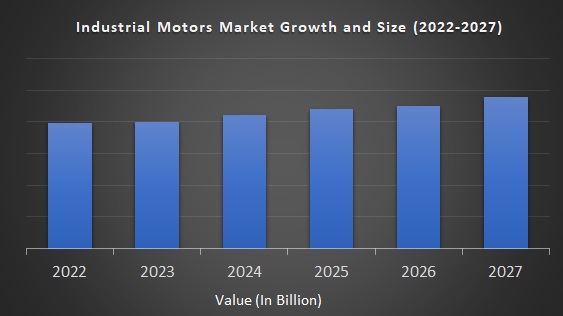
The global industrial motors market size was valued at USD 22.1 billion in 2025 and is anticipated to reach a valuation of USD 23.14 billion in 2026 and USD 33.47 billion by 2034, growing at a CAGR of 4.72% from 2026 to 2034.
Industrial motors serve as the workhorses of modern industry, powering pumps, fans, compressors, conveyors, and machine tools essential for continuous production processes. The market is currently undergoing a significant transformation driven by global mandates for energy efficiency and the rapid adoption of Industry 4.0 technologies. According to the International Energy Agency, electric motor systems account for approximately 45% of global electricity consumption, making their efficiency pivotal to achieving international climate goals. In industrialized nations, regulatory frameworks such as the European Union’s Ecodesign Directive are phasing out inefficient motor classes, thereby accelerating the replacement cycle with high-efficiency alternatives. As per the United States Department of Energy, upgrading to premium efficiency motors can reduce energy consumption by 20% to 30% in typical industrial applications. Furthermore, the integration of smart sensors and Internet of Things connectivity into motor designs enables predictive maintenance and real-time performance monitoring. As per the World Bank, industrial automation investments are rising globally, with a focus on reducing operational downtime and enhancing productivity. This convergence of regulatory pressure, technological innovation, and operational necessity positions industrial motors not merely as hardware, but as intelligent assets central to sustainable and efficient industrial operations.
MARKET DRIVERS
Stringent Global Energy Efficiency Regulations Mandate Adoption of High-Efficiency Motor Systems
The implementation of stringent global energy efficiency regulations majorly fuels the expansion of the industrial motors market, compelling industries to replace legacy systems with high-efficiency alternatives. Governments worldwide are enforcing stricter standards to reduce carbon emissions and lower national energy consumption targets. According to the International Energy Agency, the adoption of minimum energy performance standards for motors has the potential to save over 1,000 terawatt-hours of electricity annually by 2030, equivalent to the total electricity consumption of Japan. In Europe, the Ecodesign Regulation mandates that most three-phase motors must meet IE3 or IE4 efficiency levels, effectively banning the sale of less efficient models. Similarly, the United States Department of Energy has updated its standards to require premium efficiency levels for general-purpose motors used in industrial applications. These regulatory measures create a non-discretionary demand for advanced motor technologies, as non-compliance results in significant financial penalties and operational restrictions. Industries such as cement, steel, and chemicals, which are energy-intensive, are prioritizing these upgrades to align with corporate sustainability goals and reduce operational costs. The European Commission reports that improving motor efficiency could reduce industrial electricity demand by 10%, significantly contributing to the region’s decarbonization efforts. This regulatory landscape ensures a steady replacement market driven by legal compliance rather than just economic choice, forcing manufacturers to innovate and produce motors that meet or exceed these rigorous standards.
Rapid Industrial Automation and Industry 4.0 Integration Drive Demand for Smart and Connected Motors
The rapid expansion of industrial automation and the integration of Industry 4.0 technologies drive significant demand for smart and connected industrial motors capable of providing real-time data and precise control. Modern manufacturing facilities are increasingly adopting automated production lines, robotics, and artificial intelligence-driven systems that require motors with enhanced communication capabilities and variable speed control. According to the International Federation of Robotics, the global stock of operational industrial robots exceeded 3 million units in 2023, with a substantial portion installed in automotive and electronics manufacturing where precision motion control is critical. Smart motors equipped with embedded sensors can monitor parameters such as temperature, vibration, and load, allowing for predictive maintenance and reduced unplanned downtime. The McKinsey Global Institute estimates that predictive maintenance enabled by Internet of Things-connected devices can reduce maintenance costs by up to 30% and extend equipment life by 20%. This capability is particularly valuable in continuous process industries such as pharmaceuticals and food processing, where equipment failure can lead to significant product loss. Furthermore, the rise of collaborative robots and agile manufacturing systems necessitates motors that offer high dynamic response and compact designs. As industries strive for greater flexibility and efficiency, the demand for intelligent motor systems that integrate seamlessly with digital factory ecosystems continues to grow, driving innovation in motor design and control technologies.
MARKET RESTRAINTS
High Initial Capital Costs and Complex Retrofitting Requirements Restrain Market Penetration in SMEs
High initial capital costs and the complex technical requirements associated with retrofitting existing infrastructure impede the industrial motors market expansion, particularly for small and medium-sized enterprises. Premium efficiency motors and smart connected systems often command a price premium of 20% to 30% compared to standard efficiency models, which can be prohibitive for businesses operating with tight margins. According to the World Bank, access to finance remains a major challenge for small and medium-sized enterprises in developing economies, with interest rates often exceeding 10%, making long-term capital investments difficult to justify. Additionally, retrofitting older machinery with new high-efficiency motors frequently requires modifications to drive systems, control panels, and mounting structures, leading to increased installation costs and production downtime. The International Labour Organization highlights that many smaller industrial facilities lack the specialized technical expertise required to properly integrate and commission advanced motor systems, leading to suboptimal performance or premature failure. This skills gap increases the reliance on external consultants and service providers, further elevating the total cost of ownership. Consequently, many smaller operators delay upgrades until existing equipment fails completely, rather than proactively investing in efficiency improvements. This hesitation slows the overall adoption rate of advanced motor technologies and limits the market growth potential among the vast segment of smaller industrial players who constitute a significant portion of the global manufacturing base.
Volatility in Raw Material Prices, Particularly Copper and Rare Earth Elements, Impacts Manufacturing Costs
Volatility in raw material prices, particularly for copper, aluminum, and rare earth elements used in permanent magnet motors poses a significant restraint on the industrial motors market by creating uncertainty in manufacturing costs and pricing stability. Copper is a critical component in motor windings, while rare earth elements such as neodymium and dysprosium are essential for high-performance permanent magnet synchronous motors. According to the London Metal Exchange, copper prices have experienced significant fluctuations in recent years due to supply chain disruptions, geopolitical tensions, and varying demand from the electric vehicle and renewable energy sectors. These price swings make it difficult for motor manufacturers to maintain consistent profit margins and offer stable pricing to customers. The United States Geological Survey notes that the supply of rare earth elements is heavily concentrated in a few countries, creating geopolitical risks and potential supply bottlenecks. When raw material costs spike, manufacturers may pass these increases onto consumers, which can dampen demand, especially in price-sensitive markets. Additionally, the scarcity and environmental concerns associated with rare earth mining are prompting some industries to seek alternative motor technologies, which may not yet match the performance of permanent magnet designs. This material dependency exposes the industry to external shocks and complicates long-term strategic planning. Manufacturers must engage in hedging strategies or diversify supply chains to mitigate these risks, but such measures add complexity and cost to operations.
MARKET OPPORTUNITIES
Expansion of Renewable Energy Infrastructure Creates New Applications for Specialized Industrial Motors
The global expansion of renewable energy infrastructure presents a significant opportunity for the industrial motors market by creating new applications for specialized motors in wind turbines, solar tracking systems, and hydroelectric plants. Wind energy projects in particular require robust and reliable generators and pitch control motors that can withstand harsh environmental conditions and operate efficiently at variable speeds. According to the International Renewable Energy Agency, global renewable power capacity is expected to double by 2030, with wind and solar leading the growth. This expansion drives demand for high-torque low-speed motors and advanced generator systems that maximize energy capture and conversion efficiency. In solar farms, motorized tracking systems use precision actuators to follow the sun’s path, increasing energy yield by up to 25% compared to fixed panels. According to the International Energy Agency, investment in clean energy technologies reached record levels in 2023, which is signalling sustained growth in this sector. Furthermore, the development of green hydrogen production facilities requires large-scale electrolyzers powered by efficient industrial motors and compressors. As governments and corporations commit to net-zero targets, the deployment of renewable energy infrastructure will accelerate, creating a robust demand pipeline for specialized motor solutions. Manufacturers who develop durable and high-efficiency motors tailored for these specific renewable applications can capture significant market share in this rapidly growing segment.
Growth of Electric Vehicle Production Drives Innovation and Scale in Motor Manufacturing Technologies
The rapid growth of electric vehicle production drives innovation and economies of scale in motor manufacturing technologies offering opportunities for industrial motor suppliers to leverage advanced materials and production techniques. While traction motors for vehicles differ from traditional industrial motors, the underlying technologies, such as permanent magnet designs and advanced cooling systems, are increasingly converging. According to the International Energy Agency, global electric car sales surpassed 10 million units in 2022, representing a 55% increase from the previous year. This surge in volume has led to significant investments in automated manufacturing processes and supply chain optimization for motor components. Industrial motor manufacturers can benefit from these advancements by adopting similar production methods to reduce costs and improve quality consistency. The demand for high power density and compact motor designs in the automotive sector is also influencing industrial applications where space and weight are critical factors. Additionally, the development of silicon carbide inverters for electric vehicles improves efficiency and control precision, which can be adapted for industrial variable frequency drives. As the automotive and industrial sectors increasingly share technology platforms, industrial motor makers can tap into the broader ecosystem of innovation. This cross-pollination of technologies accelerates the development of next-generation industrial motors that are smaller, lighter, and more efficient, opening new markets in robotics and portable industrial equipment.
MARKET CHALLENGES
Supply Chain Disruptions and Geopolitical Tensions Threaten Component Availability and Lead Times
Supply chain disruptions and geopolitical tensions pose a major challenge to the industrial motors market by threatening the availability of critical components and extending lead times for deliveries. The global nature of the motor supply chain means that disruptions in one region can have cascading effects worldwide. According to the United Nations Conference on Trade and Development, global trade volumes have faced significant volatility due to logistical bottlenecks, port congestion, and shipping container shortages. The semiconductor shortage, which affected various industries, also impacted the production of smart motors and variable frequency drives that rely on electronic control units. Geopolitical conflicts, such as the war in Ukraine, have disrupted supplies of key raw materials including neon gas used in chip manufacturing and nickel for batteries and alloys. The International Monetary Fund warns that fragmentation of the global economy could lead to higher costs and reduced efficiency in international trade. These uncertainties force manufacturers to hold larger inventories, which ties up capital and increases storage costs. Additionally, customers face delays in project completion due to late delivery of motors, causing financial penalties and strained relationships. The lack of visibility into tier-two and tier-tier-three suppliers further complicates risk management. Companies must invest in supply chain resilience through diversification and nearshoring, but these transitions take time and resources, leaving the market vulnerable to ongoing disruptions.
Shortage of Skilled Technical Workforce Hinders Installation, Maintenance, and Optimization of Advanced Systems
The shortage of skilled technical workforce hinders the effective installation, maintenance, and optimization of advanced industrial motor systems, presenting a significant challenge to market growth and operational efficiency. Modern industrial motors, especially those integrated with Internet of Things sensors and variable frequency drives, require specialized knowledge for proper commissioning and troubleshooting. According to the International Labour Organization, there is a growing skills mismatch in the global labor market, with many workers lacking the technical competencies needed for modern industrial roles. In developed nations, an aging workforce is retiring, taking valuable institutional knowledge with them, while younger entrants often lack hands-on experience with electromechanical systems. The Society of Automotive Engineers notes that the transition to electric and smart technologies requires retraining of existing technicians, which is a slow and costly process. In emerging markets, the lack of vocational training infrastructure exacerbates the problem, leading to improper installation and maintenance practices that reduce motor lifespan and efficiency. Incorrect alignment, poor lubrication, and inadequate electrical connections are common issues that result from insufficient training. This skills gap increases the risk of equipment failure and safety incidents. Manufacturers and service providers struggle to find qualified personnel to support their growing customer base. Addressing this challenge requires significant investment in education and certification programs, but the immediate impact is a constraint on the widespread adoption and optimal utilization of advanced industrial motor technologies.
REPORT COVERAGE
| REPORT METRIC | DETAILS |
| Market Size Available | 2025 to 2034 |
| Base Year | 2025 |
| Forecast Period | 2026 to 2034 |
| CAGR | 4.72% |
| Segments Covered | By Type of Motors, Voltage, End-User, and Region |
|
Various Analyses Covered | Global, Regional & Country Level Analysis, Segment-Level Analysis, DROC, PESTLE Analysis, Porter’s Five Forces Analysis, Competitive Landscape, Analyst Overview on Investment Opportunities |
| Regions Covered | North America, Europe, APAC, Latin America, Middle East & Africa |
| Market Leaders Profiled | ABB Group, ARC Systems, Inc., Asmo Co., Ltd., Brook Crompton UK Ltd., Dr. Fritz Faulhaber GmbH, Emerson Electric, Maxon Motors AG, Regal Beloit Corporation, Rockwell Automation, Inc., and Siemens AG |
SEGMENTAL ANALYSIS
By Type of Motors Insights
The alternating current (AC) motors segment accounted for the major share of the global market in 2025. The dominance of AC motors segment in the global market can be credited to their robust construction, low maintenance requirements, and suitability for a wide range of industrial applications. AC motors, particularly induction motors, are the workhorses of industry, powering pumps, fans, compressors, and conveyors in manufacturing facilities worldwide. According to the International Energy Agency, AC motor systems account for approximately 45% of global electricity consumption, highlighting their pervasive use in industrial operations. The simplicity of AC motor design, which lacks brushes and commutators found in DC motors, results in higher reliability and longer operational life, reducing downtime and maintenance costs. As per the United States Department of Energy, three-phase AC induction motors are the most common type used in industrial settings due to their ability to handle heavy loads and operate efficiently at constant speeds. The widespread availability of AC power infrastructure globally further supports their dominance, as no additional conversion equipment is needed for standard grid connections. Additionally, advancements in variable frequency drive technology have enhanced the speed control capabilities of AC motors, making them versatile for applications that previously required DC motors. The cost-effectiveness of AC motors compared to other types, combined with their proven performance in harsh industrial environments, ensures their continued leadership in the market. Manufacturers continue to innovate with high-efficiency IE3 and IE4 class AC motors to meet regulatory standards, reinforcing their position as the preferred choice for general-purpose industrial applications.
On the other side, the direct current (DC) motors segment is estimated to showcase a CAGR of 7.4% over the forecast period in the global market owing to the growing demand for precise speed control, torque regulation, and integration with battery-powered systems. While traditionally less common in heavy industry due to maintenance needs, modern brushless DC (BLDC) motors have overcome these limitations, offering high efficiency and compact size. According to the International Federation of Robotics, the growing adoption of industrial robots and automated guided vehicles, which rely heavily on BLDC motors for precise motion control, is a key driver of this growth. The electric vehicle revolution is also significantly impacting the industrial motor landscape, as manufacturing techniques and supply chains for high-performance DC motors are scaling up rapidly. As per the International Energy Agency, global electric car sales exceeded 10 million units in 2022, creating economies of scale that benefit industrial DC motor production. These motors are increasingly used in applications requiring rapid acceleration and deceleration, such as packaging machinery and textile equipment. The integration of smart sensors and digital controls in DC motors enables advanced feedback loops for precision tasks. Furthermore, the shift towards portable and mobile industrial equipment powered by batteries favors DC motors due to their direct compatibility with DC power sources. This convergence of automation trends and electrification drives the rapid expansion of the DC motor segment in specialized industrial applications.
By Voltage Insights
The low voltage (LV) motors segment occupied the highest share of the global market in 2025. The growth of the LV motors segment in the global market is attributed to their extensive use in general manufacturing, commercial buildings, and small to medium-sized industrial facilities. LV motors typically operate at voltages below 1,000 volts and are the standard choice for a vast array of applications including HVAC systems, pumps, fans, and conveyor belts. According to the International Electrotechnical Commission, the majority of industrial motors installed globally are low voltage units due to the ease of installation, safety, and lower insulation requirements compared to higher voltage counterparts. The widespread availability of low voltage power distribution networks in both developed and developing regions supports their dominance. As per the United States Department of Energy, low voltage motors account for over 70% of the total motor stock in commercial and light industrial sectors. Their cost-effectiveness and simplicity make them accessible to small and medium-sized enterprises, which constitute a significant portion of the global industrial base. Additionally, the standardization of LV motor designs allows for easy replacement and interoperability across different manufacturers. The growth of the service sector and light manufacturing in emerging economies further drives demand for LV motors. Regulatory pushes for energy efficiency are also focused heavily on this segment, with mandates for IE3 and IE4 efficiency levels applying to most low voltage general-purpose motors. This broad applicability and regulatory focus ensure that LV motors remain the backbone of the industrial motor market.
However, the medium voltage (MV) motors segment is estimated to witness a CAGR of 6.2% over the forecast period in the global market owing to the increasing investments in heavy industry, large-scale infrastructure projects, and renewable energy installations. MV motors typically operate between 1,000 and 35,000 volts and are essential for high-power applications such as large pumps, compressors, fans, and mills in mining, oil and gas, and power generation sectors. According to the International Energy Agency, the expansion of industrial capacity in emerging economies, particularly in Asia-Pacific, is driving demand for high-power efficient motor solutions. MV motors offer superior efficiency and reduced current levels compared to low-voltage equivalents for high-power applications, resulting in lower cable costs and energy losses. As per the Global Wind Energy Council, the installation of large wind turbines, which utilize medium-voltage generators and drive systems, is accelerating globally, contributing to this growth. Additionally, the modernization of water and wastewater treatment facilities requires large MV motors for pumping stations to handle increasing urban demand. The shift towards electrification in heavy transport and industrial processes also favors MV technology due to its ability to handle substantial power loads efficiently. Government initiatives to upgrade aging industrial infrastructure in North America and Europe further stimulate demand for modern medium-voltage motor systems. These factors collectively position MV motors as the fastest-growing segment driven by the need for high power efficiency and reliability in critical industrial applications.
REGIONAL ANALYSIS
Asia Pacific Market Analysis
Asia-Pacific captured the largest share of the global market share in 2025 and is likely to experience accelerated expansion driven by robust industrial growth and massive infrastructure investments over the next few years. Asia-Pacific holds the largest share of the global industrial motors market, characterized by its rapid industrialization, status as a global manufacturing hub, and massive infrastructure development. Countries such as China, India, Japan, and South Korea are major contributors to regional demand. According to the United Nations Industrial Development Organization, Asia-Pacific accounts for over 40% of global manufacturing value added, driving substantial consumption of industrial motors. China remains the world’s largest producer of goods, requiring extensive automation and motor-driven machinery in factories. The Indian government’s Make in India initiative is boosting local manufacturing, leading to increased investment in industrial equipment. Japan and South Korea lead in technological innovation, producing high-efficiency and smart motors for domestic use and export. The region’s growing middle class and urbanization drive demand for consumer goods and infrastructure, further stimulating motor usage. As per the Asian Development Bank, infrastructure investment in the region continues to rise, supporting energy, water, and transportation projects that rely on industrial motors. The presence of major motor manufacturers in the region ensures competitive pricing and ready availability. These factors combine to maintain Asia-Pacific’s leadership position in the global industrial motor market.
North America Market Analysis
North America is anticipated to exhibit steady development propelled by ongoing industrial automation and green energy transitions over the next few years. North America exhibits steady growth in the industrial motors market, supported by technological advancement, infrastructure modernization, and strict energy efficiency regulations. The United States and Canada are the primary markets, with a focus on replacing aging motor stock with high-efficiency models. According to the United States Department of Energy, federal standards mandate minimum efficiency levels for industrial motors, driving replacement demand. The region is a leader in adopting Industry 4.0 technologies, with smart motors and predictive maintenance solutions gaining traction in manufacturing and oil and gas sectors. As per the Bureau of Labor Statistics, industrial production in the US has shown resilience, with investments in automation and robotics supporting motor demand. The shale gas boom in the US has also stimulated activity in the oil and gas sector, requiring robust motors for extraction and processing. Canada’s focus on renewable energy and mining contributes to regional growth. The presence of major motor manufacturers and advanced research institutions fosters innovation in motor design and control systems. These dynamics ensure that North America remains a mature but evolving market for high-value industrial motor solutions.
Europe Market Analysis
Europe is projected to maintain steady progress supported by stringent environmental regulations and automotive sector electrification over the next few years. Europe maintains significant demand in the industrial motors market, driven by stringent environmental regulations, a strong automotive industry, and focus on sustainable manufacturing. The European Union’s Ecodesign Directive mandates high efficiency standards for motors, accelerating the replacement of older, inefficient units. According to the European Commission, the industrial sector is under pressure to reduce energy consumption and carbon emissions, driving adoption of IE3 and IE4 class motors. Germany, France, and Italy are key markets with robust manufacturing bases, particularly in automotive machinery and chemicals. As per Eurostat, industrial production in the EU remains stable, with ongoing investments in digitalization and automation. The automotive industry’s transition to electric vehicles is influencing motor manufacturing techniques and supply chains. Eastern European countries are seeing growth due to nearshoring of manufacturing activities from Asia. The region’s emphasis on circular economy and sustainability promotes the use of durable and recyclable motor components. These regulatory and industrial factors ensure that Europe remains a critical market for advanced and energy-efficient industrial motors.
Latin America Market Analysis
Latin America is poised for moderate growth propelled by economic recovery in key commodity sectors and infrastructure upgrades over the next few years. Latin America shows moderate growth in the industrial motors market, influenced by its strong mining and agricultural sectors and ongoing infrastructure development. Brazil, Mexico, and Chile are the largest markets in the region. According to the Economic Commission for Latin America and the Caribbean, industrial activity is recovering post-pandemic, with investments in mining and agro-processing driving motor demand. Brazil’s manufacturing sector is expanding, requiring motors for automotive and appliance production. Mexico benefits from nearshoring trends, with increased foreign direct investment in manufacturing facilities. Chile’s copper mining industry requires robust, high-power motors for extraction and processing operations. As per the Inter-American Development Bank, infrastructure projects in water and energy sectors further support regional market expansion.
COMPETITIVE LANDSCAPE
The competition in the global industrial motors market is characterized by the presence of established multinational corporations and specialized regional manufacturers who compete on technology efficiency and service quality. Major players differentiate themselves through advanced engineering capabilities and comprehensive portfolios that include smart and high efficiency motors. The market exhibits a moderate level of consolidation as larger firms acquire niche technology providers to enhance their innovation pipelines. Competitive pressure drives continuous improvement in energy efficiency and digital connectivity to meet strict environmental regulations. Price competition is intense in the standard motor segment but value added services such as predictive maintenance and custom engineering play a crucial role in retaining industrial clients. Regulatory adherence serves as a significant barrier to entry favoring incumbents with robust compliance frameworks. Innovation in materials and design is becoming a key differentiator as industries seek to reduce weight and size. This dynamic landscape requires participants to balance cost management with technological advancement to sustain profitability and market relevance in an evolving industrial ecosystem.
KEY MARKET PLAYERS
Major Key Players in the Global Industrial Motors Market are
- ABB Group
- ARC Systems, Inc.
- Asmo Co., Ltd.
- Brook Crompton UK Ltd.
- Dr. Fritz Faulhaber GmbH
- Emerson Electric
- Nidec Corporation
- Maxon Motors AG
- Regal Beloit Corporation
- Rockwell Automation, Inc.
- Siemens AG
Top Players In The Market
- Siemens AG stands as a global leader in the industrial motors market leveraging its extensive portfolio of high efficiency and smart motor solutions. The company integrates digital technologies such as Internet of Things sensors and predictive maintenance algorithms into its motor designs to enhance operational efficiency. Recently Siemens has strengthened its market position by expanding its production capacity for electric drives and motors in Asia and Europe to meet rising demand. The organization actively collaborates with industrial partners to develop customized solutions for sectors like automotive and renewable energy. By focusing on sustainability and energy efficiency Siemens aligns its products with global regulatory standards. Its commitment to innovation and digitalization ensures that customers benefit from reduced downtime and lower energy consumption solidifying its reputation as a trusted provider of advanced industrial motion control systems.
- ABB Ltd contributes significantly to the global industrial motors market through its comprehensive range of low and medium voltage motors designed for diverse industrial applications. The company emphasizes energy efficiency and reliability offering motors that meet stringent international standards such as IE4 and IE5. Recently ABB has strengthened its position by launching new series of synchronous reluctance motors that provide superior performance without rare earth materials. The firm invests heavily in research and development to integrate artificial intelligence capabilities for real time monitoring and optimization. ABB actively engages in strategic partnerships with original equipment manufacturers to embed its motor technology into broader automation systems. Its focus on sustainable manufacturing practices and circular economy principles enhances its appeal to environmentally conscious clients. This approach enables ABB to deliver value through improved productivity and reduced environmental impact across various industrial sectors.
- Nidec Corporation plays a pivotal role in the industrial motors market by specializing in compact and high precision motors for robotics automation and electric vehicles. The company leverages its expertise in brushless direct current motor technology to serve demanding applications requiring high torque and efficiency. Recently Nidec has strengthened its market position through strategic acquisitions of European motor manufacturers to expand its geographic reach and product portfolio. The organization focuses on developing integrated motor drive systems that simplify installation and reduce footprint for industrial clients. Nidec actively collaborates with technology providers to enhance the connectivity and smart features of its motor offerings. Its commitment to miniaturization and performance optimization allows it to capture niche markets in precision manufacturing and medical equipment. By delivering innovative and reliable motor solutions Nidec supports the advancement of automation and electrification trends globally.
Top Strategies Used By Key Market Participants
Key players in the industrial motors market primarily employ strategies focused on product innovation strategic acquisitions and digital integration to maintain competitive advantage. Companies invest heavily in research and development to create high efficiency motors that comply with global energy regulations. Strategic collaborations with automation firms enable vendors to offer integrated motion control solutions. Many participants are expanding their manufacturing footprint in emerging markets to reduce costs and improve supply chain resilience. Additionally firms focus on developing smart motors with embedded sensors for predictive maintenance. These multifaceted approaches ensure compliance with sustainability goals while enhancing operational efficiency for customers in a dynamic industrial landscape.
MARKET SEGMENTATION
This research report on the global industrial motors market has been segmented and sub-segmented based on the type of motors, voltage, end-user, and region.
By Type of Motors
- Alternating Current (AC) Motors
- Direct Current (DC) Motor
- Other sorts of Motors
By Voltage
- High Voltage (HV)
- Medium Voltage (MV)
- Low Voltage (LV)
By End-User
- Oil and Gas
- Power Generation
- Mining and Metals
- Water and Wastewater Management
- Chemicals and Petrochemicals
- Discrete Manufacturing
- Paper and Pulp
- Others
By Region
- North America
- Europe
- Asia-Pacific
- Latin America
- The Middle East and Africa