Global Integrated Traffic Systems Market Size, Share, Trends & Growth Forecast Report Segmented By Function, Hardware, Sensor, Application, Technology, and Region (North America, Latin America, Asia Pacific, Europe, Middle East and Africa), Industry Analysis From 2026 To 2034

ID: 9810
Pages: 175

Market Size, 2025

$34.48 Bn

Market Estimate, 2026

$37.69 Bn

Market Forecast, 2034

$76.89 Bn

CAGR, 2026–2034

9.32%

Global Integrated Traffic Systems Market Report Summary

The global integrated traffic systems market was valued at USD 34.48 billion in 2025, is estimated to reach USD 37.69 billion in 2026, and is projected to reach USD 76.89 billion by 2034, expanding at a CAGR of 9.32% during the forecast period from 2026 to 2034. The global integrated traffic systems market is experiencing robust growth as governments and transportation authorities invest in intelligent mobility solutions to address rising traffic congestion, improve road safety, and optimize urban transportation networks. Rapid urbanization, increasing vehicle ownership, and the development of smart city initiatives are accelerating the deployment of advanced traffic management technologies worldwide. The integration of artificial intelligence, Internet of Things (IoT), cloud computing, and real-time traffic analytics is enabling authorities to enhance traffic flow, reduce travel delays, and improve emergency response capabilities. Growing investments in connected infrastructure, sustainable mobility, and intelligent transportation systems (ITS) are expected to further strengthen market expansion throughout the forecast period.

Key Market Trends

  • Artificial intelligence and machine learning are being integrated into traffic management platforms to enable predictive traffic control and real-time congestion management.
  • Smart city projects worldwide are accelerating investments in connected transportation infrastructure and intelligent traffic monitoring systems.
  • IoT-enabled sensors, cloud platforms, and vehicle-to-infrastructure (V2I) communication technologies are improving traffic visibility and operational efficiency.
  • Governments are prioritizing road safety through advanced surveillance, automated incident detection, and adaptive traffic signal management systems.
  • Rising adoption of electric and connected vehicles is increasing demand for intelligent traffic ecosystems capable of supporting next-generation mobility services.

Segmental Insights

Based on hardware, the infrared sensors segment accounted for 43.2% of the global integrated traffic systems market share in 2025. The segment maintained its leading position due to its high accuracy in vehicle detection, traffic monitoring, speed measurement, and reliable performance under varying environmental conditions.

Based on hardware, the surveillance cameras segment captured 34.2% of the global integrated traffic systems market share in 2025. Growing deployment of high-definition cameras for traffic monitoring, automatic incident detection, law enforcement, and real-time video analytics continues to drive widespread adoption across urban transportation networks.

Regional Insights

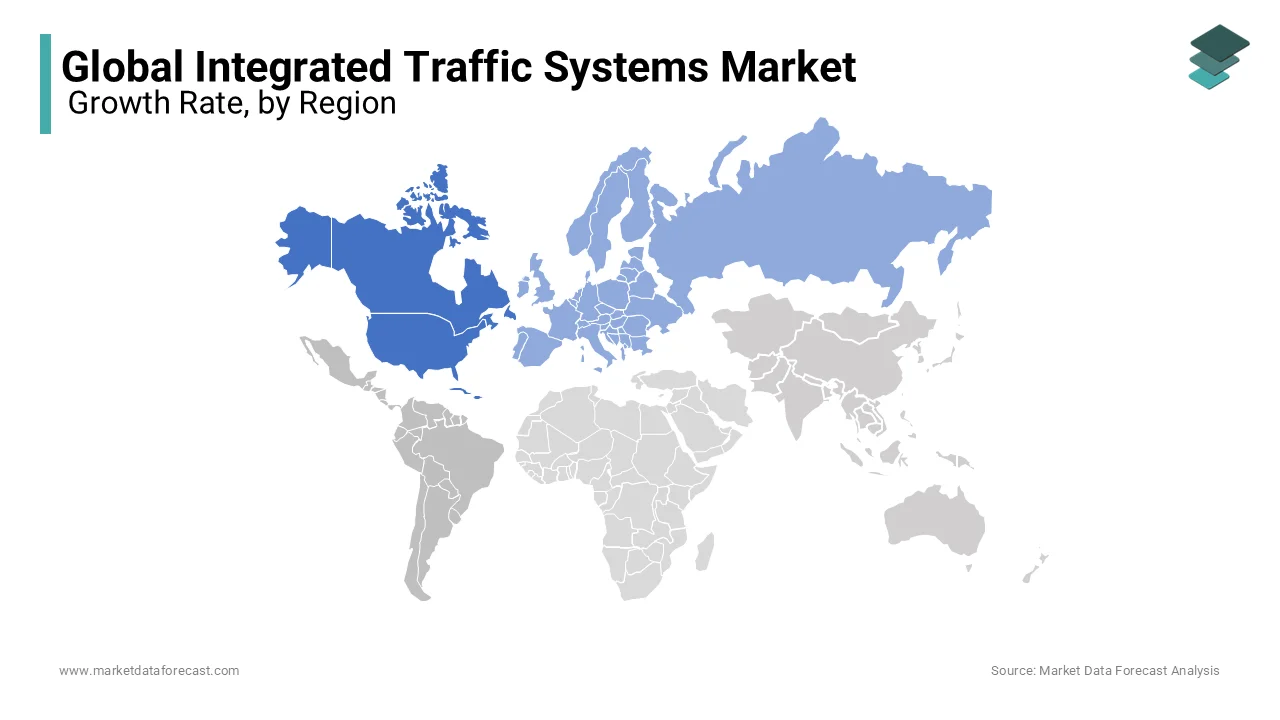
North America led the global integrated traffic systems market by accounting for 34.2% of the market share in 2025, supported by advanced transportation infrastructure, extensive smart city investments, and rapid adoption of intelligent transportation technologies. Europe ranked second with a 23.2% share, driven by stringent road safety regulations, sustainable mobility initiatives, and significant investments in connected transport infrastructure. Asia-Pacific is expected to register the fastest growth throughout the forecast period as rapid urbanization, expanding metropolitan populations, and large-scale infrastructure development accelerate the implementation of intelligent traffic management solutions. Latin America is witnessing growing adoption as governments modernize transportation networks to improve traffic efficiency and road safety, while the Middle East and Africa are gradually expanding investments in integrated traffic systems as smart city projects and digital infrastructure initiatives continue to gain momentum.

Competitive Landscape

The global integrated traffic systems market is highly competitive, with leading technology companies, transportation solution providers, and intelligent infrastructure specialists focusing on innovation, connectivity, and data-driven mobility solutions. Major market participants are investing in artificial intelligence, edge computing, cloud-based traffic management platforms, advanced sensing technologies, and real-time analytics to improve transportation efficiency and public safety. Strategic partnerships with governments, municipalities, and infrastructure developers are accelerating the deployment of next-generation intelligent transportation systems across developed and emerging economies. Companies are also expanding their portfolios with adaptive traffic signal control, connected vehicle solutions, and integrated mobility platforms while strengthening cybersecurity and interoperability capabilities. As cities continue transitioning toward intelligent and sustainable transportation ecosystems, continuous technological innovation and infrastructure modernization remain key competitive differentiators.

Prominent players in the global integrated traffic systems market include Siemens AG, Kapsch TrafficCom AG, Cisco Systems, Inc., SWARCO MIZAR S.r.l., Sumitomo Electric Industries, Ltd., LG CNS, FLIR Systems, Cubic Corporation, Jenoptik AG, Iteris, Inc., Savari, Inc., EFKO Management Company CJSC, TransCore Atlantic LLC, IMTAC LLC, Citilog SA, Atkins Limited, Global Traffic Technologies, LLC (GTT), Intelvision Technologies Limited, PTV AG, Q-Free ASA, and other regional and global market participants.

Global Integrated Traffic Systems Market Size

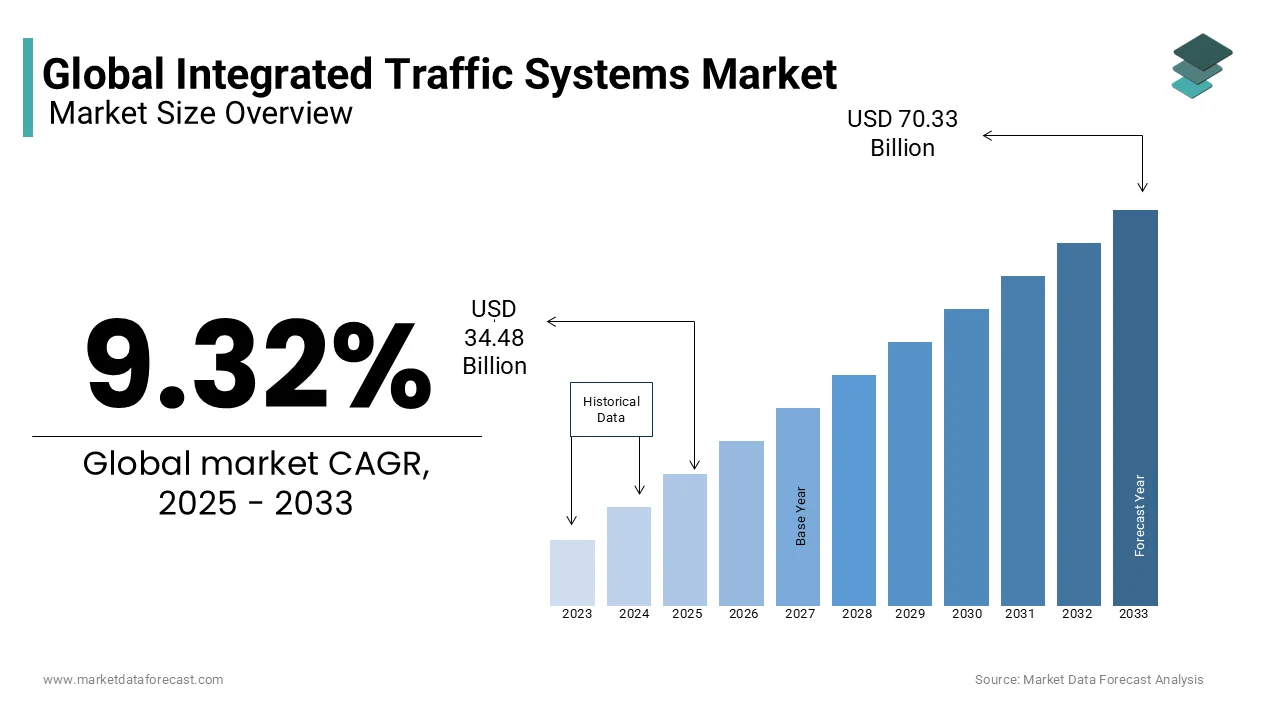
The global integrated traffic systems market size was valued at USD 34.48 billion in 2025 and is anticipated to reach USD 37.69 billion in 2026 to reach USD 76.89 billion by 2034, growing at a CAGR of 9.32% during the forecast period from 2026 to 2034.

The global integrated traffic systems market was valued at USD 34.48 billion in 2025 from USD 70.33 billion by 2033

Introduction to the Integrated Traffic Systems Market

The integrated traffic systems is a network of hardware, software, and communication technologies designed to manage, monitor, and optimize urban and interurban traffic flow. These systems integrate data from various sources, such as sensors, cameras, and connected vehicles to provide real time insights for traffic management centers. Urbanization continues to accelerate, with the United Nations Department of Economic and Social Affairs projecting that 68% of the world population will live in urban areas by 2050. This demographic shift places immense pressure on existing transportation networks, necessitating advanced solutions to handle increased vehicle density. Furthermore, the International Transport Forum indicates that congestion costs major economies billions of dollars each year in lost productivity and fuel waste. Governments are increasingly prioritizing smart city initiatives that leverage Internet of Things technologies to create responsive and adaptive traffic ecosystems. The integration of artificial intelligence and machine learning into these systems allows for predictive analytics, enabling proactive rather than reactive traffic management.

MARKET DRIVERS

Rapid Urbanization and Increasing Vehicle Density

The rapid urbanization and the consequent increase in vehicle density is escalating the growth of the integrated traffic systems market. As populations migrate to cities, the number of private and commercial vehicles on the roads increases exponentially, leading to severe congestion and inefficiencies in traditional traffic management methods. According to the United Nations Department of Economic and Social Affairs, the global urban population is expected to grow by 2.5 billion people over the next three decades, with nearly 90% of this increase occurring in Asia and Africa. This surge in urban dwellers translates directly to higher vehicle ownership rates, straining existing road infrastructure. In many megacities, average commute times have increased significantly, resulting in substantial economic losses. In major metropolitan areas, lose dozens of hours annually to congestion, costing the economy billions in wasted fuel and productivity. Integrated traffic systems address these challenges by optimizing signal timings, managing lane usage, and providing real time traffic information to drivers. The ability to dynamically adjust to changing traffic patterns helps mitigate hurdles and improves overall network efficiency. Municipalities are thus compelled to invest in intelligent transportation solutions to maintain mobility standards and support economic growth. The sheer scale of urban expansion ensures a sustained demand for scalable and adaptable traffic management technologies that can handle complex and high volume traffic scenarios.

Government Initiatives for Smart City Development

The government initiatives for smart city development, as public sector entities seek to modernize infrastructure and improve citizen services is additionally elevating the growth of the integrated traffic systems market. National and local governments worldwide are launching comprehensive smart city programs that prioritize intelligent transportation systems, as a core component. According to the study, the EU has allocated billions of euros through various funding mechanisms to support digital transformation in urban areas, including traffic management upgrades. These initiatives aim to reduce carbon emissions, enhance public safety, and improve the quality of urban life through technology driven solutions. In Asia, countries like China and India have launched ambitious smart city missions that include the deployment of integrated traffic control centers and automated enforcement systems. As per data, hundreds of pilot smart cities are being developed with a strong focus on intelligent traffic infrastructure. These government led projects often involve public private partnerships by encouraging innovation and investment from technology providers. Regulatory frameworks are also evolving to support the adoption of connected vehicle technologies and data sharing protocols. The political will to create sustainable and efficient urban environments drives substantial public spending on integrated traffic systems.

MARKET RESTRAINTS

High Initial Implementation and Maintenance Costs

The high initial implementation and maintenance costs, particularly for developing regions and smaller municipalities is impeding the growth of the integrated traffic systems market. Deploying a comprehensive integrated traffic system requires substantial capital investment in hardware, such as sensors, cameras, and communication infrastructure, as well as sophisticated software platforms. According to the study, the infrastructure gap in the United States alone requires hundreds of billions of dollars in investment, highlighting the financial burden on public budgets. For many local governments, competing priorities such as healthcare, education, and basic infrastructure maintenance limit the funds available for advanced traffic solutions. As per data from municipal finance reports, the ongoing costs of software licensing, system updates, and technical support further strain operational budgets. Small and medium sized cities often lack the financial resources to undertake large scale deployments by leading to fragmented or outdated systems. The complexity of integrating new technologies with legacy infrastructure also adds to the cost, requiring specialized expertise and custom engineering solutions. Additionally, the rapid pace of technological obsolescence means that systems may require frequent upgrades to remain effective, creating a cycle of continuous expenditure.

Data Privacy and Security Concerns

The data privacy and security concerns, as these systems collect and process vast amounts of sensitive information is additionally hindering the growth of the integrated traffic systems market. Integrated traffic systems rely on data from license plate recognition cameras, GPS trackers, and connected vehicles, raising issues regarding individual privacy and data protection. The strict guidelines govern the collection and processing of personal data, requiring organizations to implement robust security measures and obtain consent where necessary. Non-compliance can result in severe penalties and reputational damage by making organizations cautious about deploying extensive surveillance capabilities. The fear of data breaches and unauthorized access discourages some stakeholders from fully embracing connected technologies. Furthermore, public awareness regarding government surveillance can lead to resistance against the installation of monitoring devices. A significant portion of the population expresses concern about how their location data is used and stored.

MARKET OPPORTUNITIES

Integration of Artificial Intelligence and Machine Learning

The integration of artificial intelligence and machine learning by enabling predictive analytics and autonomous decision making is likely to foster new opportunities for the expansion of the integrated traffic systems market. AI algorithms can analyze historical and real time data to predict traffic patterns, identify potential incidents before they occur, and optimize signal timings dynamically. Spending on artificial intelligence solutions is growing rapidly, with transportation being a key application area. Machine learning models can learn from vast datasets to improve accuracy over time, leading to more efficient traffic flow and reduced congestion. The ability to process data from multiple sources, including weather conditions and special events that allows for more holistic traffic management. Furthermore, AI facilitates the integration of autonomous vehicles into the traffic ecosystem by enabling vehicle to infrastructure communication. This synergy enhances safety and efficiency, creating new value propositions for city planners and commuters. The continuous advancement of AI technologies offers opportunities for vendors to develop innovative solutions that address complex urban mobility challenges.

Expansion of Connected and Autonomous Vehicles

The expansion of connected and autonomous vehicles, as these technologies require seamless interaction with infrastructure, which is another attribute to boost the growth of the integrated traffic systems market. Connected vehicles exchange data with traffic signals, road signs, and other vehicles to enhance safety and efficiency, necessitating robust communication networks and integrated management systems. The level of automation in vehicles is increasing, with higher levels requiring greater infrastructure support. Integrated traffic systems play a crucial role in facilitating vehicle to infrastructure communication, providing real time information about road conditions, signal phases, and hazards. The number of connected cars on the road is projected to reach hundreds of millions in the coming decade by creating a massive demand for supporting infrastructure. This transition enables new applications, such as platooning, cooperative adaptive cruise control, and remote monitoring. Governments and private sector players are investing in dedicated short-range communications and cellular vehicle to everything technologies to enable these interactions. The synergy between autonomous vehicles and integrated traffic systems creates a synergistic effect, where improvements in one area benefit the other. This technological convergence opens new revenue streams for technology providers and encourages collaboration across industries.

MARKET CHALLENGES

Interoperability and Standardization Issues

The interoperability and standardization issues, hindering the seamless integration of diverse technologies and vendors is to pose as a major challenge for the growth of the integrated traffic systems market. The wide array of hardware and software solutions from different manufacturers, often using proprietary protocols and data formats. The lack of universal standards for vehicle to infrastructure communication and data exchange creates compatibility barriers. This fragmentation makes it difficult for cities to build cohesive systems that can effectively share data and coordinate actions across different jurisdictions. As per reports, integrating legacy systems with new technologies often requires custom interfaces and extensive testing, increasing costs and deployment times. The absence of standardized data models also complicates the aggregation and analysis of traffic information from multiple sources. Furthermore, varying regulatory requirements across different regions add another layer of complexity for global vendors. Efforts to establish global standards are ongoing but progress is slow due to competing interests and technological diversity.

Cybersecurity Vulnerabilities and Threat Landscape

The cybersecurity vulnerabilities and an evolving threat landscape, as these systems become increasingly connected and digitized is also to impede the growth of the integrated traffic systems market. The reliance on networked devices and cloud-based platforms exposes traffic management infrastructure to potential cyberattacks, including ransomware, denial of service, and data manipulation. The infrastructure sectors are prime targets for malicious actors seeking to disrupt essential services. A successful attack on an integrated traffic system could lead to widespread chaos, accidents, and loss of public trust. Many legacy traffic control devices lack adequate security features, making them vulnerable to exploitation. The complexity of modern systems, with numerous entry points and third-party connections, increases the attack surface. Protecting these systems requires continuous monitoring, regular patching, and robust incident response plans, which can be resource intensive. Furthermore, the shortage of skilled cybersecurity professionals in the transportation sector exacerbates the risk. Many organizations struggle to keep up with the latest security threats and best practices.

REPORT COVERAGE

REPORT METRIC

DETAILS

Market Size Available

2025 to 2034

Base Year

2025

Forecast Period

2026 to 2034

CAGR

9.32%

Segments Covered

By Function, Hardware, Sensor, Application, Technology, and Region.

Various Analyses Covered

Global, Regional & Country Level Analysis, Segment-Level Analysis, DROC, PESTLE Analysis, Porter’s Five Forces Analysis, Competitive Landscape, Analyst Overview of Investment Opportunities

Regions Covered

North America, Europe, APAC, Latin America, Middle East & Africa

Market Leaders Profiled

Siemens AG, Kapsch TrafficCom AG, Cisco Systems, Inc., SWARCO MIZAR s.r.l., Sumitomo Electric Industries, Ltd., LG CNS, FLIR Systems, Cubic Corporation, Jenoptik AG, Iteris, Inc., Savari, Inc., EFKO Management Company CJSC, TransCore Atlantic LLC, IMTAC LLC, Citilog SA, Atkins Limited, Global Traffic Technologies, LLC (GTT), Intelvision Technologies Limited, PTV AG, Q-Free ASA, and Others.

SEGMENT ANALYSIS

By Hardware Insights

The infra-red sensors segment was accounted in holding 43.2% of the integrated traffic systems market share in 2025 due to their reliability, accuracy, and ability to function effectively in diverse environmental conditions. These sensors are widely used for vehicle detection, counting, and classification at intersections and highways, forming the backbone of adaptive signal control systems. According to the study, infra-red technology offers high precision in detecting stationary and moving vehicles regardless of lighting conditions by making it superior to optical cameras in low light or adverse weather. The widespread installation of these sensors in existing traffic infrastructure ensures a large installed base that requires regular maintenance and upgrades. Millions of intersection controllers rely on inductive loops and infra-red detectors to manage traffic flow efficiently. The cost effectiveness of infra-red sensors compared to more complex radar or lidar systems makes them the preferred choice for municipal budgets constrained by fiscal limitations. Furthermore, their proven track record in reducing accident rates through accurate phase timing reinforces their continued adoption. The simplicity of integration with legacy traffic management software allows cities to upgrade their systems without complete overhauls.

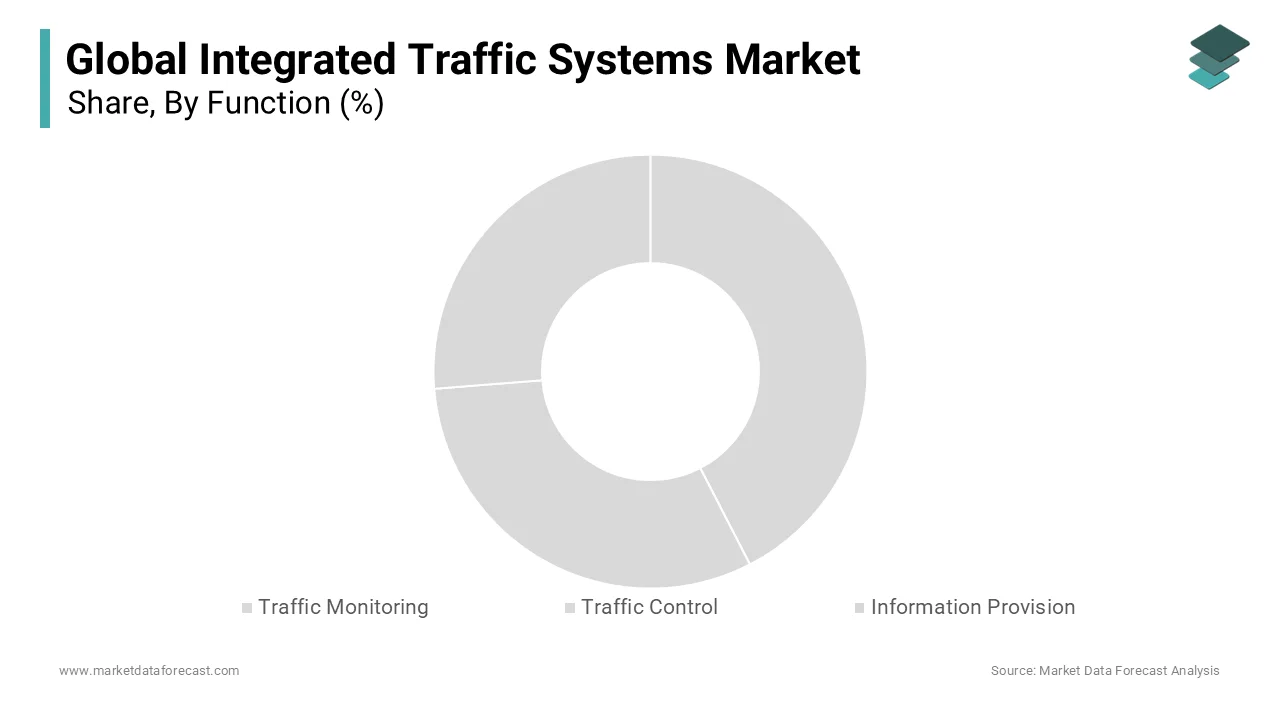
The traffic monitoring solutions segment had the major share of the global market in 2024

The weigh in motion sensor segment is projected to expand at a CAGR of 9.2% during the forecast period with the increasing need to enforce weight regulations for commercial vehicles to protect road infrastructure and ensure public safety. The overweight trucks cause billions of dollars in damage to bridges and pavements annually by necessitating rigorous monitoring. Weigh in motion sensors allow for the continuous screening of trucks without requiring them to stop, thereby improving traffic flow and enforcement efficiency. Many countries are implementing automated enforcement systems to reduce the administrative burden on law enforcement agencies. The integration of these sensors with license plate recognition systems enables real time identification and fining of violators. Governments are increasingly mandating the installation of weigh in motion systems on major freight corridors to prevent infrastructure degradation. Additionally, advancements in sensor technology have improved accuracy and durability by making them more attractive to transportation authorities. The growing emphasis on smart logistics and supply chain optimization further supports the adoption of these sensors.

By Hardware Insights

The surveillance cameras segment was accounted in holding 34.2% of the integrated traffic systems market share in 2025 due to their versatility in monitoring, enforcement, and incident management. These devices provide visual verification of traffic conditions, enabling operators to respond quickly to accidents, congestion, and illegal activities. The proliferation of high definition and pan tilt zoom cameras has enhanced the ability to capture detailed images for license plate recognition and evidence collection. As per data, thousands of cameras are deployed along highways and urban arterials to monitor traffic flow and detect incidents automatically. The integration of artificial intelligence with camera feeds enables automated detection of stopped vehicles, wrong way drivers, and pedestrian crossings. This capability reduces response times and improves overall road safety. Furthermore, surveillance cameras serve as a deterrent to traffic violations, contributing to better driver behavior. The decreasing cost of video storage and processing has made large scale deployments more feasible for municipalities.

The radars segment is esteemed to grow at a fastest CAGR of 8.5% from 2026 to 2034 with their superior performance in adverse weather conditions and long range detection capabilities. Unlike cameras, radars are not affected by fog, rain, or darkness, by making them ideal for reliable vehicle detection and speed measurement. The radar technology is increasingly being integrated into vehicle to infrastructure communication systems to support autonomous driving initiatives. The ability of radars to accurately measure speed and distance allows for precise traffic flow analysis and enforcement of speed limits. The radar-based systems offer higher accuracy in multi lane scenarios compared to other sensor types. The growing adoption of smart highways and connected vehicle technologies requires robust sensing infrastructure that can operate continuously under all conditions. Governments are investing in radar installations to enhance safety on high-speed roads and tunnels where visibility is often compromised. Additionally, the miniaturization of radar components has reduced costs and facilitated easier installation.

REGIONAL ANALYSIS

North America Market Analysis

North America was the top performer of the integrated traffic systems market by holding 34.2% of share in 2025 with the advanced technological infrastructure and strong government investment in smart city initiatives. The federal funding for intelligent transportation systems has increased substantially to address safety and mobility challenges. The presence of major technology providers and research institutions fosters innovation in traffic analytics and connected vehicle technologies. Canada is actively deploying integrated systems to improve cross border trade efficiency and urban mobility. The emphasis on reducing carbon emissions and improving air quality drives the adoption of systems that optimize traffic flow and reduce idling. Public private partnerships play a crucial role in financing and implementing large scale projects.

North America held the most significant portion of the integrated traffic system market in 2024

Europe Market Analysis

Europe integrated traffic systems market was positioned next by holding 23.2% of the share in 2025 with the stringent environmental regulations and a strong focus on sustainable urban mobility. The European Union has implemented comprehensive policies to reduce traffic congestion and emissions, driving the adoption of intelligent transportation solutions. The Trans European Transport Network initiative promotes the integration of digital technologies, across member states to enhance connectivity and efficiency. Countries like Germany, France, and the United Kingdom are leading the deployment of advanced traffic management systems in major cities. There is a growing emphasis on cooperative intelligent transport systems that enable vehicle to infrastructure communication. The region benefits from a well-established infrastructure and high levels of digital literacy among citizens. Government incentives for electric vehicles and shared mobility services also contribute to the evolution of traffic systems. The focus on data privacy and security ensures that systems are designed with robust protection measures.

Asia-Pacific Market Analysis

Asia Pacific integrated traffic systems market growth is likely to witness a fastest CAGR during the forecast period with the rapid urbanization, increasing vehicle populations, and massive infrastructure development. Countries such as China, India, and Japan are investing heavily in smart city projects to address severe congestion and pollution issues. Billions of dollars are being allocated to improve urban transport infrastructure and integrate digital solutions. China leads the region in deploying advanced traffic management systems, including extensive surveillance networks and adaptive signal control. The Smart Cities Mission includes significant components for intelligent traffic management to improve urban livability. The rising middle class and increasing car ownership rates create urgent demand for efficient traffic solutions. Governments are leveraging technology to enhance public transportation systems and reduce reliance on private vehicles. Collaboration with global technology firms accelerates the adoption of innovative solutions.

Latin America Market Analysis

Latin America integrated traffic systems market growth is driven by the urbanization and the need to improve road safety and traffic efficiency. Major cities in Brazil, Mexico, and Colombia are facing increasing congestion and accident rates by prompting governments to invest in intelligent transportation solutions. There is a growing focus on modernizing urban infrastructure to support economic growth and social inclusion. Projects, such as bus rapid transit systems are being integrated with traffic management technologies to improve service reliability. The adoption of electronic toll collection and speed enforcement systems is increasing to generate revenue and enhance safety. Limited budgets and infrastructure challenges remain barriers, but public private partnerships are helping to bridge the gap.

Middle East and Africa Market Analysis

The Middle East and Africa Integrated Traffic Systems Market growth is likely to grow with the varying levels of adoption and investment. Gulf Cooperation Council countries, such as the United Arab Emirates and Saudi Arabia are leading the region with ambitious smart city projects and world class infrastructure. These nations are investing heavily in digital transformation to diversify their economies and improve quality of life. Dubai and Riyadh are deploying advanced traffic management systems to support their vision for future mobility. In contrast, many African countries face challenges related to infrastructure deficits and limited funding, although some major cities like Johannesburg and Nairobi are beginning to adopt basic traffic monitoring technologies. There is a growing recognition of the need to improve road safety and reduce congestion. International aid and partnerships are facilitating the introduction of intelligent transportation solutions.

COMPETITIVE LANDSCAPE

The competition in the integrated traffic systems market is characterized by a mix of established industrial conglomerates and specialized technology firms vying for dominance through innovation and service excellence. Large multinational corporations leverage their extensive resources and global reach to offer comprehensive end to end solutions. These companies often compete on system reliability, scalability, and integration capabilities with existing infrastructure. Specialized vendors focus on niche areas, such as advanced sensor technology or predictive analytics software providing deep technical expertise. Regulatory compliance and data security serve as significant differentiators favoring incumbents with proven track records. Competitive dynamics are further influenced by the rising demand for smart city solutions prompting firms to invest in holistic urban mobility ecosystems. Strategic alliances with government agencies and academic institutions are common as companies seek to validate their technologies and influence policy standards.

KEY MARKET PLAYERS

A few of the market players in the global integrated traffic system market

  • Siemens AG
  • Kapsch TrafficCom AG
  • Cisco Systems, Inc.
  • SWARCO MIZAR s.r.l.
  • Sumitomo Electric Industries, Ltd
  • LG CNS
  • Thales Group
  • FLIR Systems
  • Cubic Corporation
  • Jenoptik AG
  • Iteris, Inc
  • Savari, Inc.
  • EFKO Management Company CJSC
  • TransCore Atlantic LLC
  • IMTAC LLC
  • Citilog SA
  • Atkins Limited
  • Global Traffic Technologies
  • LLC (GTT)
  • Intelvision Technologies Limited
  • PTV AG
  • Q-Free ASA

Top Players In The Market

  • Siemens AG maintains a leading position in the global integrated traffic systems market through its comprehensive portfolio of intelligent transportation solutions. The company focuses on developing adaptive signal control technologies and cloud-based traffic management platforms that enhance urban mobility. Siemens recently expanded its digital twin capabilities to simulate traffic scenarios and optimize infrastructure planning for smart cities. They have strengthened partnerships with municipal governments in Europe and Asia to deploy connected vehicle infrastructure. By integrating artificial intelligence into their traffic operating centers, Siemens enables real time decision making and predictive maintenance. The company actively participates in standardization initiatives to ensure interoperability across different transport modes. Their commitment to sustainability and efficiency drives the adoption of eco friendly traffic solutions.
  • Kapsch TrafficCom AG contributes significantly to the global integrated traffic systems market by offering specialized solutions for traffic data collection and management. The company leverages its expertise in sensor technology and software analytics to provide accurate insights for traffic optimization. Kapsch recently launched new video detection systems that utilize machine learning to improve vehicle classification accuracy. They have expanded their service offerings to include comprehensive maintenance and support contracts for existing infrastructure. The company collaborates with research institutions to develop next generation cooperative intelligent transport systems. Their modular software architecture allows for easy integration with third party applications. These efforts demonstrate their dedication to enhancing traffic safety and efficiency through advanced technological solutions tailored to the specific needs of modern urban environments.
  • Thales Group plays a pivotal role in the global integrated traffic systems market with its strong presence in secure communication and traffic management solutions. The company provides end to end systems for urban traffic control, toll collection, and public transport management. Thales recently enhanced its cybersecurity offerings to protect traffic infrastructure from emerging digital threats. They have secured major contracts in the Middle East and Asia Pacific for deploying integrated command and control centers. The company emphasizes the importance of data sovereignty and privacy in its system designs. Their focus on sustainable mobility includes solutions for reducing emissions through optimized traffic flow. This combination of security, reliability, and innovation strengthens their position as a key enabler of safe and efficient transportation systems globally.

Top Strategies Used By Key Market Participants

Key players in the integrated traffic systems market primarily employ strategic partnerships and technological innovation to maintain competitive advantage. Companies invest heavily in research and development to integrate artificial intelligence and Internet of Things capabilities into their solutions. Strategic collaborations with telecommunications providers facilitate the deployment of vehicle to infrastructure communication networks. Manufacturers also focus on expanding their software as a service offerings to provide scalable and cost-effective solutions. Emphasis on cybersecurity ensures the protection of infrastructure from digital threats. Additionally, firms pursue acquisitions to broaden their product portfolios and access new geographic markets.

MARKET SEGMENTATION

This research report on the global integrated traffic systems market is segmented and sub-segmented into the following categories.

By Function

  • Traffic Monitoring
    • Automatic Vehicle Detection
    • Number Plate Recognition Systems
    • Journey Time Measurement Systems
  • Traffic Control
    • Intelligent Traffic Lighting
    • Parking Management Systems
    • Incident Detection Systems
  • Information Provision
    • Information Communication Systems
    • Multifunctional Systems

By Hardware Type

  • Sensors
    • Infrared Sensors
    • Weigh-in-Motion Sensors
    • Acoustic Sensors
    • Inductive Loop Sensors
    • Ultrasonic Sensors
    • Magnetic Sensors
  • Display Boards
  • Radars
    • Speed Detection Radars
    • Vehicle Count Radars
    • Traffic Flow Monitoring Radars
  • Surveillance Cameras
    • Closed-Circuit Television (CCTV)
    • Pan-Tilt-Zoom (PTZ) Cameras
    • License Plate Recognition (LPR) Cameras
  • Interface Boards
  • Smart Traffic Lights
  • Others
    • Emergency Vehicle Detection Systems
    • Automatic Number Plate Recognition (ANPR) Systems

By Sensor Type

  • Infrared Sensors
  • Weigh-in-Motion Sensors
  • Acoustic Sensors
  • Inductive Loop Sensors
  • Ultrasonic Sensors
  • Magnetic Sensors

By Application

  • Urban Traffic
  • Expressways
  • Public Transport Systems
  • Parking Management
  • Freeways

By Technology

  • Internet of Things (IoT)-Based Technologies
  • Artificial Intelligence (AI) Integration
  • Wireless Communication Technologies

By Region

  • North America
  • Europe
  • Asia-Pacific
  • Latin America
  • Middle East and Africa

Trusted by 500+ companies. We respect your privacy and never share your data.

Please wait. . . . Your request is being processed

Frequently Asked Questions

Why is the integrated traffic systems market becoming a critical component of smart city development?

The market is expanding due to increasing urbanization, growing traffic congestion, rising investments in smart transportation infrastructure, and the need for safer and more efficient road networks.

What is an integrated traffic system and how does it work?

An integrated traffic system combines traffic signals, surveillance cameras, sensors, communication networks, software platforms, and data analytics to monitor, manage, and optimize traffic flow in real time.

How do integrated traffic systems improve urban mobility and road safety?

They reduce traffic congestion, optimize signal timing, improve incident response, enhance pedestrian safety, and enable real-time traffic management for smoother transportation.

Which application segment generates the highest demand in the integrated traffic systems market?

Urban traffic management systems account for a significant market share due to increasing smart city projects and the growing need for efficient road network management.

What factors are driving the adoption of integrated traffic systems worldwide?

Government investments in intelligent transportation infrastructure, increasing vehicle ownership, stricter road safety initiatives, and advancements in connected mobility technologies are driving market growth.

Who are the primary users of integrated traffic systems?

Transportation authorities, municipal governments, highway agencies, smart city developers, public transit operators, and infrastructure management organizations are the primary users.

What technologies are shaping the future of the integrated traffic systems market?

Artificial intelligence, IoT sensors, cloud computing, vehicle-to-everything (V2X) communication, big data analytics, edge computing, and 5G connectivity are transforming the market.

How is artificial intelligence enhancing integrated traffic management?

AI enables predictive traffic analysis, adaptive signal control, automated incident detection, congestion forecasting, and data-driven traffic optimization for more efficient transportation networks.

What challenges could affect the growth of the integrated traffic systems market?

High infrastructure deployment costs, cybersecurity risks, interoperability issues, data privacy concerns, and integration with legacy transportation systems could affect market growth.

Which regions are expected to lead the integrated traffic systems market?

North America and Europe remain leading markets due to advanced transportation infrastructure, while Asia Pacific is experiencing rapid growth through smart city initiatives and large-scale urban development projects.

Related Reports

Click for Request Sample