- Product Description Description
- Table of Contents TOC
- List of Table & Figure LOT
- Get Free Sample PDF Sample PDF
Market Size, 2025
$872.70 MnMarket Estimate, 2026
$1,016.70 MnMarket Forecast, 2034
$3,449.84 MnCAGR, 2026–2034
16.5%Executive Summary: Global Intra-Abdominal Pressure Measurement Devices Market
- Market Scope: Comprehensive global market evaluation of the intra-abdominal pressure measurement devices sector covering products, procedures, applications, end-users, and regional distribution frameworks.
- Market Valuation: Valued at USD 872.70 million in 2025, estimated at USD 1,016.70 million in 2026, and projected to reach USD 3,449.84 million by 2034, registering a robust CAGR of 16.50% from 2026 to 2034.
- Primary Growth Drivers: Rising incidence of trauma and critical care admissions, growing global prevalence of obesity and associated comorbidities, and increasing demand for real-time intra-abdominal hypertension monitoring.
Key Market Segment Metrics (2026–2034)
| Category | Leading Segment (2025 Position) | Fastest-Growing / Preferred Segment |
|---|---|---|
| By Product | Disposables (dominated regional and market share due to ease of use, point-of-care utility, and reduced cross-contamination risk) | Equipment Segment (anticipated to witness a strong CAGR of 9.8% during the forecast period backed by laboratory/ICU modernization) |
| By Procedure | Abdomen Procedure (held a significant market share in 2025 driven by high rates of ICU admissions and post-surgical monitoring) | Muscle Procedure (anticipated to register a CAGR of 8.6% driven by compartment syndrome evaluations in sports and trauma) |
| By Application | Intra-Abdominal Hypertension (largest segment holding a dominant share for managing critically ill ICU and major surgery patients) | Intra-Compartment Pressure (expected to grow with a CAGR of 9.3% addressing fracture-related and exertional compartment syndromes) |
| By End-User | Hospitals (largest end-user segment due to central role in managing critical care, complex surgeries, and standardized protocols) | Trauma Centers (projected to grow with a robust CAGR of 9.6% driven by emergency response needs and damage control resuscitation) |
| By Region | North America (largest contributor with 38.5% share in 2024 anchored by advanced ICU infrastructure and widespread adoption) | Asia-Pacific (esteemed to grow with the highest CAGR driven by high trauma incidence and expanding ICU capacity) |
Major Market Players & Market Structure
Market Structure: Highly competitive global marketplace featuring established medical technology leaders and specialized vendors competing through product innovation, digital connectivity, strategic partnerships, and mergers and acquisitions.
Key Companies: Medtronic plc, BD (Becton, Dickinson and Company), Philips Healthcare, C. R. Bard, Inc., ConvaTec Group PLC, Holtech Medical, Centurion Medical Products, Biometrix Ltd., Stryker Corporation, and Spiegelberg GmbH.
Global Intra-Abdominal Pressure Measurement Devices Market Size
The Global Intra-Abdominal Pressure Measurement Devices Market is projected to grow from USD 872.70 million in 2025 to USD 1,016.70 million in 2026 and reach USD 3,449.84 million by 2034, registering a CAGR of 16.50% from 2026 to 2034.
Intra-abdominal pressure (IAP) measurement is a critical clinical parameter used in the management of critically ill patients those suffering from conditions such as abdominal compartment syndrome, severe trauma, or post-surgical complications. IAP monitoring involves the use of specialized devices that assess pressure within the abdominal cavity, enabling timely intervention to prevent life-threatening complications. The growing prevalence of obesity, trauma-related injuries, and surgical procedures has significantly increased the demand for real-time intra-abdominal pressure monitoring. As per the Global Surgical Outcomes Study, approximately 4.2 million deaths occur globally each year due to complications from surgical procedures, many of which could be mitigated through early detection of intra-abdominal hypertension.
MARKET DRIVERS
Rising Incidence of Trauma and Critical Care Admissions
One of the primary drivers of the intra-abdominal pressure measurement devices market is the increasing number of trauma cases requiring critical care interventions. Traumatic injuries, especially those involving the abdomen, often lead to elevated intra-abdominal pressure (IAP), which can progress to abdominal compartment syndrome (ACS), which is potentially fatal condition if not diagnosed promptly. According to the World Health Organization, approximately 5 million people die annually due to injuries from road traffic accidents, falls, and violence, with a significant proportion requiring ICU admission. According to the American College of Surgeons, the trauma accounts for over 40 million emergency department visits annually in the United States, with nearly 3 million resulting in hospitalization. This high volume of trauma admissions necessitates routine monitoring of IAP to prevent secondary complications such as renal failure, respiratory distress, and cardiovascular instability.
Growing Prevalence of Obesity and Associated Comorbidities
Obesity has emerged as a major public health concern and a key driver of the intra-abdominal pressure measurement devices market. Excess visceral adiposity increases baseline intra-abdominal pressure, predisposing individuals to conditions such as intra-abdominal hypertension and abdominal compartment syndrome. This surge in obesity prevalence has led to an increase in metabolic and surgical conditions requiring close IAP monitoring. A 2020 study in Obesity Surgery revealed that nearly 25% of post-bariatric surgery patients experienced elevated IAP levels within the first 48 hours after surgery. Consequently, healthcare providers are adopting intra-abdominal pressure measurement devices more frequently to manage these at-risk patients effectively.
MARKET RESTRAINTS
High Cost of Advanced Monitoring Systems
One of the major restraints impeding market expansion is the high cost associated with advanced monitoring systems. While traditional intermittent IAP measurement methods remain cost-effective, modern real-time and digital monitoring solutions require significant investment in equipment, software integration, and staff training. According to a 2022 report by the Healthcare Financial Management Association (HFMA), nearly 60% of hospitals in the United States cited budget constraints as a limiting factor in adopting new medical technologies. In low- and middle-income countries, this financial barrier is even more pronounced. Additionally, reimbursement policies for IAP monitoring remain inconsistent across various regions. These economic challenges limit the widespread adoption of advanced IAP measurement devices in resource-constrained settings, thereby slowing market growth despite rising clinical demand.
Lack of Standardized Guidelines and Awareness Among Clinicians
Another significant restraint affecting the intra-abdominal pressure measurement devices market is the lack of universally accepted clinical guidelines and insufficient awareness among healthcare professionals regarding the importance of regular IAP monitoring. Although organizations such as the World Society of the Abdominal Compartment Syndrome (WSACS) have issued recommendations for IAP measurement in critically ill patients, these guidelines are not uniformly adopted across all healthcare systems. A 2021 survey conducted by the Society of Critical Care Medicine revealed that only 38% of ICU physicians routinely monitored IAP in at-risk patients, citing a lack of formal institutional protocols and unclear clinical utility as primary reasons. Furthermore, a multi-center study published in Intensive Care Medicine found that less than 25% of participating hospitals had established standard operating procedures for managing intra-abdominal hypertension. Additionally, limited continuing medical education on abdominal compartment syndrome and related monitoring techniques contributes to knowledge gaps among clinicians.
MARKET OPPORTUNITIES
Expansion of Telemedicine and Remote Patient Monitoring Technologies
The rapid evolution of telemedicine and remote patient monitoring presents a significant opportunity for the intra-abdominal pressure measurement devices market. This shift allows for continuous tracking of intra-abdominal pressure outside traditional hospital settings for postoperative patients or those with chronic conditions that elevate abdominal pressure. These trends suggest a favorable environment for the development of connected IAP monitoring devices capable of transmitting real-time data to clinicians via cloud-based platforms. Several companies are already exploring this space. For example, Philips and GE Healthcare have introduced integrated monitoring systems that support remote data access, enhancing the feasibility of IAP tracking beyond the ICU.
Increasing Use of Minimally Invasive Surgical Techniques
The rising adoption of minimally invasive surgical (MIS) techniques is creating a compelling opportunity for the intra-abdominal pressure measurement devices market. MIS procedures, including laparoscopic and robotic-assisted surgeries, require controlled pneumoperitoneum to create a working space within the abdominal cavity. Maintaining optimal intra-abdominal pressure during these surgeries is crucial to ensure surgical precision while minimizing complications such as hemodynamic instability and postoperative pain.
According to the American College of Surgeons, over 80% of cholecystectomies and 60% of colorectal surgeries in the U.S. are now performed using laparoscopic approaches. Manufacturers are responding to this need by developing specialized pressure monitoring systems tailored for use during laparoscopic surgeries. For instance, companies such as B. Braun and Medtronic have introduced integrated insufflation systems with built-in pressure sensors.
MARKET CHALLENGES
Regulatory Hurdles and Lengthy Product Approval Processes
One of the most pressing challenges facing the intra-abdominal pressure measurement devices market is the complex and time-consuming regulatory approval process required for medical device commercialization. Regulatory agencies such as the U.S. Food and Drug Administration (FDA), the European Medicines Agency (EMA), and the Pharmaceuticals and Medical Devices Agency (PMDA) in Japan impose stringent requirements for device clearance, particularly for novel technologies that integrate digital health components. However, for devices incorporating artificial intelligence or wireless connectivity, the review timeline can extend beyond two years due to additional cybersecurity and interoperability assessments. This delay hampers innovation and slows down the introduction of next-generation IAP monitoring solutions to the market. Furthermore, varying regulatory frameworks across different regions add another layer of complexity. As a result, manufacturers must allocate considerable resources to navigate diverse compliance landscapes, which can deter smaller firms from entering the market. These regulatory hurdles pose a significant challenge to the rapid adoption and scalability of intra-abdominal pressure measurement technologies, despite growing clinical demand.
Technical Limitations and Device Accuracy Concerns
Technical limitations and concerns regarding the accuracy of intra-abdominal pressure (IAP) measurement devices pose a significant challenge to market growth. Despite advancements in monitoring technology, inconsistencies in measurement reliability persist, particularly when comparing intermittent versus continuous IAP monitoring methods. A 2021 comparative study published in Annals of Intensive Care found that discrepancies between manually measured bladder pressure (the gold standard) and automated systems could vary by up to 5 mmHg, which may impact clinical decision-making in critically ill patients. Moreover, issues such as sensor drift, calibration errors, and improper placement of transducers contribute to measurement inaccuracies. According to a 2022 technical evaluation by the Biomedical Instrumentation & Technology journal, nearly 18% of IAP monitoring failures in ICU settings were attributed to incorrect device setup or operator error. Device manufacturers face the ongoing challenge of improving sensor precision while maintaining user-friendly designs. Additionally, the integration of digital interfaces and alarm systems requires rigorous validation to prevent false positives or system malfunctions.
REPORT COVERAGE
| REPORT METRIC | DETAILS |
| Market Size Available | 2025 to 2034 |
| Base Year | 2025 |
| Forecast Period | 2026 to 2034 |
| Segments Covered | By Product, Procedure, Application, End-User, and Region |
| Various Analyses Covered | Global, Regional & Country Level Analysis, Segment-Level Analysis, Drivers, Restraints, Opportunities, Challenges; PESTLE Analysis; Porter's Five Forces Analysis, Competitive Landscape, Analyst Overview of Investment Opportunities |
| Regions Covered | North America, Europe, Asia Pacific, Latin America, the Middle East, and Africa |
| Market Leaders Profiled | C. R. Bard, Inc., ConvaTec Group PLC, Holtech Medical, Centurion Medical Products |
SEGMENT ANALYSIS
By Product Insights
The disposables segment dominated the Latin American renal biomarkers market share in 2025. According to the Pan American Health Organization (PAHO), Latin America experiences over 5 million cases of chronic kidney disease annually, with a rising number of patients requiring rapid diagnostics for renal function assessment. The widespread use of disposable biomarker test strips, enzyme-linked immunosorbent assay (ELISA) kits, and urine dipsticks has surged due to their ease of use, reduced risk of cross-contamination, and compatibility with point-of-care testing environments. Additionally, the growing prevalence of diabetes and hypertension two leading causes of renal dysfunction has intensified the need for frequent monitoring. As reported by the International Diabetes Federation (IDF), over 35 million adults in Latin America suffer from diabetes, contributing significantly to the demand for disposable renal biomarker tests.
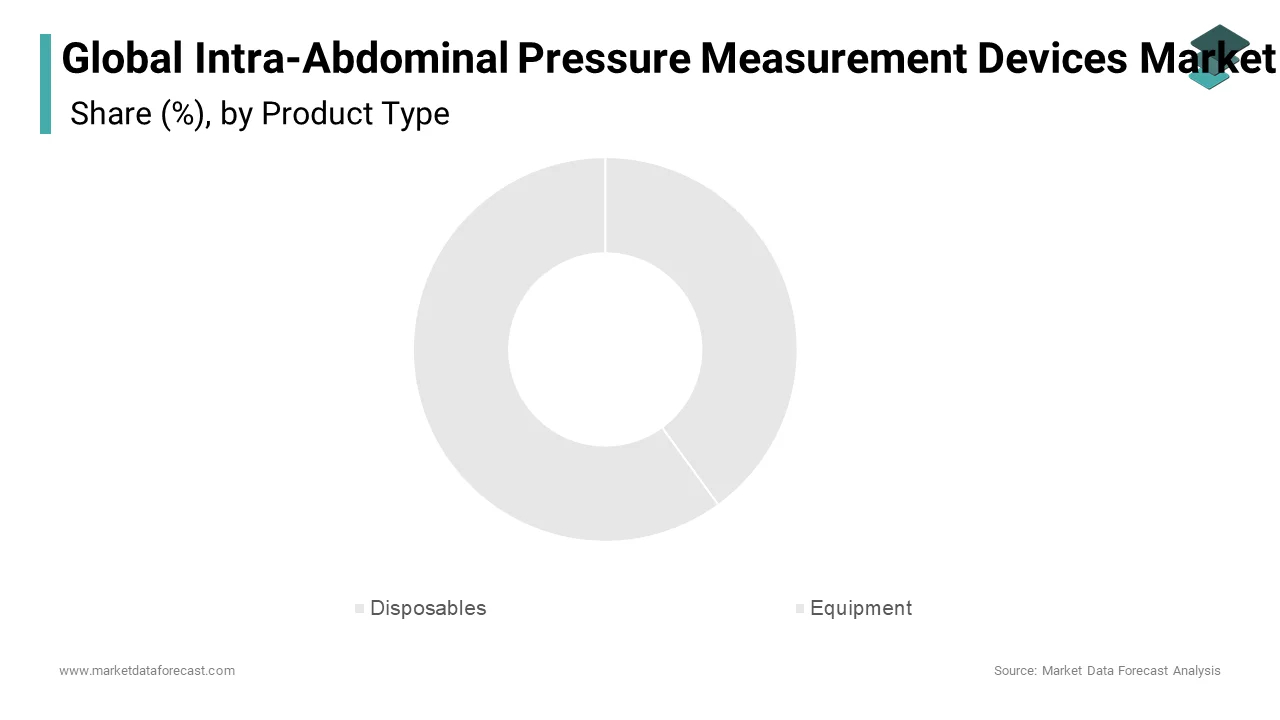
The equipment segment is anticipated to witness a CAGR of 9.8% during the forecast period. Countries like Brazil and Mexico have witnessed significant upgrades in laboratory capabilities, with over 1,200 new clinical labs established in the last three years alone, as noted by the Latin American Association of Clinical Biochemistry (ALBAC). Moreover, the increasing integration of automation and digital diagnostics into renal health assessments has enhanced the accuracy and efficiency of biomarker testing. Similarly, in Mexico, the National Institute of Public Health (INSP) launched a national screening program incorporating advanced immunoassay platforms for early AKI detection. These developments are accelerating the uptake of high-end diagnostic equipment, positioning this segment as the fastest-growing in the regional renal biomarkers market.
By Procedure Insights
The abdomen procedure segment held a significant share of the intra-abdominal pressure measurement devices market share in 2025. According to the World Society of the Abdominal Compartment Syndrome (WSACS), around 20–30% of critically ill ICU patients develop intra-abdominal hypertension, often linked to fluid resuscitation, sepsis, or postoperative swelling. Additionally, the rise in bariatric surgeries has further boosted demand. Data from the American Society for Metabolic and Bariatric Surgery (ASMBS) indicate that over 250,000 weight-loss procedures were performed in the U.S. in 2022, many of which required postoperative IAP monitoring to prevent complications like abdominal compartment syndrome.
The muscle procedure segment is anticipated to register a CAGR of 8.6% during the forecast period. According to a 2022 study published in Clinical Sports Medicine , exertional compartment syndrome affects approximately 30 out of every 100,000 athletes, especially long-distance runners and cyclists. The American Academy of Orthopaedic Surgeons (AAOS) notes that over 600,000 fracture-related emergency visits occur annually in the U.S., with tibial fractures accounting for nearly 50% of acute compartment syndrome cases. Furthermore, military populations experience high rates of crush injuries and blast trauma, necessitating immediate muscle pressure evaluations. A 2021 analysis by the U.S. Department of Defense found that combat-related musculoskeletal injuries accounted for over 25% of battlefield casualties, with a significant proportion requiring intra-compartment pressure measurements.
By Application Insights
The intra-abdominal hypertension application segment was the largest and held a dominant share of the intra-abdominal pressure measurement devices market owing to its critical role in managing critically ill patients in intensive care units. Early detection of elevated intra-abdominal pressure helps prevent life-threatening complications such as abdominal compartment syndrome, organ failure, and cardiovascular instability. According to the Global Burden of Disease Study, non-communicable diseases including diabetes, chronic kidney disease, and heart failure affect over 1.2 billion individuals globally, many of whom are at risk of developing secondary intra-abdominal hypertension due to fluid overload. Surgical trends also contribute to this segment’s dominance. The American College of Surgeons reports that over 4 million major abdominal surgeries are performed annually in the U.S., with postoperative IAP assessments becoming standard practice in high-risk cases.
The intra-compartment pressure application segment is expected to grow with a CAGR of 9.3% during the forecast period. Acute compartment syndrome commonly occurs following fractures, particularly in the tibia and forearm. According to the Journal of Bone and Joint Surgery, approximately 70% of all compartment syndrome cases occur in the lower leg muscles. The National Trauma Data Bank (NTDB) reports that over 600,000 fractures requiring emergency treatment occurred in the U.S. in 2022, many of which involved high-risk compartments. Exertional compartment syndrome is also gaining attention, especially among endurance athletes. A 2022 clinical study published in Sports Health indicated that nearly 30% of runners experiencing recurrent leg pain were diagnosed with exertional compartment syndrome. The American College of Sports Medicine estimates that over 3.5 million sports-related injuries occur annually in the U.S., many requiring intra-compartment pressure assessments for timely diagnosis and intervention.
By End-user Insights
The hospitals segment was the largest in the intra-abdominal pressure measurement devices market due to their central role in managing critically ill patients, performing complex surgeries, and implementing standardized IAP monitoring protocols. Additionally, hospitals are increasingly adopting integrated IAP monitoring systems compatible with electronic health records (EHRs). Hospitals remain the primary deployment site for intra-abdominal pressure measurement devices by ensuring sustained market expansion.
The trauma centers segment is likely to grow with a projected CAGR of 9.6% in the next coming years with the increasing number of severe injuries requiring immediate IAP monitoring to manage abdominal compartment syndrome and other critical conditions. These specialized facilities play a crucial role in emergency response systems, particularly in urban and high-accident zones. Moreover, the American College of Surgeons Committee on Trauma advocates for the implementation of Damage Control Resuscitation (DCR) strategies, which include early IAP monitoring to optimize fluid management and prevent secondary organ failure. The Federal Emergency Management Agency (FEMA) reported a 12% increase in trauma center funding between 2020 and 2023, enabling better access to advanced monitoring technologies.
REGIONAL ANALYSIS
North America was the largest contributor in the Intra-Abdominal Pressure Measurement Devices Market with 38.5% of the share in 2024 with a highly developed healthcare system, extensive ICU infrastructure, and widespread adoption of evidence-based clinical practices. According to the U.S. Centers for Disease Control and Prevention (CDC), over 5.7 million ICU admissions occur annually in the U.S., with a significant proportion involving patients at risk of intra-abdominal hypertension. Moreover, the U.S. Food and Drug Administration (FDA) has approved several next-generation IAP monitoring systems in recent years, enhancing accessibility and clinical integration. Reimbursement policies under Medicare and private insurers further facilitate device adoption.
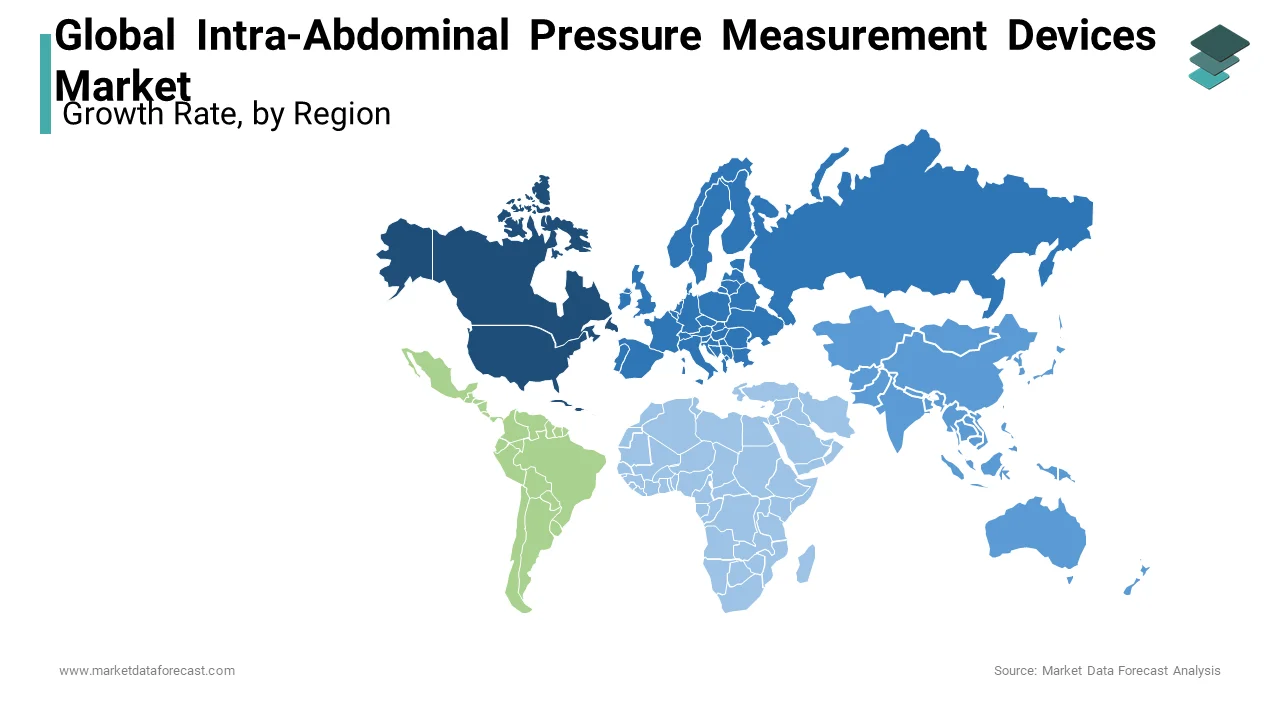
Europe was accounted in holding 25.3% of the global Intra-Abdominal Pressure Measurement Devices Market share in 2024. According to Eurostat, ICU bed density in Western Europe exceeds 30 beds per 100,000 population, significantly higher than the global average. The European Medicines Agency (EMA) has streamlined regulatory pathways for medical device approvals, encouraging innovation in IAP monitoring technology. Additionally, the British Journal of Anaesthesia reported a 22% increase in IAP monitoring adoption in UK hospitals between 2019 and 2023.
Asia-Pacific is esteemed to grow with highest CAGR in the next coming years. According to the World Health Organization (WHO), Asia accounts for over 60% of global road traffic fatalities, many of which result in abdominal trauma requiring IAP monitoring. The Indian Society of Critical Care Medicine reported that ICU admissions in India have grown by 15% annually since 2020, with increasing adoption of standardized IAP monitoring protocols. Additionally, Japanese hospitals are integrating AI-powered IAP monitoring systems to enhance diagnostic accuracy.
Latin America intra-abdominal pressure measurement devices market with is experiencing steady growth due to increasing ICU admissions, rising obesity rates, and improvements in healthcare infrastructure. Brazil’s Ministry of Health allocated BRL 15 billion ($3 billion USD) in 2023 toward ICU upgrades and emergency care enhancements. Meanwhile, Argentina’s National Institute of Medical Sciences has introduced training programs for ICU physicians on IAP monitoring best practices.
The Middle East and Africa Intra-Abdominal Pressure Measurement Devices Market is growing prominently in the next coming years. According to the Gulf Health Council, GCC countries have expanded ICU capacity by 12% since 2020, with hospitals in Dubai and Riyadh adopting advanced IAP monitoring systems.
KEY MARKET PLAYERS AND COMPETITIVE LANDSCAPE
Companies playing a significant role in the global intra-abdominal pressure measurement devices market profiled in this report are C. R. Bard, Inc., ConvaTec Group PLC, Holtech Medical, Centurion Medical Products, Biometrix Ltd. (Degania Silicone, Ltd.), Stryker Corporation, Spiegelberg GmbH, Nutrimedics S.A. (Greece), Potrero Medical Inc. (U.S.) and Gaeltec (U.K.).
The competition in the intra-abdominal pressure measurement devices market is characterized by the presence of established global medical device manufacturers striving to maintain its prominence through continuous innovation and strategic positioning. While a few dominant players control significant shares, mid-sized companies and regional vendors are also gaining traction by offering cost-effective alternatives and localized support services. Product differentiation remains a key battleground, with companies focusing on enhanced accuracy, ease of use, and integration with broader ICU monitoring systems. Additionally, there is a growing emphasis on clinician education and awareness-building initiatives to drive adoption. As demand for real-time and non-invasive pressure monitoring rises, companies are investing in digital capabilities such as cloud-based analytics and remote monitoring features. The market is also witnessing increasing regulatory scrutiny, pushing manufacturers to ensure compliance while accelerating time-to-market for new products. This dynamic landscape fosters both collaboration and competition, shaping the future trajectory of the industry.
Top Players in the Market
Medtronic plc
Medtronic is a global leader in medical technology and plays a pivotal role in the intra-abdominal pressure measurement devices market. The company offers advanced monitoring systems that integrate seamlessly into critical care environments, enhancing patient outcomes. Medtronic’s focus on innovation and clinical collaboration has enabled the development of intuitive and accurate pressure measurement tools used in ICUs and operating rooms worldwide.
BD (Becton, Dickinson and Company)
BD contributes significantly to the market through its broad portfolio of diagnostic and monitoring solutions. The company emphasizes precision and ease of use in its intra-abdominal pressure measurement offerings, supporting clinicians in early detection and intervention. BD's strong distribution network and commitment to education and training help drive adoption across diverse healthcare settings.
Philips Healthcare
Philips is a key player known for its integrated patient monitoring platforms. Its intra-abdominal pressure measurement solutions are embedded within broader ICU monitoring systems, enabling real-time data access and decision-making. Philips’ dedication to digital health and telehealth integration enhances the usability and scalability of its IAP monitoring technologies in modern healthcare facilities.
Top Strategies Used by Key Market Participants
One major strategy employed by leading players is product innovation and technological advancement , focusing on developing more accurate, user-friendly, and integrated intra-abdominal pressure measurement systems. Companies invest heavily in R&D to incorporate digital connectivity, AI-assisted diagnostics, and interoperability with electronic health records.
Another key approach is strategic collaborations and partnerships, including alliances with hospitals, research institutions, and digital health companies. These collaborations aim to enhance product development, expand clinical validation, and improve adoption through joint training programs and guideline integrations.
The market expansion through mergers and acquisitions is a prevalent strategy. Major players acquire smaller firms or complementary technologies to strengthen their portfolios, enter new geographic regions, and enhance their competitive edge in the rapidly evolving intra-abdominal pressure measurement devices market.
RECENT HAPPENINGS IN THE MARKET
In March 2024, Medtronic launched an enhanced version of its intra-abdominal pressure monitoring system designed for seamless integration with ICU telemetry platforms. This upgrade aims to improve real-time data tracking and streamline clinical workflows, reinforcing Medtronic’s dominance in critical care diagnostics.
In June 2023, BD announced a strategic partnership with a leading digital health platform to embed its intra-abdominal pressure measurement tools into a cloud-based patient monitoring ecosystem. This move supports remote data access and centralized management, aligning with the growing trend of connected healthcare solutions.
In November 2024, Philips introduced a new line of portable IAP monitoring devices tailored for use in ambulatory surgical centers and trauma units. The launch reflects Philips' commitment to expanding the application of intra-abdominal pressure monitoring beyond traditional ICU settings.
In February 2023, Smiths Medical expanded its IAP product portfolio through the acquisition of a niche device manufacturer specializing in low-cost disposable transducers. This acquisition strengthens Smiths Medical’s foothold in emerging markets where affordability and accessibility are key considerations.
In September 2024, B. Braun initiated a global training initiative focused on educating critical care professionals on best practices for intra-abdominal pressure monitoring. B. Braun aims to increase adoption rates and standardize clinical protocols across hospitals by collaborating with leading medical institutions.
MARKET SEGMENTATION
This market research report on the global intra-abdominal pressure measurement devices market has been segmented and sub-segmented based on the Product, Procedure, Application, End-User, and Region.
By Product
- Disposables
- Equipment
By Procedure
- Muscle
- Abdomen
By Application
- Intra-Compartment Pressure
- Intra-Abdominal Hypertension
By End-user
- Hospitals
- Trauma centers
- Ambulatory surgical centers (ASCs)
- Clinics
By Region
- North America
- The United States
- Canada
- Rest of North America
- Europe
- UK
- Germany
- Italy
- Spain
- France
- Rest of E.U.
- Asia-Pacific
- India
- China
- Japan
- Australia
- New Zealand
- South Korea
- Rest of APAC
- Latin America
- Mexico
- Brazil
- Argentina
- Chile
- Rest of Latin America
- Middle East
- Africa