- Product Description Description
- Table of Contents TOC
- List of Table & Figure LOT
- Get Free Sample PDF Sample PDF
Market Size, 2025
$8.58 BnMarket Estimate, 2026
$10.08 BnMarket Forecast, 2034
$36.63 BnCAGR, 2026–2034
17.50%Global Irrigation Equipment Market Size, Growth Drivers, and Forecast (2025–2034)
- Market Scope: Comprehensive global industry analysis of the irrigation equipment market covering product categories, crop types, end-user settings, regional leadership frameworks, and advanced technology integrations.
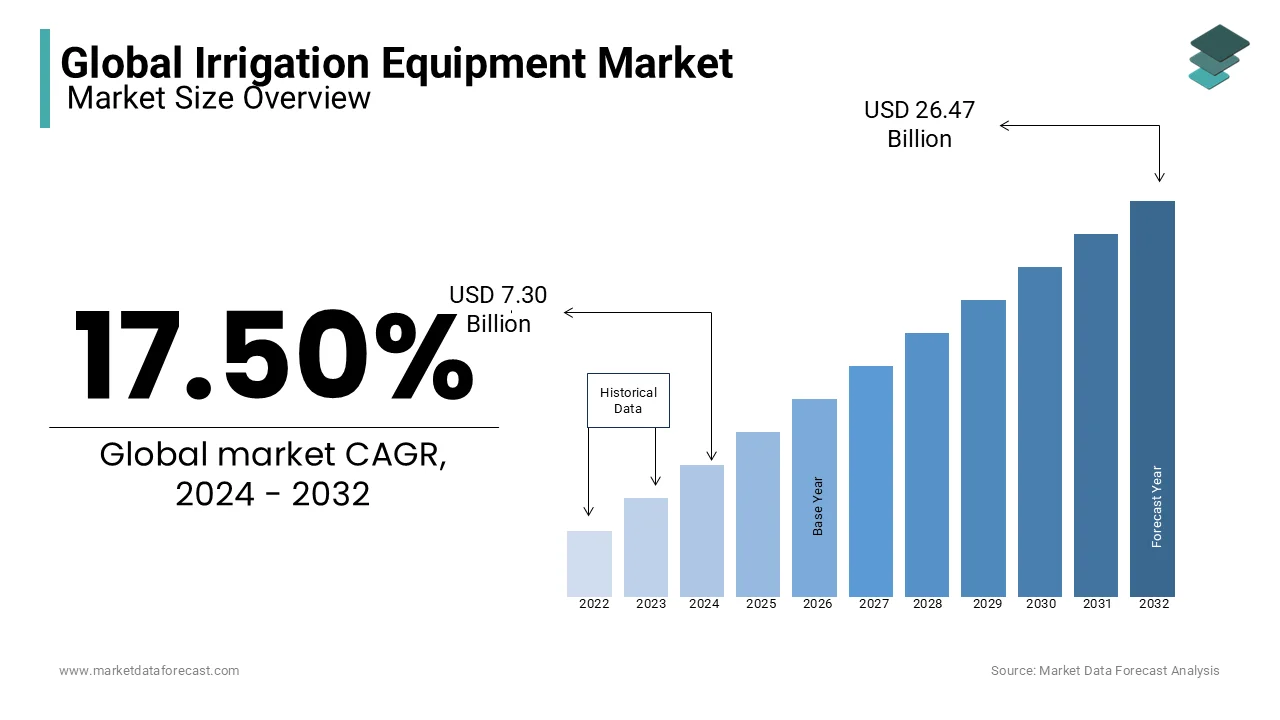
- Market Valuation: Valued at USD 8.58 billion in 2025, estimated at USD 10.08 billion in 2026, and projected to reach USD 36.63 billion by 2034, registering a robust CAGR of 17.50% from 2026 to 2034.
- Primary Growth Drivers: Escalating global water scarcity and climate change impacts (with agriculture accounting for ~72% of freshwater withdrawals), rising food demand from a growing global population, and widespread adoption of smart automated irrigation technologies.
Global Irrigation Equipment Market Segment Metrics (2026–2034)
| Category | Leading Segment (2025 Position) | Fastest-Growing Segment |
|---|---|---|
| By Product | Sprinkler Irrigation Systems (dominated with a 41.5% market share in 2025) | Drip Irrigation Emitters (projected to witness a CAGR of 8.5%) |
| By Crop Type | Cereals and Grains (captured a 45.5% share in 2025 for staple food security) | Fruits and Vegetables (estimated at a 9.2% CAGR due to high-value horticulture demand) |
| By End User | Agriculture (held the majority market share as the primary consumer of water) | Landscape Irrigation (anticipated to grow at a 7.8% CAGR via urban expansion and smart controllers) |
| By Region | Asia-Pacific (top performer with a 40.5% share in 2025 across extensive smallholder farming bases) | Middle East and Africa (experiencing rapid growth due to severe water stress and food security initiatives) |
Global Irrigation Equipment Market Players & Industry Structure
Market Structure: Highly competitive global agricultural technology landscape featuring major international corporations competing on water-use efficiency, IoT integration, precision drip/sprinkler solutions, and sustainable infrastructure.
Key Companies: Netafim, Rivulis Irrigation, Jain Irrigation Systems, Rain Bird, Eurotrip, The Toro Company, Hunter Industries, Nelson Irrigation, Valmont Industries, and T-L Irrigation Co.
Global Irrigation Equipment Market Size
The global Irrigation equipment market was valued at USD 8.58 billion in 2025 and is anticipated to reach USD 10.08 billion in 2026 from USD 36.63 billion by 2034, growing at a CAGR of 17.50% from 2026 to 2034.
Market Overview and Current Landscape
Irrigation equipment refers to the tools, machinery, and systems used to artificially supply water to crops, landscapes, or soil when natural rainfall is insufficient. This market includes diverse technologies such as drip sprinkler center pivot and surface irrigation systems which are critical for modernizing agriculture and enhancing water use efficiency. The market is increasingly driven by the urgent need to address water scarcity and improve crop yields in the face of climate change. According to the Food and Agriculture Organization of the United Nations, agriculture accounts for around 72% of global freshwater withdrawals, highlighting the imperative for efficient water management solutions. The World Bank states that expanding sustainable irrigation and improving water management can reduce childhood stunting by up to 20% in Sub-Saharan Africa while significantly transforming productivity, noting that a 10% rise in agricultural productivity reduces poverty by 2.5 to 3%. In regions facing severe drought conditions such as parts of Africa and the Middle East the adoption of precision irrigation technologies is becoming essential for food security. The United States Department of Agriculture notes that irrigated land produces nearly 50% of the total value of US crop sales despite representing only a fraction of harvested acreage. Regulatory frameworks in various countries are mandating water conservation practices further accelerating the transition from traditional flood irrigation to advanced systems. Technological advancements including smart controllers and sensor based automation are transforming the landscape enabling farmers to monitor and adjust water application in real time. This market is characterized by a shift toward sustainable agricultural practices that balance productivity with environmental stewardship ensuring long term resource availability.
MARKET DRIVERS
Escalating Water Scarcity and Climate Change Impacts
Escalating water scarcity and the intensifying effects of climate change are primary drivers for the global irrigation equipment market. This is because farmers are seeking to maximize every drop of available water. Changing precipitation patterns and prolonged droughts are reducing the reliability of traditional water sources necessitating the adoption of efficient irrigation technologies. According to the United Nations World Water Development Report, more than 2 billion people live in countries experiencing water stress, a figure expected to rise as global temperatures increase. The Intergovernmental Panel on Climate Change projects that arid and semi arid regions will experience significant reductions in water availability forcing agricultural sectors to adapt. Drip and micro irrigation systems which deliver water directly to the plant root zone can reduce water usage compared to conventional methods. The Food and Agriculture Organization of the United Nations emphasizes that efficient irrigation is crucial for maintaining crop yields in water scarce environments. Governments in countries like India and China are implementing policies to promote water saving technologies to mitigate the impact of diminishing groundwater reserves. The World Resources Institute indicates that 25 countries face extremely high baseline water stress, driving investment in irrigation infrastructure. As climate variability becomes the norm farmers are increasingly viewing efficient irrigation equipment not as a luxury but as a necessity for survival. This urgency is compelling both smallholder and commercial farmers to upgrade their systems ensuring consistent production despite environmental challenges.
Growing Global Population and Rising Food Demand
The growing global population and the consequent rise in food demand are significant growth enablers for the irrigation equipment market. This is due to the fact that agricultural systems must produce more with limited resources. The United Nations Department of Economic and Social Affairs projects that the world population will reach 9.7 billion by 2050 requiring a substantial increase in food production. To meet this demand without expanding arable land significantly farmers must intensify production through higher yields which reliable irrigation facilitates. According to the Food and Agriculture Organization of the United Nations, irrigated crops typically yield two times more than rainfed crops globally, making irrigation essential for food security.The World Bank highlights that irrigation enables multiple cropping cycles per year thereby increasing overall productivity. In developing regions such as Sub Saharan Africa and South Asia the expansion of irrigation infrastructure is critical for reducing hunger and poverty. The International Food Policy Research Institute states that investment in irrigation can significantly boost agricultural GDP and rural incomes. As dietary patterns shift toward more water intensive foods like meat and dairy the pressure on agricultural water resources intensifies. Efficient irrigation equipment allows for the precise application of water and nutrients optimizing plant growth and minimizing waste. This demographic and dietary shift creates a sustained demand for advanced irrigation solutions that can support intensive farming practices while conserving vital water resources for future generations.
MARKET RESTRAINTS
High Initial Investment Costs and Financial Barriers
High initial investment costs and financial barriers are hampering the growth of the global irrigation equipment market. This is particularly true for smallholder farmers in developing regions. Advanced irrigation systems such as drip and sprinkler setups require significant upfront capital for equipment purchase installation and maintenance. According to the World Bank the cost of installing a hectare of drip irrigation can range from 1000 to 3000 dollars which is prohibitive for many small scale farmers who operate on thin margins. The International Fund for Agricultural Development notes that access to credit remains a significant challenge for rural farmers limiting their ability to invest in modern technologies. In many African and Asian countries, fewer than 10% of smallholders have access to formal finance to invest in asset modernization like climate-resilient irrigation infrastructure. Additionally the complexity of these systems often requires specialized knowledge for operation and repair adding to the total cost of ownership. The Food and Agriculture Organization of the United Nations highlights that without subsidies or financial support the adoption rate of efficient irrigation remains low among resource poor farmers. Maintenance costs including replacement of emitters and pipes further strain budgets. While government subsidies exist in some countries they are often insufficient or poorly targeted. This financial constraint slows down the widespread adoption of water saving technologies despite their long term benefits. Market growth will remain constrained in key agricultural regions until affordable financing options and cost-effective solutions become more accessible.
Lack of Technical Expertise and Infrastructure Limitations
The lack of technical expertise and inadequate infrastructure pose significant restraints to the global irrigation equipment market hindering the effective implementation and maintenance of advanced systems. Proper installation and operation of precision irrigation technologies require specialized skills that are often lacking in rural agricultural communities. According to the Food and Agriculture Organization of the United Nations extension services in many developing countries are underfunded and unable to provide adequate training to farmers on modern irrigation techniques. This knowledge gap leads to improper system design and inefficient water application negating the potential benefits of the technology. In regions with unreliable electricity supply such as parts of Sub Saharan Africa and South Asia operating pump based irrigation systems is challenging. The International Energy Agency reports that 730 million people lack access to electricity globally, limiting the installation of automated irrigation controls. Poor road networks and logistical challenges also hinder the distribution of equipment and spare parts to remote areas. The World Bank emphasizes that infrastructure deficits increase the cost and complexity of adopting irrigation technologies. Without reliable technical support and infrastructure farmers may revert to traditional methods that are less efficient but easier to manage. This barrier prevents the full realization of water savings and yield improvements. Addressing these issues requires comprehensive capacity building programs and infrastructure development to support the sustainable adoption of irrigation equipment.
MARKET OPPORTUNITIES
Integration of Smart Irrigation and Internet of Things Technologies
The integration of smart irrigation and Internet of Things technologies offers a significant opportunity for the global irrigation equipment market. This enhances precision and efficiency through data driven decision making. Smart irrigation systems utilize sensors weather data and soil moisture monitors to automate water application ensuring optimal usage. According to the International Water Management Institute smart irrigation can reduce water consumption by up to 30% while improving crop yields. The growing availability of affordable sensors and connectivity solutions is making these technologies accessible to a broader range of farmers. The Food and Agriculture Organization of the United Nations supports the adoption of digital agriculture tools to enhance sustainability and productivity. Governments in countries like Israel and the United States are investing in research and development of smart irrigation systems to address water scarcity. The Global System for Mobile Communications Association highlights that increased mobile penetration in rural areas facilitates the use of mobile based irrigation control apps. These technologies allow farmers to monitor and adjust irrigation remotely reducing labor costs and improving responsiveness to changing conditions. As artificial intelligence and machine learning algorithms become more sophisticated predictive analytics can further optimize water management. This technological evolution creates new revenue streams for equipment manufacturers and service providers. The shift toward precision agriculture aligns with global sustainability goals offering a compelling value proposition for farmers seeking to maximize efficiency and minimize environmental impact.
Expansion of Government Subsidies and Support Programs
The expansion of government subsidies and support programs creates a promising prospect for the global irrigation equipment market. This reduces financial barriers and encourages adoption. Many governments recognize the critical role of efficient irrigation in ensuring food security and water conservation leading to the implementation of favorable policies. According to the Ministry of Agriculture and Farmers Welfare in India the Per Drop More Crop initiative provides financial assistance for micro irrigation systems aiming to cover millions of hectares. The Chinese government has also implemented substantial subsidies for water saving irrigation technologies as part of its rural revitalization strategy. The European Union’s Common Agricultural Policy includes measures to support investments in sustainable irrigation infrastructure. The Food and Agriculture Organization of the United Nations reports that targeted investment frameworks can increase irrigation efficiency in developing regions from 43% to 50%. These programs often include technical training and demonstration projects to build farmer confidence in new technologies. In the United States the Environmental Quality Incentives Program offers cost share assistance for irrigation efficiency improvements. Such initiatives lower the entry cost for farmers and stimulate market demand. As water scarcity becomes a pressing global issue more countries are likely to introduce similar support mechanisms. This policy environment creates a favorable landscape for market growth enabling manufacturers to expand their reach and contribute to sustainable agricultural development.
MARKET CHALLENGES
Energy Consumption and Operational Costs
Energy consumption and operational costs are a major challenge to the global irrigation equipment market. Many systems rely heavily on electricity or fossil fuels for pumping water. High energy prices can significantly increase the cost of irrigation making it economically unviable for some farmers. According to the International Energy Agency, agriculture accounts for approximately 4% of global total final energy consumption, with irrigation systems acting as a major contributor to the sector's power requirements. In regions where diesel pumps are prevalent fluctuating fuel prices add uncertainty to operational budgets. The Food and Agriculture Organization of the United Nations notes that energy inefficiencies in irrigation systems can lead to excessive costs and environmental impacts. Transitioning to solar powered irrigation systems offers a solution but requires high initial investment which remains a barrier for many. The World Bank highlights that energy subsidies in some countries distort market signals leading to over extraction of groundwater and inefficient water use. As governments move to remove these subsidies to promote sustainability farmers face higher operational costs. Additionally maintenance of pumps and motors adds to the financial burden. The lack of affordable and reliable renewable energy solutions in remote areas further complicates the situation. Addressing this challenge requires innovations in energy efficient technologies and supportive policies that promote sustainable energy sources for irrigation. Energy costs must be managed. Until then, the economic viability of irrigation equipment remains a concern for many users.
Environmental Concerns Regarding Soil Salinization and Waterlogging
Environmental concerns regarding soil salinization and waterlogging negatively impact the expansion of the global irrigation equipment market. Improper irrigation practices can lead to significant land degradation. Over irrigation and poor drainage can lead to the accumulation of salts in the soil reducing fertility and crop productivity. According to the Food and Agriculture Organization of the United Nations approximately 20% of irrigated land worldwide is affected by salinization. This degradation undermines the long term sustainability of agriculture and reduces the effectiveness of irrigation investments. The International Water Management Institute states that salinization can reduce crop yields by up to 50% in severe cases. In arid and semi arid regions where evaporation rates are high the risk of salinization is particularly acute. Poorly designed irrigation systems that do not account for local soil and hydrological conditions exacerbate these issues. The World Bank emphasizes the need for integrated water resources management to prevent environmental damage. Farmers may hesitate to adopt new irrigation technologies if they perceive a risk of worsening soil conditions. Additionally regulatory pressures to protect water quality and soil health are increasing requiring more sophisticated and expensive equipment. Addressing these environmental challenges requires advanced engineering solutions and comprehensive planning. These issues must be effectively managed. Until then, the potential negative impacts of irrigation on land resources remain a significant concern for stakeholders.
REPORT COVERAGE
| REPORT METRIC | DETAILS |
| Market Size Available | 2025 to 2034 |
| Base Year | 2025 |
| Forecast Period | 2026 to 2034 |
| CAGR | 17.50% |
| Segments Covered | By Product, Crop Type, End Users, and Region |
| Various Analyses Covered | Global, Regional & Country Level Analysis, Segment-Level Analysis, DROC, PESTLE Analysis, Porter’s Five Forces Analysis, Competitive Landscape, Analyst Overview on Investment Opportunities |
| Regions Covered | North America, Europe, APAC, Latin America, Middle East & Africa |
| Market Leaders Profiled | Netafim, Rivulis Irrigation, Jain Irrigation Systems, Rain Bird, Eurotrip, The Toro Company, Hunter Industries, Nelson Irrigation, Valmont Industries, T-L Irrigation Co., and Others. |
SEGMENT ANALYSIS
By Product Insights
The sprinkler irrigation systems segment dominated the global irrigation equipment market and accounted for a 41.5% share in 2025. This dominance of segment was driven by its versatility cost effectiveness and suitability for a wide range of crops and field conditions. These systems mimic natural rainfall distributing water evenly over large areas which makes them ideal for cereals grains and pasturelands. According to the Food and Agriculture Organization of the United Nations sprinkler irrigation is widely adopted in North America and Europe where large scale mechanized farming is prevalent. The United States Department of Agriculture reports that sprinkler systems account for approximately 58% of all irrigated acreage in the United States, reflecting their widespread acceptance. The ease of installation and operation compared to more complex drip systems drives their popularity among farmers with limited technical expertise. Additionally sprinklers are effective in cooling crops during heat waves reducing heat stress and improving yields. The International Water Management Institute notes that modern low pressure sprinklers have improved water use efficiency making them more competitive against traditional flood irrigation. Government subsidies in countries like India and China often favor sprinkler systems for their ability to cover large areas quickly. The robust manufacturing base for sprinkler components ensures availability and affordability. Furthermore the adaptability of sprinkler systems to various topographies including sloping lands where surface irrigation is inefficient contributes to their dominance. Farmers seek reliable and proven technologies to enhance productivity. Therefore, sprinklers remain the go-to solution for many agricultural applications globally.
The drip irrigation emitters segment is predicted to witness the highest CAGR of 8.5% from 2026 to 2034 due to the urgent need for water conservation and high value crop production. Drip systems deliver water directly to the root zone minimizing evaporation and runoff which is crucial in arid regions. According to the International Water Management Institute drip irrigation can improve water use efficiency by up to 90% compared to conventional methods. This efficiency is driving adoption in water scarce regions such as the Middle East North Africa and parts of Asia. The Food and Agriculture Organization of the United Nations highlights that drip irrigation is increasingly used for high value crops like fruits vegetables and nuts which require precise water management. Governments in countries like Israel Spain and California are promoting drip technology through subsidies and regulations to combat drought. The rising cost of water and energy further incentivizes farmers to switch to drip systems. Technological advancements such as self cleaning emitters and pressure compensating devices have enhanced reliability and reduced maintenance costs. The expansion of greenhouse and protected agriculture which relies heavily on drip irrigation also fuels growth. The precision and efficiency of drip emitters make them the preferred choice for sustainable agriculture as global food demand rises and water resources dwindle. Consequently, the market for this technology is experiencing rapid expansion
By Crop Insights
In 2025, the cereals and grains segment led the global irrigation equipment market and captured a 45.5% share. This leading position of the segment was attributed to its extensive cultivation area and critical role in global food security. Staples such as wheat maize rice and barley are grown on millions of hectares worldwide requiring reliable water supply to ensure stable yields. According to the Food and Agriculture Organization of the United Nations cereals occupy nearly 50% of the world’s harvested cropland making them the largest consumer of irrigation water. In countries like India China and the United States large scale irrigation projects are dedicated to cereal production to meet domestic and export demands. The United States Department of Agriculture notes that irrigated maize and wheat yields are significantly higher than rain fed counterparts driving farmers to invest in irrigation infrastructure. Sprinkler and center pivot systems are predominantly used for these crops due to their ability to cover vast areas efficiently. Government policies aimed at self sufficiency in staple grains further support irrigation development. The World Bank emphasizes that irrigation is key to stabilizing cereal production in the face of climate variability. As the global population grows the demand for cereals increases reinforcing the need for efficient irrigation solutions. The economic importance of these crops ensures continuous investment in irrigation equipment to safeguard production levels and maintain food security across nations.
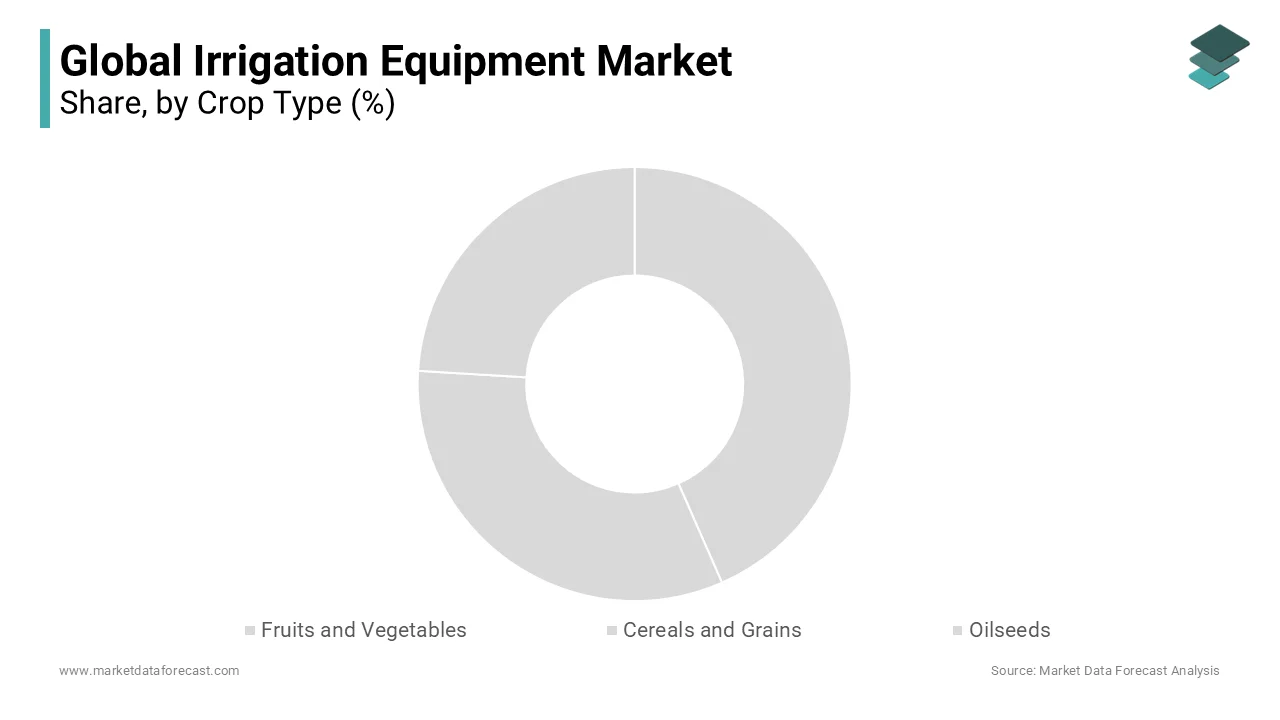
The fruits and vegetables segment is estimated to register the fastest CAGR of 9.2% during the forecast period owing to changing dietary habits and the high value nature of these crops. Consumers are increasingly prioritizing fresh produce for health benefits leading to expanded cultivation areas. According to the Food and Agriculture Organization of the United Nations global production of fruits and vegetables has risen steadily requiring precise water management to maintain quality and yield. Drip and micro irrigation systems are preferred for these crops as they prevent leaf wetness reducing disease risk and ensuring uniform fruit size. The International Trade Centre reports that export oriented horticulture in countries like Kenya Mexico and Turkey relies heavily on advanced irrigation to meet international standards. High value crops justify the higher initial cost of precision irrigation systems due to better returns on investment. Urbanization and the rise of supermarket chains have increased demand for consistent high quality produce encouraging farmers to adopt efficient irrigation technologies. Government initiatives promoting horticulture exports further drive equipment adoption. Additionally the expansion of protected agriculture and greenhouses which predominantly use drip irrigation for vegetables contributes to rapid growth. The reliance on controlled irrigation systems is intensifying as consumers demand year-round availability of diverse produce. This makes the segment the fastest-growing in the market
By End Users Insights
The agriculture segment held the majority share of the global irrigation equipment market in 2025. It leads in this sector because it is the primary consumer of water and drives the adoption of new technology. The sector accounts for the vast majority of irrigation equipment sales due to the extensive land area under cultivation and the critical need for water to sustain crop production. According to the Food and Agriculture Organization of the United Nations, agriculture consumes approximately 72% of global freshwater withdrawals, necessitating efficient irrigation solutions. The World Bank states that irrigated agriculture produces 40% of the world’s food on just 20% of cultivated land highlighting its productivity importance. Governments worldwide invest heavily in agricultural irrigation infrastructure to ensure food security and support rural livelihoods. The United States Department of Agriculture reports that irrigation is essential for high value crops and staple grains in major producing regions. Subsidies and loans for farmers to purchase irrigation equipment further boost market demand. The increasing frequency of droughts and erratic rainfall patterns forces farmers to rely on irrigation to mitigate risks. As the global population grows the pressure on agricultural systems to produce more food with less water intensifies driving continuous innovation and adoption of irrigation technologies. This fundamental reliance on water for crop survival ensures that agriculture remains the dominant end user segment in the irrigation equipment market.
The landscape irrigation segment is anticipated to witness the fastest CAGR of 7.8% between 2026 and 2034. This swift growth of the segment is propelled by urbanization aesthetic demands and water conservation regulations. Municipalities commercial properties and residential homeowners are increasingly investing in sophisticated irrigation systems for parks gardens golf courses and sports fields. According to the United Nations Department of Economic and Social Affairs, urbanization is accelerating with over 58% of the global population living in urban areas, creating demand for green spaces. Smart irrigation controllers and weather based sensors are being adopted to comply with strict water usage laws in regions like California and Australia. The Environmental Protection Agency notes that landscape irrigation can account for up to 60% of residential water use in arid areas, prompting shifts toward efficient technologies. Golf courses and sports stadiums are upgrading to high efficiency nozzles and drip systems to reduce operational costs. The rise of smart home technology has also spurred demand for automated residential lawn irrigation systems. Corporate sustainability goals are driving businesses to install water saving landscape solutions. The need for aesthetically pleasing yet water-efficient landscapes is fueling rapid growth, driven by urban expansion and environmental awareness. Consequently, this segment is outpacing traditional agricultural growth rates in certain developed markets.
REGIONAL ANALYSIS
Asia Pacific Market Analysis
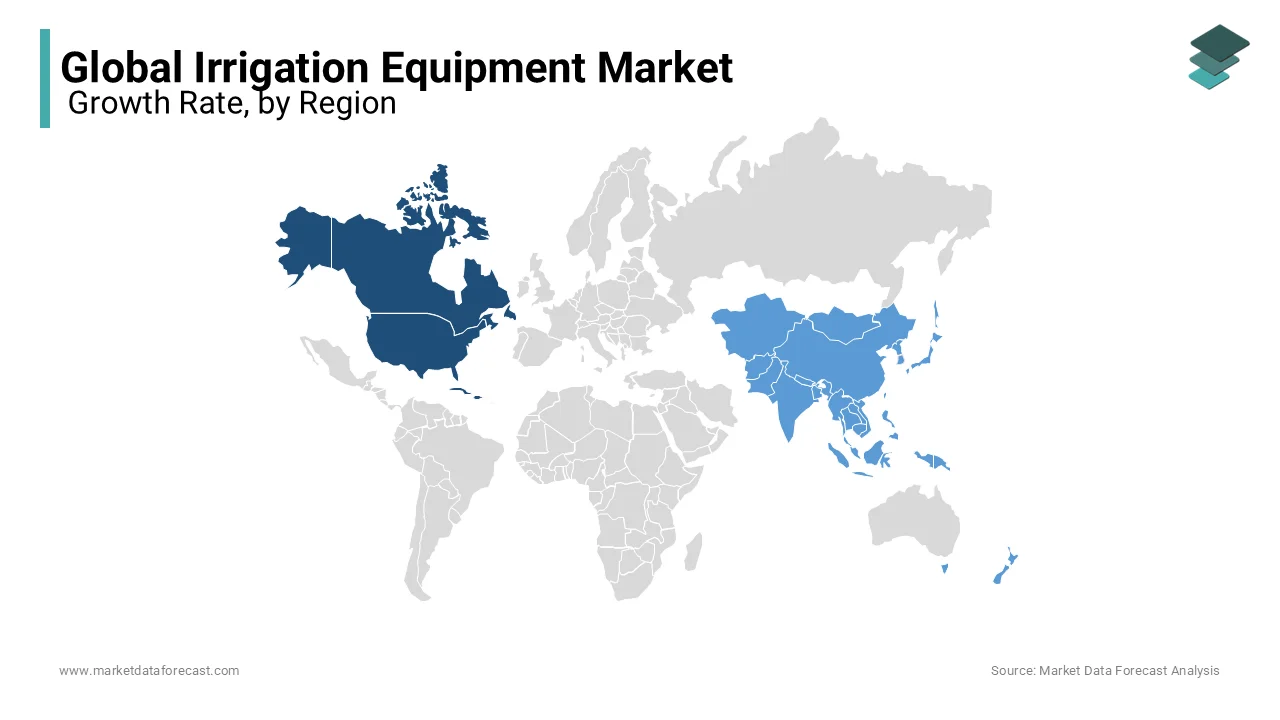
The Asia Pacific region was the top performer in the global irrigation equipment market and accounted for a 40.5% share in 2025. This position of the APAC market was supported by its vast agricultural base and growing population. Countries like India China and Thailand are major contributors to this dominance. According to the Food and Agriculture Organization of the United Nations, Asia is home to 70% of the world’s irrigated land, making it the central hub for irrigation technology adoption. The Indian government’s Per Drop More Crop initiative aims to expand micro irrigation coverage significantly boosting equipment sales. China is investing heavily in modernizing its agricultural infrastructure to improve water use efficiency amid severe water scarcity issues. The Asian Development Bank supports various projects aimed at enhancing irrigation productivity in the region. Rapid urbanization and changing dietary patterns are increasing demand for high value crops which require precision irrigation. The presence of local manufacturers offering cost effective solutions further stimulates market growth. Government subsidies and favorable policies encourage farmers to transition from traditional flood irrigation to modern systems. Climate change impacts including erratic monsoons and droughts are forcing farmers to adopt reliable irrigation methods. The region’s focus on food security and sustainable agriculture ensures continued investment in irrigation equipment. The potential for market expansion remains immense due to a large smallholder farmer base. This growth is accelerated as awareness and access to technology improve across rural communities.
North America Market Analysis
North America was the second largest country in the global irrigation equipment market and occupied a 25.2% share in 2025. This growth of the regional market was driven by high adoption rates of precision irrigation technologies such as center pivots and smart controllers. It is a mature and technologically advanced segment, which is led by the United States and Canada. According to the United States Department of Agriculture over 50% of irrigated land in the US uses sprinkler systems reflecting a preference for efficient large scale solutions. Water scarcity in western states like California and Texas drives investment in drip and micro irrigation systems. The Environmental Protection Agency promotes water conservation practices influencing regulatory frameworks that favor efficient equipment. Canadian farmers are increasingly adopting irrigation to mitigate climate risks and extend growing seasons. The presence of leading global manufacturers and strong research and development capabilities fosters innovation in the region. High labor costs encourage automation and remote monitoring solutions. Government programs such as the Environmental Quality Incentives Program provide financial assistance for irrigation upgrades. The well established distribution network and high farmer awareness contribute to steady market growth. Sustainability is becoming a priority. As a result, North American farmers continue to invest in advanced irrigation technologies to optimize resource use and maintain competitiveness in global agricultural markets.
Middle East and Africa Market Analysis
The Middle East and Africa region is experiencing significant growth in the irrigation equipment market due to extreme water scarcity and government initiatives to enhance food security. Countries like Saudi Arabia Israel and Egypt are leading adopters of advanced irrigation technologies. According to the Food and Agriculture Organization of the United Nations the Middle East faces the highest water stress levels globally necessitating efficient water management solutions. Israel is a global leader in drip irrigation technology exporting expertise and equipment worldwide. Saudi Arabia’s Vision 2030 includes strategies to reduce water consumption in agriculture promoting the use of treated wastewater and efficient irrigation systems. In Africa countries like Kenya and South Africa are expanding irrigation infrastructure to support smallholder farmers and improve productivity. The African Development Bank funds projects aimed at increasing irrigation access in rural areas. Desertification and climate change pressures are forcing governments to prioritize water saving technologies. The adoption of solar powered irrigation systems is rising due to abundant sunlight and high energy costs. Limited arable land and growing populations drive the need for intensive farming practices supported by precision irrigation. Investment in agricultural modernization is increasing. So, the region presents substantial opportunities for irrigation equipment manufacturers seeking to address critical water challenges.
Europe Market Analysis
Europe holds a significant share of the global irrigation equipment market owing to strict environmental regulations and a focus on sustainable agriculture. Countries like Spain Italy and France are major users of irrigation systems due to their Mediterranean climates and high value crop production. According to the European Environment Agency water scarcity affects many parts of southern Europe driving the adoption of efficient irrigation technologies. The European Union’s Common Agricultural Policy provides funding for investments in water saving infrastructure promoting the use of drip and sprinkler systems. Spain is a leader in modernizing its irrigation networks to reduce water waste in agriculture. Germany and the Netherlands are innovating in smart irrigation technologies integrating IoT and data analytics. The region’s emphasis on environmental protection mandates efficient water use reducing runoff and pollution. High labor costs encourage automation and precision farming techniques. The presence of advanced manufacturing firms supports the development of high quality irrigation equipment. Climate change impacts including hotter summers and irregular rainfall are increasing the reliance on irrigation. European farmers are striving to meet sustainability standards and maintain competitiveness. Hence, the demand for advanced irrigation solutions continues to grow steadily across the continent.
Latin America Market Analysis
Latin America is an emerging market for irrigation equipment because of its expansive agricultural sector and export oriented crop production. Countries like Brazil Argentina and Chile are increasing irrigation adoption to boost yields and mitigate climate risks. According to the Food and Agriculture Organization of the United Nations Latin America has significant untapped irrigation potential with only a fraction of arable land currently irrigated. Brazil is investing in large scale irrigation projects for soybeans and sugarcane production. Chile’s fruit export industry relies heavily on drip irrigation to ensure high quality produce for international markets. The Inter American Development Bank supports initiatives to improve water management and irrigation infrastructure in the region. Water scarcity in areas like northern Mexico and parts of Brazil is driving the shift toward efficient systems. Government policies promoting agricultural modernization and export growth encourage equipment adoption. The region’s diverse climate zones require tailored irrigation solutions ranging from sprinklers for grains to drip for fruits. As global demand for Latin American agricultural products rises farmers are investing in technology to enhance productivity and reliability. The potential for market expansion is substantial as more farmers recognize the benefits of irrigation in securing consistent harvests and improving economic outcomes.
COMPETITIVE LANDSCAPE
The competition in the global irrigation equipment market is intense and characterized by the presence of established multinational corporations and numerous regional manufacturers. Key players compete on the basis of product quality technological innovation and after sales service reliability. The market is fragmented with many local companies offering cost effective solutions tailored to specific regional needs. Leading firms differentiate themselves through advanced digital features such as remote monitoring and automated control systems that appeal to modern farmers. Price competition remains significant particularly in developing regions where affordability is a primary concern. Regulatory standards regarding water efficiency and environmental impact influence competitive dynamics by favoring compliant and sustainable products. Strategic alliances with agricultural technology providers enable companies to offer integrated solutions that enhance value propositions. Brand reputation and customer trust play crucial roles in maintaining market position as farmers seek reliable long term investments. Continuous innovation in materials and design ensures durability and performance under varying climatic conditions. Overall the market requires agility and customer centric approaches to navigate diverse regulatory environments and evolving agricultural practices successfully while addressing the critical need for water conservation globally.
KEY MARKET PLAYERS
Some of the major players in the Irrigation Equipment market are
- Netafim
- Rivulis Irrigation
- Lindsay Corporation
- Valmont Industries Inc
- Jain Irrigation Systems
- Rain Bird
- Eurotrip
- The Toro Company
- Hunter Industries
- Nelson Irrigation
- Valmont Industries
- T-L Irrigation Co.
Top Three Market Players
- Lindsay Corporation is a global leader in the irrigation equipment market renowned for its innovative center pivot and lateral move systems. The company serves agricultural producers worldwide with advanced water application technologies that enhance efficiency and crop yields. Recently Lindsay has focused on integrating digital solutions such as the FieldNET remote management platform to provide farmers with real time data and control. This strategic shift toward precision agriculture allows users to optimize water usage and reduce operational costs. The corporation continues to invest in research and development to improve system durability and energy efficiency. By expanding its service network and offering comprehensive support Lindsay strengthens its position as a trusted partner for modern farming operations. These initiatives demonstrate a commitment to sustainability and technological advancement in the global irrigation sector.
- Valmont Industries Inc contributes significantly to the global irrigation market through its Valley brand of center pivot and linear move irrigation systems. The company provides robust and reliable equipment designed to withstand diverse environmental conditions while maximizing water distribution uniformity. Valmont recently enhanced its product portfolio by incorporating smart technology features that enable automated monitoring and adjustment of irrigation schedules. The firm actively collaborates with agronomists and dealers to deliver tailored solutions that address specific crop and soil needs. Valmont also emphasizes sustainable manufacturing practices and resource conservation in its operations. By focusing on innovation and customer centric services the company maintains a strong competitive edge. Its dedication to improving agricultural productivity through efficient water management solidifies its reputation as a key player in the international irrigation industry.
- Jain Irrigation Systems Ltd is a prominent participant in the global irrigation equipment market specializing in micro irrigation solutions such as drip and sprinkler systems. The company offers a comprehensive range of products including pipes filters and fertigation equipment catering to smallholder and commercial farmers. Jain Irrigation recently expanded its manufacturing capabilities and distribution networks in emerging markets to increase accessibility. The organization focuses on developing cost effective and durable irrigation technologies that promote water conservation and sustainable agriculture. It actively engages in educational programs to train farmers on best practices for micro irrigation adoption. By leveraging its extensive experience and technical expertise Jain Irrigation strengthens its global presence. The company’s commitment to innovation and social responsibility drives its growth and impact in the agricultural sector worldwide.
Top Strategies Used By Key Market Participants
Key players in the global irrigation equipment market primarily focus on product innovation and technological integration to enhance efficiency and user experience. Companies invest heavily in research and development to create smart irrigation systems equipped with sensors and automation capabilities. Strategic partnerships with technology firms enable the incorporation of Internet of Things and data analytics into irrigation solutions. Expansion into emerging markets through localized manufacturing and distribution networks helps firms capture new customer segments. Providing comprehensive after sales support and training services builds customer loyalty and trust. Sustainability initiatives such as developing energy efficient pumps and recyclable materials align with environmental regulations. Mergers and acquisitions allow companies to broaden their product portfolios and access new technologies. These strategies collectively drive growth and competitiveness in the evolving landscape of global agriculture.
MARKET SEGMENTATION
This research report on the global irrigation equipment market is segmented and sub-segmented based on Product, Crop Type, End-User, and Region.
By Product
- Flow Meters
- Valves
- Injectors
- Filters
- Pressure Pumps
- Emitters
- Center Pivots
- Sprinklers and Others
By Crop Type
- Fruits and Vegetables
- Cereals and Grains
- Oilseeds and Others
By End Users
- Agriculture
- Landscape
- Mining and Others
By Region
- North America
- Europe
- Asia Pacific
- Latin America
- Middle East and Africa