- Product Description Description
- Table of Contents TOC
- List of Table & Figure LOT
- Get Free Sample PDF Sample PDF
Market Size, 2025
$1.37 BnMarket Estimate, 2026
$1.48 BnMarket Forecast, 2034
$2.7 BnCAGR, 2026–2034
7.81%Global Isomaltulose Market Size
The global isomaltulose market size was valued at USD 1.37 billion in 2025, and is expected to reach USD 2.70 billion by 2034 from USD 1.48 billion in 2026. The market is growing at a CAGR of 7.81% during the forecast period.
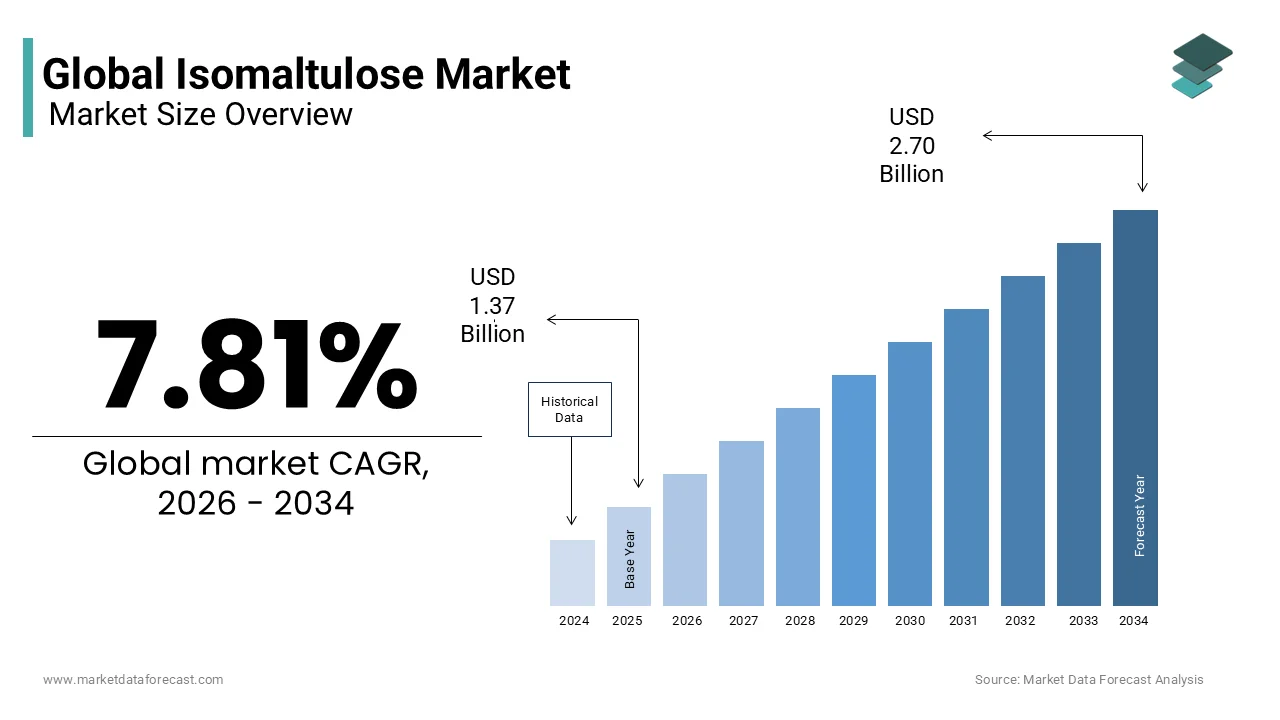
The isomaltulose sector revolves around the production and commercialization of a unique functional disaccharide derived from the enzymatic rearrangement of sucrose. This specialized carbohydrate is fully digestible yet absorbed much more slowly in the small intestine, providing a steady and sustained release of glucose and fructose into the bloodstream. Unlike conventional sugars that cause rapid metabolic spikes, this ingredient supports prolonged energy availability and metabolic homeostasis. The global urgency to address metabolic health crises underscores the relevance of such functional ingredients. According to the World Health Organization, more than 1 billion adults worldwide are living with obesity, creating a massive imperative for dietary interventions. As per the International Diabetes Federation, approximately 537 million adults are living with diabetes, a number that necessitates the reformulation of everyday foods with low glycemic alternatives. The food and beverage industry is actively seeking natural solutions to replace artificial sweeteners and high glycemic syrups. Isomaltulose offers a dental friendly and naturally sourced profile, making it highly attractive for modern product development. The integration of this slowly digested sugar into sports nutrition, clinical diets, and everyday beverages represents a critical evolution in how the global population approaches carbohydrate consumption and energy management.
MARKET DRIVERS
Escalating Global Metabolic Disorders Drive Demand for Low Glycemic Sweeteners
The rising prevalence of metabolic conditions across the globe is a significant factor propelling the global isomaltulose market growth. Consumers and healthcare professionals are increasingly recognizing the detrimental effects of rapid blood sugar fluctuations, which is leading to a strong preference for ingredients that promote metabolic stability. According to the Centers for Disease Control and Prevention, more than 37 million people in the United States are living with diabetes, highlighting the immense scale of this public health challenge. As per the International Diabetes Federation, the global diabetic population is projected to reach 783 million by the year 2045, indicating a sustained and growing need for glycemic control solutions. Isomaltulose addresses this critical need by providing the sweetness of sugar without the associated rapid insulin response. Food manufacturers are reformulating products to include this functional disaccharide to appeal to health conscious demographics seeking to manage their weight and blood glucose levels. This profound shift toward preventive nutrition and metabolic health ensures a robust and expanding demand for specialized low glycemic ingredients across international markets.
Surging Sports Nutrition Sector Requires Sustained Energy Release Profiles
The rapid expansion of the sports nutrition and endurance performance market significantly propels the consumption of specialized carbohydrates designed for prolonged energy delivery, which is further boosting the global market expansion. Athletes and fitness enthusiasts require fuel sources that can sustain physical exertion over extended periods without causing gastrointestinal distress or subsequent energy crashes. According to Grand View Research, the global sports nutrition market is experiencing steady growth as more individuals engage in regular endurance training and competitive athletics. As per the International Society of Sports Nutrition, the physiological demand for slow oxidizing carbohydrates is critical for maintaining glycogen stores during marathon running and cycling events. Isomaltulose perfectly fulfills this requirement due to its unique molecular bond, which delays enzymatic breakdown and ensures a continuous supply of energy to working muscles. Manufacturers of energy bars, hydration powders, and performance drinks are increasingly incorporating this ingredient to differentiate their products and enhance athletic endurance. The relentless pursuit of optimal physical performance and the growing commercialization of fitness supplements guarantee a strong and continuous uptake of this specialized energy substrate.
MARKET RESTRAINTS
Premium Production Costs and Complex Enzymatic Conversion Limit Mass Adoption
The intricate and costly biocatalytic transformation required to produce this functional disaccharide is impeding the expansion of the global isomaltulose market. Unlike standard sucrose or high fructose corn syrup which are produced through highly optimized and heavily subsidized agricultural processes, this ingredient requires specific enzymatic rearrangement using sucrose isomerase. According to the United States Department of Agriculture, the baseline cost of conventional sweeteners remains exceptionally low due to massive global agricultural subsidies and efficient refining infrastructure. As per the Journal of Food Science and Technology, the production expenses associated with specialized functional sugars can be significantly higher than those of standard commodity sweeteners. This substantial price premium forces food and beverage manufacturers to carefully evaluate the return on investment when reformulating their products. Many mass market brands operating on extremely thin profit margins find it financially unfeasible to replace cheap carbohydrates with this expensive alternative. Consequently, the high manufacturing costs restrict the commercial viability of this ingredient primarily to premium health foods and specialized dietary supplements rather than everyday grocery staples.
Moderate Sweetness Intensity Restricts Direct Replacement in Traditional Formulations
The relatively lower sweetening power of this functional disaccharide is further hindering the isomaltulose market expansion. Isomaltulose possesses a sweetness intensity of only 42% compared to standard sucrose, meaning it cannot provide the same level of sweetness on an equal weight basis. According to the Institute of Food Technologists, achieving the desired organoleptic profile in beverages and confectionery often requires formulators to blend this ingredient with high intensity sweeteners or other bulk sugars. As per the Food and Agriculture Organization, this necessity for complex blending increases the overall formulation complexity, requires additional regulatory approvals for new ingredient combinations, and ultimately drives up the final production cost. Furthermore, the lower sweetness level can negatively impact consumer acceptance if the final product tastes bland compared to its original counterpart. This inherent limitation in sweetening potency prevents the ingredient from being a universal direct replacement for sucrose, thereby limiting its application scope primarily to products where mild sweetness and functional benefits are prioritized over intense sugar like sweetness.
MARKET OPPORTUNITIES
Expansion into Clinical Nutrition and Infant Formula Sectors
The immense potential for integrating this slowly digested carbohydrate into clinical nutrition and infant formula represents a highly lucrative avenue for market expansion. In clinical settings, patients requiring enteral nutrition or managing specific metabolic disorders benefit greatly from the steady energy release and low glycemic impact of this ingredient. According to the IMARC Group, the global market for infant formula is valued at over 60 billion USD annually, driven by the continuous need for safe and nutritionally optimized early childhood nutrition. As per the American Society for Nutrition, the prebiotic effects of slowly digested sugars are proven to support the development of a healthy gut microbiome in infants, promoting better digestion and immune function. By positioning this functional disaccharide as a critical component for pediatric health and medical recovery, manufacturers can tap into highly regulated but extremely profitable sectors. The ability to provide sustained energy without overwhelming the delicate metabolic systems of vulnerable populations opens the door for long term partnerships with major healthcare and pediatric nutrition corporations globally.
Consumer Shift Toward Clear Label and Natural Functional Ingredients
The growing consumer rejection of artificial sweeteners in favor of natural and clear label alternatives creates a massive opportunity for the isomaltulose market. Isomaltulose is originally found in honey and sugarcane, and its commercial production involves a simple enzymatic process that maintains its natural origin status, appealing to the modern transparent ingredient movement. According to the International Food Information Council, over 65% of global consumers actively scrutinize ingredient lists to avoid artificial chemicals and synthetic sweeteners. As per the Organic Trade Association, the sales of products featuring natural and minimally processed ingredients continue to see significant annual growth, reflecting a profound shift in purchasing behavior. Food and beverage brands are eager to replace controversial artificial sweeteners with recognizable and naturally sourced alternatives to maintain consumer trust and brand loyalty. By marketing this ingredient as a natural, dental friendly, and sustainably produced functional sugar, companies can capture the premium segment of the market. This alignment with the clear label trend ensures strong commercial potential as brands continuously seek natural solutions to meet evolving consumer demands.
MARKET CHALLENGES
Widespread Consumer Misconceptions Regarding Sugar Classification and Health Impacts
A major obstacle facing the isomaltulose market is the widespread consumer confusion and misconception regarding the classification of this ingredient and its actual health impacts compared to regular sugar. Because it is chemically a disaccharide and still contributes calories, many health conscious consumers mistakenly equate it with standard sucrose or assume it is an artificial chemical compound. According to the National Institutes of Health, a significant portion of the public fundamentally misunderstands the metabolic differences between various carbohydrate types and their respective glycemic responses. As per the American Heart Association, this public confusion often leads to skepticism and reluctance to purchase products containing any form of added sugar, regardless of its functional benefits. Educating the market requires substantial financial investment in marketing campaigns and scientific communication to explain the unique slow digestion properties of this ingredient. Until consumers fully comprehend the distinction between rapidly absorbed sugars and this specialized functional carbohydrate, brands may struggle to justify premium pricing or convince skeptical buyers to incorporate these products into their daily dietary routines.
Fragmented International Regulatory Frameworks and Labeling Mandates
The highly fragmented and inconsistent international regulatory landscape regarding the classification and labeling of functional carbohydrates poses a severe challenge to isomaltulose market expansion. Different countries and regions classify this ingredient in vastly different ways, with some treating it as a standard sugar, others as specialized syrup, and some allowing specific health claims while others strictly prohibit them. According to the World Trade Organization, divergent food labeling laws and ingredient definitions affect a large share of global food trade, creating massive compliance hurdles for multinational manufacturers. As per the Codex Alimentarius Commission, harmonizing the scientific and legal classification of novel functional carbohydrates remains an ongoing and complex struggle among international food safety authorities. This regulatory fragmentation forces companies to maintain multiple product formulations, distinct packaging designs, and separate marketing strategies for different geographic markets. The immense administrative burden and legal costs associated with navigating these disparate regulatory environments significantly slow down global product launches and limit the ability of manufacturers to achieve true economies of scale across international borders.
REPORT COVERAGE
| REPORT METRIC | DETAILS |
| Market Size Available | 2025 to 2034 |
| Base Year | 2025 |
| Forecast Period | 2026 to 2034 |
| CAGR | 7.81% |
| Segments Covered | By Grade, End Use, and Region |
| Various Analyses Covered | Global, Regional & Country Level Analysis, Segment-Level Analysis, DROC, PESTLE Analysis, Porter’s Five Forces Analysis, Competitive Landscape, Analyst Overview on Investment Opportunities |
| Regions Covered | North America, Europe, APAC, Latin America, Middle East & Africa |
| Market Leaders Profiled | Anhui Elite Industrial Co., Ltd., Baolingbao Biology Co., Ltd., Benenovo, BENEO GmbH (Südzucker AG), Borger GmbH, Cargill Incorporated, ErgoNutrition, Fengchen Group Co., Ltd., Ferrer Alimentación, Fooding Group Limited, Frusano GmbH, Fuyang Jiannuo Biotechnology Co., Ltd., Gerfro, Krüger GmbH & Co. KG, Merck KGaA, Mitsui Sugar Co., Ltd., Nanning Rich Valley Technological Co., Ltd., Now Foods, Südzucker AG, Qingdao Oriental Tongxiang International Trading Co., Ltd., and Shaanxi Iknow Biotechnology Co., Ltd. |
SEGMENTAL ANALYSIS
By Grade Insights
The food grade segment dominated the market by commanding for the largest share of the global isomaltulose market in 2025 because it serves as the foundational ingredient for mass market reformulation across the global food and beverage industry. Manufacturers are aggressively replacing high glycemic sugars with this functional disaccharide to meet consumer demands for healthier options without sacrificing taste or texture. According to the International Food Information Council, over 60% of consumers actively seek products with reduced sugar content, driving brands to adopt food grade isomaltulose as a primary clean label solution. As per the European Food Safety Authority, the approval of isomaltulose as a novel food ingredient has facilitated its widespread use in everyday consumables ranging from breakfast cereals to confectionery. The versatility of food grade isomaltulose allows it to function not just as a sweetener but also as a texturizer and stabilizer, making it indispensable for product developers. Its ability to prevent crystallization and maintain moisture in baked goods further cements its dominance. The sheer volume of processed foods produced globally ensures that the food grade segment will perpetually lead in terms of total consumption tonnage and revenue generation across all international markets.
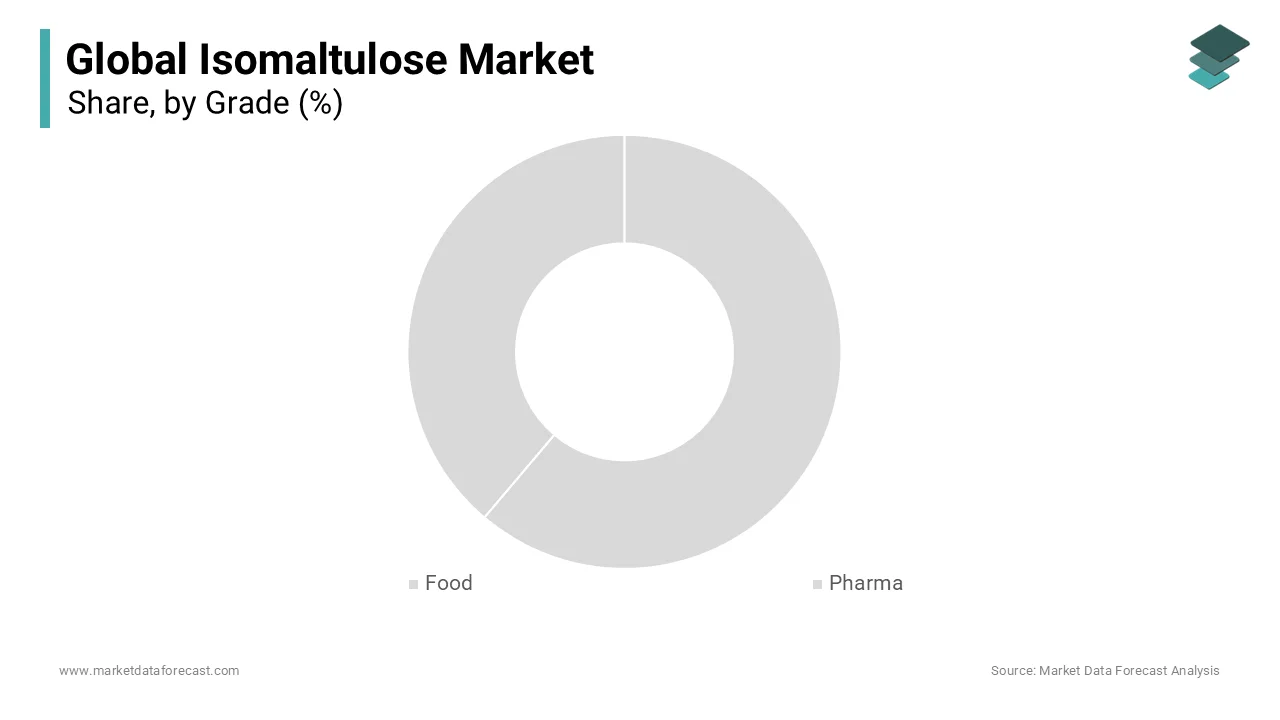
On the other end, the pharma grade segment is experiencing the fastest growth and is predicted to record a CAGR of 10.4% during the forecast period owing to the escalating demand for specialized medical nutrition and enteral feeding formulations. Patients recovering from surgery, managing severe metabolic disorders, or requiring long term tube feeding need energy sources that provide steady glucose release without causing dangerous blood sugar spikes. According to the World Health Organization, the global burden of noncommunicable diseases necessitates advanced clinical nutrition solutions that support metabolic stability during critical care. As per the American Society for Parenteral and Enteral Nutrition, the use of slowly digestible carbohydrates in hospital settings has seen consistent growth as healthcare providers recognize the benefits of sustained energy for patient recovery. Pharma grade isomaltulose offers the highest purity levels required for these sensitive medical applications, ensuring no impurities interfere with patient health. The strict regulatory requirements for medical devices and nutritional therapies mandate the use of ultra-pure ingredients, driving hospitals and clinical nutrition manufacturers to procure pharma grade variants. This critical reliance on precision nutrition guarantees rapid expansion for the highest purity segment.
By End Use Insights
The beverages segment led the market by capturing the dominant share of the global market in 2025 and is likely to remain the dominant end-use category for the next few years due to sustained demand for healthier drink options, the explosive growth of functional hydration and sports performance drinks that require sustained energy release. Athletes and active individuals increasingly reject high sugar sports drinks that cause energy crashes in favor of formulations that provide steady fuel over long durations. For instance, the global sports drink market has shown consistent growth as consumers prioritize endurance and metabolic efficiency in their hydration choices. As per the International Society of Sports Nutrition, isomaltulose is scientifically proven to maintain blood glucose levels during prolonged exercise, making it the ideal carbohydrate for marathon runners and cyclists. Beverage manufacturers are leveraging this scientific backing to launch premium performance drinks that feature isomaltulose as a key differentiator. The liquid format allows for easy integration of the ingredient without affecting clarity or mouthfeel, making it highly versatile for product developers. The massive volume of bottled water and functional beverages consumed globally ensures that this segment remains the primary driver of isomaltulose demand.
However, the pharmaceuticals segment is projected to maintain strong growth momentum in the coming years and register a CAGR of 10.4% during the forecast period owing to the integration of isomaltulose into advanced drug delivery systems and therapeutic formulations. Pharmaceutical scientists are utilizing this highly stable and pure carbohydrate as an excipient to improve the solubility and bioavailability of complex active pharmaceutical ingredients. According to the Journal of Controlled Release, the use of specialized sugars in tablet coatings and liquid suspensions has increased significantly as researchers seek to enhance patient compliance and drug efficacy. As per the United States Pharmacopeia, the strict purity requirements for pharmaceutical excipients make pharma grade isomaltulose an ideal candidate for use in sensitive medical applications where contamination risks must be minimized. The ingredient’s non hygroscopic nature ensures that tablets remain stable and effective even in humid environments, reducing waste and improving supply chain reliability. The continuous innovation in oral drug formulations and the need for high quality excipients guarantee rapid adoption within the pharmaceutical industry.
REGIONAL ANALYSIS
North America Isomaltulose Market Analysis
North America dominated the market by holding the highest share of the global market in 2025 and is expected to maintain its leadership position in the market over the forecast period due to the high health awareness, a robust sports nutrition industry, a mature consumer base that actively seeks functional ingredients to manage weight and improve athletic performance. According to the Centers for Disease Control and Prevention, the high prevalence of obesity and diabetes in the United States has created an urgent demand for low glycemic alternatives in everyday foods. As per the National Sporting Goods Association, the participation in endurance sports and fitness activities continues to rise, fueling the demand for sustained energy supplements. Major food and beverage companies in the region are rapidly reformulating products to include isomaltulose to meet clean label demands. The presence of advanced regulatory frameworks and strong intellectual property protections encourages innovation and investment in functional carbohydrate research. This combination of health consciousness and athletic culture ensures that North America remains a primary hub for isomaltulose consumption and product development.
Europe Isomaltulose Market Analysis
Europe maintains a strong position in the regional landscape capturing a prominent share of the global market in 2025 and is characterized by strict regulatory standards and a deep cultural emphasis on natural and healthy eating. The market status in this region is heavily influenced by the European Food Safety Authority guidelines which promote the use of safe and scientifically validated functional ingredients. According to Eurostat, the European population is increasingly adopting diets rich in whole foods and low in refined sugars, driving the demand for natural sweeteners like isomaltulose. As per the European Federation of Food Science and Technology, the region leads in research and development of novel food ingredients, fostering a supportive environment for isomaltulose innovation. The strong presence of major confectionery and beverage manufacturers in countries like Germany and France further accelerates adoption. Consumers in Europe are willing to pay a premium for products that offer health benefits and transparency, making it a lucrative market for high quality isomaltulose applications. This regulatory support and consumer sophistication ensure Europe remains a critical driver of global market growth.
Asia Pacific Isomaltulose Market Analysis
Asia Pacific represents the fastest growing region in the global market over the forecast period due to the rapid urbanization, increasing disposable incomes. The market in this region is dynamic with countries like China, Japan, and India leading the charge in adopting functional foods and beverages. According to the Asian Development Bank, the rising middle class in Asia is increasingly concerned about lifestyle related diseases such as diabetes and obesity, prompting a shift toward healthier dietary choices. As per the Japanese Ministry of Health, Labour and Welfare, Japan has been a pioneer in the use of functional foods including isomaltulose for decades creating a mature and knowledgeable consumer base. The expanding sports and fitness industry in emerging economies like India and China is also driving demand for performance enhancing ingredients. Local manufacturers are investing heavily in production capabilities to meet domestic demand and reduce reliance on imports. This massive population base and evolving health consciousness guarantee that Asia-Pacific will experience the most robust growth in the coming years.
Latin America Isomaltulose Market Analysis
Latin America is expected to see progressive expansion as functional food adoption increases over the next few years owing to the growing health awareness and expanding food processing industries, the increasing prevalence of metabolic disorders and the gradual shift away from traditional high sugar diets. According to the Pan American Health Organization, the rates of diabetes and obesity in Latin American countries have risen sharply, creating a pressing need for healthier food alternatives. As per the Economic Commission for Latin America and the Caribbean, the food and beverage sector is modernizing rapidly with local manufacturers adopting global trends in functional ingredients. Brazil and Mexico are leading the adoption of isomaltulose in beverages and confectionery as consumers become more educated about the benefits of low glycemic sugars. The region's abundant sugarcane production provides a strategic advantage for local sourcing and potential future production of isomaltulose. This combination of health needs and agricultural resources ensures a steady and progressive growth trajectory for the market in Latin America.
Middle East and Africa Isomaltulose Market Analysis
The Middle East and Africa are projected to experience gradual market adoption in the near future as urbanization continues due to the rising incidence of lifestyle related diseases and a growing interest in premium health products among affluent populations. According to the World Health Organization, the prevalence of diabetes in the Middle East is among the highest globally, driving demand for functional sweeteners that support blood sugar management. As per the African Union Agenda 2063, efforts to improve food security and nutrition are leading to greater adoption of fortified and functional foods in urban centers. Countries like South Africa and the United Arab Emirates are seeing increased importation of isomaltulose containing products as international brands expand their presence. The lack of local production capabilities currently limits market size but presents a significant opportunity for future investment. As health awareness spreads and infrastructure improves this region is poised for gradual but meaningful market expansion.
COMPETITIVE LANDSCAPE
The competition in the isomaltulose market is characterized by a concentrated landscape dominated by a few major producers who control the proprietary enzymatic technologies required for efficient production. Established players leverage their vertical integration from sugar beet or cane cultivation to final refinement to maintain cost advantages and ensure supply chain stability. New entrants face significant barriers due to high capital requirements for biocatalytic facilities and complex regulatory approvals for novel food ingredients. Differentiation is achieved through scientific validation of health benefits sustainability certifications and technical support for product formulation. Price competition remains moderate as buyers prioritize quality consistency and regulatory compliance over lowest cost options. Strategic collaborations with global food and beverage brands drive innovation and secure long term supply contracts. Intellectual property protection around specific enzyme strains and production processes provides a competitive moat for incumbent manufacturers. The market sees continuous efforts to expand applications beyond traditional confectionery into sports nutrition and medical foods. Customer loyalty is driven by reliable supply technical expertise and shared commitment to health and sustainability goals.
KEY MARKET PLAYERS
The major players operating in the global isomaltulose market are
- Anhui Elite Industrial Co., Ltd.
- Baolingbao Biology Co., Ltd.
- Benenovo
- BENEO GmbH (Südzucker AG)
- Borger GmbH
- Cargill Incorporated
- ErgoNutrition
- Fengchen Group Co., Ltd.
- Ferrer Alimentación
- Fooding Group Limited
- Frusano GmbH
- Fuyang Jiannuo Biotechnology Co., Ltd.
- Gerfro
- Krüger GmbH & Co. KG
- Merck KGaA
- Mitsui Sugar Co., Ltd.
- Nanning Rich Valley Technological Co., Ltd.
- Now Foods
- Südzucker AG
- Qingdao Oriental Tongxiang International Trading Co., Ltd.
- Shaanxi Iknow Biotechnology Co., Ltd.
Top Players in the Market
- Beneo Group operates as a leading global supplier of functional carbohydrates with a strong focus on isomaltulose derived from beet sugar. The company leverages its extensive agricultural network in Europe to produce high quality Palatinose which is widely recognized for its slow release energy properties. Recent actions include expanding production capacities in Germany to meet the rising demand from sports nutrition and clinical diet sectors. Beneo actively collaborates with research institutions to publish scientific data validating the metabolic benefits of isomaltulose for blood sugar management. Their investment in sustainable farming practices and carbon neutral production processes enhances their brand reputation among environmentally conscious buyers. By providing technical support and custom formulation services Beneo strengthens its position as a trusted partner for major food and beverage manufacturers seeking clean label solutions.
- Mitsui Sugar Co Ltd is a prominent player in the isomaltulose market utilizing its advanced enzymatic technology to convert cane sugar into this functional disaccharide. The company supplies high purity isomaltulose to diverse industries including confectionery beverages and pharmaceuticals across Asia and globally. Recent actions involve strengthening distribution networks in North America and Europe to capture growing demand for low glycemic ingredients. Mitsui Sugar invests heavily in research and development to optimize enzyme efficiency and reduce production costs while maintaining product quality. They also engage in strategic partnerships with local food manufacturers to develop innovative products tailored to regional taste preferences. By emphasizing reliability and consistent supply Mitsui Sugar reinforces its role as a key enabler of health focused product innovation in the global sweetener industry.
- Südzucker AG contributes significantly to the global isomaltulose market through its specialized carbohydrate division which produces premium functional sugars from European beet sugar. The company focuses on delivering sustainable and natural ingredients that support healthy lifestyles and metabolic well being. Recent actions include launching new marketing initiatives to educate consumers and formulators about the unique benefits of isomaltulose in preventing dental caries and managing weight. Südzucker expands its application centers to assist clients in reformulating products without compromising texture or taste. They prioritize environmental stewardship by implementing energy efficient production methods and supporting biodiversity in beet growing regions. Through continuous innovation and customer centric services Südzucker solidifies its standing as a leader in the European and global functional carbohydrate landscape.
Top Strategies Used by Key Market Participants
Key players in the Isomaltulose Market primarily focus on strategic partnerships with research institutions to validate health claims and expand scientific evidence supporting the benefits of slow release carbohydrates. Companies invest heavily in expanding production capacities to achieve economies of scale and reduce unit costs for competitive pricing. Market participants prioritize sustainability initiatives by sourcing raw materials from certified sustainable farms and implementing eco friendly manufacturing processes. Educational campaigns targeting consumers and food formulators help raise awareness about the metabolic advantages of isomaltulose over traditional sugars. Diversification into high value applications such as clinical nutrition and sports performance products allows companies to capture premium market segments. Geographic expansion through local distribution centers ensures reliable supply and faster response to regional demand fluctuations. Continuous innovation in enzyme technology improves yield and purity enhancing overall product quality and market competitiveness.
MARKET SEGMENTATION
This research report on the global isomaltulose market is segmented and sub-segmented into the following categories.
By Grade
- Food
- Pharma
By End Use
- Confectionery
- Bakery Products
- Breakfast Cereals & Bars
- Dairy Products
- Beverages
- Fluoridated Salt
- Frozen Desserts
- Pharmaceuticals
- Others
By Region
- North America
- Europe
- Asia Pacific
- Latin America
- Middle East and Africa.