- Product Description Description
- Table of Contents TOC
- List of Table & Figure LOT
- Get Free Sample PDF Sample PDF
Market Size, 2025
$12.95 BnMarket Estimate, 2026
$13..47 BnMarket Forecast, 2034
$18.46 BnCAGR, 2026–2034
4.02%Executive Summary: Latin America Candy Market
- Market Scope: Comprehensive Latin America confectionery candy market evaluation covering product types, distribution channels, and country-level geographic frameworks.
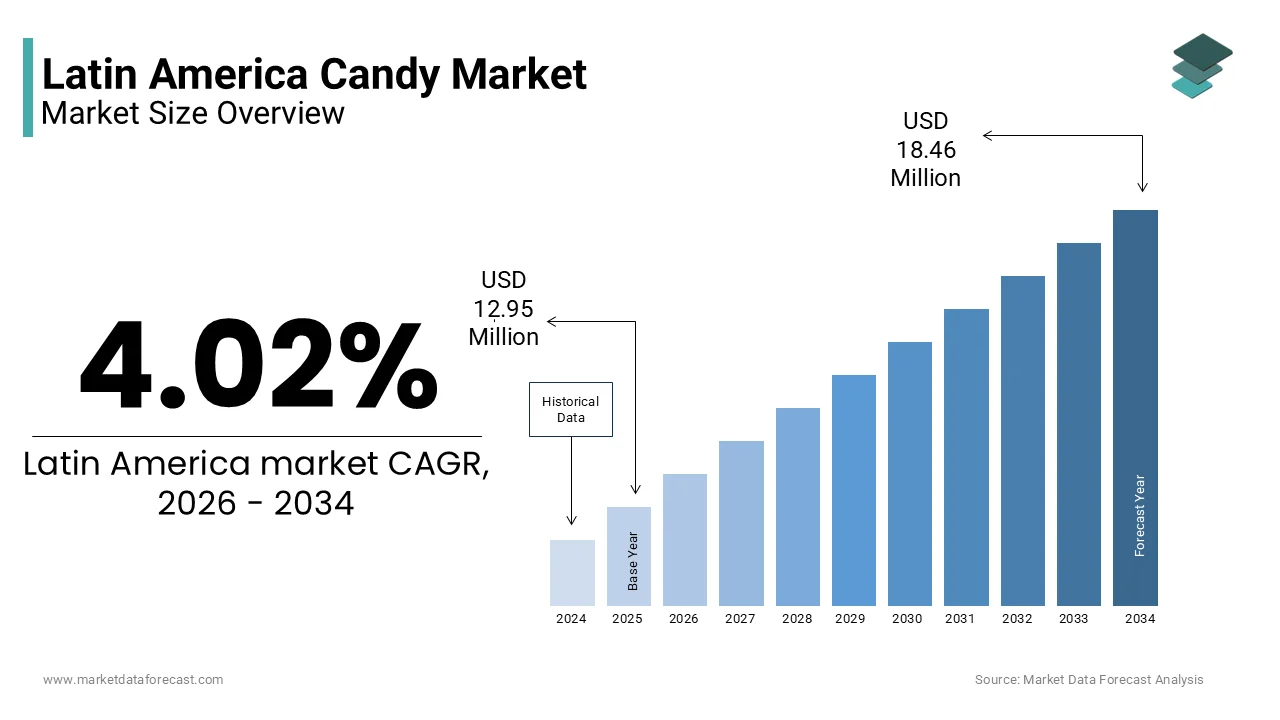
- Market Valuation: Valued at USD 12.95 million (2025), estimated at USD 13.47 million (2026), and projected to reach USD 18.46 million by 2034, registering a CAGR of 4.02% (2026–2034).
- Primary Growth Drivers: Increasing disposable income, diverse flavor introductions attracting all consumer demographics, and product innovations featuring sugar-free and no-artificial-flavor additive variants.
Key Market Segment Metrics (2026–2034)
| Category | Leading Segment (2025 Position) | Fastest-Growing Segment |
|---|---|---|
| By Type | Hard Rolled Candies and Chocolate Candies (hold major market share) | Gummies and Caramels (expected to grow the fastest due to consumer shift toward soft and fruit-flavored candies) |
| By Distribution Channel | Supermarkets (hold the major market share due to ease of consumer accessibility) | Online Retailers (expected to grow the fastest as digital e-commerce adoption expands) |
| By Country | Brazil (holds the major share due to market leaders and a large population of candy-consuming individuals) | Argentina (fastest-growing region driven by rising demand, product innovation, and increasing disposable income) |
Major Market Players & Market Structure
Market Structure: Competitive regional landscape populated by global confectionery giants and established regional producers focusing on flavor diversification, clean-label sugar-free options, and robust retail distribution.
Key Companies: Arcor, August Storck KG, Yildiz Holding, Cemoi, Chocoladefabriken Lindt & Sprungli AG, United Confectionary Manufacturers, Crown Confectionary Co. Ltd., DeMet’s Candy Co., Ezaki Glico Co. Ltd., Ferrero Group, Lotte Confectionary, Mars Inc., Hersheys Co, and General Mills.
Latin America Candy Market Size
The Latin America candy market size was valued at USD 12.95 million in 2025 and is expected to reach USD 18.46 million by 2034 from USD 13.47 million in 2026. The market is growing at a CAGR of 4.02%.
Candy is a sweet confection made primarily from sugar or honey, often combined with flavourings, chocolate, fruits, or nuts. This market thrives on traditional consumption patterns where candy is integral to social gatherings and daily rituals across countries like Brazil, Mexico, and Argentina. According to the Food and Agriculture Organisation of the United Nations (FAO), Latin America and the Caribbean's per capita sugar consumption averaged 40.5 kg between 2020 and 2022, while global trends describe the region broadly as the second-largest sugar-producing region behind Brazil's leading output. As per the Pan American Health Organisation (PAHO), adults and children should reduce their daily intake of free sugars to less than 10% of total calories, while broader health data indicates that Latin Americans consume very high levels of added sugar, more than triple that recommended by the WHO. These facts illustrate the intrinsic link between agricultural output and consumer behaviour in shaping the industry landscape. The market is characterised by a mix of multinational corporations and local artisans who leverage regional ingredients such as dulce de leche and tropical fruits to create unique flavour profiles. Urbanisation trends have further accelerated the shift toward packaged and branded products, enhancing accessibility in retail channels. As disposable incomes rise in emerging economies within the bloc, consumers are increasingly exploring premium and imported varieties, thereby expanding the market scope beyond traditional low-cost options.
MARKET DRIVERS
Rising Urbanisation and Changing Lifestyles
Urbanisation is driving the Latin American candy market. This demographic shift is reshaping consumer access and purchasing habits. According to the United Nations Department of Economic and Social Affairs, the urban population in Latin America reached 81 % in 2023, making it one of the most urbanised regions globally. This demographic shift means that more consumers live in areas with dense retail networks, including supermarkets and convenience stores, which significantly boosts the visibility and availability of packaged confectionery items. As per research, rapid urban adaptation and evolving lifestyle dynamics inside Latin American metros systematically drive an expanded budgetary preference for packaged convenience foods and ready-to-eat products. As people move to cities, their busy schedules reduce the time available for traditional home cooking, leading to an increased reliance on impulse buys and snackable treats. Candy manufacturers capitalise on this by placing products at checkout counters and high-traffic zones in urban retail outlets. Furthermore, urban environments foster exposure to global trends, prompting local brands to innovate with new textures and flavours to meet evolving tastes. The concentration of marketing efforts in metropolitan areas ensures that new product launches gain rapid traction among younger demographics who are more open to experimenting with novel confectionery formats.
Growing Middle Class and Disposable Income
The expansion of the middle class is also a critical factor boosting the growth of the Latin American candy market. This demographic shift provides consumers with greater spending power and a preference for premium treats. Moreover, this trend underscores how economic growth translates into higher spending on non-essential goods. According to the World Bank, the middle class in the Latin America and Caribbean region steadily increased to comprise 41.1 % of the total population in 2023, reaching the highest level thus far this century. This economic segment has greater financial flexibility to indulge in discretionary items such as branded chocolates and artisanal candies. As per sources, urban household budgets across the region's prominent metropolitan areas allocate a substantial share of monthly outlays toward retail groceries and discretionary snacking options. As incomes rise, consumers are willing to pay more for high-quality ingredients and ethical sourcing, prompting manufacturers to introduce luxury lines and gift packs. This trend is particularly evident in countries like Chile and Uruguay, where per capita spending on confectionery is among the highest in the region. The aspirational nature of the growing middle class also drives demand for international brands, which are perceived as status symbols. Consequently, companies are investing in premium packaging and marketing campaigns that resonate with affluent consumers, thereby elevating the overall value of the market.
MARKET RESTRAINTS
Health Consciousness and Sugar Reduction Trends
Health consciousness is a significant restraint to the Latin America candy market. This trend is altering consumer preferences away from high-sugar products. The introduction underscores the adverse effect of health-conscious consumer trends on standard confectionery markets. According to the Food and Agriculture Organisation of the United Nations (FAO) and the Pan American Health Organisation (PAHO), adult obesity in Latin America and the Caribbean reached 29.9% in 2022, which represents a doubling of rates since 2000 and has prompted regional frameworks to advocate for fiscal measures and front-of-package warning labels. This public health crisis has led to stricter labelling regulations and consumer education campaigns that discourage excessive consumption of sweets. As per the Pan American Health Organisation (PAHO), 21 out of 33 Member States in Latin America and the Caribbean apply excise taxes on sugar-sweetened beverages as an intervention strategy. As consumers become more aware of the links between sugar and chronic diseases, there is a noticeable shift toward healthier alternatives such as fruit-based snacks and dark chocolate with lower sugar content. Major retailers are responding by dedicating shelf space to zero-sugar and keto-friendly options, forcing traditional candy makers to reformulate their products. This transition is costly and complex, often compromising taste and texture, which can alienate loyal customers. The stigma associated with sugary treats is growing, especially among parents who are increasingly restrictive about giving candy to children, thereby shrinking a key demographic for the industry.
Regulatory Pressures and Taxation Policies
Regulatory pressures and taxation policies are major hurdles for the Latin American candy market. These measures increase operational costs and reduce demand. The initial findings show how government interventions create headwinds for confectionery producers. According to international food policy tracking, Colombia introduced a landmark "junk food law" in November 2023 to explicitly tax ultra-processed food products, starting with a levy of 10% in 2023, rising to 15% in 2024, and reaching 20% in 2025. These fiscal measures are designed to curb consumption but have the immediate effect of raising retail prices, making candy less accessible to price-sensitive consumers. As per sources, regional manufacturing businesses face varying and complex layers of compliance costs spanning food safety, local packaging mandates, and multi-tiered taxation protocols. Companies must invest in reformulating products to meet lower sugar thresholds or face higher tax burdens, which squeezes profit margins. Additionally, strict advertising restrictions limit the ability of brands to market to children, a traditional target audience for candy. For instance, Chile’s law on food labelling and advertising has forced companies to remove cartoon characters from packaging, reducing the appeal to younger buyers. These regulatory hurdles require significant legal and operational adjustments, slowing down product launches and innovation. The cumulative effect of these policies is a constrained market environment where growth is hindered by governmental efforts to promote public health over commercial interests.
MARKET OPPORTUNITIES
Expansion of E-commerce and Digital Retail Channels
Proliferating e-commerce platforms are driving substantial commercial opportunities for the Latin American candy market. This development effectively diversifies market access by introducing alternative avenues for product distribution. According to Payments and Commerce Market Intelligence (PCMI), the digital commerce sector in Latin America is characterised by robust growth, with e-commerce volume projected to expand at a 22% rate between 2023 and 2026. This digital shift allows candy manufacturers to bypass traditional retail limitations and reach consumers in remote areas where physical store access is limited. As per the study, the rapid integration of mobile applications and digital wallet architectures across major metropolitan hubs has steadily expanded consumer readiness for online food and grocery procurement services. Candy brands can leverage data analytics from e-commerce platforms to understand consumer preferences and tailor offerings accordingly. Subscription models and bundled gift sets are gaining popularity, providing steady revenue streams and enhancing customer loyalty. Social media integration enables direct engagement with consumers, allowing brands to launch viral campaigns and limited-edition products that drive immediate sales. Furthermore, cross-border e-commerce enables local artisans to export unique regional candies to international markets, diversifying their customer base. The convenience of home delivery appeals to busy urbanites, while the ability to compare prices and read reviews empowers consumers to make informed choices, fostering a competitive yet dynamic market environment.
Innovation in Functional and Natural Ingredients
Innovation in functional and natural ingredients provides a promising prospect for the Latin American candy market. This aligns with health trends. It emphasises how product differentiation can capture niche segments. According to research, regional agricultural producers are increasingly incorporating zero-calorie natural sweetening crops such as stevia to support global and local food manufacturer reformulations. This availability enables manufacturers to create candies that offer health benefits such as improved digestion or enhanced immunity, appealing to health-conscious consumers. As per sources, health-focused purchasing habits are steadily escalating across regional markets as consumers examine ingredient formulations for transparency and additive reduction. Brands are incorporating superfoods like acai, guarana, and quinoa into their formulations, leveraging the region’s rich biodiversity to create unique selling propositions. These functional candies command higher price points and attract premium buyers who are willing to pay for added value. Collaborations with local farmers ensure a steady supply of high-quality ingredients while supporting rural economies. Moreover, the use of natural colours and flavours enhances the sensory experience without compromising health credentials. This innovation strategy not only mitigates the negative perception of candy but also positions it as a wholesome treat, thereby expanding the total addressable market.
MARKET CHALLENGES
Supply Chain Volatility and Raw Material Costs
Supply chain volatility is a major challenge to the Latin America candy market. This disrupts production and increases costs. According to the Economic Commission for Latin America and the Caribbean (ECLAC), average regional inflation in Latin America and the Caribbean finished 2023 at 3.8%, a sharp decline from the 8.2% recorded in 2022. Fluctuations in global commodity prices, exacerbated by geopolitical tensions and climate change, make it difficult for manufacturers to maintain stable pricing strategies. As per studies, public sector transit bottlenecks and shifting energy or fuel subsidies historically raise the real economic baseline for supply chain distribution inside the region. These rising expenses squeeze profit margins, forcing companies to either absorb the costs or pass them on to consumers, which can dampen demand. Dependence on imported ingredients exposes manufacturers to currency exchange risks, particularly in countries with volatile local currencies. Disruptions in harvests due to extreme weather events, such as droughts or floods, further complicate supply reliability. According to research, while West African cocoa production faced severe structural supply declines that sent futures prices soaring to historic multi-decade highs, Ecuador and Brazil intentionally increased their production via strategic crop management, cushioning the global shortfall. Companies must invest in diversified sourcing and inventory management systems to mitigate these risks, but such measures require significant capital investment. The unpredictability of the supply chain undermines long-term planning and hampers the ability to meet consistent consumer demand.
Intense Competition and Market Saturation
Intense competition and market saturation are significant obstacles to the Latin American candy market. This environment limits growth potential. According to sources, the Latin American food and beverage marketplace retains a highly competitive profile with diverse local and multinational brands actively contesting modern retail shelf allocations. This saturation makes it difficult for new entrants to gain visibility and for established brands to maintain market share without heavy investment in marketing. As per studies, corporate confectionery participants frequently initiate trademark applications to safeguard commercial identities amid a landscape of continuous brand expansion. Consumers are faced with an overwhelming array of choices, which dilutes brand distinctiveness and encourages switch behaviour based on price promotions. Price wars among competitors reduce profitability and force companies to cut costs, potentially compromising product quality. Large multinational corporations dominate the market with extensive distribution networks and advertising budgets, making it challenging for small and medium enterprises to compete effectively. Additionally, private label brands from major retailers are gaining traction by offering lower-priced alternatives, further pressuring branded manufacturers. To survive, companies must continuously innovate and differentiate their offerings, but the pace of change required is exhausting resources and stretching operational capabilities thin.
 REPORT COVERAGE
| REPORT METRIC | DETAILS |
| Market Size Available | 2025 to 2034 |
| Base Year | 2025 |
| Forecast Period | 2026 to 2034 |
| CAGR | 4.02% |
| Segments Covered | By Type, Distribution Channel, and Region |
| Various Analyses Covered | Global, Regional, & Country Level Analysis; Segment-Level Analysis; DROC; PESTLE Analysis; Porter’s Five Forces Analysis; Competitive Landscape; Analyst Overview of Investment Opportunities |
| Regions Covered | Latin America include Brazil, Argentina, Mexico, and the Rest of Latin America |
| Market Leaders Profiled | Arcor, August Storck KG, Nestlé, Yildiz Holding, Cemoi, Chocoladefabriken Lindt & Sprüngli AG, United Confectionary Manufacturers, Crown Confectionary Co. Ltd., DeMet’s Candy Co., Ezaki Glico Co. Ltd., Ferrero Group, Lotte Confectionary, Mars Inc., Hershey’s Co., and General Mills |
SEGMENTAL ANALYSIS
By Type Insights
In 2025, the chocolate candy segment held the majority share in the Latin America market because of its deep cultural integration and perceived value as a premium treat. One of the key factors driving this dominance is the region's strong affinity for cocoa-based products rooted in historical consumption patterns. According to the International Cocoa Organisation (ICCO), the Americas' regional share of global cocoa production stood at 20% during the 2023/24 crop year, with West Africa producing the vast majority (over 70%) of the global cocoa bean supply. This proximity to raw materials allows companies to maintain competitive pricing while offering high-quality products that resonate with local tastes. The prominence of this segment is further reinforced by the gifting culture associated with chocolate during festivals and special occasions. As per studies, chocolate and confectioneries serve as preferred retail choices during regional gifting occasions and family festivities across urban markets. This seasonal demand spike sustains high sales volumes throughout the year. Additionally, multinational brands have invested heavily in marketing campaigns that position chocolate as a symbol of affection and luxury. The availability of diverse formats ranging from bars to filled pralines caters to various consumer preferences. Local artisans also contribute by creating unique flavours using regional ingredients like coffee and fruits. This combination of abundant raw materials, cultural significance, and strategic marketing solidifies the leadership of the chocolate segment in the regional confectionery landscape.
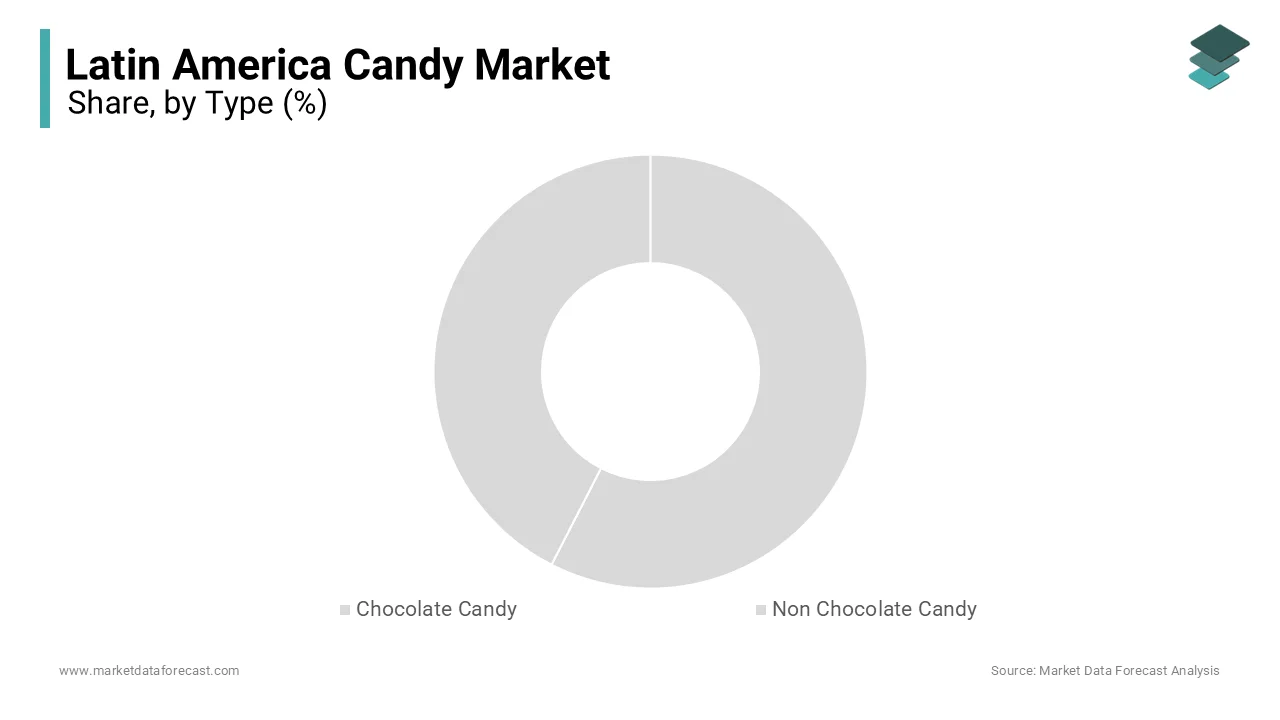
The non-chocolate candy segment is expected to exhibit a noteworthy CAGR of 5.8% from 2026 to 2034 due to the increasing demand for affordable and convenient snacking options among younger demographics. According to research, young adults and teenagers make up a sizable proportion of the broader population in Latin America, acting as an influential target demographic for instant purchase retail segments. This demographic prefers low-cost treats such as gums, jellies, and hard candies that are easy to consume on the go. Moreover, the swift expansion of this segment gains further momentum from the innovation in functional ingredients within non-chocolate categories. As per studies, low-sugar and functional formulations within the gum and mint categories face rising consumer trial as health-conscious snacking expands. Manufacturers are leveraging natural fruit extracts and herbal supplements to create products that offer both taste and wellness benefits. Furthermore, the versatility of non-chocolate candies allows for frequent flavour launches and limited edition releases, keeping consumer interest high. Retailers benefit from the long shelf life and low storage requirements of these products, enabling wider distribution in remote areas. The combination of affordability, health-oriented innovation, and broad accessibility fuels the accelerated growth of the non-chocolate segment.
By Distribution Channel Insights
The supermarkets and hypermarkets segment was the largest in 2025 and occupied a commanding share of the Latin America candy market. This prominence of the segment was supported by its extensive reach and ability to offer a wide product variety. The leading position of this segment is bolstered by the consolidation of modern retail infrastructure in urban centres. According to sources, modern organised trade venues provide central retail infrastructure for the distribution of processed food brands and confectionery goods. These large outlets allow manufacturers to display extensive portfolios including imported and premium brands, attracting affluent shoppers. This segment maintains its top market share, driven by the promotional power of supermarket chains. As per research, organised grocery promotions and point-of-sale price discounts consistently amplify visual conversion and volume generation for confectionery product segments. Candy brands leverage end cap displays and bundle offers to capture consumer attention during routine grocery shopping trips. The trust associated with established supermarket chains also assures consumers of product quality and freshness. Additionally, the integration of loyalty programs enables retailers to collect data on purchasing habits, allowing for targeted marketing efforts. The convenience of one-stop shopping combined with competitive pricing strategies ensures that supermarkets remain the preferred channel for the majority of candy buyers in the region.
The online retail segment is predicted to witness the highest CAGR of 14.2% during the forecast period, owing to the rapid adoption of digital payment systems and improved last-mile delivery networks. According to reports, digital retail operations across primary Latin American commerce hubs continue to increase their share of overall commerce revenues, led by expansion in quick-commerce and digital deliveries. This digital transformation enables consumers to access a wider range of niche and artisanal candies that are not available in physical stores. Fueling this segment's ongoing lead is the changing consumer behaviour post-pandemic. As per research, contemporary consumer cohorts inside metropolitan centers utilize online grocery applications to streamline household replenishment routines. Candy manufacturers are responding by optimising their digital presence through dedicated websites and partnerships with major platforms. Social media marketing drives traffic to these online stores by showcasing visually appealing products and limited-time offers. The ability to read reviews and compare prices empowers consumers to make informed decisions. Furthermore, subscription services for regular candy deliveries are gaining traction among busy professionals. The synergy between technological advancement and shifting lifestyle preferences propels the online channel to the forefront of market growth.
REGIONAL ANALYSIS
Brazil Market Analysis
Brazil was the leading as well as the fastest-growing country within the Latin America candy market and captured a significant share in 2025. This leading position of the Brazilian market was attributed to its massive population and robust agricultural base. The country is a global leader in sugar production, which directly supports the confectionery industry. According to the Brazilian government's food supply agency (Conab), Brazil's sugar production reached a historic record of 45.68 million metric tons during the 2023/24 crop year, driven by high global prices and favourable weather. This abundance allows for competitive pricing and high output volumes. The foremost factor securing its leading position is the strong domestic consumption culture. As per studies, escalating food and beverage prices within urban baseline groups consistently pressure overall consumer spending distributions for Brazilian households. Brazilians have a deep-seated tradition of consuming candies during social events and holidays, sustaining steady demand. Local brands leverage tropical flavours such as passion fruit and coconut to differentiate their offerings. The presence of major multinational corporations alongside vibrant local artisans creates a dynamic competitive landscape. Urbanisation in cities like São Paulo and Rio de Janeiro further boosts retail accessibility. Government initiatives to support small and medium enterprises in the food sector also contribute to market diversity. The combination of resource availability, cultural affinity, and economic scale cements Brazil's position as the market leader.
Argentina Market Analysis
Argentina is expanding moderately in the Latin American candy market due to high per capita consumption and a preference for premium products. The country has a strong tradition of dairy-based confections, which influences market dynamics. According to reviews, the production of iconic shortbread confections and regional chocolates continues to scale as a prominent asset within Argentina's food manufacturing sector. This growth is supported by a culture that values high-quality ingredients and artisanal craftsmanship. The second factor is the export orientation of the sector. As per sources, Argentine sweet and savoury baked confections find expanding consumer bases across cross-border Latin American markets and selective international channels. Argentine brands are renowned for their dulce de leche formulations, which have gained international acclaim. Despite economic volatility, the local market remains resilient due to the ingrained habit of daily sweet consumption. Inflationary pressures have led consumers to seek value for money, benefiting local brands over expensive imports. The government's support for agro-industrial exports further strengthens the sector. Urban centres like Buenos Aires serve as hubs for innovation and trend-setting. The blend of traditional recipes and modern marketing strategies keeps Argentina as a key player in the regional market.
Chile Market Analysis
Chile is a mature segment of the Latin American candy market, with a focus on health-conscious and premium products. The country has one of the highest standards of living in the region, which influences purchasing behaviour. According to research, upscale organic and specialised premium cocoa items capture a growing niche within specialised retail footprints across urban trade zones. Consumers are increasingly aware of health implications and seek products with clean labels and natural ingredients. An additional factor supporting this market is the strict regulatory environment that shapes product formulation. As per studies, Chile's pioneering Law on Food Labelling and Advertising was progressively rolled out starting in 2016 to mandate prominent black octagonal front-of-package warning icons on foods high in sugars, sodium, calories, and saturated fats. This has forced manufacturers to innovate and reduce sugar levels while maintaining taste. The result is a market dominated by dark chocolates and sugar-free alternatives. Chilean retailers are quick to adopt global trends, introducing keto-friendly and vegan options. The stable economic environment encourages foreign investment in the confectionery sector. Urban consumers in Santiago drive demand for novelty and exotic flavours. The emphasis on quality and compliance positions Chile as a leader in healthy confectionery trends within the region.
COMPETITIVE LANDSCAPE
The competition in the Latin America candy market is characterized by a dynamic mix of multinational corporations and local artisans who vie for consumer attention through differentiation and innovation. Large global players leverage their extensive resources to dominate shelf space in modern retail outlets while smaller regional brands capitalize on traditional flavors and cultural relevance to maintain loyal customer bases. Price sensitivity remains a critical factor influencing purchasing decisions prompting companies to offer value packs and promotional discounts regularly. The entry of private label brands from major supermarket chains further intensifies rivalry by providing lower cost alternatives to established names. Innovation in product formulation such as reduced sugar content and functional benefits serves as a key differentiator in this crowded marketplace. Marketing efforts are increasingly digital focused with brands utilizing social media influencers and interactive campaigns to engage younger audiences. Supply chain efficiency and sustainable sourcing practices have become essential competitive advantages as consumers grow more aware of environmental impacts. Regulatory compliance regarding labeling and taxation adds complexity requiring firms to adapt quickly to changing legal frameworks. This multifaceted competitive environment drives continuous improvement and strategic agility among all market participants seeking long term success.
KEY MARKET PLAYERS
Some of the key players in the Latin America candy market are
- Arcor
- August Storck KG
- Nestlé
- Yildiz Holding
- Cemoi
- Chocoladefabriken Lindt & Sprungli AG
- United Confectionary Manufacturers
- Crown Confectionary Co. Ltd.
- DeMet’s Candy Co.
- Ezaki Glico Co. Ltd.
- Ferrero Group
- Lotte Confectionary
- Mars Inc.
- Hersheys Co
- General Mills
Top Players in the Market
- Nestlé maintains a strong presence in the Latin America Candy Market through its extensive portfolio of chocolate and confectionery brands. The company leverages its global expertise to introduce innovative products that cater to local tastes and preferences. Recent initiatives include the launch of sugar free variants and sustainable sourcing programs for cocoa. Nestlé focuses on digital marketing campaigns to engage younger consumers and enhance brand loyalty. The company also invests in supply chain efficiency to ensure product availability across diverse retail channels. By collaborating with local farmers, Nestlé supports rural economies while securing high quality raw materials. These efforts reinforce its position as a trusted household name in the region.
- Ferrero Group strengthens its market position by emphasizing premium quality and artisanal craftsmanship in its confectionery offerings. The company is renowned for its iconic brands that appeal to gift giving occasions and special celebrations. Ferrero recently expanded its production facilities in Brazil to meet rising demand and reduce import dependencies. It actively promotes sustainability through responsible sourcing of hazelnuts and palm oil. The group engages consumers via experiential marketing and seasonal promotions that highlight product uniqueness. Ferrero also adapts its packaging to align with environmental standards and consumer expectations. These strategic moves enhance its reputation for excellence and drive consistent growth in the competitive landscape.
- Mars Wrigley contributes significantly to the market with its diverse range of chewing gums and chocolate bars. The company focuses on innovation by introducing functional candies with added health benefits such as vitamins. Mars Wrigley recently launched eco friendly packaging initiatives to address environmental concerns and attract conscious consumers. It partners with local retailers to improve distribution networks and increase product visibility. The brand invests heavily in advertising campaigns that resonate with cultural traditions and family values. Mars Wrigley also supports community programs that promote active lifestyles and balanced diets. These actions solidify its role as a key influencer in shaping consumer preferences and market trends.
Top Strategies Used by Key Market Participants
Key players in the Latin America Candy Market employ several strategic approaches to maintain competitiveness and drive growth. Product innovation remains a primary focus as companies introduce healthier alternatives such as sugar free and organic options to meet evolving consumer demands. Brands are increasingly leveraging local ingredients like tropical fruits and native sweeteners to create unique flavor profiles that resonate with regional tastes. Strategic partnerships with local distributors and retailers enhance market penetration and ensure widespread product availability across urban and rural areas. Digital transformation is another critical strategy with firms investing in e commerce platforms and social media marketing to reach younger demographics. Sustainability initiatives including eco friendly packaging and ethical sourcing practices help build brand loyalty among environmentally conscious consumers. Companies also engage in aggressive promotional activities during festive seasons to boost sales volumes. Mergers and acquisitions allow larger corporations to expand their portfolios and enter new geographic segments efficiently. These combined strategies enable market participants to navigate challenges and capitalize on emerging opportunities effectively.
MARKET SEGMENTATION
This research report on the Latin America candy market has been segmented and sub-segmented into the following categories.
By Type
- Chocolate Candy
- Non Chocolate Candy
By Distribution Channel
- Supermarkets
- Convenience Stores
- Grocery Stores
- Online
By Country
- Brazil
- Argentina
- Mexico
- Rest of Latin America