- Product Description Description
- Table of Contents TOC
- List of Table & Figure LOT
- Get Free Sample PDF Sample PDF
Market Size, 2025
$0.47 BnMarket Estimate, 2026
$0.51 BnMarket Forecast, 2034
$1.06 BnCAGR, 2026–2034
9.45%Executive Summary: Latin America Cardiac Marker Testing Market
- Market Scope: Comprehensive Latin American cardiac marker testing industry analysis covering test types, product systems, disease indications, testing settings, country leadership frameworks, and competitive landscapes.
- Market Valuation: Valued at USD 0.47 billion (2025), estimated at USD 0.51 billion (2026), and projected to reach USD 1.06 billion by 2034, registering a robust CAGR of 9.45% (2026–2034).
- Primary Growth Drivers: Rising cardiovascular disease prevalence, expanding geriatric population, increased public and private funding for biomarker research, health IT integration, and early diagnosis programs supported by WHO and PAHO. Restraints include reimbursement policy challenges, delayed lab results, and marker specificity limitations.
Key Market Segment Metrics (2026–2034)
| Category | Leading Segment / Classification | Scope / Parameters Covered |
|---|---|---|
| By Type & Product | Reagents and Instruments (Chemiluminescence and ELISA systems) | Troponin I & T, CK-MB, Myoglobin, BNP, and hs-CRP |
| By Indication & Setting | Acute conditions and diagnostic lab workflows | Acute Coronary Syndrome, Myocardial Infarction, Congestive Heart Failure; Lab vs. Point-of-Care (POC) settings |
| By Region / Country | Brazil (holds the largest market share supported by spending power and chronic disease management) | Mexico (projected to experience significant growth due to increasing clinical importance of cardiac markers) |
Major Market Players & Market Structure
Market Structure: Competitive regional in-vitro diagnostics landscape driven by technological advancements, integrated communication networks, and targeted solutions for cardiovascular disease management.
Key Companies: Danaher Corporation, Alere Inc., bioMérieux SA, XENIOS Roche Diagnostics Ltd., Abbott Laboratories, Siemens AG, Guangzhou Wondfo Biotech Co. Ltd, Getinge Group, Medtronic plc, LivaNova PLC, LSI Medience Corporation, Ortho Clinical Diagnostics, and Randox Laboratories Ltd.
Latin America Cardiac Marker Testing Market Size
The Latin America cardiac marker testing market was valued at USD 0.47 billion in 2025. This market is expected to grow at a CAGR of 9.45% from 2026 to 2034 and be worth USD 1.06 billion by 2034, up from USD 0.51 billion in 2026.

Latin America faces a significant burden of cardiovascular diseases, which remain the leading cause of mortality across most nations. According to the Pan American Health Organization, cardiovascular diseases account for approximately 30% of all deaths in Latin America and the Caribbean, highlighting the urgent need for efficient diagnostic tools. According to the World Health Organization, ischemic heart disease alone is responsible for over 1 million deaths annually in the region, necessitating robust diagnostic infrastructure. Furthermore, according to data from the Interheart Study, risk factors such as hypertension, diabetes, and obesity are prevalent in over 40% of the adult population in countries like Mexico and Brazil, driving the demand for early detection methods. According to the Ministry of Health in Brazil, emergency departments handle millions of chest pain cases yearly, requiring immediate triage through cardiac marker testing to reduce mortality rates. These epidemiological realities underscore the vital role of advanced diagnostic assays in improving patient outcomes and managing the growing healthcare costs associated with cardiovascular events in Latin America.
MARKET DRIVERS
Rising Prevalence of Cardiovascular Diseases and Risk Factors
The escalating incidence of cardiovascular diseases is fuelling the expansion of the cardiac marker testing market in Latin America. Lifestyle changes, including sedentary behavior, high sodium intake, and increased consumption of processed foods, have led to a surge in metabolic disorders that predispose individuals to heart conditions. According to the Pan American Health Organization, hypertension affects nearly 25% of adults in the region, while diabetes prevalence has risen to over 10% in several countries, including Mexico and Argentina. These comorbidities significantly increase the likelihood of acute myocardial infarction and heart failure, creating a sustained demand for diagnostic monitoring. According to the Global Burden of Disease Study, cardiovascular mortality rates in Latin America have increased by 15% over the past decade due to aging populations and urbanization. In Brazil, the Ministry of Health records over 300,000 hospitalizations for acute coronary syndromes annually, with each requiring serial cardiac marker testing for accurate diagnosis and treatment planning. Similarly, in Colombia, the National Institute of Health reports a steady rise in emergency room visits related to chest pain, prompting hospitals to adopt high-sensitivity troponin assays for faster rule-out protocols. The economic impact of these conditions drives governments and private insurers to invest in early diagnostic capabilities to prevent costly interventions such as bypass surgery or long-term rehabilitation. This clinical necessity ensures a consistent volume of tests performed across public and private healthcare facilities throughout the region.
Modernization of Healthcare Infrastructure and Emergency Protocols
The ongoing modernization of healthcare infrastructure and the adoption of standardized emergency care protocols are significantly driving the uptake of advanced cardiac marker testing in Latin America, which is further contributing to the Latin American market growth. Governments and private healthcare providers are investing in upgrading laboratory equipment and emergency department capabilities to meet international standards of care. The Brazilian Society of Cardiology has updated its guidelines to recommend high-sensitivity troponin testing as the gold standard for diagnosing myocardial infarction, prompting hospitals to replace older, less sensitive assays. In Mexico, the Ministry of Health has implemented national programs to improve emergency care efficiency, which include the integration of rapid point-of-care testing devices in triage areas. According to the Inter-American Development Bank, healthcare spending in Latin America has increased by 8% annually in recent years, with a significant portion allocated to diagnostic technologies. Chile has seen widespread adoption of automated immunoassay platforms in public hospitals following regulatory reforms that prioritize quality and turnaround time. The Joint Commission International accreditation of numerous hospitals in countries like Peru and Ecuador requires adherence to strict diagnostic accuracy standards, further encouraging the procurement of premium cardiac marker kits. Additionally, the expansion of private insurance coverage in urban centers allows patients access to better-equipped facilities that utilize state-of-the-art diagnostic tools. This structural improvement in healthcare delivery systems creates a favorable environment for the growth of sophisticated cardiac testing solutions.
MARKET RESTRAINTS
High Cost of Advanced Diagnostic Technologies
The substantial financial burden associated with acquiring and maintaining advanced cardiac marker testing systems is a major restraint on market growth in Latin America. High-sensitivity troponin assays and multiplex biomarker panels require sophisticated analyzers and proprietary reagents that are significantly more expensive than traditional tests. According to the World Bank, healthcare expenditure per capita in many Latin American countries remains below 1,000 United States Dollars, limiting the ability of public health systems to invest in premium diagnostic technologies. In countries like Bolivia and Paraguay, budget constraints force hospitals to rely on older-generation assays that may lack the sensitivity required for early detection of minor cardiac events. According to local industry associations, the cost of imported reagents is further exacerbated by currency fluctuations and import tariffs, which can increase prices by up to 30%. Private laboratories often pass these costs onto patients, making advanced testing inaccessible to lower-income populations who constitute a large segment of the market. According to the Pan American Health Organization, out-of-pocket expenses account for over 40% of total health spending in the region, discouraging individuals from seeking timely diagnostic evaluation. Consequently, many healthcare providers opt for cheaper alternatives despite clinical guidelines recommending more sensitive tests. This economic barrier slows the widespread adoption of next-generation cardiac markers and limits market penetration, particularly in rural and underserved areas where resources are scarce.
Limited Reimbursement Policies and Coverage Gaps
Inadequate reimbursement policies and fragmented insurance coverage present significant challenges to the widespread adoption of comprehensive cardiac marker testing in Latin America. Public health systems in many countries have rigid formularies that do not fully cover newer, high-cost biomarkers such as high-sensitivity troponin or natriuretic peptides for routine use. The Mexican Social Security Institute restricts the use of advanced cardiac tests to specific clinical scenarios, limiting their availability in general practice. In Argentina, economic instability has led to frequent adjustments in reimbursement rates, causing delays in payments to laboratories and discouraging the purchase of new testing platforms. According to the Latin American Health Insurance Association, only 60% of the population has adequate insurance coverage that includes comprehensive diagnostic services, leaving a significant portion reliant on underfunded public facilities. Brazil’s Unified Health System covers basic cardiac markers but often faces supply chain disruptions that lead to shortages of reagents, forcing patients to seek private care at their own expense. The lack of standardized reimbursement codes across different countries complicates billing processes for multinational diagnostic companies. Private insurers often impose strict prior authorization requirements for expensive biomarker panels, reducing utilization rates. These policy limitations create financial uncertainty for healthcare providers and restrict patient access to optimal diagnostic care, thereby restraining market growth and innovation in the cardiac testing sector.
MARKET OPPORTUNITIES
Expansion of Point-of-Care Testing in Emergency Departments
The increasing deployment of point-of-care testing (POCT) devices in emergency departments offers a substantial opportunity for growth in the Latin America cardiac marker testing market. Rapid diagnostic results are critical for triaging patients with chest pain and reducing door-to-needle time for thrombolytic therapy. According to the American Heart Association, point-of-care troponin testing can reduce diagnosis time by up to 50%, improving patient throughput and outcomes. Hospitals in urban centers like São Paulo and Buenos Aires are increasingly adopting handheld or benchtop analyzers that provide results within minutes without the need for central laboratory processing. The Ministry of Health in Chile has promoted the use of point-of-care devices in remote primary care centers to facilitate early detection of cardiac events in areas lacking full laboratory infrastructure. According to the European Society of Cardiology guidelines, which influence regional practices, rapid rule-out protocols using point-of-care tests are becoming standard in emergency medicine. Manufacturers are introducing compact devices with minimal maintenance requirements suitable for resource-limited settings. The convenience and speed of these systems appeal to busy emergency departments aiming to reduce overcrowding and improve patient satisfaction. As healthcare providers seek to optimize operational efficiency and enhance clinical decision-making, the demand for portable and rapid cardiac marker testing solutions is expected to rise significantly across the region.
Growing Awareness of Preventive Cardiology and Wellness Screening
Rising public awareness regarding preventive cardiology and the importance of early detection creates a promising opportunity for the expansion of cardiac marker testing beyond acute care settings. Consumers in Latin America are becoming more health-conscious and proactive about monitoring their cardiovascular risk factors, driven by educational campaigns and media coverage. According to the World Heart Federation, awareness of heart disease risk factors has increased by 20% in major Latin American cities over the past five years. This shift in consumer behavior is driving demand for wellness screenings that include biomarkers such as high-sensitivity C-reactive protein (hs-CRP) and natriuretic peptides, which assess long-term cardiac stress. Private clinics in countries like Colombia and Peru are offering comprehensive cardiovascular health packages that incorporate advanced biomarker testing to attract health-conscious individuals. The growth of corporate wellness programs in multinational companies operating in the region further supports this trend by providing employees with regular health check-ups. Digital health platforms are also integrating cardiac risk assessment tools that recommend biomarker testing based on individual risk profiles. As the focus shifts from treatment to prevention, diagnostic companies can expand their market reach by targeting outpatient and wellness segments. This diversification reduces reliance on hospital-based testing and opens new revenue streams through direct-to-consumer and preventive care channels.
MARKET CHALLENGES
Regulatory Heterogeneity and Approval Delays
Navigating the diverse and often complex regulatory landscapes across Latin American countries is a significant challenge for manufacturers of cardiac marker testing products. Each country has its own regulatory authority with varying requirements for product registration, clinical validation, and quality control. The National Agency for Sanitary Surveillance (ANVISA) in Brazil requires extensive local clinical data, which can delay market entry by up to two years compared to other regions. In Mexico, the Federal Commission for the Protection against Sanitary Risks (COFEPRIS) has streamlined some processes, but inconsistencies in interpretation still cause bottlenecks. According to the Pan American Health Organization, regulatory harmonization efforts through the Americas Health Foundation have made progress, but full alignment remains distant. Small and medium-sized diagnostic companies often lack the resources to manage multiple regulatory submissions simultaneously, limiting competition and innovation. Changes in political leadership and health policies can further disrupt approval timelines, creating uncertainty for investors. For instance, recent regulatory updates in Argentina have introduced new labeling requirements that necessitate packaging redesigns and additional compliance costs. These bureaucratic hurdles increase the time to market and operational expenses for global players. Without greater regional harmonization, manufacturers face fragmented markets that hinder efficient distribution and scale economies. This regulatory complexity acts as a barrier to entry for new technologies and slows the adoption of advanced cardiac marker assays in the region.
Supply Chain Vulnerabilities and Logistics Constraints
The Latin America cardiac marker testing market faces persistent challenges related to supply chain vulnerabilities and logistical constraints that affect product availability and cost stability. Many countries in the region rely heavily on imported reagents and instruments from North America, Europe, and Asia, making them susceptible to global supply chain disruptions. According to the Inter-American Development Bank, logistics costs in Latin America are among the highest in the world due to inadequate infrastructure, customs inefficiencies, and geographic barriers. Port congestion and transportation delays in countries like Venezuela and Ecuador have led to periodic shortages of critical diagnostic supplies, impacting hospital operations. Currency volatility in nations such as Argentina further complicates procurement as fluctuating exchange rates increase the cost of imports unexpectedly. Local manufacturing capacity for high-complexity diagnostic reagents is limited, forcing dependence on foreign suppliers. According to the World Customs Organization, clearance times for medical devices can vary significantly, causing unpredictable lead times. These logistical challenges force hospitals to maintain larger inventories, tying up capital and increasing storage costs. In remote areas, poor road networks and a lack of cold-chain infrastructure compromise the integrity of temperature-sensitive reagents. Addressing these supply chain weaknesses requires significant investment in local production and logistics optimization, which remains a formidable challenge for market participants operating in the region.
REPORT COVERAGE
| REPORT METRIC | DETAILS |
| Market Size Available | 2025 to 2034 |
| Base Year | 2025 |
| Forecast Period | 2026 to 2034 |
| Segments Covered | By Type, Product, Disease, Testing, and Country. |
| Various Analyses Covered | Global, Regional and Country-Level Analysis, Segment-Level Analysis, Drivers, Restraints, Opportunities, Challenges; PESTLE Analysis; Porter’s Five Forces Analysis, Competitive Landscape, Analyst Overview of Investment Opportunities |
| Countries Covered | UK, France, Spain, Germany, Italy, Russia, Sweden, Denmark, Switzerland, Netherlands, Turkey, Czech Republic & Rest of Europe. |
| Market Leaders Profiled | Danaher Corporation, Alere Inc., bioMérieux SA, XENIOS Roche Diagnostics Ltd., Abbott Laboratories, Siemens AG, and Guangzhou Wondfo Biotech Co. Ltd, Getinge Group, Medtronic plc, LivaNova PLC, LSI Medience Corporation, Ortho Clinical Diagnostics, Randox Laboratories Ltd... |
SEGMENTAL ANALYSIS
By Type Insights
The troponin I and T segment accounted for the dominating share of the Latin American market in 2025 due to their superior sensitivity and specificity for detecting myocardial injury. These biomarkers have replaced creatine kinase-MB (CK-MB) as the gold standard for diagnosing acute myocardial infarction in clinical guidelines across the region. The dominance of this segment is driven by the widespread adoption of high-sensitivity troponin assays, which allow for earlier detection of cardiac events and faster rule-out protocols in emergency departments. According to the Brazilian Society of Cardiology, over 80% of tertiary hospitals in Brazil now utilize high-sensitivity troponin tests as the primary diagnostic tool for chest pain patients. According to the Pan American Health Organization, early diagnosis using troponins significantly reduces mortality rates and hospital stays, making it a cost-effective solution for healthcare systems. In Mexico, the National Institute of Cardiology reports that troponin testing volume has increased by 25% annually as emergency protocols align with international standards. The ability of troponin I and T to detect minor myocardial damage that other markers miss ensures their continued preference among cardiologists and laboratory professionals. Furthermore, the availability of both laboratory-based and point-of-care troponin tests provides flexibility for different healthcare settings, reinforcing their market leadership. The clinical evidence supporting troponins as the most reliable indicator of heart muscle damage solidifies their position as the cornerstone of cardiac diagnostics in Latin America.
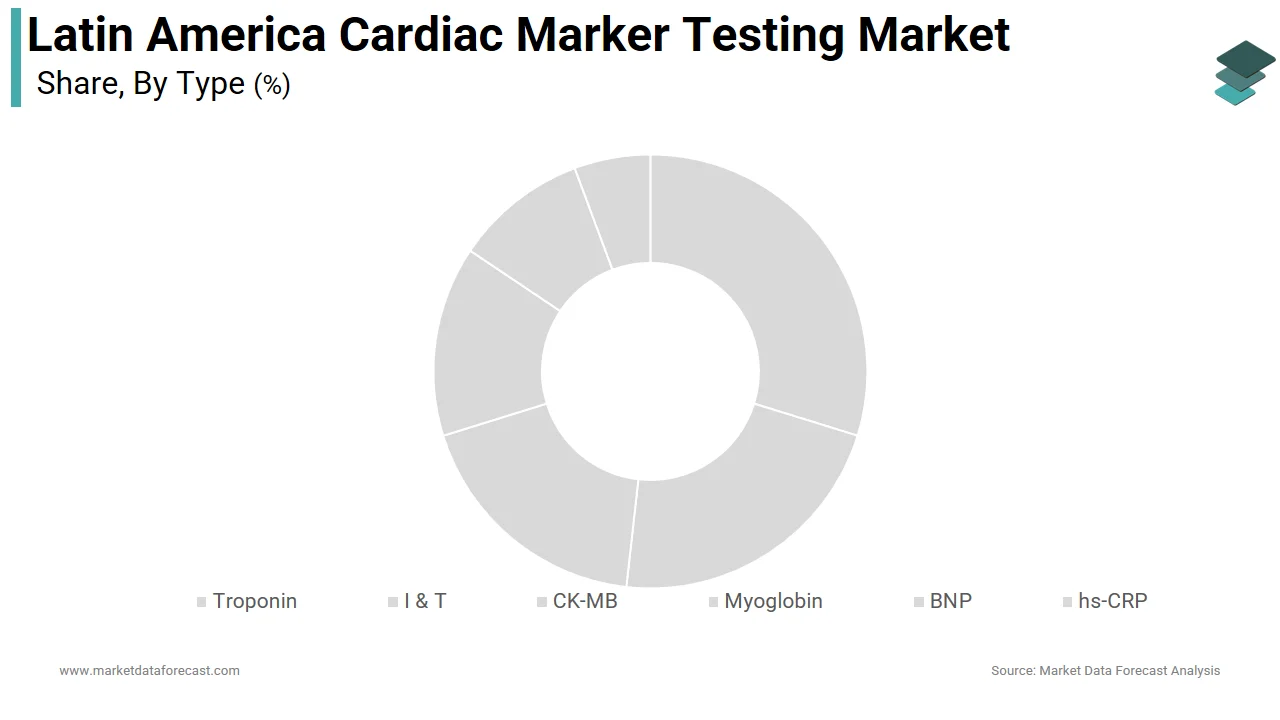
However, the Brain Natriuretic Peptide (BNP) segment represents the fastest-growing segment in the Latin America cardiac marker testing market and is expected to showcase a CAGR of 11.7% over the forecast period owing to the rising prevalence of heart failure and the increasing recognition of BNP as a critical tool for prognosis and management. The aging population in countries like Chile and Uruguay has led to a surge in congestive heart failure cases requiring regular monitoring. According to the American Heart Association, BNP levels correlate strongly with the severity of heart failure and predict mortality risk, making it invaluable for clinical decision-making. Hospitals are increasingly using BNP tests to differentiate between cardiac and non-cardiac causes of dyspnea in emergency settings, reducing unnecessary admissions. The introduction of point-of-care BNP devices has expanded access to testing in primary care clinics and remote areas. In Brazil, the Ministry of Health has launched initiatives to improve heart failure management, which include routine BNP screening for high-risk patients. Pharmaceutical companies are also promoting BNP testing as a companion diagnostic for new heart failure therapies, driving adoption. The combination of demographic shifts, clinical utility, and technological accessibility positions BNP as the highest-growth segment in the cardiac marker landscape.
By Product Insights
The reagents segment led the market by holding the major share of the regional market in 2025. The growth of the reagents segment in the Latin American market is driven by their recurring consumption nature and essential role in every diagnostic test. Unlike instruments, which are one-time capital purchases, reagents are consumed continuously, ensuring steady revenue streams for manufacturers. The high volume of cardiac tests performed daily in hospitals and laboratories drives substantial reagent sales. According to industry data, reagents account for approximately 60% of total market revenue in Latin America. The shift towards high-sensitivity assays requires specialized reagents that are often proprietary to specific instrument platforms, creating a locked-in customer base. Hospitals in Brazil and Mexico perform thousands of troponin tests monthly, each requiring fresh reagent kits. The need for consistent quality and reliability makes healthcare providers loyal to established reagent suppliers. Additionally, the expiration dates of reagents necessitate regular replenishment, preventing bulk stockpiling and ensuring continuous demand. The expansion of testing volumes due to rising cardiovascular disease prevalence further boosts reagent consumption. Manufacturers focus on optimizing reagent stability and ease of use to maintain market share. This recurring demand model secures the reagent segment as the dominant component of the cardiac marker testing market.
However, the chemiluminescence segment is estimated to register a promising CAGR of 11.4% during the forecast period owing to the superior sensitivity and wide dynamic range of chemiluminescent immunoassays compared to traditional methods like ELISA or immunochromatography. The demand for high-sensitivity troponin and BNP tests, which require precise quantification at low concentrations, favors chemiluminescence technology. According to the Clinical Chemistry Journal, chemiluminescent assays offer up to 10 times greater sensitivity than fluorescent methods, enabling earlier detection of cardiac events. Hospitals in Chile and Colombia are upgrading their laboratory infrastructure to include automated chemiluminescence analyzers to meet international quality standards. The ability to process large batches of samples quickly makes this technology ideal for high-volume central laboratories. Manufacturers are introducing compact chemiluminescence systems suitable for smaller hospitals, expanding market reach. The trend towards automation and standardization in Latin American healthcare supports the adoption of this advanced technology. As clinical guidelines emphasize precision, the shift from manual to automated chemiluminescent testing accelerates, driving rapid segment growth.
By Disease Insights
The Acute Coronary Syndrome (ACS) segment had the leading share of the Latin American market in 2025 due to its high incidence and the critical need for rapid diagnosis. ACS encompasses unstable angina and myocardial infarction, which are medical emergencies requiring immediate intervention. According to the Pan American Health Organization, ACS accounts for the majority of cardiovascular deaths in the region, driving extensive testing protocols. Emergency departments in major cities like Lima and Bogotá prioritize cardiac marker testing for all patients presenting with chest pain. The standard of care involves serial troponin measurements to confirm or rule out ACS, ensuring timely treatment. The high volume of ACS cases creates a consistent and large demand for cardiac markers. Public health initiatives focus on reducing time to diagnosis for ACS, further boosting test utilization. The severity of the condition mandates the use of the most sensitive assays available, reinforcing the market leadership of this segment. The critical nature of ACS ensures that cardiac marker testing remains a priority in healthcare spending and resource allocation.
On the other side, the congestive heart failure (CHF) segment is the fastest-growing disease segment in the Latin America cardiac marker testing market and is predicted to showcase a CAGR of 11.4% over the forecast period. The aging population and rising prevalence of hypertension and diabetes are driving an increase in CHF cases. According to the American Heart Association, CHF hospitalizations have increased by 20% in Latin America over the past decade. BNP and NT-proBNP testing are becoming standard for diagnosing and managing CHF. Governments are launching heart failure management programs that include regular biomarker monitoring. The shift towards outpatient management of CHF increases the frequency of testing. Private insurers are covering BNP tests more broadly, recognizing their value in preventing readmissions. The growing awareness of heart failure as a chronic condition requiring monitoring fuels segment growth. As healthcare systems focus on chronic disease management, CHF testing demand accelerates rapidly.
COUNTRY-LEVEL ANALYSIS
Brazil Cardiac Marker Testing Market Analysis
Brazil led the market by holding 33.7% of the regional market share in 2025. The growth of Brazil in the Latin American market is attributed to its large population and advanced healthcare system. The country has a high prevalence of cardiovascular diseases, prompting extensive testing. The Brazilian Ministry of Health has invested in upgrading public hospital laboratories. Private healthcare providers in São Paulo and Rio de Janeiro adopt advanced technologies rapidly. The local manufacturing of diagnostic reagents supports market stability. Regulatory approval by ANVISA ensures product quality. The universal health system (SUS) provides coverage for cardiac tests, increasing access. Research institutions contribute to clinical guidelines favoring high-sensitivity assays. The large market size and infrastructure development sustain Brazil's leadership.
Mexico Cardiac Marker Testing Market Analysis
Mexico occupies the second-largest position with a notable market share, characterized by a mix of public and private healthcare sectors. The rising incidence of diabetes and hypertension drives cardiac testing demand. The Mexican Social Security Institute (IMSS) covers cardiac markers for beneficiaries. Private hospitals in Mexico City adopt international standards quickly. The Federal Commission for Protection against Sanitary Risks (COFEPRIS) regulates diagnostics strictly. Trade agreements facilitate the import of advanced instruments. Awareness campaigns promote early detection of heart disease. The growing middle class increases demand for private diagnostic services. Mexico serves as a hub for distribution to Central America.
Argentina Cardiac Marker Testing Market Analysis
Argentina is expected to record a healthy CAGR in the regional market during the forecast period, owing to economic fluctuations but supported by strong medical expertise. The country has a high density of cardiologists who advocate for advanced testing. Public hospitals face budget constraints, but private clinics thrive. The National Administration of Drugs, Foods and Medical Technologies (ANMAT) regulates products. Economic instability affects import costs, but local distribution networks are robust. Universities research cardiac biomarkers. The aging population increases demand for heart failure monitoring. Despite challenges, the clinical culture supports high-quality diagnostics.
COMPETITIVE LANDSCAPE
The Latin America Cardiac Marker Testing Market features intense competition among multinational corporations and emerging local manufacturers striving for technological superiority and market penetration. Global leaders leverage extensive research and development resources to introduce innovative high-sensitivity troponin assays and automated platforms that offer superior diagnostic accuracy. Local players compete primarily on price affordability and customized service models tailored to specific regional needs. The competitive landscape is characterized by continuous product launches, strategic collaborations, and aggressive marketing campaigns aimed at capturing share in rapidly growing segments like point-of-care testing. Regulatory heterogeneity across countries creates barriers to entry, requiring companies to navigate complex approval processes and adapt to varying quality standards. Supply chain resilience has become a critical differentiator following recent global disruptions, prompting investments in regional manufacturing hubs and local distribution networks. Customer service excellence, including technical support and training programs, distinguishes leading brands in markets with skilled labor shortages. Price pressure from public procurement programs forces manufacturers to optimize cost structures while maintaining quality. This dynamic environment drives constant evolution in business models and product offerings across the region.
KEY MARKET PLAYERS
The leading companies operating in the Latin America cardiac marker testing market include:
- Danaher Corporation
- Alere Inc.
- bioMérieux SA
- XENIOS
- Roche Diagnostics Ltd.
- Abbott Laboratories
- Siemens AG
- Guangzhou Wondfo Biotech Co. Ltd.
- Getinge Group
- Medtronic plc
- LivaNova PLC
- LSI Medience Corporation
- Ortho Clinical Diagnostics
- Randox Laboratories Ltd.
TOP PLAYERS IN THE MARKET
- Abbott Laboratories maintains a robust presence in the Latin America Cardiac Marker Testing Market through its comprehensive portfolio of high-sensitivity troponin assays and point-of-care solutions. The company actively supports regional healthcare systems by providing advanced diagnostic platforms that enable rapid detection of acute coronary syndromes. Recent actions include expanding its manufacturing and distribution capabilities in Brazil and Mexico to ensure consistent supply of critical reagents. Abbott collaborates with local medical societies to educate healthcare professionals on the benefits of early cardiac marker testing. The introduction of compact point-of-care devices has enhanced accessibility in remote clinics and emergency departments. By focusing on innovation and strategic partnerships, Abbott strengthens its position as a trusted provider of reliable diagnostic tools that improve patient outcomes across diverse healthcare settings in Latin America.
- Roche Diagnostics plays a pivotal role in the Latin America Cardiac Marker Testing Market by delivering high-quality automated immunoassay systems and proprietary reagents. The company focuses on modernizing laboratory infrastructure in major hospitals across Argentina, Chile, and Colombia. Recent initiatives involve launching next-generation high-sensitivity troponin T assays that offer superior precision for early diagnosis. Roche invests heavily in training programs for laboratory technicians to ensure optimal instrument performance and result accuracy. The integration of digital health solutions allows for seamless data management and remote monitoring of diagnostic equipment. These efforts reinforce Roche's reputation for technological leadership while facilitating broader adoption of standardized cardiac testing protocols throughout the region.
- Siemens Healthineers contributes significantly to the Latin America Cardiac Marker Testing Market through its advanced chemiluminescence platforms and comprehensive cardiac biomarker panels. The company specializes in providing high-throughput solutions for large reference laboratories and hospital networks. Recent expansions include establishing new service centers in Peru and Ecuador to enhance technical support and maintenance efficiency. Siemens Healthineers collaborates with government health agencies to implement standardized testing guidelines for acute coronary syndrome management. The company also introduces flexible financing options to help smaller healthcare facilities acquire state-of-the-art diagnostic equipment. These strategic moves solidify Siemens' commitment to improving diagnostic accessibility and operational efficiency while supporting the growing demand for precise cardiac marker testing in Latin America.
TOP STRATEGIES USED BY THE KEY MARKET PARTICIPANTS
Key players in the Latin America Cardiac Marker Testing Market employ strategic approaches to maintain competitive advantage and drive growth. Product innovation focuses on developing high-sensitivity assays and point-of-care devices to meet clinical demands for rapid and accurate diagnosis. Strategic partnerships with local distributors and healthcare providers facilitate market entry and expansion in emerging economies. Manufacturers invest in regulatory compliance to navigate complex approval processes across different countries. Educational programs train healthcare professionals on best practices for cardiac marker interpretation and usage. Pricing strategies accommodate varying economic conditions, ensuring affordability for public and private sectors. Digital integration enhances laboratory workflows and data management capabilities. These multifaceted strategies collectively strengthen market positions while addressing unique regional healthcare challenges and opportunities effectively.
MARKET SEGMENTATION
This Latin America cardiac marker testing market research report is segmented and sub-segmented into the following categories.
By Type
- Troponin
- I & T
- CK-MB
- Myoglobin
- BNP
- hs-CRP
By Product
- Reagent
- Instrument
- Chemiluminescence
- Immunofluorescence
- Immunochromatography
- ELISA
By Disease
- Acute Coronary Syndrome
- Myocardial Infarction
- Congestive Heart Failure
By Testing
- Lab
- POC
By Country
- Brazil
- Mexico
- Argentina
- Chile
- Rest of Latin America